

Free visual inspection and a written scope of work before any mitigation begins - photos, moisture readings, and drying logs go in your claim file
The scope we write is the scope we bill. Anything new gets shown to you, in writing, before we touch it.






 Before
 After
After Before
 After
After Before
 After
After24/7 Emergency Mold Remediation in Central Harlem
Mold remediation in Central Harlem typically costs between $1,800 and $6,500 for chronic interior wall and ceiling contamination, while concealed party-wall spread in brownstones runs $8,000 to $18,000. We answer the phone at (917) 924-4221 with a live dispatcher at any hour, and a certified crew can be at your door inside Central Harlem within 45 minutes of your call. The first hour matters because mold behind plaster does not announce itself until the bloom is already weeks old. If you’re seeing staining on a wall, a musty smell in a hallway closet, or peeling paint near a windowsill on a pre-war brownstone, the colony behind it is already larger than the visible patch. Call us while it’s still a wall stain and not a multi-unit problem.
Understanding Mold Remediation Severity in Central Harlem Properties
Central Harlem’s housing stock sits on a foundation of shared masonry party walls, original cast iron waste stacks, and plaster-over-lath interiors. That combination changes how mold behaves compared to a mid-century brick box or a new construction condo downtown. In a modern home, a water leak wets drywall, the drywall is cut out, and the problem ends at the stud. In a Central Harlem brownstone, water travels along the lath channels behind original plaster, feeds mold deep inside wall cavities, and then follows the shared party wall into the neighboring building. We classify mold jobs in Central Harlem by containment level rather than just surface area. A small bloom around a bathroom ceiling is a Level 1 containment job, which means poly sheeting, negative air pressure with a HEPA scrubber, and localized removal. A party-wall spread behind original plaster on a landmark-designated block is a Level 3 containment job, which means full-room isolation, air scrubbing with Phoenix and Dri-Eaz units, daily moisture readings until the dry standard is met, and clearance testing before anyone reoccupies the space. Severity in Central Harlem is rarely about the size of the stain. It’s about where the wall cavity connects.
Why Central Harlem Property Owners Choose Floodline Restoration Co. of Manhattan
- 45-minute response commitment to Central Harlem. Our dispatch board tracks crews in real time, and when you call with an active leak or visible mold, we commit to having a certified technician at your building within 45 minutes. Not a callback. Not a window. A time.
- A live person answers the phone, 24 hours a day. You will never reach a recording when you call (917) 924-4221. At 2 a.m. on a holiday, a real dispatcher picks up, and they can put a crew in motion while you’re still on the line.
- IICRC-certified mold remediation crews. Our technicians carry the AMRT and WRT certifications and follow IICRC S520 standards for mold remediation. That means containment first, containment always, and documented clearance before we hand the keys back.
- Free visual inspection in Central Harlem. Before we quote a dollar figure, we look. A visual inspection with thermal imaging tells us whether you have a surface issue or a party-wall spread, and that changes the whole scope.
- Direct insurance billing. We bill your carrier directly and handle the adjuster conversations. In Central Harlem, where a single leak can involve two or three owners and multiple policies, that coordination is not a courtesy. It’s the job.
- One team from first extraction to final coat of paint. The crew that sets containment in your brownstone is the same crew that reinstates your original plaster and millwork. No handoffs, no subcontracted strangers, no inherited mess.
Our Mold Remediation Process
Inspection & Assessment
We start with a visual walkthrough, moisture mapping with Dri-Eaz meters, and thermal imaging where the walls suggest hidden spread. In Central Harlem, that means checking party walls, basement floor drains, and ceiling cavities around cast iron stacks.
Containment & Air Pressure Control
Before we disturb any mold, we seal the affected area with poly sheeting and run negative air pressure through HEPA-filtered Phoenix air scrubbers. This prevents spores from traveling into adjacent rooms or through floor joists during removal.
Source Removal & Material Remediation
Affected plaster, lath, trim, or flooring is removed under containment. On landmark blocks, we photograph everything first and file any required emergency applications before cutting. Non-salvageable materials are double-bagged and removed through sealed pathways.
Cleaning & Antimicrobial Treatment
Framing, masonry, and adjacent cavities are HEPA-vacuumed, wire-brushed where appropriate, and treated with antimicrobial agents registered for interior use. We also treat the source of the moisture, not just the visible growth.
Structural Drying & Moisture Verification
Dri-Eaz dehumidifiers and XPOWER air movers run until daily moisture readings confirm the dry standard is met. We keep a written moisture log and share it with you and your insurer. The log is your proof the job was dried, not just cleaned.
Clearance Testing & Restoration
We conduct clearance testing to verify spore counts have returned to normal background levels. Then we rebuild. On landmark-designated properties, that means restoring original plaster and millwork to pre-loss condition, not substituting drywall.
Need Emergency Mold Remediation in Central Harlem Now?
Crews minutes away, answering live 24 hours a day. The sooner we start, the less it costs.
Working With Your Insurance Company
Mold claims in Central Harlem are not simple. A visible bloom is rarely the whole loss. Behind it is usually a broken cast iron stack, a failed flat roof, or a combined sewer back-up, and your policy language will hinge on what caused the water, when it happened, and what was done about it. We document from the first hour. Photos of the affected area before any work begins, moisture readings, thermal imaging captures, and a line-item scope of work with cause-of-loss language your adjuster can use. We bill your carrier directly and speak with the adjuster on your behalf. If the adjuster wants third-party verification, our documentation stands up. If the claim is denied, you get honest counsel on out-of-pocket remediation versus partial mitigation. You do not play messenger between us and your carrier.
What We Provide Your Insurer
- Thorough documentation of the loss
- Photos of all damage, room by room
- Moisture readings and drying logs
- A detailed, line-item scope of work
- Direct coordination with your carrier
Built for Central Harlem’s Loss Calendar
Central Harlem sees mold remediation cases in distinct seasonal patterns, and they follow the same calendar every year. January and February bring deep freezes that burst supply lines in the unheated rear extensions of brownstones and in basement crawl spaces, where pipes run along uninsulated foundation walls. The water soaks plaster, joists, and subfloor, and by March, when the thaw comes, the mold is already established. April through June is flat-roof season, where a winter’s worth of freeze-thaw damage opens seams in the tar-and-gravel roofing over pre-war tenements, and the first sustained spring rain pushes water into top-floor ceilings and down through wall cavities for a month before anyone sees staining. July and August are combined sewer season, when afternoon thunderstorms over Frederick Douglass Boulevard and Lenox Avenue overwhelm the aging system and push Category 3 sewage water back up through basement floor drains across Central Harlem. That water carries bacteria and pathogens that accelerate mold growth within 48 hours and require full containment, not just cleaning. October and November bring the first nor’easters, testing every flat roof and parapet wall in the neighborhood. We staff for all of it, year round, because we know exactly when Central Harlem calls, and we know what we’re walking into before we arrive.
Mold Remediation Across Central Harlem’s Neighborhoods
Central Harlem’s mold remediation needs shift block by block, and our crews learn them by walking them. Up on Strivers’ Row, on W. 138th and W. 139th between Adam Clayton Powell Jr. Blvd and Frederick Douglass Blvd, the work is about original plaster, historic millwork, and Landmarks Preservation Commission paperwork. Those brownstones have shared masonry walls and 19th-century plumbing, and the mold is usually in the lath cavities. Down around Mount Morris Park, the same conditions apply, but the buildings are slightly later, the plaster keys are thinner, and the mold spreads horizontally across common attic spaces in the row. West of St. Nicholas Avenue, the five- and six-story tenement walk-ups near Edgecombe and the Hamilton Heights border present a different profile: cast iron stacks that have been patched with rubber couplings, bathrooms stacked four and five floors high, and moisture that travels vertically through the pipe chases into multiple apartments at once. Along 125th Street’s commercial corridors, the mold is usually below grade, where stores with basement storage fight the combined sewer and the water table. Around the Polo Grounds Towers and the housing developments east of St. Nicholas, the work is concrete and cinder block, not plaster and lath, and the remediation focuses on cavity wall weeping and drain back-ups. Each area has a pattern. We’ve been reading them for years.
Specialized Mold Remediation Services We Offer in Central Harlem
Our Mold Remediation team handles the full cycle in Central Harlem, from first inspection to final plaster coat. Here is how we apply the core services to the housing stock we actually see on these blocks.
Mold Inspection & Testing
In Central Harlem, we don’t trust surface staining to tell the whole story. A mold inspection here includes thermal imaging to read temperature differences behind original plaster, moisture meters on party walls, and air sampling when the concern is hidden spread. On a pre-war brownstone, a clean wall can hold a fully colonized wall cavity, and the only way to know is to read the moisture and the thermal signature. Testing confirms what inspection suspects.
Black Mold Remediation
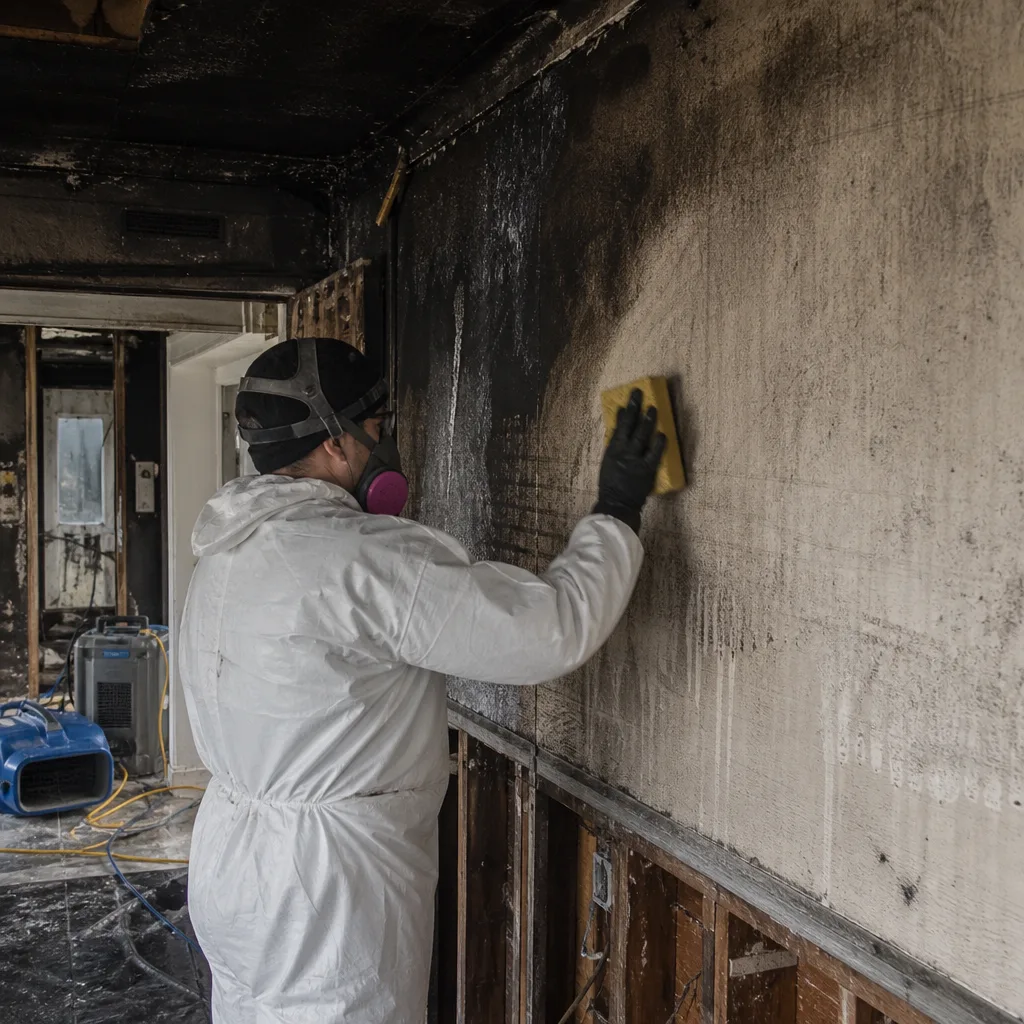
Black mold, Stachybotrys chartarum, is exactly what grows behind water-damaged plaster in Central Harlem’s brownstones, because it feeds on the cellulose in the lath and the paper face of old plaster board. It requires full containment, HEPA air scrubbing, and removal under negative pressure. Our crews are trained and certified for black mold work, and we don’t treat it as paint-over problem. We remove the source, treat the cavity, and verify with clearance testing.
Air Quality Restoration
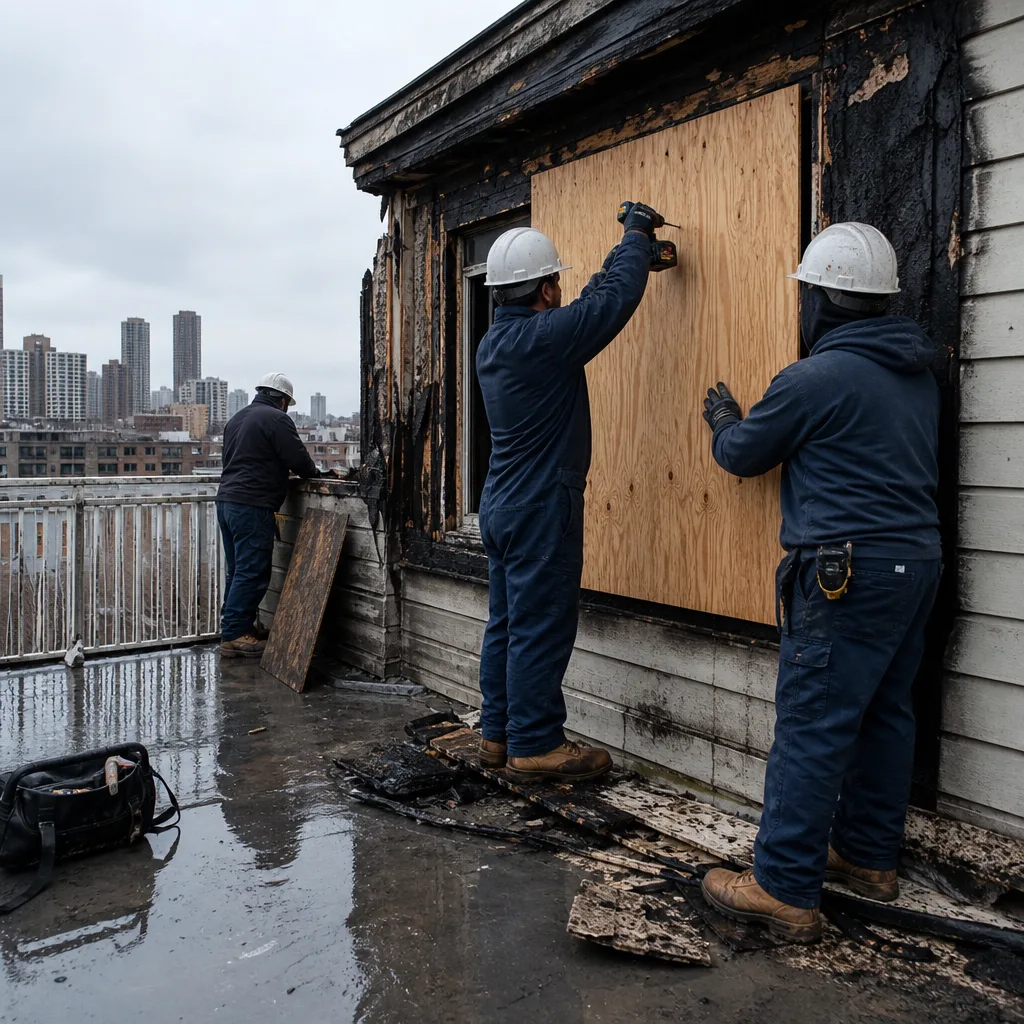
After mold removal in a Central Harlem tenement, the air itself carries the history of the job. We run HEPA air scrubbers continuously during and after remediation, and we test spore counts against normal outdoor background levels before we hand the space back. In buildings with shared ventilation risers, roof vents, or common stairwells, air quality restoration includes checking adjacent units and common areas, because spores travel along the same paths as the heat and the smells of the building.

Crawl Space Treatment
Central Harlem’s brownstones have shallow, dirt-floored crawl spaces under rear extensions, and those spaces stay damp eight months of the year. We treat crawl spaces by correcting drainage where possible, sealing exposed earth, treating structural wood with registered antimicrobial agents, and installing ventilation or dehumidification where the building allows. Crawl space mold is a recurring problem in this neighborhood, and the treatment has to address the moisture source, not just the visible growth.

Moisture & Humidity Control
Mold remediation in Central Harlem without moisture correction is a temporary fix. We identify the moisture source, whether it’s a leaking stack, a failed roof membrane, or a weeping foundation wall, and we correct it before we finish the remediation. Then we verify with daily moisture readings and give you a written drying log. The mold is the symptom. The moisture is the disease. We treat both.

What happens when you call
- 1
A real person answersNo phone trees - you reach a local pro.
- 2
You get an upfront price rangeHonest numbers before anyone is dispatched.
- 3
A background-checked tech heads outLicensed & insured, dispatched right away.
- 4
You approve before work beginsNothing starts until you say go.
Mold Remediation Costs in Central Harlem, NY
Here are the numbers we actually see in Central Harlem. A small, localized mold bloom in a single bathroom or closet runs $1,800 to $3,500, depending on whether we need to open a ceiling or just treat surface growth. A full wall section remediation in an apartment or single-family brownstone, with containment, removal, drying, and restoration, typically lands between $4,500 and $9,000. Party-wall spread involving multiple units, or work on a landmark-designated block on Strivers’ Row or Mount Morris Park where original plaster must be reinstated, runs $8,000 to $18,000, and the cost is shared across the affected owners and their carriers. Sewage-driven mold from combined sewer back-ups costs more than clean water mold because Category 3 contamination requires full antimicrobial treatment and more aggressive material removal. Your insurance coverage depends on the cause of loss and your policy language. We provide a free visual inspection in Central Harlem, and from that inspection you get a written scope with real numbers, not a range over the phone. Call (917) 924-4221 to schedule the inspection.
We Also Serve Cities Near Central Harlem
Floodline Restoration Co. of Manhattan runs mold remediation crews across the surrounding area, including Fairview, Harrison, East Bronx, and Hunts Point. Our dispatch board covers all of these areas, and the same certified crews respond across the same 45-minute commitment. If you own or manage property in any of these nearby areas, call us the way you would from Central Harlem, at (917) 924-4221.
Serving Central Harlem, NY - Our Local Coverage Area
We’re based in the Central Harlem area and know this community well. Use the map below to see our service coverage - if you’re nearby, we can almost certainly help.
Central Harlem Mold Remediation Questions, Answered
How do Landmarks Preservation Commission rules affect mold remediation in Central Harlem’s historic districts?
LPC rules require that any removal or alteration of protected interior features, including original plaster ceilings, millwork, and masonry finishes on designated blocks, be reviewed and permitted before work proceeds. In a genuine emergency, we file an emergency application immediately, photograph everything, and proceed with containment and drying while the application is pending. On landmarked blocks like Strivers’ Row and Mount Morris Park, experienced crews never substitute drywall for original plaster, because the LPC can issue a stop-work order and require reinstatement at the contractor’s expense.
Can mold spread from one Central Harlem brownstone to the neighboring house through the shared wall?
Yes. Central Harlem’s 1890s to 1930s brownstones share masonry party walls, and those walls have continuous lath cavities, joist pockets, and pipe chases that connect one building to the next. Mold colonizing behind water-damaged plaster on one side of a party wall can spread through the cavities into the adjacent owner’s walls without any visible signs for weeks. That’s why we treat party-wall mold as a multi-owner problem from the first inspection, and why containment is not optional on these jobs.
What is the difference between cleaning mold and full removal in a pre-war Harlem building?
Cleaning mold addresses surface growth on non-porous surfaces, like tile or metal. Full removal in a pre-war Central Harlem building means removing the contaminated porous materials, usually the plaster, lath paper, and old wood trim that mold has colonized, treating the underlying framing and masonry, and verifying with clearance testing. In a brownstone, plaster and lath are mold food. Cleaning the surface does not kill the colony behind it, and the bloom comes back within months.
Why does sewage back-up from Harlem’s combined sewer system create a worse mold risk than a clean water leak?
Harlem’s combined sewer system carries both stormwater and sewage in the same pipes, and during heavy thunderstorms or nor’easters, those pipes surcharge and back-flow into basement floor drains. The water that comes up is Category 3 water, which means it contains sewage, bacteria, and pathogens. Those contaminants accelerate mold growth and require full containment, antimicrobial treatment, and material removal that clean water damage would not require. Skipping those steps leaves a biological hazard in the walls.
Can you restore original mold-damaged plaster in a landmarked Central Harlem brownstone instead of replacing it?
Yes, and on designated blocks, that is usually the only legal option. Our crews are trained in plaster restoration, including lath repair, lime plaster patching, and re-creation of original profiles and textures. On landmarked buildings, we restore the original material to pre-loss condition rather than replacing it with drywall, and we document the entire process for LPC records. The restoration work is done by the same crew that handled the remediation, so there is no handoff between removal and rebuild.
How fast can you actually get to a Central Harlem address?
Our commitment is 45 minutes from your call to a certified technician at your door anywhere in Central Harlem. Our dispatch board tracks crew locations in real time, and because we’re a New York City operation with crews stationed across the boroughs, we are frequently on scene sooner than 45 minutes. When you call (917) 924-4221, you speak to a live dispatcher who can tell you exactly where the nearest crew is and when they’ll arrive.
Can I stay in my Central Harlem apartment or brownstone during mold remediation?
For small, localized jobs with full containment in place, you can usually remain in the building, though we’ll ask you to stay out of the contained work area. For larger jobs involving party-wall spread, sewage contamination, or extensive demolition of original plaster, we may recommend temporary relocation, especially if you have respiratory conditions, are elderly, or have young children. We will tell you honestly on the first visit, and we will document our recommendation for your insurer.
What should I do in the first 30 minutes after discovering mold in Central Harlem?
Call (917) 924-4221. Take photos of the visible mold and any water staining with your phone, turn off the water if you can identify an active leak, and do not disturb the mold by wiping or scrubbing it. Disturbing the growth releases spores into the air and makes remediation larger. Do not run fans on the affected area, and keep pets and children out of the room. Then wait for our crew. We’ll handle the rest.
Written by Curt Bowman, founder of Floodline Restoration Co., serving Central Harlem since 2010. Curt built Floodline around a dispatch board, not a sales desk, and he still answers the phone.