
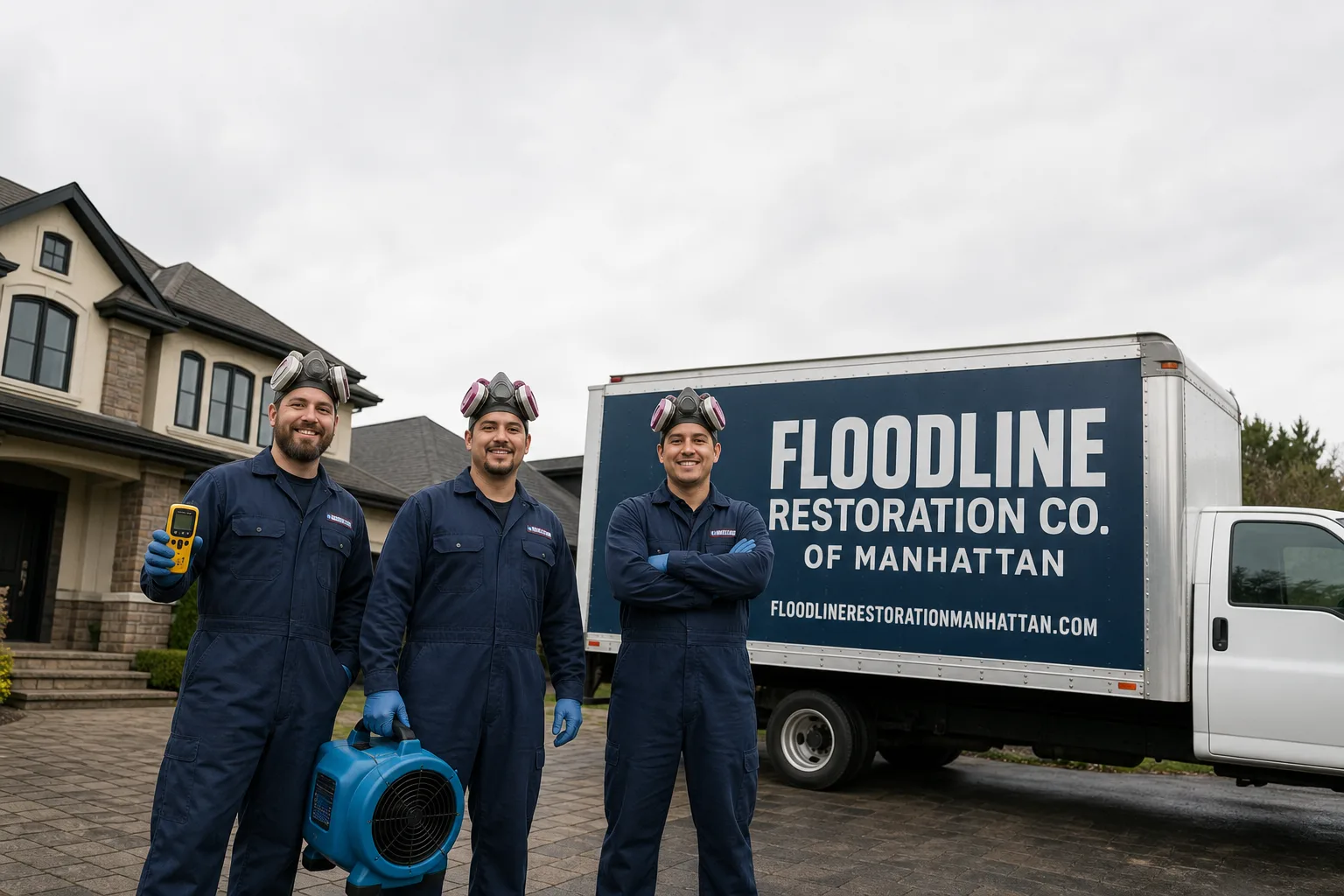
Free visual inspection and a written scope of work before any mitigation begins - photos, moisture readings, and drying logs go in your claim file
The scope we write is the scope we bill. Anything new gets shown to you, in writing, before we touch it.






 Before
 After
After Before
 After
After Before
 After
After24/7 Emergency Mold Remediation in Flatbush
Mold remediation in Flatbush starts with a live person on the phone. Call (917) 924-4221 any hour, and a dispatcher answers. Not a recording, not a call center. We send a crew to your block, and a visual inspection is free. In Flatbush, the first hour matters because mold moves fast through original plaster walls and behind the finished basement ceilings that line so many pre-war two-family homes. Our crews stage containment and start drying the same visit, so a damp corner doesn’t become a full gut job by the time your adjuster calls back.
Understanding Mold Remediation Severity in Flatbush Properties
Mold growth in Flatbush rarely starts as a headline event. It starts as a slow drip from a 1920s cast-iron drain stack, a steam pipe sweating inside a plaster wall cavity, or a basement apartment floor that never quite dried after a sewer backup. Severity tracks moisture source and material, not square footage alone. A small water stain on vinyl tile over original wood subfloor can hide a Category 3 contamination layer below, especially in Flatbush basements where the 1910s-era clay sewer laterals back up during heavy rain. We classify the water, map the moisture with hygrometers and thermal imaging, and contain the affected rooms under negative air before any material comes out. For mold, that means HEPA air scrubbers running continuously, antimicrobial treatment on exposed framing, and third-party clearance testing before we call the job done. Flatbush’s plaster-on-lath walls hold moisture differently than modern drywall. They release it slowly. Reading the wall surface is never enough. We log interior-cavity readings until the dry standard holds.
Why Flatbush Property Owners Choose Floodline Restoration Co. of Manhattan
- 45-minute response commitment. Crews dispatch from our New York City office and reach Flatbush fast. When mold is spreading, a four-hour delay can double the containment scope.
- 24/7 live answer. A real person picks up at 2 a.m. No automated menu, no “leave a message.” We have lived by that since Curt Bowman founded the company in 2010.
- IICRC-certified crews. Our technicians hold WRT (Water Damage Restoration), FSRT (Fire & Smoke), and AMRT (Applied Microbial Remediation) certifications, and they train to RIA and IFA standards. Background-checked and uniformed on every job.
- Free visual inspection. Before any work begins, we walk the loss with you and tell you honestly what needs remediation and what does not. No pressure, no invented scope.
- Direct insurance billing. We bill your carrier directly and hand them the documentation they need. You never play messenger between us and the adjuster.
- One team, extraction to reconstruction. The same certified crew that sets containment handles drying, clears the mold, and rebuilds what had to come out. No mid-job handoff to a crew you have never met.
Our Mold Remediation Process
Inspection & Assessment
We start with a free visual inspection of the Flatbush property. We identify the moisture source, classify the water category, and check for asbestos-containing materials before any wall or floor comes apart. A written scope follows, agreed to before work starts.
Containment & Stabilization
We stage containment with 6-mil poly barriers and run negative air with HEPA air scrubbers. This keeps mold spores from moving through the rest of your Flatbush home while we work. Stabilization means stopping the active moisture source first, whether that is a leaking supply line or a backed-up sewer lateral.
Drying & Dehumidification
Dri-Eaz dehumidifiers and XPOWER air movers run continuously, positioned from a moisture map taken on day one. Plaster-on-lath walls in Flatbush rowhouses dry slowly, so we take interior-cavity readings daily and log every number.
Cleaning & Sanitization
We remove contaminated material under containment, HEPA-vacuum all surfaces, and apply EPA-registered antimicrobial treatments to exposed framing and masonry. The goal is a clean, dry environment that will not support regrowth.
Asbestos & Lead Coordination
In pre-war Flatbush homes, this step is not optional. When original floor tile, pipe wrap, or plaster must be disturbed, we coordinate with a licensed asbestos abatement contractor and follow EPA RRP lead-safe protocols before we proceed. Documented, not skipped.
Repairs & Restoration
After clearance testing confirms the mold is gone, the same Floodline crew rebuilds what was removed. Drywall, trim, flooring, and paint. The 90-Day Done Right Promise covers the whole job, in writing.
Need Emergency Mold Remediation in Flatbush Now?
Crews minutes away, answering live 24 hours a day. The sooner we start, the less it costs.
Working With Your Insurance Company
Mold claims in Flatbush are rarely simple. Your carrier will ask whether the water came from a covered source, when it started, and whether you took reasonable steps to stop it. We build the file from the first hour. Photos of the loss before anything moves. Moisture readings charted against time. A line-item scope that matches the work we actually do, not a template. We handle direct adjuster communication, and if your adjuster balks at asbestos testing for the original 1928 floor tile we need to pull, we explain why it is legally required, not optional. You get a square deal: no surprises on the bill, and the carrier gets the documentation they need to pay the claim.
What We Provide Your Insurer
- Thorough documentation of the loss
- Photos of all damage, room by room
- Moisture readings and drying logs
- A detailed, line-item scope of work
- Direct coordination with your carrier
Built for Flatbush’s Loss Calendar
Flatbush mold problems follow the weather and the calendar. January and February are the deep-freeze months: supply lines in uninsulated exterior walls freeze and split, and the thaw that follows sends water down behind plaster before anyone sees a stain. March and April bring spring rain against foundations that have stood since before the First World War. Hydrostatic pressure builds, and water finds the old mortar joints. July and August thunderstorms overwhelm the combined sewer system along Flatbush Avenue and Church Avenue, pushing Category 3 water into below-grade basement apartments. Then come the nor’easters: prolonged rain, saturated soil, and a rush of calls from the same blocks that always flood. We know which Flatbush blocks tend to back up together because more than 42 years of combined route experience in Brooklyn has taught us the pattern. We stage Category 3 PPE and enzyme treatment supplies for it. When you call Floodline Restoration Co. of Manhattan, we already know what your block faces.
Mold Remediation Across Flatbush’s Neighborhoods
Flatbush is not one housing type. The limestone rowhouses along Parkside Avenue and the streets near Prospect Park are some of the oldest in the borough, with original cast-iron drain stacks and thick plaster walls that hold water for weeks. East of Flatbush Avenue, you find more wood-frame two-family homes from the 1910s and 1920s, many with converted basement units below grade. Ditmas Park holds large Victorian wood-frame houses with balloon framing that lets moisture travel vertically through wall cavities from basement to attic. Over near Brooklyn College, mid-century brick buildings trade plaster for drywall but still sit above the same aging sewer laterals. Each block has a different failure pattern, and our Mold Remediation team reads the building first, then the mold. Our dispatch covers all of it, from Ocean Avenue to Church Avenue, from the Parade Grounds to the Junction.
Specialized Mold Remediation Services We Offer in Flatbush
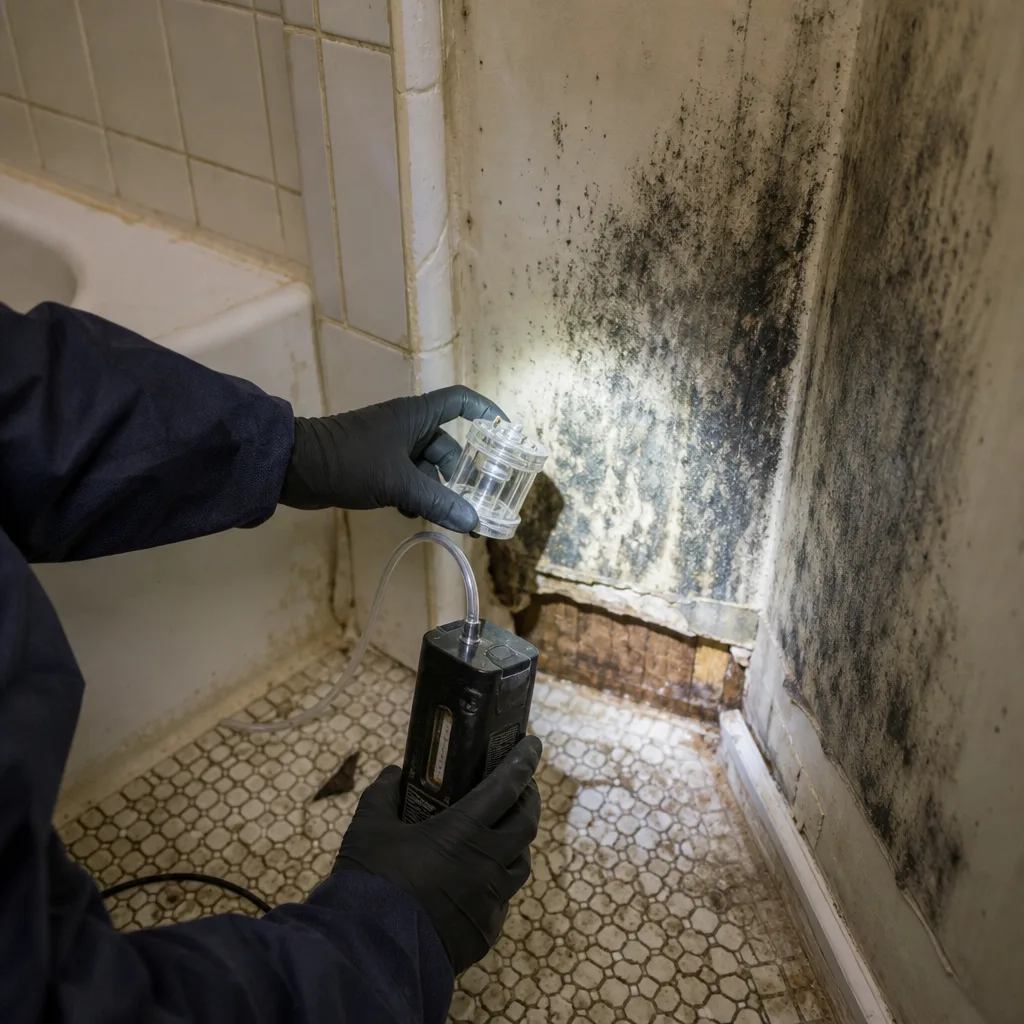
Mold Inspection & Testing
We inspect first and test when it matters. A visual inspection tells us where the moisture is, how far the growth has spread, and whether you need air sampling before demolition. Flatbush pre-war homes often have mold behind original plaster that you cannot see from the living room, so we use thermal imaging to trace cold spots and hidden dampness before we open anything.
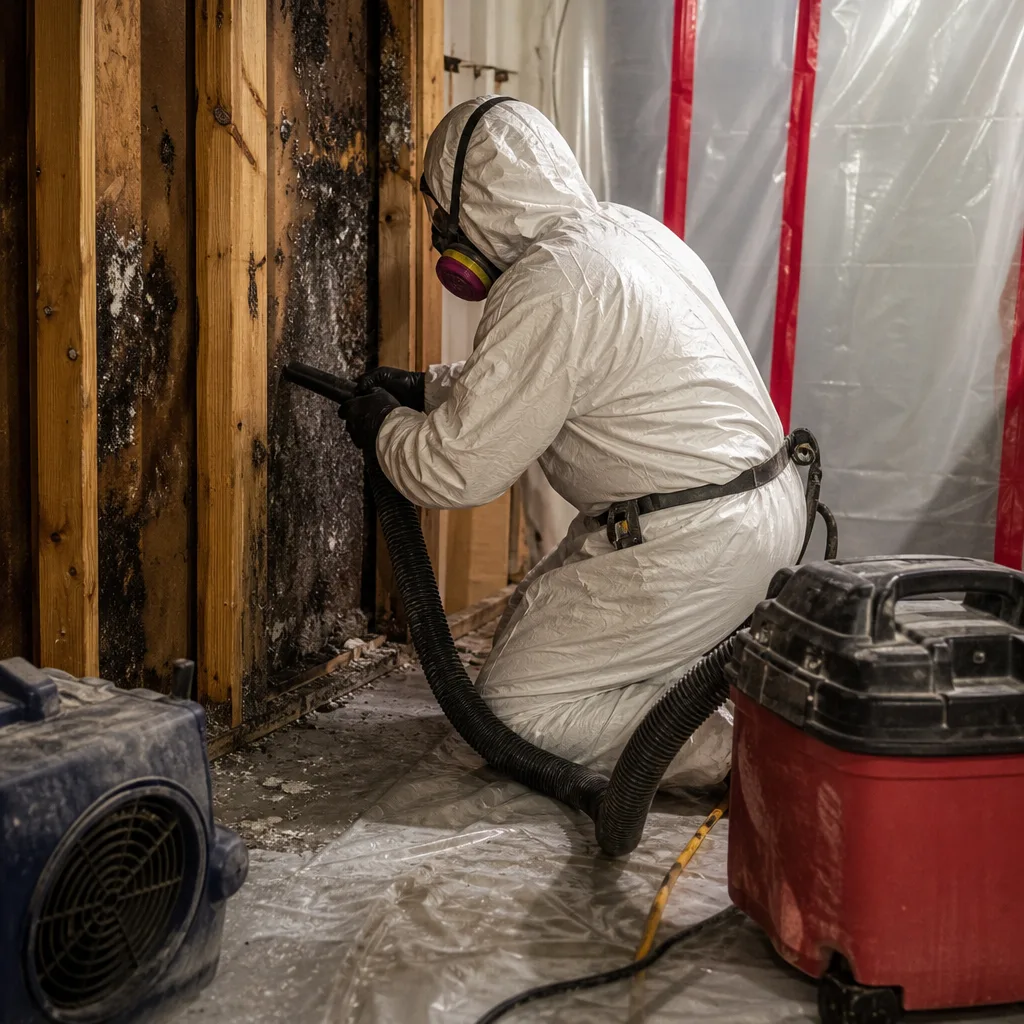
Mold Removal
Mold removal in Flatbush is containment work more than anything else. We seal the room, run negative air, and remove affected material inside the barrier. No dry scraping that launches spores through the house. The remaining framing gets HEPA-vacuumed and treated with an EPA-registered antimicrobial product.
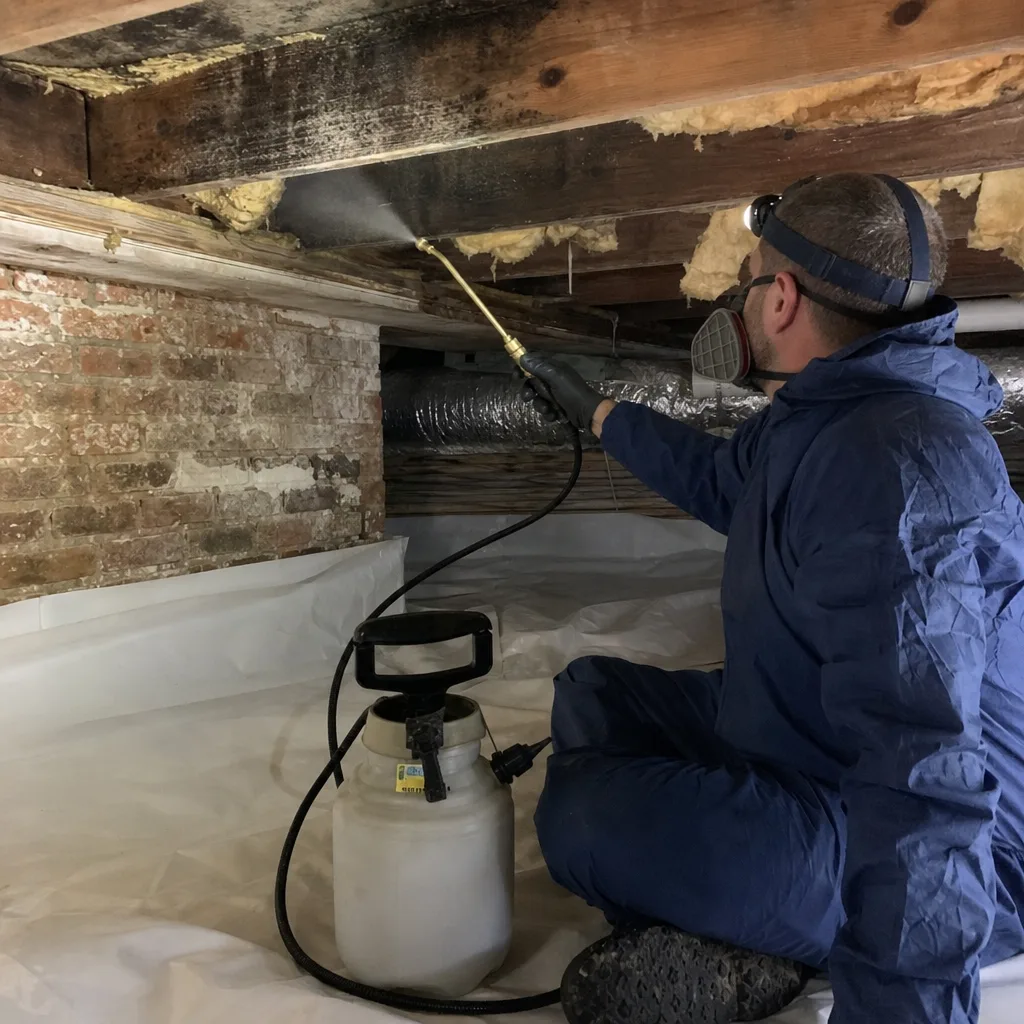
Black Mold Remediation
Black mold, or Stachybotrys chartarum, gets the same protocol as any other toxic mold: full containment, full PPE, and clearance testing after the job. What makes it worse in Flatbush is that the same wet plaster and saturated wood that feeds it is often original to the house. We remove what must come out and treat what stays.
Air Quality Restoration
After mold removal, the air in your Flatbush home should not smell like a basement. We run HEPA air scrubbers through the drying and remediation period, then verify with post-remediation air sampling. If your home has a musty smell that returns after rain, the moisture source is still active. We find it and fix it.
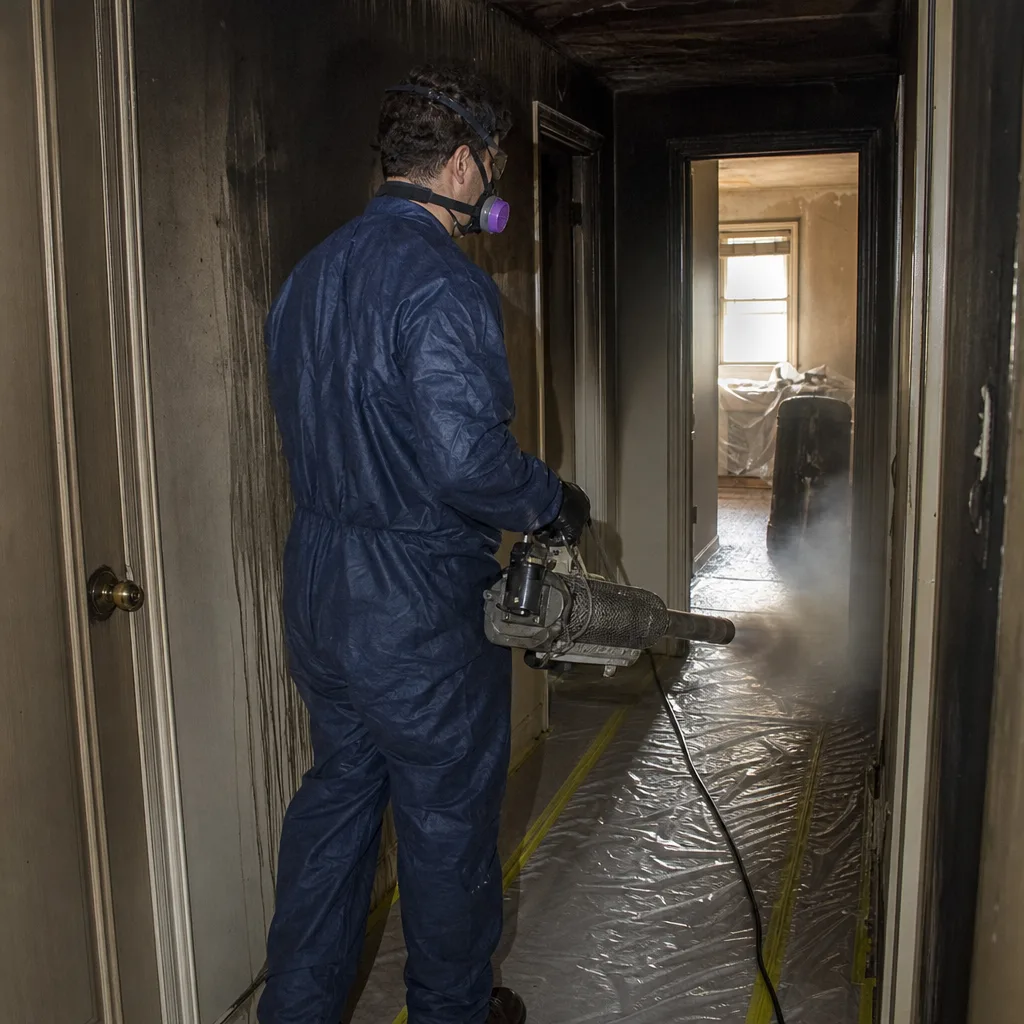
Crawl Space Treatment
Flatbush attached rowhouses often share a party-wall crawl space that spans between buildings. Moisture migrates sideways through the masonry from your neighbor’s side as easily as your own. We treat the framing, seal what can be sealed, and install vapor barriers where the floor permits, with the understanding that a 1925 rowhouse crawl space will never be perfectly dry. The target is controlled moisture, not impossible conditions.
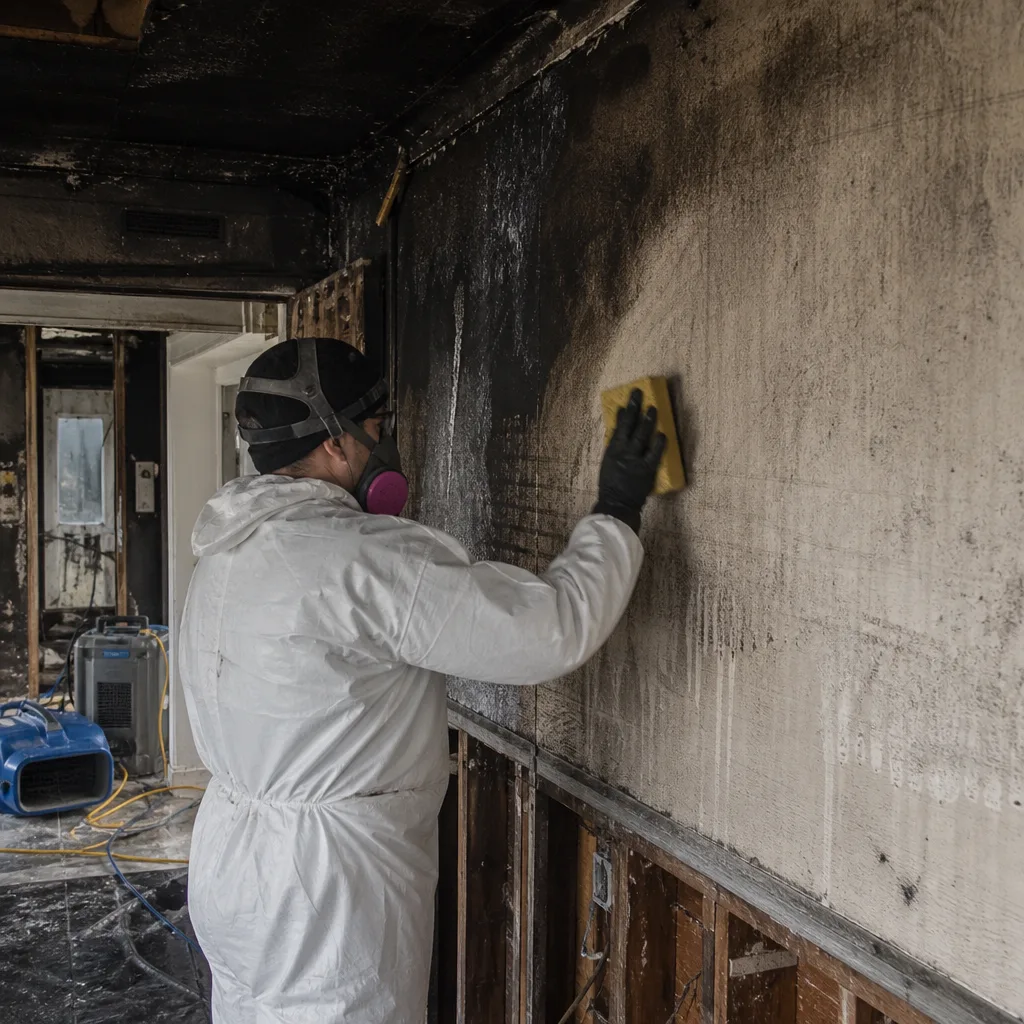
Moisture & Humidity Control
Mold grows where water repeats. In Flatbush basements, the enemy is condensation as often as a leak. We map the moisture sources, recommend dehumidification where it works, and correct drainage or vapor-drive problems where it does not. A finished basement apartment that reads 75% humidity in August is a mold claim waiting to happen. We get it under 50% and keep it there.
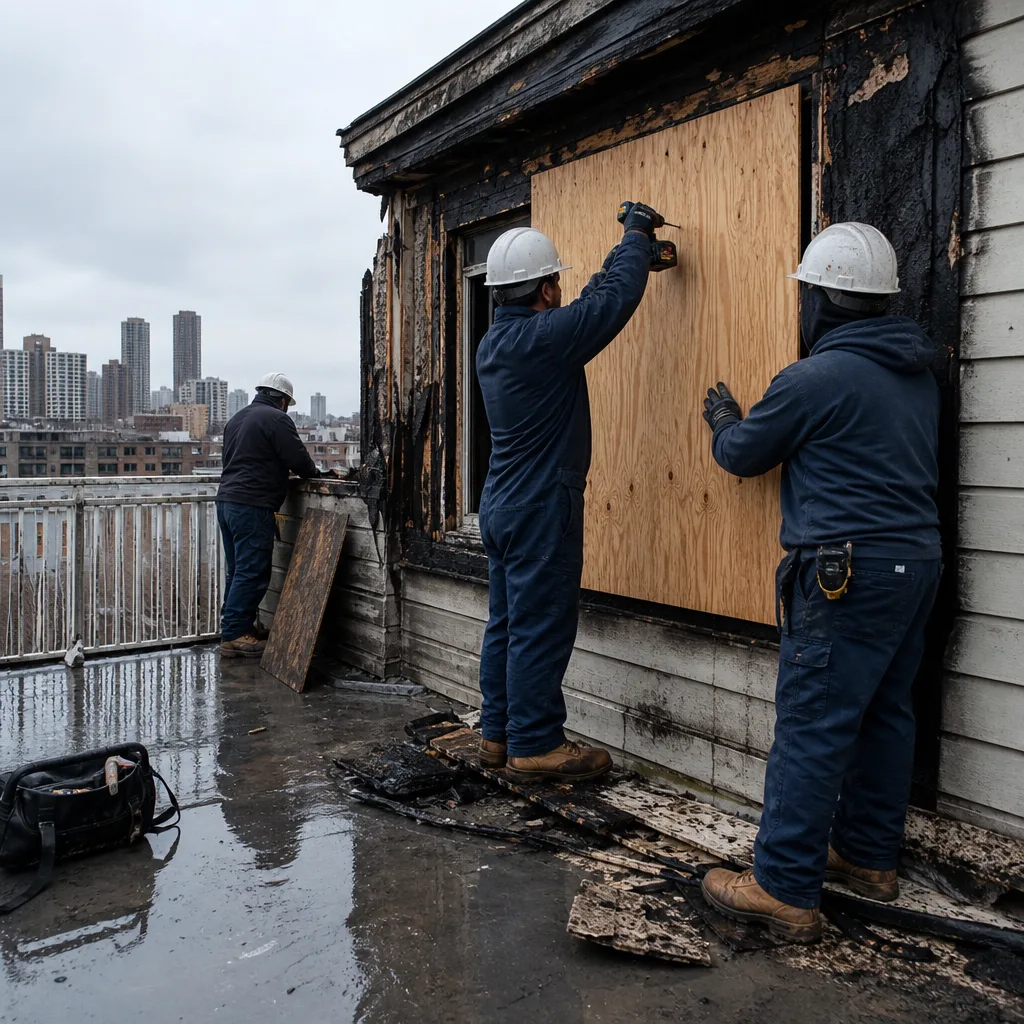
What happens when you call
- 1
A real person answersNo phone trees - you reach a local pro.
- 2
You get an upfront price rangeHonest numbers before anyone is dispatched.
- 3
A background-checked tech heads outLicensed & insured, dispatched right away.
- 4
You approve before work beginsNothing starts until you say go.
Mold Remediation Costs in Flatbush, NY
A small, contained mold removal in a Flatbush bathroom runs $1,200 to $3,500. A full basement remediation with asbestos testing, containment, and rebuild runs $8,000 to $30,000 depending on square footage and what must come out. Black mold behind original plaster in a two-family house typically lands between $6,000 and $18,000. If your loss follows a covered water event, like a burst supply line or a sewer backup, your policy likely covers the remediation. If the mold grew from long-term humidity with no sudden event, you may be paying out of pocket. Either way, the first step is the same: a free visual inspection and a written scope before any work starts. Call (917) 924-4221 and we will come look.
We Also Serve Cities Near Flatbush
Our Flatbush crews also respond to mold calls in Fairview, Harrison, East Bronx, and Hunts Point. Same live dispatch, same 45-minute response commitment, same written scope before work begins.
Serving Flatbush, NY - Our Local Coverage Area
We’re based in the Flatbush area and know this community well. Use the map below to see our service coverage - if you’re nearby, we can almost certainly help.
Flatbush Mold Remediation Questions, Answered
How does Flatbush’s pre-war plaster-on-lath construction change the mold remediation scope compared to modern drywall?
Plaster-on-lath walls release moisture slowly and hide mold growth in the keys and lath spaces behind the surface. We cannot judge dryness by touch or appearance. We take interior-cavity moisture readings and keep drying equipment running longer than a drywall job would require. In practice, a Flatbush plaster wall takes two to three days longer to reach the dry standard, and we factor that into the scope up front so there are no surprises later.
When a Category 3 sewer backup floods a finished basement rental unit in Flatbush, what must happen legally before we can start mold removal?
The landlord must notify the tenant and, depending on the extent of damage, arrange temporary relocation while remediation is underway. The unit is a regulated residential space under NYC housing law, and a Category 3 loss requires full biohazard containment, not standard water mitigation. We coordinate with the property owner on tenant notification and document everything for the carrier and the city. Then we start the mold removal under containment.
Why do some Flatbush blocks get simultaneous mold and sewage-backup calls after a heavy rainstorm?
Many Flatbush blocks share the same original clay-tile and cast-iron sewer laterals from the 1910s through 1930s. Those pipes have decades of root intrusion and bellying. During a heavy nor’easter or summer downpour, the combined sewer system surcharges and backs up into the lowest drain on each block, usually a basement floor drain. That is why we see clusters of simultaneous Category 3 calls from specific blocks along Rugby Road, East 21st Street, and Newkirk Avenue. We keep PPE and enzyme supplies staged for it.
Do I need asbestos testing before mold remediation in my 1920s Flatbush rowhouse if only a small section of flooring was wet?
If the remediation requires disturbing original vinyl floor tile, pipe wrap, or plaster, then yes. The law requires testing before removal, even for a small section. Asbestos-containing materials were standard in Flatbush construction until the late 1970s. We will check for suspect materials during the free inspection and bring in a licensed abatement contractor if testing comes back positive. Skipping that step can halt the job and open the property owner to fines.
How does your team handle moisture behind original cast-iron drain stacks in a Flatbush two-family house after a hidden pipe leak?
We open the wall carefully, inspecting for asbestos before any cutting. The cast-iron stack itself may be cracked or leaking at a joint. We determine whether the stack can be repaired or needs replacement by a licensed plumber, then dry the wall cavity with air movers and dehumidifiers until interior readings meet the dry standard. Antimicrobial treatment follows, then reconstruction. The same Floodline crew handles the whole sequence, so nothing gets lost between trades.
How fast can someone actually get to my Flatbush address for mold remediation?
We commit to a 45-minute response time for emergency calls in Flatbush. Our dispatcher takes your call live, confirms the address, and sends the nearest available crew. For non-emergency inspections, we schedule at your convenience, often the same day. Call (917) 924-4221 any hour to start.
Will my insurance cover mold remediation in a Flatbush two-family house?
If the mold resulted from a sudden, covered water event, like a burst supply line or a sewer backup, your homeowner’s or landlord policy typically covers remediation. Gradual moisture from long-term high humidity is usually excluded. We bill your carrier directly and provide the full documentation file, so you are not fighting the claim alone. Call us and we will help you figure out what applies to your policy.
What should I do in the first 30 minutes after I find mold in my Flatbush home?
Stop the water source if you can do so safely. Do not disturb the mold by scrubbing or sanding it. Keep family members and pets out of the room. Place a fan at the doorway blowing out if that is your only option, but know that a fan can spread spores, so containment is better. Then call (917) 924-4221. We will walk you through the next hour over the phone and have a crew on the way.
Written by Curt Bowman, Owner at Floodline Restoration Co. of Manhattan, serving Flatbush since 2010.