
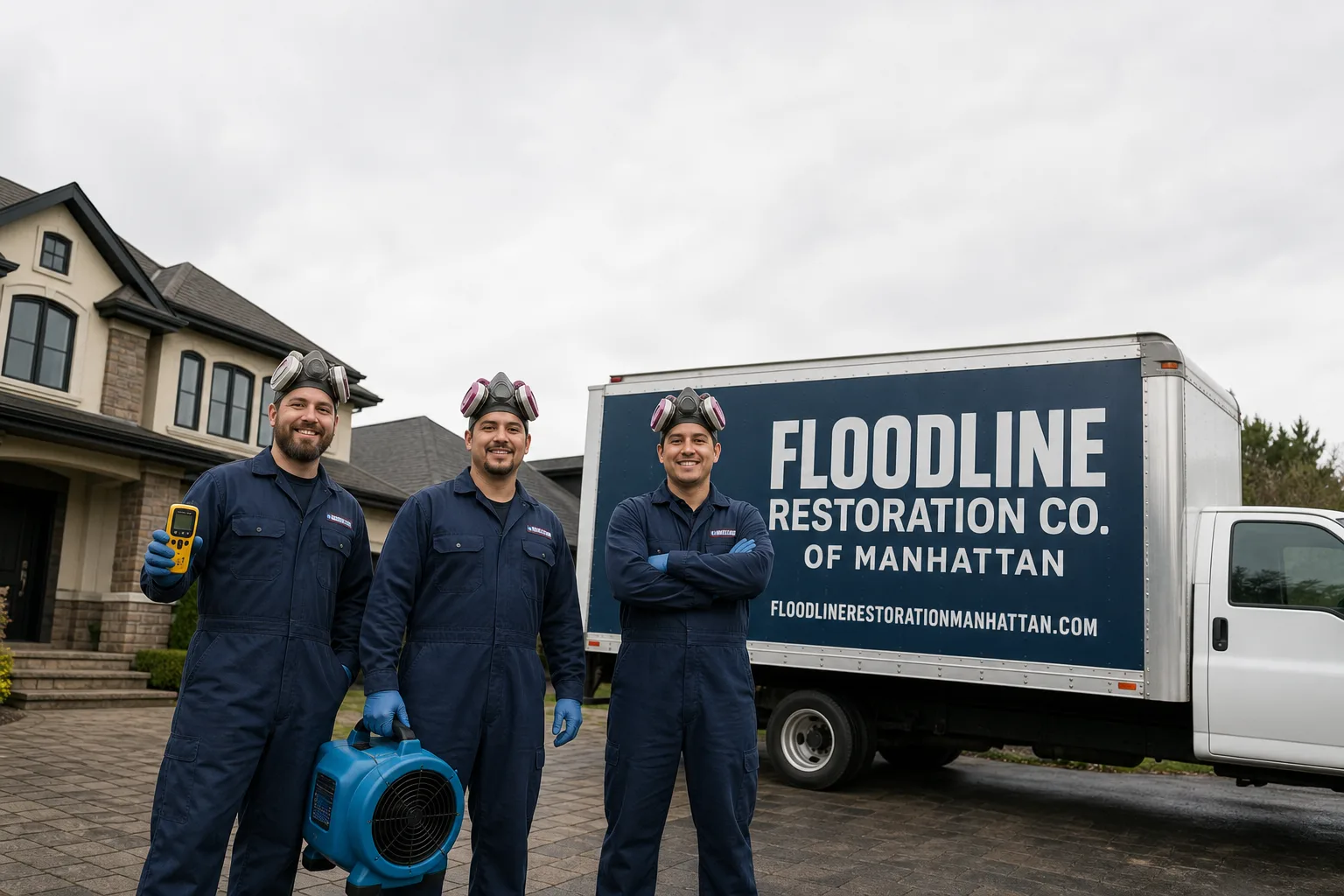
Free visual inspection and a written scope of work before any mitigation begins - photos, moisture readings, and drying logs go in your claim file
The scope we write is the scope we bill. Anything new gets shown to you, in writing, before we touch it.






 Before
 After
After Before
 After
After Before
 After
After24/7 Emergency Mold Remediation in Flushing
Mold remediation in Flushing typically runs $1,800 to $6,500 for a contained basement job, and severe Category 3 sewage-mixed cases involving full drywall tear-out can reach $12,000 or more. Most work is completed within three to five days once containment is set. If you’re seeing black staining spreading across basement walls or smelling that telltale musty earth odor in a 1920s brick row house off Northern Boulevard, call (917) 924-4221 right now. A live dispatcher answers at any hour, and our crews reach Flushing addresses fast. The first hour matters because mold colonizes porous plaster and shared brick party walls quickly after water intrusion, and every day of delay widens the containment zone and the final bill. Don’t wait for your basement tenant to complain about breathing trouble. We’ll walk the space, read the moisture, and tell you straight what needs doing.
Understanding Mold Remediation Severity in Flushing Properties
Flushing’s mold problems rarely start the way they do in newer-construction Queens suburbs. The neighborhood’s residential core is attached and semi-detached brick row houses and two- to three-family homes built between the 1920s and 1950s. Finished basements are common, often rented out, and the walls are usually plaster over brick or lath. When water gets behind plaster, it stays there. Shared party walls between attached homes mean moisture from a neighbor’s leak can migrate into your wall cavity, colonize mold, and release spores into your living space months after the visible side looks dry. Severity breaks down into categories. A clean-water pipe burst is one thing, but Flushing sits on historically filled tidal marshland adjacent to Flushing Creek and Flushing Bay. Heavy rain and nor’easters routinely push the combined sewer system beyond capacity, backing raw sewage up into basement drains. That’s Category 3 water, black water, and it forces full biohazard protocols: containment with HEPA negative-air machines, antimicrobial fogging, drywall removal to the studs, and clearance testing before anyone sleeps down there again. A straightforward pipe-burst job in Fresh Meadows might mean drying and repainting. The same square footage near Flushing Creek can mean gutting the room and treating every stud.
Why Flushing Property Owners Choose Floodline Restoration Co. of Manhattan
Our Mold Remediation team works this neighborhood differently than a franchise that dispatches from two counties away. Here’s what that means in practice:
- 45-minute response commitment in Flushing. When you call (917) 924-4221, we give you a window and we keep it. Our crews know the one-way streets off Roosevelt Avenue and the parking constraints near Main Street.
- 24/7 live answer, every time. A real person picks up at 2 a.m., not a recording. You describe the problem, we dispatch a crew, and extraction or containment starts the same visit.
- IICRC-certified crews. Our technicians hold IICRC certifications including AMRT (Applied Microbial Remediation Technician) and WRT (Water Damage Restoration Technician). They show up in uniform, background-checked, and they know the difference between Category 1 and Category 3 water.
- Free visual inspection. We don’t charge to walk your basement, check the moisture levels, and tell you honestly whether you need full remediation or a targeted cleaning. No pressure, no scare tactics.
- Direct insurance billing. We bill your carrier directly and talk to your adjuster ourselves. You don’t play messenger between us and the insurance company.
- One team from first reading to final coat of paint. The same crew that sets up containment and logs daily moisture readings also handles the rebuild under our Flushing service umbrella. No mid-job handoff to a crew you’ve never met.
Our Mold Remediation Process
Inspection & Assessment
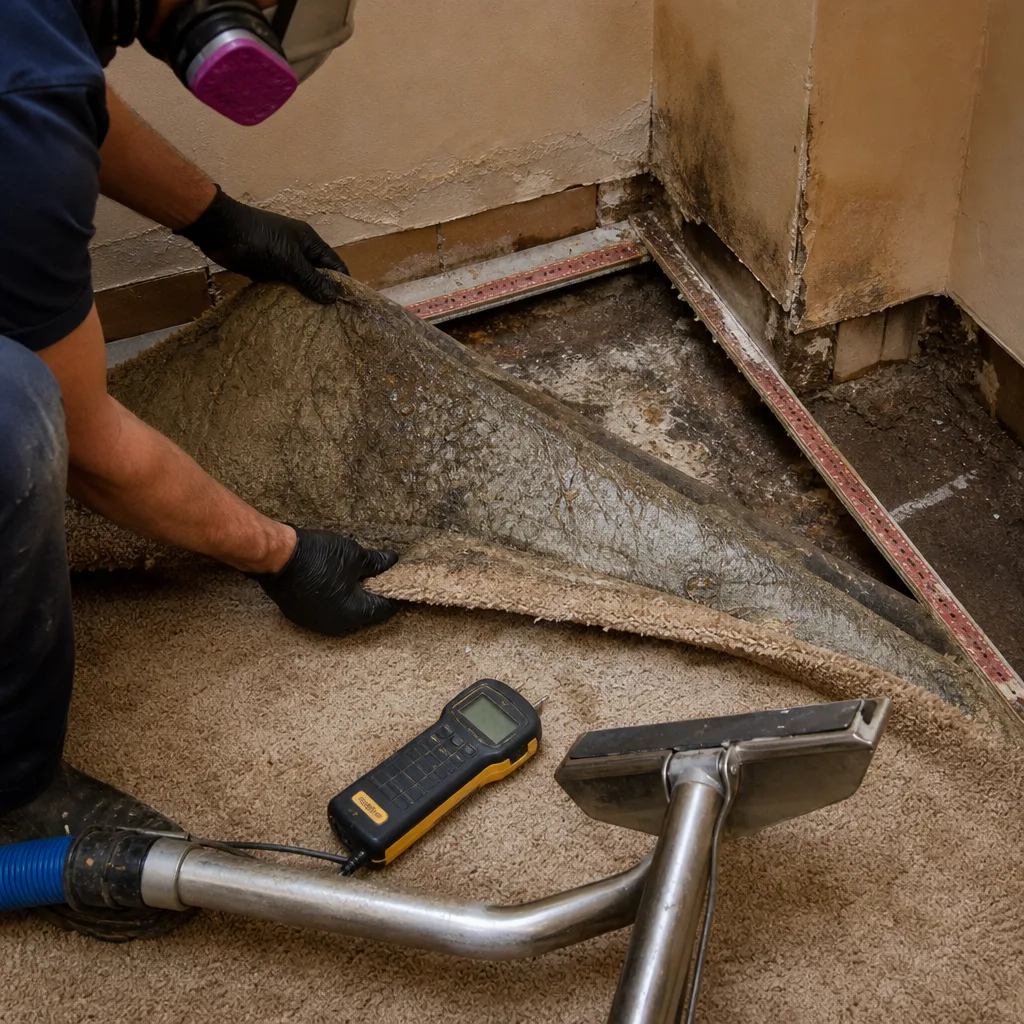
We start with thermal imaging and moisture meters to find water you can’t see. In a 1930s Flushing row house, that means checking party walls, behind baseboards, and inside the floor assembly. You get a written scope before any work starts.
Containment & Air Control
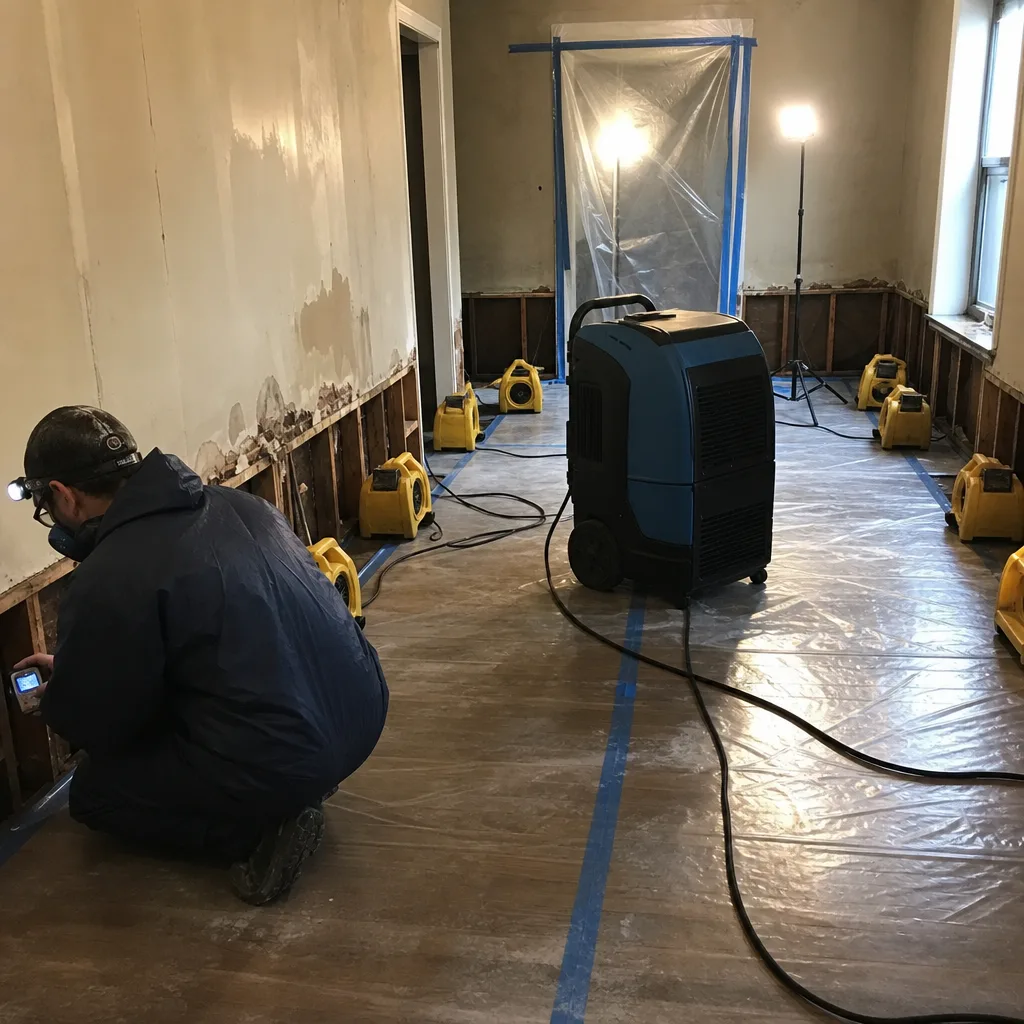
We seal the affected area with polyethylene sheeting and run a HEPA negative-air machine to keep spores from spreading through stairwells and shared hallways. In basement rental apartments, this is non-negotiable.
Water Extraction & Source Control
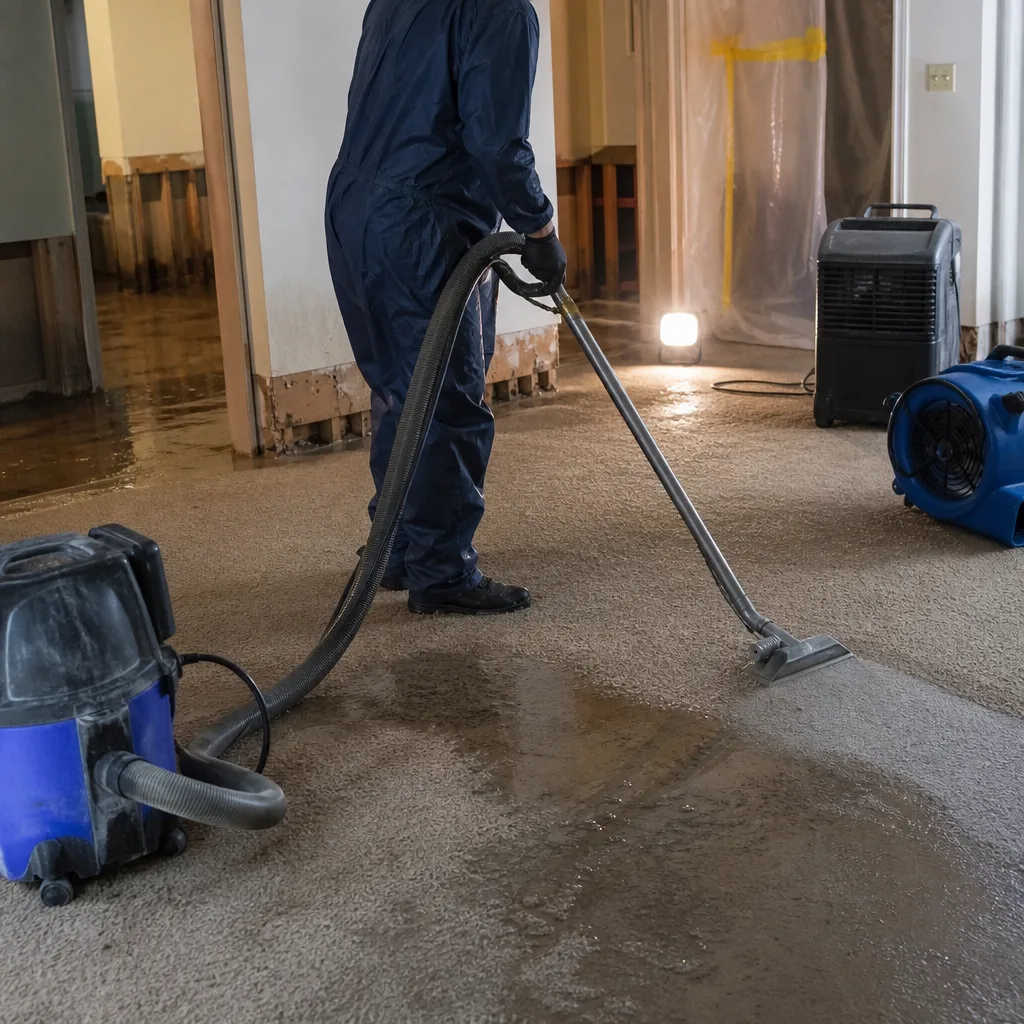
If standing water is present, we extract it with truck-mounted or portable extraction units. For Category 3 sewage-mixed water, we treat everything as biohazard material from the first minute.
Drying & Dehumidification
We run Dri-Eaz dehumidifiers and Phoenix air movers on a moisture map. Daily readings are logged until materials hit the dry standard. You and your insurer see the log.
Cleaning, Antimicrobial Treatment & Fogging
We remove mold-damaged drywall and insulation, wire-brush affected studs, and apply EPA-registered antimicrobial treatment. Then we HEPA-vacuum and fog the space to address airborne spores.
Repairs & Restoration
We rebuild what we removed: new drywall, insulation, flooring, trim, paint. Same crew, same standards. The 90-Day Done Right Promise covers the work in writing.
Need Emergency Mold Remediation in Flushing Now?
Crews minutes away, answering live 24 hours a day. The sooner we start, the less it costs.
Working With Your Insurance Company
Mold claims are scrutinized harder than most water damage claims. Carriers want to know whether the mold predates the loss, whether the water was Category 3, and whether drying happened fast enough. We document everything from hour one. That means photos of the moisture readings, a containment log, daily drying records, and a line-item scope with defensible pricing. Our team talks to your adjuster directly, sends the documentation in the format carriers expect, and pushes to get covered work approved at the right numbers. You shouldn’t have to argue with an insurance company about whether a Flushing basement flood near Flushing Creek qualifies as covered water damage. That’s our job.
What We Provide Your Insurer
- Thorough documentation of the loss
- Photos of all damage, room by room
- Moisture readings and drying logs
- A detailed, line-item scope of work
- Direct coordination with your carrier
Built for Flushing’s Loss Calendar
Flushing’s mold season doesn’t have a clean start and stop date, but the causes shift through the year. January and February bring deep freezes that burst supply lines in uninsulated 1920s basements, sending clean water through the floor and into drywall. Spring thaw and steady March rain saturate the former marshland under the neighborhood, and basement seepage follows. June through August, afternoon thunderstorms overwhelm the combined sewer system along Flushing Creek and Flushing Bay, pushing sewage-mixed water up through floor drains. September and October bring nor’easters and the occasional tropical remnant, and that’s when we see the worst Category 3 basement floods, especially in attached row houses north of Northern Boulevard and around the low-lying blocks near the creek. The pattern matters because the remediation protocol changes with the water category. A January pipe burst needs drying and maybe a patch of drywall. An October nor’easter backup demands full personal protective equipment, antimicrobial treatment, and a containment zone sealed tight enough to keep spores out of the upstairs apartment.
Mold Remediation Across Flushing’s Neighborhoods
The work changes block by block. Around Murray Hill and Broadway, we see 1940s brick row houses with converted basement apartments. Stairwells are narrow, access is tight, and containment has to protect upstairs tenants from cross-contamination. Over near Flushing Creek and the low streets around College Point Boulevard, the water table sits close to the surface, and basements flood before the rain even stops. East of Main Street, toward Kissena Park, the two-family homes from the 1930s and 1940s often share party walls, and moisture migrates through brick from one home to the next. A mold bloom on your side may have started in the neighbor’s leaking water heater. Around the blocks near the Flushing Bay shoreline and the areas that border East Elmhurst, nor’easter storm surge pushes water up through the storm drains, and every basement on the block takes water at once. Crews working these blocks coordinate parking, move equipment through narrow gangways, and know which blocks lose power when the water rises.
Our crew was called to a 1940s brick row house near Flushing Creek on Northern Boulevard after Hurricane Ida’s storm surge pushed sewage up through a basement floor drain. Moisture mapping showed elevated readings behind plaster walls, and we set containment with a HEPA negative-air machine before removing soaked drywall and applying antimicrobial treatment to studs. Using Dri-Eaz dehumidifiers and Phoenix air movers, we kept drying logs until moisture readings matched pre-loss condition, then fogged the space to clear airborne mold after flush-out.
Specialized Mold Remediation Services We Offer in Flushing
Mold Inspection & Testing
Not every dark stain is mold, and not every mold problem needs full remediation. We inspect with thermal imaging and moisture meters, and when testing is warranted, we pull air and surface samples for lab analysis. In Flushing’s attached row houses, we always check party walls and the floor assembly above the basement.
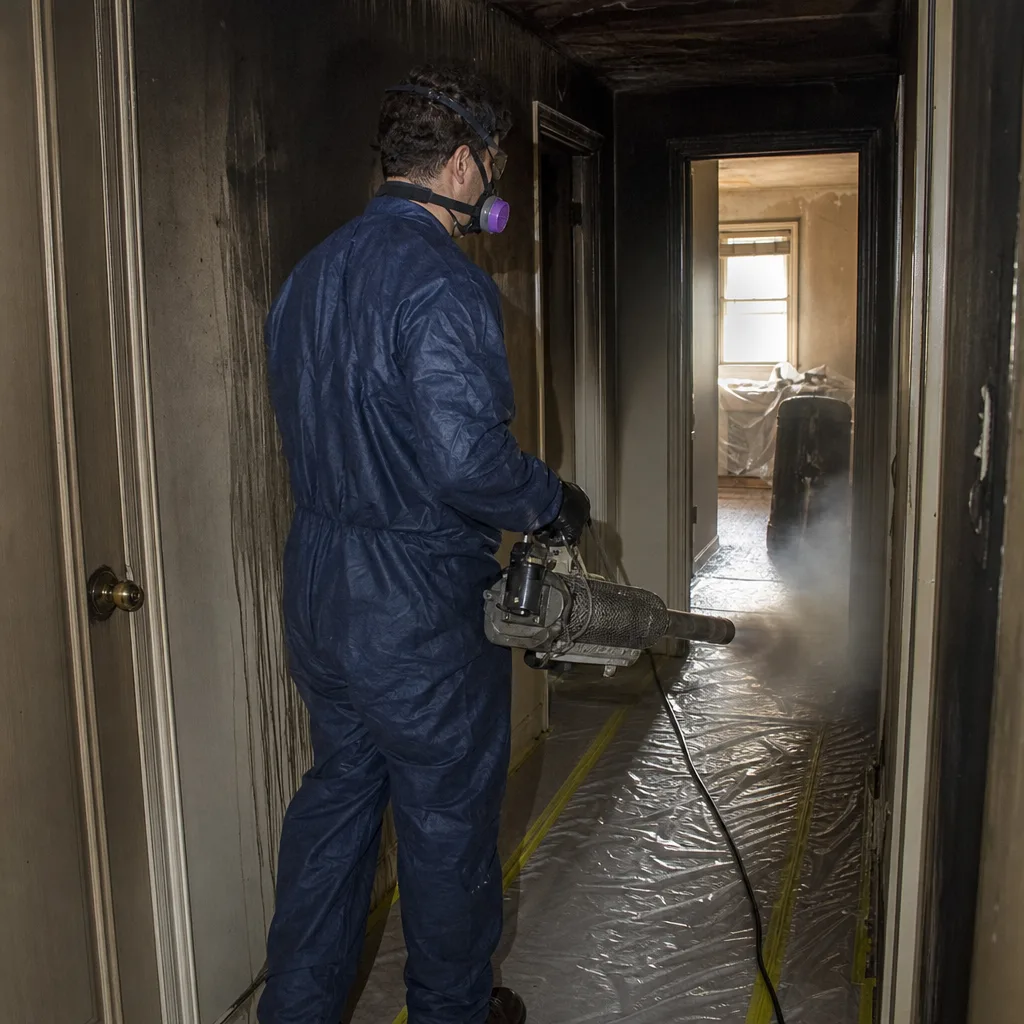
Mold Removal
We remove affected materials properly, not just cosmetically. That means cutting out saturated drywall, discarding contaminated insulation, and treating the framing behind it. In a 1950s two-family home near Kissena Park, that often means working around the plumbing and wiring that runs through the same wall cavities.
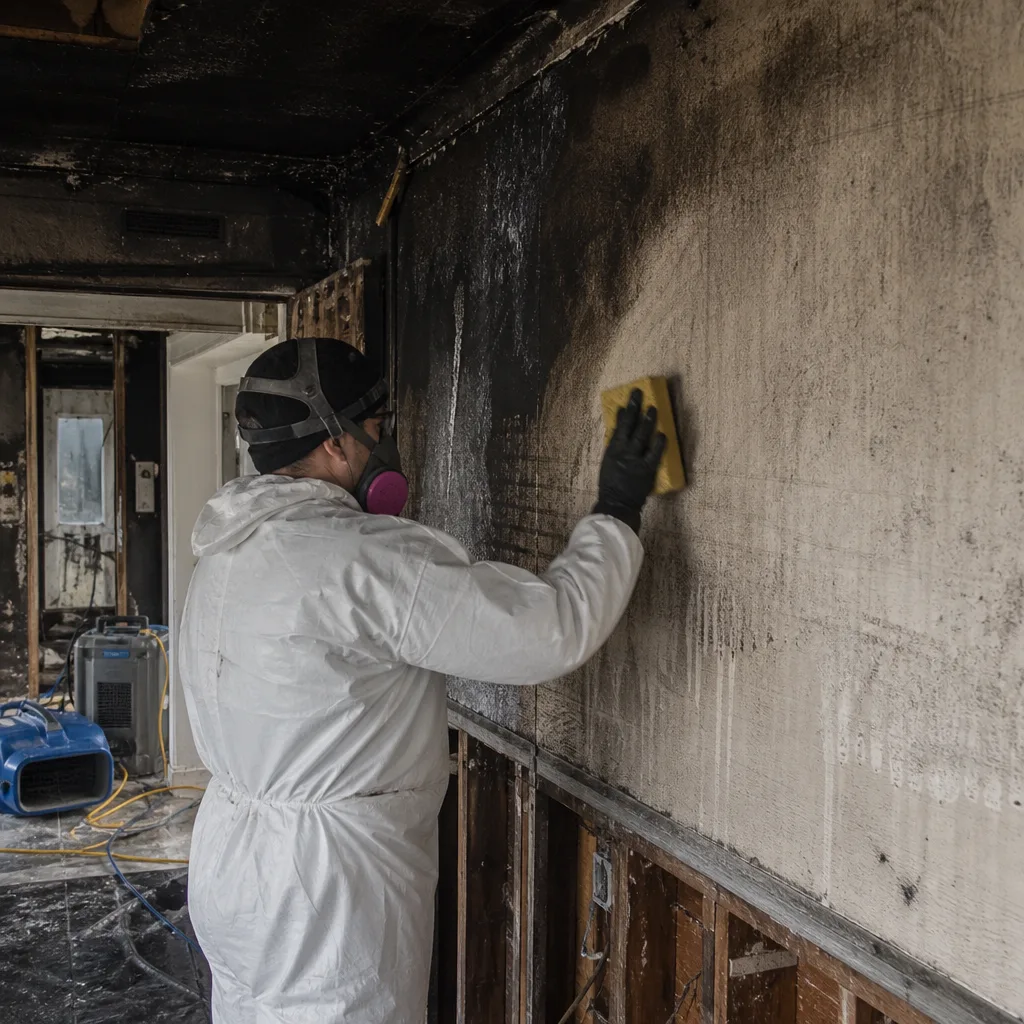
Black Mold Remediation
Stachybotrys, the black mold homeowners worry about, thrives on chronically damp cellulose: drywall, ceiling tiles, cardboard boxes stored on basement floors. Flushing’s low-lying blocks near Flushing Creek produce exactly the damp, slow-drying conditions it likes. Full containment, HEPA air scrubbing, and antimicrobial treatment are standard on these jobs.
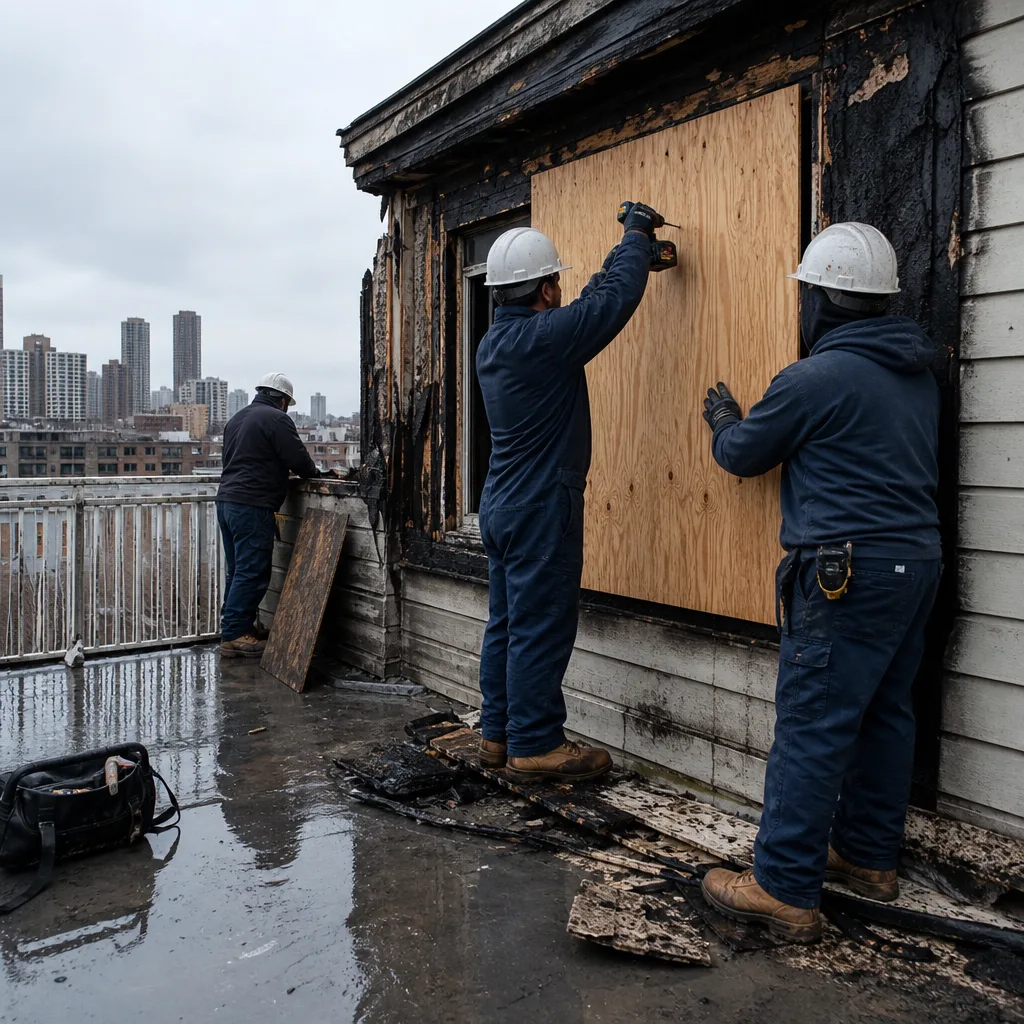
Air Quality Restoration
After we remove the mold source and clean the structure, we fog the space to bring airborne spore counts down. We can run post-remediation verification and show you the before-and-after readings. For a basement apartment with a tenant in place, this step is the difference between a healthy space and recurring complaints.
Crawl Space Treatment
Flushing homes with crawlspaces, especially the older frame sections west of Main Street, trap moisture against joists and subflooring. We install or improve vapor barriers, treat affected wood, and set up dehumidification. It’s slower work, but it stops the mold cycle at the source.
Moisture & Humidity Control
Mold returns when moisture does. We size dehumidifiers to the space, seal foundation leaks where possible, and recommend drainage improvements for basements that take water every season. For a Flushing homeowner who has already remediated once, this is the step that keeps it from happening again.
What happens when you call
- 1
A real person answersNo phone trees - you reach a local pro.
- 2
You get an upfront price rangeHonest numbers before anyone is dispatched.
- 3
A background-checked tech heads outLicensed & insured, dispatched right away.
- 4
You approve before work beginsNothing starts until you say go.
Mold Remediation Costs in Flushing, NY
A typical mold remediation in Flushing runs between $1,800 and $6,500. Smaller jobs, like a 40-square-foot bathroom patch with contained removal and antimicrobial treatment, start around $1,200 to $2,500. A full basement in a 1940s row house with Category 3 sewage-mixed water, drywall tear-out to the studs, HEPA containment, fogging, and rebuild work commonly lands between $8,000 and $15,000. Crawl space treatment with vapor barrier installation runs $2,500 to $7,000 depending on square footage and access. What moves the price: whether the water was clean or sewage-mixed, how much drywall and insulation comes out, whether the space has finished living areas, and whether party walls need treatment. Insurance covers much of the work when the mold stems from a covered water event with proof of prompt response. We offer a free visual inspection and a written scope before any work begins, so you’ll know the number before you commit. Call (917) 924-4221 and we’ll come look.
We Also Serve Cities Near Flushing
Our crews work the surrounding Queens neighborhoods regularly. We handle mold remediation in College Point and Whitestone, where homes face their own water table and drainage issues. We serve East Elmhurst and Corona too, including the attached row houses and two-family homes that share Flushing’s older housing stock. The same protocols, the same written guarantee, the same live-answer dispatch.
Serving Flushing, NY - Our Local Coverage Area
We’re based in the Flushing area and know this community well. Use the map below to see our service coverage - if you’re nearby, we can almost certainly help.
Flushing Mold Remediation Questions, Answered
Why does mold remediation in Flushing need different protocols for basement floods near Flushing Creek?
Because Flushing sits on historically filled tidal marshland, and Flushing Creek and Flushing Bay back up through the combined sewer system during heavy rain, the water in these basements is usually Category 3: sewage-mixed black water, not clean stormwater. That triggers full biohazard protocols including HEPA containment, antimicrobial fogging, and drywall tear-out to the studs, not just drying and repainting. Call (917) 924-4221 if you’ve had a backup and we’ll assess the water category properly.
How quickly can mold appear in a Flushing row house basement after a heavy rain backup?
Mold can start colonizing wet drywall and wood within 24 to 48 hours in the warm, damp conditions common in Flushing basements from spring through fall. In a 1920s brick row house with plaster walls, it can establish behind the plaster where you won’t see it for weeks. That’s why the first 48 hours after any water intrusion matter so much.
Do Flushing townhomes with shared brick party walls need special mold inspections?
Yes. Water from a neighboring attached home can migrate through shared brick and wet your wall cavities, and mold can grow on the back side of your drywall with no visible signs on your side. Our inspections include moisture readings along party walls in attached and semi-detached Flushing homes, which a standard visible-only inspection would miss entirely.
Can you remediate mold in a basement apartment with minimal disruption to tenants in a 1950s Flushing two-family home?
We do it regularly. Containment is the key: we seal the affected area with polyethylene sheeting, run HEPA negative-air machines, and keep the upstairs completely isolated from the work zone. Tenants can usually stay in the home while we work, though we’ll tell you straight if a Category 3 flood means temporary relocation is safer.
What makes Flushing basement mold remediation more complex than in newer Queens suburbs?
Three things: the age of the housing stock means plaster over brick instead of modern drywall over studs; the attached row house layout means shared walls and tight access; and the neighborhood’s low-lying former marshland geography means Category 3 sewage-mixed water is far more common here than in higher-elevation neighborhoods like Fresh Meadows. Each of those factors changes how we contain, treat, and rebuild.
How fast can a crew actually get to a Flushing address for mold remediation?
We commit to a 45-minute response window for emergency calls in Flushing. Our crews dispatch from the New York City office and know the neighborhood’s streets, so you’re not waiting on someone crossing three boroughs. Call (917) 924-4221 and a live person confirms the ETA.
Will my homeowner’s insurance cover mold remediation in my Flushing basement?
It depends on the source and timing. If mold follows a covered water event like a burst pipe or sewer backup and you responded promptly, most policies cover some remediation. If the mold predates the event and resulted from long-standing moisture, coverage is less likely. We bill your carrier directly and deal with the adjuster ourselves.
What should I do in the first 30 minutes after discovering mold or water in my Flushing basement?
Stop using the space, don’t run fans that might spread spores, and don’t touch contaminated materials, especially if the water came up through a floor drain near Flushing Creek. Call (917) 924-4221 and describe what you see. Our dispatcher will tell you what to do while the crew is on the way.
Done Right: The 90-Day Promise
Curt Bowman founded Floodline Restoration Co. in 2010 on a simple rule: if it isn’t done right, we make it right. Every mold remediation job we complete in Flushing carries the 90-Day Done Right Promise in writing, backed by the K.E.Y.S. values code: Krafted right, Every time, Your home first, Standing behind it. No paperwork battles, no arguing, no chasing. That’s the standard for every crew, every block, every basement we treat from Flushing Bay to Kissena Park.
Written by Curt Bowman, Owner at Floodline Restoration Co. of Manhattan, serving Flushing with live-answer dispatch and written guarantees.