
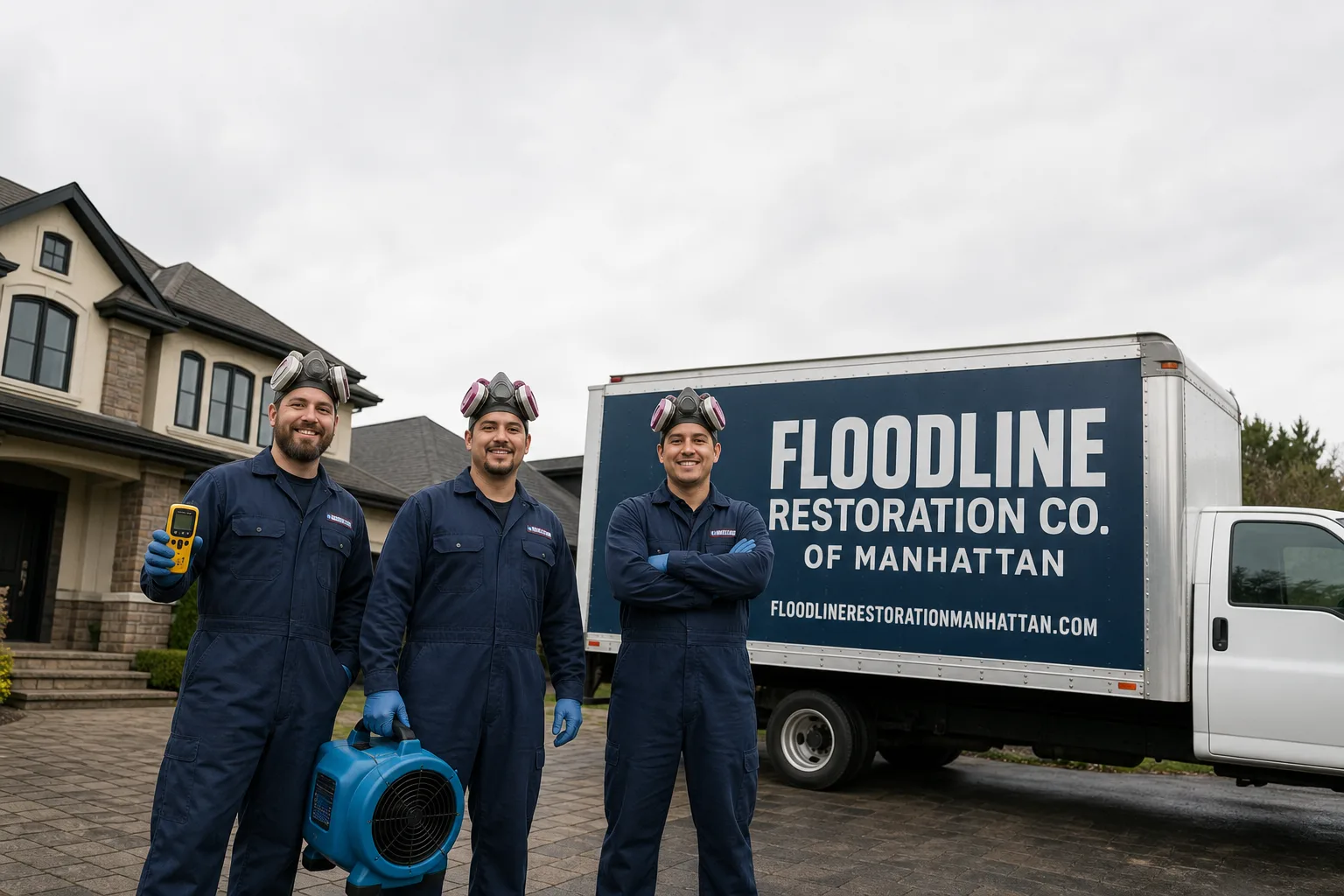
Free visual inspection and a written scope of work before any mitigation begins - photos, moisture readings, and drying logs go in your claim file
The scope we write is the scope we bill. Anything new gets shown to you, in writing, before we touch it.






 Before
 After
After Before
 After
After Before
 After
After24/7 Emergency Storm & Disaster Restoration in Flushing
Storm damage in Flushing doesn’t wait for business hours, and neither do we. Floodline Restoration Co. of Manhattan answers live at (917) 924-4221 around the clock, every day of the year, with a certified crew dispatched to Flushing properties within 45 minutes of your call. The first hour after a nor’easter pushes sewage-mixed water into your basement is the difference between a contained cleanup and a full gut to the studs. We arrive with truck-mounted extraction units, thermal imaging cameras, and moisture meters already running. The visual inspection is free. You’ll get a straight answer about what you’re looking at, what it costs, and what we’re going to do about it. No recording, no callback queue, no waiting until morning. A real person picks up at 2 a.m. and a real crew shows up.
Understanding Storm & Disaster Restoration Severity in Flushing Properties
Storm damage in Flushing breaks into three water categories, and the distinction dictates everything about the restoration protocol. Category 1 is clean water from a broken supply line or rainwater that hasn’t touched contaminated surfaces. Category 2 carries significant biological or chemical contamination, the kind that leaches through flooded yards before entering a crawlspace. Category 3 is black water, sewage-mixed and pathogen-laden, and Flushing sees more of it than almost any neighborhood in Queens. When Flushing Creek and Flushing Bay back the combined sewer past capacity during a nor’easter, the water pushing up through basement floor drains in the area’s 1920s to 1950s brick row houses is Category 3. That means full containment, antimicrobial fogging after tear-out, and drywall cut to the studs, not a mop-and-fan job. Crews working the blocks near Flushing Creek see this weekly during storm season. The attached row house stock makes it worse: water entering one home travels through shared party walls into the neighbor’s side, which is why moisture mapping has to cover the full wall assembly, not just the visible wet patch. We run structural drying with Dri-Eaz and Phoenix equipment, logging readings twice daily until every surface hits the dry standard.
Why Flushing Property Owners Choose Floodline Restoration Co. of Manhattan
- 45-minute response commitment: A certified crew reaches your Flushing address within 45 minutes of your call, day or night. We’ll be there when we say.
- Live answer, 24/7: A dispatcher picks up at 2 a.m., not a recording. You’ll speak to a person who can send help immediately.
- IICRC-certified crews: Technicians hold WRT, FSRT, and AMRT certifications, trained to handle the Category 3 sewage-mixed surge common along Flushing Creek.
- Free visual inspection: We assess the loss on site and give you a written scope before any work starts. No pressure, no surprises on the bill.
- Direct insurance billing: We bill your carrier directly and handle adjuster communication, photo documentation, and drying logs. You never play messenger.
- One team, start to finish: The same certified crew that extracts and dries also handles the reconstruction. No mid-job handoff, no inherited strangers.
Our Storm & Disaster Restoration Process
Inspection & Assessment
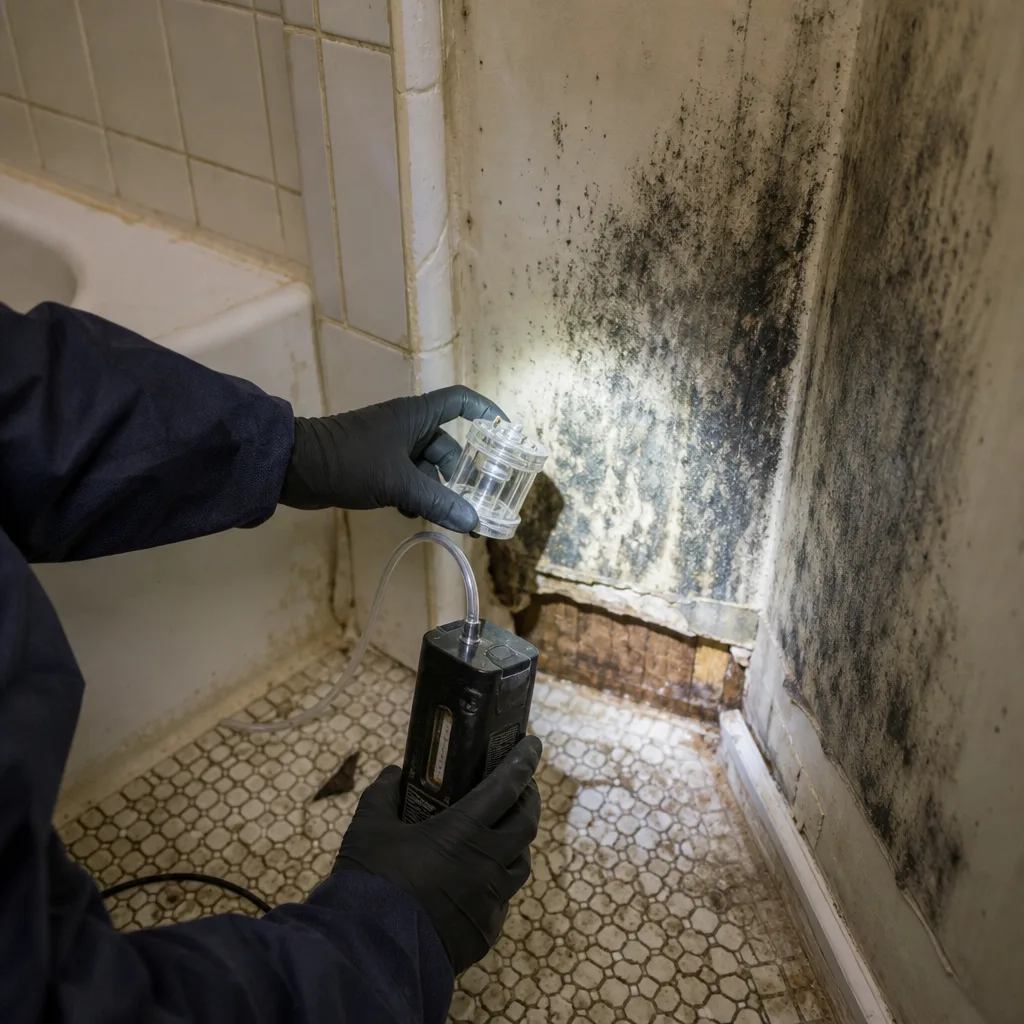
We arrive with thermal imaging cameras and moisture meters to map the full extent of water migration, including inside shared party walls and behind plaster. You get a written scope and a firm price before work begins.
Extraction / Stabilization
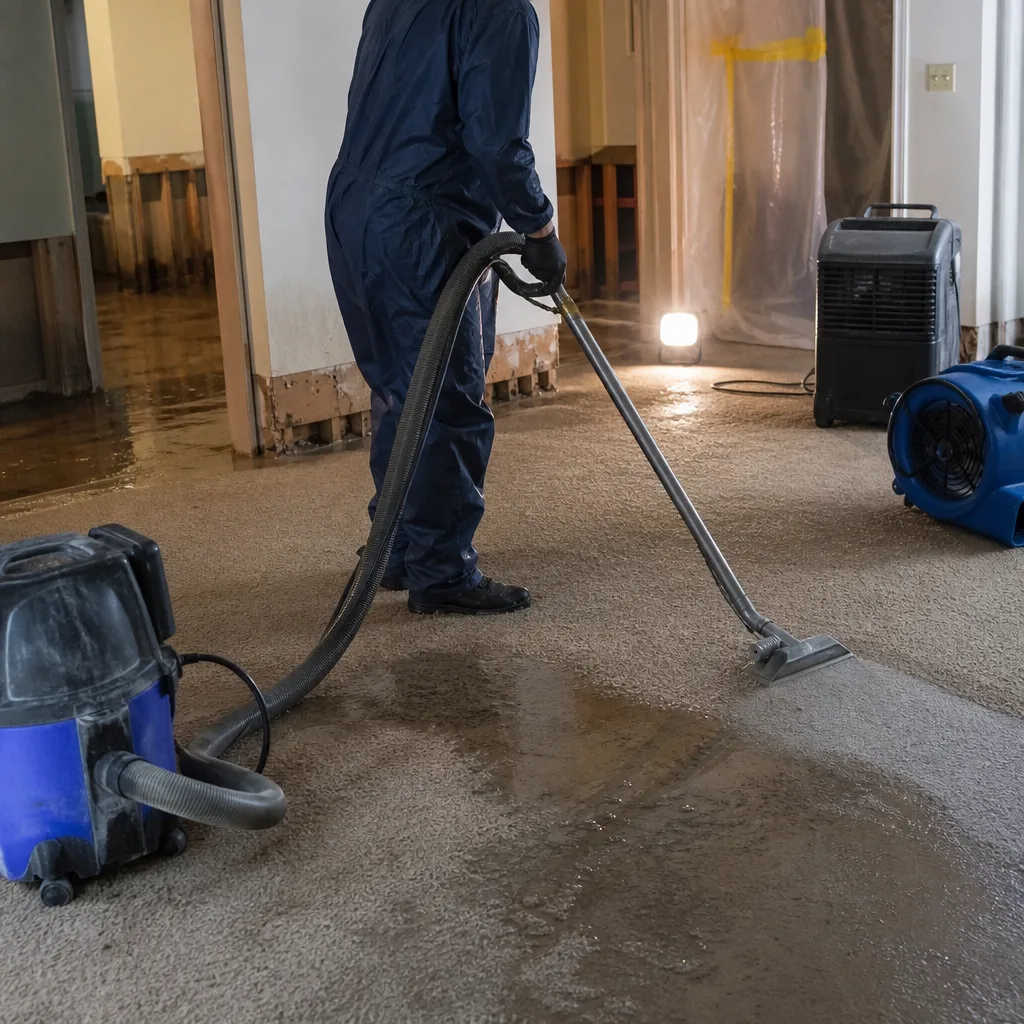
Truck-mounted Dri-Eaz extraction units pull standing water and sewage from basements, crawlspaces, and finished living areas. We set containment immediately if Category 3 water is present.
Drying & Dehumidification
Phoenix air movers and dehumidifiers run continuously, with hygrometers tracking humidity in real time. Daily moisture readings are logged and shared with you and your carrier.
Cleaning & Sanitization
Every affected surface is cleaned and treated. For Category 3 losses, we fog stud cavities with antimicrobial after tear-out and before any drywall goes back.
Structural Drying Verification
We don’t rebuild until the structure hits pre-loss moisture levels. The log proves it. No guessing, no covering wet framing.
Repairs & Restoration
The same Floodline crew rebuilds what was removed: drywall, flooring, trim, paint. Because we do the full cycle, you get one name to hold accountable and one written guarantee covering all of it.
Need Emergency Storm & Disaster Restoration in Flushing Now?
Crews minutes away, answering live 24 hours a day. The sooner we start, the less it costs.
Working With Your Insurance Company
Storm and flood claims in Flushing move faster when documentation starts the day of the loss. From the first hour, we photograph every affected room, log moisture readings, and build a line-item scope of work using industry-standard estimating software your carrier recognizes. We send all of it directly to your adjuster and handle the communication ourselves. Homeowners who call us after a nor’easter backup off Northern Boulevard often tell us the same thing: they don’t want to chase their insurance company. You don’t have to. We bill the carrier directly, and we stay on the claim until it’s settled.
What We Provide Your Insurer
- Thorough documentation of the loss
- Photos of all damage, room by room
- Moisture readings and drying logs
- A detailed, line-item scope of work
- Direct coordination with your carrier
Built for Flushing’s Loss Calendar
Storm and disaster restoration in Flushing follows a pattern shaped by the neighborhood’s geography as much as the seasons. January and February deep freezes burst supply lines in the unheated crawlspaces of 1930s brick row houses along Roosevelt Avenue. Spring thaw pushes groundwater up through the filled marshland soil, seeping into basements and finished lower-level rental units. Summer thunderstorms drop three inches of rain in two hours over flat, former-wetland streets where stormwater has almost nowhere to drain, leaving standing water in yards and crawlspaces for days. Late summer and fall bring the nor’easters and tropical systems that push Flushing Creek and Flushing Bay storm surge directly into low-lying blocks near downtown, driving Category 3 sewage backup through floor drains. Every one of these losses follows a predictable path through Flushing’s attached housing stock: water enters below grade, migrates through shared walls, and colonizes behind plaster within 48 hours. Our crews plan for this calendar because the neighborhood writes it every year.
Storm & Disaster Restoration Across Flushing’s Neighborhoods
The blocks closest to Flushing Creek and Flushing Bay, including the low-lying streets near the Flushing Marina and the section off Northern Boulevard, take the hardest hit during coastal storms. Those 1920s and 1930s brick row houses sit a few feet above the filled marsh, and their basement floor drains back up when the combined sewer surcharges. Crews responding there know to look for Category 3 contamination immediately. Downtown Flushing, around Main Street and Roosevelt Avenue, holds dense attached two- and three-family homes with finished basement apartments. When those lose power or take water, tenants are displaced and the restoration has to move fast through tight interior access. The residential blocks east of Kissena Boulevard and near Queens College sit slightly higher, so their losses lean more toward wind-driven rain, roof damage, and the occasional clean-water pipe burst. That said, even these streets share the same aging building stock: plaster hides water damage until the studs are soaked. Our dispatch routes crews through all of it, and our techs know which failure mode waits behind each block’s doors before they arrive.
Specialized Storm & Disaster Restoration Services We Offer in Flushing
Storm Damage Cleanup
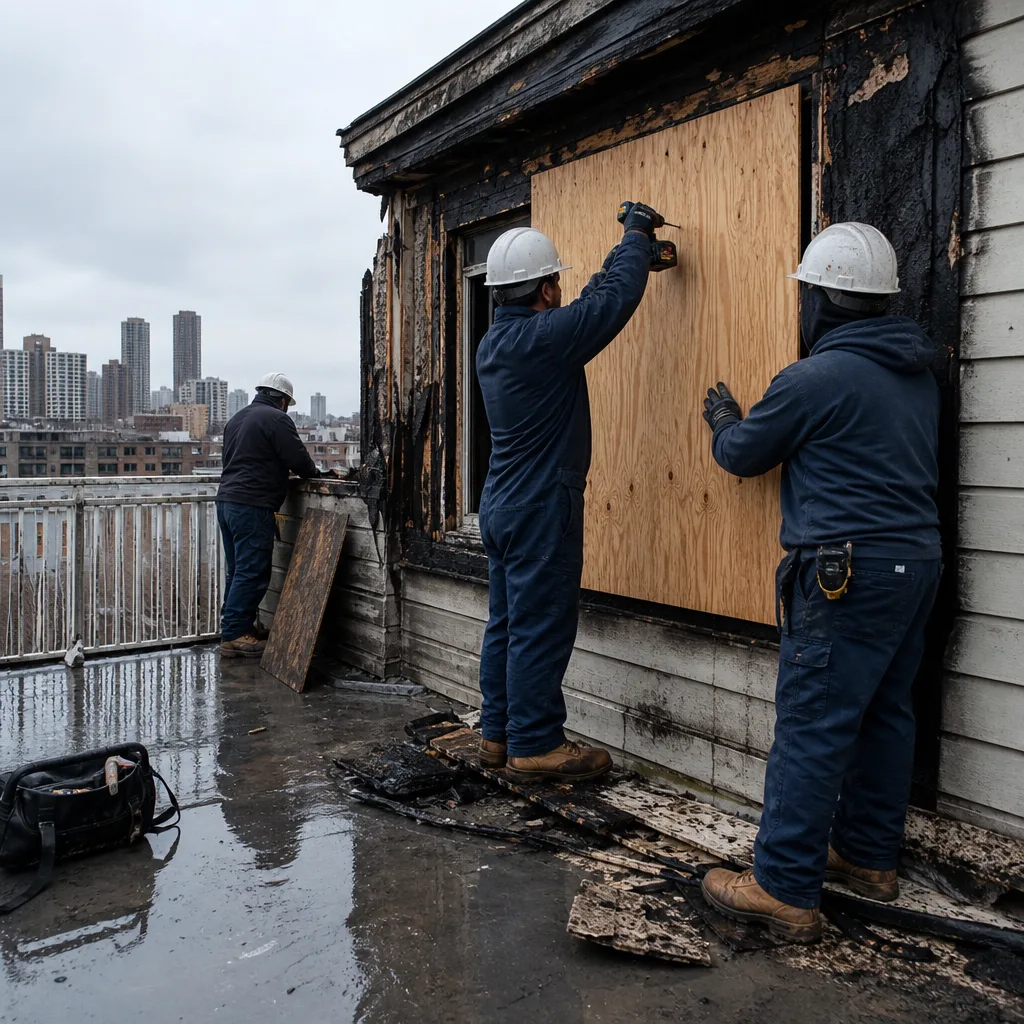
After a nor’easter tears through Flushing, the damage is rarely isolated. Trees and limbs take down service lines and breach roofs. Wind-driven rain finds every gap in 90-year-old brick and mortar. We handle the full cleanup: securing the site, removing storm debris, extracting water, and restoring what the storm opened up.
Flood Damage Restoration
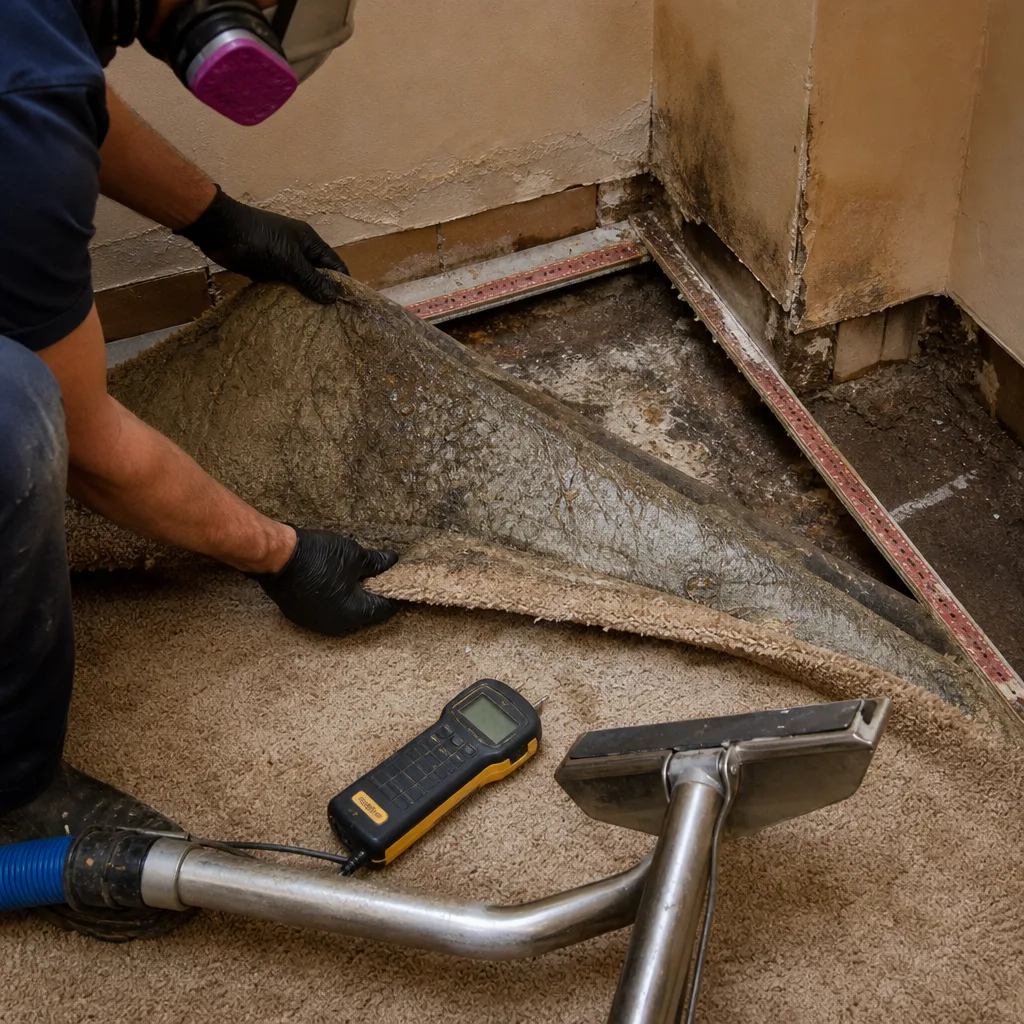
Flooding in Flushing is often sewage-mixed, especially in the low blocks near Flushing Creek and Flushing Bay. That means Category 3 protocols from the first hour: containment, pump-out, sanitization, tear-out to the studs, and antimicrobial fogging before reconstruction. Our team handles black water as a biohazard, not a mop job.
Emergency Board-Up
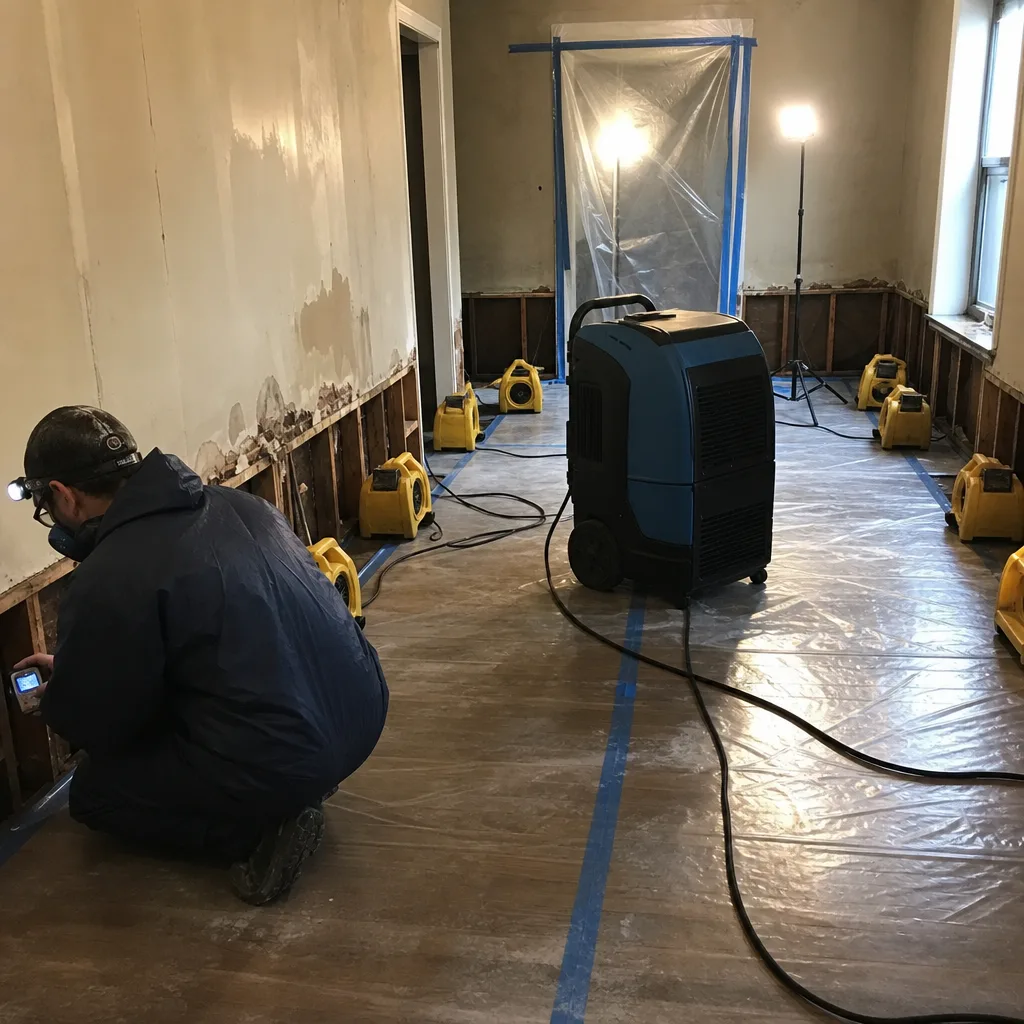
Broken windows and breached exterior doors in Flushing’s row houses leave your home open to weather, looters, and animals. We board up the opening the same visit, using plywood and fasteners sized for brick and frame openings common across the neighborhood’s 1920s-1950s stock. The board-up buys you time while the full restoration scope is written.
Roof Tarping
A punctured roof over a Flushing row house pours water into the attic and down the party walls. We tarp the damaged section with reinforced material, fastened into the framing, not just the shingles. Temporary protection stops water entry until permanent repair can be scheduled.
Debris Removal
Storm debris, fallen branches, and torn building materials block access and slow the restoration down. Our crew clears the yard, the driveway, and the curb, then disposes of everything properly. Flushing’s tight lot lines and shared drives make fast debris removal a safety issue, not just a convenience.
What happens when you call
- 1
A real person answersNo phone trees - you reach a local pro.
- 2
You get an upfront price rangeHonest numbers before anyone is dispatched.
- 3
A background-checked tech heads outLicensed & insured, dispatched right away.
- 4
You approve before work beginsNothing starts until you say go.
Storm & Disaster Restoration Costs in Flushing, NY
Storm damage restoration in Flushing runs on a wide range, because the loss drives the number. A straightforward storm debris cleanup with minor water extraction typically runs $1,200 to $3,500. Category 3 sewage-mixed basement flooding in a row house near Flushing Creek, with containment, tear-out, drying, and antimicrobial treatment, usually falls between $6,000 and $14,000. Roof tarping and emergency board-up after a nor’easter runs $400 to $1,800, depending on roof pitch and access. Full reconstruction after a severe storm, including drywall, flooring, and finish work, starts around $20,000 and moves up from there. Most of our Flushing jobs are paid through homeowner insurance policies, and we bill the carrier directly. Your out-of-pocket is typically the deductible, and we tell you exactly what that number is before we start. The free visual inspection gives you a firm, written scope, never a vague estimate. Call (917) 924-4221 and we’ll send a tech out.
We Also Serve Cities Near Flushing
Floodline Restoration Co. crews based in and around Flushing also cover College Point, Whitestone, East Elmhurst, and Corona. When the storm pushes east from Flushing Bay, the same certified technicians answer.
Serving Flushing, NY - Our Local Coverage Area
We’re based in the Flushing area and know this community well. Use the map below to see our service coverage - if you’re nearby, we can almost certainly help.
Flushing Storm & Disaster Restoration Questions, Answered
Why does Flushing have so many Category 3 basement backups during nor’easters compared with Fresh Meadows or Bayside?
Flushing sits on filled tidal marshland directly adjacent to Flushing Creek and Flushing Bay, and its combined sewer system carries both stormwater and sewage. When a nor’easter pushes storm surge into the creek and bay while heavy rain saturates the system, the sewer backs up through basement floor drains as Category 3 black water. Fresh Meadows and Bayside sit on higher, better-drained ground with newer drainage infrastructure, so their backups are usually clean-water pipe failures, not sewage-mixed surge. Call (917) 924-4221 if you’re seeing black water in your basement now.
The sewer backed up into my finished basement off Northern Blvd near Flushing Creek. How quickly do I need restoration before mold starts?
Mold colonization behind plaster and drywall begins within 48 to 72 hours in warm, wet conditions, and Flushing’s coastal humidity shortens that window. In a Category 3 sewage backup, we recommend containment and extraction within hours, not days. The longer the water sits, the more wall assembly has to be torn out. Call (917) 924-4221 and we’ll have a crew on-site in 45 minutes.
Does Floodline strip every wet wall in a Flushing row house after a storm, or can some drywall be saved?
In clean-water storms where we begin structural drying within a few hours, we can often save drywall using aggressive dehumidification and air movement. In Category 3 sewage-mixed losses, no drywall that touched black water is considered salvageable; we cut it to the studs, treat the framing, and rebuild. We don’t guess. We use moisture meters and the IICRC dry standard to make the call, and we show you the readings. Call (917) 924-4221 for a free visual inspection.
My attached brick house near downtown Flushing took on water in the shared party wall during a heavy rain. Can you dry that without gutting my neighbor’s side?
Party walls in Flushing’s attached row houses are a common moisture migration path. We can often dry the shared wall assembly from your side using Injectidry wall cavity drying systems and targeted air movement, without opening the neighbor’s side. If the water is contaminated or the framing is saturated, we may need to open your side to the studs. We always document what was wet and what we did. Call (917) 924-4221 to discuss your specific wall.
After a coastal storm, my crawlspace under a 1940s two-family house near Flushing Bay stays wet for days. Is that typical for this neighborhood?
Yes. Flushing’s flat, former-marshland topography means stormwater has almost nowhere to drain, and crawlspaces under the 1920s-1950s brick two-families near Flushing Bay routinely hold standing water for days after a storm. That pooled water drives mold into the floor joists and subfloor above. We recommend a crawlspace inspection after every coastal storm, with drying equipment deployed if moisture readings stay above the dry standard. Call (917) 924-4221 to schedule.
How fast can someone actually get to my house in Flushing?
Our dispatch commitment is 45 minutes to any Flushing address, including the blocks near Flushing Creek, downtown Main Street, and the residential streets east of Kissena Boulevard. A live dispatcher takes your call, and a certified crew rolls out immediately. Call (917) 924-4221 and someone pulls up fast.
Will insurance cover storm and flood damage in Flushing?
Most homeowner policies in New York cover storm damage from wind, fallen trees, and sudden water intrusion through the roof or windows. Sewage backup and flood damage may require specific endorsements or separate flood policies, depending on your carrier. We photograph everything, write the scope in industry-standard language, and bill your carrier directly. Call (917) 924-4221 and we’ll help you understand what your policy covers.
What should I do in the first 30 minutes after storm water enters my Flushing home?
Shut off power to the affected area if you can do so safely without stepping into water, then call a professional. Don’t run fans or appliances in wet areas. Don’t walk through sewage-contaminated water without protection. Take photos of the damage for your insurer. Then call (917) 924-4221. The sooner extraction starts, the less gets torn out.
On a nor’easter afternoon, our crew responded to a 1930s brick row house near Flushing Creek where Category 3 water had backed up through the basement floor drain into a converted rental unit. We set containment, pumped out with a Dri-Eaz truck mount, sanitized every surface, and cut drywall to the studs. Technicians logged moisture readings twice a day until the structure hit pre-loss condition, then fogged the stud cavities with an antimicrobial before reconstruction. That’s how Storm & Disaster Restoration gets done here.
Floodline Restoration Co. of Manhattan serves Storm & Disaster Restoration in Flushing with the same crew from first extraction to finished rebuild, backed by the 90-Day Done Right Promise in writing. If you’re facing storm damage, a sewage backup, or a flooded basement in Flushing, call (917) 924-4221 for a free estimate and a straight answer. Done right, and backed in writing.
Written by Curt Bowman, Owner at Floodline Restoration Co. of Manhattan, serving Flushing and the surrounding Queens communities since 2010.