
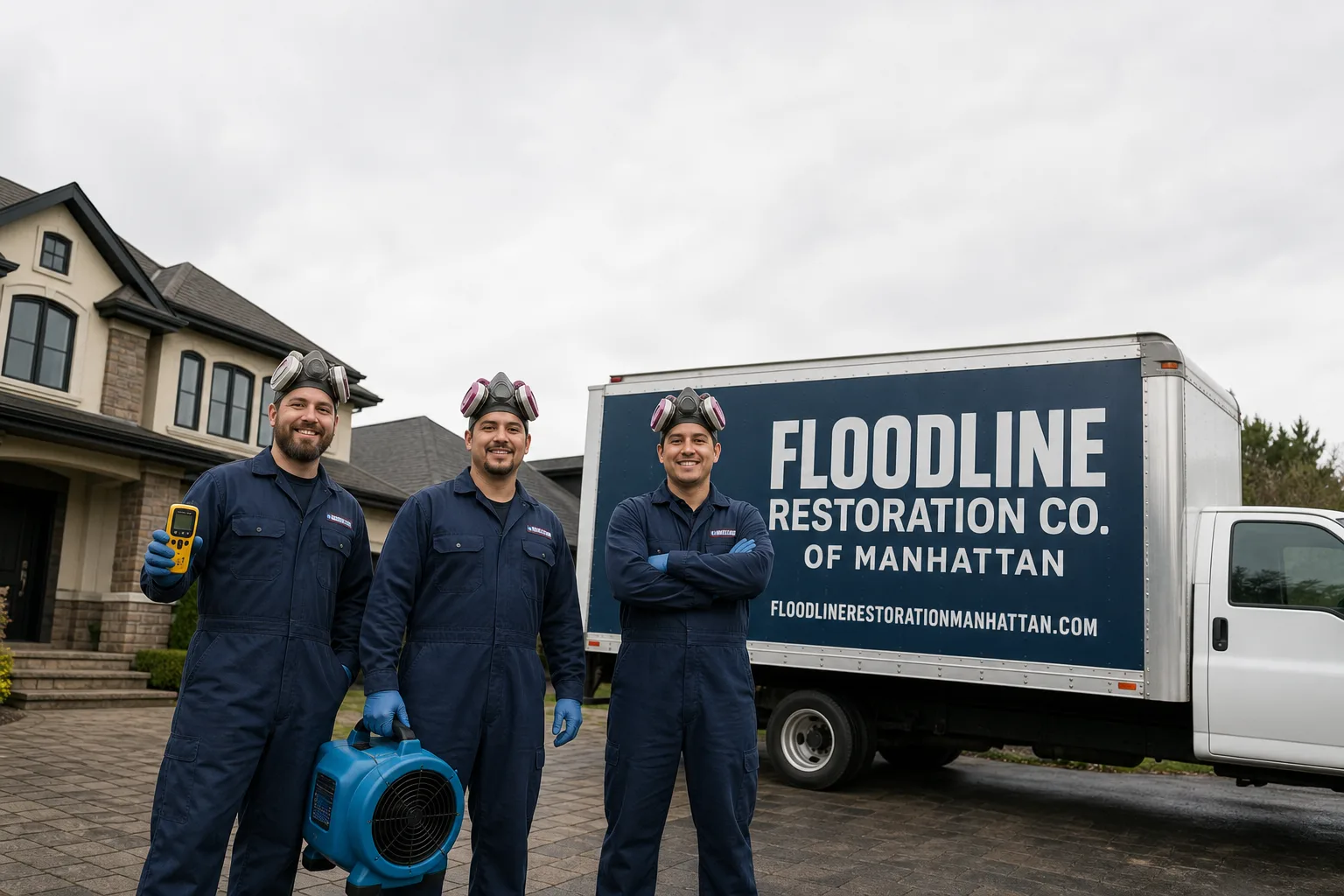
Free visual inspection and a written scope of work before any mitigation begins - photos, moisture readings, and drying logs go in your claim file
The scope we write is the scope we bill. Anything new gets shown to you, in writing, before we touch it.






 Before
 After
After Before
 After
After Before
 After
After24/7 Emergency Mold Remediation in Getty Square
Mold remediation in Getty Square typically runs $1,800-$6,500 depending on how far the colony has spread and whether Category 3 water from the Saw Mill River is involved. We dispatch crews into Getty Square around the clock, and a live person answers at (917) 924-4221 no matter the hour. The first hour matters because mold moves fast in these old brick buildings: a damp plaster wall becomes a colony in 48 hours, and by day five the spores are in the air your family breathes.
Call us the moment you see staining, smell that musty odor, or notice peeling paint in a basement or ground-floor space near Main Street or Warburton Avenue. We’ll send a certified technician for a free visual inspection, and the same crew that does the inspection is the crew that does the work.
Understanding Mold Remediation Severity in Getty Square Properties
Mold severity in Getty Square is different from what you’d find in newer construction a few miles north. The building stock here is late 19th- to early 20th-century mixed-use brick masonry, typically 3-6 stories, with plaster-over-lath walls, original cast-iron or galvanized plumbing, and almost no vapor barriers. Those conditions trap moisture inside wall cavities. When the Saw Mill River surges or a nor’easter pushes Hudson backwater up through the storm drains, that water wicks upward through the masonry and hides where you can’t see it.
We classify mold work by the extent of colonization and the water source. Category 1 water is clean supply-line water. Category 2 has some contamination. Category 3, what you get when the Saw Mill floods basement-level commercial spaces, carries sewage, river sediment, and whatever the daylighted channel picked up upstream. That requires full containment, negative air pressure, HEPA air scrubbing, and antimicrobial treatment before drying even starts. A surface-level bleach wipe won’t touch what’s growing behind the original plaster.
For Getty Square’s older structures, we don’t rely on visual assessment alone. Moisture mapping with thermal imaging tells us where water is trapped inside walls, under floors, and around original cast-iron pipes. That’s the difference between cleaning what you can see and actually removing the colony.
Why Getty Square Property Owners Choose Floodline Restoration Co. of Manhattan
- 45-minute response commitment: Our crews stage out of nearby dispatch points, which means we’re inside Getty Square quickly when you call, even during a storm.
- 24/7 live answer: A real person picks up at 2 a.m. Not a recording. Not a callback service. You tell us what’s happening, and we move.
- IICRC-certified crews: Our technicians hold WRT and AMRT certifications, and they’ve worked in Getty Square’s older masonry buildings long enough to know what they’re going to find before they open a wall.
- Free visual inspection: We look at the damage, tell you honestly what you’re dealing with, and give you a written scope of work before anything starts. No pressure, no overselling.
- Direct insurance billing: We document everything from the first hour, communicate directly with your adjuster, and bill the carrier. You don’t play messenger.
- One team from start to finish: Extraction, drying, mold removal, and reconstruction are handled by the same certified crew. No mid-job handoff, no inherited subcontractor.
Our Mold Remediation Process
Inspection & Assessment
We start with thermal imaging and moisture meters to find every wet pocket, including inside plaster-over-lath walls where mold hides without any visible sign. We test the air quality and map the full extent of the colony before we touch anything.
Containment
We set up negative air pressure and physical barriers around the affected area so spores don’t migrate through your home during removal. Cross-contamination is the most common reason mold comes back.
Extraction & Stabilization
If Category 3 water from the Saw Mill is involved, we extract it first with truck-mounted units and submersible pumps, then stabilize the space so moisture stops spreading upward through the masonry.
Drying & Dehumidification
We run Dri-Eaz and Phoenix dehumidifiers with XPOWER air movers, logging moisture readings daily. In Getty Square’s old brick buildings, this takes longer than in modern construction because the masonry holds water like a sponge.
Antimicrobial Treatment
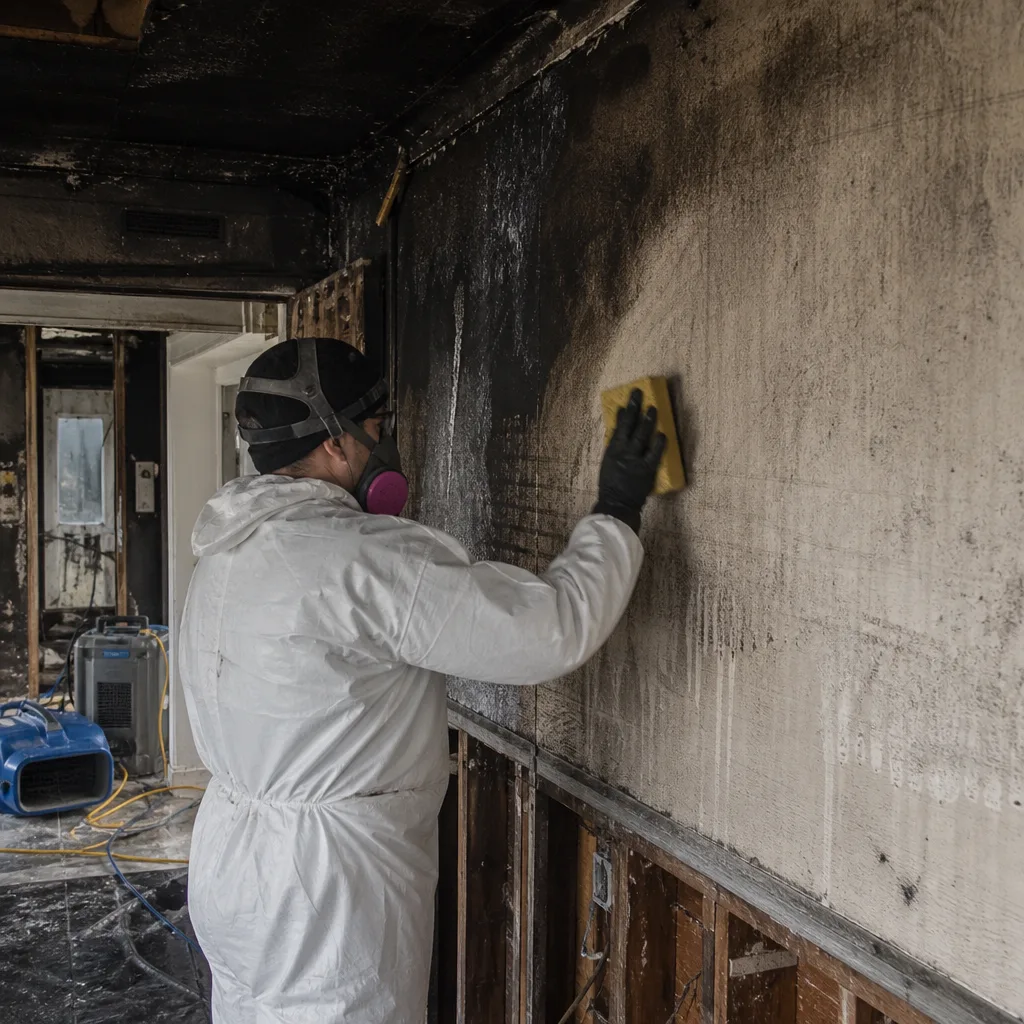
We remove affected plaster and insulation, treat the exposed masonry with antimicrobial agents, and run HEPA air scrubbers until the indoor air tests clean. This is the step that prevents regrowth.
Repairs & Restoration
We rebuild what was removed: plaster repair, painting, flooring, trim. We don’t hand you off to a different company. The same crew that read the moisture map on day one rebuilds the wall and hands you the drying log.
Need Emergency Mold Remediation in Getty Square Now?
Crews minutes away, answering live 24 hours a day. The sooner we start, the less it costs.
Working With Your Insurance Company
Mold claims are the ones insurance carriers push back on hardest. We’ve handled enough of them in Getty Square to know exactly what an adjuster needs to approve a claim without months of back-and-forth. From the first hour, we photograph every affected area, log moisture readings daily, and document the full scope of the loss. The estimate we submit uses industry-standard line items that carriers recognize, which means faster approval and fewer disputes.
You’ll never be the one calling your adjuster to explain what we’re doing. We talk to them directly. You get copied on the correspondence. And when the claim closes, the homeowner gets a copy of the drying log and the final clearance test results.
What We Provide Your Insurer
- Thorough documentation of the loss
- Photos of all damage, room by room
- Moisture readings and drying logs
- A detailed, line-item scope of work
- Direct coordination with your carrier
Built for Getty Square’s Loss Calendar
Getty Square’s location at the confluence of the Saw Mill and Hudson Rivers creates a loss calendar unlike anywhere else in Westchester or the Bronx. The big events are the nor’easters that funnel Hudson backwater upstream while the Saw Mill’s culverted sections upstream act as an uncontrolled release valve. The daylighted plaza channel fills fast, and basement-level spaces along Main Street and Warburton Avenue take on water before the storm peaks. Hurricane Ida in 2021 was the worst example in recent memory, but even an ordinary summer thunderstorm can overwhelm the channel if rain falls hard enough in a short window.
Spring brings its own problems. Snowmelt combined with April rain saturates the ground, and the high water table pushes moisture through foundation walls in older buildings that were never built with vapor barriers. Summer humidity is constant because of the two adjacent waterways. Winter brings frozen pipes and the slow, hidden leaks that go unnoticed in basements until mold is already established. The pattern is consistent: water gets in, the masonry holds it, and mold follows. The only variable is how fast you respond.
Mold Remediation Across Getty Square’s Neighborhoods
Getty Square’s building stock shifts block by block, and the mold patterns shift with it. Along Warburton Avenue, the older mixed-use buildings have ground-floor commercial spaces with basements that flood first when the Saw Mill surges. Those spaces almost always have original plaster-over-lath walls and cast-iron plumbing. The water wicks upward, and by the time an owner notices staining on the first floor, mold has been growing inside the wall cavity for days.
Main Street storefronts carry the same risk: century-old masonry, shared party walls, and drainage systems that back up when the river’s discharge meets Hudson backwater. Over by Getty Square’s residential blocks west of the plaza, the buildings are slightly newer, early 20th-century rowhouses with shallow basements and no vapor barriers. Moisture rises through the slab, humidity sits at 70% or higher all summer, and mold in corners behind furniture is common even without a water event. Near the daylighted river channel itself, the ambient humidity is so high that we recommend continuous dehumidification after any remediation, whether or not the space flooded directly.
Getting to any of these blocks is straightforward for our crews: we come in via Nepperhan Avenue, Saw Mill River Road, or South Broadway, and we know which buildings have basements we can access from the street versus those requiring interior entry through the ground-floor commercial space. That matters when you’re dispatching at 2 a.m. during a storm.
Specialized Mold Remediation Services We Offer in Getty Square
Mold Inspection & Testing
We start with thermal imaging, moisture meters, and air sampling. In Getty Square’s old brick buildings, visible mold is almost never the whole story. We test behind walls, under floors, and around original cast-iron pipes before we give you a scope of work. The inspection is free when you call (917) 924-4221.
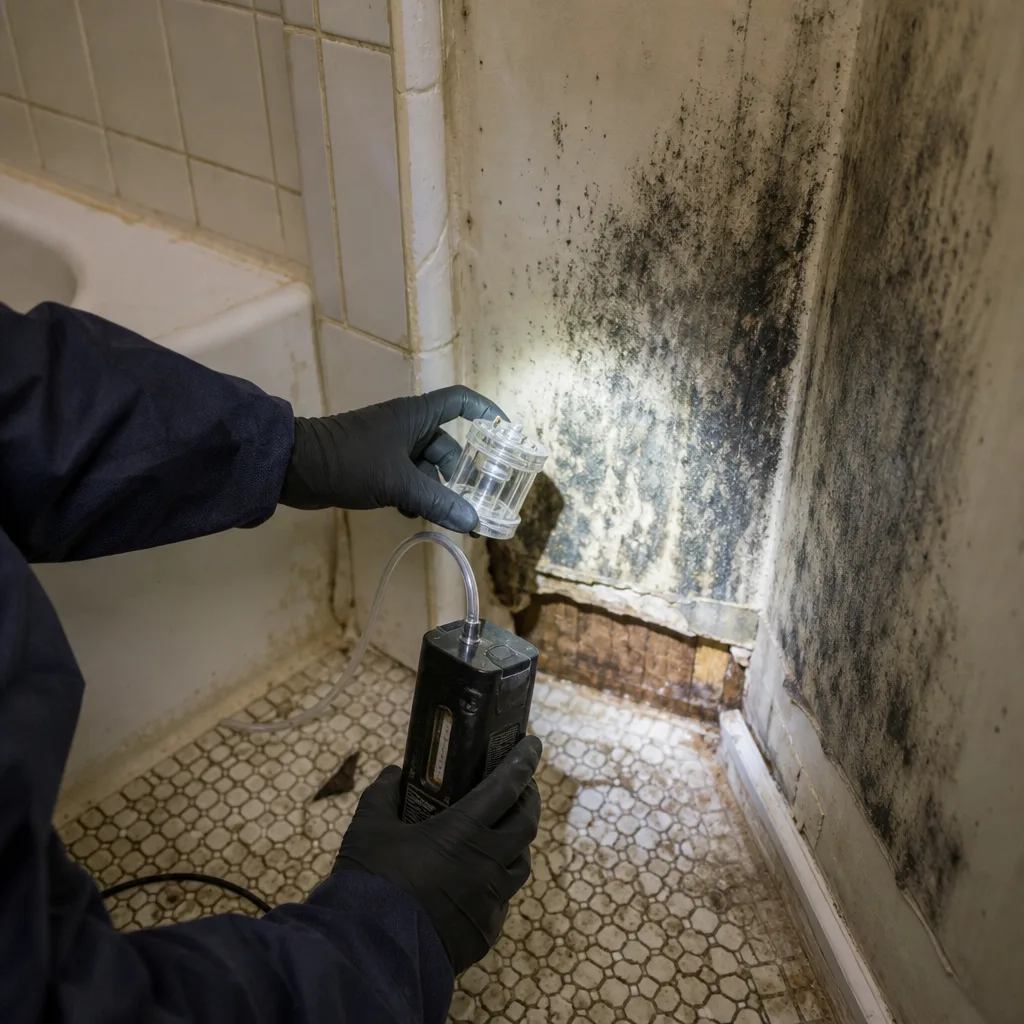
Mold Removal
We remove the mold you can see and the mold you can’t. For Getty Square’s plaster-and-masonry construction, that usually means opening the wall, removing affected plaster and lath, treating the masonry behind it, and rebuilding. We don’t paint over a colony and call it done.
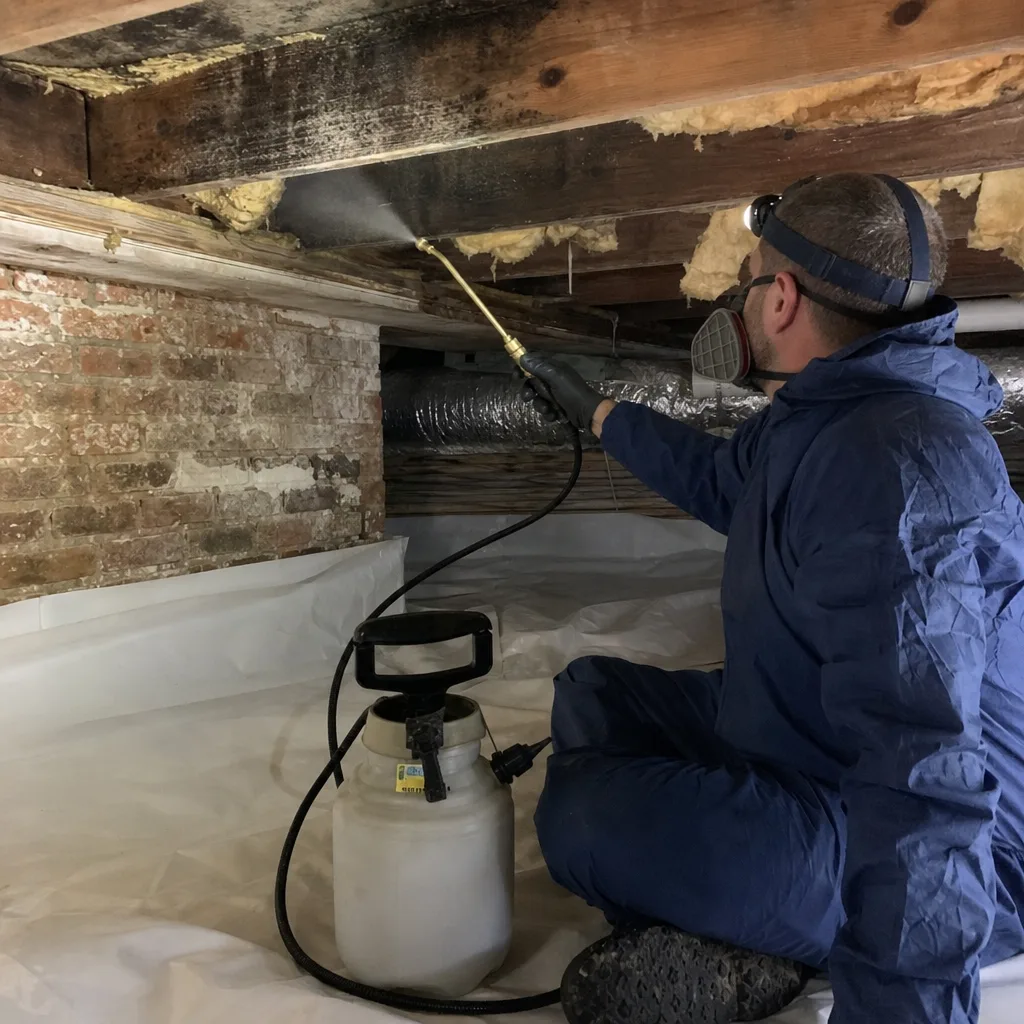
Black Mold Remediation
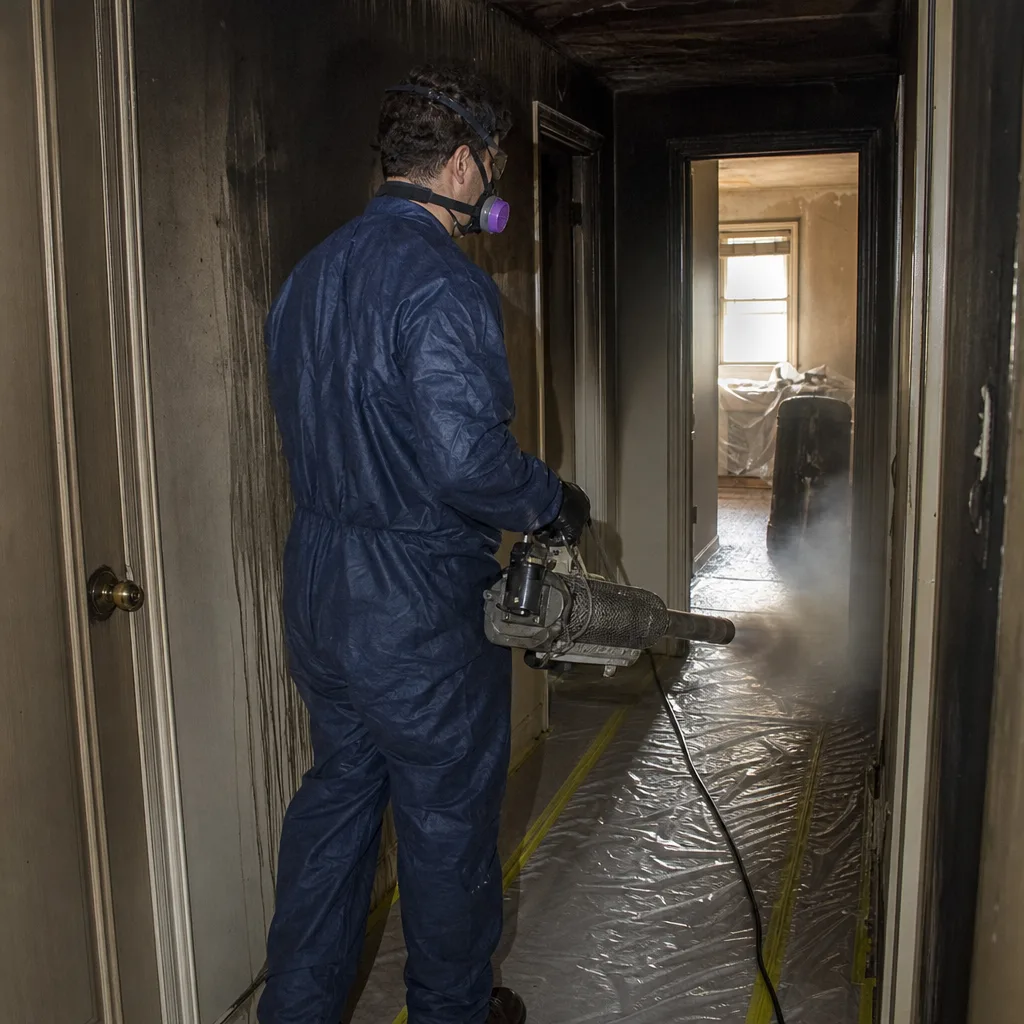
Black mold, the Stachybotrys you’ve heard about, needs full containment, negative air pressure, and HEPA air scrubbing. It grows in the cellulose of old plaster, wood lath, and paper-backed insulation, all of which are everywhere in Getty Square’s original construction. We remove the material, not just the surface growth.
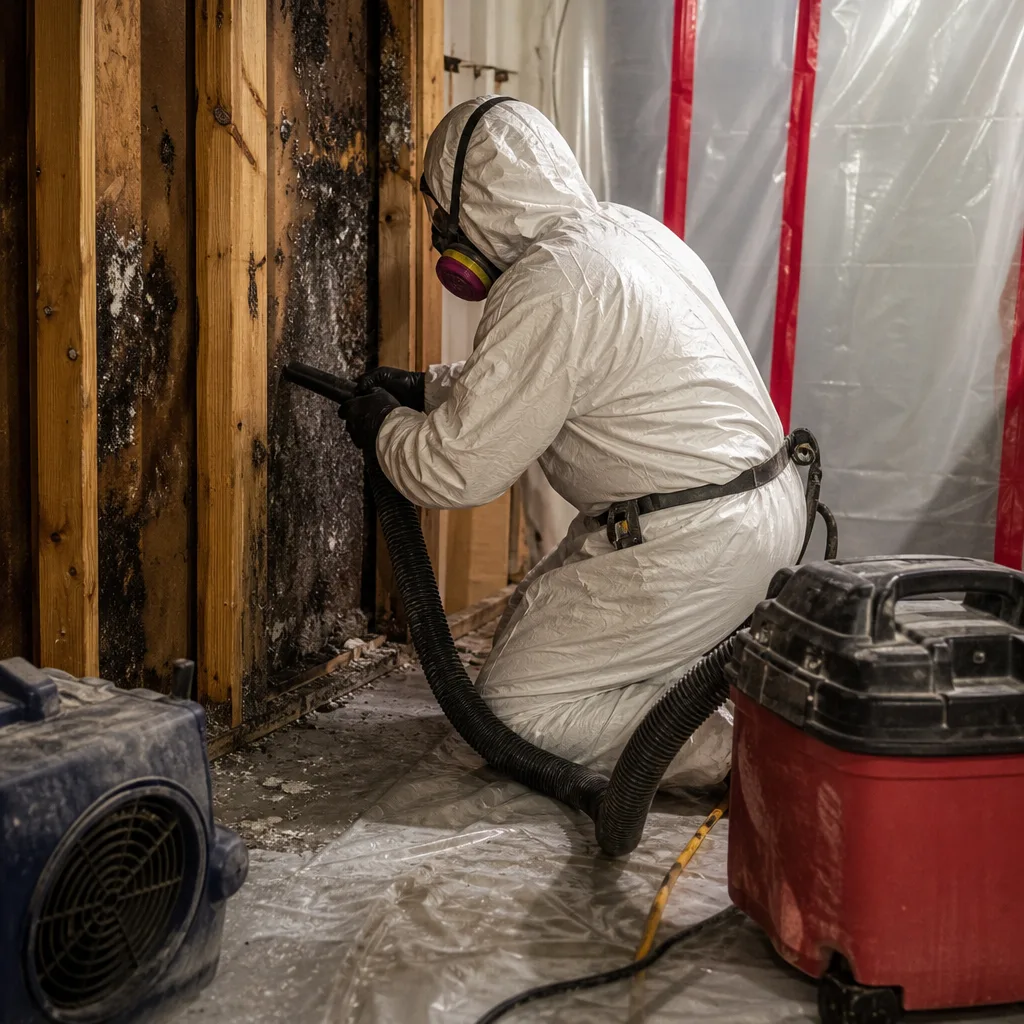
Air Quality Restoration
After the mold is removed and the space is dry, we run HEPA air scrubbers until the indoor air tests clean. In a building near the Saw Mill and Hudson, that takes longer than in a suburban house. The river-driven humidity means we’re not done until the clearance test proves it.
Crawl Space Treatment
Crawl spaces under Getty Square’s 19th-century buildings are damp, dark, and rarely visited. We treat the framing, install vapor barriers in the most vulnerable crawl areas, and set up dehumidification that runs continuously. Ignore the crawl space and the mold appointment comes back next year.
Moisture & Humidity Control
This is the most overlooked piece of mold work in Getty Square. The two adjacent waterways create a microclimate that keeps ambient humidity high year-round. After any remediation, we recommend permanent dehumidification in basements and ground-floor spaces. It’s the only way to keep a cleaned space from failing a follow-up inspection six months later.
What happens when you call
- 1
A real person answersNo phone trees - you reach a local pro.
- 2
You get an upfront price rangeHonest numbers before anyone is dispatched.
- 3
A background-checked tech heads outLicensed & insured, dispatched right away.
- 4
You approve before work beginsNothing starts until you say go.
Mold Remediation Costs in Getty Square, NY
Honest numbers, because you should know before you call. A typical mold inspection with air testing in Getty Square runs $350-$750. Mold removal with containment in a single room starts around $1,800 and goes up from there. A basement flood involving Category 3 water from the Saw Mill, with full extraction, containment, wall opening, antimicrobial treatment, and reconstruction, typically lands between $4,500 and $12,000 depending on square footage and how much of the original plaster must come out. Black mold remediation with air quality restoration in a multi-room commercial space can exceed $15,000 if the colony has been growing for weeks.
What moves the price: the amount of wall that has to be opened, whether Category 3 contamination is present, how long the space has been wet, and whether reconstruction is limited to plaster repair or extends to flooring and trim. We give you a written scope of work before anything starts, so you know the number before we open the first wall. Estimates are free. Call (917) 924-4221 and we’ll come look.
We Also Serve Cities Near Getty Square
Our crews serve Getty Square and the surrounding area from the same dispatch board: Mold Remediation in Getty Square is our home base, and we regularly run calls in Fairview, Harrison, East Bronx, and Hunts Point. Same live answer, same certified crews, same written guarantee.
Serving Getty Square, NY - Our Local Coverage Area
We’re based in the Getty Square area and know this community well. Use the map below to see our service coverage - if you’re nearby, we can almost certainly help.
Getty Square Mold Remediation Questions, Answered
How fast can you get to Getty Square?
We commit to a 45-minute response inside Getty Square, and our crews are dispatched from nearby staging points, so we’re often faster. A live person answers the phone 24 hours a day at (917) 924-4221.
Why does mold grow faster in Getty Square’s older buildings than in newer construction a few miles north?
Because the buildings are brick masonry with plaster-over-lath walls, no vapor barriers, and original plumbing that leaks behind walls where nobody sees it. The proximity of the Saw Mill and Hudson Rivers keeps ambient humidity high, which accelerates mold growth. Newer construction with vapor barriers and modern insulation dries faster and hides less.
How do you handle Category 3 water from the Saw Mill flooding my basement on Main Street?
We treat it as a biohazard event first: extraction, then containment with negative air, then antimicrobial treatment before drying begins. The sediment and contamination in Saw Mill floodwater means we don’t just pump it out and set up fans. The masonry has to be treated or the mold comes back. Call (917) 924-4221 immediately if this happens.
Can you save the original plaster walls in my Getty Square building after a water event, or must they be replaced?
Sometimes, but not usually when Category 3 water is involved. Plaster-over-lath walls in century-old buildings wick water upward and hold it inside the cavity. If the plaster is still structurally sound and only the lower portion is affected, we can cut a horizontal line, remove the wet portion, treat the masonry, and replaster. If the water reached the lath and soaked upward, the affected section has to come out. We’ll know after the moisture map is read.
What is moisture mapping, and why is it critical for older Getty Square structures?
Moisture mapping is the process of taking readings at intervals across every wall, floor, and ceiling using meters and thermal imaging. In Getty Square’s old masonry buildings, water travels unpredictably: it wicks upward through brick, follows cast-iron pipes, and pools in dead air pockets inside wall cavities. Without a moisture map, you can dry the visible surface and leave a hidden pocket that grows mold within weeks. We map before we touch anything and repeat the readings daily until the dry standard is met.
How do you control humidity during mold remediation when both the Saw Mill and Hudson Rivers are nearby?
We run continuous dehumidification with Dri-Eaz and Phoenix units while the space is open, and we keep running them until moisture readings are below 12% and stay there. In river-adjacent buildings, we often recommend permanent dehumidification after the job is finished, because the ambient humidity from the two waterways never really drops. That’s a Getty Square reality, not a sales pitch.
Will my insurance cover mold remediation in Getty Square?
Depends on the policy and the source of the water. If the mold resulted from a covered peril like a burst pipe or storm-driven flooding, the remediation is usually covered. Gradual leaks and long-standing humidity problems often aren’t. We document everything from the first hour and communicate directly with your adjuster, so you get a straight answer quickly instead of a denial letter six weeks from now.
What should I do in the first 30 minutes after discovering mold in my Getty Square building?
Don’t disturb the colony. Don’t scrub it, don’t spray bleach on it, don’t run a fan on it. Every disturbance sends spores into the air and spreads the problem. Close off the room if you can, keep children and anyone with respiratory issues away, and call (917) 924-4221. We’ll come inspect it for free and tell you what you’re actually dealing with.
One more thing worth saying plainly: because the Saw Mill River’s daylighted channel through Getty Square fills faster than property owners expect during heavy rain, mold remediation here routinely begins with Category 3 water extraction from basement-level commercial spaces along Main Street and Warburton Avenue before the storm has even peaked. That’s a sequencing challenge not found in neighboring Yonkers or Riverdale. Our crew was called to a 1908 mixed-use building on Warburton Avenue after the Saw Mill surged. Using moisture mapping and thermal imaging, we found hidden mold colonies inside original plaster-over-lath walls that had trapped humidity from the adjacent Hudson and Saw Mill. We set containment with negative air, removed the affected plaster, applied antimicrobial treatment to the masonry, and installed temporary dehumidification to bring moisture readings below 12% before reconstruction.
We’re Mold Remediation specialists, and we’ve been doing this work in Getty Square long enough to know that the old buildings here don’t dry on a schedule. They dry on a moisture map. We stand behind the work with the 90-Day Done Right Promise, in writing. If mold comes back within 90 days, we make it right. No argument, no fine print.
Written by Curt Bowman, Owner at Floodline Restoration Co. of Manhattan, serving Getty Square since 2010.