
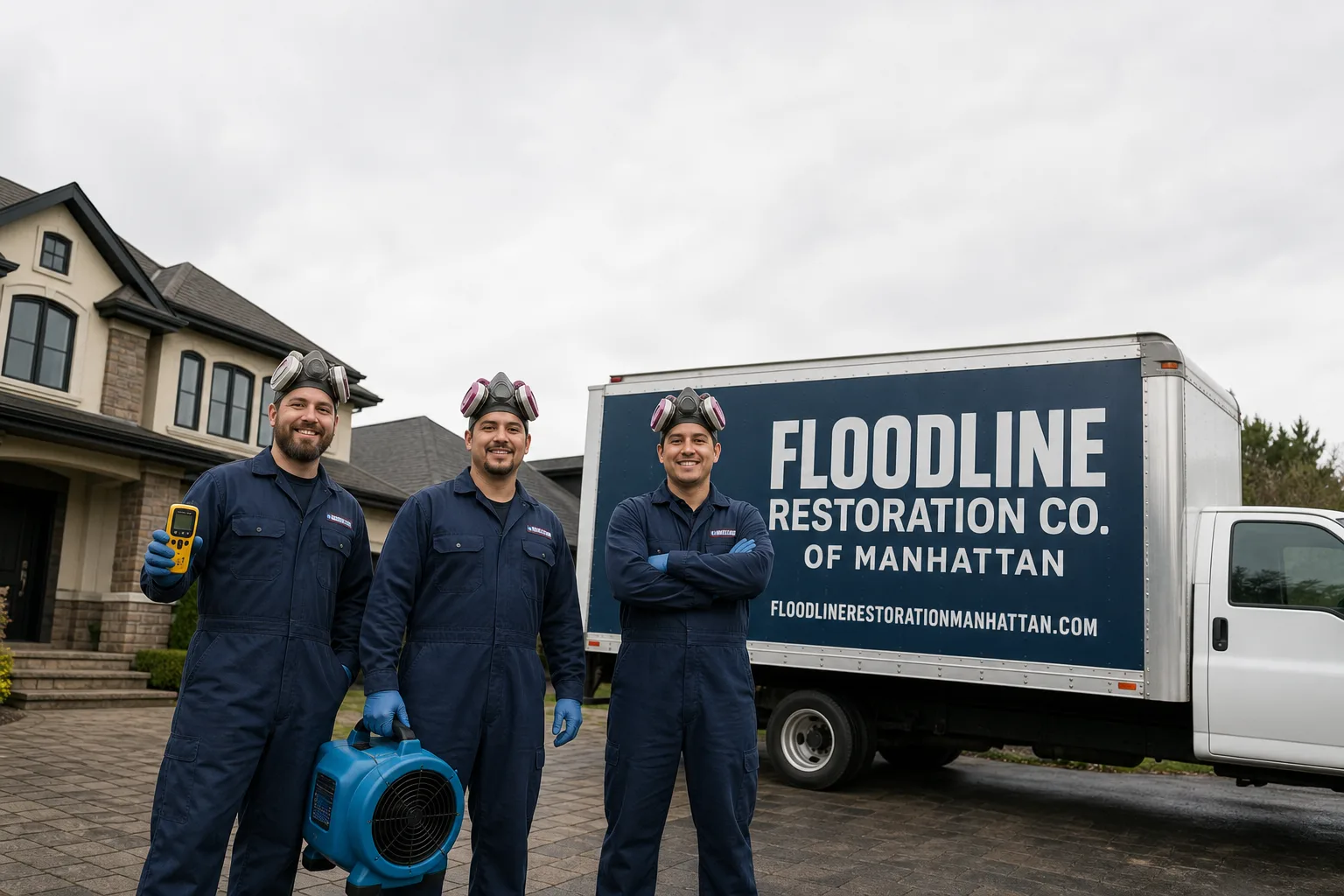
Free visual inspection and a written scope of work before any mitigation begins - photos, moisture readings, and drying logs go in your claim file
The scope we write is the scope we bill. Anything new gets shown to you, in writing, before we touch it.






 Before
 After
After Before
 After
After Before
 After
After24/7 Emergency Mold Remediation in Glen Oaks
Mold in a Glen Oaks apartment or co-op unit moves fast, and the clock starts before you see it. We answer live around the clock at (917) 924-4221, and a Floodline Restoration Co. crew can be dispatched into Glen Oaks within 45 minutes. The first visit is a free visual inspection, because the sooner we find where moisture is feeding the growth, the smaller the containment area stays. In garden-level units of Glen Oaks Village, water from a failed cast-iron stack or a saturated common wall can push hidden mold into drywall within 24 to 48 hours. Call now and a real person picks up, not a recording.
Understanding Mold Remediation Severity in Glen Oaks Properties
Mold severity in Glen Oaks breaks down by how much square footage is affected, what the moisture source is, and whether the contamination sits inside walls or on a visible surface. A surface bloom under a bathroom sink is a containment job: seal the area, air-scrub with HEPA filtration, remove affected material, sanitize, and clearance-test. But in the mid-century brick garden apartments that dominate Glen Oaks, the serious cases are the concealed ones. A slow soak behind a co-op corridor wall, fed by a rusting galvanized supply riser, can colonize the wall cavity and the shared plumbing chase before anyone sees a stain. At that point the job is not a cleanup. It is a full Mold Remediation project: containment under negative pressure, HEPA air scrubbing throughout the affected unit, demolition of wet gypsum and insulation, structural drying with Phoenix or Dri-Eaz equipment, antimicrobial treatment of framing, and post-remediation clearance testing to a dry standard. The severity of a Glen Oaks mold problem is often determined by a co-op wall the shareholder does not own, and that changes who authorizes the work.
Why Glen Oaks Property Owners Choose Floodline Restoration Co. of Manhattan
- 45-minute response commitment: When mold is spreading, we dispatch a crew from our New York City office into Glen Oaks with a target of arriving within 45 minutes. We will be there when we say.
- 24/7 live answer: A dispatcher picks up at 2 a.m. During a nor’easter, that matters. You will never reach a phone tree.
- IICRC-certified crews: Our technicians carry IICRC, RIA, and IFA training, and they are background-checked and uniformed every visit.
- Free visual inspection: The first look costs nothing. We tell you what we found, what it will take to fix it, and what can wait.
- Direct insurance billing: We document the loss from hour one, bill the carrier directly, and coordinate with adjusters so you are not the messenger.
- One team, start to finish: The same crew that sets containment handles drying, demolition, and the rebuild. No mid-job handoff to a third party.
Our Mold Remediation Process
Inspection & Assessment
We use thermal imaging and hygrometers to map moisture across the unit, then identify exactly where the water is coming from. In Glen Oaks Village, that means determining whether the moisture is in a shareholder-owned wall or a co-op-owned plumbing chase, because authorization differs.
Containment & Stabilization
We seal affected areas with polyethylene sheeting and run HEPA air scrubbers under negative pressure so mold spores do not cross into clean rooms. Written scope comes before any wall is opened.
Drying & Dehumidification
Dri-Eaz and Phoenix dehumidifiers run until framing reaches a dry standard. Daily moisture readings are logged and handed to you and your carrier. No guessing.
Cleaning & Sanitization
We remove affected drywall, insulation, and soft goods, then treat exposed framing with antimicrobials. HEPA vacuuming and air scrubbing continue throughout the entire process.
Air Quality Restoration
After source removal, we run air-scrubbing equipment and conduct clearance testing so the unit’s air meets a post-remediation standard before we lift containment. This is the step a cheap company skips, and it is why mold comes back.
Repairs & Restoration
We rebuild what was removed: drywall, insulation, trim, paint. The job is backed by our 90-Day Done Right Promise, in writing, no arguing.
Need Emergency Mold Remediation in Glen Oaks Now?
Crews minutes away, answering live 24 hours a day. The sooner we start, the less it costs.
Working With Your Insurance Company
Mold claims live and die on documentation from the first hour. We photograph every affected surface before demolition, log daily moisture readings, and write a line-item scope a carrier can approve without back-and-forth. When a Glen Oaks Village stack failure pushes water across multiple units, the insurance picture gets complicated fast: each shareholder may file separately, and the co-op corporation may file on the common areas. We handle adjuster communication directly and provide the documentation each party needs. That is a square deal: you are not left holding a folder of paperwork and a carrier’s phone number.
What We Provide Your Insurer
- Thorough documentation of the loss
- Photos of all damage, room by room
- Moisture readings and drying logs
- A detailed, line-item scope of work
- Direct coordination with your carrier
Built for Glen Oaks’s Loss Calendar
Glen Oaks sits inland in the flat northeastern corner of Queens, away from coastal flood zones, but that does not spare the Village. Nor’easters dump rain onto flat and low-slope co-op roofs, and rapid snowmelt overwhelms local storm drainage, pushing water into garden-level and basement-level units. Each winter, freeze-thaw cycles work on aging parapet walls, exterior brick, and roof membranes that date to the late 1940s. A hairline roof crack in January becomes a wet wall cavity by March, and by June the shareholder smells mold. Summer thunderstorms bring flash saturation, and the Village’s original galvanized supply risers, now 75 years old in many buildings, fail without warning. The mold calls in Glen Oaks do not come from one season. They come from a housing stock that was built before modern moisture barriers existed, and from a plumbing infrastructure that has outlived its intended lifespan.
Mold Remediation Across Glen Oaks’s Neighborhoods
Glen Oaks is overwhelmingly Glen Oaks Village, the sprawling garden apartment cooperative William Levitt built after World War II. The co-op’s red-brick buildings run along 260th Street, 74th Avenue, Little Neck Parkway, and Union Turnpike, and most units share walls, chase cavities, and roof lines. A mold job on 260th Street often begins as a roof leak that traveled down through a common wall before showing up in a top-floor unit. Over near the Queens-Nassau border, units along the western edge face a different challenge: the co-op’s specific insurance and authorization requirements govern which crews can open a structural wall. For a wider picture, our Mold Remediation in Glen Oaks coverage explains how we serve the entire area. In every corner of the Village, the mold itself is rarely the root problem. The root problem is a shared chase or a shared roof, and that means a remediation plan the board will sign off on before a single screw comes out.
Specialized Mold Remediation Services We Offer in Glen Oaks
Mold Inspection & Testing
We inspect for visible growth and hidden moisture, then test when the source is unclear. In a co-op building, the inspection often determines whether the contamination is inside your walls or the building’s, which changes who pays. A written report follows within days.
Mold Removal
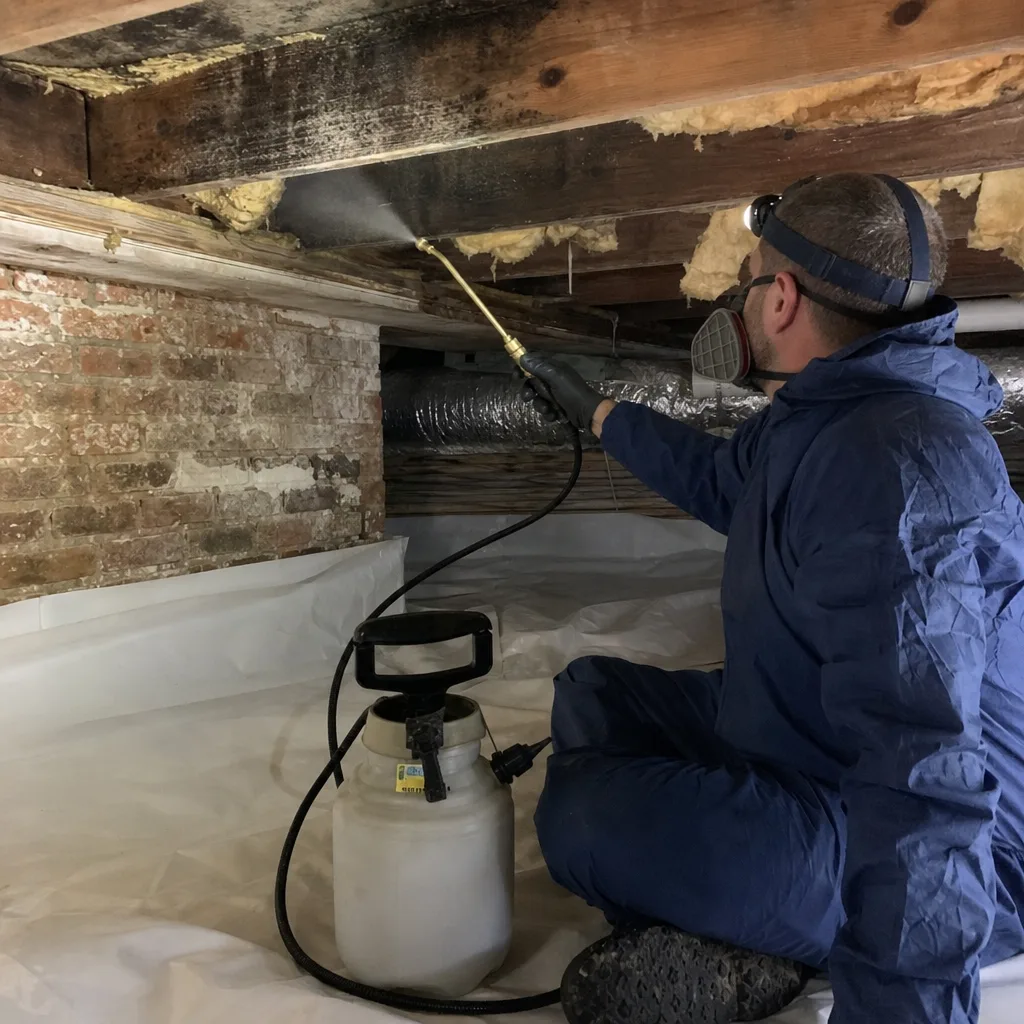
Source removal, not just surface spray. We remove contaminated drywall and insulation under containment, treat the framing, and leave a space that is dry and sanitized. In Glen Oaks we do not open a wall until both shareholder and managing agent have authorized the cut.
Black Mold Remediation
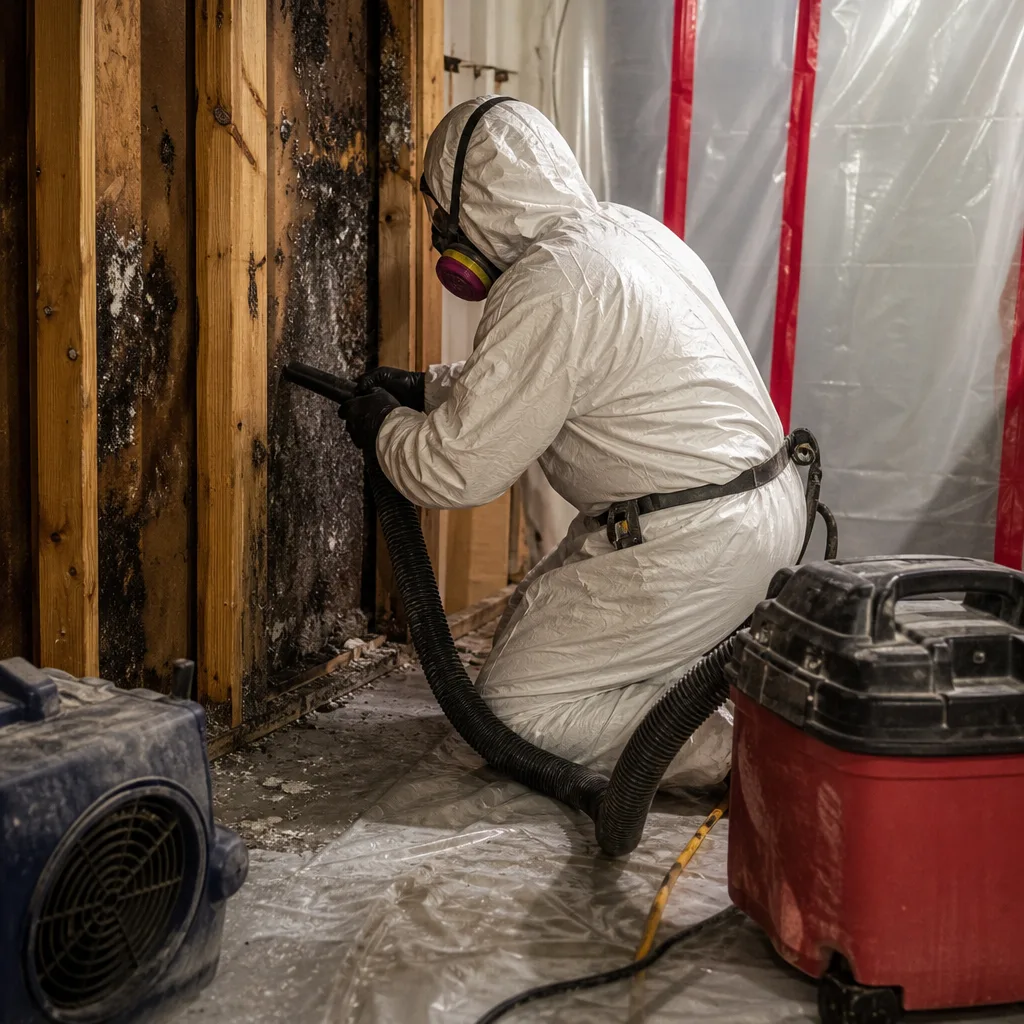
Stachybotrys, the mold people call black mold, grows where water has been sitting for days, often inside a wet wall cavity or under a saturated subfloor. We treat it with full containment, negative air pressure, and clearance testing, not a bleach wipe. It is a job for trained techs with respirators and proper PPE.
Air Quality Restoration
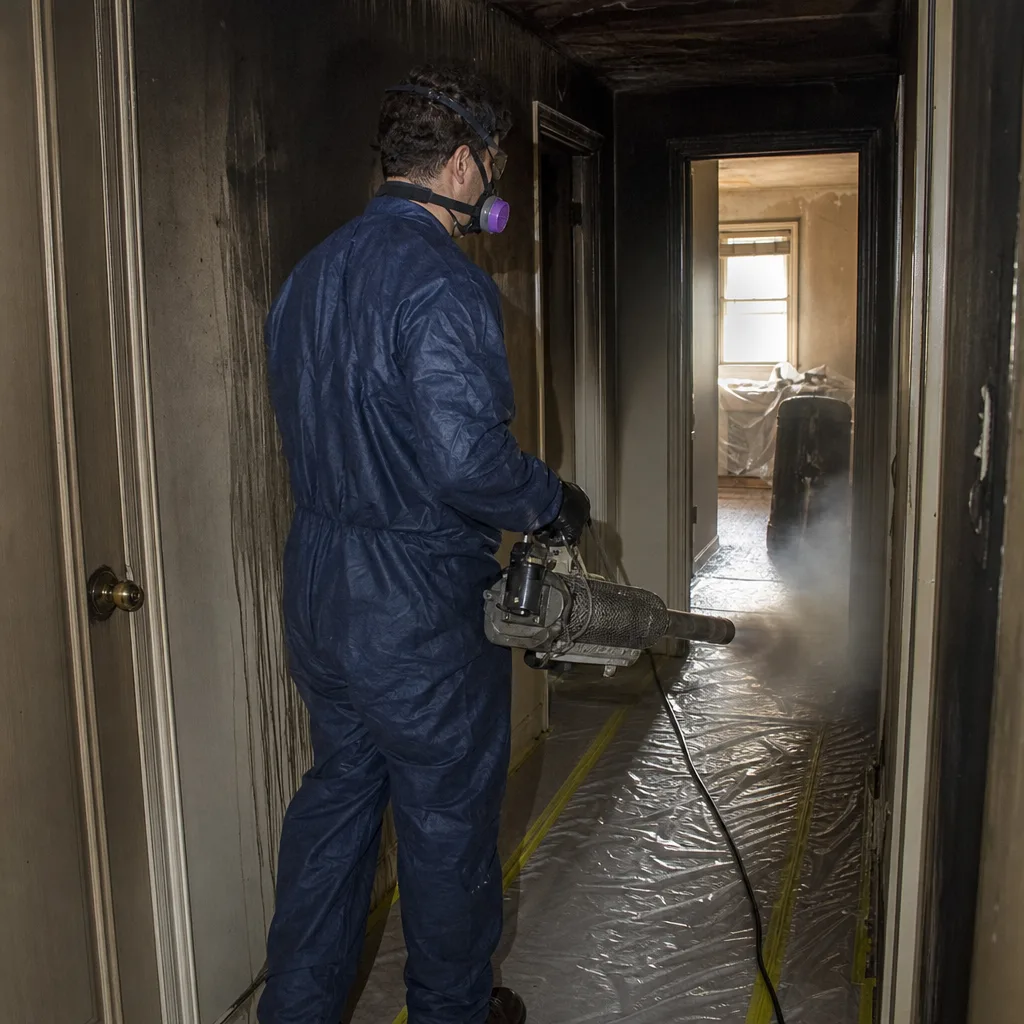
After the source is gone, the air still carries spores. We run HEPA air scrubbers through the containment period and continue after demolition until clearance testing shows the air cleaned to a post-remediation standard. Garden-level units in Glen Oaks Village need this step more than most because there is limited cross-ventilation.
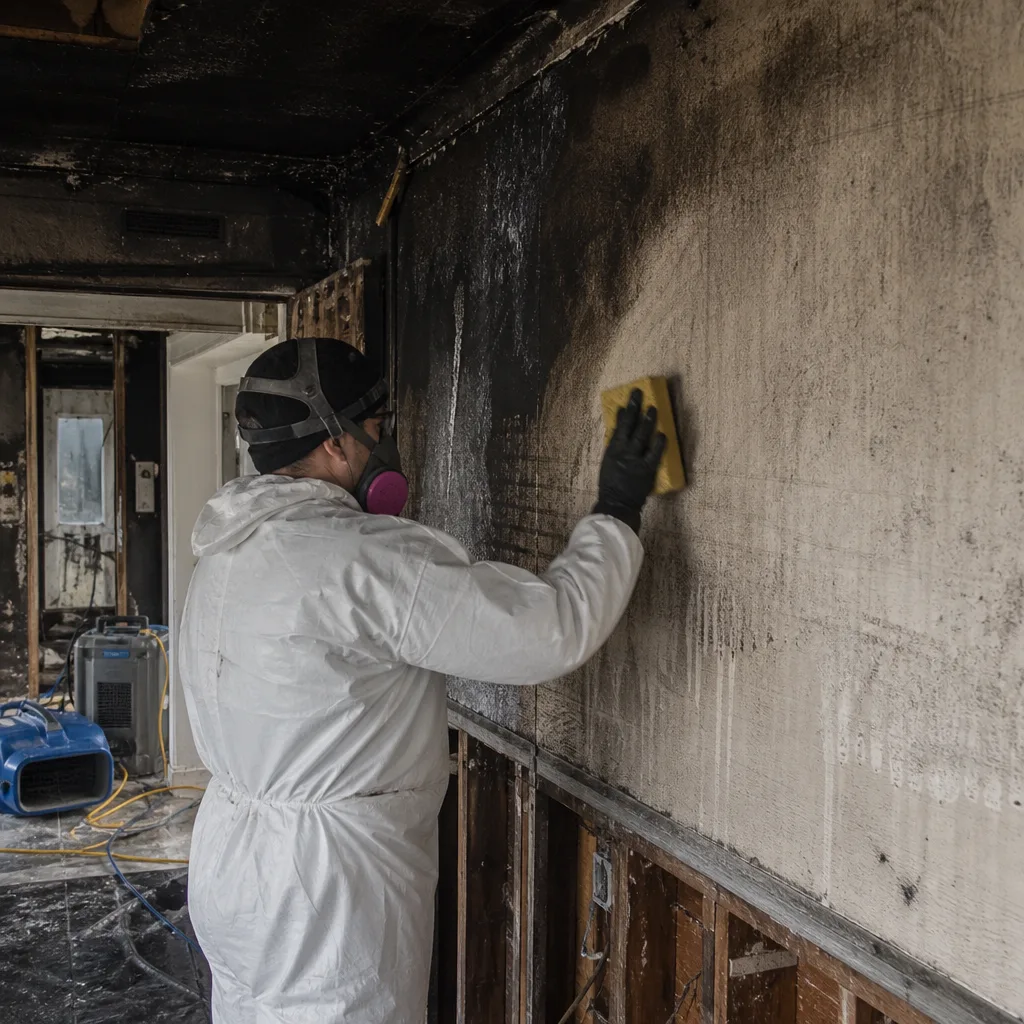
Crawl Space Treatment
Some garden-level units have crawl spaces or shallow service cavities beneath the floor. We dry those spaces, remove contaminated insulation, and treat the framing so the mold does not come back through the floorboards. Moisture control is the endgame here.
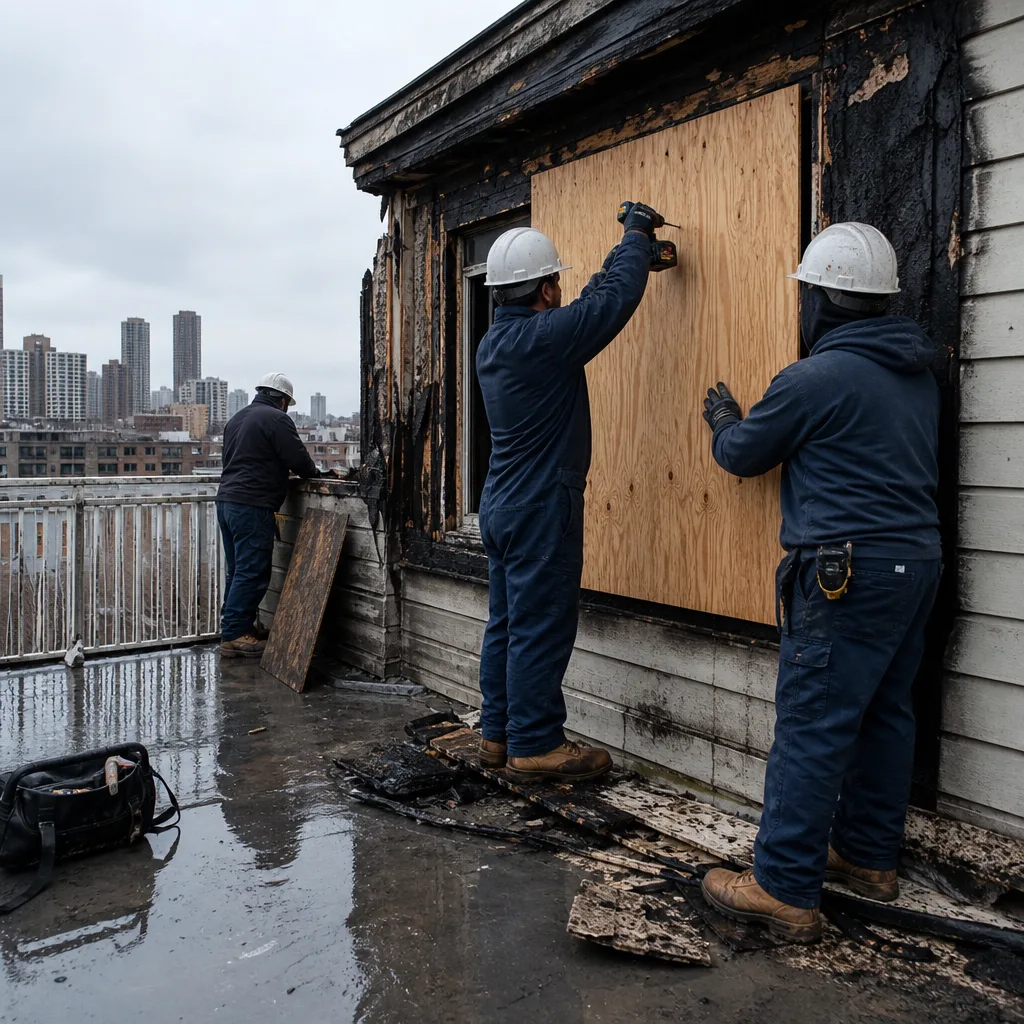
Moisture & Humidity Control
In Glen Oaks, mold returns when the humidity does. We map the moisture source, recommend dehumidification and ventilation changes, and repair the leaks or stack issues that started the problem. The goal is not just a clean unit. It is a dry one.
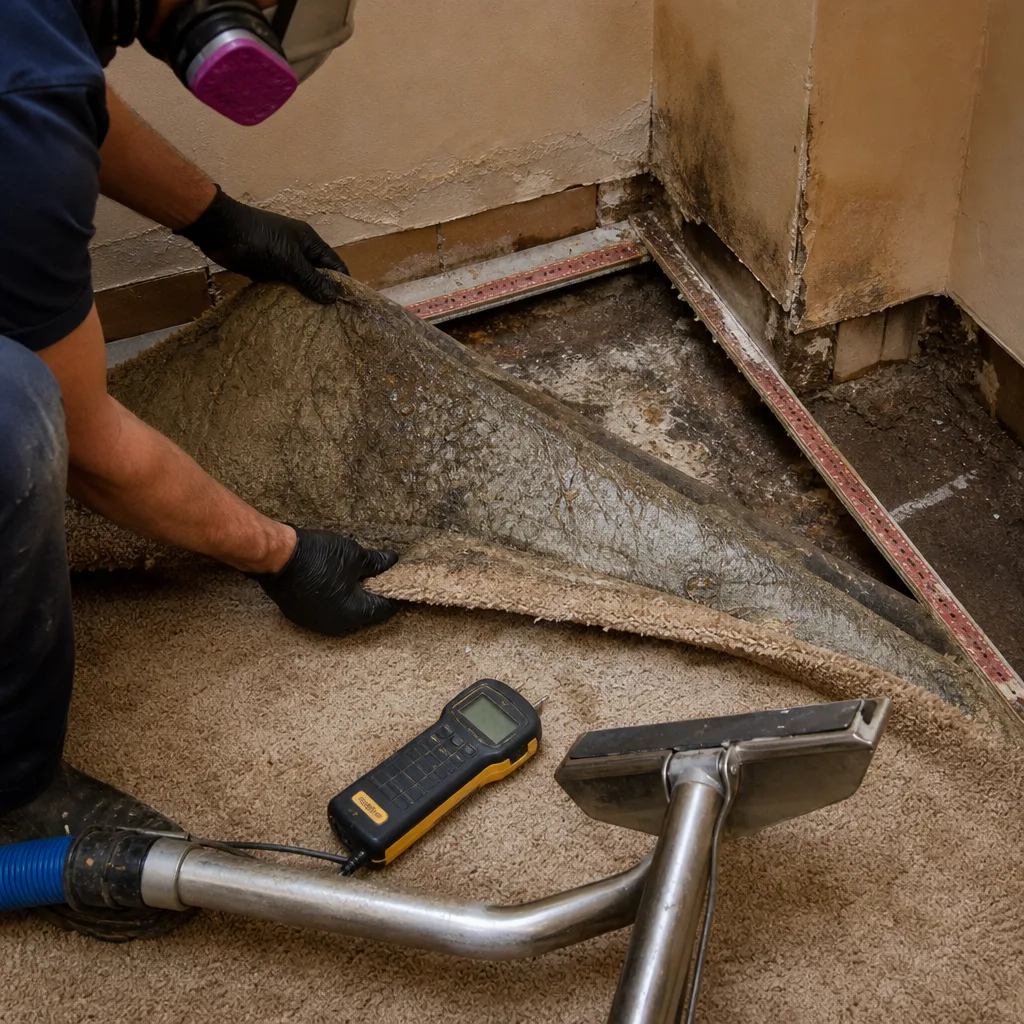
What happens when you call
- 1
A real person answersNo phone trees - you reach a local pro.
- 2
You get an upfront price rangeHonest numbers before anyone is dispatched.
- 3
A background-checked tech heads outLicensed & insured, dispatched right away.
- 4
You approve before work beginsNothing starts until you say go.
Mold Remediation Costs in Glen Oaks, NY
A small contained mold cleanup in a Glen Oaks bathroom runs $500 to $1,200. A full-room remediation with containment, HEPA air scrubbing, drywall removal, and clearance testing typically falls between $1,800 and $4,500. When a failed cast-iron drain stack wicks moisture across multiple stacked units, the shared-chase work can push a scope to $8,000 or more, and that is before rebuild. The biggest price movers in Glen Oaks are co-op authorization delays and whether the common plumbing chase is involved, because both add time and labor. Most homeowner policies cover mold remediation only when it stems from a covered water loss, like a sudden pipe failure, and not from long-term seepage. The free visual inspection gives us a chance to tell you what it will take, in writing, before you spend a dollar.
We Also Serve Cities Near Glen Oaks
Floodline Restoration Co. of Manhattan handles mold remediation in Bellerose, Little Neck, Floral Park, and Great Neck, plus the broader Queens and Nassau border area. Same crews, same 45-minute dispatch target, same written guarantee.
Serving Glen Oaks, NY - Our Local Coverage Area
We’re based in the Glen Oaks area and know this community well. Use the map below to see our service coverage - if you’re nearby, we can almost certainly help.
Glen Oaks Mold Remediation Questions, Answered
Do I need Glen Oaks Village co-op board approval before mold remediation can start in my unit?
If the mold is in a wall, ceiling, or plumbing chase that belongs to the co-op corporation, yes, you need written authorization from the building’s managing agent before any contractor opens that cavity. A shareholder-owned interior wall, like a closet partition, usually does not require board sign-off, but most Glen Oaks Village mold jobs involve a common wall or chase. We confirm authorization status before the first cut, because opening a common element without it can trigger a work-stop order. Call (917) 924-4221 and we will help you figure out which approval applies to your unit.
How does a failed cast-iron stack in Glen Oaks Village affect mold remediation across multiple units?
When the cast-iron drain stack fails inside a wall, water and waste can travel vertically through three or four stacked units at once. Each shareholder may have mold in their own space, but the source is in a common chase the board owns. Remediation becomes a multi-unit scope: each affected unit needs containment and drying, and the common chase itself must be accessed, dried, and repaired with board authorization. We run moisture logging in every affected unit and give each shareholder the documentation their own carrier needs. Estimates are free.
What is the difference in liability between my unit’s walls and the common plumbing chase in Glen Oaks?
As a shareholder, you generally own the interior surfaces and the airspace within your unit, but not the structural walls, plumbing chases, or risers that serve multiple units. Those belong to the co-op corporation. That means the mold inside your drywall is your remediation claim, while mold inside the shared chase is the corporation’s remediation responsibility. A competent Glen Oaks contractor identifies which layer the mold is in and scopes each party’s share separately. That is exactly what we do before any work begins.
Why do I need air quality restoration after mold removal in a garden-level Glen Oaks unit?
Because mold spores linger in the air long after the visible colony is removed, and garden-level units in the Village have limited natural cross-ventilation. Air quality restoration means running HEPA air scrubbers through the containment period and after demolition, then clearance testing until the air meets a post-remediation standard. Skipping that step is the most common reason Glen Oaks mold jobs fail. Spores settle, moisture returns, and the mold comes back inside six months.
How quickly can mold spread in a Glen Oaks Village unit after a roof leak or stack failure?
Mold can begin colonizing wet drywall within 24 to 48 hours in the warm, still air of a closed co-op unit. A slow roof leak that goes unnoticed for two weeks is already a full containment job. That is why we answer live 24/7 and dispatch within 45 minutes. The first visit is a free visual inspection, and the faster we dry, the less demolition follows. Call (917) 924-4221.
How fast can a mold remediation crew actually get to Glen Oaks?
Our commitment is 45 minutes from dispatch into Glen Oaks. A live dispatcher answers around the clock, not a phone tree, and we coordinate with co-op managing agents so access is not delayed at the door. In a spreading mold situation, that arrival window is the difference between a small containment and a gut.
Will my insurance cover mold remediation in my Glen Oaks co-op unit?
Most homeowners policies cover mold remediation when it follows a sudden and accidental covered water loss, like a burst supply riser or a stack backup. Coverage is limited or excluded when the mold stems from long-term seepage or deferred maintenance. We photograph the damage from hour one, log daily moisture readings, and coordinate directly with your adjuster to give the carrier what it needs to approve the claim. Never a message relay for you.
What should I do in the first 30 minutes after I find mold in my Glen Oaks unit?
Do not disturb the mold, do not run a fan on it, and do not open the wall. Disturbing a colony releases spores into the air and spreads contamination into rooms that were clean. Turn off the HVAC if you can, close the door to the affected room, and call us at (917) 924-4221. We will tell you what to document for your carrier while we are on the way.
Mold in a Glen Oaks Village co-op is rarely a one-wall problem. It lives in the roof, the stack, the shared chase, or the garden-level floor, and treating only the visible stain means the colony comes back. Floodline Restoration Co. of Manhattan handles the whole sequence, from co-op authorization to source removal to rebuild, with one certified crew and a written 90-Day Done Right Promise. Call (917) 924-4221 for a free visual inspection and a firm scope in writing.
Written by Curt Bowman, Owner at Floodline Restoration Co. of Manhattan, serving Glen Oaks and greater Queens.