
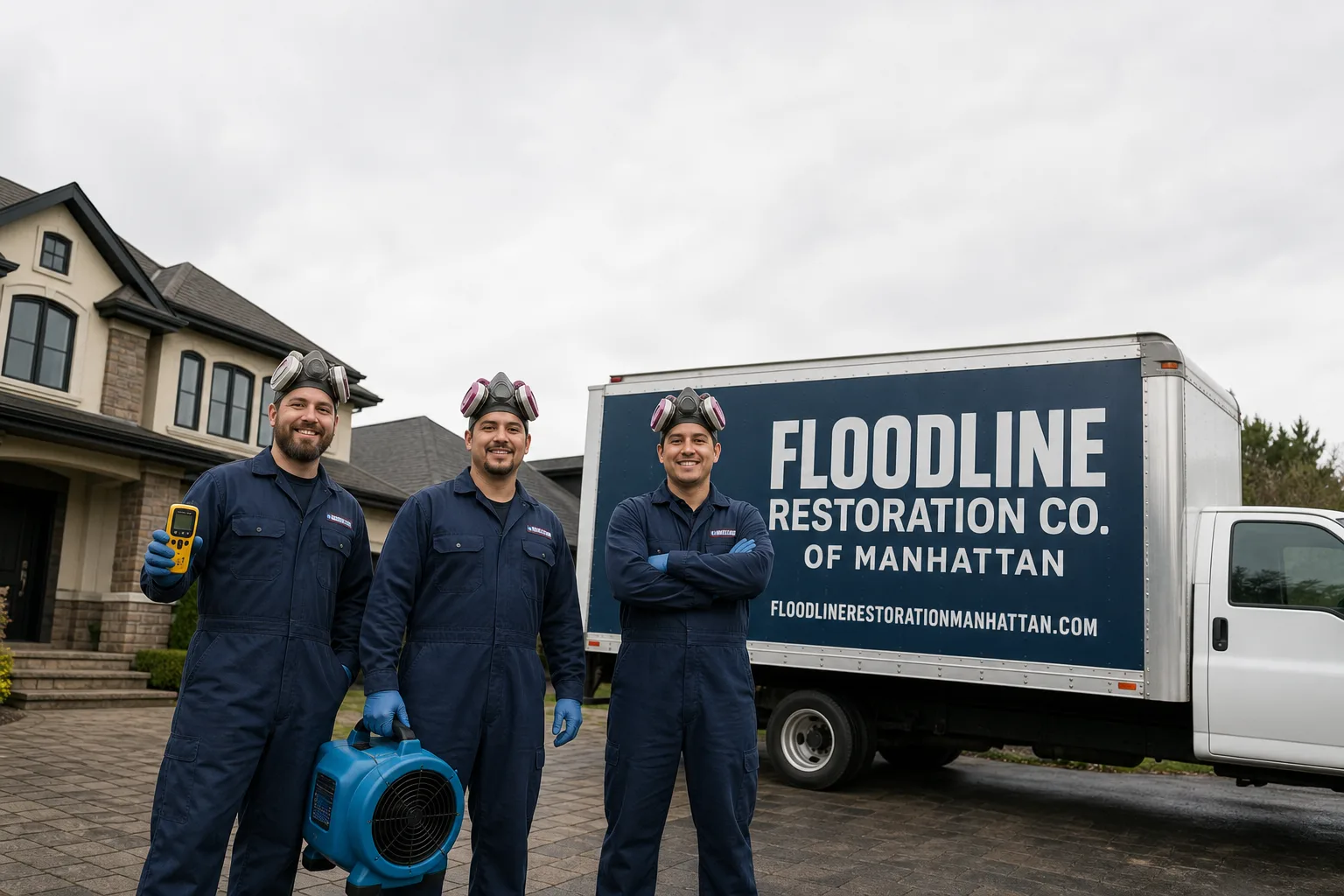
Free visual inspection and a written scope of work before any mitigation begins - photos, moisture readings, and drying logs go in your claim file
The scope we write is the scope we bill. Anything new gets shown to you, in writing, before we touch it.






 Before
 After
After Before
 After
After Before
 After
After24/7 Emergency Mold Remediation in Floral Park
Mold remediation in Floral Park typically costs $1,800-$6,500 depending on how far the colony has spread and whether the village building department requires its own inspection sign-off. We answer live at (917) 924-4221 around the clock, and a certified crew can be at your door within 45 minutes for a free visual inspection. The first hour matters because mold releases spores that travel through forced-air systems and wall cavities into rooms that look untouched. Floral Park’s 1920s-1950s housing stock gives those spores exactly what they need: horsehair plaster, unlined block foundations, and a water table sitting just a few feet below grade. When you call, you get a background-checked, uniformed technician who knows this village’s building department by name, not a call center that transfers you three times before anyone shows up.
Mold Remediation Across Floral Park’s Neighborhoods
Floral Park’s neighborhoods run on different timetables for mold, and we dispatch accordingly.
The blocks north of Jericho Turnpike hold most of the village’s 1920s-era Cape Cods, where original horsehair plaster over lath traps moisture behind walls for decades before anyone sees staining. We respond to those calls expecting hidden colonies, and we bring containment and HEPA air scrubbers on the first visit because opening those walls without them is how a $1,200 spot job becomes a $12,000 remediation.
Down along Tulip Avenue, the Tudor-style homes from the 1930s and 1940s present a different problem: their stucco-and-timber exteriors can hide water intrusion at the roofline, and by the time mold shows on an interior ceiling, the attic sheathing is often already colonized. We run moisture mapping first, not demolition.
Homes near Floral Park-Bellerose School sit on some of the flattest, lowest ground in the village, and after a nor’easter or a heavy July thunderstorm, the water table rises fast. Basement mold there is rarely a one-time event; it’s a chronic seepage problem the homeowner usually can’t see because the block foundation looks dry from inside. We treat the source, not just the stain.
The residential streets west of Plainfield Avenue, closer to the village’s commercial spine, have the highest concentration of early 1950s split-levels with crawl spaces. We do more crawl space mold treatment there than anywhere else in Floral Park, and in summer the humidity inside those spaces runs 70-80% unless someone installs a vapor barrier and a dehumidifier rated for that square footage.
Every one of these neighborhoods sits within the incorporated village of Floral Park, which means every job needs two layers of sign-off: Nassau County’s and the village’s own building department. A contractor who doesn’t know that will stall mid-job. We do not.
Understanding Mold Remediation Severity in Floral Park Properties
Mold severity in Floral Park rarely matches what the homeowner sees. A dark patch the size of a dinner plate on a basement wall often means a colony three times larger behind the horsehair plaster, feeding on groundwater that wicked through an unlined block foundation. We classify mold for remediation purposes by the square footage of visible growth, the moisture source category, and whether the colony has reached the HVAC system.
Category 1 water is clean supply water, like a burst copper line; Category 2 is gray water with some contaminants; Category 3 is sewage or flood water. Most Floral Park basement mold comes from Categories 1 and 2: groundwater seepage, condensation on cold block, and slow supply-line drips inside walls. The distinction matters because Category 3 requires different containment, different personal protective equipment, and different disposal rules under Nassau County waste regulations. A contractor who treats groundwater seepage like a simple wipe-and-paint job will hand you a basement that reeks again by the next wet season.
Moisture mapping tells us where the colony is actually growing. We run thermal imaging and hygrometers through walls and floors, log readings daily, and don’t stop drying until materials hit the dry standard the IICRC sets for plaster and dimensional lumber. That’s not a number we guess at; it’s documented and handed to you and your insurer.
Why Floral Park Property Owners Choose Floodline Restoration Co. of Manhattan
- 45-minute response to Floral Park jobs. When you call (917) 924-4221, a live dispatcher answers and a local crew heads out immediately. Not a recording, not a callback.
- Live answer 24/7, every day. There is a person on the phone at 2 a.m. That’s the way Floodline Restoration Co. has run since Curt Bowman founded it in 2010 around a dispatch board, not a sales desk.
- IICRC-certified crews trained to AMRT and WRT standards. Mold work requires Applied Microbial Remediation Technician training, and our technicians hold current certifications. Uniformed, background-checked, and accountable by name.
- Free visual inspection with a written scope. You’ll know what the job involves and what it costs before we start. No pressure, no surprises on the bill, and a written scope agreed before any wall is opened.
- Direct insurance billing. We bill your carrier directly and coordinate with your adjuster, with photos and moisture logs from the first hour. You don’t play messenger.
- One team from the first containment to the final coat of paint. Floodline Restoration Co. handles Mold Remediation and all phases of restoration, so no mid-job handoff to a crew you’ve never met.
Our Mold Remediation Process
1. Inspection & Assessment
We start with thermal imaging and moisture mapping, not demolition. On a Floral Park Cape Cod, that means checking the basement sill, the plaster walls, and the roofline for the water source feeding the mold. You get a written scope and a firm price before we cut anything.
2. Containment & Stabilization
We seal the affected area with poly sheeting and negative air pressure, then run HEPA air scrubbers to prevent spore migration. In Floral Park’s pre-war homes, containment happens before the first plaster crack is widened because horsehair plaster holds decades of dormant spores.
3. Source Control & Moisture Elimination
Groundwater seepage through unlined block is the most common mold source in Floral Park basements. We address it with foundation waterproofing and drainage corrections, not just drying. Dri-Eaz dehumidifiers and Phoenix air movers run until the dry standard is met, with daily hygrometer readings.
4. Cleaning & Sanitization
We clean colonized surfaces with antimicrobial treatments appropriate for the material, and we remove porous materials that can’t be cleaned to standard. Horsehair plaster that’s saturated gets removed and replaced; plaster that can be dried gets dried.
5. Crawl Space & Humidity Correction
In Floral Park’s 1950s split-levels, the cure for recurring mold is usually in the crawl space: a vapor barrier, sealed vents, and a dehumidifier sized to the square footage. We handle that as part of the same job, because treating the living space while ignoring the crawl space is how mold comes back.
6. Repairs & Restoration
We dry, rebuild, and finish: plaster repair, paint, trim, flooring if needed. The village of Floral Park’s building department signs off on our work before we call it done, and our 90-Day Done Right Promise covers it in writing.
Need Emergency Mold Remediation in Floral Park Now?
Crews minutes away, answering live 24 hours a day. The sooner we start, the less it costs.
Built for Floral Park’s Loss Calendar
Floral Park’s mold season doesn’t start in summer. It starts in January, when deep freezes crack supply lines inside unheated basements and crawl spaces, and the water runs behind plaster walls for days before anyone notices a spike in the water bill. By February, our moisture meters read high in basements all over the village, and the mold follows in March.
Spring is when the shallow water table does its worst work. March and April rains push groundwater up through the glacial outwash plain that Floral Park sits on, and those unlined block foundations from the 1920s start weeping. Homeowners who’ve lived here twenty years know the musty smell; what they don’t know is that by the time they smell it, the colony behind the plaster is usually well established.
Summer brings thunderstorm flash flooding and high humidity, and the 1950s crawl spaces get their annual dose of 80% relative humidity. We run a lot of crawl space treatments and dehumidifier installations from June through August. Fall is the breather, but nor’easters in late autumn and early winter bring wind-driven rain and ice damming on low-slope Cape Cod roofs, sending meltwater behind the original wood fascia and into plaster ceilings. Every one of these seasons produces mold. The village’s building department and Nassau County both get involved, and the job takes as long as the inspections take. We plan for that from day one.
Specialized Mold Remediation Services We Offer in Floral Park
Mold Inspection & Testing
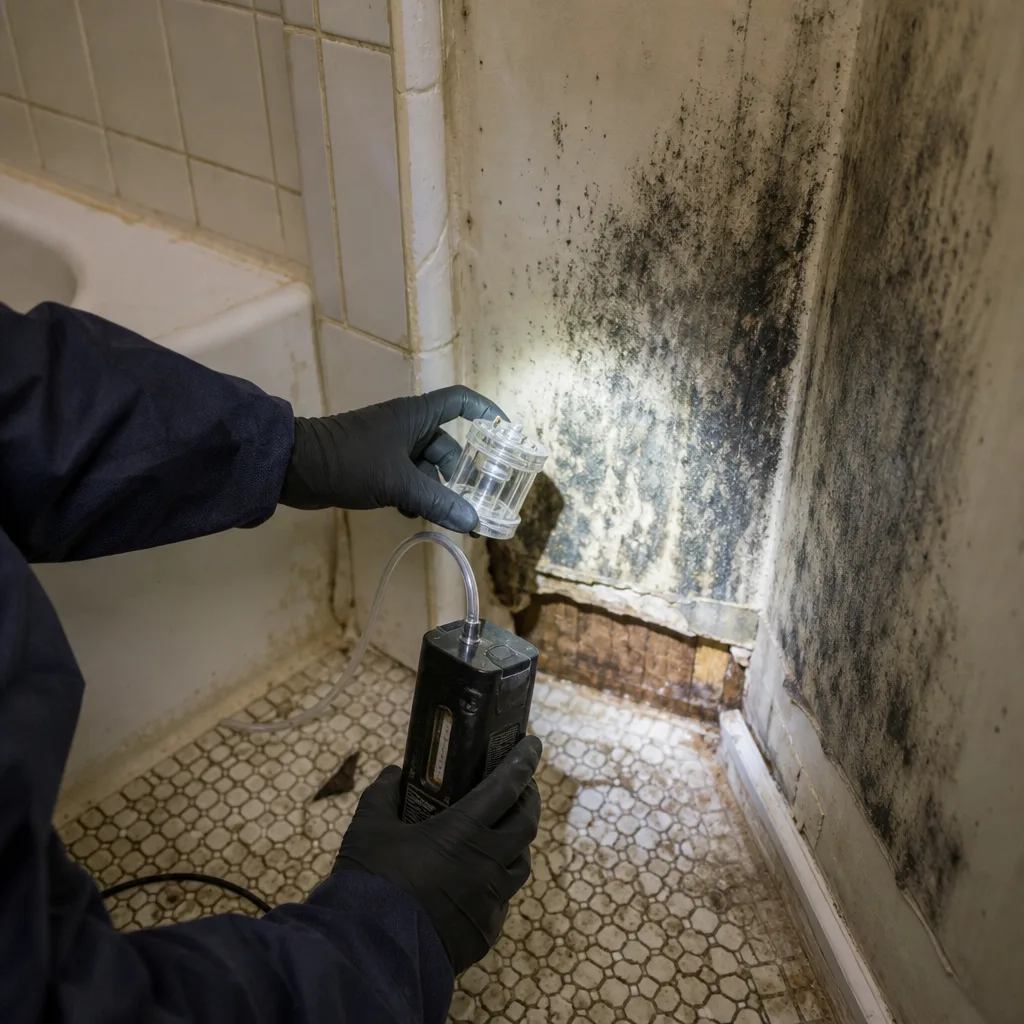
Before we remediate, we identify what we’re dealing with. In Floral Park homes with original plaster, that means surface sampling, air sampling, and moisture mapping to find the colony’s full extent. We document everything for your insurer and for the village’s records.
Mold Removal
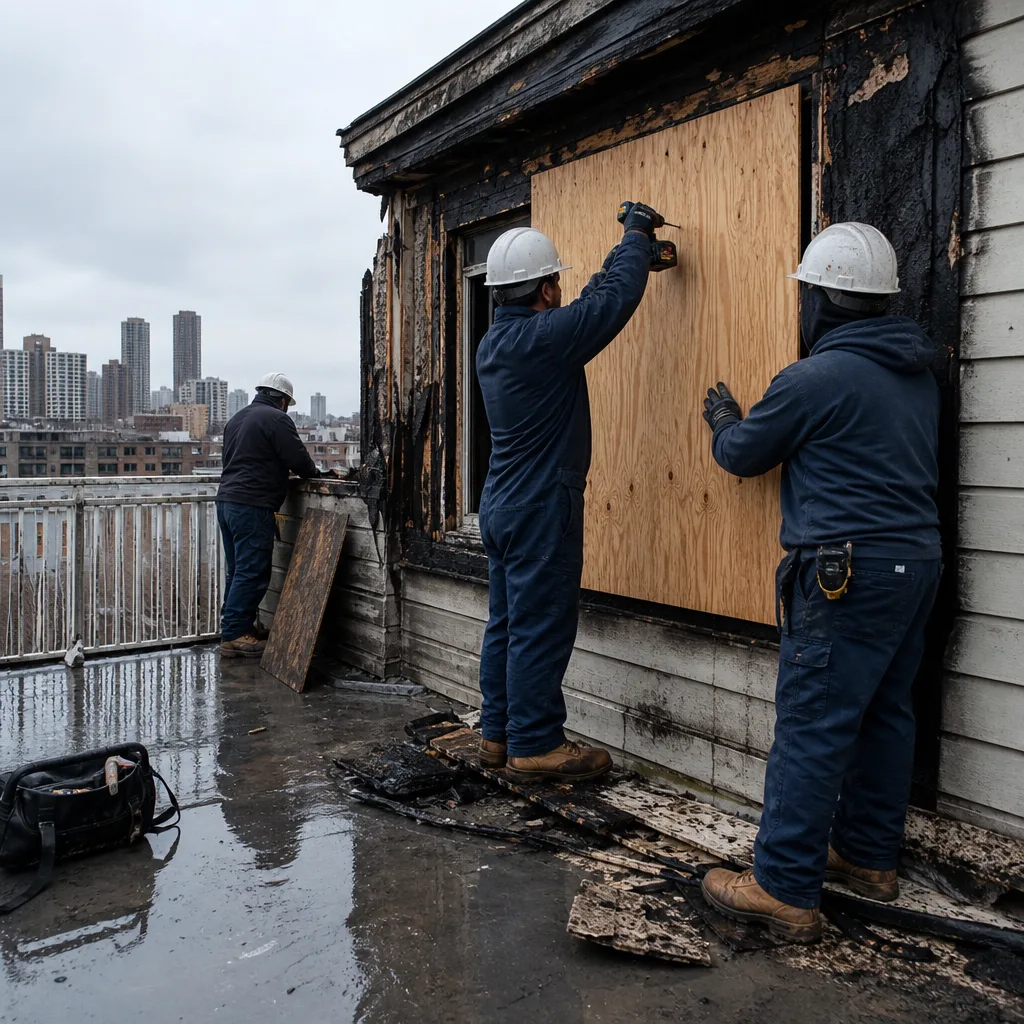
Removal means physically taking out colonized material and cleaning what can be saved. In a 1930s Tudor off Tulip Avenue, that often means removing saturated plaster and lath while preserving the studs and sheathing underneath. We contain, scrub, and dispose per Nassau County regulations.
Black Mold Remediation
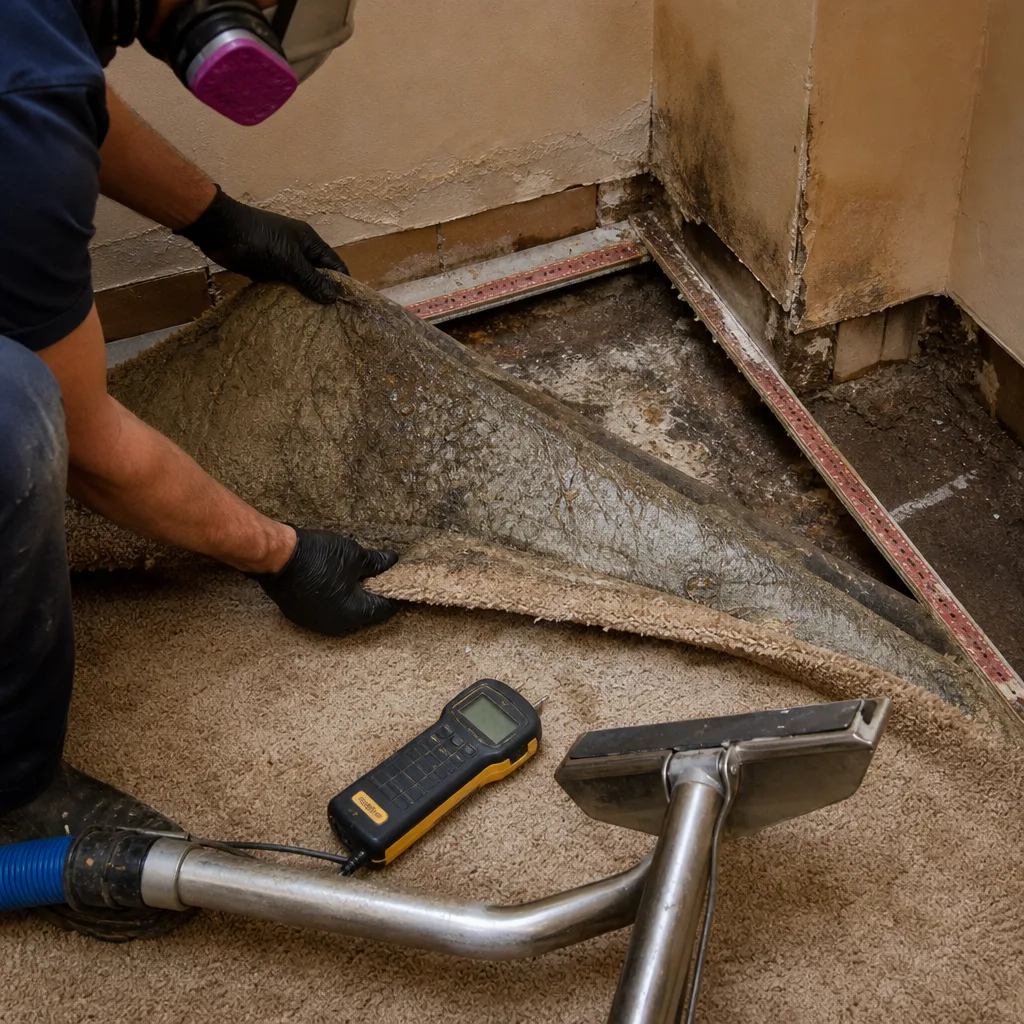
Stachybotrys, what most people call black mold, needs chronic moisture to grow. Floral Park’s groundwater seepage provides exactly that. Our black mold jobs use full containment, negative air pressure, and HEPA air scrubbing, and the clearance testing has to pass before we drop the poly walls.
Air Quality Restoration
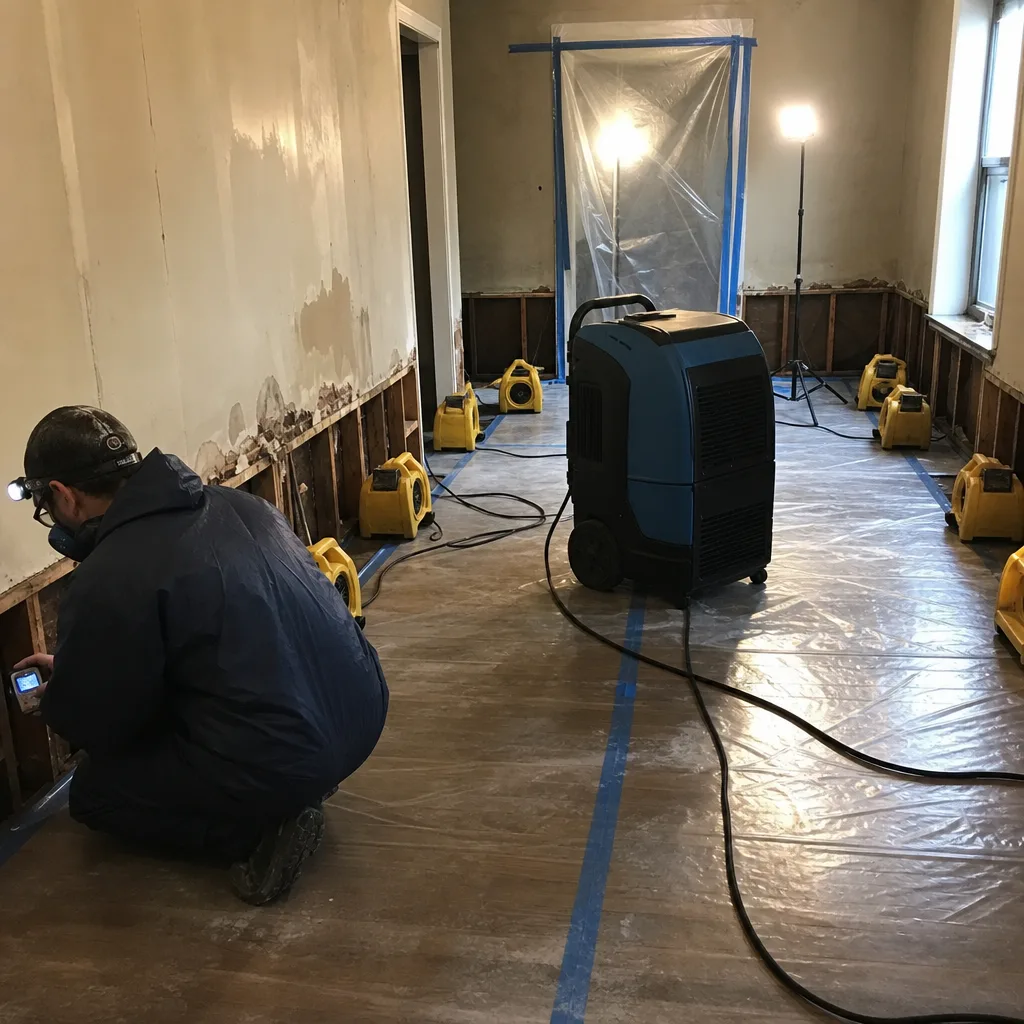
Mold spores don’t respect room boundaries. After the colony is removed, we run air scrubbers and, when needed, fogging or oxidation treatments to bring the indoor air back to levels safe for the people who actually live there. Homeowners over 65, or anyone with respiratory conditions, are the first priority in that decision.
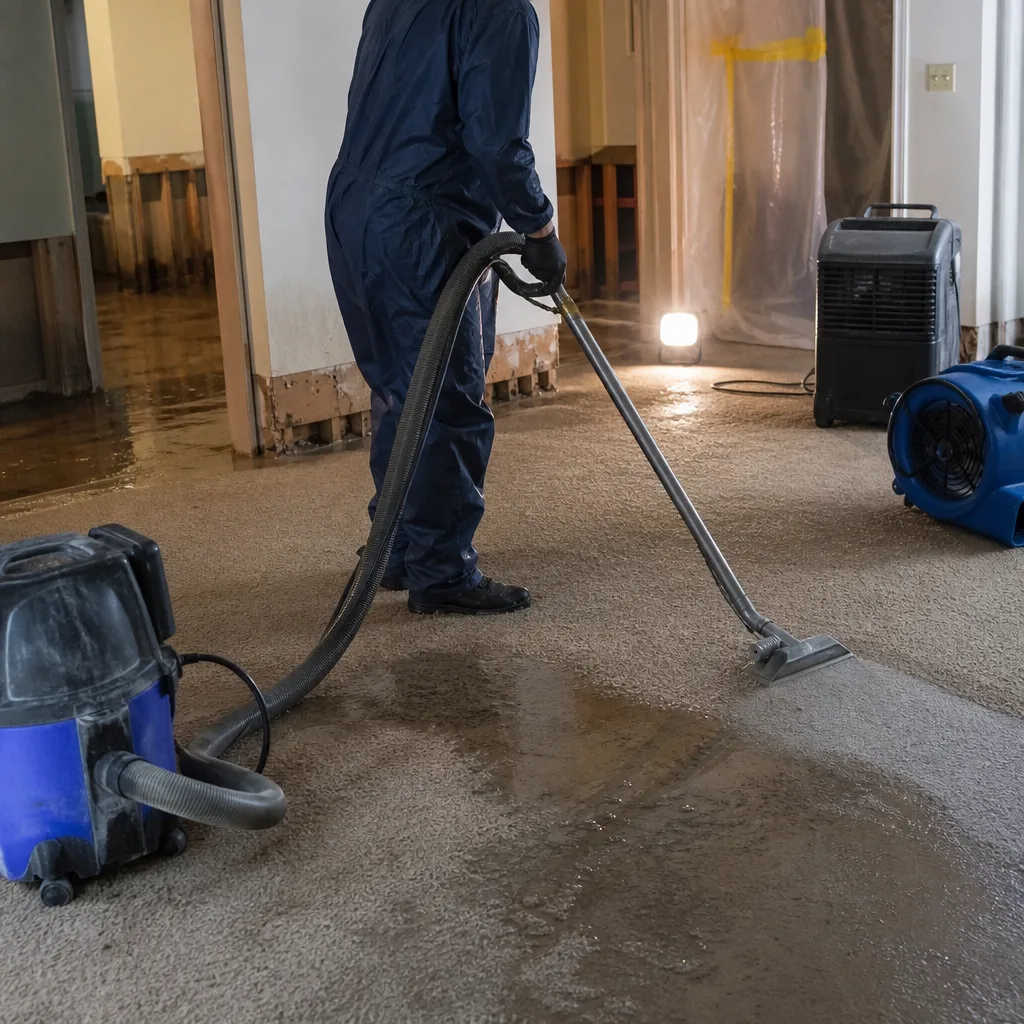
Crawl Space Treatment
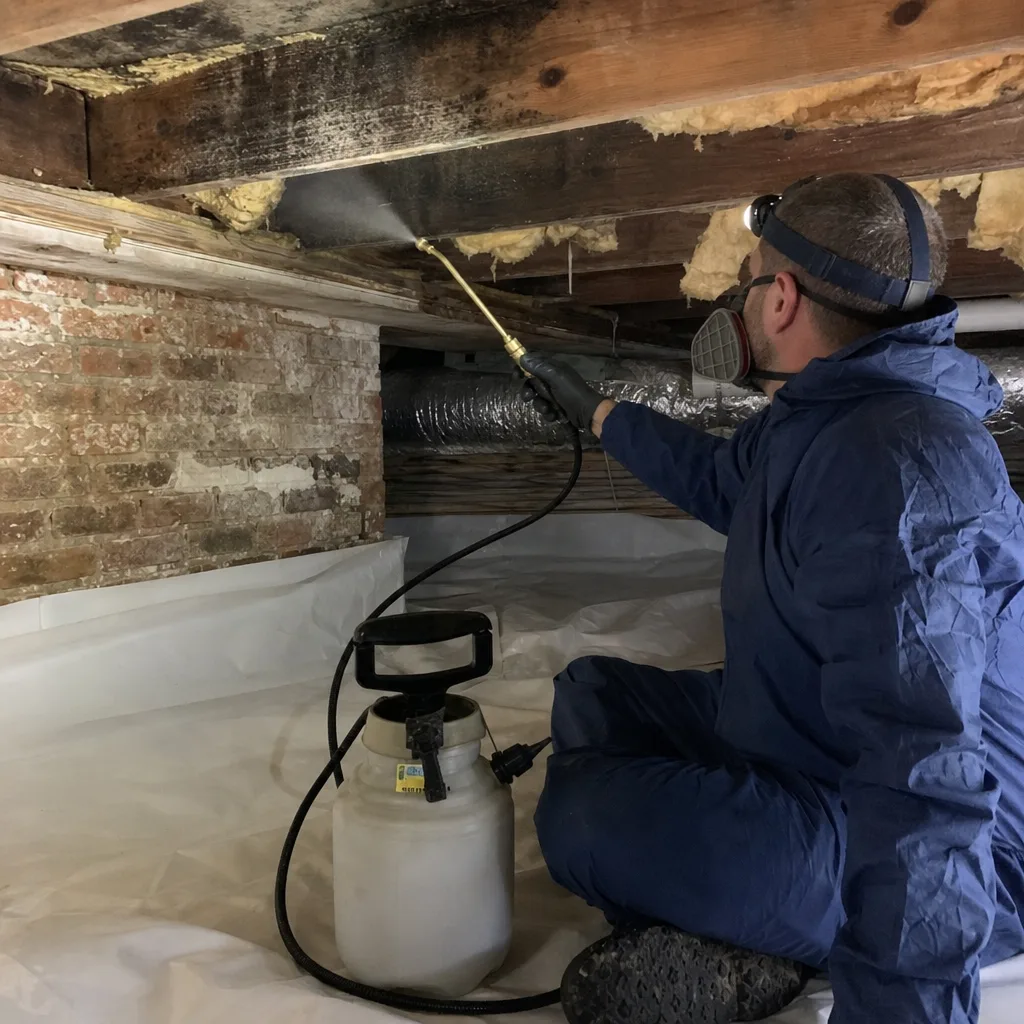
Floral Park’s 1950s split-levels have crawl spaces that quietly feed mold into the rooms above. We seal, vapor-barrier, and dehumidify those spaces so the issue doesn’t return. This is the single most common repeat-call prevention we do in the village, and it’s often the part the last contractor skipped.
Moisture & Humidity Control
The water table under Floral Park sits close enough to the surface that even dry weather can produce damp basements. We install the drainage, sump pumps, and dehumidification that stop mold before it starts. This is the long-term fix, and it’s cheaper than a second remediation.
What happens when you call
- 1
A real person answersNo phone trees - you reach a local pro.
- 2
You get an upfront price rangeHonest numbers before anyone is dispatched.
- 3
A background-checked tech heads outLicensed & insured, dispatched right away.
- 4
You approve before work beginsNothing starts until you say go.
Mold Remediation Costs in Floral Park, NY
A typical mold remediation in Floral Park runs $1,800-$6,500 depending on the colony’s square footage, whether containment is required, and what the village inspector needs to see.
Here’s what homeowners in Floral Park actually pay, based on the work we’ve done here:
| Service | Typical Range in Floral Park |
|---|---|
| Mold inspection with moisture mapping | $250-$550 |
| Small remediation (one wall, under 10 sq ft) | $1,200-$2,000 |
| Basement remediation with containment | $3,000-$6,500 |
| Crawl space treatment with vapor barrier | $2,500-$5,000 |
| Black mold remediation with full containment | $3,500-$8,000 |
| Humidity control system installation | $1,800-$3,200 |
What moves the price is the extent of the colony behind the plaster, whether HVAC ductwork is involved, and whether the village requires its own inspection sign-off beyond Nassau County’s. Insurance covers mold remediation when the mold stems from a covered peril, like a burst pipe, and your policy language matters. We work directly with your adjuster so you don’t have to interpret that language yourself. The free visual inspection gives you a firm scope and price before any work begins. Call (917) 924-4221 and we’ll walk the property with you.
Working With Your Insurance Company
Mold claims get denied or underpaid when documentation is thin. We start documenting in the first hour: photos of every affected surface, moisture readings, and a written scope that matches the insurance carrier’s estimating standards. From there, we communicate directly with your adjuster, so you don’t spend your evenings on hold with someone who’s never seen your basement. The adjuster gets our drying logs, our equipment list, and the before-and-after readings. That’s usually the difference between a claim that pays and one that gets fought. We’ve been doing this in Floral Park long enough to know what the carriers need, and we provide it without the homeowner ever playing messenger.
What We Provide Your Insurer
- Thorough documentation of the loss
- Photos of all damage, room by room
- Moisture readings and drying logs
- A detailed, line-item scope of work
- Direct coordination with your carrier
Floral Park’s Building Department and Your Mold Job
Floral Park is an incorporated village with its own building department, which means a mold remediation job here needs two layers of approval: Nassau County’s and the village’s. Contractors who pull only the county permit hit a stop-work order when the village inspector arrives mid-job. That adds weeks to the timeline and usually means the homeowners are out of their house longer than planned.
Our crews have done this work in Floral Park for years. We know the village’s inspectors, we know they’re attentive to anything that changes a streetscape the community protects, and we build the inspection schedule into the job plan from day one. On a 1930s Cape Cod near Tulip Avenue, our crew found black mold blooming behind original horsehair plaster after groundwater wicked through an unlined block foundation. We ran containment and HEPA air scrubbers, removed the saturated plaster, and documented moisture readings dropping from 42% to 9% over four days of structural drying with Dri-Eaz dehumidifiers before the village inspector cleared the job. That’s the sequence, and it works because we don’t skip the village’s layer.
One more thing that’s specific to Floral Park: because the water table sits just a few feet below grade, basement moisture is a chronic, code-triggering issue even in dry weather. A contractor who doesn’t address the groundwater seepage through an unlined block foundation will dry the basement, pass the inspection, and hand you a recurrence in one season. We address the water source, not just the stain. That’s the difference between a job that holds and a job that doesn’t.
We Also Serve Cities Near Floral Park
Our crews respond to mold calls across western Nassau County and eastern Queens. You’ll find us in Bellerose, New Hyde Park, Glen Oaks, and Elmont, often arriving within the same 45-minute window we hold for Floral Park itself. Same live dispatchers, same certified technicians, same written scope before work starts.
Floral Park Mold Remediation Questions, Answered
Does Floral Park village require a separate permit for mold remediation beyond Nassau County’s?
Yes. Floral Park is an incorporated village with its own building department, and it requires its own inspection sign-off on top of Nassau County’s permitting. Skipping the village’s layer will stop the job mid-way, so we build both approvals into the schedule from the start.
How do you dry horsehair plaster walls without causing more mold?
Horsehair plaster is a lime-and-hair matrix that holds moisture differently than drywall, and we dry it slowly with controlled dehumidification rather than aggressive heat. Over-drying cracks the plaster; under-drying leaves the wall damp enough for regrowth. Our moisture meters tell us when the dry standard is met, and we log those readings daily.
Why does mold keep coming back in Floral Park basements even after remediation?
Because the water table under Floral Park sits a few feet below grade, and groundwater seeps through unlined block foundations even in dry weather. If the contractor dries the basement without addressing the seepage, mold comes back within a season. We treat the water source, not just the colony.
Can you remediate mold in a Floral Park home without relocating my family during the job?
Usually yes. We contain the affected area with poly sheeting and negative air pressure, which keeps spores from moving into the rest of the house. For sensitive occupants or large remediations, we’ll advise temporary relocation, but most Floral Park jobs are done while the homeowners stay.
What does ‘category’ of water have to do with mold remediation in Floral Park?
The water feed determines the remediation standard. Category 1 is clean water, like a supply pipe. Category 2 carries contaminants. Category 3 is sewage. Floral Park’s groundwater seepage is usually Category 1 or 2, but Category 3 jobs need different containment and disposal rules. We assess that before we start.
How fast can you actually get to Floral Park?
Our 45-minute response commitment covers all of Floral Park, and we answer the phone live around the clock at (917) 924-4221. A certified crew is usually on site within the hour.
How long does mold remediation take in Floral Park?
A small wall job takes one to two days of drying plus repairs. A full basement remediation with containment usually runs four to seven days, plus the village’s inspection schedule. We’ll give you a timeline in the written scope.
What should I do in the first 30 minutes after I find mold?
Don’t disturb it. Don’t wipe it, paint it, or run fans at it. Kill the HVAC if you can, close the door to that area, and call us at (917) 924-4221. Disturbing a mold colony sends spores through the house and makes the job bigger and more expensive.
Serving Floral Park, NY - Our Local Coverage Area
We’re based in the Floral Park area and know this community well. Use the map below to see our service coverage - if you’re nearby, we can almost certainly help.
Contact Floodline Restoration Co. of Manhattan
If you’ve found mold in your Floral Park home, call (917) 924-4221 now. A live person answers, day or night, and a certified crew can be at your door inside the hour. We’ll do a free visual inspection, explain the scope in writing, and handle your carrier directly. The 90-Day Done Right Promise covers the job in writing, and we stand behind it. Serving Floral Park and the surrounding communities with a plain, honest standard: the line the water left is where we start.
Written by Curt Bowman, Owner at Floodline Restoration Co. of Manhattan, serving Floral Park with the 90-Day Done Right Promise.