
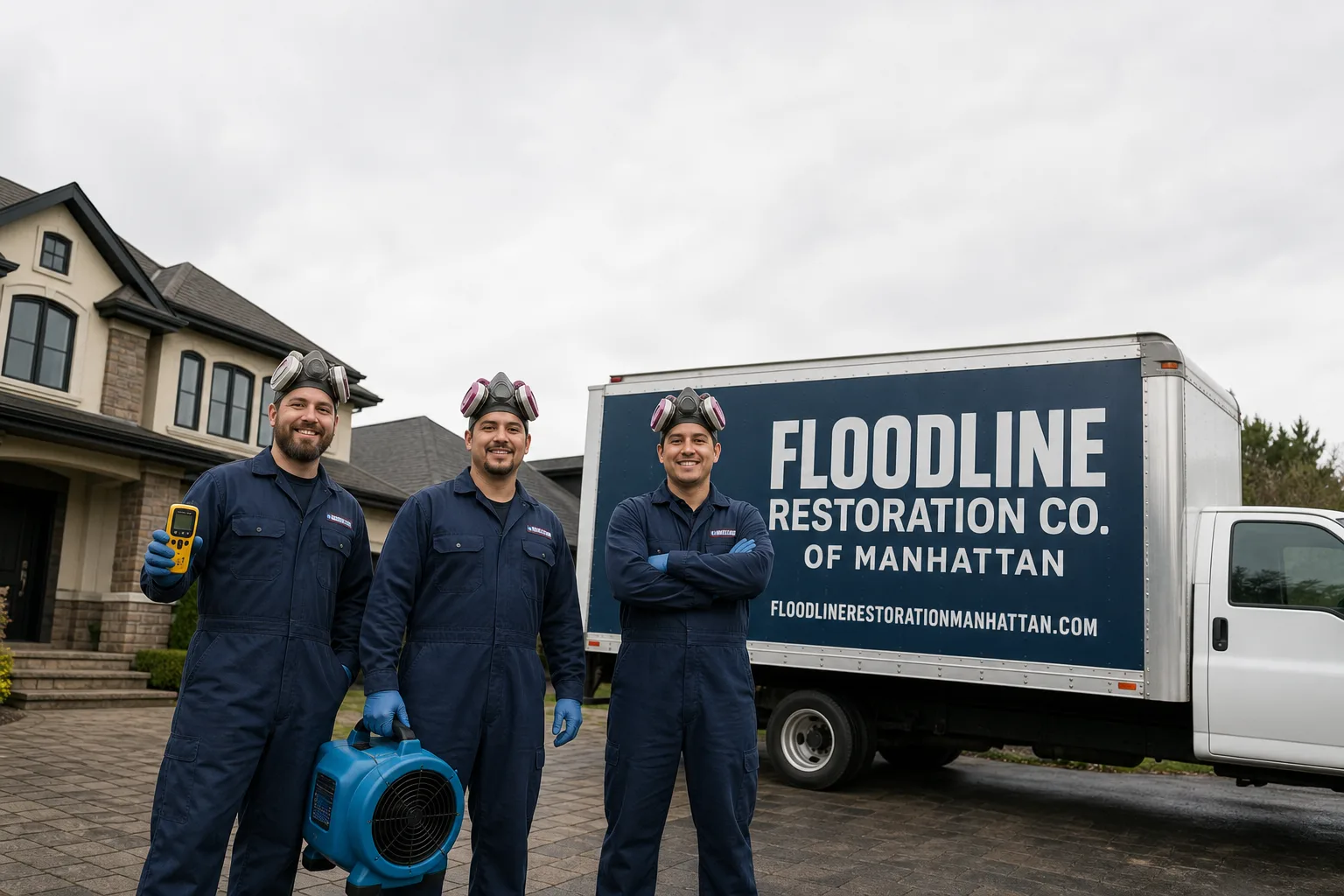
Free visual inspection and a written scope of work before any mitigation begins - photos, moisture readings, and drying logs go in your claim file
The scope we write is the scope we bill. Anything new gets shown to you, in writing, before we touch it.






 Before
 After
After Before
 After
After Before
 After
After24/7 Emergency Storm & Disaster Restoration in Harrington Park
Storm damage in Harrington Park moves fast, and so do we. A nor’easter tears shingles off a raised ranch on Elm Street, the Pascack Brook jumps its banks near Highland Avenue, and within hours water is wicking up drywall and into 1950s block foundations. Our Storm & Disaster Restoration crews are on call around the clock, with live dispatch answering at 2 a.m. and a certified technician headed toward your street, not a voicemail box. Call (917) 924-4221 any hour. The first 60 minutes determine whether a storm event becomes a two-day drying job or a full crawlspace remediation and rebuild.
Understanding Storm & Disaster Restoration Severity in Harrington Park Properties
Storm damage in Harrington Park tends to hit the borough’s post-war housing stock in specific, predictable ways. The ranch and split-level homes built between 1950 and 1975 often sit on slab or block foundations with original vapor barriers long since degraded. When the Pascack Brook watershed overflows, water enters crawlspaces and basements as Category 2 or Category 3 water, meaning it carries silt, farm runoff, or sewage from overwhelmed municipal lines. That water doesn’t just dampen surfaces. It saturates the porous block and mortar joints those foundations were built with decades ago. Within 48 to 72 hours of warm-weather flooding, Harrington Park’s humid continental climate pushes mold growth into poorly ventilated crawlspaces and behind baseboards. Restoration here isn’t a mop-and-fan operation. It requires moisture mapping with thermal imaging, containment where needed, structural drying against a dry standard, and antimicrobial treatment on surfaces that will wick moisture again if left untreated. Homeowners near the Pascack Brook corridor often know this from hard experience. Many have filed multiple claims for the same address, which is precisely why pre-loss documentation matters so much in this borough. Bergen County building officials and insurance adjusters both know these repeat-loss addresses well, and claims get scrutinized accordingly.
Why Harrington Park Property Owners Choose Floodline Restoration Co. of Manhattan
- 45-minute response commitment. When a tree limb goes through a roof or floodwater is rising in a crawlspace, we commit to having a crew dispatched and moving toward Harrington Park within 45 minutes of your call.
- 24/7 live answer, every time. A real person answers our phones at 2 a.m., not an answering service or automated menu. You’ll speak to a dispatcher who knows restoration and can start the process immediately.
- IICRC-certified crews. Our technicians hold WRT, FSRT, and AMRT certifications and follow industry drying and remediation standards on every Harrington Park job. Uniformed, background-checked, and accountable by name.
- Free visual inspection. We’ll assess storm damage on site at no cost before any work begins. You get a written scope and a straight answer about what needs to happen, not a sales pitch.
- Direct insurance billing. We coordinate with your carrier directly, provide the documentation adjusters need, and bill the claim where coverage applies. You never carry messages between us and your insurer.
- One team from extraction to reconstruction. The same Floodline crew that pumps out your crawlspace handles drying, mold prevention, trim repair, and any rebuild. No mid-job handoff to a sub you never chose.
Our Storm & Disaster Restoration Process
Inspection & Assessment
We walk the property with you, map the moisture with thermal imaging and hygrometers, and identify every affected surface, including what’s hiding behind walls and under flooring. For Pascack Brook repeat-loss homes, we document pre-existing conditions carefully to protect your claim history.
Extraction & Stabilization
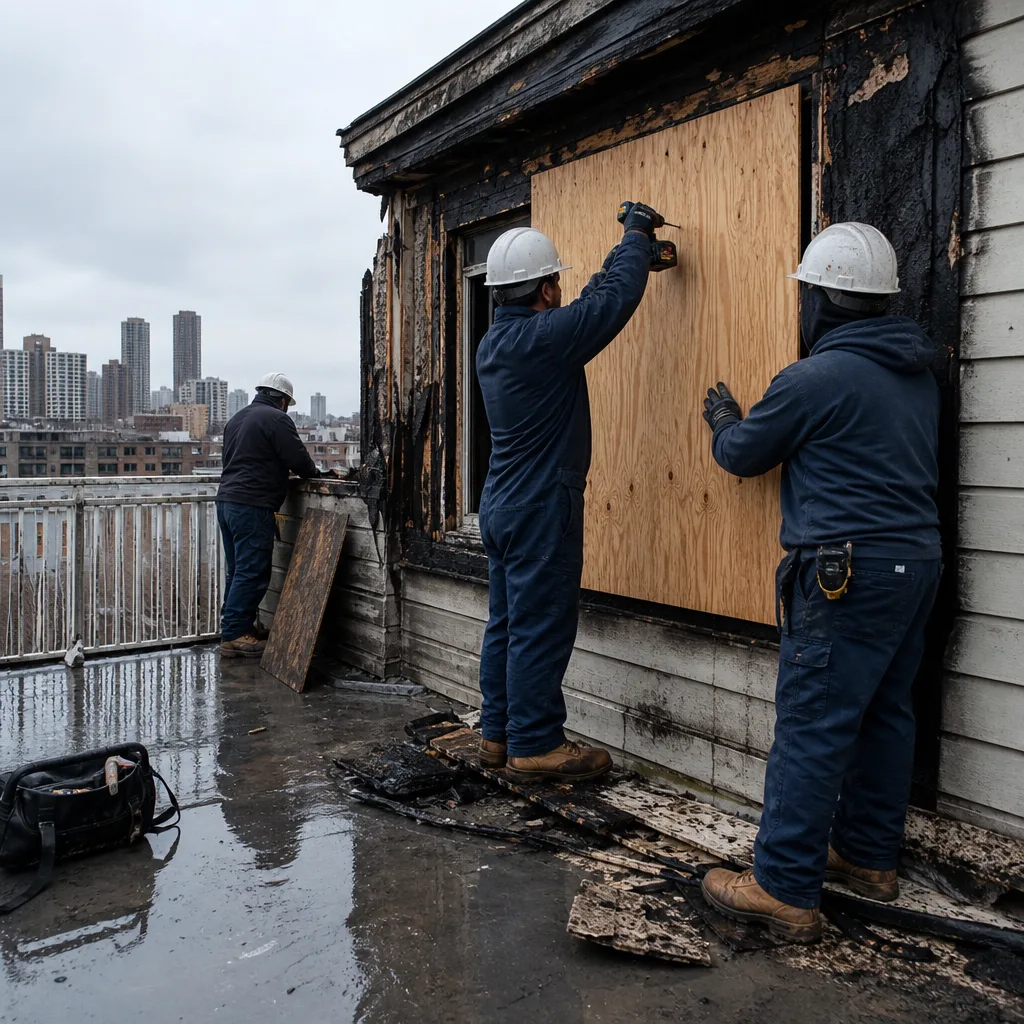
Standing water comes out first. We set up pumps and extraction units, then stabilize the structure with emergency board-up and roof tarping where storm damage has opened the building envelope. This is the step that stops the loss from spreading.
Drying & Dehumidification
We place Dri-Eaz dehumidifiers and XPOWER air movers in a calculated layout to dry structural materials to a verified standard. Daily moisture readings are logged, and we stay until the dry standard is met, not until a timer goes off.
Cleaning & Sanitization
Category 2 and 3 water leave behind contaminants that drying alone won’t fix. We clean and sanitize all affected surfaces, including antimicrobial treatment on block foundations and crawlspace framing, which is critical in Harrington Park’s older homes.
Storm-Specific Treatment
Debris removal from yards and rooflines, wind damage repair to siding and trim, and drying of any interior water intrusion from roof or window failures. Every surface is checked for hidden moisture before it’s declared dry.
Repairs & Restoration
We repair what the storm broke, from drywall and insulation to flooring and finished surfaces. Because we handle the full cycle, the rebuild matches the original scope and no one has to re-explain the job to a new crew.
Need Emergency Storm & Disaster Restoration in Harrington Park Now?
Crews minutes away, answering live 24 hours a day. The sooner we start, the less it costs.
Working With Your Insurance Company
Harrington Park homeowners near the Pascack Brook know the claims process here is not casual. FEMA-designated flood zones, multiple historical claims on the same parcel, and Bergen County permitting all mean your insurer looks at storm damage with a magnifying glass. We handle that scrutiny for you. From the first hour on site, we photograph every affected area, document moisture readings before and during drying, and record the pre-loss condition of surfaces that insurers might otherwise call pre-existing. Our estimates follow industry-standard line-item formats that adjusters recognize. When your carrier has questions, we talk to them directly. You don’t spend your afternoon on hold with a claims department.
What We Provide Your Insurer
- Thorough documentation of the loss
- Photos of all damage, room by room
- Moisture readings and drying logs
- A detailed, line-item scope of work
- Direct coordination with your carrier
Built for Harrington Park’s Loss Calendar
Harrington Park’s storm damage follows a rhythm, and we’ve learned it by working the Pascack Valley across every season. January and February bring deep freezes that burst aging copper and galvanized supply lines in those mid-century ranches, along with ice dams that back water under shingles and into ceilings. March and April bring snowmelt and spring rain that lift the Pascack Brook and fill basements and crawlspaces with groundwater intrusion, especially where original vapor barriers have failed. June through August delivers the hot, humid thunderstorms that drop an inch of rain in an hour, overwhelming storm drains along Highland Avenue and sending flash runoff into low-lying yards. Then comes the fall and early winter nor’easter season, with wind-driven rain and wet snow that peel siding, snap branches, and push water through window frames and roof penetrations. In every season, the same truth applies: Harrington Park’s older housing stock rewards quick response and punishes delay. A flooded crawlspace in July becomes a mold issue by the weekend. A small roof leak in November becomes a ceiling collapse by February.
Storm & Disaster Restoration Across Harrington Park’s Neighborhoods
Homes east of Harriot Avenue and along the Pascack Brook corridor face the most direct flood exposure, and these are addresses we know well. The raised ranches and split-levels near Highland Avenue and Elm Street sit low enough that a nor’easter pushes Category 3 water into crawlspaces and lower-level garages within hours. The blocks around Tappan Road and Bogert Avenue, on slightly higher ground, see less standing water but more wind damage: mature oak and maple limbs through roofs, siding torn loose, and water forced through aging window frames. Over on the western side of the borough, near the Norwood and Closter lines, quiet residential streets like Harriot and La Roche see the same post-war ranch stock, but with more finished basements in the daylight-walkout configurations. Those finished spaces mean water that would be a crawlspace cleanup elsewhere becomes a full lower-level remediation with drywall removal and dry-out behind finished surfaces. Up on the hillside streets near the northern border, wind exposure is worse, and roof tarping calls spike after every serious storm front. Wherever you are in Harrington Park, the response route is short, and the crew that arrives knows what your foundation is made of and what the water just did to it. When we page through a borough map, these are streets we’ve worked, not just names we recognize.
Specialized Storm & Disaster Restoration Services We Offer in Harrington Park
Storm Damage Cleanup
When wind, rain, and falling limbs tear into a Harrington Park home, the mess is only half the problem. We clear debris, remove damaged building materials, and assess every surface the storm water touched. In the borough’s older homes, the concern is always what’s hidden: moisture behind baseboards, saturation in subfloor layers, water that followed a wall cavity down to the block foundation.
Flood Damage Restoration
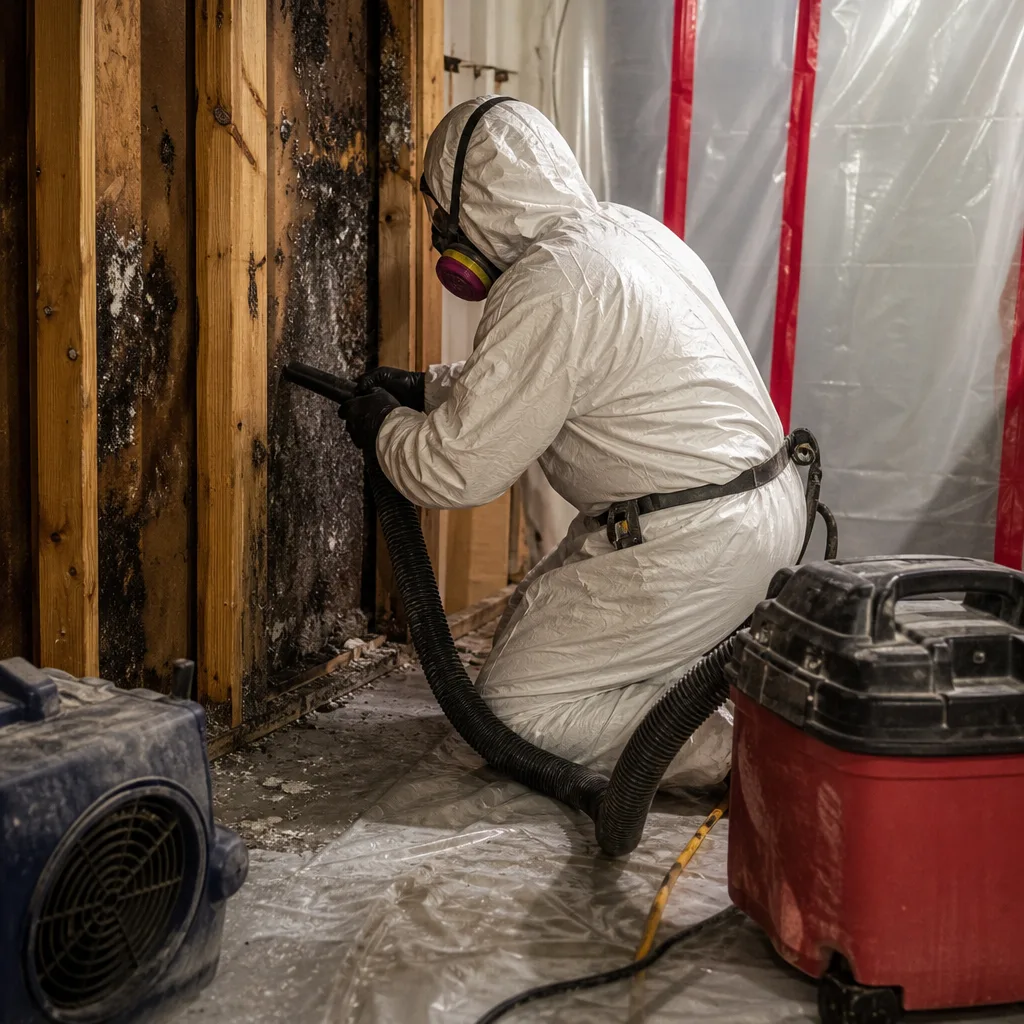
The Pascack Brook is not a hypothetical. Homes along its corridor have flooded repeatedly in recent years, and the restoration work on a repeat-loss property is different from a one-time pipe burst. Our flood crews extract, dry, and sanitize with one eye on your claim history, documenting pre-loss conditions so your current claim isn’t denied for something the last flood left behind.
Emergency Board-Up
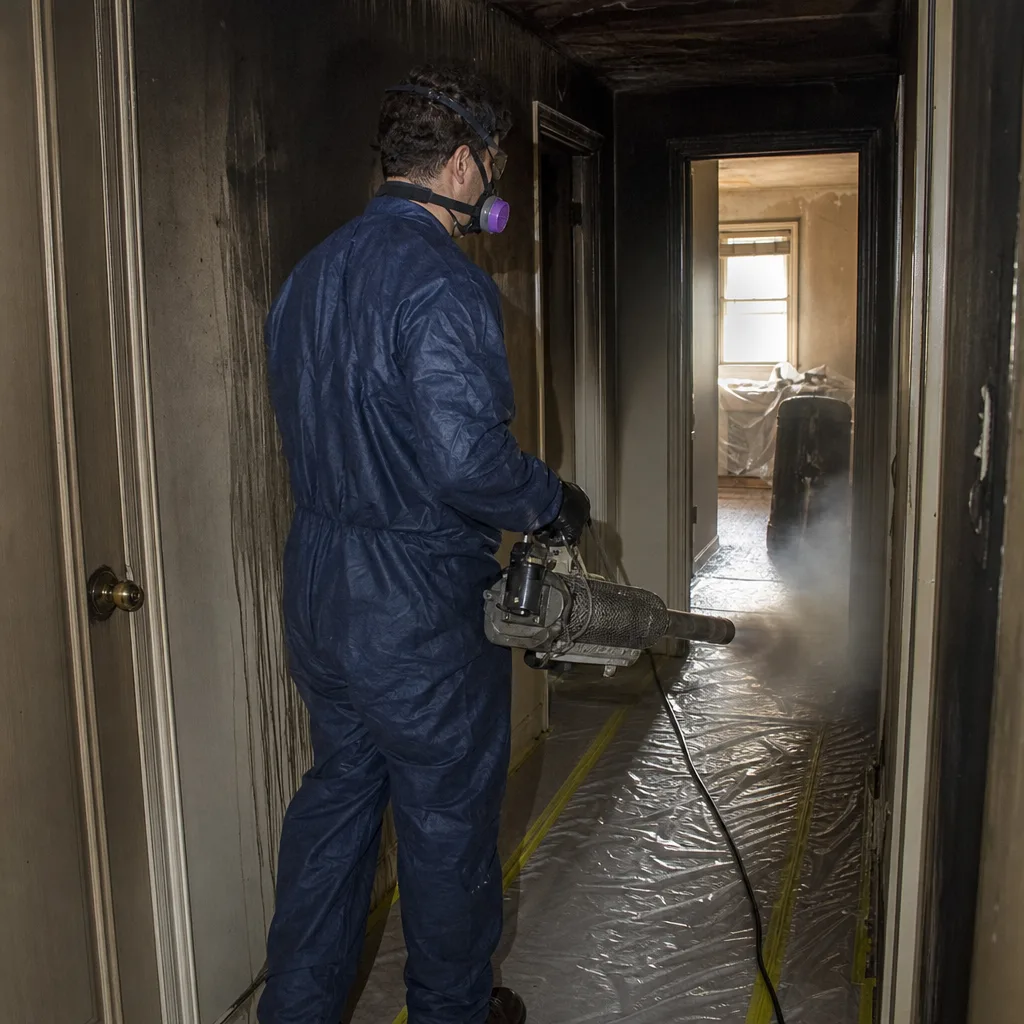
A broken window or a garage door torn off its track leaves your Harrington Park home open to weather, animals, and worse. We secure every opening with board-up that holds until permanent repairs are scheduled. This is not plywood slapped over a hole. It’s weather-sealed, properly fastened, and documented for your insurer.
Roof Tarping
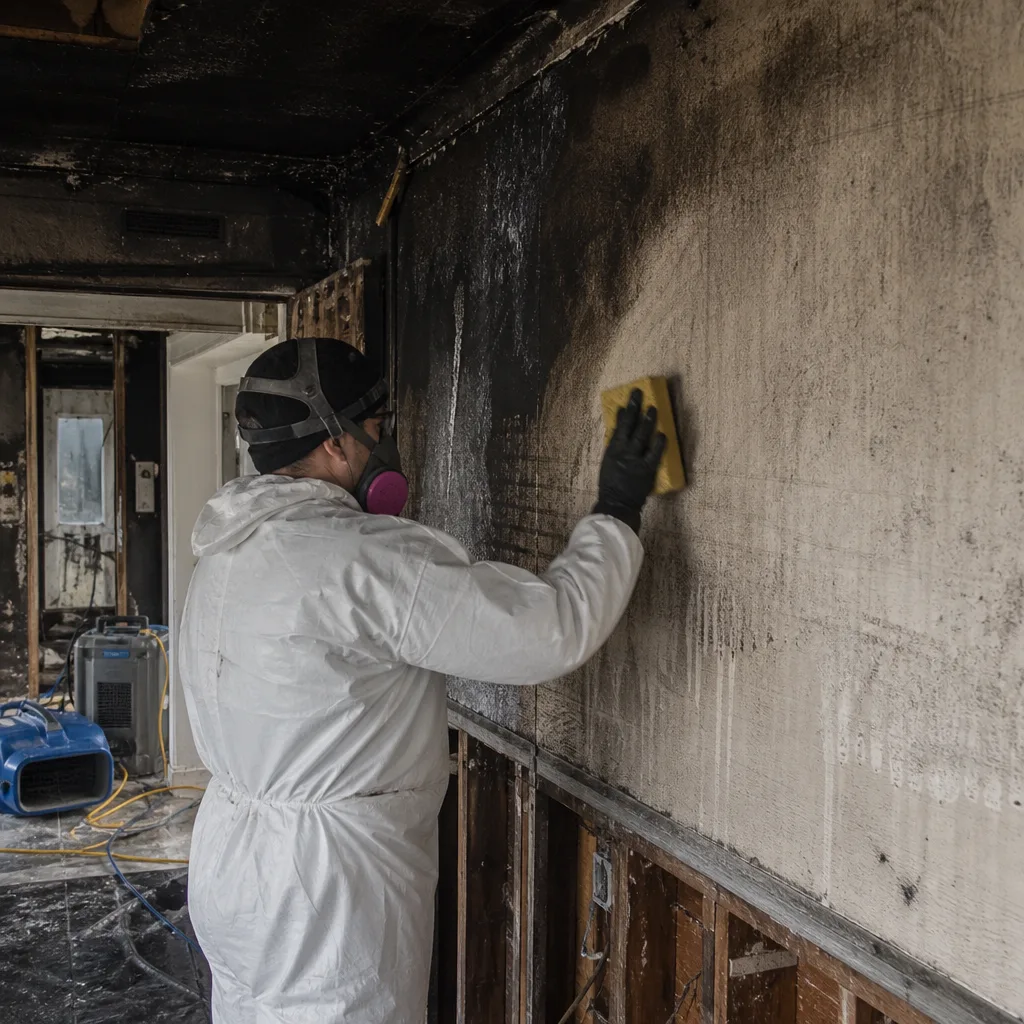
When a nor’easter peels shingles off a ranch on Bogert Avenue, leaving the sheathing exposed, the next rain does more damage than the storm that started it. We tarp damaged roofs within hours, using secured anchor points that survive the next wind event, not just until morning. Tarping stops the active leak and buys time for a proper roof inspection.
Debris Removal
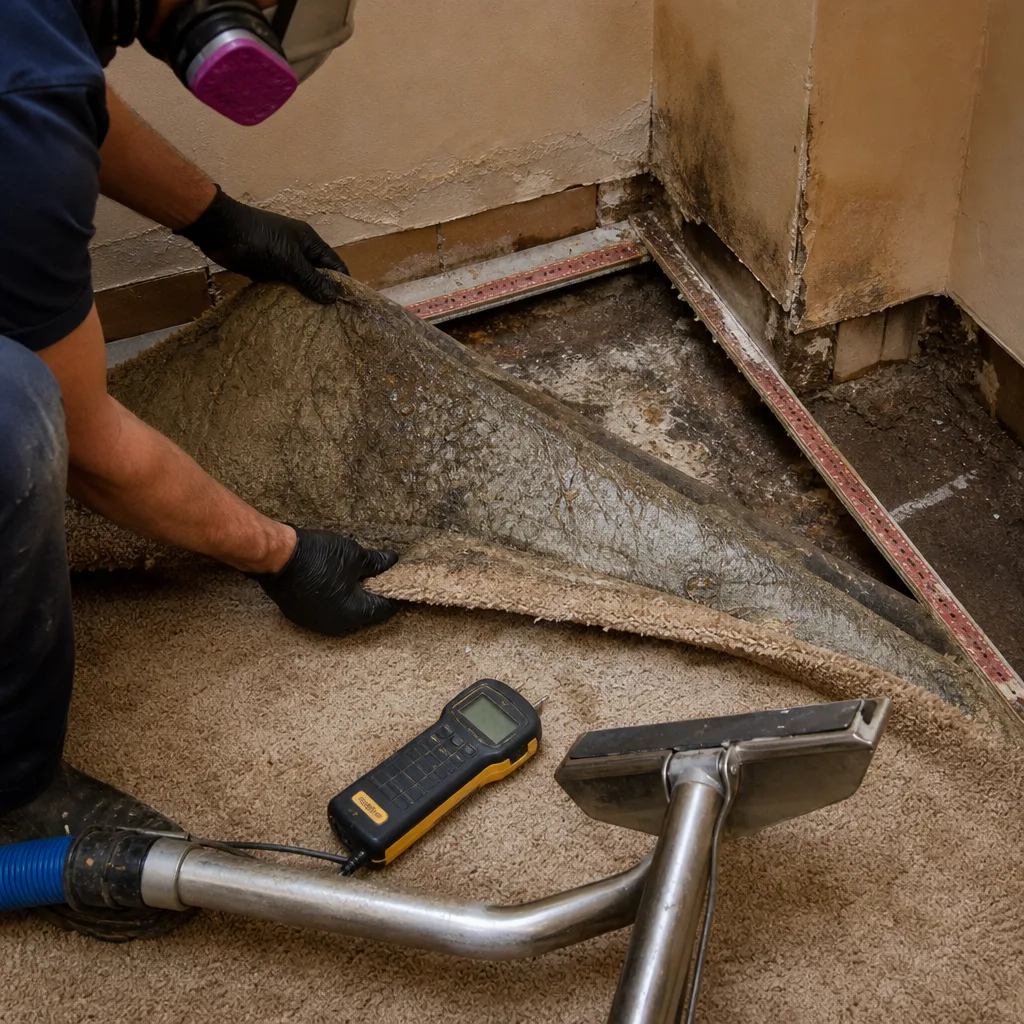
Storm debris in Harrington Park yards ranges from small branches to entire sections of old-growth trees across driveways and walkways. We cut, haul, and clear access paths so your property is safe to move around, then document what was removed for the claim. This also applies to flood debris that the Pascack Brook leaves behind when it recedes: silt, vegetative matter, and whatever the current carried in.
What happens when you call
- 1
A real person answersNo phone trees - you reach a local pro.
- 2
You get an upfront price rangeHonest numbers before anyone is dispatched.
- 3
A background-checked tech heads outLicensed & insured, dispatched right away.
- 4
You approve before work beginsNothing starts until you say go.
Storm & Disaster Restoration Costs in Harrington Park, NJ
Storm damage costs here follow the housing stock. A straightforward crawlspace extraction and drying job in a Harrington Park split-level typically runs $2,400 to $4,800 depending on square footage and water category. Full basement flood restoration with drywall removal, antimicrobial treatment, and structural drying lands between $5,500 and $12,000. Roof tarping after a nor’easter usually costs $450 to $900 for a standard ranch or split-level, while emergency board-up runs $350 to $700 per opening. Debris removal varies widely: $250 to $700 for smaller branch cleanup, $1,200 to $4,000 when large trees are involved. What moves the price most in Harrington Park is water category and access. A tight crawlspace with Category 3 water and a repeat-loss claim on file takes longer to dry and document, and the scope reflects that. Many storm losses are covered by homeowners insurance or flood insurance, and we bill carriers directly where that applies. The free visual inspection gives you a firm written scope before any work begins, so there’s no open-ended meter running while you decide. Call (917) 924-4221 for exact numbers on your specific damage, not a guess.
We Also Serve Cities Near Harrington Park
Our crews respond across Bergen County’s northern tier. You’ll find us working in Harrington Park and the neighboring boroughs of Norwood, Westwood, Closter, and Haworth. If you’re just across a town line and dealing with storm damage, the same certified crews and the same live 24/7 dispatch apply.
Serving Harrington Park, NJ - Our Local Coverage Area
We’re based in the Harrington Park area and know this community well. Use the map below to see our service coverage - if you’re nearby, we can almost certainly help.
Harrington Park Storm & Disaster Restoration Questions, Answered
How fast can you get to my Harrington Park home after a storm?
We commit to dispatching a crew within 45 minutes of your call, and for Harrington Park addresses we’re typically on site within the hour. Live dispatch means the clock starts when you call, not when someone checks a message. Call (917) 924-4221 and you’ll speak to a person who starts the process immediately.
How do you handle repeat flood claims for homes along the Pascack Brook in Harrington Park?
We treat repeat-loss properties differently, because your insurer does too. On every Pascack Brook flood job, we document pre-existing conditions before we extract water or remove materials, photograph everything in its as-found state, and log moisture readings throughout drying. That documentation gives your current claim a clean separation from prior losses, which is exactly what Bergen County adjusters look for when they scrutinize these addresses.
What’s the right moisture reading before you can say my Harrington Park crawlspace is dry?
We dry to the IICRC dry standard, which for the wood and block materials common in Harrington Park crawlspaces typically means moisture content below 16 percent for wood and equilibrium with the surrounding environment for concrete and block. We don’t stop when the floor feels dry to the hand. Daily readings with moisture meters and thermal imaging confirm the number, and we hand you the log.
Can you do a pack-out and still finish storm cleanup in one trip for my ranch home?
Yes, and we do it regularly on Harrington Park ranch and split-level homes. A pack-out moves your contents to a safe area, either on site or in our storage, while we extract, dry, and remediate. Because the same crew runs the full job, pack-out, cleanup, and pack-back happen in one continuous sequence. No one waits for a different company to show up next week.
Do I need a separate permit for flood restoration work in Harrington Park after a storm?
For most water extraction, drying, and cleaning work, no. When storm damage requires structural repairs, rebuild, or changes to electrical or plumbing systems, Harrington Park’s borough building department and Bergen County may require permits. We handle the permitting paperwork on the work we perform, so you don’t have to chase down a permit office while your home is open to the weather.
What does category 2 or 3 water mean for my Harrington Park basement after a nor’easter?
Category 2 water carries significant contamination, like silt and field runoff from a Pascack Brook overflow. Category 3 water is grossly contaminated, typically including sewage or floodwater that has picked up animal and human waste. Both require containment, antimicrobial treatment, and proper disposal of saturated porous materials. Drying alone leaves behind contaminants you don’t want in your home’s air.
Will my insurance cover storm and flood restoration in Harrington Park?
Most homeowners policies cover wind-driven rain, fallen trees, and roof damage. Flood damage from the Pascack Brook overflowing usually requires a separate flood insurance policy, which many Harrington Park homeowners in FEMA-designated zones already carry. We document everything from the first hour so your claim is supported either way, and we bill your carrier directly on covered losses.
What should I do in the first 30 minutes after storm water enters my home?
Call us at (917) 924-4221 first. Then, if it’s safe, turn off electricity to the affected area at the breaker and don’t walk through standing water until power is confirmed off. Don’t use a shop vac on floodwater that may be contaminated. Don’t rip out drywall yourself; what you disturb changes the claim. Let our crew arrive, assess, and start extraction with the right equipment.
When the Pascack Brook rises or a nor’easter opens your roof, you want one number and one name that answers. Call Floodline Restoration Co. of Manhattan at (917) 924-4221 for a free estimate and a straight answer, day or night. We arrive fast, we document hard, and we stand behind the work with the 90-Day Done Right Promise, in writing. The line the water left is where we start.
Written by Curt Bowman, Owner at Floodline Restoration Co., serving Harrington Park with storm and disaster restoration since 2010.