
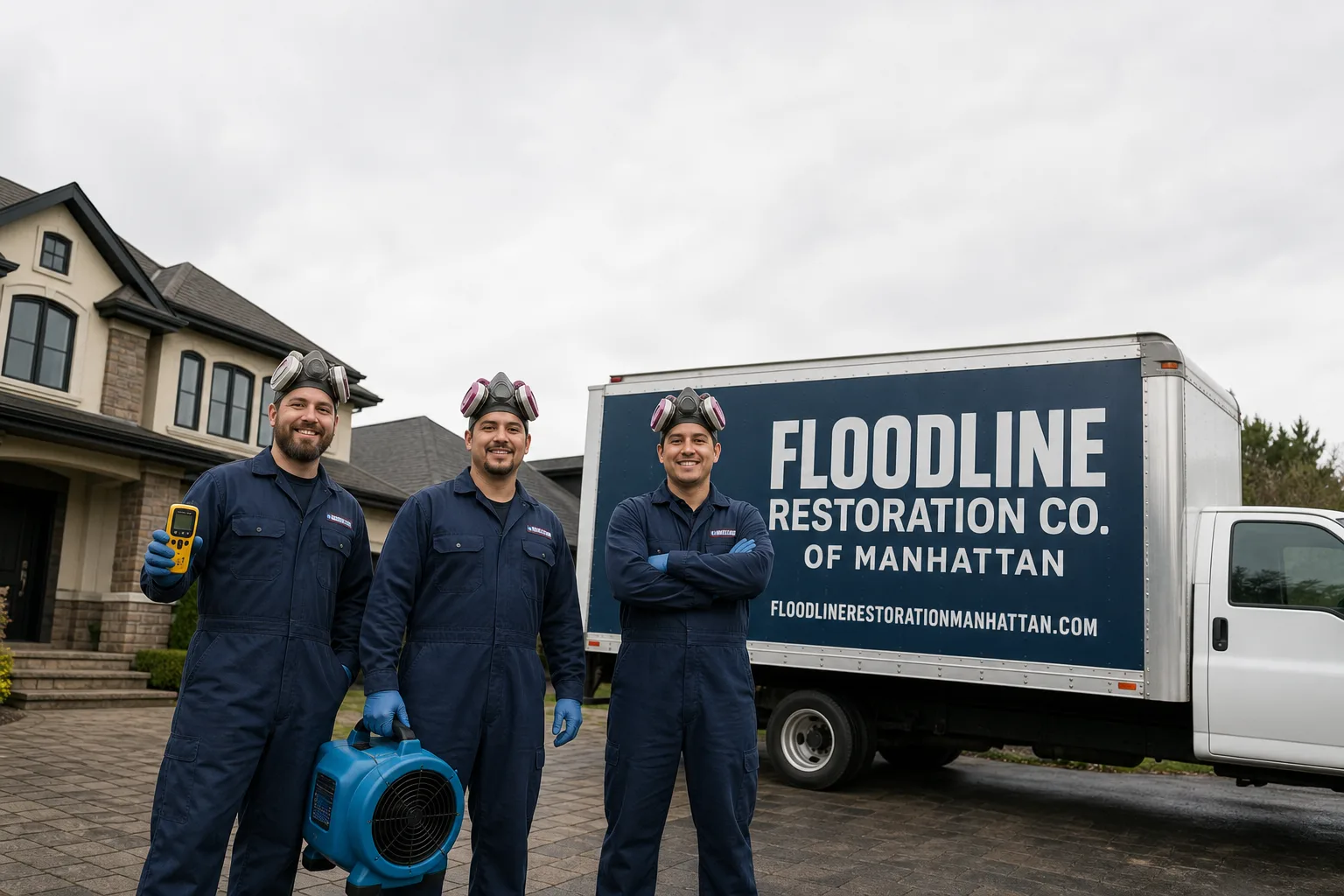
Free visual inspection and a written scope of work before any mitigation begins - photos, moisture readings, and drying logs go in your claim file
The scope we write is the scope we bill. Anything new gets shown to you, in writing, before we touch it.






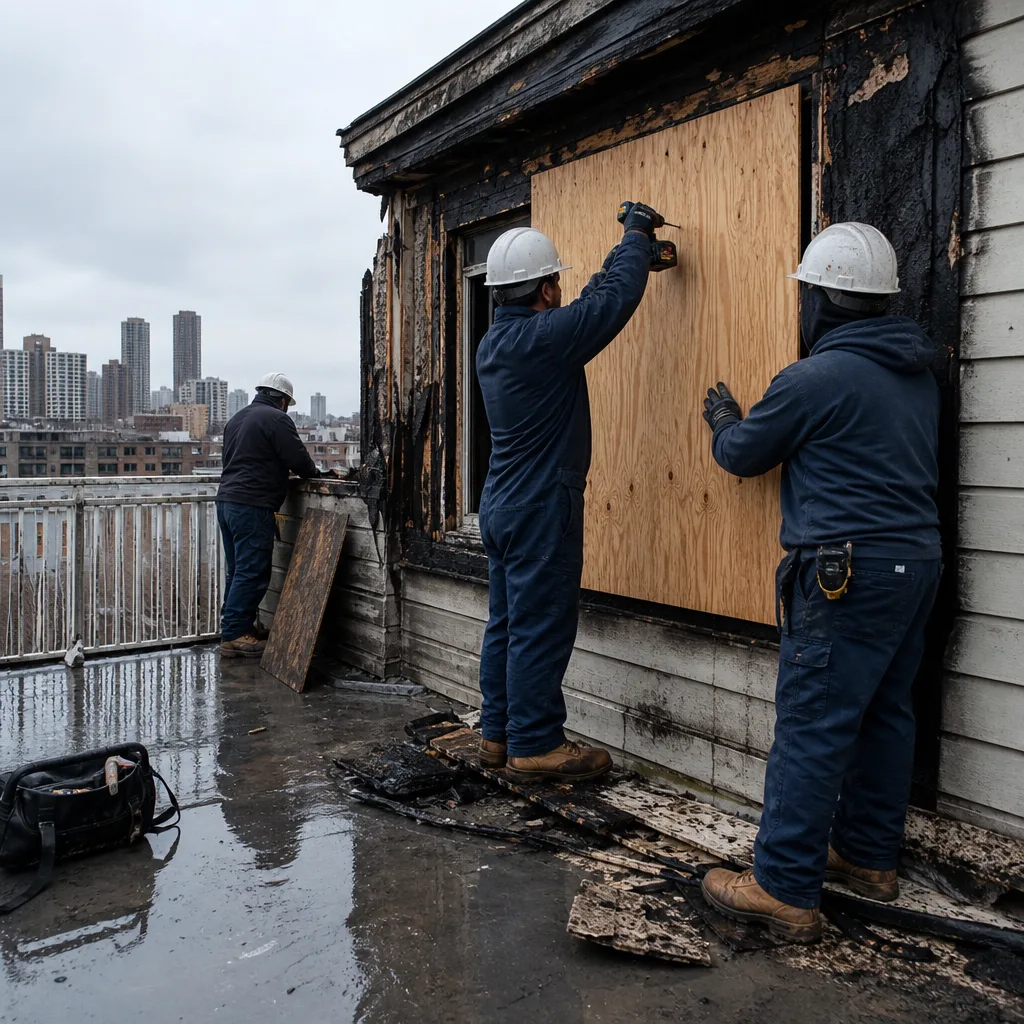
 Before
 After
After Before
 After
After Before
 After
After24/7 Emergency Mold Remediation in Hartsdale
Mold remediation in Hartsdale typically costs between $1,800 and $6,500 depending on how far the growth has spread through plaster walls, rim joists, and basement framing. A contained bathroom or closet job often lands near $1,200, while full basement colonization in a 1930s Colonial can exceed $9,000. We answer the phone live at (917) 924-4221 around the clock and dispatch crews into Hartsdale the same day you call.
Here’s what we know after 42 years of restoration work in Westchester County: mold doubles its footprint every 24 to 48 hours inside a damp, dark basement. The first hour isn’t about saving drywall. It’s about stopping spores from riding forced-air ducts into every bedroom in the house. Call before you shop for bleach. We do free visual inspections in Hartsdale with no obligation, and we arrive in marked trucks with background-checked, uniformed technicians.
Understanding Mold Remediation Severity in Hartsdale Properties
Mold severity in Hartsdale breaks into three practical tiers. Tier one is surface colonization on concrete block or drywall from condensation and poor air movement, commonly found in the tight, low-ceiling basements of 1920s Tudors near Ridge Road. This often requires HEPA vacuuming, antimicrobial treatment, and humidity correction. Tier two is growth that has wicked behind plaster and lath, usually after category 2 water from a failed sump pit or foundation seep sat against the wall for more than 24 hours. The mold follows the moisture line upward, hidden from view. Tier three is duct-contaminated or rim-joist colonization where spores have entered the HVAC system or structural framing, and this is where containment, air scrubbing, and clearance testing become non-negotiable.
Hartsdale’s housing stock makes tier two and tier three more common than homeowners expect. Plaster-and-lath walls in pre-1950 homes hold moisture differently than modern drywall. They wick it upward and hold it longer. Stone and poured-concrete-block foundations in the lower-lying streets near the Bronx River tributaries stay wet for weeks after a storm event. Without moisture mapping and daily drying-log readings, mold that looks like a small patch on the baseboard is often six inches up the lath behind the plaster.
Why Hartsdale Property Owners Choose Floodline Restoration Co. of Manhattan
- 45-minute response commitment in Hartsdale. When you call about mold, a live dispatcher answers immediately and a crew is routed to your address right then.
- 24/7 live answer, never an automated system. At 2 a.m. you get a person who can send a truck, not a recorded message asking you to leave a number.
- IICRC-certified crews trained to AMRT and WRT standards. Mold work is not a side job for us. Our techs carry applied microbial remediation credentials and follow written drying protocols.
- Free visual inspection with a written scope. You get a line-item explanation of what we found, what it costs, and what we recommend before any work starts.
- Direct insurance billing. We document from the first hour and communicate with your adjuster so you don’t have to translate moisture logs over the phone.
- One crew from containment to reconstruction. We don’t hand you off to a different company when it’s time to rebuild. The same technicians who removed the mold put the walls back.
Our Mold Remediation Process
Inspection & Assessment
We start with a visual inspection and moisture mapping using thermal imaging and hygrometers. In a Hartsdale split-level, that means checking rim joists, the sill plate, and the duct runs, not just the visible drywall. We identify the water source first because killing mold without stopping the moisture is a waste of your money.
Extraction/Stabilization
Standing water from a failed sump pit or foundation seep is removed immediately. On the co-op buildings near the Hartsdale station, this step begins after board authorization is secured. In single-family homes, we start the same visit.
Drying & Dehumidification
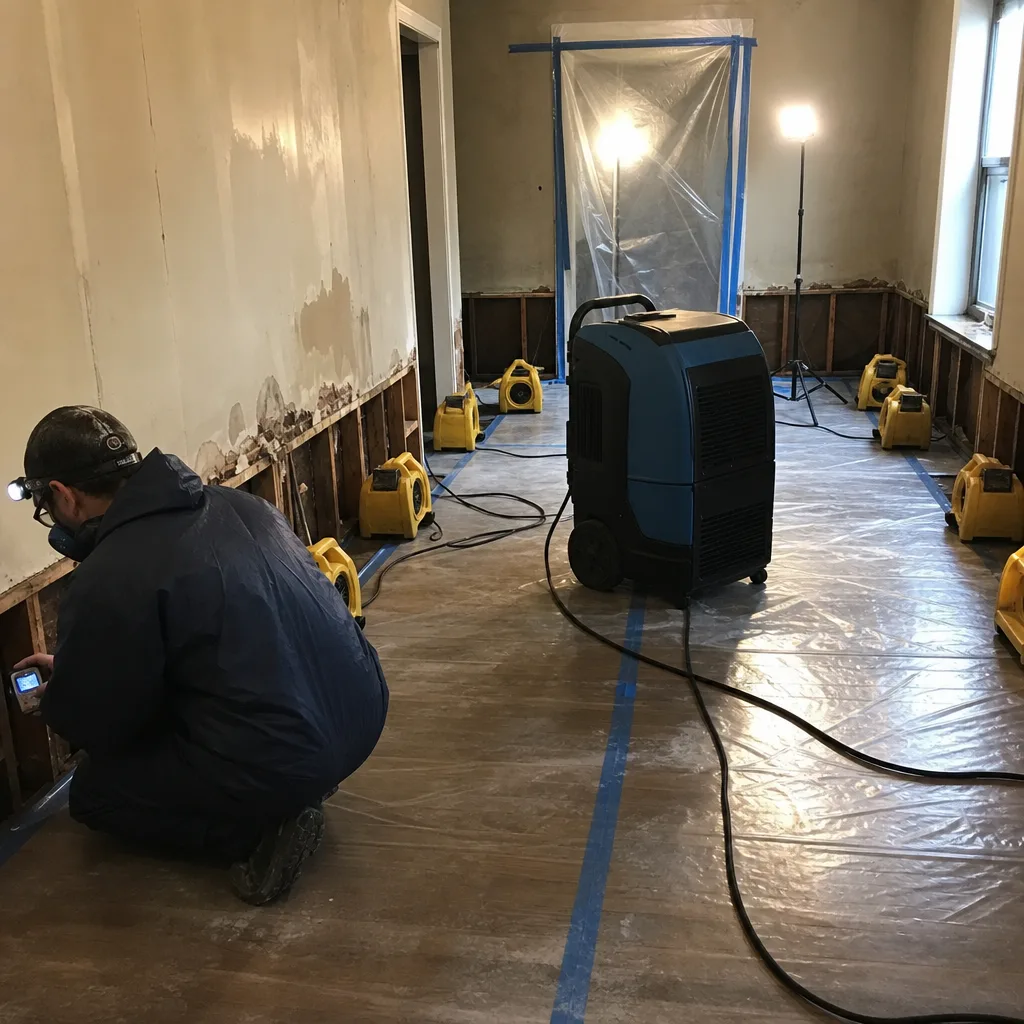
We run Dri-Eaz dehumidifiers and XPOWER air movers positioned to dry the structure, not just the room. Daily moisture readings are logged until the dry standard is met. In Hartsdale’s uninsulated stone basements, this can take three to five days longer than in newer construction because the masonry holds water.
Cleaning & Sanitization
HEPA air scrubbers run continuously during remediation to capture airborne spores. Affected surfaces are HEPA-vacuumed, scrubbed, and treated with EPA-registered antimicrobial solutions. Full containment barriers stay in place until the area passes visual clearance.
Specialty Treatment for Mold Remediation
In Hartsdale’s older Colonials, we commonly perform plaster wall removal, lath treatment, and rim joist remediation where hidden mold has colonized structural framing. Crawl spaces get vapor barrier installation and dehumidifier placement after treatment to prevent re-growth.
Repairs & Restoration
Once the moisture log shows the structure is dry and clearance testing passes, we rebuild what was removed. New drywall, insulation, trim, and paint. The team that started the job finishes it, and the 90-Day Done Right Promise covers the result in writing.
Need Emergency Mold Remediation in Hartsdale Now?
Crews minutes away, answering live 24 hours a day. The sooner we start, the less it costs.
Working With Your Insurance Company
Mold claims in Hartsdale hinge on documentation. The carrier needs to see that the mold resulted from a covered water event, and they need proof of what we found, what we did, and that the structure is dry. We build that file from the first hour. Photos, room by room. Daily moisture readings signed and dated. A line-item scope that matches industry-standard estimating software so the adjuster recognizes every number.
You won’t play messenger between us and your carrier. We bill directly, coordinate with the adjuster on-site, and provide the documentation they ask for. If it helps, we’ll get on the phone with them while standing in your basement so they hear what we’re seeing.
What We Provide Your Insurer
- Thorough documentation of the loss
- Photos of all damage, room by room
- Moisture readings and drying logs
- A detailed, line-item scope of work
- Direct coordination with your carrier
Built for Hartsdale’s Loss Calendar
Hartsdale’s mold season doesn’t follow the calendar. It follows freeze-thaw cycles, nor’easters, and summer cloudbursts over the Bronx River watershed. January and February bring the deep freezes that expand hairline cracks in stone foundations. March and April turn those cracks into seepage channels as snowmelt and spring rain push hydrostatic pressure against basement walls. The 24 to 48 hours after a thaw are when category 2 water finds its way into rim joists and behind plaster, and that’s when mold takes hold.
Summer convective storms drop two to four inches in an hour onto terrain that drains into already-taxed tributaries. Basements in the lowest-lying residential blocks near the river corridor take water faster than sump pumps can move it out. Fall’s nor’easters load older roofs with water and ice, and ice dams on 1920s Tudors and Colonials release meltwater into wall cavities and ceilings. By the time you see the stain on the ceiling, mold has often been growing behind the plaster for days. Our Mold Remediation team plans for this calendar because we’ve worked it every year for over four decades.
Mold Remediation Across Hartsdale’s Neighborhoods
Hartsdale isn’t one housing type. The single-family blocks around Ridge Road and the Webster Avenue corridor are dominated by 1920s-to-1950s Colonials and split-levels with full basements and aging foundation walls. These homes develop mold the same way: water enters through foundation cracks, a sump pump fails, or condensation builds in an uninsulated crawl space. We know the streets, the typical basement layouts, and where the ducts run.
Down near the Hartsdale Metro-North station, the pre-war co-op buildings operate under a different set of rules. Mold remediation cannot begin until the co-op board, not just the unit owner, authorizes demolition and drying equipment placement. That adds 24 to 72 hours to a response that would be same-day on a single-family street. The property managers who know us know we’ll have documentation ready for board review immediately. The unit owners who wait for board approval without a remediation company already lined up lose days, and mold takes full advantage. If you live near the station, call us the moment you suspect a problem, not after the board meeting.
Scattered throughout Greenburgh’s Hartsdale zip codes, the hillside streets above Central Avenue see less standing water but more crawl space humidity. Those homes need moisture and humidity control as much as they need mold removal, otherwise the treatment fails within a year.
Specialized Mold Remediation Services We Offer in Hartsdale
Mold Inspection & Testing
Every Hartsdale home we treat starts with a proper inspection, not a guess. We use thermal imaging to find moisture in walls before we open them and air sampling to identify spore types and concentrations. For the many pre-1950 Colonials in town, this means checking rim joists, sill plates, and the back side of plaster walls where hidden mold lives for months before it’s visible.
Mold Removal
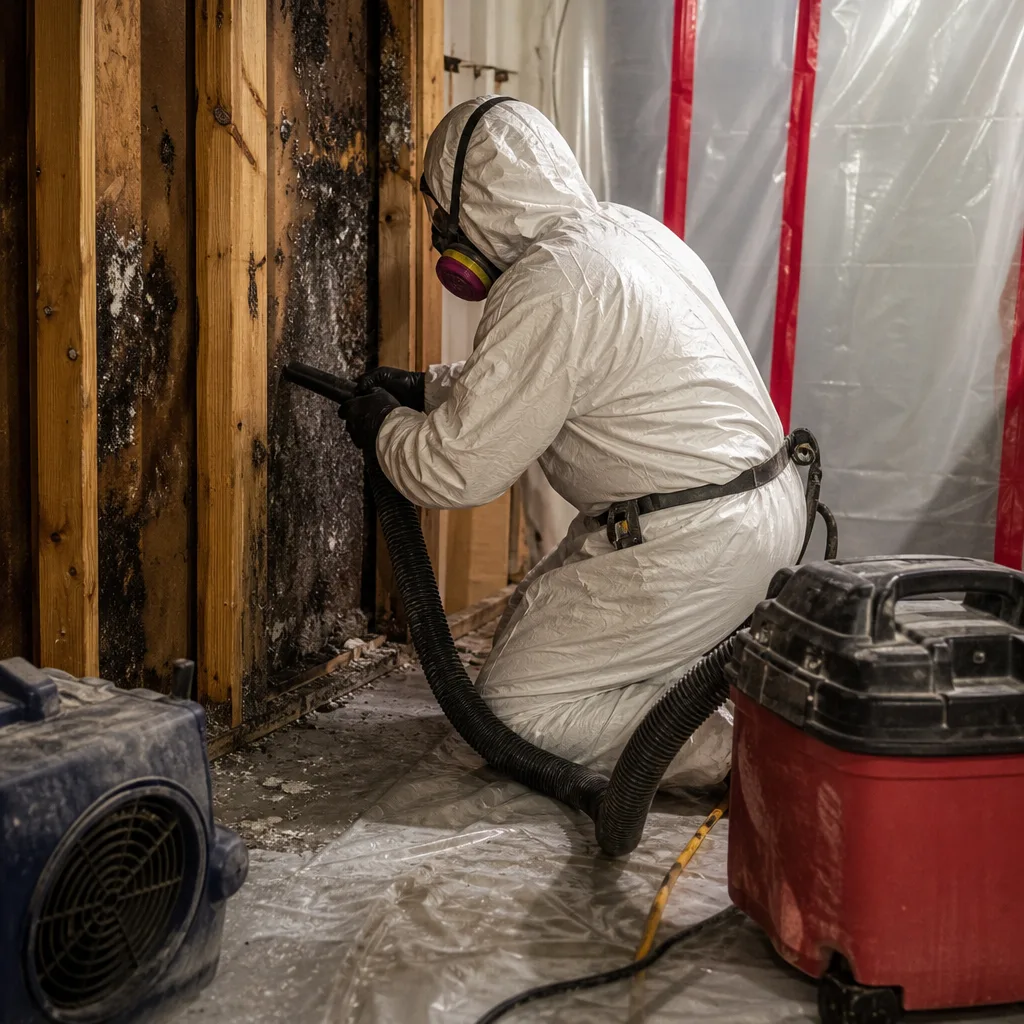
Physical removal, not just chemical treatment. In Hartsdale’s lath-and-plaster homes, mold that has wicked up the wall requires removing the affected plaster, treating the lath, and replacing the section cleanly. We contain the work area under negative air pressure so spores don’t spread through forced-air systems during the job.
Black Mold Remediation
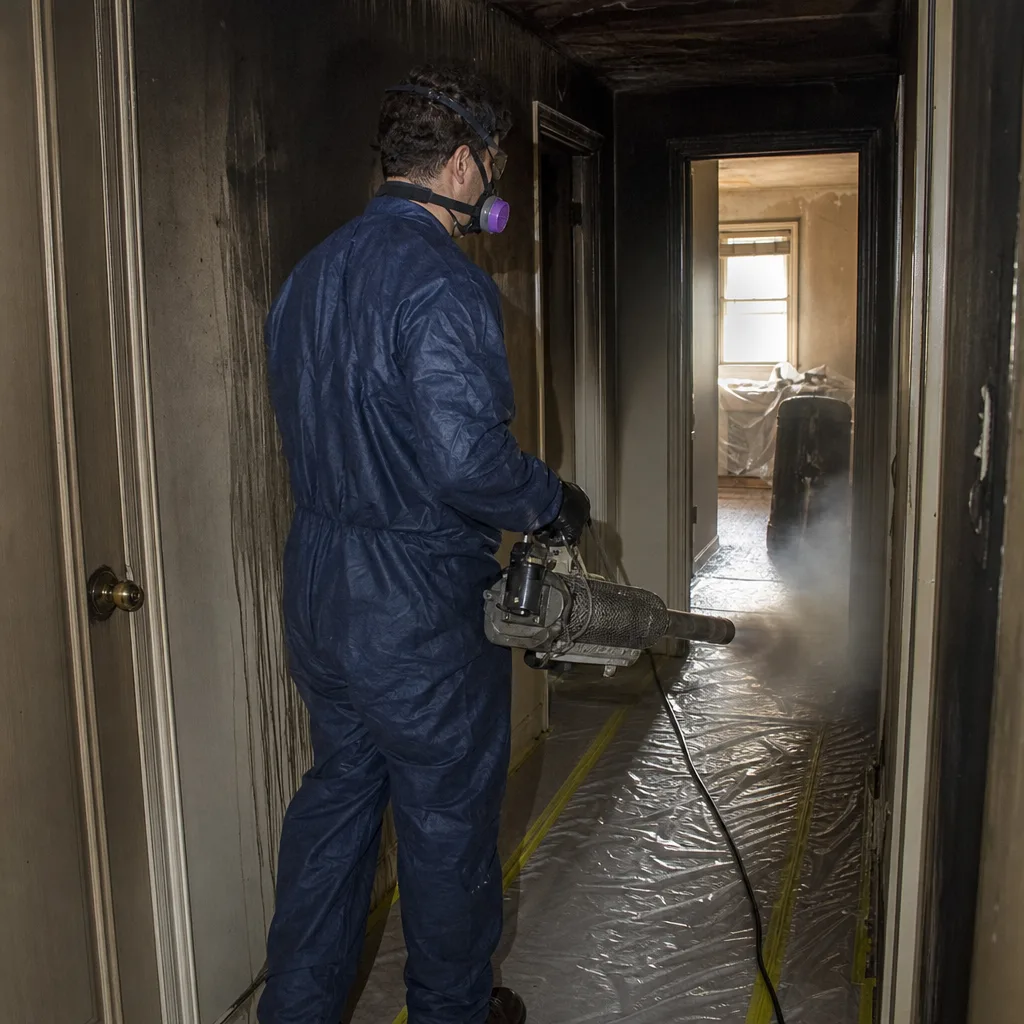
Black mold, most often Stachybotrys, shows up in Hartsdale after prolonged category 2 or 3 water sits against organic materials like drywall paper, wood lath, or old carpet. It’s a heavier remediation: full containment, HEPA air scrubbing, PPE, and clearance testing before anyone re-enters the space without protection. We treat it seriously and document every step for your insurer.
Air Quality Restoration
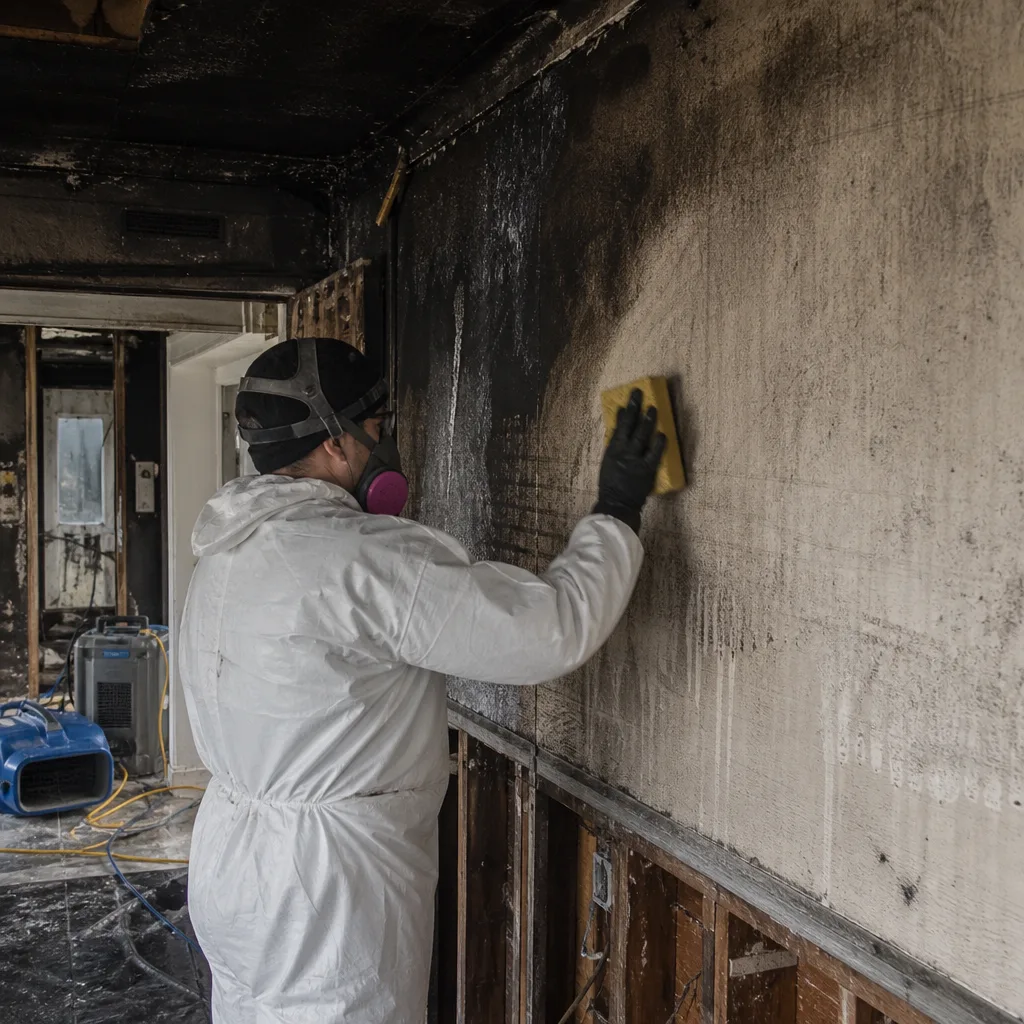
After remediation, Hartsdale homeowners want to know their air is clean. We run HEPA air scrubbers during the job and provide post-remediation verification so you have a record that spore counts returned to normal. For homes with older ductwork, we inspect and clean the HVAC runs so the system isn’t redistributing mold spores through every room.
Crawl Space Treatment
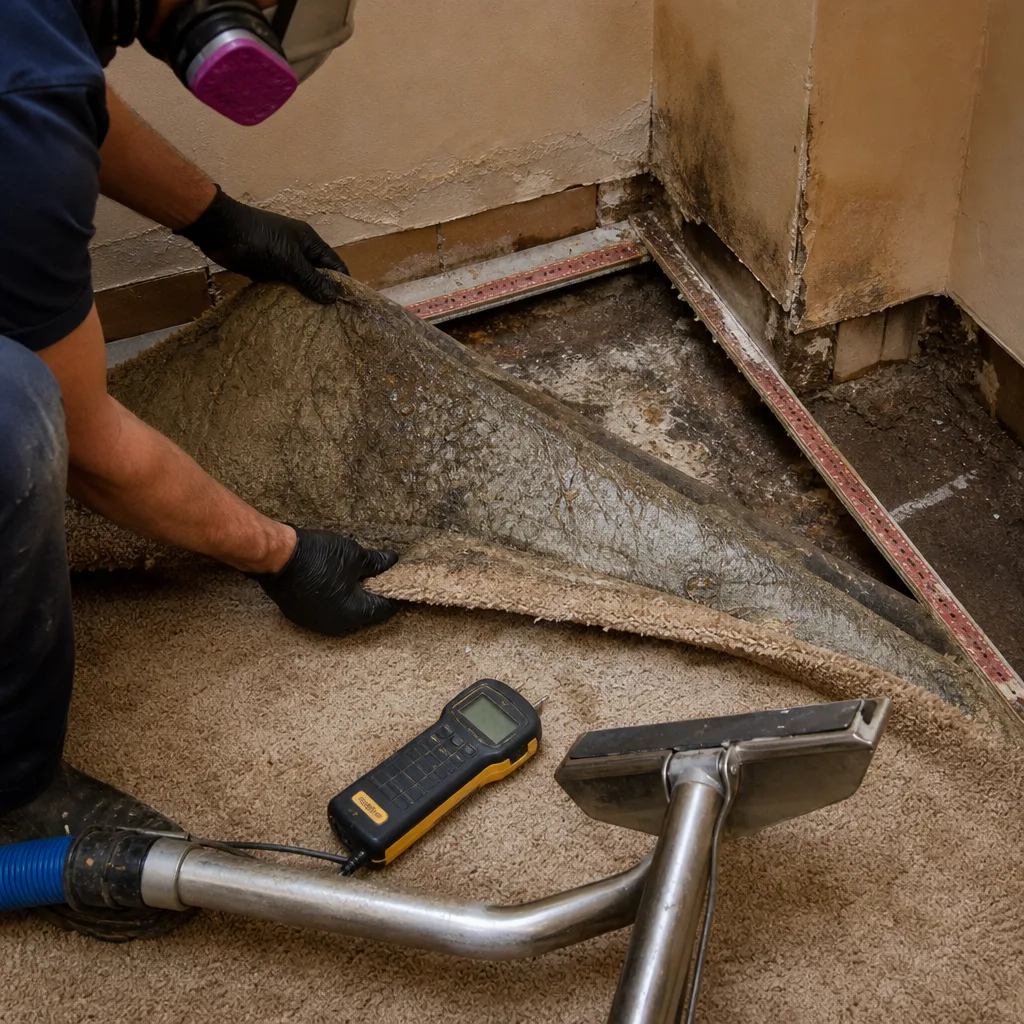
Crawl spaces in Hartsdale’s split-levels and older homes trap humidity that feeds mold for years. We treat the framing, install vapor barriers, and set dehumidifiers to keep relative humidity below 60%. This is prevention, not just cleanup, and it’s the difference between a one-time remediation and a recurring problem.
Moisture & Humidity Control
Hartsdale’s freeze-thaw cycles keep foundation walls damp for weeks each spring. Without humidity control, treated basements re-grow mold within a season. We install and maintain dehumidifiers sized for Hartsdale’s typical basement square footage and monitor moisture levels with written logs.
What happens when you call
- 1
A real person answersNo phone trees - you reach a local pro.
- 2
You get an upfront price rangeHonest numbers before anyone is dispatched.
- 3
A background-checked tech heads outLicensed & insured, dispatched right away.
- 4
You approve before work beginsNothing starts until you say go.
Mold Remediation Costs in Hartsdale, NY
Hartsdale’s mold remediation market runs higher than national averages because the housing stock is older and the labor market is Westchester-priced. A contained bathroom mold job typically runs $1,200 to $1,800. A basement wall remediation with plaster removal and antimicrobial treatment lands between $2,500 and $5,000. Full basement colonization requiring containment, air scrubbing, duct cleaning, and rebuild work runs $6,500 to $12,000 depending on square footage and the age of the framing.
What moves the price: whether mold reached the HVAC system, whether co-op board approval delayed containment, whether plaster or drywall, and the amount of reconstruction needed after treatment. Insurance covers the water damage that caused the mold. The mold remediation itself is often covered when it’s clearly tied to a covered event, and we document to make that link obvious to the adjuster. The free visual inspection is the fastest way to a firm number. Call (917) 924-4221 and we’ll put a scope in writing before any work begins.
We Also Serve Cities Near Hartsdale
Our crews respond to mold jobs throughout central Westchester. We serve Ardsley, Scarsdale, White Plains, and Elmsford with the same live dispatch, the same IICRC-certified technicians, and the same written 90-Day Done Right Promise. If you’re in Mold Remediation in Hartsdale or a neighboring town, one call to (917) 924-4221 gets a real person and a real crew.
Serving Hartsdale, NY - Our Local Coverage Area
We’re based in the Hartsdale area and know this community well. Use the map below to see our service coverage - if you’re nearby, we can almost certainly help.
Hartsdale Mold Remediation Questions, Answered
Does Hartsdale’s co-op board approval requirement delay mold remediation in my apartment near the train station?
Yes. Co-op buildings near the Hartsdale Metro-North station require board authorization before demolition or drying equipment placement, and that adds 24 to 72 hours to a job that would be same-day in a single-family home. The workaround is to have your remediation company prepared with documentation before the board meets. Call (917) 924-4221 as soon as you suspect mold so we can have a written scope ready for board review immediately.
How fast can mold start in a Hartsdale basement after a Bronx River tributary backs up?
Mold germination begins within 24 to 48 hours on wet organic materials like drywall paper, wood lath, and carpet. In Hartsdale’s low-lying blocks near the Bronx River tributaries, category 2 water that sits overnight creates the exact conditions mold needs. The first 24 hours are the window where aggressive drying prevents colonization. After that, remediation becomes necessary.
Why does freeze-thaw cycle matter for mold in Hartsdale’s older Colonials?
Freeze-thaw cycles widen existing cracks in Hartsdale’s stone and concrete-block foundations each winter. By spring thaw, water moves through those widened channels under hydrostatic pressure and wets the interior walls, rim joists, and sill plates. That moisture, trapped behind plaster or inside uninsulated basements, feeds mold for weeks before you see it. We moisture-map foundations in the spring specifically to catch this pattern before colonization spreads.
Is an ice dam on my Hartsdale Tudor roof a mold risk before spring?
Yes. Ice dams form on Hartsdale’s older roofs when heat escapes into the attic and melts snow at the ridge, and the meltwater refreezes at the cold eaves. The pooled water backs up under shingles and moves into wall cavities and ceilings. By the time you see a ceiling stain, mold has often been growing behind the plaster for weeks. A spring inspection catches this early. Call (917) 924-4221 if you suspect ice dam intrusion.
Do I need to move out of my Hartsdale split-level during mold remediation?
It depends on the scope. Small contained jobs in one room may not require vacating. A split-level with mold throughout the basement and duct contamination often does. We assess the spread, the spore counts, and the HVAC connection, then give you a straight answer. If occupants are over 55 or have respiratory conditions, we lean toward recommending temporary relocation during heavy remediation.
How fast can you get to my Hartsdale home?
Our commitment is 45 minutes to dispatch from your call. We answer live at (917) 924-4221 24 hours a day, and crews are routed into Hartsdale the same day. Mold emergencies don’t wait for business hours, and neither do we.
Will my insurance cover mold remediation in Hartsdale?
Coverage depends on the source of the water that caused the mold. A sudden covered event like a burst pipe that leads to mold is often covered. Long-term seepage or condensation may not be. We document the cause, the moisture readings, and the scope so your adjuster has what they need to make a determination. Call (917) 924-4221 for a free inspection and we’ll document everything from the first hour.
What should I do in the first 30 minutes after I find mold in my Hartsdale home?
Stop running the HVAC system so spores don’t spread through the ductwork. Don’t touch the mold or try to scrub it. Don’t cover it with plastic and wait. Call (917) 924-4221. We’ll walk you through shutting off the system, isolating the area, and we’ll have a crew dispatched while you’re still on the phone.
Last March, we responded to a 1930s stone-foundation Colonial on Ridge Road where a failed original sump pit had left two inches of category 2 water across the basement for 36 hours. Our techs set containment around the stairwell, ran three XPOWER air movers and a Dri-Eaz dehumidifier, and moisture-mapped the plaster walls to find mold had wicked six inches up the lath. We removed the affected plaster, treated the framing with antimicrobial treatment, and left drying logs showing pre-loss condition within four days. That’s the job done the way it should be done in Hartsdale.
Curt Bowman founded Floodline Restoration Co. in 2010 because he saw too many restoration companies hand customers off between water removal, mold treatment, and rebuild. We don’t do that. One crew handles the job from first extraction to finished walls, direct billing to your insurance carrier, and the 90-Day Done Right Promise in writing. If it’s not done right, we make it right. No arguing, no paperwork battles. That’s the Keystone Standard, and it applies to every mold job we do in Hartsdale.
Call (917) 924-4221 now for a free visual inspection or to get a crew dispatched today. A live dispatcher answers. Every time.
Written by Curt Bowman, Owner at Floodline Restoration Co. of Manhattan, serving Hartsdale and Westchester County for over 42 years.