
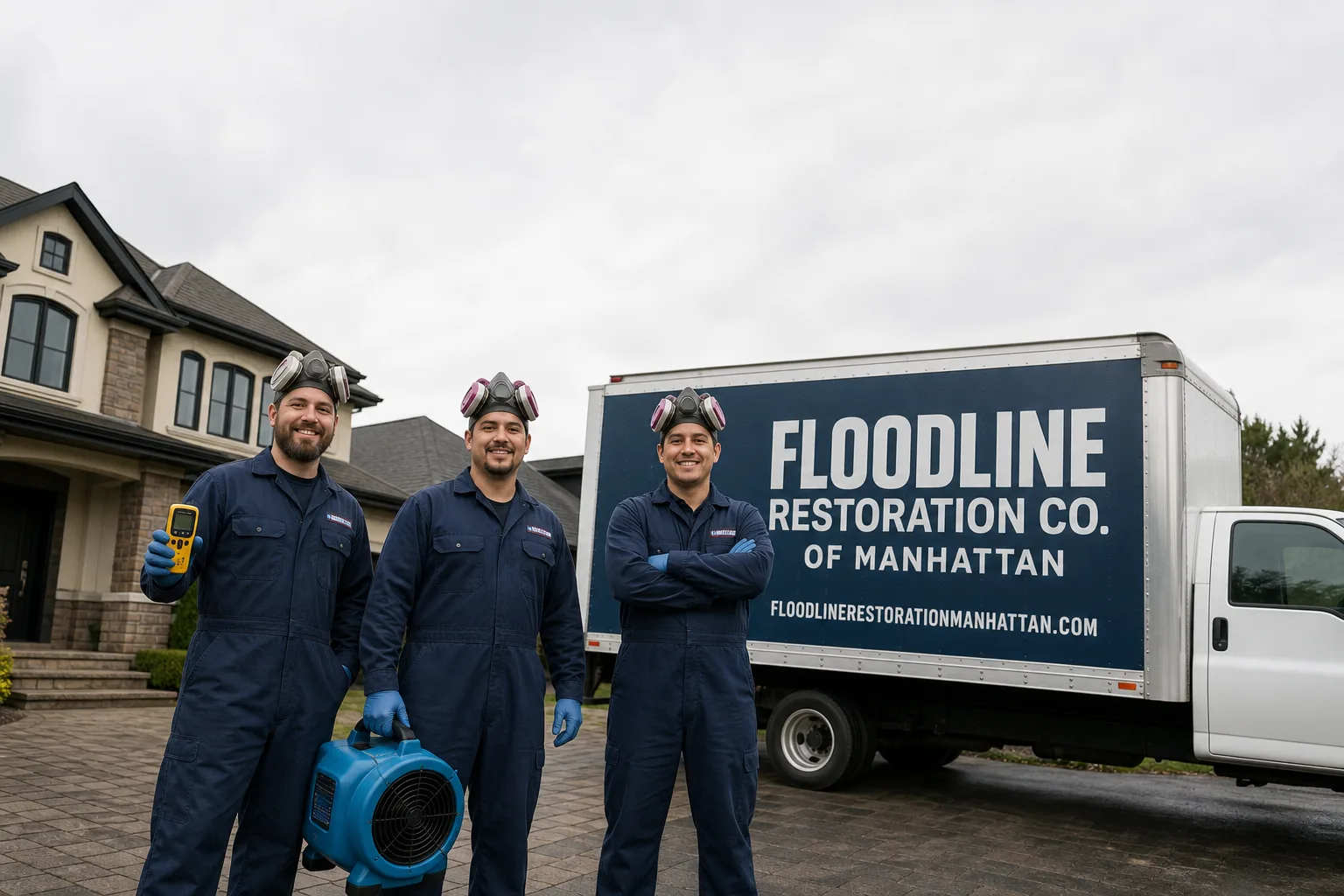
Free visual inspection and a written scope of work before any mitigation begins - photos, moisture readings, and drying logs go in your claim file
The scope we write is the scope we bill. Anything new gets shown to you, in writing, before we touch it.






 Before
 After
After Before
 After
After Before
 After
After24/7 Emergency Mold Remediation in Indian Field
Mold remediation in Indian Field typically costs $2,100-$7,400 depending on how far the growth has spread, and Floodline Restoration Co. of Manhattan answers live at (917) 924-4221 any hour of the night. When a seasonal home near the Peconic Bay sits empty through nor’easter season, one failed heating system or corroded garage-door seal is enough to turn trapped moisture into a full colony behind finished walls. Our crews dispatch into Indian Field within 45 minutes of your call, run a free visual inspection the same visit, and contain the growth before it spreads into adjacent living spaces. The first hour matters because mold advances daily in coastal humidity; every day of delay means more drywall, more flooring, and more containment barrier in the work plan.
Understanding Mold Remediation Severity in Indian Field Properties
Mold problems in Indian Field fall into a few distinct categories, and they do not all look the same. The most common we see is what the trade calls Class 2 growth: visible colonies on drywall, baseboards, and subflooring, usually fed by a slow leak or condensation that has gone unnoticed for weeks. Class 3 growth involves the wall cavity itself, where mold travels behind finished surfaces and only shows as a faint musty odor or mild discoloration along the baseboard. Class 4 is the one we find in seasonal homes left untouched since October: colonies that have spread through insulation, behind kitchen cabinets, and into joist bays, often requiring containment, negative air pressure, and full-source removal rather than surface cleaning.
The reason Indian Field properties are more vulnerable than inland homes comes down to three local realities. First, the housing stock is largely mid-20th-century cottages and bungalows built on crawl spaces or slabs with inadequate vapor barriers, so groundwater and humidity enter from below even before a storm event starts. Second, the salt-laden coastal air corrodes garage-door hinges, rollers, tracks, and fasteners years before they would fail inland, which lets wind-driven rain and storm surge penetrate the garage and soak the adjacent living space. Third, many homes are winterized and left unheated, so once moisture enters, nothing dries it out. A single heating failure during a January nor’easter means frozen pipes that burst undetected until Memorial Day weekend, revealing hidden mold behind finished walls by the time an owner returns.
When we inspect an Indian Field home, we do not just look for visible discoloration. We use thermal imaging to read temperature differences behind walls, moisture meters to map elevated levels in sheetrock and framing, and air sampling to measure spore counts where there is any question about what type of growth we are dealing with. That distinction matters because some mold types are far more aggressive in coastal conditions than in a dry inland basement, and the remediation plan has to match the actual biology in the home, not a guess.
Why Indian Field Property Owners Choose Floodline Restoration Co. of Manhattan
- 45-minute response commitment. Indian Field is in our dispatch radius, and a live person answers our phone at all hours. The crew that answers your call knows the roads from the Hartford office to the East End, and we do not put you on hold while a recorded message lists our menu options.
- 24/7 live answer. Not an automated system, not a callback queue. When you call (917) 924-4221 at 2 a.m. on a Tuesday in February because your winterized bungalow’s heating failed, a dispatcher picks up and starts the clock on a crew.
- IICRC-certified crews. Our technicians are trained to IICRC standards including WRT (Water Damage Restoration Technician) and AMRT (Applied Microbial Remediation Technician) certifications, so the person running containment and air scrubbing in your home knows the protocols, not just the equipment.
- Free visual inspection. We come out and look before you owe us a dollar. That inspection includes thermal imaging and moisture readings, so you know what you are dealing with before any work order is written.
- Direct insurance billing. We document from the first hour, coordinate with your adjuster directly, and bill your carrier for covered losses. You do not play messenger between our company and the insurance company.
- One crew from extraction to reconstruction. We do not remediate and then hand you off to a third-party contractor for the rebuild. The same certified team that removes moldy drywall rebuilds the wall, finishes it, and hands you the 90-Day Done Right Promise in writing.
Our Mold Remediation Process
Inspection & Assessment
Every job starts with a full visual inspection, thermal imaging of wall cavities, and moisture readings with hygrometers across affected and adjacent areas. We map the extent of growth and water damage before any containment is set, so the work plan reflects the actual scope, not a guess.
Stabilization
Once we know where the water came from and where the mold spread, we stabilize the environment. That includes shutting off the moisture source, setting up containment with sealed 6-mil polyethylene barriers, and running HEPA air scrubbers to capture airborne spores before disturbance begins.
Drying & Dehumidification
For any job involving water-damaged materials, we run professional-grade dehumidifiers and air movers from Dri-Eaz, Phoenix, and B-Air, with daily moisture readings logged until the dry standard is met. On salt-water intrusion jobs near the Peconic Bay, this step matters because the drying standard for salt-laden materials is stricter than the standard for fresh water.
Cleaning & Sanitization
We physically remove mold from surfaces using HEPA-vacuuming, wire brushing, and approved antimicrobial treatments matched to the specific mold type identified in inspection. Contents that can be salvaged are cleaned and treated; materials that cannot be returned to pre-loss condition are documented with photos and itemized for your insurance claim.
Crawl Space & Moisture Control Treatment
For Indian Field homes with crawl-space foundations, true remediation does not end at the living-space floor. We treat the crawl space by sealing the ground surface, correcting or installing vapor barriers, and managing the humidity that feeds mold on floor joists in the first place.
Repairs & Restoration
The same crew that removed the mold rebuilds the space: re-insulating, rehanging drywall, reinstalling trim, and finishing surfaces. We hand you the drying logs, the clearance documentation, and the 90-Day Done Right Promise, in writing, before we leave the job.
Need Emergency Mold Remediation in Indian Field Now?
Crews minutes away, answering live 24 hours a day. The sooner we start, the less it costs.
Working With Your Insurance Company
Most mold remediation work done in Indian Field is at least partially covered when the mold growth is directly tied to a covered water event, such as a burst pipe, a roof failure, or storm-surge flooding. The insurance company is not your adversary, but they do not send an adjuster out just to be helpful; they send one out to determine the cheapest defensible settlement. That is why our documentation starts the moment our crew arrives: photos of every affected room, moisture readings from the first day, thermal imaging files, and a log of every drying reading taken every day until the job closes.
We communicate with your adjuster directly and submit industry-standard, line-item scopes of work that reflect what the repair actually costs in Indian Field. If you have a seasonal home and were not on site when the loss happened, we document that absence clearly, because insurers handle unoccupied-property claims differently, and untold mold growth gets treated more favorably when a professional crew can show exactly when the water entered and how long it sat.
What We Provide Your Insurer
- Thorough documentation of the loss
- Photos of all damage, room by room
- Moisture readings and drying logs
- A detailed, line-item scope of work
- Direct coordination with your carrier
Built for Indian Field’s Loss Calendar
Indian Field’s mold losses follow a real seasonal rhythm, and the families who live here year-round know it; the seasonal owners learn it the hard way. October through April is our busiest stretch on the East End: nor’easters roll in off the Atlantic, driving storm surge into the Peconic Bay and the South Fork shores, and a single coastal front can push salt water through garage-door tracks and corroded fasteners on homes that have been closed up tight since September. Once water is in, the heat is off and nothing dries. Mold starts inside 48 hours and is fully established inside two weeks.
January and February bring the freeze-thaw cycle. Winterized homes with the water shut off but no heat running are one failed thermostat away from burst pipes in the crawl-space supply lines. By the time the owner returns for Memorial Day weekend, the mold has been growing for four months behind the sheetrock.
June, July, and August are the discovery months. Seasonal owners re-open their homes, smell the must, see the discoloration along the baseboard, and call us. That is also when we run the most Mold Remediation inspections for pre-sale transactions, as coastal buyers are increasingly asking for clearance testing before closing on 1950s bungalows and mid-century cottages.
The off-season is the smart time for prevention. Our crews run moisture-and-humidity-control assessments all fall for owners who want to know, before they lock up, whether their vapor barrier is still doing its job and whether the garage-door seals will survive another salt-air winter. The line the water left is where we start.
Mold Remediation Across Indian Field’s Neighborhoods
Indian Field is not one kind of house repeated; it is a patchwork of mid-century cottages, bungalows, and a handful of newer builds, each with different failure patterns. The older bungalows off the main roads near Indian Field Road and along the stretches close to the Peconic Bay are the ones we run the most crawl-space treatments on. Those homes were built as seasonal getaways with slab or crawl foundations, no meaningful vapor barrier, and the garage doors and hardware were original to the 1950s and 1960s; salt air has been working on those springs and hinges for sixty years by now.
Toward the inland edges of Indian Field, where the houses are slightly newer and mostly on slab foundations, the recurring problem is groundwater intrusion through floor joints and slab cracks after heavy nor’easter rain, not storm surge. Those slab homes tend to hide mold under floating floors and behind baseboards, where it is invisible until the flooring starts to cup or the quarter-round starts to darken.
Along the shore-adjacent blocks, we see the full garage-to-living-space pathway: salt-corroded bottom seals on garage doors let storm surge wick into the slab, the slab never dries, the vapor pressure pushes moisture through the mud sill, and the drywall in the adjacent laundry or mudroom is moldy by the time anyone smells it. The response time to those blocks is a straight run from the dispatch office, and our crews know the seasonal traffic patterns on Route 27 and the back roads well enough to keep to the 45-minute commitment even on a summer Friday afternoon.
We also serve the quiet residential streets around the Indian Field park areas and the adjoining neighborhoods that share the same coastal conditions, and the crawl-space and garage-door patterns do not change at the property line. What changes is who is home when the problem is found: year-round residents catch it early, and seasonal owners find it in June. Either way, the phone number is the same, and so is the inspection.
Specialized Mold Remediation Services We Offer in Indian Field
Mold Inspection & Testing
We run both visual inspections and air-sampling tests in Indian Field homes, and we are clear about the difference before you pay for anything. A visual inspection plus thermal imaging and moisture mapping tells you where growth is active and where moisture is feeding it. Air sampling tells you what species you are dealing with and whether spore counts are elevated in the living space, which matters when you are a seasonal owner deciding whether a home is safe to stay in this weekend or needs full containment first.
Mold Removal
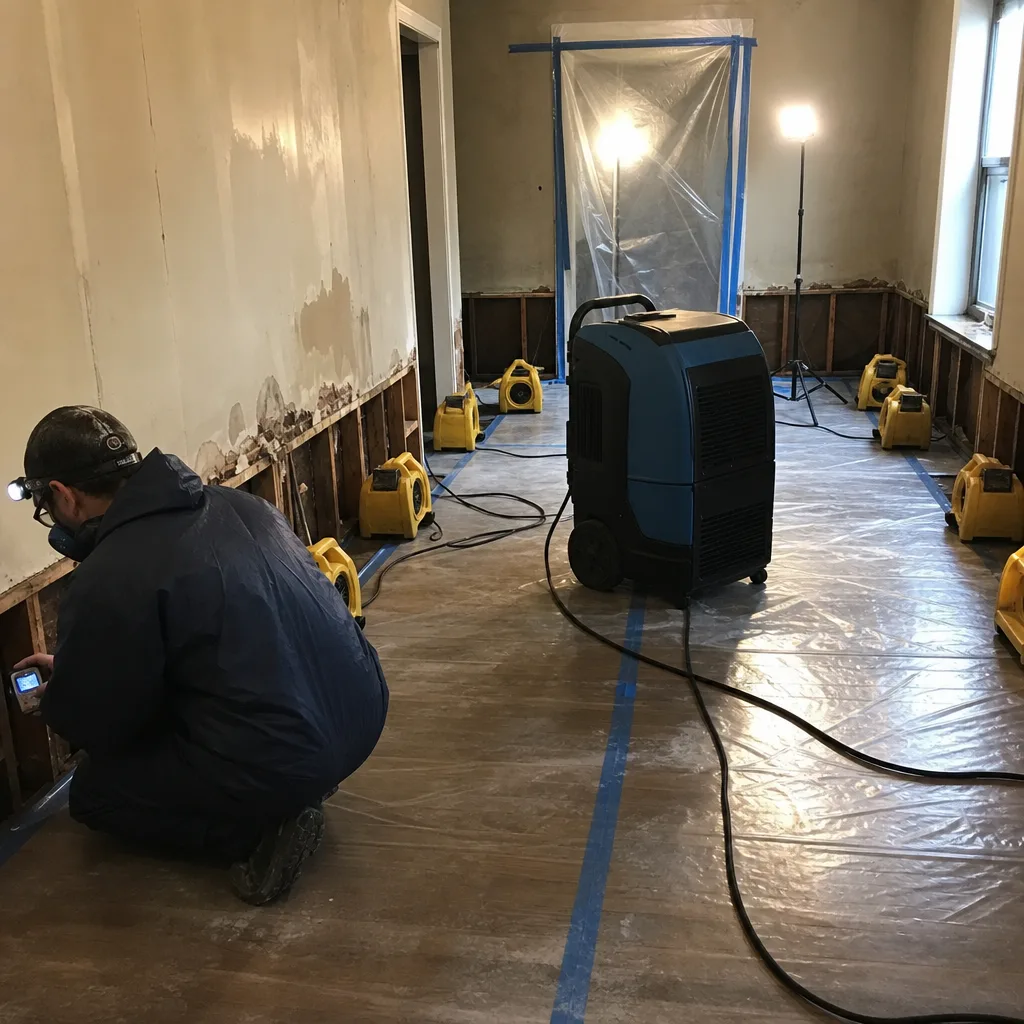
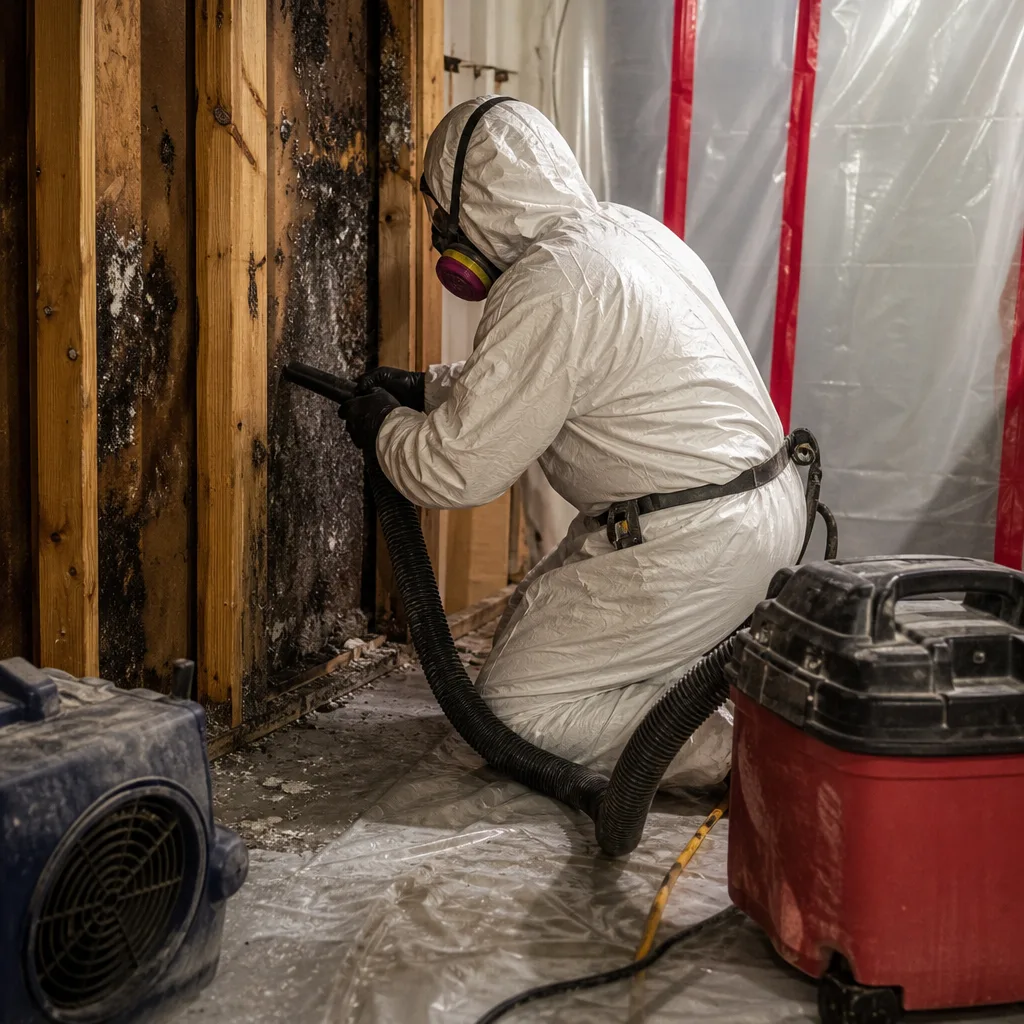
Removal means physically removing mold and mold-damaged material under containment, not just spraying bleach and calling it finished. In Indian Field’s older bungalows with drywall over slab foundations, removal often includes cutting out the bottom foot of wallboard, treating the framing, and sealing the stud bays before we rebuild. The goal is pre-loss condition, documented with clearance readings, so the mold does not return in September.
Black Mold Remediation
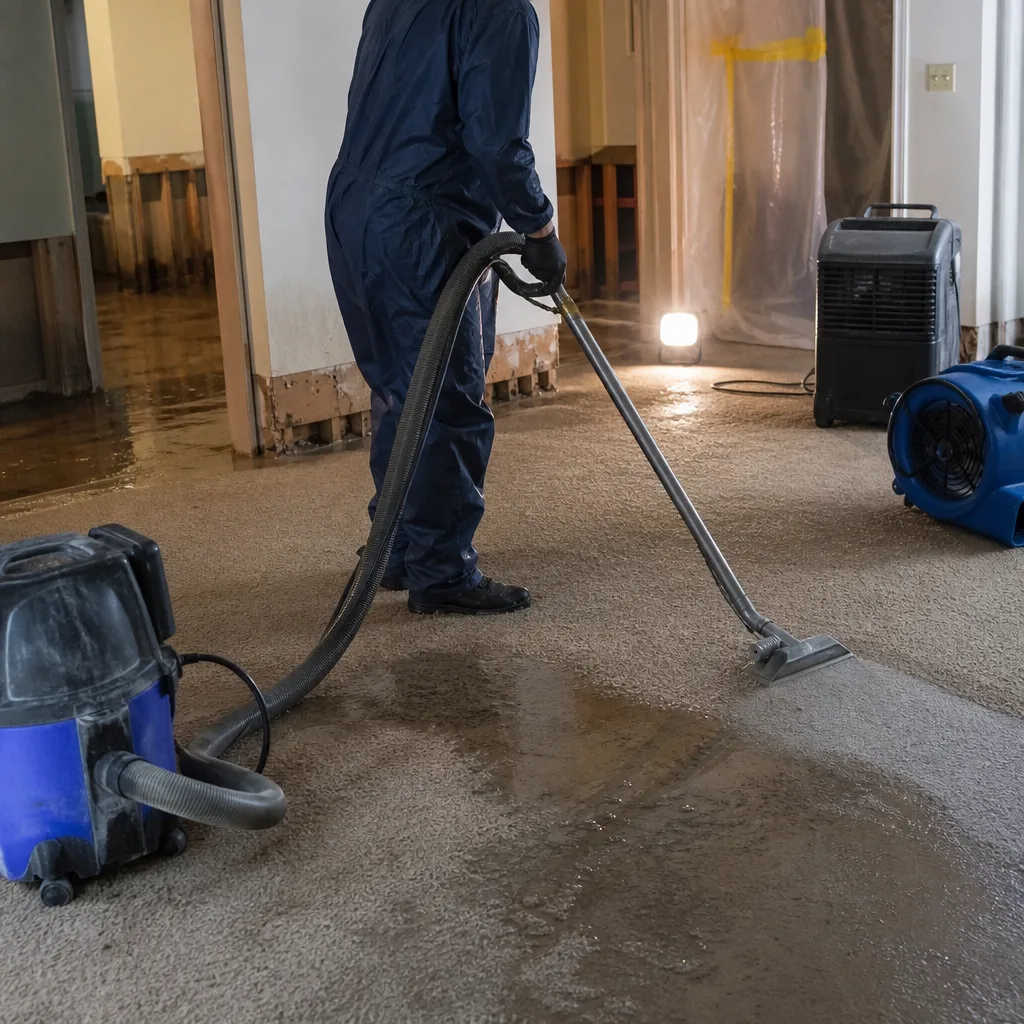
Not every dark mold is Stachybotrys, and we do not scare people into a bigger job than they need; we identify what we are dealing with before we touch it. But Indian Field’s seasonal homes are one of the few residential environments where we do see genuine black mold with some regularity, because the conditions are right: warm, dark, unventilated spaces with continuous moisture for months at a time. When black mold is confirmed, the containment, negative air pressure, and clearance protocols are stricter, and our crews are trained and certified to run them correctly.
Air Quality Restoration
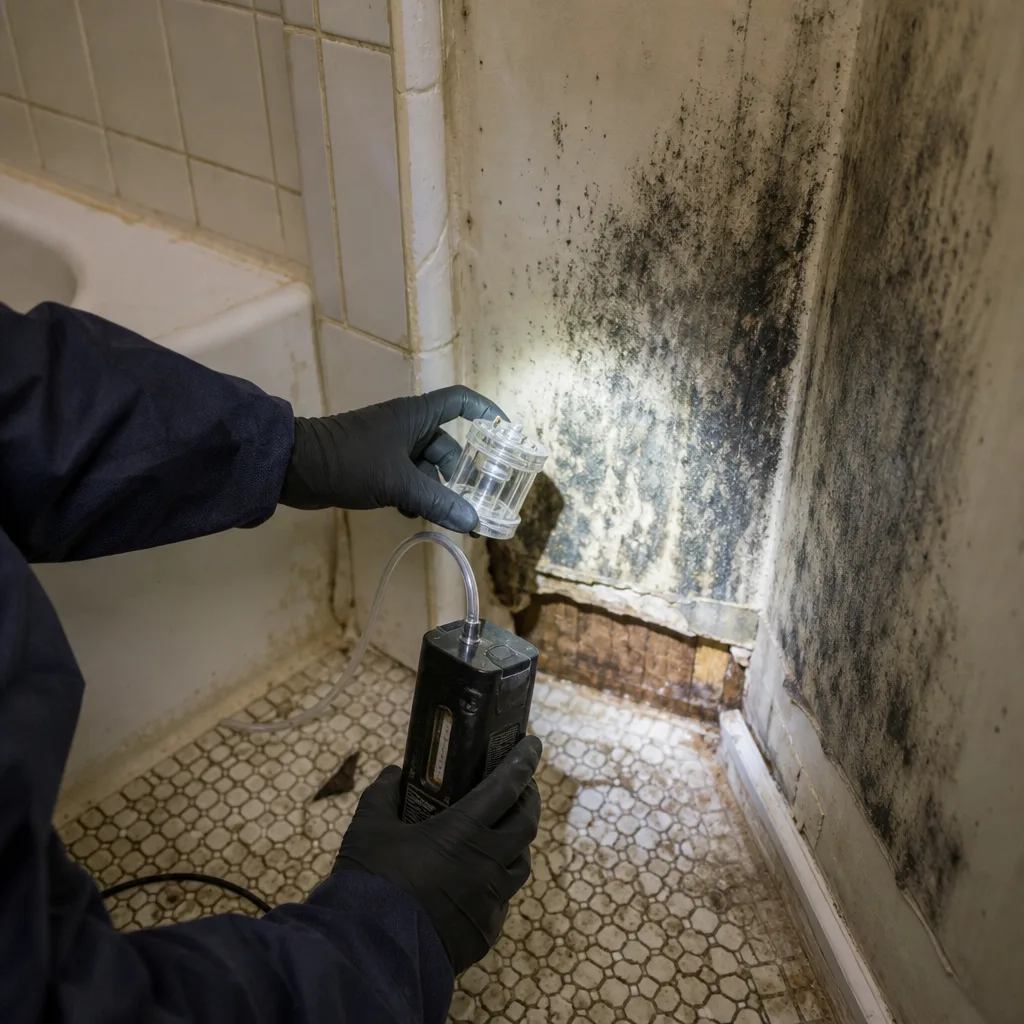
Once the mold is removed, the air in the home still needs to be cleaned, and this step is not a luxury add-on. We run HEPA air scrubbers during the entire removal phase and bring in HEPA-filtered negative air machines where needed to keep spores from migrating. At the end of the job, we run clearance air sampling to show that the air inside the home is back to normal background levels, documented in writing and included in your insurance package.
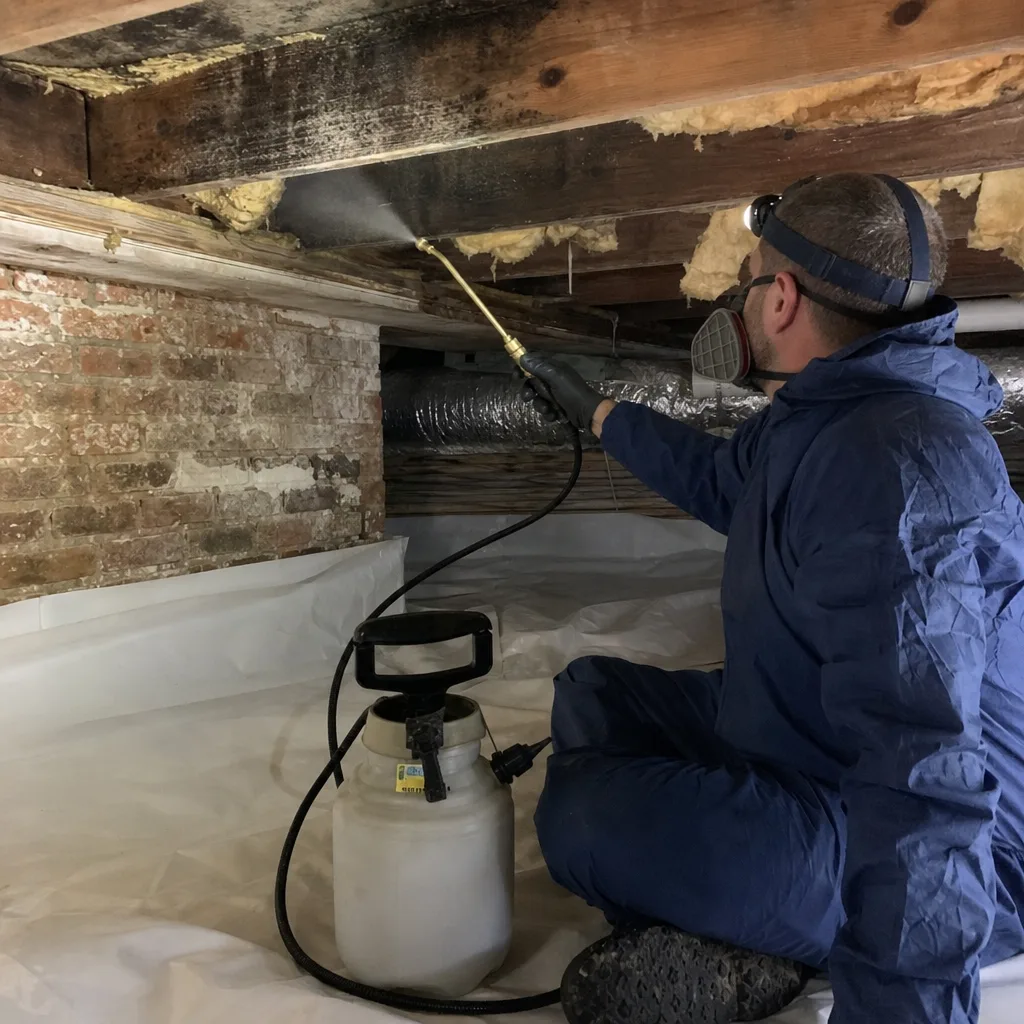
Crawl Space Treatment
For Indian Field homes built on crawl spaces, every mold problem above the floor has a cousin below it. The crawl space is where moisture enters first, where a failed or missing vapor barrier lets groundwater vapor feed the floor joists, and where mold grows unseen for years. We treat the crawl space as part of the mold job, which means clearing the space, treating any growth on the joists and subfloor, correcting the vapor barrier, and installing or upgrading ventilation and humidity controls so the problem does not come back next season.
What happens when you call
- 1
A real person answersNo phone trees - you reach a local pro.
- 2
You get an upfront price rangeHonest numbers before anyone is dispatched.
- 3
A background-checked tech heads outLicensed & insured, dispatched right away.
- 4
You approve before work beginsNothing starts until you say go.
Mold Remediation Costs in Indian Field, CT
Mold remediation in Indian Field runs higher than inland Connecticut pricing because of three coastal factors: seasonal damage tends to be more extensive by the time it is discovered, salt-water losses require longer drying cycles and often more material replacement, and crawl-space access on older East End bungalows adds labor hours to almost every job. A small, contained remediation job, such as mold behind one bathroom baseboard in a slab home, typically runs $2,100 to $3,800. A mid-size job across a garage-adjacent living space, including containment, removal, drying, and rebuild of a single wall section, lands between $3,800 and $6,200. A full crawl-space remediation with vapor-barrier correction and joist treatment on a 1950s bungalow commonly runs $6,500 to $9,000 or more, depending on square footage and whether the space is accessible on foot or only by crawl.
The single biggest variable is not the mold itself; it is the water that fed it and how long it sat. A burst pipe caught within 48 hours costs a lot less to clean up than a burst pipe that sat for four months in a winterized house. That is why the free inspection is the path to a firm, written scope. We come out, we measure, we write a line-item plan, and you decide. No surprises on the bill.
If you are a senior or a veteran, ask about our standing 5% discount, plus the $50-off-any-repair-over-$250 offer on top of any covered claim. Call (917) 924-4221 for the free estimate before the damage spreads further.
We Also Serve Cities Near Indian Field
Floodline Restoration Co. of Manhattan runs mold remediation crews throughout the coastal Connecticut and New York border towns. Our service area includes Indian Field proper and also stretches to Byram, Glenville, Greenwich, and Pemberwick. Same 45-minute response commitment, same live answer, same one crew from water damage through final rebuild.
Serving Indian Field, CT - Our Local Coverage Area
We’re based in the Indian Field area and know this community well. Use the map below to see our service coverage - if you’re nearby, we can almost certainly help.
Indian Field Mold Remediation Questions, Answered
How does the salt air near Indian Field affect mold growth in garage-adjacent living spaces?
Salt air corrodes garage-door hinges, rollers, tracks, and bottom seals years before the same hardware fails inland, which lets wind-driven rain and storm surge seep into the garage and wick into the slab foundation. Once that moisture reaches the drywall and framing of the adjacent living space, the warm, humid coastal environment makes it nearly impossible for the materials to dry on their own, and mold begins within 48 hours in unoccupied homes.
What happens when a winterized Indian Field home has a heating failure during a nor’easter?
If the water is shut off but the heat is off and a January nor’easter hits, the supply lines in the crawl space freeze and burst, and the water never gets noticed until the owner returns in spring. That means four or five months of standing water and trapped humidity feeding mold behind finished walls and across floor joists before anyone calls us.
Can you restore a crawl space in a 1950s bungalow without full pack-out?
Usually, yes. We treat the crawl space from below without packing out the living space above, unless the mold has spread past the subfloor into the flooring and walls. In a 1950s bungalow with the original vapor barrier, we can often remove growth from the joists, install a new sealed barrier, and manage the humidity without the homeowner moving a single piece of furniture.
What is the difference between category 1 and category 3 water in a garage flooding scenario?
Category 1 water starts clean, like a burst supply line, and becomes category 3, or unsanitary, after it sits for 48 hours or mixes with storm surge, salt, silt, and whatever is on the garage floor. By the time most Indian Field seasonal owners discover a garage flood, the water is category 3 and the drywall and insulation it touched need removal, not just drying.
How do you prove a mold remediation job restored pre-loss condition for a seasonal owner?
We hand you documentation: daily moisture readings from day one until the dry standard is met, photos of every affected room before and after, thermal imaging files, and a clearance report showing the indoor air quality returned to normal background levels. That package goes to your insurer and stays with your home records, so if you sell the bungalow next season, the mold history is documented and closed.
How fast can someone actually get here from the time I call?
Within 45 minutes, day or night, every day of the year. Our dispatch board is staffed by live people, not a recording, and the crew that picks up knows the Indian Field roads. When you call (917) 924-4221 at 2 a.m., a person answers and starts the clock.
How long does mold remediation take in a typical Indian Field home?
A contained single-room job can be finished in three to five days. A garage-adjacent living space with crawl-space involvement and a seasonal discovery usually runs six to ten days, depending on how long the wood takes to dry to the standard. We will give you a written timeline at the free inspection and keep to it.
What should I do in the first 30 minutes after I find mold or water in my Indian Field home?
Call (917) 924-4221 and stay out of the affected area if the mold is extensive, because disturbing it sends spores airborne into the rooms you can still use. Do not run the HVAC system, do not try to dry it out with a household fan, and do not spray anything on the growth. Let us get there, measure, and contain it before it spreads.
If you have a mold problem in Indian Field, or if you own a seasonal home you have not checked since October, call us at (917) 924-4221. The inspection is free. The answer is honest. The work is done right and backed in writing.
Written by Curt Bowman, Owner at Floodline Restoration Co. of Manhattan, serving Indian Field since our founding in 2010.