
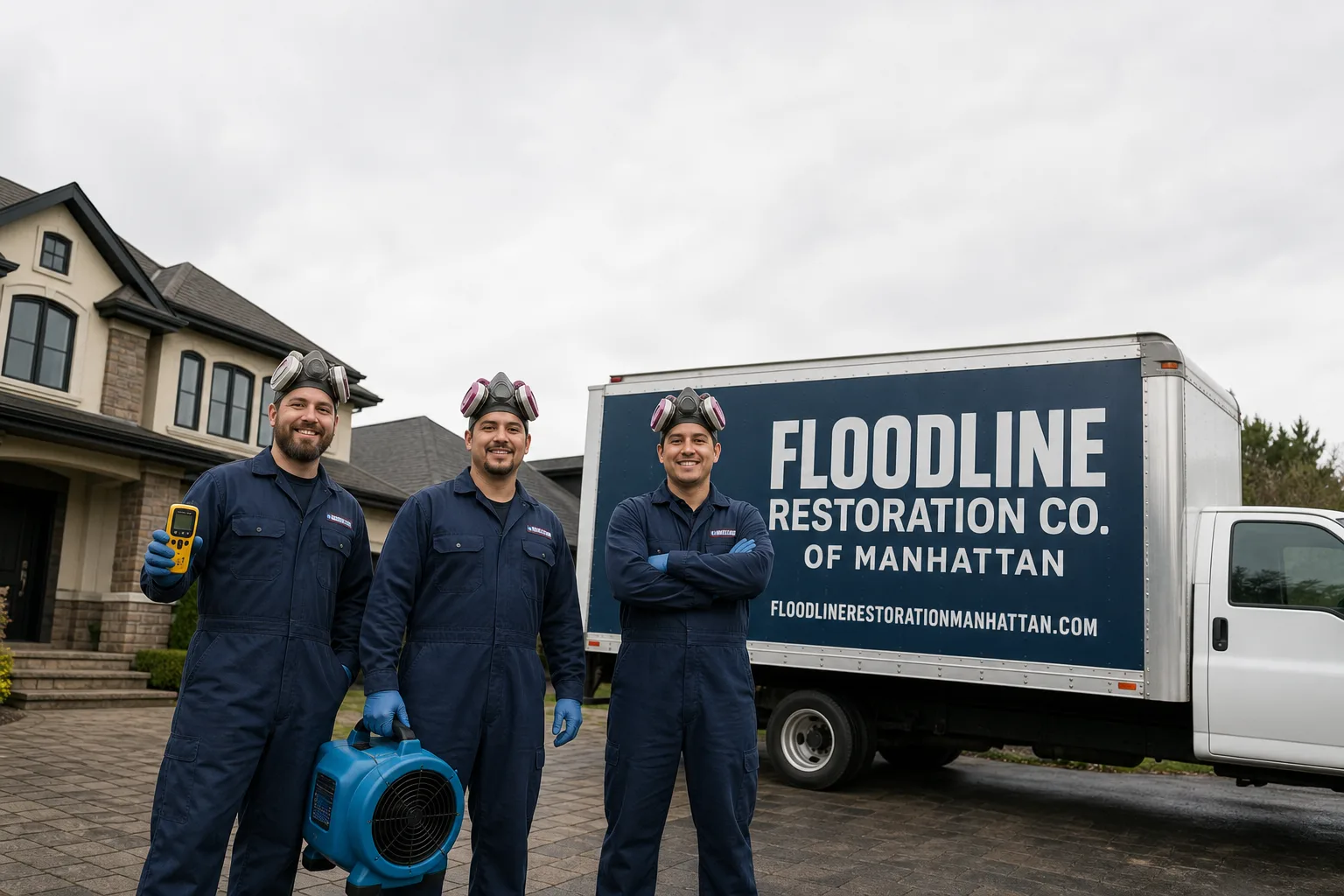
Free visual inspection and a written scope of work before any mitigation begins - photos, moisture readings, and drying logs go in your claim file
The scope we write is the scope we bill. Anything new gets shown to you, in writing, before we touch it.






 Before
 After
After Before
 After
After Before
 After
After24/7 Emergency Mold Remediation in Glenville
Mold in a Glenville home rarely announces itself politely. It starts as a musty smell in the basement after a thaw, a dark bloom behind a baseboard, or a ceiling stain that keeps spreading weeks after a roof leak. When you find it, time works against you. Our crews answer live around the clock and dispatch into Glenville, including the 12302 ZIP and the blocks along Vley Road, the same day you call. A free visual inspection tells us whether you’re dealing with surface mold or a concealed colony behind plaster and lath. Call (917) 924-4221 and a person picks up, not a recording. The first hour matters because mold roots deeper into porous building materials every day it’s left undisturbed, and in Glenville’s older housing stock, that often means the difference between a contained cleanup and a full wall-system tear-out.
Understanding Mold Remediation Severity in Glenville Properties
The severity of a mold problem in Glenville depends on three things: water source, building era, and how long moisture sat before discovery. We classify water losses by category. Category 1 is clean water from a supply line. Category 2 carries contaminants. Category 3, common in the Mohawk floodplain, is sewage or river water. Category 3 losses demand full containment, HEPA air scrubbing, and third-party clearance testing before anyone occupies the space again.
Glenville’s housing stock makes this trickier than it sounds. Many homes are 1950s and 1960s Cape Cods and ranches with original plaster-over-lath walls. Mold doesn’t just sit on the surface of plaster. It roots into the gaps behind the lath, where old horsehair binder and decades of dust give it a food source. We see this all over town, from blocks near Scotia to the quieter acreage parcels off Potter Road. Surface antimicrobial treatment without demolition just hides the colony until the next ice-dam season. A 60-year-old ranch with a low-pitched roof behaves very differently from a newer build with drywall and modern sheathing. Knowing which you have changes the scope, the containment plan, and the price.
Why Glenville Property Owners Choose Floodline Restoration Co. of Manhattan
- 45-minute response commitment. When you call with active water or visible mold, we commit to having a crew on the way within 45 minutes. For Glenville’s flood-prone blocks, that speed matters.
- 24/7 live answer. A real dispatcher picks up at 2 a.m. Not a voicemail. Not an answering service that takes a message. This matters when a pipe bursts at midnight in February and you’re standing in water.
- IICRC-certified crews. Our techs hold WRT, FSRT, and AMRT certifications, and they show up background-checked and uniformed. You’ll know who’s in your home.
- Free visual inspection. Before any work starts, we walk the property with you, explain what we see, and give you a written scope. No pressure, no surprise work orders.
- Direct insurance billing. We handle the claim paperwork and talk to your adjuster directly. You don’t play messenger between us and your carrier.
- One team from extraction to reconstruction. The same certified crew that reads the moisture map on day one handles the daily readings and rebuilds what needs rebuilding. No mid-job handoff to a subcontractor you’ve never met.
Our Mold Remediation Process
Inspection & Assessment
We start with a visual walk-through and moisture mapping using thermal imaging and hygrometers. In Glenville’s older homes, we check wall cavities, crawl spaces, and attic framing, not just visible surfaces. You get a written scope before any work begins.
Containment & Stabilization
Before demolition, we seal off the affected area with negative air pressure and HEPA filtration. This prevents cross-contamination to the rest of the house, especially important in ranches where the HVAC system shares air between floors.
Drying & Dehumidification
We use Dri-Eaz dehumidifiers and XPOWER air movers to pull moisture from structural materials. We log readings every 12 hours until wood studs hit a dry standard, typically 8% moisture content across the board.
Cleaning & Sanitization
Affected surfaces get HEPA vacuuming and antimicrobial treatment. We don’t spray and walk away. We treat the cavity, not just the face of the wall, because mold behind plaster is still mold in your house.
Air Quality Restoration
We run HEPA air scrubbers during remediation and can arrange third-party air sampling afterward. In Glenville’s flood zone, post-remediation verification is standard practice, not an upsell.
Repairs & Restoration
Once the moisture map is clean and the air is clear, we rebuild. Drywall, plaster repair, trim, paint, insulation. The same crew, the same company, the same invoice.
Need Emergency Mold Remediation in Glenville Now?
Crews minutes away, answering live 24 hours a day. The sooner we start, the less it costs.
Working With Your Insurance Company
Insurance claims will make or break a mold remediation in Glenville. The FEMA floodplain designation complicates things. Many homes near the Mohawk carry NFIP policies with specific requirements for repeated-loss documentation. We handle that paperwork from the first hour. Our techs document the loss with photos room by room, take moisture readings before and during drying, and produce a line-item scope that speaks the language adjusters expect. We talk directly with your carrier so you don’t spend your evenings on hold. The goal is simple: you get what your policy owes you, and the work gets done right. If your claim requires elevation certificates or prior-loss history because your home sits below base flood elevation, we walk you through it.
What We Provide Your Insurer
- Thorough documentation of the loss
- Photos of all damage, room by room
- Moisture readings and drying logs
- A detailed, line-item scope of work
- Direct coordination with your carrier
Built for Glenville’s Loss Calendar
Glenville has a mold season, and it’s not summer. It’s February and March. The Mohawk Valley funnels cold Arctic air down from the north, and the town accumulates real snowpack. When temperatures swing above and below freezing through late winter, ice dams form on the low-pitched roofs of all those mid-century ranches. Melt water backs up under shingles, runs down inside wall cavities, and soaks insulation. By the time the stain shows on the ceiling, mold has had weeks to establish. We field a wave of calls every February from Glenville homeowners who discover a soft patch above a window or a brown line spreading across a bedroom ceiling.
Spring brings the next wave. Thaw and rain saturate the clay-heavy soils near the river, and basements and crawl spaces in the 12302 ZIP start wicking moisture through foundation walls. Summer thunderstorms can flash-flood the lower-lying streets near Scotia. Every season here has a failure mode, and we plan our response around them.
Mold Remediation Across Glenville’s Neighborhoods
Response routes in Glenville change depending on where you live. The blocks closest to the Mohawk River, particularly along Vley Road and the streets running down toward the water, sit in documented FEMA Special Flood Hazard Areas. Homes there are mostly pre-1980 construction, many with crawl spaces. When the river crests, even clean water in a crawl space becomes a mold problem within 72 hours because capillary action pulls moisture up through the clay soil and into framing. We respond to those calls with full containment gear and third-party air sampling lined up from the start because the homes are often on their second or third flood cycle.
Up the hill and out toward Potter Road and Baldwin Road, you find the acreage properties and detached workshops. These homeowners usually discover mold in a basement or a garage that hasn’t been opened all winter. It’s a different job: less containment, more structural drying, and often a crawl space that never flooded but stayed damp for twenty years. In the ranch-house streets off Swaggertown Road, the pattern is ice dams and attic mold. Same company, same IICRC standards, very different scopes.
Specialized Mold Remediation Services We Offer in Glenville
Mold Inspection & Testing
A damp smell in a 1960s ranch is not the same as proof of mold, and proof matters when you’re filing a claim or preparing to sell. We inspect attics, basements, crawl spaces, and wall cavities, then arrange third-party air sampling when the situation calls for it. In Glenville’s SFHA, the health department expects post-remediation clearance testing after a Category 3 loss. We line that up for you.
Mold Removal
Surface mold on drywall or framing gets removed with HEPA vacuuming and controlled demolition where needed. But removal without fixing the moisture source is a waste of your money. In Glenville, that source is usually an ice dam, a foundation seep, or a crawl space that never dries. We fix the source as part of the scope.
Black Mold Remediation
Stachybotrys, the mold people call black mold, grows where cellulose sits wet for extended periods: drywall backing, ceiling tiles, the paper face of insulation. In Glenville homes with original 1950s materials, we’ve found it behind wallpaper and under vinyl flooring that trapped moisture for years. This work requires full containment, negative air pressure, and careful disposal. We don’t cut corners on it.
Air Quality Restoration
After remediation, we run HEPA air scrubbers to pull spores and particulates from the air. For Glenville homeowners with allergies, asthma, or young kids, we recommend post-remediation air sampling through an independent lab. It’s the only way to verify the air is clean, not just the surfaces.
Crawl Space Treatment
The crawl space under a 1960s Glenville bungalow is often the last place anyone looks and the first place mold grows. Dirt floors, minimal ventilation, and seasonal condensation create a steady moisture supply. We treat these with moisture barriers, dehumidification, and anti-microbial application, then explain what you can do to keep the space dry through the next freeze-thaw cycle.
Moisture & Humidity Control
Basement humidity in Glenville runs high from spring through fall. If your foundation wicks moisture or your sump pump runs constantly, we address the water path before we treat the mold. Otherwise you’ll be calling us again in a year.
What happens when you call
- 1
A real person answersNo phone trees - you reach a local pro.
- 2
You get an upfront price rangeHonest numbers before anyone is dispatched.
- 3
A background-checked tech heads outLicensed & insured, dispatched right away.
- 4
You approve before work beginsNothing starts until you say go.
Mold Remediation Costs in Glenville, CT
A contained mold cleanup in a single room of a Glenville home typically runs $1,200 to $3,500. A crawl space treatment with moisture barrier and dehumidification lands between $2,500 and $6,000. Full containment and remediation after a flood loss in the 12302 SFHA, with demolition, drying, air scrubbing, and third-party clearance testing, generally falls between $8,000 and $20,000 depending on square footage and whether reconstruction is included. The big cost drivers here are plaster-and-lath demolition, which runs more than drywall, and whether the mold reached structural framing. Insurance covers mold remediation when the moisture source is a covered peril, like a burst supply line or a roof leak. Flood insurance under NFIP may cover mold damage as part of a covered flood claim, but repeated-loss properties face stricter documentation. Your free visual inspection gives you a firm written scope before you spend a dollar. Call (917) 924-4221 to set one up.
We Also Serve Cities Near Glenville
Beyond Glenville, we regularly handle mold remediation in Glenville and the surrounding communities. Our crews cover Byram, Greenwich, Indian Field, and Pemberwick with the same response commitment and written scope process. If you’re just over the town line, you’re still in our service area.
Glenville Mold Remediation Questions, Answered
How does Glenville’s floodplain status affect the mold remediation scope and documentation my home needs?
Homes in the 12302 ZIP within FEMA’s Special Flood Hazard Area fall under stricter documentation rules, especially if they’re NFIP repeated-loss properties. You’ll need thorough photo documentation, moisture logs, and often elevation-related paperwork before remediation and again before re-occupancy. We handle that for you, and we coordinate directly with your carrier.
Why do I need containment and air sampling when my neighbor just sprayed bleach and repainted?
Because your neighbor’s approach hides the problem instead of fixing it. In Glenville’s older plaster-and-lath homes, mold roots into the cavity behind the wall. Bleach on the surface does nothing to the colony growing in the lath gaps. Containment prevents spores from spreading during demolition, and air sampling proves the air is actually clean afterward. That’s the difference between remediation and a cover-up.
Can you remediate my detached workshop or garage without moving my cars and equipment out?
In most cases yes. We contain the affected area with plastic sheeting and negative air pressure, so the rest of the structure stays clean while we work. For larger workshops, we may ask you to move vehicles if they’re in the immediate work zone, but equipment and tool chests can usually stay put with proper sealing.
My crawl space under the 1960s ranch smells musty every spring but never floods. What’s the right fix?
A crawl space that smells musty every spring has a moisture problem even if you never see standing water. In Glenville’s clay soils, capillary rise pulls groundwater up through the dirt floor and saturates the air. The fix is a moisture barrier on the floor, proper ventilation or a dehumidifier, and treatment of any existing mold on the joists and subfloor. We’ll write the scope after we see it.
How do you verify mold is actually gone before I let my kid back in the basement bedroom?
We dry the space to the dry standard, typically 8% moisture content in wood studs, treat all affected materials, and then recommend third-party air sampling through an independent lab. The lab results tell us whether spore counts have returned to normal background levels for Glenville’s outdoor air. Until that clearance comes back, the room stays sealed.