
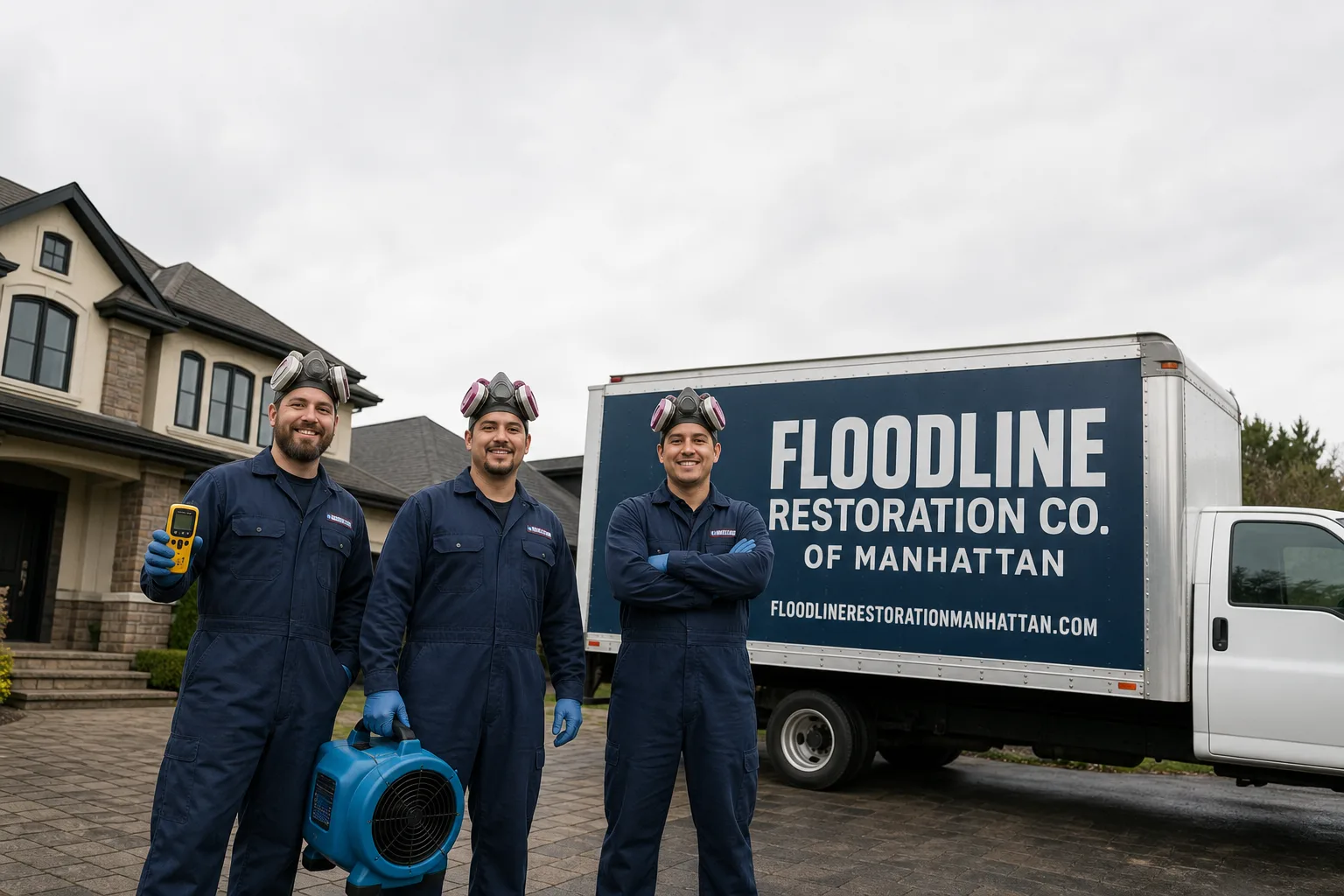
Free visual inspection and a written scope of work before any mitigation begins - photos, moisture readings, and drying logs go in your claim file
The scope we write is the scope we bill. Anything new gets shown to you, in writing, before we touch it.






 Before
 After
After Before
 After
After Before
 After
After24/7 Emergency Mold Remediation in Lawrence
Mold remediation in Lawrence typically runs $2,800 to $6,500 for a contained removal on a single room, and $8,000 to $18,000 when saltwater intrusion has compromised plaster walls, masonry foundations, and the wiring below the first-floor ceiling. The crew that arrives first is the crew that stops the colony from spreading into ductwork and behind original millwork. We answer live, around the clock, at (917) 924-4221, and a certified team from Floodline Restoration Co. of Manhattan can be on-site in Lawrence within 45 minutes. The first hour after you discover mold, or after floodwater recedes, determines whether you’re dealing with a contained remediation or a whole-house pack-out. Don’t wait for the musty smell to get worse. Call now and we’ll walk the property with you, moisture meter in hand, before you spend a dollar.
Understanding Mold Remediation Severity in Lawrence Properties
Mold severity in Lawrence breaks into three practical tiers. Tier one is surface colonization on non-porous materials: condensation-driven mold on bathroom ceilings, window sills, or the inside of exterior walls where humidity has run high. This is often a cleaning-and-air-scrubbing job with HEPA filtration. Tier two is porous-material penetration, and this is where Lawrence’s housing stock changes the math. Original 1920s plaster-and-lath walls, parquet floors over wood subfloor, and custom millwork all absorb moisture deeply. When mold reaches the lath behind plaster, or the underlayment beneath hardwood, the affected material must come out under full containment. Tier three is saltwater-driven contamination: floodwater from Jamaica Bay or Atlantic storm surge has wicked up through the masonry foundation, carrying chlorides into plaster, wood framing, and electrical raceways. This third tier is the one most national remediation firms get wrong, because they treat it like any other Category 3 water event. In Lawrence, it’s not. Salt retains moisture longer, corrodes metals faster, and demands drying targets and clearance testing that freshwater protocols don’t anticipate. Homes built between the 1920s and 1960s, with their plaster walls and older wiring systems, are especially vulnerable because moisture pushes deep and stays there.
Why Lawrence Property Owners Choose Floodline Restoration Co. of Manhattan
- 45-minute response commitment: When mold is spreading, containment can’t wait. Our Lawrence-area crews are dispatched from our New York City office the moment you call, with a target arrival of 45 minutes or less for emergency jobs.
- 24/7 live answer: You’ll never reach an automated menu at 2 a.m. A live dispatcher picks up, every time, and stays on the line until a crew is rolling.
- IICRC-certified crews: Our technicians hold certifications to IICRC standards for water damage restoration, applied structural drying, and applied microbial remediation. They’re background-checked and uniformed, trained to RIA and IFA standards as well.
- Free visual inspection: We’ll assess the scope and severity before any work begins. No charge for the walkthrough, no pressure to sign anything on the spot.
- Direct insurance billing: We bill your carrier directly and speak with your adjuster ourselves. You never play messenger between us and the insurance company.
- One team from start to finish: The same crew that sets containment handles demolition, drying, antimicrobial treatment, and the rebuild. No mid-job handoff to a subcontractor you’ve never met.
Our Mold Remediation Process
Inspection & Assessment
We start with a room-by-room visual inspection, thermal imaging, and moisture mapping. In Lawrence homes, this means probing plaster walls, checking crawl spaces for humidity, and testing any area below the first-floor ceiling for salt residue if there’s a flood history.
Extraction & Stabilization
Standing water comes out first if present, using truck-mounted and portable extraction units. We stabilize the structure so nothing spreads while containment goes up.
Drying & Dehumidification
Dri-Eaz dehumidifiers and Phoenix air movers run continuously, with daily moisture readings logged until materials hit the dry standard. On Lawrence jobs where saltwater is involved, drying cycles run longer because chlorides retain moisture. Injectidry systems pull water from wall cavities and under hardwood floors without unnecessary demo.
Cleaning & Sanitization
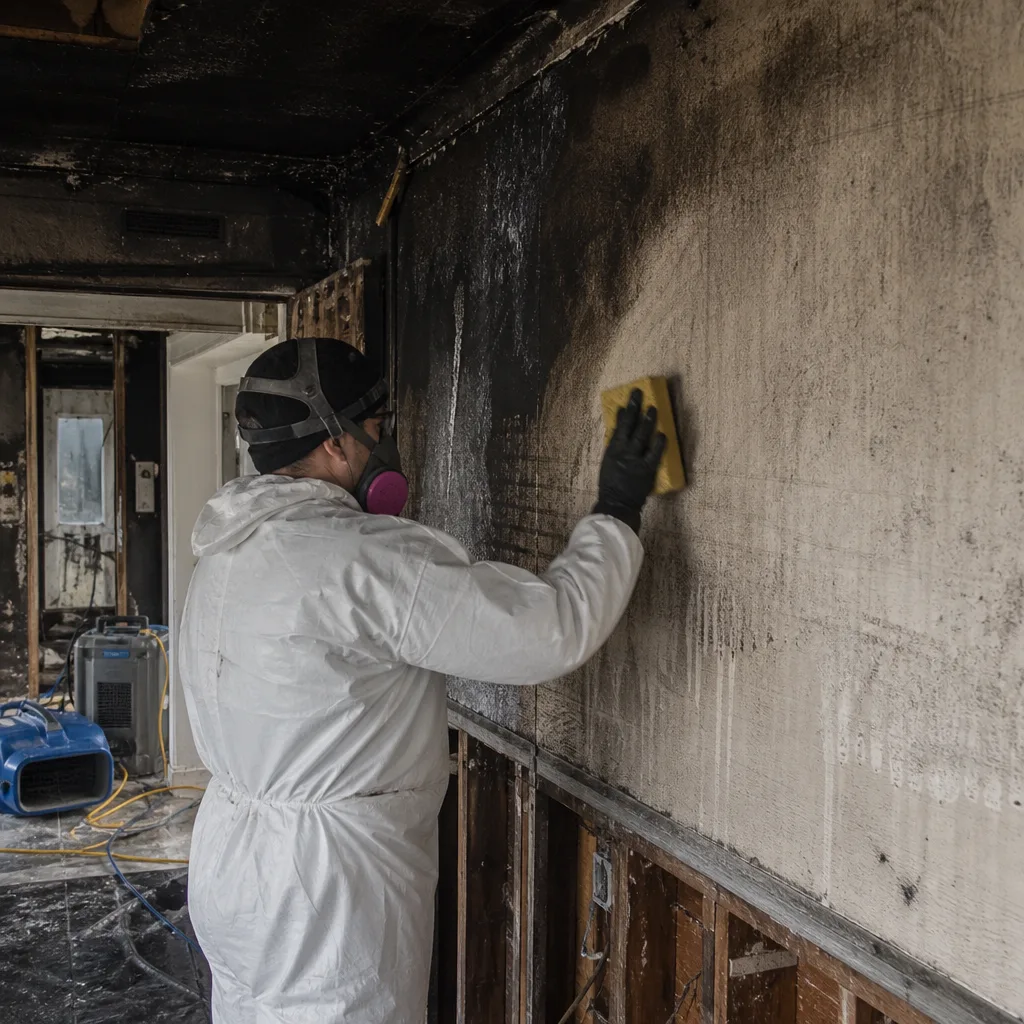
HEPA air scrubbers run throughout the job. Affected surfaces are HEPA-vacuumed, wire-brushed where needed, and treated with antimicrobial agents appropriate for the material.
Mold-Specific Specialty Treatment
For Lawrence’s plaster-and-lath homes, this means controlled removal of contaminated plaster sections under negative air pressure, treatment of the exposed lath and framing, and application of a post-remediation protectant. Crawl spaces get vapor-barrier assessment and humidity-control recommendations.
Repairs & Restoration
Once clearance testing confirms the mold is gone, we rebuild what was removed: plaster, drywall, flooring, trim, and any electrical work that Nassau County requires. The same crew finishes the job and hands you the 90-Day Done Right Promise in writing.
Need Emergency Mold Remediation in Lawrence Now?
Crews minutes away, answering live 24 hours a day. The sooner we start, the less it costs.
Working With Your Insurance Company
Mold claims in Lawrence almost always involve a flood or water event first, and insurance carriers scrutinize these files closely. That’s why we document from the first hour: photos of every affected surface before demolition, moisture readings taken on day one and logged daily, and a line-item scope of work that separates water damage from mold remediation. Our team communicates directly with your adjuster, provides the drying logs and clearance test results they’ll ask for, and handles the billing so you’re not fronting money and chasing reimbursement. The 90-Day Done Right Promise applies to insurance work exactly the same as any other job.
What We Provide Your Insurer
- Thorough documentation of the loss
- Photos of all damage, room by room
- Moisture readings and drying logs
- A detailed, line-item scope of work
- Direct coordination with your carrier
Built for Lawrence’s Loss Calendar
Lawrence gets hit from two directions. Jamaica Bay sits to the north, and the Atlantic barrier beaches sit to the south, which means storm surge can push in from either side during a major event. Hurricane Sandy’s 2012 surge inundated large sections of the village, and every major nor’easter since has reminded residents what saltwater does to a house. The late-fall nor’easter season, November through March, is when we see the surge-driven mold jobs: foundations soaked for days, plaster walls wicked waist-high, and electrical panels below the ceiling line that Nassau County inspectors will not pass after salt exposure. Spring brings heavy rain and rising groundwater, which fills crawl spaces and basements in the low-lying pockets between Rockaway Turnpike and the bay. Summer’s humidity, especially in homes with original masonry foundations and no vapor barrier, keeps indoor moisture high enough to trigger condensation mold in closets and behind furniture even without a flood. Lawrence homes don’t get a quiet season. Neither do we.
Mold Remediation Across Lawrence’s Neighborhoods
Lawrence is compact, but the building stock shifts block by block. Along Broadway and Central Avenue, you’ll find the substantial 1920s and 1930s Tudors and colonials, many with original plaster, steam-heat systems, and basements that have been managing groundwater for nearly a century. These homes need aggressive drying after any water event, because the plaster holds moisture against the lath and framing for weeks. Near the Five Towns border along Cedarhurst Avenue and the numbered streets running toward Rockaway Turnpike, homes built in the 1940s and 1950s often have early Romex wiring and crawl spaces that stay damp year-round. South toward the water, especially around Ocean Avenue and the streets closer to Reynolds Channel, elevation drops and flood exposure rises. We’ve worked homes there where the crawl space never fully dries between storms, and mold recurrence is constant until a proper vapor barrier and dehumidification plan goes in. Wherever you are in Lawrence, from the bay side to the village center, our Mold Remediation team knows the building types and the failure patterns that come with them.
Specialized Mold Remediation Services We Offer in Lawrence
Mold Inspection & Testing
Before any remediation, you should know what you’re dealing with. We run moisture mapping and take air and surface samples where warranted, including after a flood event to establish a baseline. In Lawrence, we pay particular attention to plaster walls, crawl spaces, and any area below the first-floor ceiling that may have seen saltwater. Testing gives you and your adjuster a clear record.
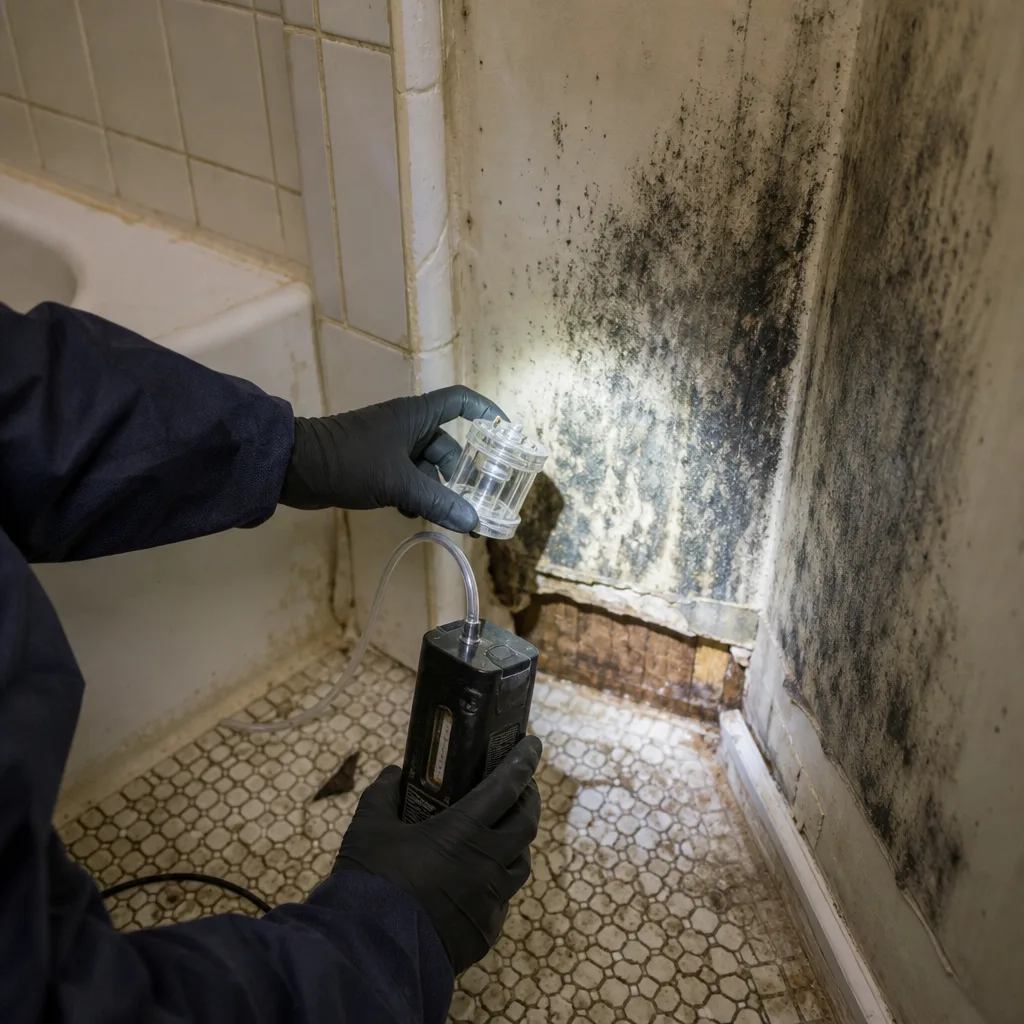
Mold Removal
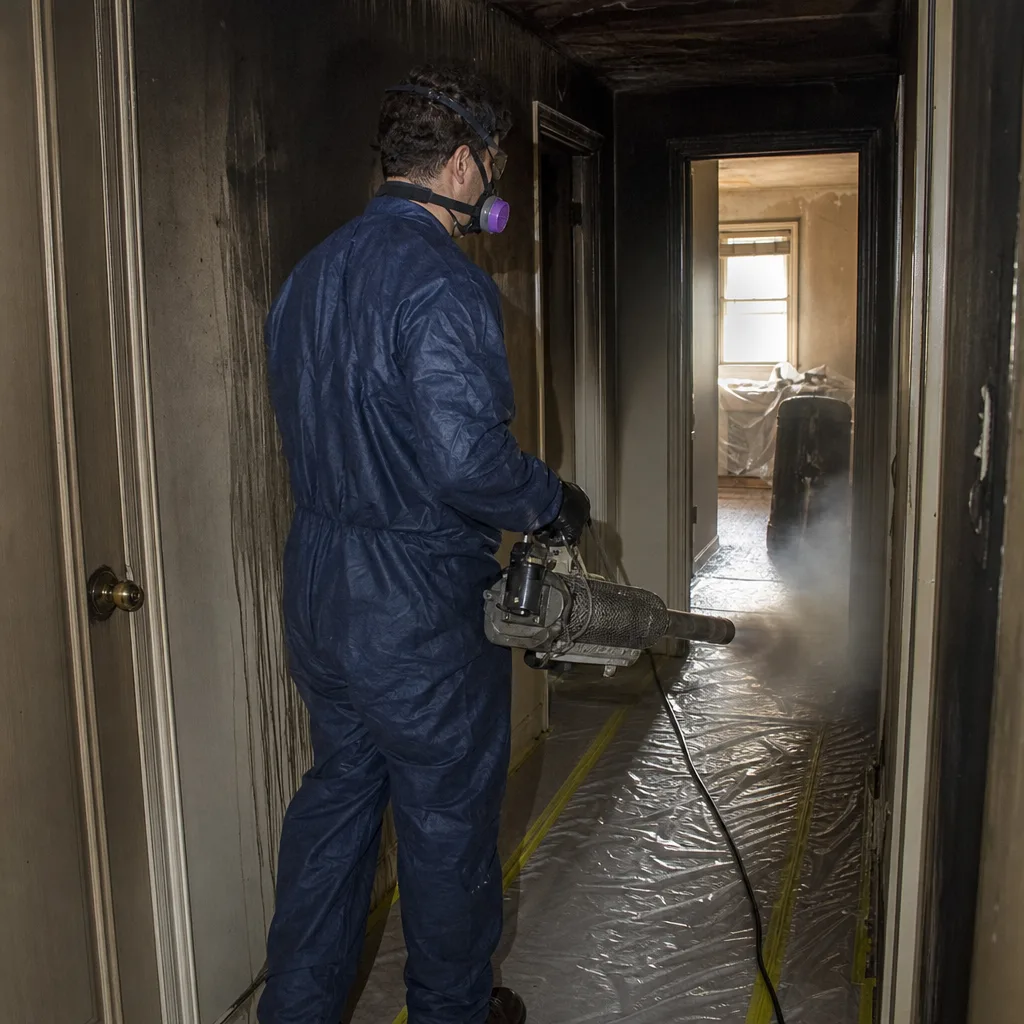
Removal in older Lawrence homes usually means controlled demolition of contaminated plaster or drywall under full containment, followed by wire-brushing of framing, HEPA vacuuming, and antimicrobial application. We don’t paint over mold, and we don’t “kill” it and leave the dead spores in the wall. We remove it and prove the air is clean.
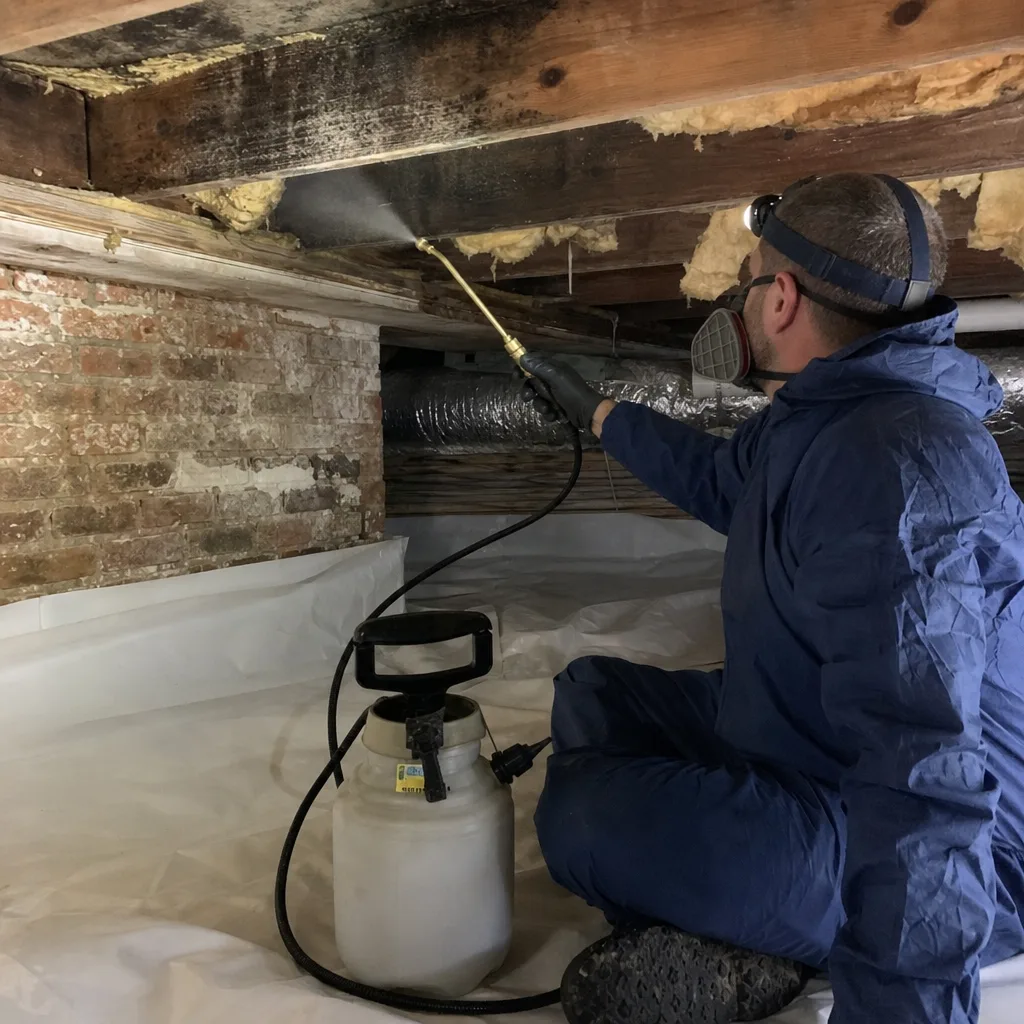
Black Mold Remediation
Stachybotrys, the black mold people worry about, thrives on chronically wet cellulose: drywall, paper-faced plaster, wood framing, and wet cardboard boxes. In Lawrence’s older homes, we typically find it behind plaster walls that stayed wet after a flood or in crawl spaces with chronic humidity. Full containment, negative air pressure, and post-remediation clearance testing are non-negotiable on these jobs.
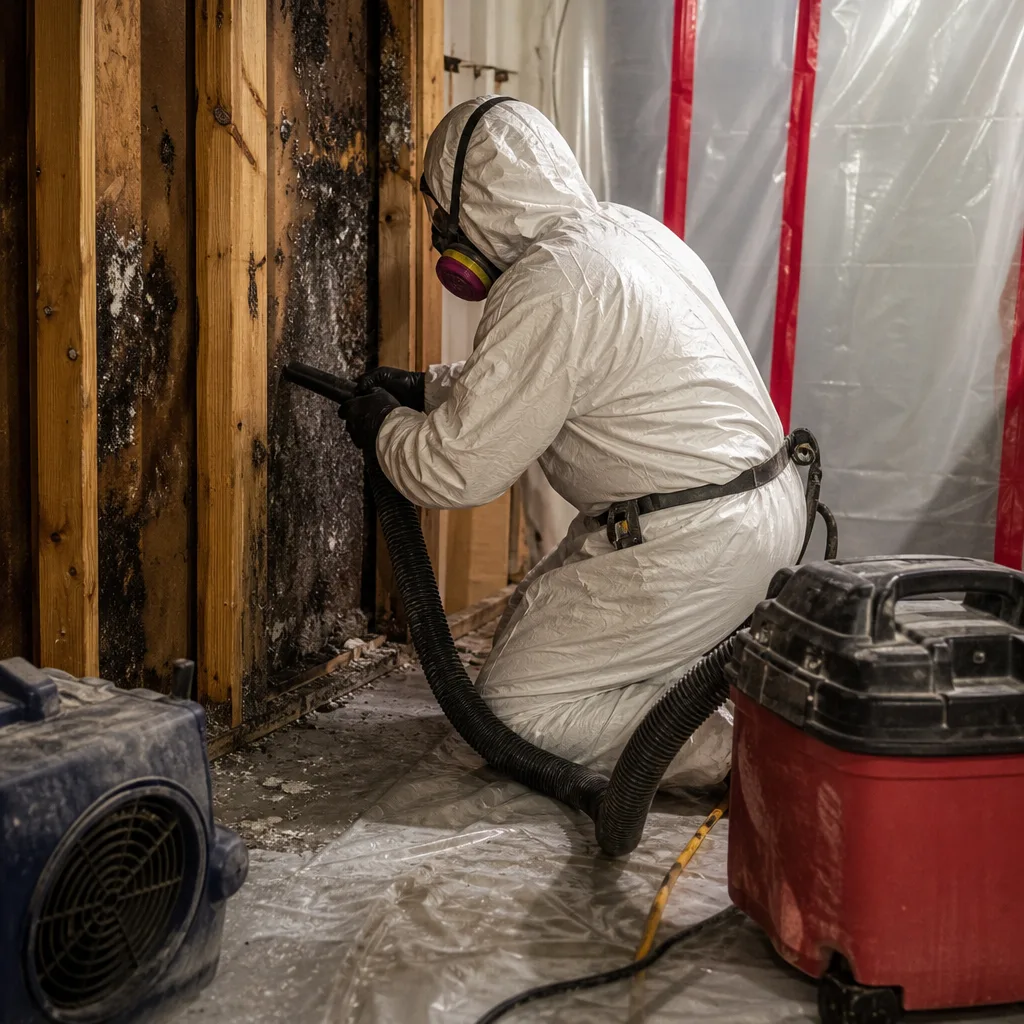
Air Quality Restoration
After a mold job, the spores that got airborne during demolition must be scrubbed. We run HEPA air scrubbers throughout the project and perform clearance air sampling before we call the job done. For Lawrence homes with forced-air systems, we also inspect ductwork and recommend cleaning if spores migrated into the system.
Crawl Space Treatment
Crawl spaces under Lawrence homes are chronically damp. The water table is high, the soil is sandy, and in many cases there’s no vapor barrier at all. We treat mold on joists and subflooring, then address the moisture source: drainage, encapsulation, or dehumidification. This is the single biggest mold-prevention step for most homes in the village. We serve all of Lawrence and the surrounding Five Towns area.
Moisture & Humidity Control
Mold returns when moisture returns. We assess the whole house: foundation drainage, gutter discharge, indoor humidity levels, bathroom and kitchen ventilation, and basement or crawl space conditions. The goal is a home that stays dry enough that mold can’t get a foothold, whether the next storm comes from the bay or the ocean.
What happens when you call
- 1
A real person answersNo phone trees - you reach a local pro.
- 2
You get an upfront price rangeHonest numbers before anyone is dispatched.
- 3
A background-checked tech heads outLicensed & insured, dispatched right away.
- 4
You approve before work beginsNothing starts until you say go.
Mold Remediation Costs in Lawrence, NY
A contained single-room mold removal in Lawrence, with containment, HEPA scrubbing, and clearance testing, generally lands between $2,800 and $6,500. A crawl space treatment with encapsulation runs $3,500 to $9,000 depending on square footage and access. Whole-house jobs after saltwater intrusion, where multiple rooms of plaster are removed, wiring is replaced, and drying runs extended, range from $12,000 to $30,000 or more. What moves the number: how many rooms are affected, whether plaster or drywall has to come out, whether crawl space encapsulation is needed, and whether Nassau County requires electrical panel replacement. Insurance often covers the water damage component if the event was sudden and covered, and many Lawrence policies include limited mold coverage. The free inspection gives you a firm, written scope with no obligation, and the $50 off any repair over $250, the $89 seasonal tune-up, and the 5% senior and veteran discount apply to Lawrence jobs. Call (917) 924-4221 for a free visual inspection and an exact number.
We Also Serve Cities Near Lawrence
Our crews handle mold remediation throughout the Five Towns and the surrounding South Shore. We serve homeowners in Cedarhurst, Inwood, Far Rockaway, and Woodmere under the same 90-Day Done Right Promise and with the same live-answer dispatch. If you’re in a neighboring village, call the same number and you’ll get the same team.
Serving Lawrence, NY - Our Local Coverage Area
We’re based in the Lawrence area and know this community well. Use the map below to see our service coverage - if you’re nearby, we can almost certainly help.
Lawrence Mold Remediation Questions, Answered
How does saltwater from Jamaica Bay storm surge change mold remediation in Lawrence compared to freshwater flooding?
Saltwater dramatically changes the job because salt is hygroscopic, meaning it pulls moisture from the air and holds it in porous materials long after freshwater would have dried. In Lawrence, this means plaster walls, lath, and especially masonry foundations stay wet longer, which extends the window for mold colonization. Salt also corrodes metals, so you have to assess wiring, fasteners, and structural connectors for corrosion damage at the same time you’re remediating mold. Standard freshwater drying targets will leave hidden moisture and hidden mold behind, so we run longer drying cycles, take more moisture readings, and treat the salt residue itself as part of the remediation. Call (917) 924-4221 for an assessment of your specific situation.
Do I need to replace my electrical panel if it got wet during a nor’easter in Lawrence, or can it be dried and reused?
If saltwater reached the panel or any wiring below the first-floor ceiling, Nassau County’s post-Sandy inspection standard treats it as failed and requires replacement, not drying. Salt corrodes the copper and the connections, and even a panel that looks fine can arc later. Your re-opening permit will stall if the electrical system doesn’t meet the current standard, so the practical answer is to plan on replacement. A licensed electrician handles that portion of the job, and we coordinate the sequencing so drying and mold removal happen in the right order. Call (917) 924-4221 and we’ll lay out the full scope before work starts.
What is the mold risk in original 1920s plaster-and-lath walls after flooding on Long Island’s Five Towns?
Plaster-and-lath walls are high-risk after flooding because the plaster is porous and the wood lath behind it is organic, which is exactly what mold feeds on. The cavity between plaster and lath also traps moisture, so a wall can look dry on the surface while mold is actively growing inside. In Lawrence’s older homes, we typically cut a small inspection hole, run a moisture meter into the cavity, and make a determination from there. If readings are elevated, the lower plaster sections usually come out under containment, the lath and framing are treated, and the wall is rebuilt. Call (917) 924-4221 for a free moisture check if you’ve had water against an original plaster wall.
Why does crawl space treatment matter more for Lawrence homes near Reynolds Channel?
Homes near Reynolds Channel sit close to the water table, and the crawl spaces under many of them stay damp year-round, not just after storms. Persistent high humidity in a crawl space creates mold on joists and subflooring, and that moisture migrates upward into the living space. In Lawrence, we see mold recurrence in houses near the channel where the crawl space was never properly encapsulated or dehumidified. Treatment means removing the mold, then fixing the moisture source so it doesn’t come back. Call (917) 924-4221 and we’ll inspect your crawl space and give you a straight answer.
Can parquet flooring and custom millwork be saved after a saltwater flood in Lawrence, or does everything have to go?
Parquet and millwork can often be saved if drying starts fast. Hardwood takes in water slowly, and parquet has a lot of surface area, so with Injectidry systems pulling moisture out from underneath, many floors can be dried in place. Custom millwork, if it hasn’t swelled and delaminated, can typically be cleaned and refinished after the structure behind it is dried and treated. What kills these materials is waiting: the longer they sit wet, the more likely they’ll cup, warp, or grow mold from the inside. We did a 1940s Tudor on Cedarhurst Avenue where pack-out of the parquet allowed the subfloor to dry and the flooring was reinstalled afterward. Call (917) 924-4221 as soon as water recedes, and we’ll assess what can be saved.
How fast can a mold remediation crew actually get to a Lawrence home?
We target 45 minutes for emergency calls in Lawrence, and we answer the phone live at any hour, any day. The crew comes from our New York City dispatch, and because we keep a team on rotation for the Five Towns area, we’re usually on-site quickly. Mold doesn’t wait, and neither do we. Call (917) 924-4221 and a live person will take the call.
Will my homeowners insurance cover mold remediation in Lawrence?
It depends on the cause and your policy language. Sudden and accidental water damage, like a burst pipe or a covered storm-surge event, often triggers coverage for the resulting mold. Gradual moisture problems, like chronic crawl space humidity, usually aren’t covered. Many policies also have a mold sub-limit. We document everything from the first hour, bill your carrier directly, and coordinate with your adjuster so you get a clear answer on what’s covered before you’re asked to pay anything out of pocket. Call (917) 924-4221 and we’ll help you work through the coverage question.
What should I do in the first 30 minutes if I find mold in my Lawrence home?
Don’t disturb it. Don’t wipe it, don’t paint over it, and don’t run a fan on it, because all of that spreads spores. Close the door to the affected room if possible, keep children and pets away, and turn off the HVAC if you suspect spores have reached the ductwork. Then call us at (917) 924-4221. We’ll talk you through containment steps over the phone and get a crew on the way for a free visual inspection.
Written by Curt Bowman, Owner at Floodline Restoration Co. of Manhattan. We’ve restored homes across New York’s Five Towns since 2010, and we stand behind every job with the 90-Day Done Right Promise, in writing.