
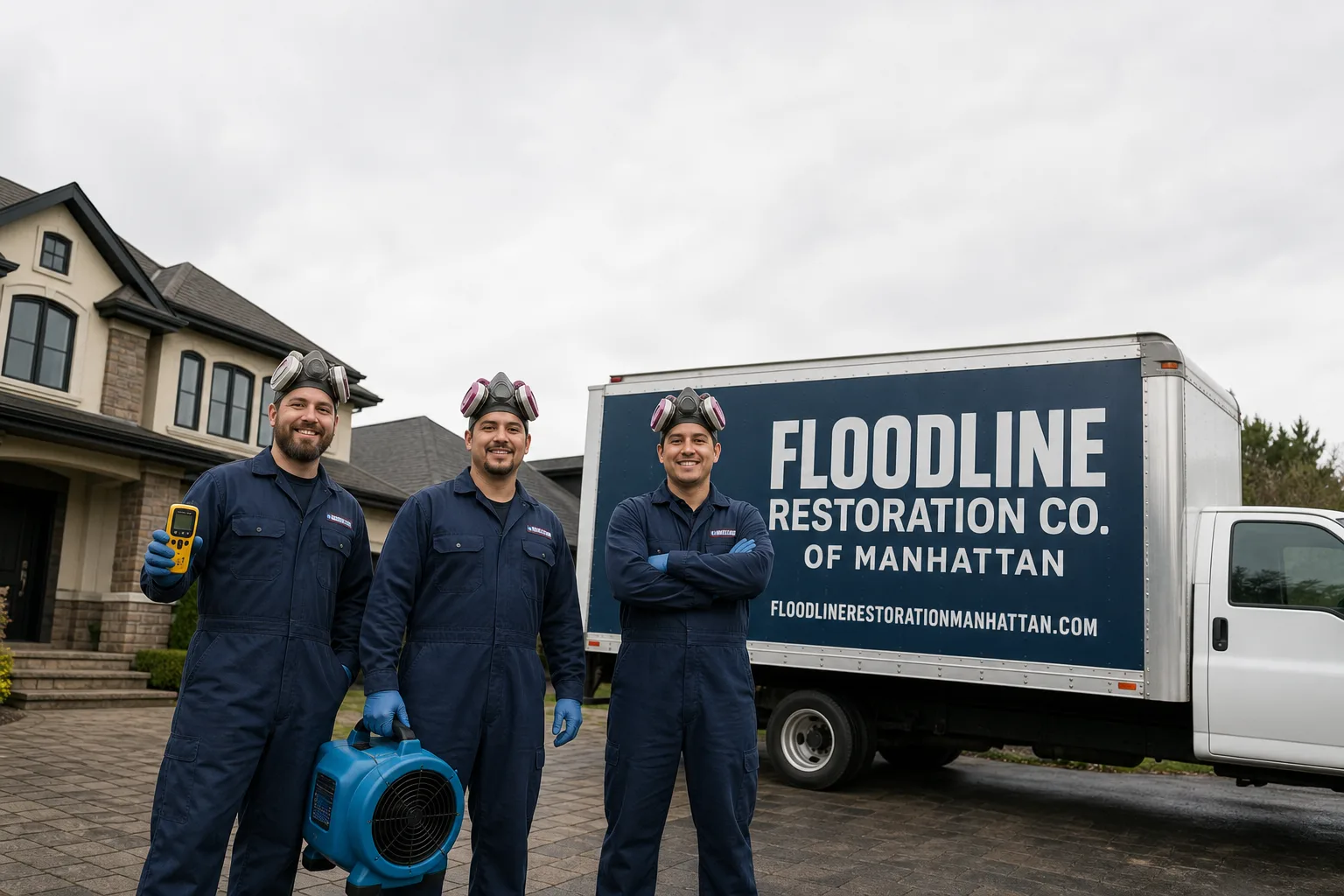
Free visual inspection and a written scope of work before any mitigation begins - photos, moisture readings, and drying logs go in your claim file
The scope we write is the scope we bill. Anything new gets shown to you, in writing, before we touch it.






 Before
 After
After Before
 After
After Before
 After
After24/7 Emergency Mold Remediation in Red Hook
Mold remediation in Red Hook, NY typically runs $1,800 to $6,500 depending on the square footage affected and how far moisture has wicked into plaster and framing. When you call (917) 924-4221, a live dispatcher answers on the first ring and our nearest certified crew is dispatched into Red Hook immediately. Mold doubles every 24 to 48 hours once active growth takes hold, so the first hour matters more than most homeowners realize.
We don’t leave you on hold, and we don’t route you to a call center. Our Red Hook mold team arrives fast, sets up containment to stop spore migration, and starts reading moisture levels before anything gets opened up. Free visual inspection, straight talk on what we found, and a written scope before work starts.
Understanding Mold Remediation Severity in Red Hook Properties
Mold severity in Red Hook is rarely about the mold alone. It’s about what the mold is growing on and how long the moisture has been present. We classify jobs by the extent of fungal colonization and the substrate affected. A surface bloom on a fieldstone foundation wall is a very different job from growth that has penetrated horsehair plaster or old-growth floorboards. In practice, Red Hook’s 18th and 19th century homes usually fall into the more serious categories, because the porous materials don’t dry quickly and mold roots run deep.
We use containment barriers, HEPA air scrubbing, and negative air pressure to isolate the affected area before disturbing any contaminated surface. Air samples before and after tell us whether the spore load has actually dropped or just visually disappeared. On fieldstone basements, mortar joints wick groundwater for months at a time, which means the mold is fed from the exterior side even as we treat the interior. That’s the part generic mold companies get wrong here: they treat the bloom and miss the water path, and the mold returns before the next spring thaw.
Why Red Hook Property Owners Choose Floodline Restoration Co. of Manhattan
- 45-minute response commitment: Our Red Hook dispatch is coordinated from our New York City office, and crews are positioned to reach Red Hook addresses fast. We tell you when we’ll arrive and we’re there when we say.
- 24/7 live answer: A real person picks up at 2 a.m., not a recording. Every call gets a live dispatcher who can send a certified crew the same visit.
- IICRC-certified crews: Our technicians hold IICRC AMRT, WRT, and IFA certifications and are background-checked and uniformed on every job. The same crew that runs the moisture map on day one handles daily readings through the dry standard.
- Free visual inspection: We assess the growth, map the moisture, and give you a written scope before any work begins. No pressure, no upselling.
- Direct insurance billing: We bill your carrier directly and document every step so you never play messenger between us and the adjuster.
- One team from start to finish: We handle mold removal, drying, and any rebuild. No mid-job handoff to a third party, no inherited crew with no stake in the result.
Our Mold Remediation Process
Inspection & Assessment
We map moisture throughout the affected area using thermal imaging and hygrometers, then identify the mold type and extent. On Red Hook’s historic homes we check fieldstone mortar joints, plaster walls, and subfloor cavities before opening anything.
Containment & Stabilization
We set up HEPA-filtered negative air containment so spores don’t spread into unaffected rooms. In older homes with open floor plans and plaster walls, this step prevents cross-contamination into irreplaceable finishes.
Drying & Dehumidification
Dri-Eaz LGR dehumidifiers and XPOWER air movers run continuously until the dry standard is met. We take daily moisture readings and log them, because on fieldstone and old-growth wood, surface dryness is not the same as core dryness.
Cleaning & Sanitization
Affected surfaces get antimicrobial treatment appropriate for the substrate. Horsehair plaster and wide-plank floors need different products than drywall. We don’t use a one-size-fits-all chemical on a 170-year-old beam.
Air Quality Restoration
HEPA air scrubbers run through the entire drying period, and we take clearance samples at the end. The goal is spore counts that match or beat the outside air baseline, not just a visual wipe-down.
Repairs & Restoration
Whatever the mold damaged, we rebuild. Plaster repair, floor restoration, sill plate replacement, crawl space encapsulation. The same crew starts and finishes the job, and the 90-Day Done Right Promise covers the result in writing.
Need Emergency Mold Remediation in Red Hook Now?
Crews minutes away, answering live 24 hours a day. The sooner we start, the less it costs.
Working With Your Insurance Company
Mold claims in Red Hook usually hinge on the source of the water. If a covered peril like a burst pipe or storm intrusion caused the moisture, the mold remediation is often covered. If it’s long-term seepage through a fieldstone foundation, carriers may classify it as a maintenance issue. We document from the first hour so the cause is clear. Photos of the water path, moisture readings before and after, containment logs, and a line-item scope build a claim file the adjuster can act on without a fight.
We bill your carrier directly and handle adjuster communication on the technical points. Your job is the house. Ours is the paperwork.
What We Provide Your Insurer
- Thorough documentation of the loss
- Photos of all damage, room by room
- Moisture readings and drying logs
- A detailed, line-item scope of work
- Direct coordination with your carrier
Built for Red Hook’s Loss Calendar
Red Hook sits in the mid-Hudson Valley where Catskill topography funnels and amplifies rainfall from nor’easters and tropical remnants. Tropical Storm Irene in 2011 was the benchmark, and every restoration contractor in Dutchess County still measures jobs against it. But the quieter pattern hurts more homes: the hard freeze-thaw cycle each winter cracks historic masonry foundations and generates ice dams on steep 19th-century roofs. When the spring thaw hits, saturated soil and frozen ground push water through basement walls that have never had modern waterproofing.
That spring snowmelt window is our busiest mold season in Red Hook. Groundwater wicks through mortar joints for weeks, soaking wide-plank subfloors and feeding fungal growth behind plaster. Summer brings its own problems: flash flooding from thunderstorms overwhelms fieldstone foundations quickly, and humid air settles into crawl spaces where the temperature differential produces condensation. The mold that starts in August is often the same mold that bloomed in April and never fully dried. Every season in Red Hook has a mold trigger. Knowing which one produced your problem changes how we treat it.
Mold Remediation Across Red Hook’s Neighborhoods
The village center around Cherry Street and South Broadway is dense with Greek Revival homes and early Victorian structures. These houses sit close together, which changes how we set containment; negative air pressure on one side of a shared wall can pull spores from a neighbor’s basement if the mortar is porous. We’ve learned to isolate tightly and check adjacent spaces before starting air movers.
Out along Route 9 and the rural stretches toward Milan and Barrytown, the homes spread out but the problems get bigger: pre-Civil War farmhouses on fieldstone foundations with original wide-plank floors. Mold in those houses travels through the sill plate and into the floor system before anyone sees it on a wall. The recent wave of NYC-area buyers renovating these properties cosmetically created a pattern we see constantly: hidden deferred water damage discovered after closing, with mold already behind newly painted plaster.
Near the Saw Kill and along the flatter land south of the village, basement seepage is chronic. Those homes sit closer to the water table, and spring snowmelt keeps the ground saturated for weeks. Homeowners there learn to read the musty smell in March as the first warning. By the time we’re called, the mold is usually established in the rim joist and working upward.
In the newer construction on the village outskirts, the issues shift toward HVAC condensation, bathroom exhaust failures, and crawl spaces that were built too tight for Hudson Valley humidity. Those homes need moisture control design work more than historic material salvage, and we treat them accordingly. Different building stock, different mold biology, same standard of drying.
Specialized Mold Remediation Services We Offer in Red Hook
Mold Inspection & Testing
We inspect the whole house, not just the visible bloom. In Red Hook’s older homes, the moisture source is often twenty feet from where the mold appears. We use thermal imaging to trace cold spots behind plaster, and we collect air and surface samples where the history of the house suggests hidden growth. Testing tells us what’s in the air, what’s on the surfaces, and whether the spore load matches the visible damage or runs much deeper.
Mold Removal
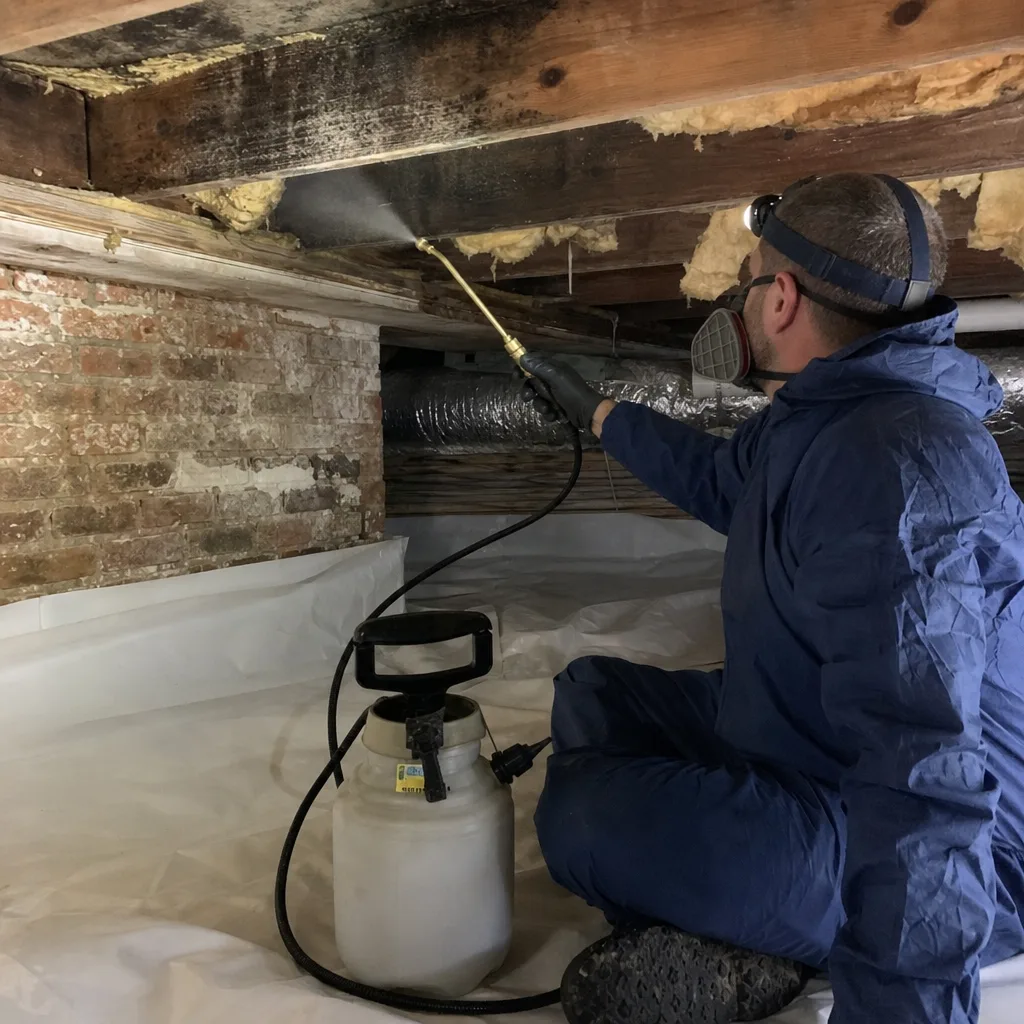
Our Mold Remediation team removes contaminated material only when it cannot be saved, and we specify salvage whenever possible. In a Red Hook farmhouse, the plaster on an 1840s wall is not replaceable. Neither is the old-growth pine underfoot. We remove what’s lost, treat what’s salvageable, and rebuild what’s gone using materials matched to the original.
Black Mold Remediation
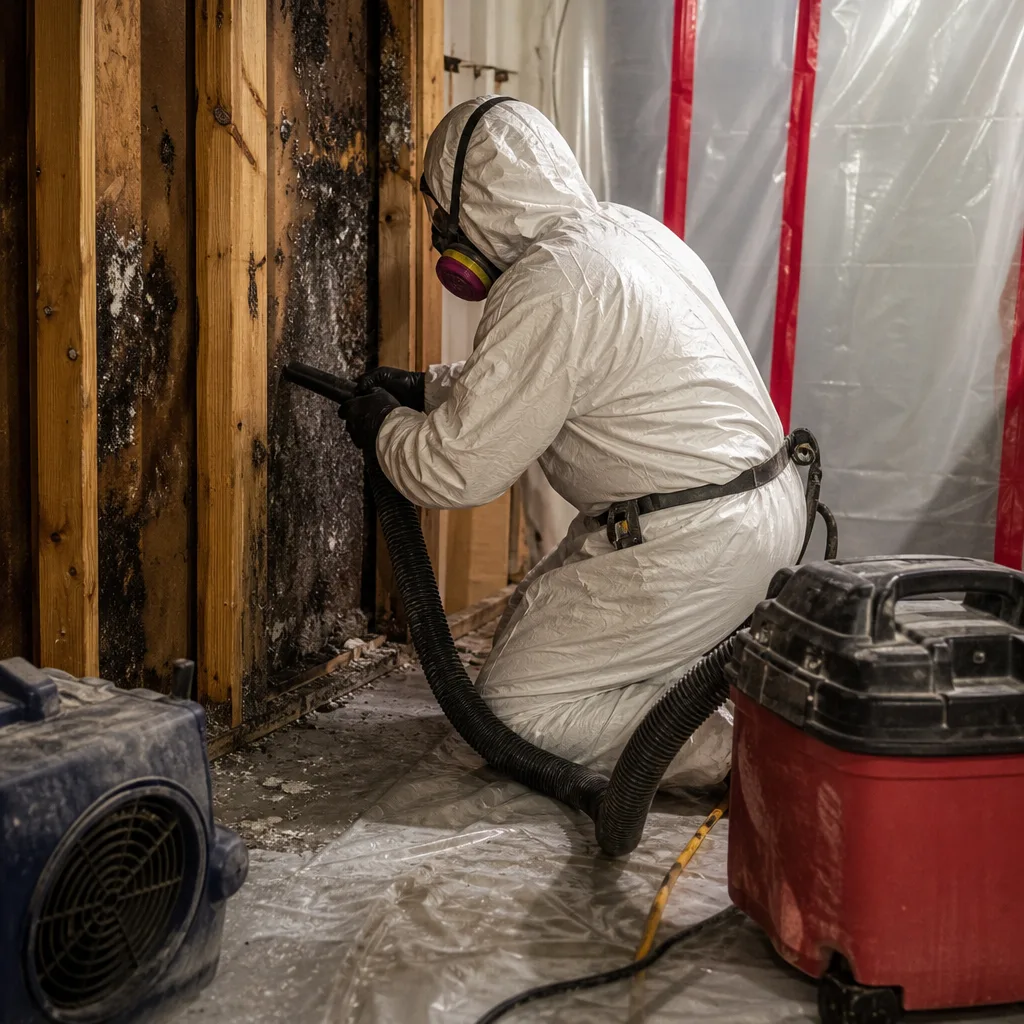
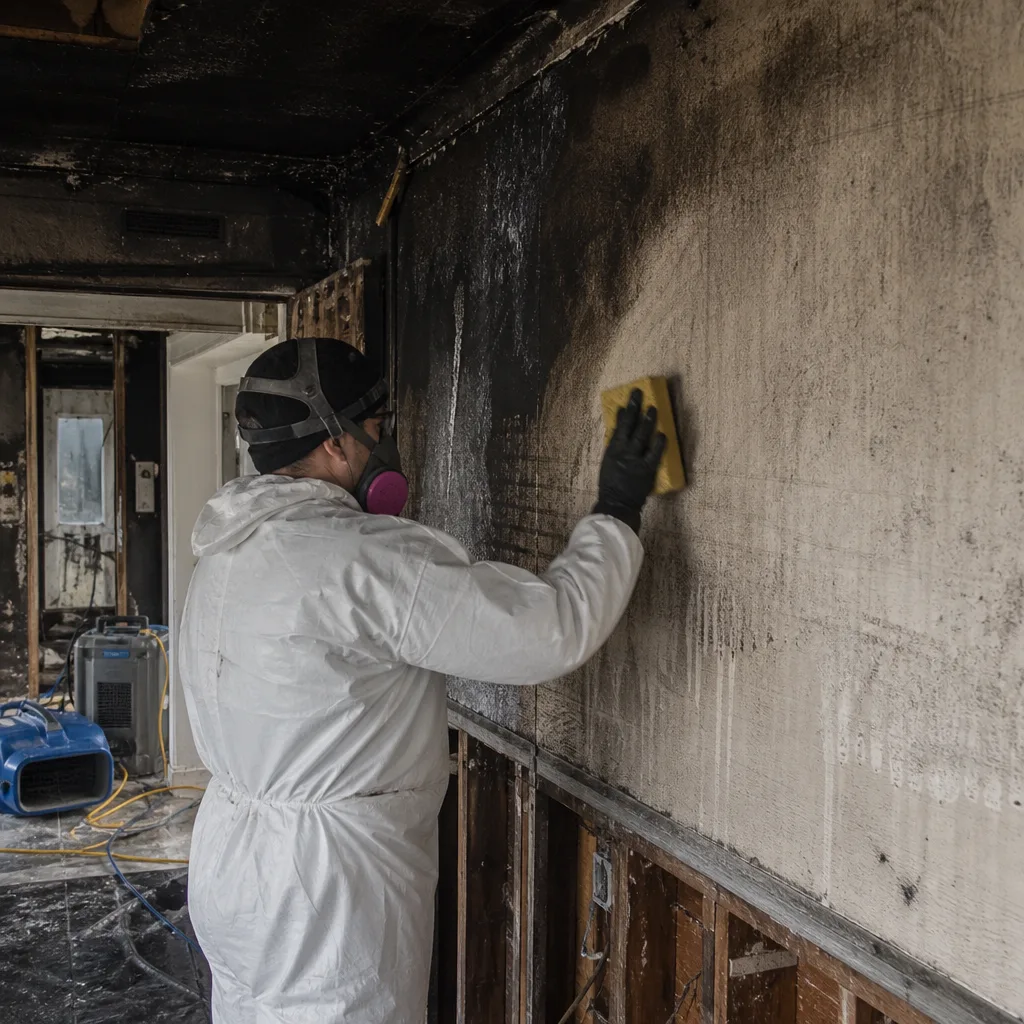
Black mold, usually Stachybotrys or similar toxigenic species, is common after long-term water intrusion in dark, low-oxygen spaces like fieldstone basements and crawl spaces. In Red Hook’s older housing stock, it often grows behind baseboards and inside walls where humidity has sat for months. The process is the same discipline: full containment before disturbing anything, HEPA filtration throughout, antimicrobial treatment on remaining surfaces, and clearance testing before we lift the containment. No shortcuts on black mold.
Air Quality Restoration
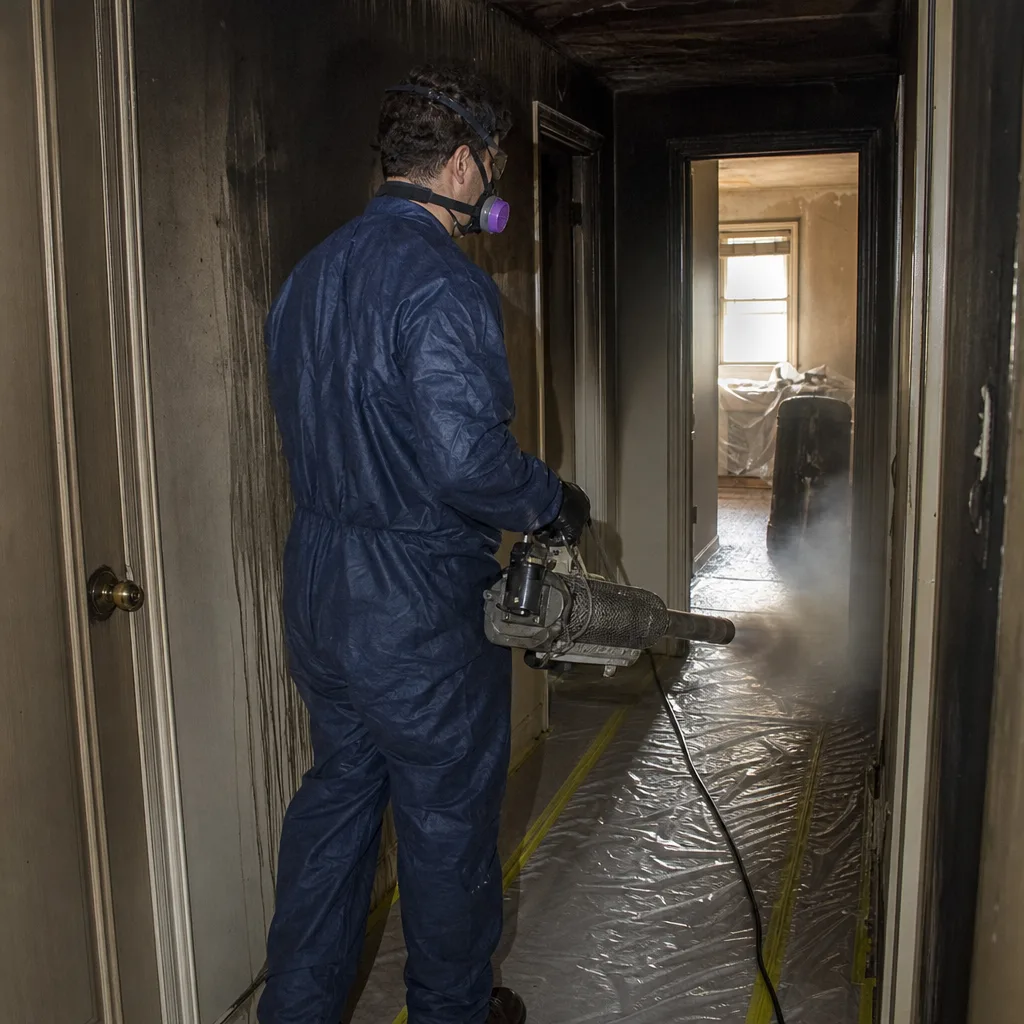
After the visible mold is gone, the air in the house still carries the history of the bloom. We run HEPA air scrubbers through the entire remediation period and take before-and-after air samples to verify the spore count has actually dropped. For Red Hook homeowners with allergies, asthma, or simply a house that has smelled musty for years, this final step is the difference between a clean basement and a house that finally breathes right again.
Crawl Space Treatment
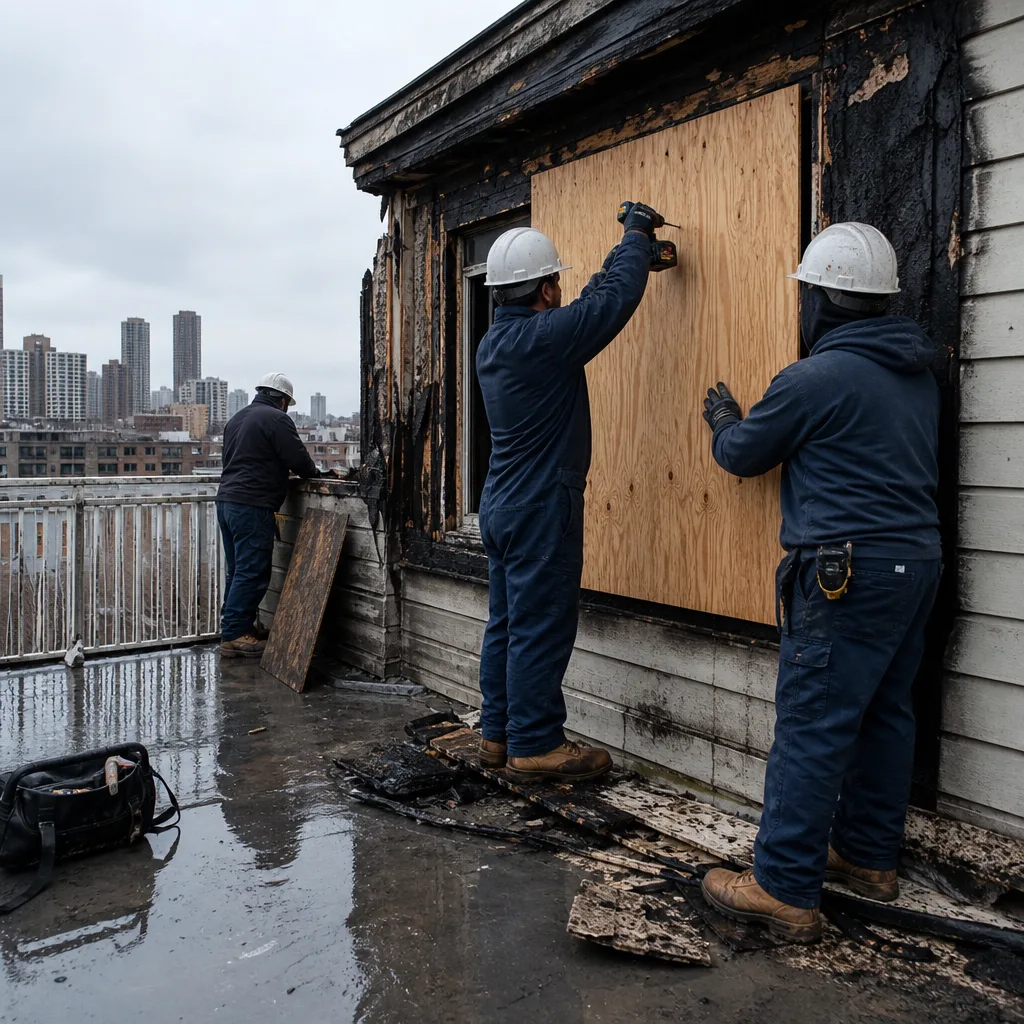
Crawl spaces in Red Hook’s older farmhouses are where the biggest mold problems hide. Dirt floors, rubble masonry walls, and low clearance combine to trap moisture against the floor joists above. We treat the crawl space as its own contained environment: remove contaminated insulation, apply antimicrobial treatment to framing, and install vapor barriers and dehumidification where the structure needs it. Without this step, the mold just comes back every humid summer.
Moisture & Humidity Control
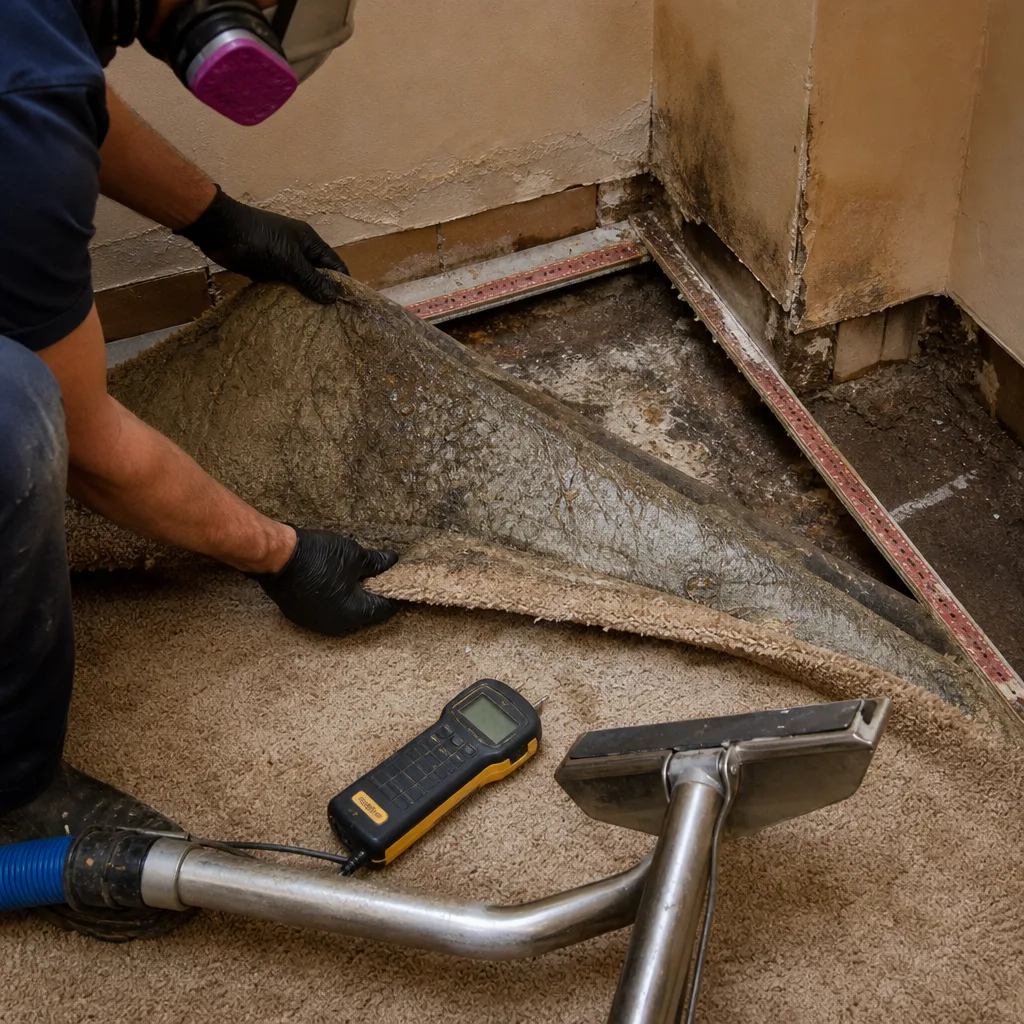
Mold is a water problem before it’s a fungus problem. In Red Hook’s mid-Hudson climate, the freeze-thaw cycle and spring snowmelt mean fieldstone basements will always see moisture unless the water path is managed. We install interior drainage, sump pumps, dehumidifiers, and vapor barriers where they make sense for the structure. But we don’t oversell systems. A 90-day moisture log tells us whether the existing grading and drainage can handle the water or whether mechanical control is required. We specify only what the readings support.
What happens when you call
- 1
A real person answersNo phone trees - you reach a local pro.
- 2
You get an upfront price rangeHonest numbers before anyone is dispatched.
- 3
A background-checked tech heads outLicensed & insured, dispatched right away.
- 4
You approve before work beginsNothing starts until you say go.
Mold Remediation Costs in Red Hook, NY
A small, contained mold job in a Red Hook basement, maybe ten to twenty square feet of growth on a fieldstone wall, typically runs $1,800 to $3,200. That includes containment, removal of affected material, antimicrobial treatment, and short-term drying. If the mold has spread into a crawl space or floor system, the job moves into the $4,000 to $7,500 range because the containment footprint grows and the salvage work becomes more demanding.
Historic material salvage changes the math. Drying old-growth wide-plank floors in place costs less than ripping them out and laying modern flooring, but it takes longer and requires daily moisture readings to confirm the wood is stable. Replacing horsehair plaster runs higher than drywall repair because the material match and finish work are specialized. Insurance often covers the remediation and drying, but not always the rebuild. A free visual inspection gets you a firm scope and a straight answer on what the carrier will likely cover. Call (917) 924-4221 and we’ll walk the house with you.
We Also Serve Cities Near Red Hook
Beyond our Red Hook service area, our crews respond daily to mold jobs in neighboring communities. We serve Greenville, Chelsea, Shrub Oak, and Shenorock with the same live dispatch, certified technicians, and 90-Day Done Right Promise.
Serving Red Hook, NY - Our Local Coverage Area
We’re based in the Red Hook area and know this community well. Use the map below to see our service coverage - if you’re nearby, we can almost certainly help.
Red Hook Mold Remediation Questions, Answered
Can you remediate mold in a fieldstone basement without removing the original stone?
Yes, and in most Red Hook homes we prefer to. Fieldstone walls are load-bearing and the original mortar is part of the structure’s character and integrity. We treat the stone and mortar with appropriate antimicrobials, dry the wall from the interior and exterior where accessible, and address the water path so the mold doesn’t return. The stone itself almost never needs removal.
How do you dry old-growth wide-plank floors without warping them?
We dry them slowly and monitored. Old-growth boards are dense and dimensionally stable, but blasting them with heat and high airflow will cup them. We use Dri-Eaz LGR dehumidifiers set to a controlled drying environment, take daily moisture readings with penetrating meters, and ease the wood back to its pre-loss moisture content over days, not hours. Warp is usually avoidable if the drying is disciplined.
My 1850s farmhouse has black mold on horsehair plaster after storm water intrusion. Is the plaster salvageable?
Often yes. Horsehair plaster is remarkably resilient if it hasn’t lost its key to the lath. We remove the contaminated surface growth, treat the plaster with an antimicrobial appropriate for lime-based material, and dry the wall cavity. If the plaster has delaminated from the lath, we can sometimes reattach it with plaster washers before full replacement. We’ll tell you honestly which path the wall can take.
What does Tropical Storm Irene mean for mold risk in Red Hook basements today?
Irene saturated basements in Dutchess County in 2011, and many of those spaces never fully dried. Homes that took on floodwater back then often have dormant mold in the framing and mortar that reactivates whenever humidity spikes. If your Red Hook basement flooded during Irene and was never professionally dried, a mold inspection now is a reasonable precaution. The mold you see today may be thirteen years old.
Do I need to move out during mold remediation in a historic Red Hook home?
Usually not, but it depends on the extent. For contained jobs in a single basement or crawl space, the family can stay in the house because negative air pressure and HEPA filtration keep spores out of the living areas. For whole-house contamination or when the mold has spread through ductwork, we may recommend temporary relocation. We’ll tell you on the first visit which situation you’re in.
How fast can a crew actually get to my Red Hook house?
We dispatch to Red Hook addresses with a 45-minute response commitment, and our New York City dispatch office is open live around the clock. A real person answers at any hour and sends the nearest certified crew immediately. In most cases we have a team on site within the hour and containment started the same visit.
Will insurance cover mold remediation in a historic home?
Coverage depends on the source of the moisture. If a covered peril like a burst pipe or stormwater intrusion caused the mold, remediation is often covered. Seepage through a fieldstone foundation over years is usually classified as maintenance, not a sudden loss. We document the moisture source, collect samples, and provide the evidence your carrier needs. Direct billing means we work with the adjuster so you don’t carry the claim alone.
What should I do in the first 30 minutes after finding mold?
Don’t disturb it. Opening the wall or scrubbing the surface sends spores into the air and spreads the problem. Shut the door to the affected space, turn off any HVAC fan that could circulate air through the house, and call (917) 924-4221. We’ll walk you through what to do until the crew arrives. Photos help. Disturbing the mold hurts.
Written by Curt Bowman, Owner at Floodline Restoration Co. of Manhattan, serving Red Hook and the Hudson Valley with certified mold remediation since 2010.