
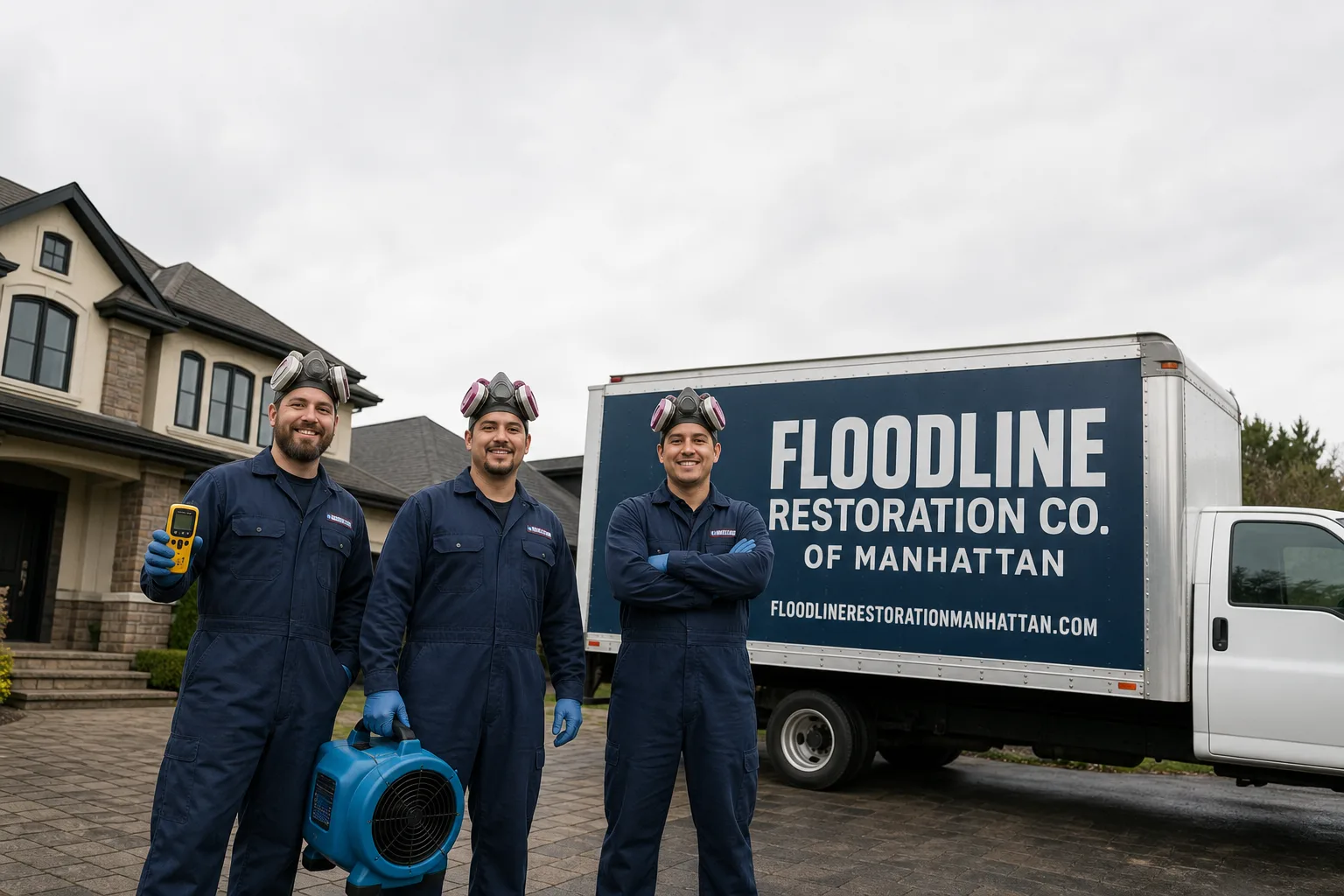
Free visual inspection and a written scope of work before any mitigation begins - photos, moisture readings, and drying logs go in your claim file
The scope we write is the scope we bill. Anything new gets shown to you, in writing, before we touch it.






 Before
 After
After Before
 After
After Before
 After
After24/7 Emergency Storm & Disaster Restoration in Red Hook
Storm damage in Red Hook moves fast. A breached roof, a blown-out window, or a garage door peeled off its track lets wind-driven rain into a house within minutes, and in a town full of pre-Civil War farmhouses with fieldstone foundations, that water finds its way into places you can’t see for weeks. If you’re looking at damage right now, call (917) 924-4221. A live dispatcher answers around the clock, and we get a crew moving toward Red Hook the same visit. The first hour determines whether you’re drying plaster and wide-plank floors or tearing them out. Our Storm & Disaster Restoration team starts with a free visual inspection, documents everything for your carrier, and stabilizes the opening before the next band of weather rolls through.
Understanding Storm & Disaster Restoration Severity in Red Hook Properties
The severity of a storm loss in Red Hook has as much to do with the age of the house as the force of the storm. Most homes here were framed with mortise-and-tenon joinery and sit on fieldstone or rubble-masonry foundations that have been breathing groundwater for 150 years or more. When wind peels a vinyl-sided addition off a Greek Revival or drives rain through a failed garage-door track, the water doesn’t just wet the surface. It migrates through horsehair plaster, wicks into old-growth subflooring, and settles against mortared stone that was never waterproofed. Category 3 water, the kind carrying silt and ground runoff from a flooded basement, requires containment, extraction, and structural drying with moisture mapping. We use thermal imaging and hygrometers to find water that’s behind plaster and under floors, then run Dri-Eaz air movers and dehumidifiers until daily readings match the dry standard. In Red Hook, that almost always means treating the structure as a historic-materials project. Drywall-and-concrete assumptions don’t hold here.
Why Red Hook Property Owners Choose Floodline Restoration Co. of Manhattan
- A 45-minute response commitment for Red Hook addresses. When a nor’easter has opened your house to the weather, the clock is running on every porous surface. We move fast because the damage does too.
- A live person answers the phone, 24/7. Two in the morning, Thanksgiving, during a county-wide power outage. A dispatcher picks up and a certified crew reaches the job. No phone trees, no recording.
- IICRC-certified crews on every job. WRT for water damage, FSRT for fire and smoke, AMRT for applied microbial remediation. Background-checked and uniformed.
- Free visual inspection before anything is signed. We’ll tell you what’s storm damage, what’s deferred maintenance, and what your insurance carrier is likely to cover. Then we hand you a written scope.
- Direct insurance billing. You never play messenger between us and the carrier. We document, we negotiate, we bill direct.
- One team from board-up to finished rebuild. The crew that secures the opening is the same crew that dries the frame, replaces the door, and rebuilds the wall. No mid-job handoff and no inherited subcontractor who never saw the moisture map.
Our Storm & Disaster Restoration Process
Inspection & Assessment
We walk the property with a thermal camera and moisture meter, mapping every wet surface and structural compromise. The written assessment includes the wind-load rating of any failed door or window, the condition of the original framing, and a line-item scope for the carrier.
Extraction / Stabilization
Standing water comes out first, followed by emergency board-up, roof tarping, and temporary bracing of any opening. On a farmhouse off Route 9, we secured an opening with board-up before the next squall line arrived, then removed the bent steel track that had failed.
Drying & Dehumidification
Dri-Eaz and Phoenix air movers create structured airflow through cavities, while dehumidifiers pull moisture from the air mass. In Red Hook’s historic homes, we log daily moisture readings on original plaster and subfloors until we can prove the dry standard in writing.
Cleaning & Sanitization
Category 3 water from a flooded fieldstone basement carries silt and biologicals. We pressure-wash the stone, treat affected surfaces with an EPA-registered antimicrobial where appropriate, and run HEPA air scrubbers while the space is open.
Specialty Treatments for Storm Damage
Wind-driven rain against 19th-century horsehair plaster requires lime-compatible repair, not drywall compound. We match historic materials, sister damaged wide-plank boards where possible, and specify impact-rated replacements for any door or window that failed under wind load.
Repairs & Restoration
The same crew that extracted and dried now rebuilds. One team, one work log, one chain of custody. We stand behind the result with the 90-Day Done Right Promise, in writing.
Need Emergency Storm & Disaster Restoration in Red Hook Now?
Crews minutes away, answering live 24 hours a day. The sooner we start, the less it costs.
Working With Your Insurance Company
Most Red Hook storm losses are covered under a standard homeowner’s policy, but the documentation has to be right from the first hour. Carriers want specific proof: photos of the failed door track before anyone touches it, moisture readings showing the path of water, and a line-item scope that separates storm-caused damage from pre-existing conditions. We handle that. Our team photographs every room, logs every reading, and communicates directly with your adjuster. You shouldn’t have to explain the difference between wind damage and a 150-year-old foundation crack. That’s our job. Curt Bowman built Floodline Restoration Co. around the principle that the homeowner should never be the middleman between a restoration crew and an insurance carrier. We bill direct and we document thoroughly.
What We Provide Your Insurer
- Thorough documentation of the loss
- Photos of all damage, room by room
- Moisture readings and drying logs
- A detailed, line-item scope of work
- Direct coordination with your carrier
Built for Red Hook’s Loss Calendar
Storm damage in Red Hook has a season. Late January through early March brings the freeze-thaw cycle that cracks fieldstone foundations and lifts the eaves on steep-pitched Victorian roofs, leaving the house open when the first nor’easter of spring arrives. March and April are the snowmelt months, when saturated ground pushes water through mortar joints in homes that have never had modern waterproofing. Tropical remnants from August through October follow the Catskill trough, amplifying rainfall the way Irene did across Dutchess County in 2011. And from November on, wind-driven snow builds ice dams on the north-facing eaves of every 19th-century farmhouse with inadequate ventilation. The pattern matters. A property that shows hairline cracks in November is a flood-loss candidate by March. We read the calendar because Red Hook’s housing stock has been reading it for two hundred years.
Storm & Disaster Restoration Across Red Hook’s Neighborhoods
The work changes depending on which side of town you’re on. Along Route 9 and the historic village center, we see Greek Revival and Federal homes with original wide-plank floors that have absorbed moisture from storm breaches and now need careful pack-out and drying instead of simple extraction. Out near the farmhouses off Milan Hollow Road and Rockefeller Lane, exposed lots mean garage doors take the full force of Catskill-amplified wind, and a door that was never rated for the load pulls its track right off the jamb. In the hamlets around Upper Red Hook and hamlets toward the Saw Kill, fieldstone basements weep through mortar joints after every heavy rain, and storm runoff turns a wet floor into a Category 3 situation. The houses between Linden Avenue and the town recreation fields tend to be mid-century builds with newer framing, but they sit on the same clay-heavy soils that hold water against foundation walls. Each area has a repeat pattern. We know them because we’ve worked them for years. When you call Floodline Restoration Co., you get a team that understands the difference between a village Greek Revival and a farmhouse off Route 9.
Specialized Storm & Disaster Restoration Services We Offer in Red Hook
Wind Damage Repair
Wind is the most insidious threat to Red Hook’s older homes because the failures happen slowly. A door track that flexed during one nor’easter may hold for months before it pulls out entirely. We inspect wind-rated doors, reinforce stiles and tracks, and replace modern retrofit failures with impact-rated panels sized for the opening and the wind zone. If the original mortise-and-tenon frame has shifted, the repair starts there, not with a new door hung on a racked jamb.
Emergency Board-Up
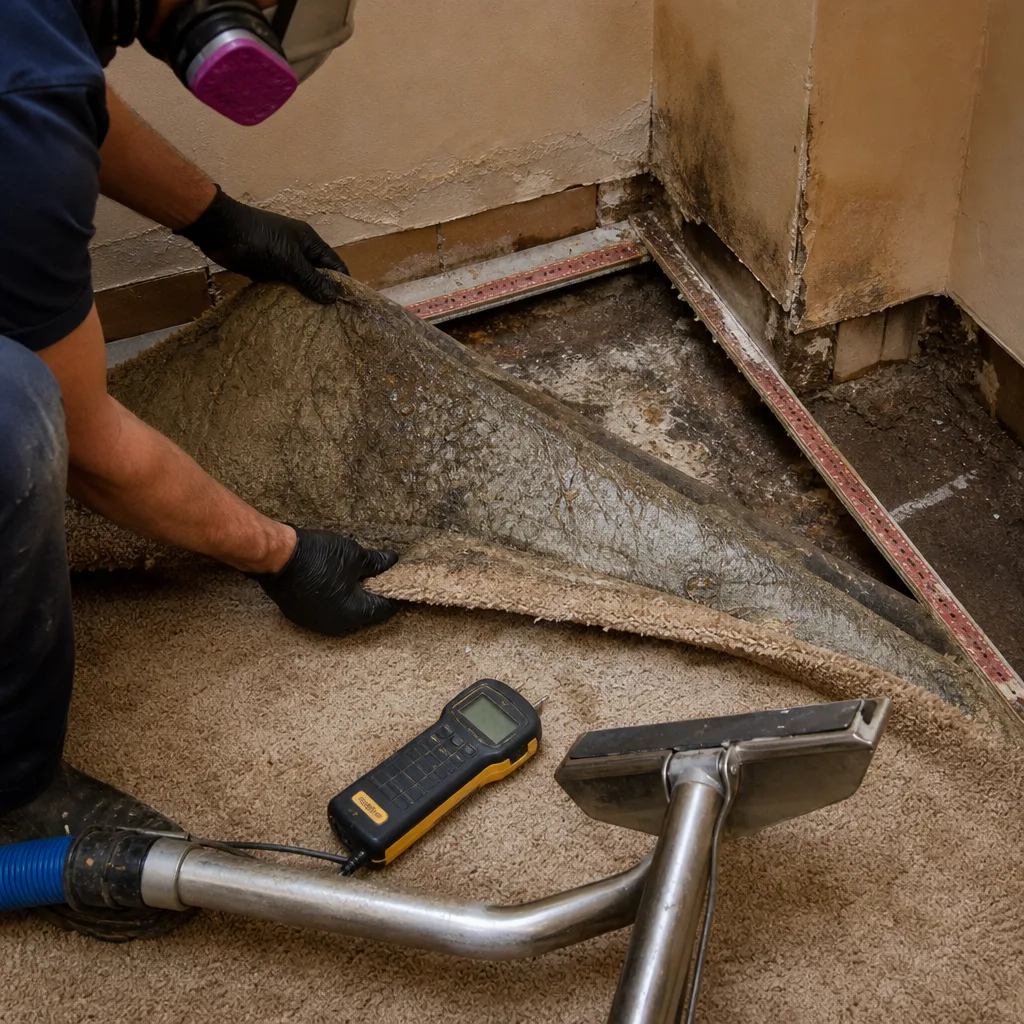
When a tree branch punches through a roof or a failed door leaves the house open, board-up is the first priority. We use plywood and structural brackets, not plastic sheeting, to close the opening against wind and animals. Board-up in Red Hook has to work on fieldstone foundations and 19th-century framing, which means the anchoring method matters as much as the board itself.
Flood Damage Restoration
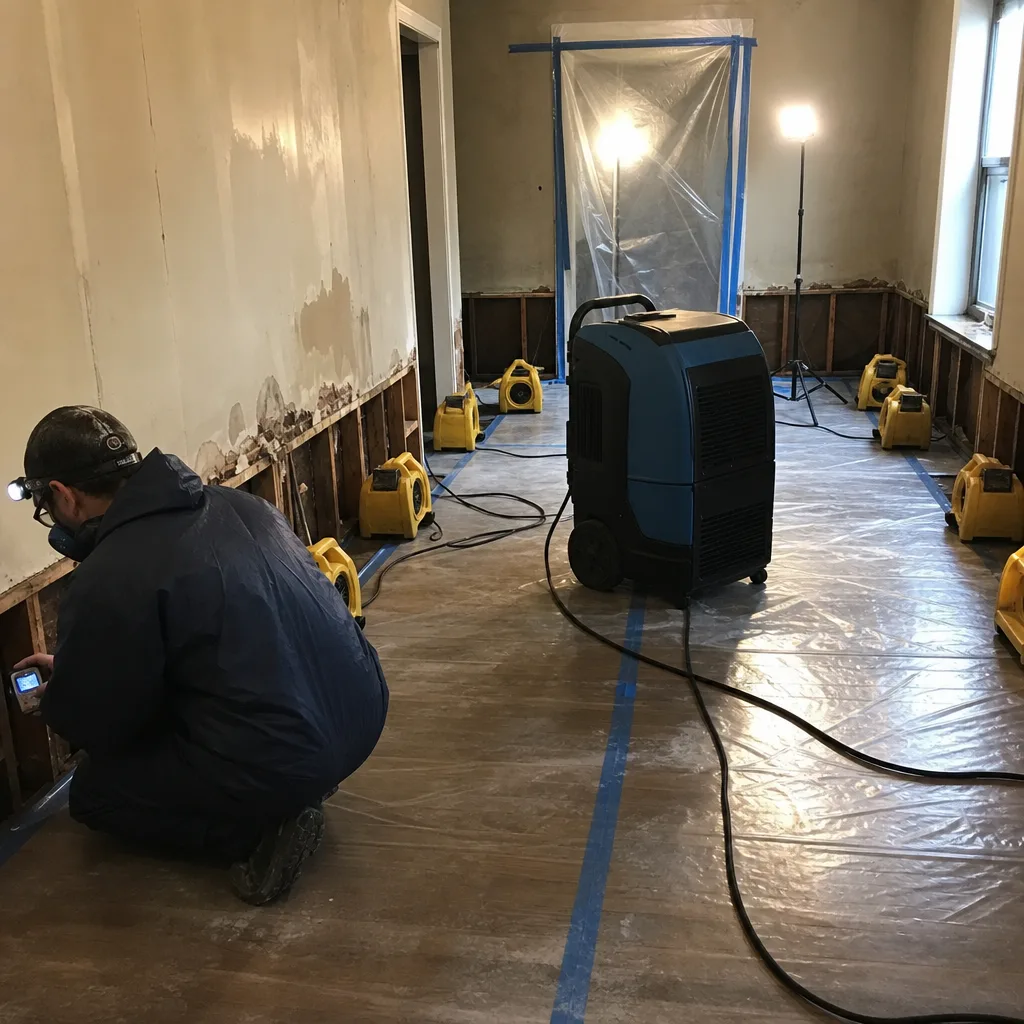
Flooding in Red Hook usually enters through fieldstone basement walls, not doorway thresholds. When the Catskills amplify a nor’easter and saturated ground presses against a rubble-masonry foundation, water moves through the mortar joints and into the house. We extract, pressure-wash the stone, install perimeter drying, and log readings on original wide-plank subfloors until the entire structure meets the dry standard. Then we rebuild what the water claimed.
Roof Tarping
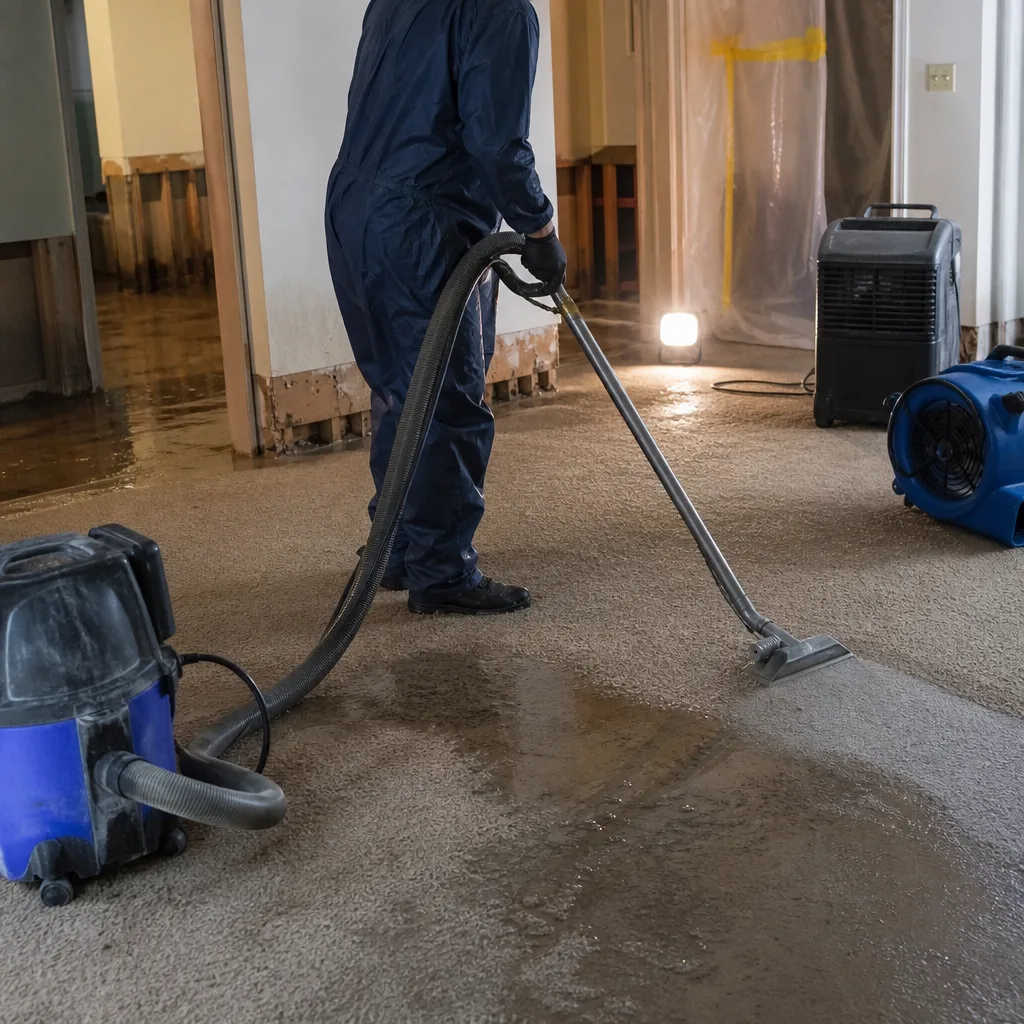
Wind-driven rain against a steep-pitched Victorian roof finds every missing slate and lifted flashing. We tarp quickly, seal the edges against the next storm, and document the damage for your carrier before any repair begins. In Red Hook, the tarp has to survive the same wind that caused the damage, so we use heavy-gauge material and mechanical fastening, not staples.
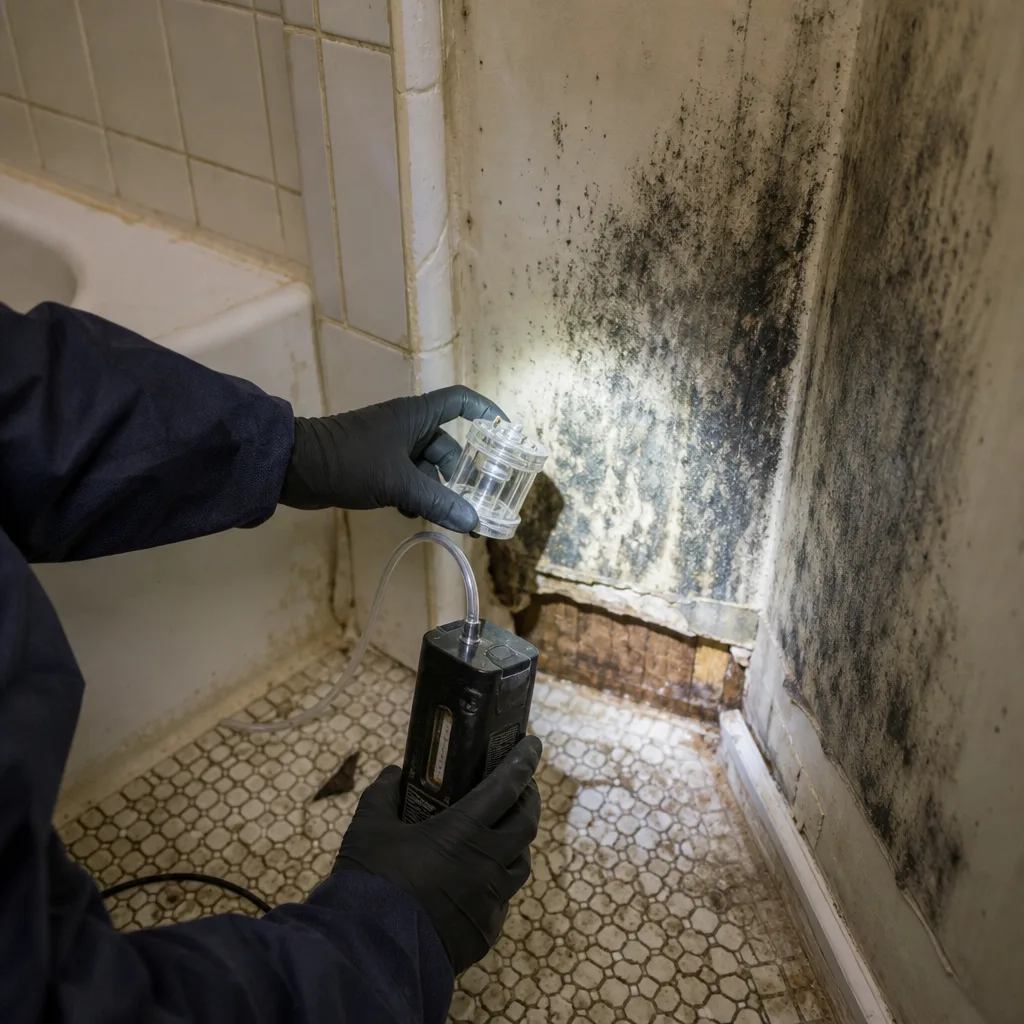
Debris Removal
A storm that drops a maple limb through a roof also scatters debris across the property, often into the basement through a broken window. We clear the interior, remove wet insulation and compromised plaster, and haul debris away as part of the same job. You’re not left with a pile of broken framing and a contractor who only handles water.
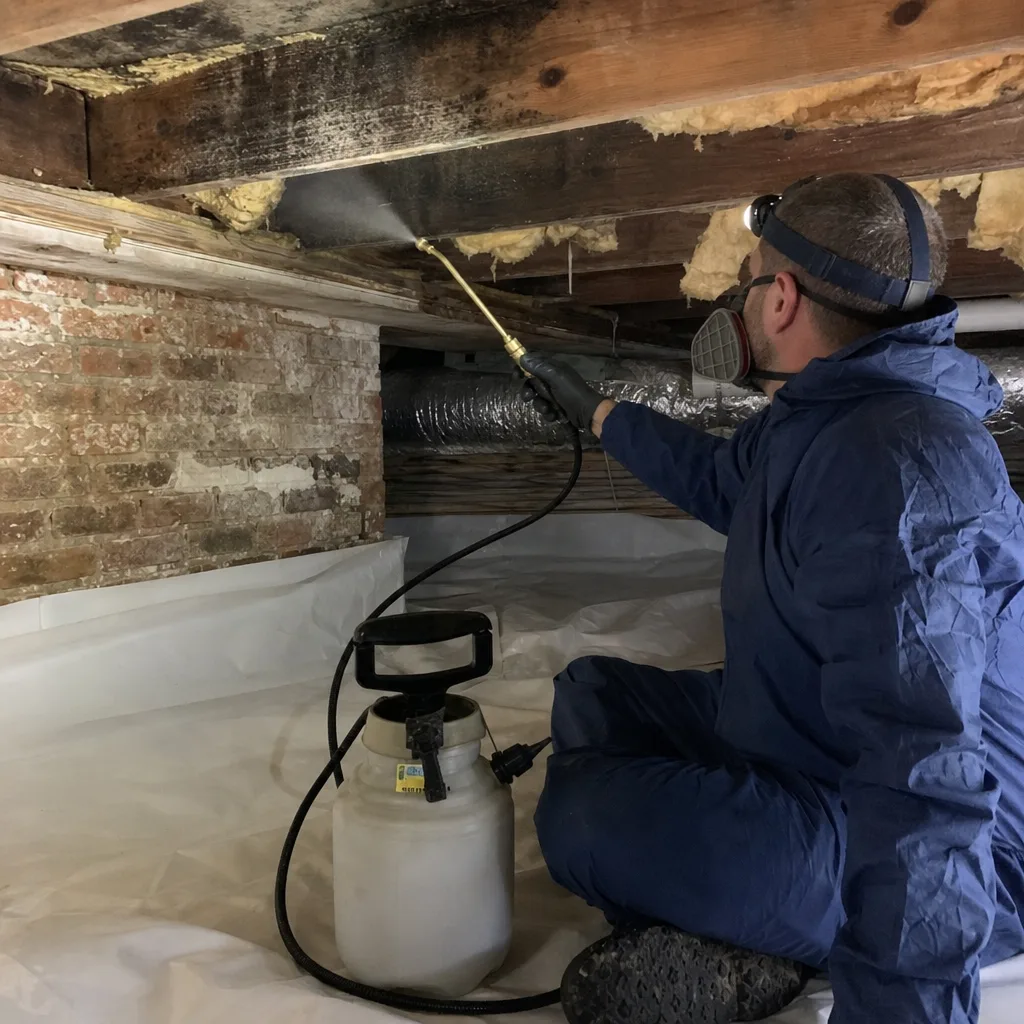
What happens when you call
- 1
A real person answersNo phone trees - you reach a local pro.
- 2
You get an upfront price rangeHonest numbers before anyone is dispatched.
- 3
A background-checked tech heads outLicensed & insured, dispatched right away.
- 4
You approve before work beginsNothing starts until you say go.
Storm & Disaster Restoration Costs in Red Hook, NY
In Red Hook, emergency board-up for a breached opening typically runs $400 to $900 per opening, including the structural anchoring. Roof tarping on a steep-pitched Victorian roof runs $450 to $1,100 depending on the number of roof planes and edge sealing required. Flood damage restoration in a fieldstone basement, including extraction and structural drying on original wide-plank floors, usually lands between $3,800 and $12,000 for a single-level event. Wind damage repair with a replacement impact-rated door runs $2,200 to $5,500 installed, more if the original frame needs re-trueing. The biggest variables are the age of the framing, the condition of the fieldstone foundation, and whether horsehair plaster has to be matched. Insurance covers most storm losses once the cause is documented, and we bill direct. The free visual inspection is how you get a firm number before anything is signed. Call (917) 924-4221 and we’ll walk the property with you.
We Also Serve Cities Near Red Hook
Our crews work throughout the mid-Hudson Valley. If you’re in Greenville, Chelsea, Shrub Oak, or Shenorock, the same live dispatch number reaches us: (917) 924-4221. We’re a local team serving Red Hook and the surrounding towns, with crews who know the roads, the building stock, and the loss patterns of each area.
Red Hook Storm & Disaster Restoration Questions, Answered
Does my Red Hook farmhouse need impact-rated garage doors, or are standard wind-rated doors enough?
A standard wind-rated door can work if it’s properly anchored to a plumb frame and the property isn’t exposed. In Red Hook’s farmhouse lots, where the Catskill foothills amplify wind from the west, we recommend impact-rated panels with reinforced center stiles. An original 19th-century garage opening framed with mortise-and-tenon joinery transfers the load differently than a modern stud wall, and a door that flexes in one nor’easter may pull its track the next. The free visual inspection tells you what your opening can actually hold.
After a nor’easter, my fieldstone basement is weeping water through the mortar joints. Is that storm damage or just normal spring thaw?
Usually both, and that matters for an insurance claim. When a storm saturates the ground and wind-driven rain pushes against the foundation, the water pressing through the joints is storm-caused. When the same weeping happens every March without a storm, it’s deferred maintenance. We document the weather event, the ground saturation, and the moisture readings to establish causation for your carrier. Call (917) 924-4221 and we’ll tell you what the evidence shows.
What is the first thing to do when a tree branch punches through my historic roof in Red Hook?
Shut off power to the affected area if it’s safe to reach the panel, move anything valuable out of the water path, and call us for emergency tarping and board-up. Do not go onto the roof. A steep-pitched 19th-century roof with compromised framing can fail further, and a wet slate roof is unforgiving. Our crew handles the tarp, documents the damage for your carrier, and stabilizes the opening so water stops moving through the house.
My Greek Revival home has original wide-plank floors that got soaked during a storm. Can they be dried, or do they need to be removed?
Wide-plank old-growth floors can often be dried if the response is fast and the drying plan is aggressive, but they have to be monitored daily. In Red Hook’s pre-Civil War homes, these planks are irreplaceable, so we use Dri-Eaz air movers and dehumidifiers to pull moisture out through the edges and underside, logging readings until every plank meets the dry standard. If the water was Category 3 or the wood was saturated for more than 48 hours, pack-out and restoration may be the only option. The inspection will give you a straight answer.
How do I know if my Red Hook home’s storm damage restoration will pass local permitting for window and door replacements?
Red Hook has specific permitting expectations for any exterior opening alteration, and in the historic districts, that includes materials and character review. We handle the permit application as part of the restoration scope. Our team specifies replacements that meet current wind-load code while matching the building’s era, and we document the entire process for the permit file. You won’t be left holding a permit rejection with a contractor who has already left town.
How fast can you actually get to Red Hook after I call?
Our commitment is a 45-minute response for Red Hook addresses, and we answer the phone live 24/7. When you call (917) 924-4221, a dispatcher takes the address and the nature of the damage, then sends the nearest certified crew. We arrive in the same visit, not two days later. Emergency stabilization begins as soon as the truck is parked.
Will my insurance cover storm damage to a 200-year-old house, or will they deny it for age?
Age alone doesn’t void coverage. What matters is whether the damage was caused by the storm or by deferred maintenance. A failed door track that had been loose for years may get partial coverage. A fieldstone foundation that flooded because a nor’easter dropped four inches of rain on saturated ground usually gets full coverage. We document the event, the saturation levels, and the specific point of failure so your carrier sees the same evidence we do. Then we bill direct.
What should I do in the first 30 minutes after a storm tears open my house?
Call us. That’s the single most important step. Then, if it’s safe, turn off power to wet areas, move photographs and documents out of the water path, and don’t touch any standing water that may be Category 3. Take photos of the damage before moving anything, but don’t wait for your carrier to respond before calling us. The sooner extraction and stabilization start, the less likely you are to lose original plaster and wide-plank floors. (917) 924-4221, any hour, any storm.
Why Red Hook’s Wind Rating Matters More Than You Think
Red Hook sits in the mid-Hudson Valley where Catskill topography funnels and amplifies wind from the west and northwest. A storm that flattens a suburban development in Putnam County can hit a farmhouse lot on Route 9 with gusts twenty miles an hour stronger. The 18th- and 19th-century homes here were framed with mortise-and-tenon joinery and original wide-plank floors. Those frames transfer storm loads directly into porous fieldstone foundations. When a garage door fails under that load, the wind doesn’t stop at the door. It pressurizes the interior, lifts the roof, and drives rain through every gap in the shell. A wind-rated door, properly anchored to a plumb frame, is the single most effective storm-hardening measure for these houses. On a pre-Civil War farmhouse off Route 9, our crew arrived after a nor’easter had peeled a poorly retrofitted garage door off its track and driven rain through the gap. We secured the opening with emergency board-up, then removed the bent steel track and installed an impact-rated panel door with reinforced center stiles before pressure-washing Category 3 water from the old fieldstone basement and running structural drying logs with Dri-Eaz air movers until moisture readings matched pre-loss condition. The house held through the next storm. That’s the difference between a repair and a repeat.
Serving Red Hook, NY - Our Local Coverage Area
We’re based in the Red Hook area and know this community well. Use the map below to see our service coverage - if you’re nearby, we can almost certainly help.
Standing Offers for Red Hook Homeowners
$50 Off Any Repair Over $250. $89 Seasonal Tune-Up. Senior & Veteran 5% Discount - Always. These offers are always available. Mention them when you call. And every job we complete in Red Hook carries the 90-Day Done Right Promise in writing. If it’s not done right, we make it right. No paperwork battles, no arguing. That’s the Keystone Standard, the reason Curt Bowman built Floodline Restoration Co. around a dispatch board rather than a sales desk. You get one name on the work order and one company standing behind it.
For a free visual inspection or emergency storm response in Red Hook, call (917) 924-4221. A live person answers, 24 hours a day, 7 days a week. We’ll be there when we say.
Written by Curt Bowman, Owner at Floodline Restoration Co. of Manhattan, serving Red Hook with Storm & Disaster Restoration, water damage restoration, and full reconstruction.