
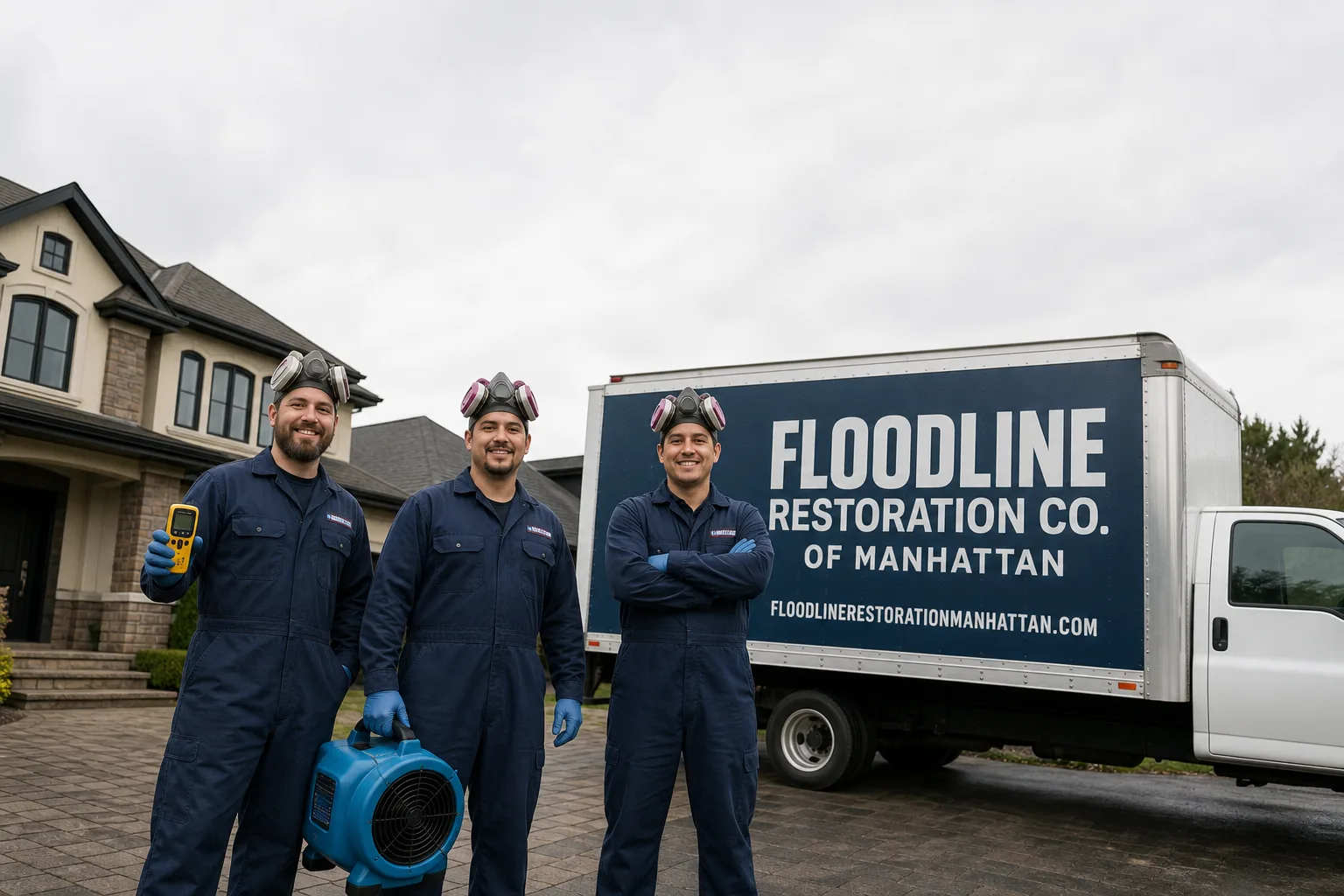
Free visual inspection and a written scope of work before any mitigation begins - photos, moisture readings, and drying logs go in your claim file
The scope we write is the scope we bill. Anything new gets shown to you, in writing, before we touch it.






 Before
 After
After Before
 After
After Before
 After
After24/7 Emergency Mold Remediation in South Hackensack
Mold remediation in South Hackensack typically costs $1,800-$6,500 depending on how far the growth has spread, and the clock starts the moment water enters your home. Call (917) 924-4221 and a live dispatcher answers, any hour, any day. We dispatch crews into South Hackensack neighborhoods with the understanding that one soaked foundation here can turn into a containment job inside 48 hours.
The first hour matters more than most homeowners realize. Wet drywall, saturated carpet, and damp framing in a poured-block basement begin supporting mold colonies quickly in South Hackensack’s humid Meadowlands air. Our crews reach local properties fast, start extraction the same visit, and keep a moisture log from day one so you know exactly when the structure is actually dry, not just dry on the surface.
Understanding Mold Remediation Severity in South Hackensack Properties
Mold remediation severity runs on a scale from isolated surface growth to full containment with HEPA air scrubbing. Most South Hackensack homes we see fall into the middle range: a sump pump fails, groundwater seeps through the poured-block or stone foundation, and within 24 to 48 hours the lower portions of drywall and baseboards are feeding mold that hasn’t yet spread into wall cavities. That requires containment, negative air pressure, and antimicrobial treatment, but it’s a contained job when caught early.
The heavier end involves Category 2 or 3 water. South Hackensack sits low against the Hackensack River, and when a nor’easter pushes tidal backflow up through overwhelmed storm drains, basements take in river water mixed with sewage. That’s a full-scale remediation: containment chambers, HEPA air scrubbers, removal of saturated drywall and insulation, structural drying with professional-grade equipment, and clearance testing before anyone rebuilds. Older single-family and two-family homes built in the 1940s through 1960s dominate the residential stock here, and their foundation types wick groundwater readily in the saturated Meadowlands soil.
Why South Hackensack Property Owners Choose Floodline Restoration Co. of Manhattan
- 45-minute response commitment: We dispatch crews positioned for South Hackensack’s streets immediately, because holding water is already feeding mold.
- 24/7 live answer, every call: A real person picks up at 2 a.m., not a recording. You’ll never leave a message during an emergency.
- IICRC-certified crews: Our technicians hold WRT, FSRT, and AMRT certifications, trained to IICRC, RIA, and IFA standards.
- Free visual inspection before any work: We walk the loss with you, explain what we’re seeing, and hand you a written scope, not a sales pitch.
- Direct insurance billing: We handle the claim documentation and adjuster communication so you’re not playing messenger with your carrier.
- One team from extraction to rebuild: The crew that reads the moisture map on day one handles daily readings, drying logs, and reconstruction. No mid-job handoff.
Our Mold Remediation Process
Inspection & Assessment
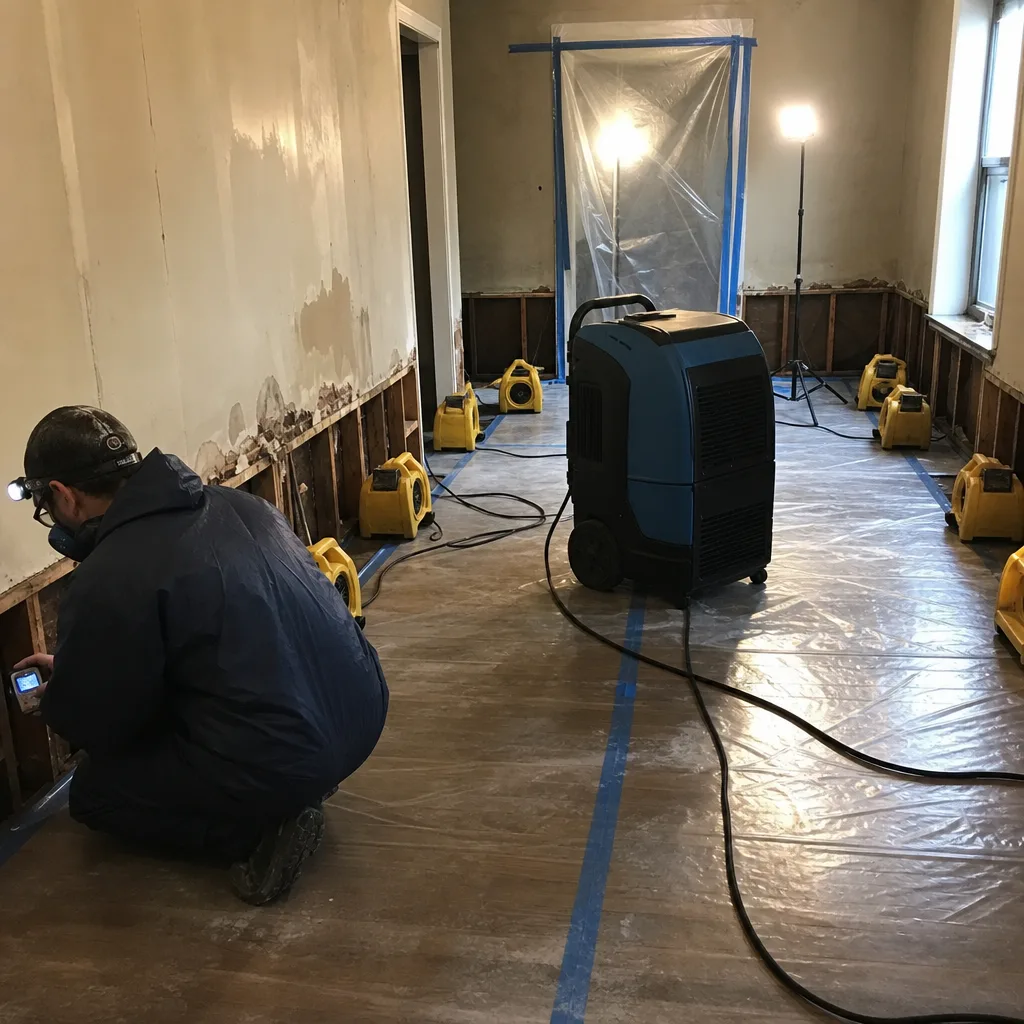
We start with thermal imaging and moisture meters across the affected areas, mapping the full extent of water migration and mold growth. In South Hackensack, we pay special attention to foundation walls and slab edges, because Meadowlands groundwater behaves differently than upland seepage.
Extraction & Stabilization
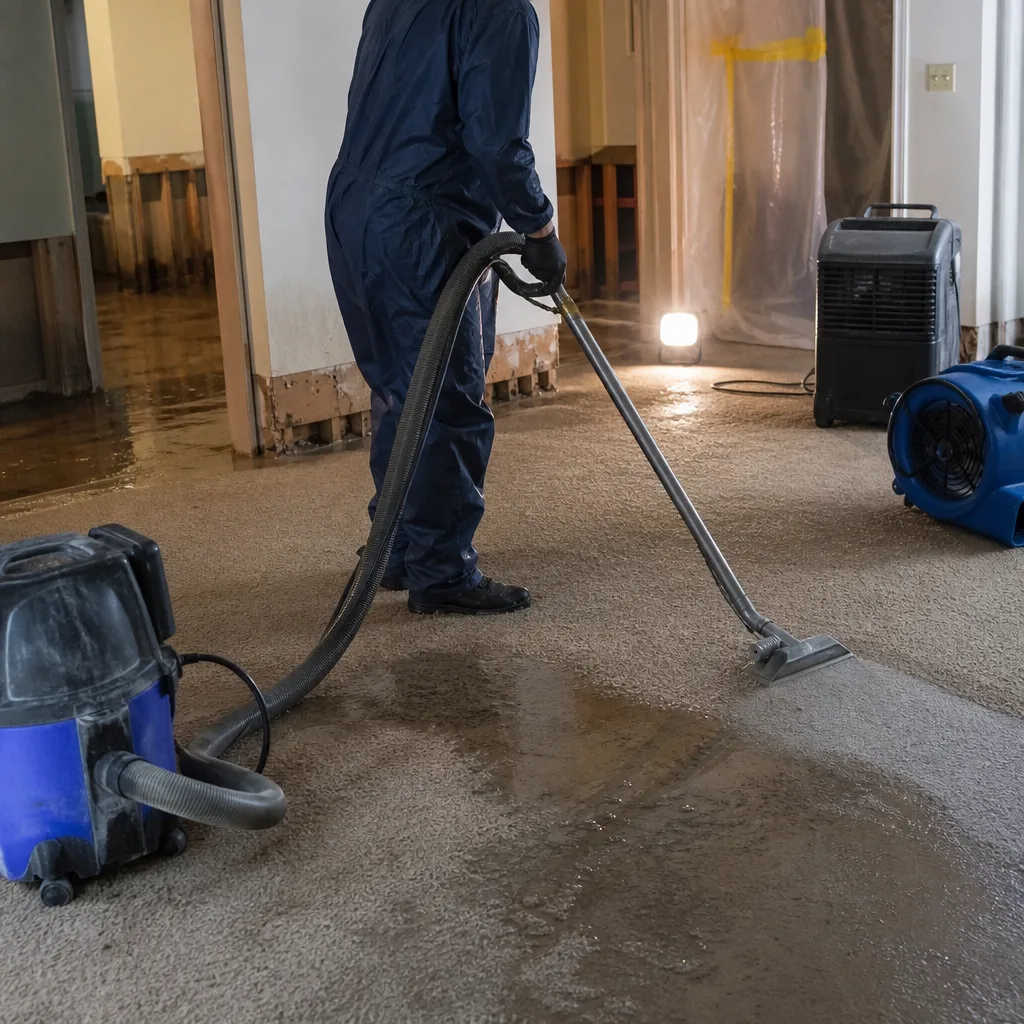
We remove standing water and saturated materials immediately, cutting off the moisture source that fuels mold. The goal in the first hours is to stop the spread before containment becomes a larger project than it has to be.
Drying & Dehumidification
Professional-grade Dri-Eaz and Phoenix dehumidifiers run alongside XPOWER air movers, with daily moisture readings logged until we hit the dry standard. South Hackensack’s clay soil holds water against foundations, so we often run drying longer here than a standard schedule would call for.
Cleaning & Sanitization
Surfaces are cleaned with antimicrobial treatments, and salvageable materials are treated to prevent regrowth. We remove what can’t be saved: mold penetrates porous drywall and insulation in ways surface cleaning can’t reverse.
Containment & Air Scrubbing
For active mold growth, we build containment chambers with negative air pressure and run HEPA air scrubbers to capture airborne spores. This keeps the rest of your house from becoming part of the remediation zone and protects the air you’re breathing while we work.
Repairs & Restoration
Once the structure is dry and clearance testing confirms the air is clean, we rebuild what was removed: drywall, baseboards, insulation, flooring. The same crew that did the remediation does the reconstruction, so the job stays whole from first extraction to final walkthrough.
Need Emergency Mold Remediation in South Hackensack Now?
Crews minutes away, answering live 24 hours a day. The sooner we start, the less it costs.
Working With Your Insurance Company
Mold claims are evidence claims, and the difference between a covered remediation and an out-of-pocket fight often comes down to what’s documented in the first hours. We photograph every affected area, log moisture readings daily, and produce a line-item scope of work that speaks the language adjusters expect. From the first visit, we’re building the file your carrier will review.
We bill directly to your insurance whenever coverage applies. You don’t carry paperwork between us and the carrier, and you don’t negotiate line items. Our crews document what they find, we coordinate with your adjuster directly, and the 90-Day Done Right Promise means the work is backed in writing after the claim closes.
What We Provide Your Insurer
- Thorough documentation of the loss
- Photos of all damage, room by room
- Moisture readings and drying logs
- A detailed, line-item scope of work
- Direct coordination with your carrier
Built for South Hackensack’s Loss Calendar
South Hackensack’s mold season doesn’t follow one calendar. Nor’easters in late fall and winter push the Hackensack River over its banks and back up through storm drains, soaking basements across the low-lying residential streets. Spring thaws saturate the Meadowlands peat and clay, keeping hydrostatic pressure against foundations for weeks. Summer thunderstorms overwhelm the same drainage systems with flash flooding, and the commercial flat-roof buildings along the light-industrial corridors collect ponding water that seeps under membrane failures.
Each season brings a different version of the same problem: water enters a structure that was built before modern drainage standards, and the clock starts. The properties that fare best are the ones where the owner calls before the musty smell becomes a containment job. We schedule inspections and remediation year-round, and we answer the phone the same way in every season: live, ready, and close enough to South Hackensack that the crew is on-site quickly.
Mold Remediation Across South Hackensack’s Neighborhoods
South Hackensack’s neighborhoods each show us a different version of this town’s mold problem, shaped by proximity to water and the age of the housing stock. Along Green Street and the residential blocks near the Hackensack River, the two-family homes sit close to the water table, and we see foundation seepage that homeowners mistake for condensation until mold shows behind baseboards. Up toward Phillips Avenue and the streets running off it, mid-century single-family homes on slightly higher ground still fight the same clay soil, but the water takes longer to show itself, which means the mold is often further along before anyone notices.
Over by the Teterboro line, the mixed residential and commercial blocks keep us busy with older warehouses and flat-roof structures. Ponding water on a membrane roof isn’t dramatic like a flooded basement, but it feeds mold in roof decks and ceiling cavities for months before a warehouse worker notices the air smells wrong. And in the industrial zone near Route 46, we work on commercial spaces where the slab sits right at the water table, and a single sump pump failure turns a dry warehouse into a Category 2 loss within hours. No two streets in South Hackensack behave exactly the same, but all of them share the Meadowlands groundwater that keeps this work from ever being a simple dry-and-go job.
Specialized Mold Remediation Services We Offer in South Hackensack
Mold Inspection & Testing
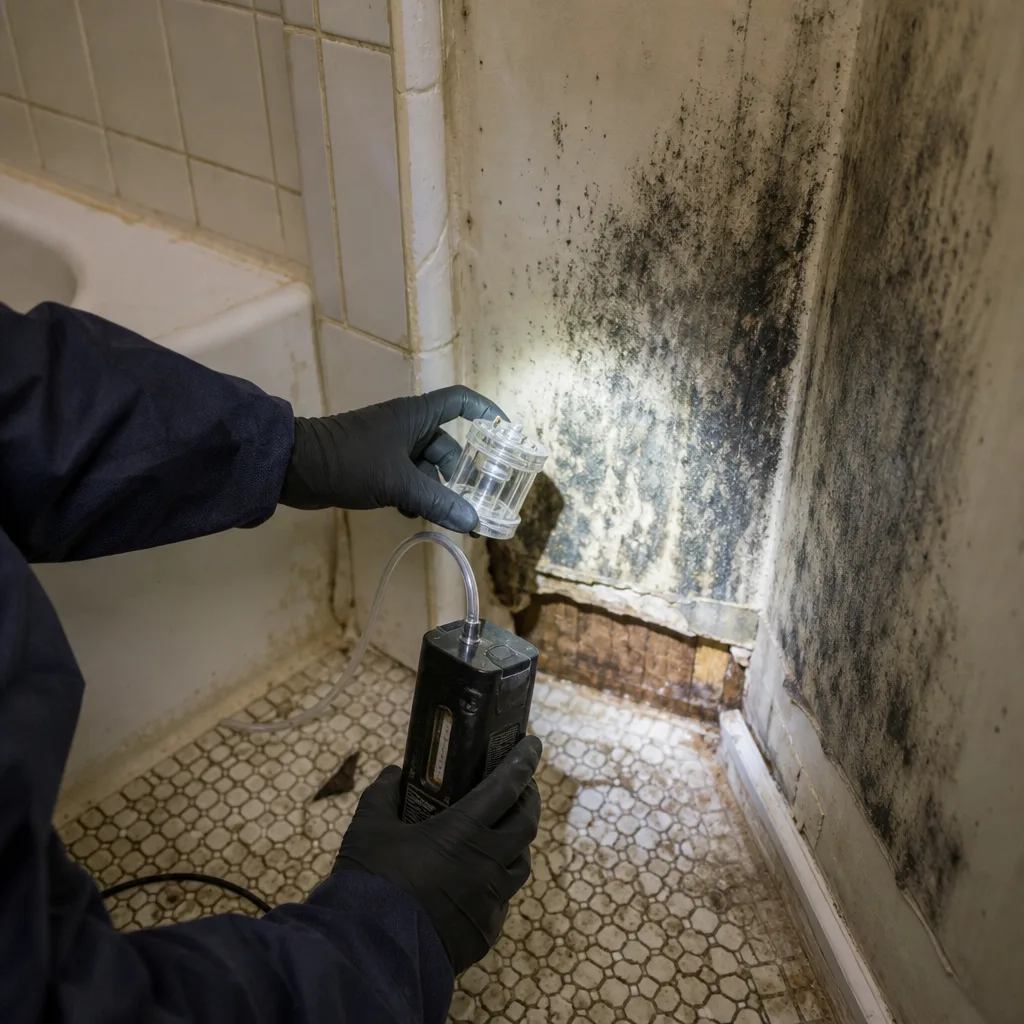
Before anything is torn out, you need to know what you’re dealing with and where it’s hiding. We use moisture meters, thermal imaging, and air sampling to map the full extent of growth, including what’s behind walls and under floors. In South Hackensack, our inspections pay special attention to foundation walls and the base of poured-block walls, because that’s where the water table does its slow, invisible work.
Mold Removal
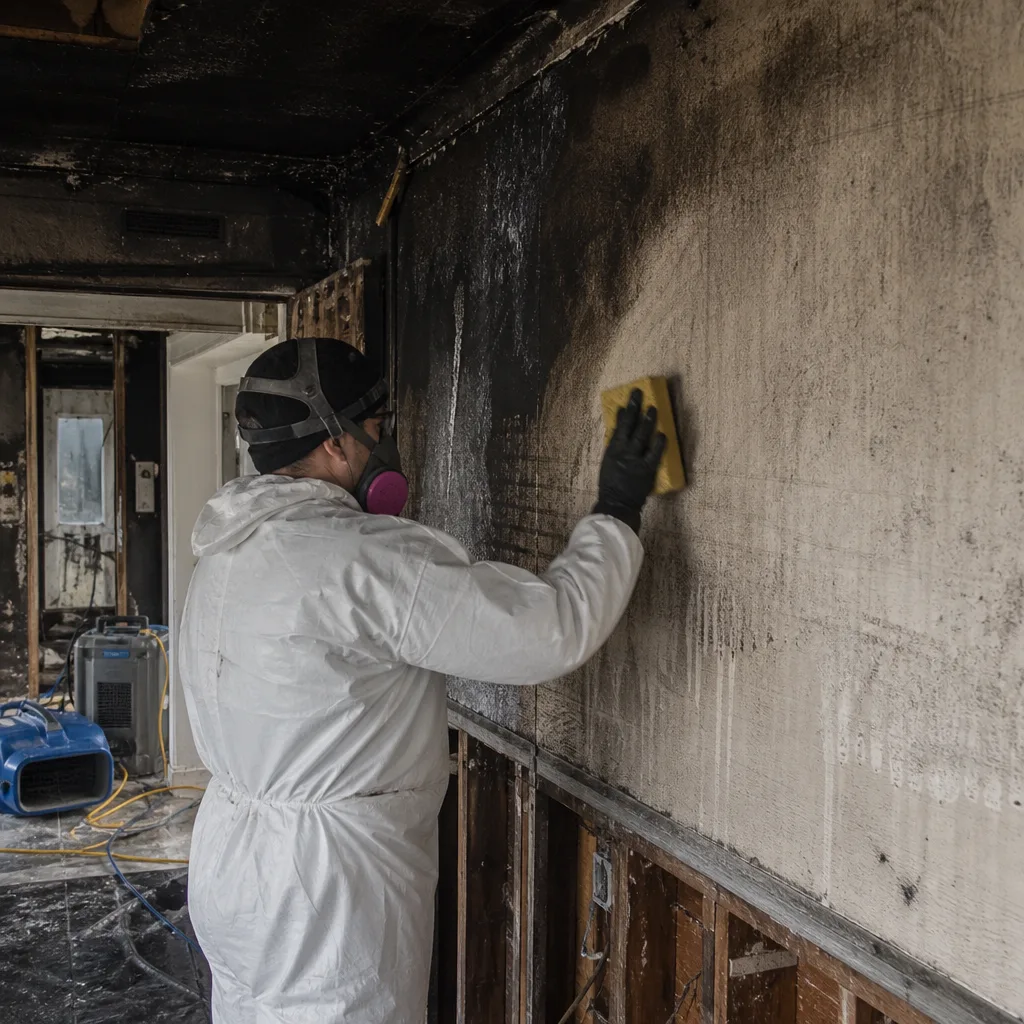
Once we’ve mapped the mold, we remove affected materials and treat the frame with antimicrobial solutions. Porous drywall and insulation come out; studs and framing get treated rather than replaced when they’re structurally sound. The goal is a clean, dry cavity that won’t regrow the moment the humidity climbs again.
Black Mold Remediation
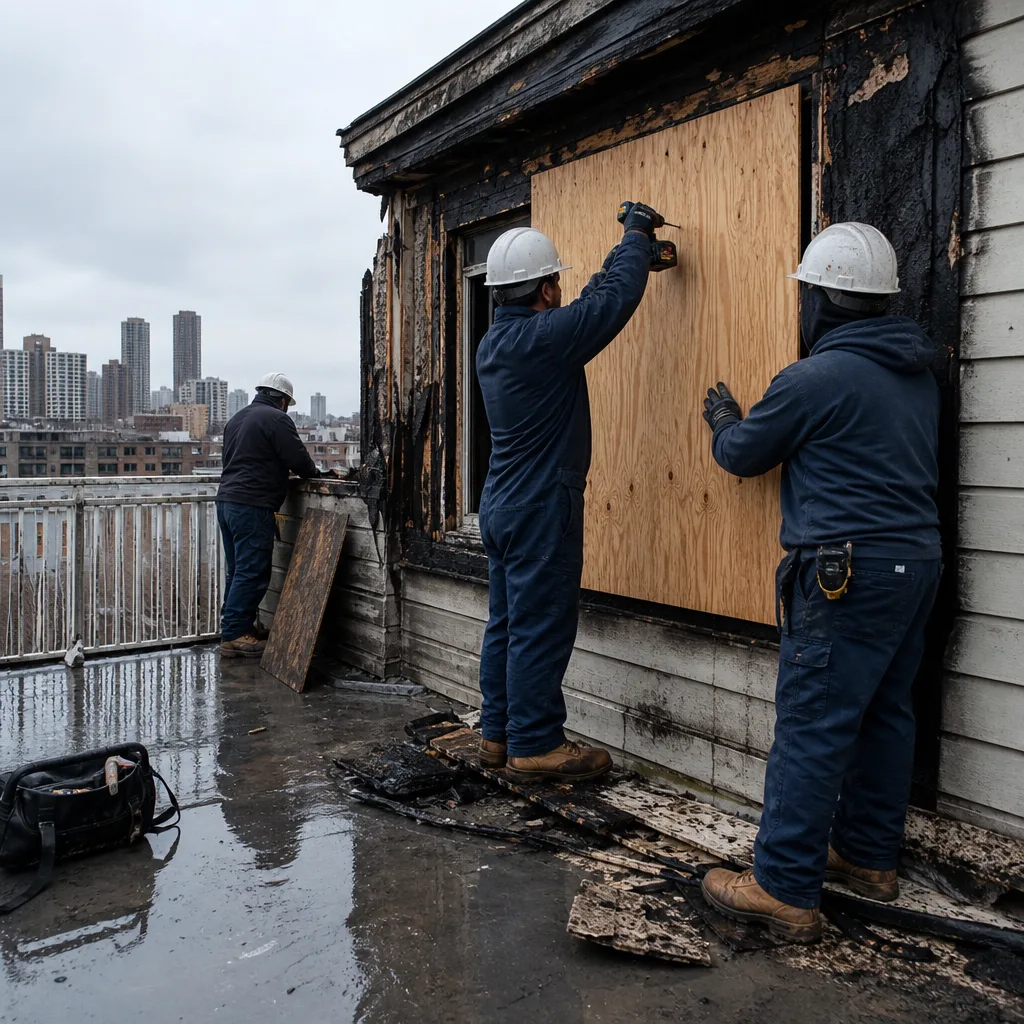
Stachybotrys, the black mold South Hackensack homeowners worry about, grows on chronically wet cellulose: drywall, ceiling tiles, paper-backed insulation. It needs weeks of sustained moisture, which is exactly what a slow foundation seep can provide. Full containment, HEPA air scrubbing, and clearance testing are standard practice on these jobs, not add-ons.
Air Quality Restoration
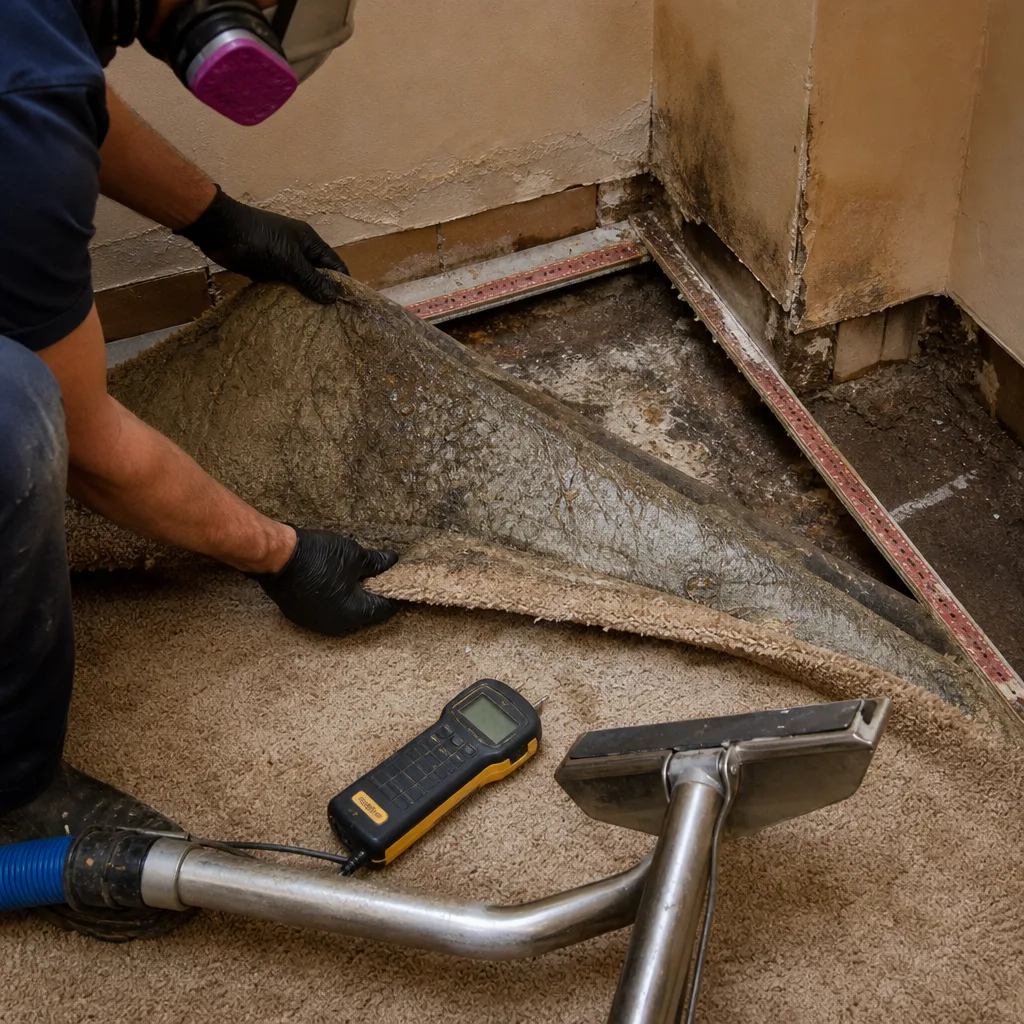
After remediation, the air in your house should be cleaner than when we started. We run HEPA air scrubbers throughout the containment and remediation period, then conduct clearance testing to confirm spore counts are back to normal background levels. For South Hackensack homes near the river, we often recommend addressing the humidity source too, because clean air doesn’t stay clean if the basement keeps breathing in groundwater.
Crawl Space Treatment
Crawl spaces in this borough are close to the ground and close to the water table, which makes them prime mold territory. We remove standing water, treat wood framing, install or repair vapor barriers, and set up drying that accounts for the damp soil underneath. A neglected crawl space in South Hackensack will feed mold into your floor joists and eventually into your living space.
Moisture & Humidity Control
The mold will come back if the moisture does. We scope solutions that fit the property: dehumidification systems, battery backup sump pumps, French drain assessments, and vapor barrier work. On every South Hackensack job, we look at the whole moisture picture, not just the patch of drywall where mold happened to appear first.
What happens when you call
- 1
A real person answersNo phone trees - you reach a local pro.
- 2
You get an upfront price rangeHonest numbers before anyone is dispatched.
- 3
A background-checked tech heads outLicensed & insured, dispatched right away.
- 4
You approve before work beginsNothing starts until you say go.
Mold Remediation Costs in South Hackensack, NJ
Mold remediation in South Hackensack runs on a wide band because the scope depends on what’s actually wet and for how long. A contained bathroom or closet job typically runs $1,800-$3,500. A basement remediation with containment, drywall removal, and structural drying lands between $3,500 and $6,500. Full-scale work on a two-family home or commercial warehouse with Category 2 or 3 water, multiple rooms, and extended structural drying can reach $8,000-$15,000 or more.
What moves the price: how far the water traveled through the structure, whether containment is required, how much drywall and insulation comes out, and how long the drying equipment has to run. South Hackensack’s clay soil extends drying timelines, which adds equipment days most homeowners don’t plan for. Insurance covers remediation when the mold results from a covered water loss: a burst pipe, a failed sump overflow, or storm-driven water that entered suddenly. The free visual inspection is the path to a firm written scope. Call (917) 924-4221 and we’ll walk the property with you, explain what we see, and put numbers on paper before any work starts.
We Also Serve Cities Near South Hackensack
Floodline Restoration Co. crews work throughout the Meadowlands and northeastern Bergen County. We provide Mold Remediation in Teterboro, Little Ferry, Bogota, and Ridgefield Park, with the same 24/7 live dispatch and written-scope process.
Serving South Hackensack, NJ - Our Local Coverage Area
We’re based in the South Hackensack area and know this community well. Use the map below to see our service coverage - if you’re nearby, we can almost certainly help.
South Hackensack Mold Remediation Questions, Answered
Why does mold remediation take longer in South Hackensack than in nearby Teaneck?
South Hackensack’s Meadowlands peat and clay soils hold saturation for weeks after a storm, keeping hydrostatic pressure against foundations long after the surface water is gone. Towns like Teaneck sit on higher, better-draining ground, so a standard 72-hour drying cycle works there. Here, our crews keep equipment running and moisture readings logged daily until the foundation actually gives up its water, which can add several days or more to the job.
How quickly can black mold develop in a South Hackensack basement after a nor’easter?
Black mold needs sustained wet conditions to establish, usually 7 to 14 days of chronic moisture. But the precursor: visible surface mold on damp drywall or wood, can begin within 24 to 48 hours in South Hackensack’s humid air. If your basement took water during a storm and you can see or smell mold, call (917) 924-4221 for a free visual inspection before it spreads into wall cavities.
Do South Hackensack remediation jobs need to address the sump pump and French drains?
Most of the time, yes. Many residential parcels in South Hackensack sit at or inside the FEMA Special Flood Hazard Area boundary, and a sump pump failure during a moderate nor’easter can convert a manageable seepage into a Category 2 loss within hours. If we’re remediating a basement loss, we scope a battery backup and French drain assessment as part of the job, because fixing the mold without fixing the water entry point just means we’ll be back after the next storm.
Why are moisture readings different in South Hackensack than in higher-elevation Bergen County towns?
The Meadowlands soil under South Hackensack is predominantly peat and clay, which retains water far longer than the sandy, better-draining soils found at higher elevations. Moisture meters read wetter, the drying curve is flatter, and the standard dry standard takes longer to reach. Our techs, including Curt Bowman’s crews, have logged enough South Hackensack jobs to know the local drying curve and plan equipment days accordingly.
What does a mold remediation scope look like for a commercial warehouse in South Hackensack’s light-industrial zone?
Warehouse scopes in the industrial zone typically start with a roof inspection, because chronic ponding on flat membranes is the most common moisture source. Then we handle the interior: air quality testing, HEPA air scrubbing, removal of mold-affected ceiling panels and drywall, antimicrobial treatment of the roof deck, and drying equipment sized for the cubic footage. The scope is written line by line before work begins, and we coordinate directly with the property owner or their carrier on billing.
How fast can a crew reach a South Hackensack property?
We commit to a 45-minute response for emergency calls, with crews positioned to reach South Hackensack streets quickly at any hour. A live dispatcher answers the phone, takes the address, and sends the nearest available certified technician. Call (917) 924-4221 and you’ll speak to a person, not a call tree.
Will my insurance cover mold remediation in South Hackensack?
Coverage hinges on the source of the water that caused the mold. If mold resulted from a covered water loss: sudden pipe failure, storm-driven water, an overflowed sump, most policies cover the remediation as part of that claim. We document everything from the first visit, bill your carrier directly, and coordinate with your adjuster so you’re not caught between us and the insurance company.
Can we stay in our home during mold remediation?
For contained jobs in a single room or basement, yes, you can generally stay in the house while we work. The containment barrier and HEPA air scrubbers keep spores isolated from your living space. If the mold is widespread, if you have respiratory issues, or if the job requires removing large sections of wall throughout the home, we’ll walk you through what’s reasonable and safe before work begins.
South Hackensack Mold Remediation, Done Right and Backed in Writing
Free visual inspection, direct insurance billing, and the 90-Day Done Right Promise. Call now and talk to a live person.
Written by Curt Bowman, Owner at Floodline Restoration Co., serving South Hackensack with certified mold remediation and restoration crews.