
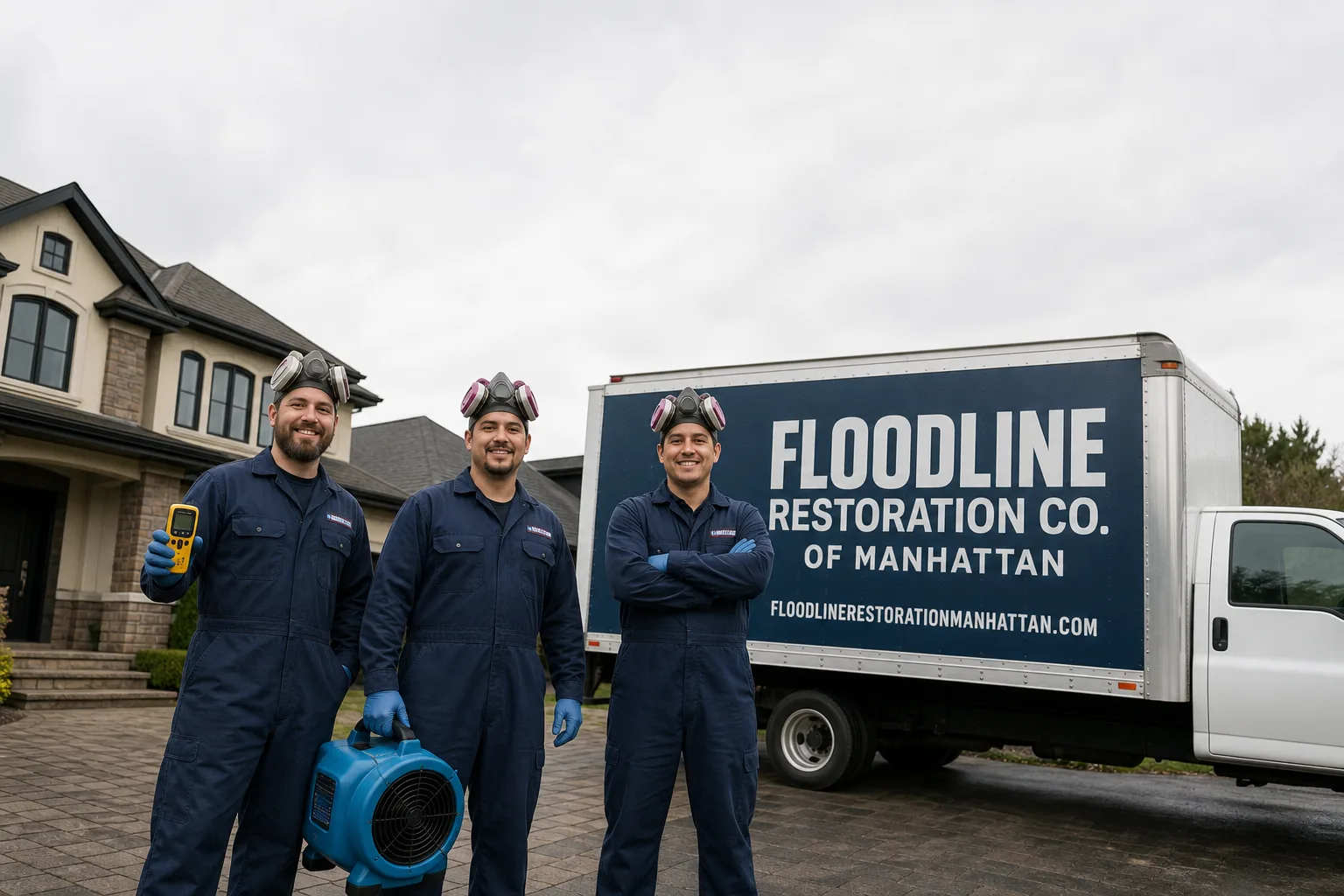
Free visual inspection and a written scope of work before any mitigation begins - photos, moisture readings, and drying logs go in your claim file
The scope we write is the scope we bill. Anything new gets shown to you, in writing, before we touch it.






 Before
 After
After Before
 After
After Before
 After
After24/7 Emergency Storm & Disaster Restoration in South Hackensack
Storm damage in South Hackensack doesn’t wait for business hours, and neither do we. A live dispatcher answers at (917) 924-4221 at two in the morning, every day of the year, and a background-checked, uniformed crew gets moving toward your property right away. The first hour after a nor’easter tears open a flat roof or drives river water into a poured-block foundation is the hour that determines whether you’re looking at extraction and drying or a full Category 3 remediation and rebuild. Call (917) 924-4221 the moment you see water where it doesn’t belong, wind damage to your roof, or a door that won’t hold. We’ll give you a free visual inspection and a straight answer about what you’re facing.
Understanding Storm & Disaster Restoration Severity in South Hackensack Properties
South Hackensack’s housing stock is mostly mid-20th century single-family and two-family homes sitting on poured-block or stone foundations, and those foundations wick groundwater fast when the Meadowlands water table rises. A nor’easter that pushes tidal backflow up the Hackensack River doesn’t just leave surface water, it leaves Category 3 water, the kind contaminated with river sediment, sewage overflows, and whatever the storm drains couldn’t hold. That water saturates block walls, creeps under slab edges, and turns a seepage event into a full structural drying job. On the commercial side, the flat-roofed warehouse and light-industrial buildings along Huyler Street and Phillips Avenue hold water on their membranes, and once a membrane fails, moisture rides the steel deck into the slab below. Our crews use thermal imaging and moisture mapping on every storm loss here, because what’s happening behind a drywall panel or under a warehouse slab in South Hackensack is never as simple as what’s on the surface. In our experience, a moderate nor’easter can push a sump-pump failure into a Category 2 loss within hours and Category 3 if the drains back up. That’s why our Storm & Disaster Restoration team never treats a flooded South Hackensack basement as “just water.”
Why South Hackensack Property Owners Choose Floodline Restoration Co. of Manhattan
- 45-minute response commitment. When you call about a storm loss in South Hackensack, we commit to having a crew dispatched and moving toward your property within 45 minutes. Not a callback. Not a voicemail. We’ll be there when we say.
- 24/7 live answer, every time. A real person answers our phones around the clock. At 2 a.m. during a nor’easter, you get a live dispatcher who knows Storm & Disaster Restoration, not a recording.
- IICRC-certified crews. Our technicians hold IICRC certifications including WRT (Water Damage Restoration Technician), FSRT (Fire & Smoke Restoration Technician), and AMRT (Applied Microbial Remediation Technician). They’re background-checked, uniformed, and trained to IICRC, RIA, and IFA standards.
- Free visual inspection. We don’t charge to assess storm damage in South Hackensack. You get a clear-eyed look at what’s wet, what’s compromised, and what it’ll take to dry it and rebuild it.
- Direct insurance billing. We bill your carrier directly and we handle the adjuster communication. You don’t play messenger between Floodline and your insurance company. That’s the square deal, spelled out.
- One team from extraction to reconstruction. The same crew that runs the pumps and drops the dehumidifiers on day one stays through daily moisture readings, drywall, flooring, and finished rebuild. No mid-job handoff, no inherited crew you never met.
Our Storm & Disaster Restoration Process
Inspection & Assessment
We start with a full walkthrough, using thermal imaging and moisture meters to find water behind walls, under slabs, and inside framing. In South Hackensack, we pay special attention to water movement in block foundations and slab edges, because the Meadowlands water table keeps a reservoir under the floor long after the storm drains clear.
Extraction / Stabilization
Before anything else, we stop the water at its source and stabilize the structure. That means emergency board-up on wind-compromised openings, roof tarping over failed membranes, and submersible pumps moving standing water out. We photograph everything as we go, room by room, so your carrier sees the loss exactly as we found it.
Drying & Dehumidification
Dri-Eaz and Phoenix dehumidifiers and XPOWER air movers go in after extraction, and we don’t guess at drying times. Daily moisture readings log the progress, and in South Hackensack we budget extra time for the peat and clay soils that keep hydrostatic pressure on foundations long after the visible water’s gone.
Cleaning & Sanitization
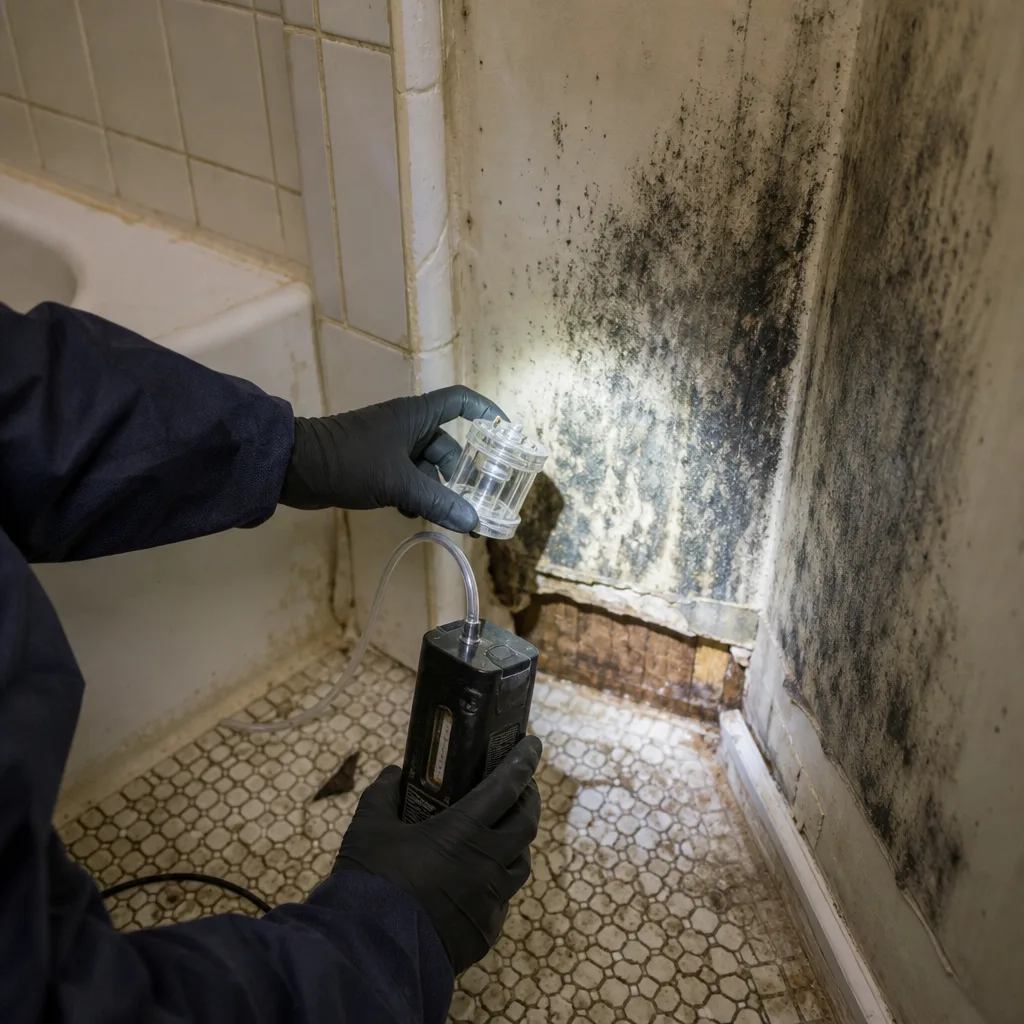
Any surface touched by Category 2 or 3 water gets cleaned and sanitized with proper antimicrobial treatments. Materials that can’t be saved come out. What can be saved gets treated and monitored. We don’t cover up contamination, we remove it.
Storm-Specific Treatment
For wind damage and roof failures, this means checking every door frame, window header, and roofline for hidden saturation using moisture meters and thermal imaging. Wind-driven rain gets behind siding and door tracks in ways visible inspection alone won’t catch, and South Hackensack’s old block structures hide it well.
Repairs & Restoration
Once the structure hits the dry standard and our moisture log says so, we rebuild. Drywall, insulation, flooring, roofing, door systems, paint, and finish work, done by the same crew that has been on the job since the first call. You get one name to hold accountable, and our 90-Day Done Right Promise in writing when we finish.
Need Emergency Storm & Disaster Restoration in South Hackensack Now?
Crews minutes away, answering live 24 hours a day. The sooner we start, the less it costs.
Working With Your Insurance Company
We’ve handled enough storm losses in South Hackensack to know that a claim lives or dies on documentation. From the first hour, we photograph the loss as we found it, log moisture readings daily, and build a line-item scope with the numbers your adjuster needs. We send everything directly to your carrier and we talk to the adjuster ourselves, so you don’t spend your week on hold. If the carrier’s estimate comes back short, we walk through it with them and with you, line by line, and we take another look at the scope. The goal is a restored home, not a paperwork war.
What We Provide Your Insurer
- Thorough documentation of the loss
- Photos of all damage, room by room
- Moisture readings and drying logs
- A detailed, line-item scope of work
- Direct coordination with your carrier
Built for South Hackensack’s Loss Calendar
South Hackensack has a storm calendar that runs year round, and each season brings a different failure mode. Winter noreasters and deep freezes burst supply lines in unheated basements and garages across the older stock, then the thaw pressing against block foundations stretches already-punished mortar joints. Spring’s biggest problem is the Meadowlands water table rising faster than drainage systems can push it out, so a heavy March rain turns into basement seepage that lingers for weeks. Summer thunderstorms roll in fast, drop two inches of rain in an hour, and overwhelm the storm drains that sit barely above the river’s high-tide line. Then fall noreasters come up the coast, drive tidal backflow into the Hackensack, and turn every low-lying street into a temporary river. Knowing which failure you’re dealing with changes the restoration plan, and we’ve seen every one of those failure modes repeated across South Hackensack since Curt Bowman founded Floodline in 2010. That’s not something the big national templates know how to handle. We do, because we’ve been on those streets.
Storm & Disaster Restoration Across South Hackensack’s Neighborhoods
South Hackensack is small, but the loss patterns change block by block. The residential streets off Green Street and the older two-family homes along Phillips Avenue sit tight against the river lowlands, which means the water shows up there first during a noreaster and the drying cycle runs longest because the Meadowlands soils won’t release their saturation. Over by Huyler Street and the light-industrial corridor, we’re mostly working flat-roofed commercial slabs, and the damage starts on the roof membrane before it ever reaches a doorway. The neighborhoods around the Little Ferry line and Liberty Street seem to see a lot of sump-pump failures during moderate storms, the kind that should be manageable until the drains back up and it’s not. And the industrial lots along the western edge, near the Teterboro line, have older warehouses with metal door tracks whose weatherstripping gave up years ago. When a wind-rated door fails on one of those, wind-driven rain gets behind the slab edge before the storm is even over. Our crews know these streets, and our dispatchers route for them, because Storm & Disaster Restoration in South Hackensack is a neighborhood-by-neighborhood job, not a zip-code shape.
Specialized Storm & Disaster Restoration Services We Offer in South Hackensack
Roof Tarping
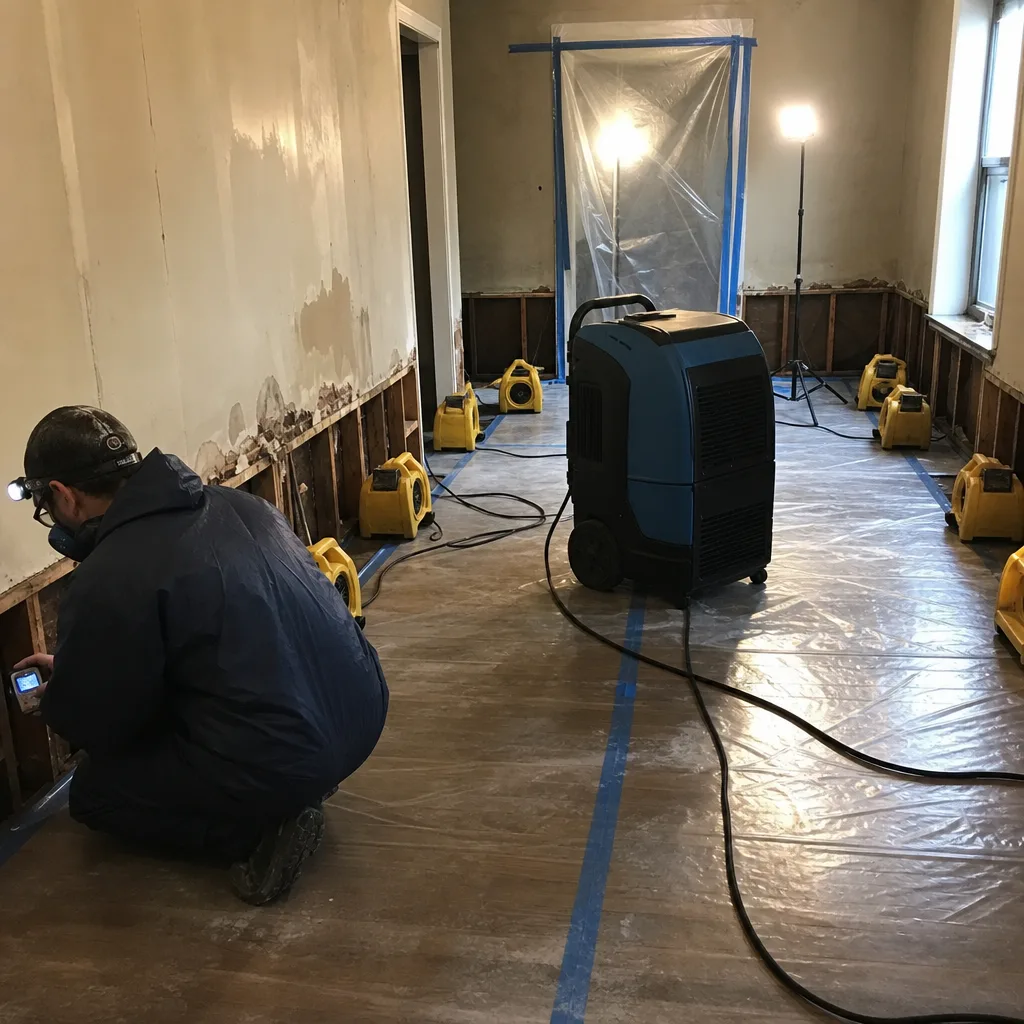
When a noreaster peels back a membrane or strips shingles, the difference between a repair and a full teardown is how fast the roof gets tarped. We carry industrial-grade tarps on every truck and we secure them to hold against the next wind event, not just the current one. On South Hackensack’s flat-roofed commercial buildings, we anchor tarps over the failed section and seal the joints before the next rain hits.
Emergency Board-Up
Wind blows out windows, racks doors off their tracks, and leaves commercial bays open to weather and worse. Our board-up crews stabilize the opening with weather-resistant panels, secure the property from entry, and document the condition in photos for your insurance claim. In South Hackensack’s industrial corridors, a failed overhead door on a windy night becomes an open invitation. We close it, fast.
Wind Damage Repair
Wind damage in South Hackensack hides in two places: door and window frames that got racked but not broken, and roof edges that look fine from the ground but have lifted at the seams. We check moisture levels behind every impact-rated door frame after a storm, because wind-driven rain wicks into drywall within 24 to 48 hours and the damage spreads from there. Then we repair or replace the framing, the weatherstripping, the track, and the finish, so the door actually holds when the next storm comes.
Flood Damage Restoration
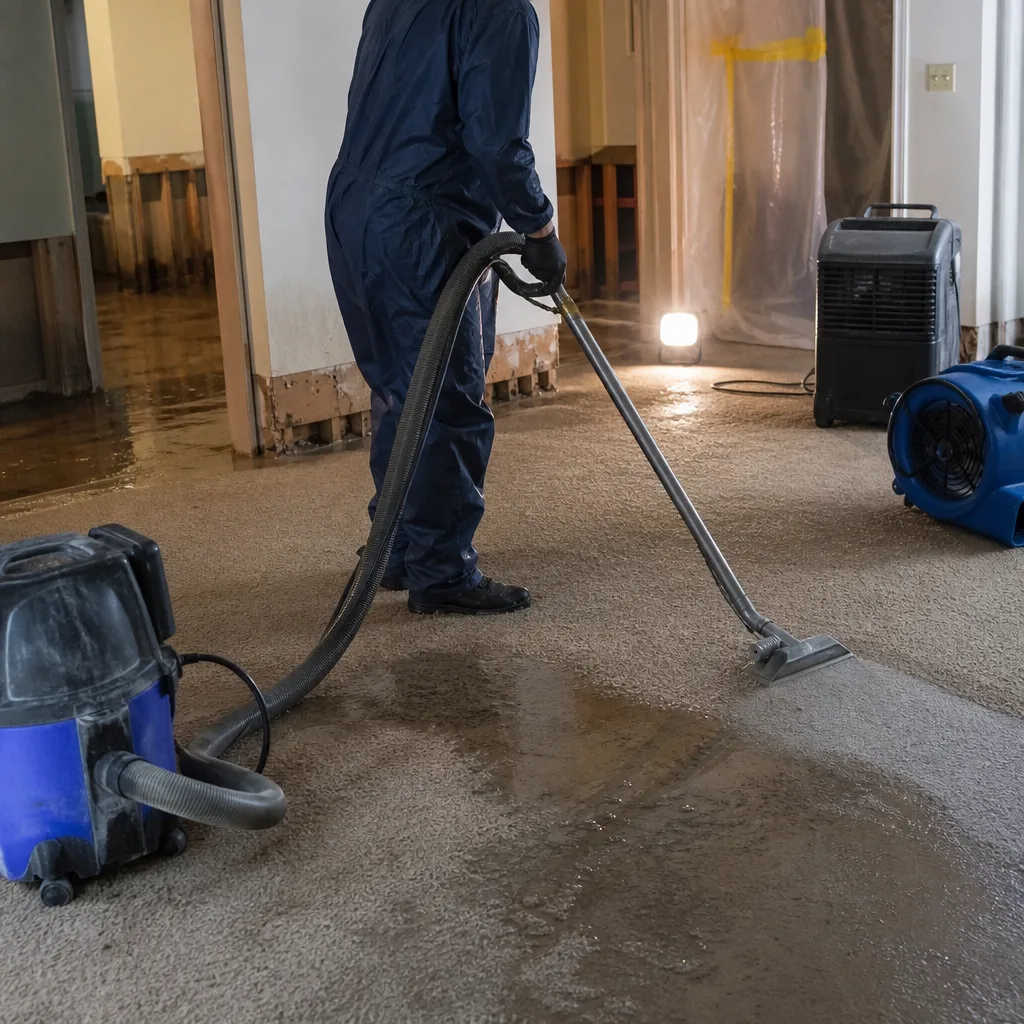
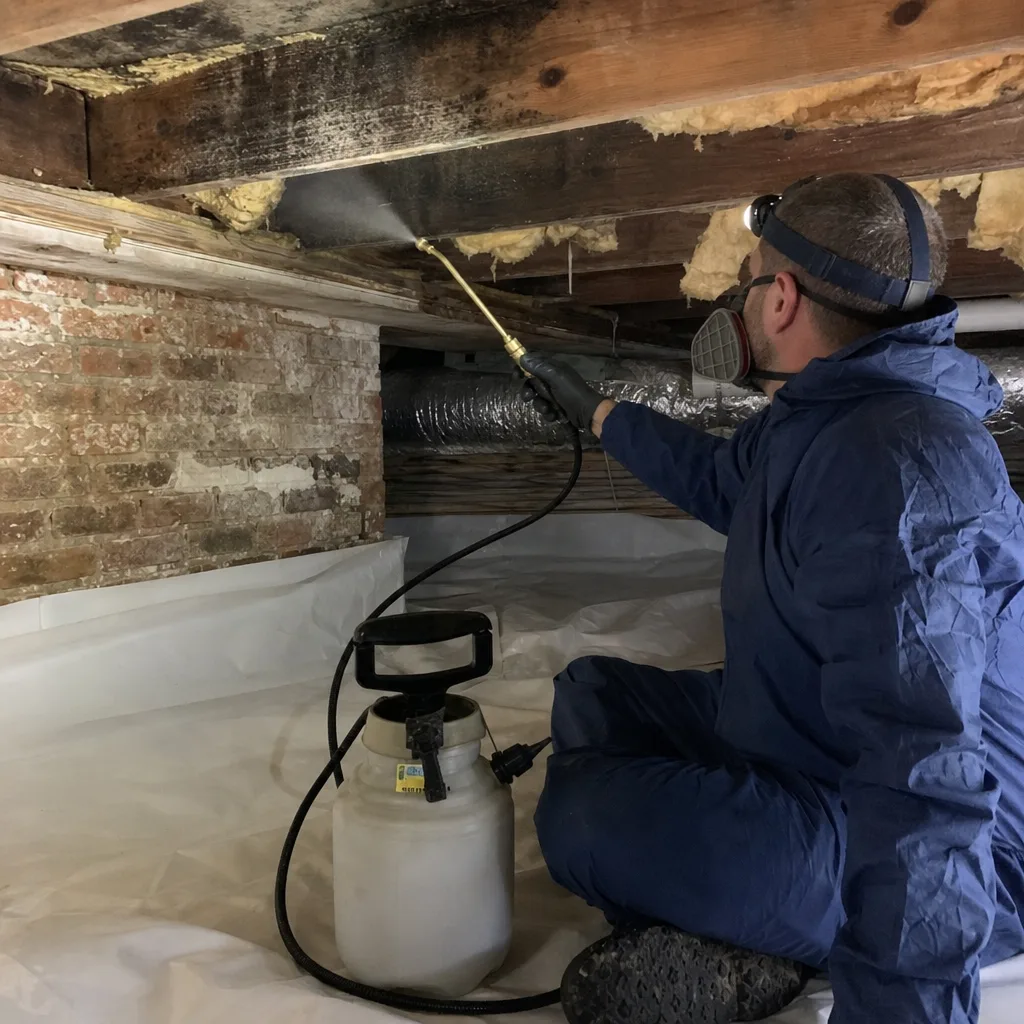
When the Hackensack comes over the banks or the drains give out, South Hackensack basements take on Category 3 water. We treat it like a contamination event, not a mop job. Full extraction with submersible pumps, containment set before anything moves, disposal of saturated porous materials, and structural drying that runs until our moisture meters read the dry standard, not just until the floor looks dry.
Debris Removal
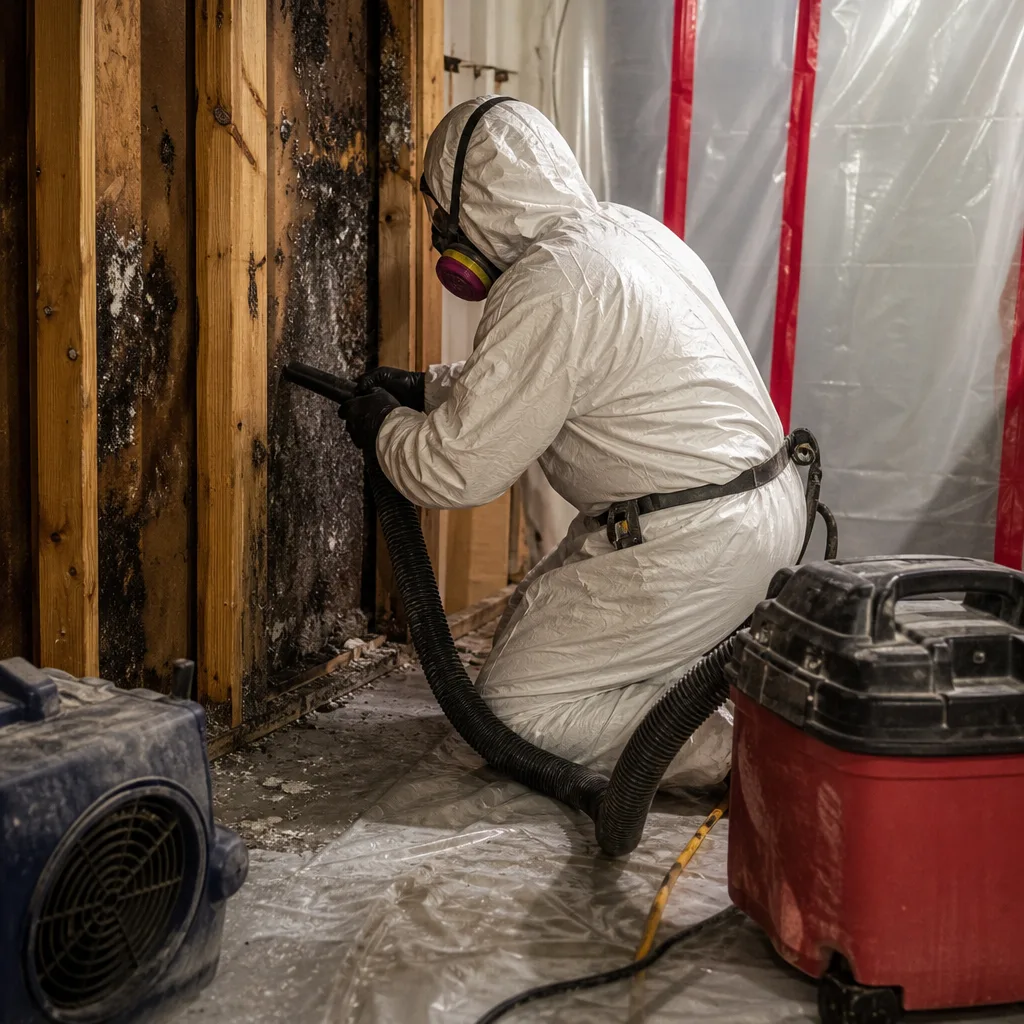
Storm debris in South Hackensack ranges from tree limbs and roof material to mud and river sediment pushed onto driveways and basement slabs. We haul the debris, pressure-wash what’s left, and sort salvageable from non-salvageable. Then we document everything for the carrier, because debris removal is a covered line item when it’s part of a storm loss.
What happens when you call
- 1
A real person answersNo phone trees - you reach a local pro.
- 2
You get an upfront price rangeHonest numbers before anyone is dispatched.
- 3
A background-checked tech heads outLicensed & insured, dispatched right away.
- 4
You approve before work beginsNothing starts until you say go.
Storm & Disaster Restoration Costs in South Hackensack, NJ
Here’s what restoration work actually costs in South Hackensack, based on the losses we regularly handle. Emergency board-up on an average single-family home runs $400 to $900. Roof tarping on a flat-roofed commercial building typically costs $800 to $1,800 depending on the square footage and how much staging the roof requires. Flood extraction in a basement with Category 2 or 3 water ranges from $1,500 to $4,500, then structural drying adds another $1,200 to $3,500 depending on how far the moisture has moved through the walls and slab. Full storm restoration including drywall, flooring, and finish work can run $8,000 to $35,000 on a heavily affected home. Most of these costs are insurance-covered when the loss falls under your storm and flood endorsements, and we bill the carrier directly. The free inspection is how you get from uncertainty to a firm line-item scope, and it’s how we keep things honest. Call (917) 924-4221 and we’ll put hard numbers on the table before any work starts.
We Also Serve Cities Near South Hackensack
Floodline Restoration Co. of Manhattan serves South Hackensack and the surrounding communities, including Teterboro, Little Ferry, Bogota, and Ridgefield Park. If you’re in one of those towns and you’re watching a storm come in, the same crew, the same equipment, and the same 24/7 live answer applies. Call (917) 924-4221.
South Hackensack Storm & Disaster Restoration Questions, Answered
Why do South Hackensack homes need wind-rated door reinforcement more than homes in upland Bergen County?
South Hackensack sits on the low-lying terrain along the Hackensack River and Meadowlands tidal wetlands, so storm winds arrive without the friction and terrain break that slows them down in upland towns like Teaneck. Wind-driven rain travels further and harder here, especially against overhead doors and entry doors on the commercial corridors. A wind-rated, impact-rated door with intact weatherstripping holds that water out. A failing one lets it through the frame within an hour. We recommend checking your door seals and ratings before every storm season, and we’ll do it as part of a free inspection. Call (917) 924-4221 if you’re unsure.
How long after a nor’easter does structural drying really take in South Hackensack?
Longer than most homeowners expect, and longer than it takes in higher-elevation Bergen County towns. The Meadowlands peat and clay soils under South Hackensack hold saturation for weeks after a storm passes, which keeps hydrostatic pressure against foundation walls long after the visible water is gone. A typical flooded basement with Category 2 or 3 water takes 5 to 12 days of active structural drying with Dri-Eaz and Phoenix dehumidifiers and XPOWER air movers running, plus daily moisture readings. If we pulled the equipment early, the walls would stay wet and mold would follow. We don’t pull early.
What does a failing wind-rated door look like before a storm hits South Hackensack?
You’ll see gaps at the top corners where the frame has racked, weatherstripping that’s flattened or missing, and daylight around the edges when the door’s closed. On overhead doors, look for worn side tracks, rusted bottom seals, and panels that don’t sit flush. If the door rattles in a strong wind or you can push a dollar bill through the seal without resistance, water’s getting through in a noreaster. We check frame moisture levels as part of a storm-readiness assessment, because a door that looks fine from the outside may already have water-wicking damage inside the jamb. Call (917) 924-4221 for an honest look.
After a storm, is the water in a South Hackensack basement Category 1, 2, or 3?
It depends on the source, but in South Hackensack during a noreaster it’s usually 2 or 3. Category 1 is clean water from a burst supply line. Category 2 is gray water with some contamination. But when the Hackensack backs up through storm drains or the Meadowlands floodwater reaches your foundation, you’re in Category 3 territory: river water, sewage, road runoff, and everything the storm carried in. Category 3 water means full containment, disposal of saturated porous materials, and sanitization of everything that stays. We test and classify before we start extraction, and our documentation reflects what the water actually is. Call (917) 924-4221 if you’re not sure.
Why do South Hackensack restoration crews recommend a French drain assessment after every storm loss?
Because South Hackensack’s lot lines and the high Meadowlands water table mean the water has nowhere to go after a storm except back into your foundation. A French drain collects groundwater and routes it away from the structure before it can build hydrostatic pressure against the walls. After a storm loss, we routinely scope the property for drainage deficiencies, and if a French drain or battery backup sump system would prevent the next loss, we say so in writing. A square deal includes telling you what we’d do if it were our house, even when it means more work.
How fast can someone actually get to South Hackensack?
We commit to having a crew dispatched within 45 minutes of your call, and for emergencies we’re typically on site faster than that depending on your specific location in South Hackensack. A live dispatcher answers at (917) 924-4221 at any hour, routes a crew from nearby, and extraction equipment goes on the truck before they leave. Storm response moves faster than most people expect, and the first hour matters more than most people realize.
Will my insurance cover storm and flood damage in South Hackensack?
Most standard homeowner’s policies cover wind damage and the water that comes in through a wind-damaged roof or door. Flood damage from rising river water or tidal backflow is a separate question that depends on your flood insurance endorsement, which many South Hackensack property owners carry because of the FEMA Special Flood Hazard Area boundaries here. We document everything, photograph everything, and coordinate directly with your adjuster, so the claim reflects what actually happened. If you’re not sure what your policy covers, call (917) 924-4221 and we’ll walk through it with you before you file.
What should we do in the first 30 minutes after storm damage?
First, make sure everyone’s safe, and shut off power to any flooded areas if you can do so without walking through standing water. Then call (917) 924-4221. Don’t try to extract the water yourself with a wet/dry vac; you’ll move contaminated water around and spread what you’re trying to contain. Photograph what you can see, from a safe distance, and leave the rest to us. The sooner extraction starts, the less damage spreads, and the lower the total cost of the claim. We’ll be there when we say.
Serving South Hackensack, NJ - Our Local Coverage Area
We’re based in the South Hackensack area and know this community well. Use the map below to see our service coverage - if you’re nearby, we can almost certainly help.
Storm Loss in South Hackensack? Call the Crew That’s Seen It Before
Floodline Restoration Co. of Manhattan serves South Hackensack with one team, one name, and one standard: done right, and backed in writing. Our crews carry Dri-Eaz, Phoenix, XPOWER, and Injectidry equipment, and our technicians hold IICRC, RIA, and IFA certifications. We answer the phone live at 2 a.m. because that’s when storms hit. We give you a written scope before work starts, not after. And we stand behind the finished job with the 90-Day Done Right Promise. If you’re looking at water, wind damage, or a roof that won’t hold, call (917) 924-4221 now for a free estimate. The line the water left is where we start.
Written by Curt Bowman, Owner at Floodline Restoration Co. of Manhattan.