
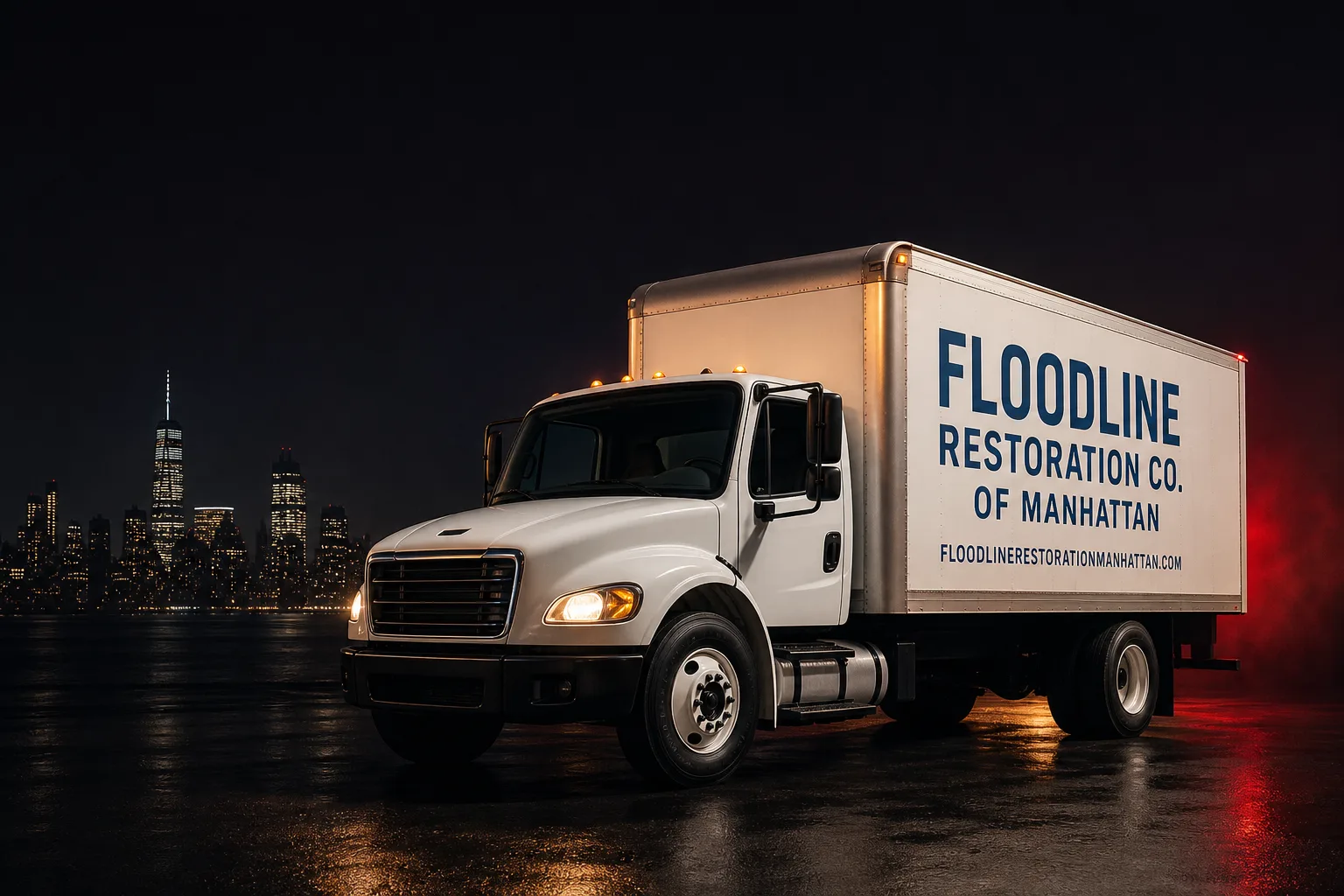
Free visual inspection and a written scope of work before any mitigation begins - photos, moisture readings, and drying logs go in your claim file
The scope we write is the scope we bill. Anything new gets shown to you, in writing, before we touch it.






 Before
 After
After Before
 After
After Before
 After
After24/7 Emergency Mold Remediation in Upper Manhattan
Mold remediation in Upper Manhattan typically runs $1,800 to $6,500 for a contained remediation in a pre-war apartment or co-op, depending on how far the moisture has traveled through plaster walls. That’s the honest range for this market, because Upper Manhattan’s housing stock is almost entirely pre-war brick buildings where plaster holds water far longer than drywall. When you call (917) 924-4221, a live dispatcher answers. A crew reaches your building fast, because we keep response routes mapped through Harlem, Washington Heights, and Inwood every shift. The first hour matters: mold releases more spores the longer it sits, and in a 1900-1940 building, those spores move through shared hallways and pipe chases faster than most property owners realize.
If you just found mold, call now. Stress doesn’t fix itself, but containment does.
Understanding Mold Remediation Severity in Upper Manhattan Properties
Severity in Upper Manhattan isn’t only about square footage. It’s about building construction. Pre-war buildings here were built with three-coat plaster over wood lath, not gypsum board. Plaster absorbs moisture deeply and releases it slowly. A leak that started two weeks ago may look like a small stain today, while the lath behind it is still wet and feeding mold growth. Our techs use penetrating moisture meters to read the wood lath behind the plaster, because a surface reading will tell you the plaster face is dry while the cavity behind it is still at 18% moisture equivalent or higher. That hidden moisture is where mold returns.
We classify mold jobs in Upper Manhattan by four levels:
- Level 1: Visible surface mold under 10 square feet, no hidden moisture. Often handled with HEPA vacuuming and antimicrobial treatment, with a quick containment setup.
- Level 2: Visible mold 10-30 square feet, often around a radiator pipe, bathroom vent, or window condensation line. Requires full containment and negative air.
- Level 3: Hidden mold behind plaster, typically found after probing moisture readings or when tenants report odor without visible growth. Requires opening walls, structural drying, and extended monitoring.
- Level 4: Saturated plaster and lath across multiple units, usually after a burst supply line or steam radiator failure. This is the job that needs full-scale containment, stairwell sealing, DEP-required asbestos and lead clearance, and drying logs that run 7-14 days.
Most Upper Manhattan jobs fall into Level 2 or Level 3. The mistake we see repeatedly is treating a Level 3 as a Level 1: cleaning visible surface mold, painting over it, and walking away. Six months later the mold is back because the lath never dried. That’s not a recurrence. That’s an incomplete first job.
Why Upper Manhattan Property Owners Choose Floodline Restoration Co. of Manhattan
- 45-minute response commitment in Upper Manhattan: We stage crews across the area so a team can reach Harlem, Washington Heights, or Inwood within 45 minutes of your call. The clock starts when you hang up.
- A live person answers, 24/7: You will never reach a voicemail or a call center recording. A real dispatcher picks up, gets your address, and starts a crew toward your building.
- IICRC-certified crews: Our techs hold IICRC AMRT and WRT certifications. They’ve been trained to RIA and IFA standards, and they carry that training into every plaster wall and crawl space they open.
- Free visual inspection: We walk the unit with you, take moisture readings on the spot, and tell you honestly whether you have a real problem or a surface stain. No charge for the inspection, and no pressure to sign anything.
- Direct insurance billing: After 42 years in restoration, we know how carriers work. We bill them directly, we speak to adjusters on your behalf, and we document every step so the claim doesn’t stall.
- One team, start to finish: The crew that sets up containment and runs drying logs is the same crew that removes the lath, treats the framing, and rebuilds the wall. No mid-job handoff to a subcontractor you’ve never met.
Our Mold Remediation Process
Inspection & Assessment
We start with a full walk-through and penetrating moisture mapping. Readings come from the plaster surface and the wood lath behind it. We also check the unit above, below, and adjacent, because water in a pre-war building travels sideways through joist bays before it shows up on your ceiling.
Containment & Stabilization
We seal the affected area with 6-mil polyethylene and set up negative air pressure with HEPA-filtered air scrubbers. In a shared hallway or stairwell, containment matters as much for the neighbors as for the source unit. Spores don’t respect property lines.
Drying & Dehumidification
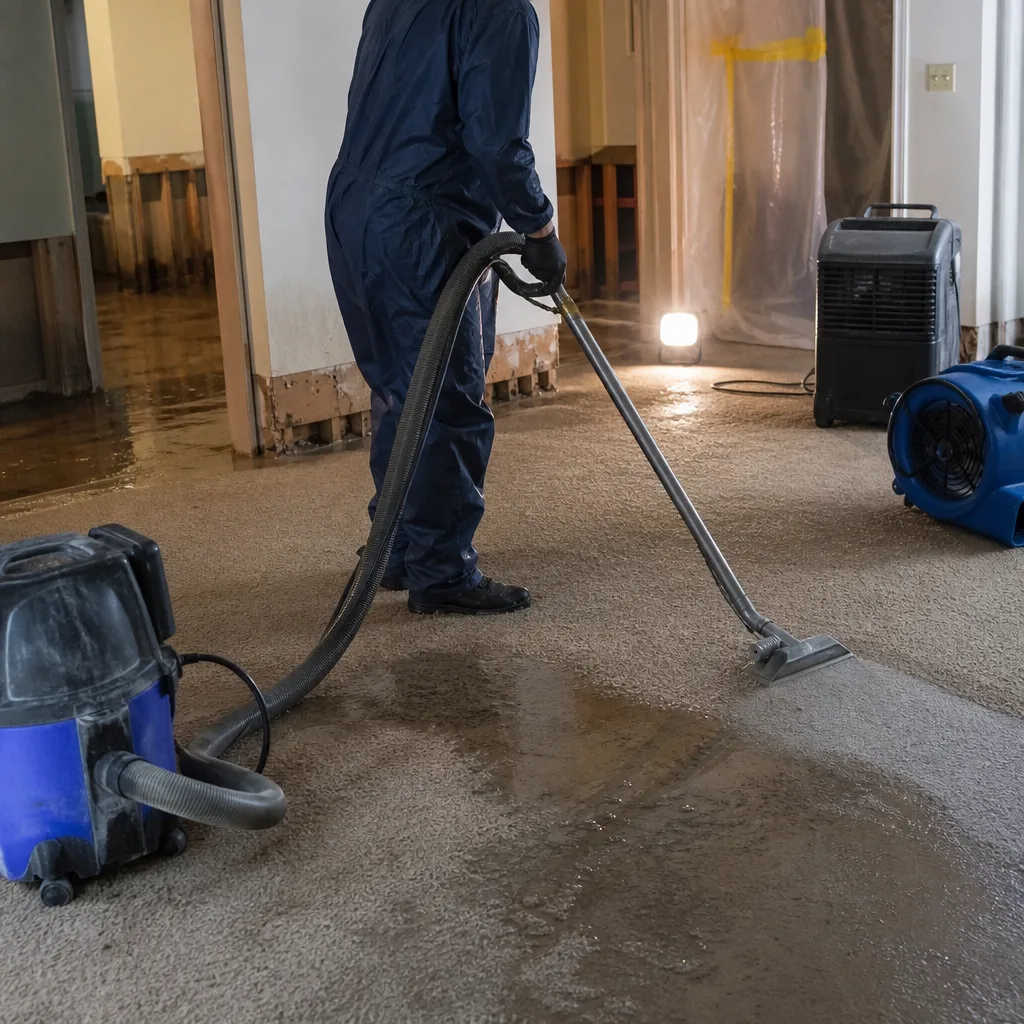
This is where Upper Manhattan’s pre-war stock breaks the standard playbook. Plaster and lath need 60-80% longer drying than drywall. We run Dri-Eaz and Phoenix dehumidifiers with daily moisture readings logged until the plaster cavity reads under 15% wood moisture equivalent. That typically runs 7-14 days, not the 3-4 days a drywall job takes.
Cleaning & Sanitization
We remove saturated insulation, HEPA-vacuum surfaces, and apply antimicrobial treatment to the wood lath. Every surface that can hold spores gets addressed, including the backs of radiators and the void behind baseboards.
Air Quality Restoration
Air scrubbers run throughout remediation, not just during teardown. Before we close the walls, we test the air to confirm spore counts have dropped to background levels. If you have an air quality concern, we can arrange independent clearance testing.
Repairs & Restoration
After clearance, we rebuild. We match the existing plaster profile where the building calls for it, or we restore with drywall where the owner prefers. We document everything with photos and final moisture logs, and we hand you the file before we leave.
Need Emergency Mold Remediation in Upper Manhattan Now?
Crews minutes away, answering live 24 hours a day. The sooner we start, the less it costs.
Working With Your Insurance Company
Most co-op and condo policies in Upper Manhattan cover mold remediation when it follows a sudden water event: a burst pipe, a plumbing failure, or a storm-related leak. A slow leak that went unreported for months can get denied as a maintenance issue. Either way, we document from the first hour so the claim file has what it needs. Our team photographs every affected surface before teardown, logs moisture readings daily, and writes a line-item scope of work that the adjuster can actually understand. We’ve been doing direct insurance billing for over four decades, and we’ll speak to the adjuster on your behalf so you’re not the one translating trade terms at 9 a.m.
What We Provide Your Insurer
- Thorough documentation of the loss
- Photos of all damage, room by room
- Moisture readings and drying logs
- A detailed, line-item scope of work
- Direct coordination with your carrier
Built for Upper Manhattan’s Loss Calendar
Upper Manhattan has a mold season, even if no one calls it that. January and February bring deep freezes that burst supply lines in uninsulated pipe chases, especially in Harlem brownstones and pre-war elevator buildings along Broadway and St. Nicholas Avenue. Water travels down three or four floors before anyone notices the stain on a fifth-floor ceiling. Then spring thaw comes, and basement-level units in Inwood and along the Harlem River corridor start seeing seepage through old foundation walls. Summer brings sudden downpours, and since Hurricane Ida in September 2021, heavy rain events push water into basement mechanical rooms and ground-level apartments that had never flooded before. Late fall is when the steam radiators fire up for the first time, and aged supply lines and fittings fail under pressure.
Mold doesn’t follow the calendar. It follows the water. But in Upper Manhattan, the calendar tells you where the water is coming from next.
Mold Remediation Across Upper Manhattan’s Neighborhoods
Mold Remediation in Upper Manhattan changes block by block, and our crews run the same routes the MTA does. In Harlem, we see a lot of steam radiator failures in brownstones with original cast-iron supply lines, where the loss starts on an upper floor and works down through lath and plaster. In Washington Heights, we’re often called into six-story elevator buildings on Broadway and Fort Washington Avenue where a bathroom or kitchen leak in one unit becomes a hallway containment job because the building shares vertical pipe chases. Inwood brings basement-level units with water intrusion from high groundwater after heavy rain, plus older cooperatives along Sherman Avenue whose original plumbing is now ninety years old. And in Hamilton Heights and Sugar Hill, the housing stock is early-20th-century rowhouses where humidity control is the real problem - tight spaces, original windows, and radiator heat that keeps the air dry but doesn’t stop bathroom condensation.
Across all of it, one pattern holds. The buildings were built before moisture barriers were a thing. When water gets in, it stays, and it travels. That’s why our response routes in Upper Manhattan are built around building type as much as geography.
Specialized Mold Remediation Services We Offer in Upper Manhattan
Mold Inspection & Testing
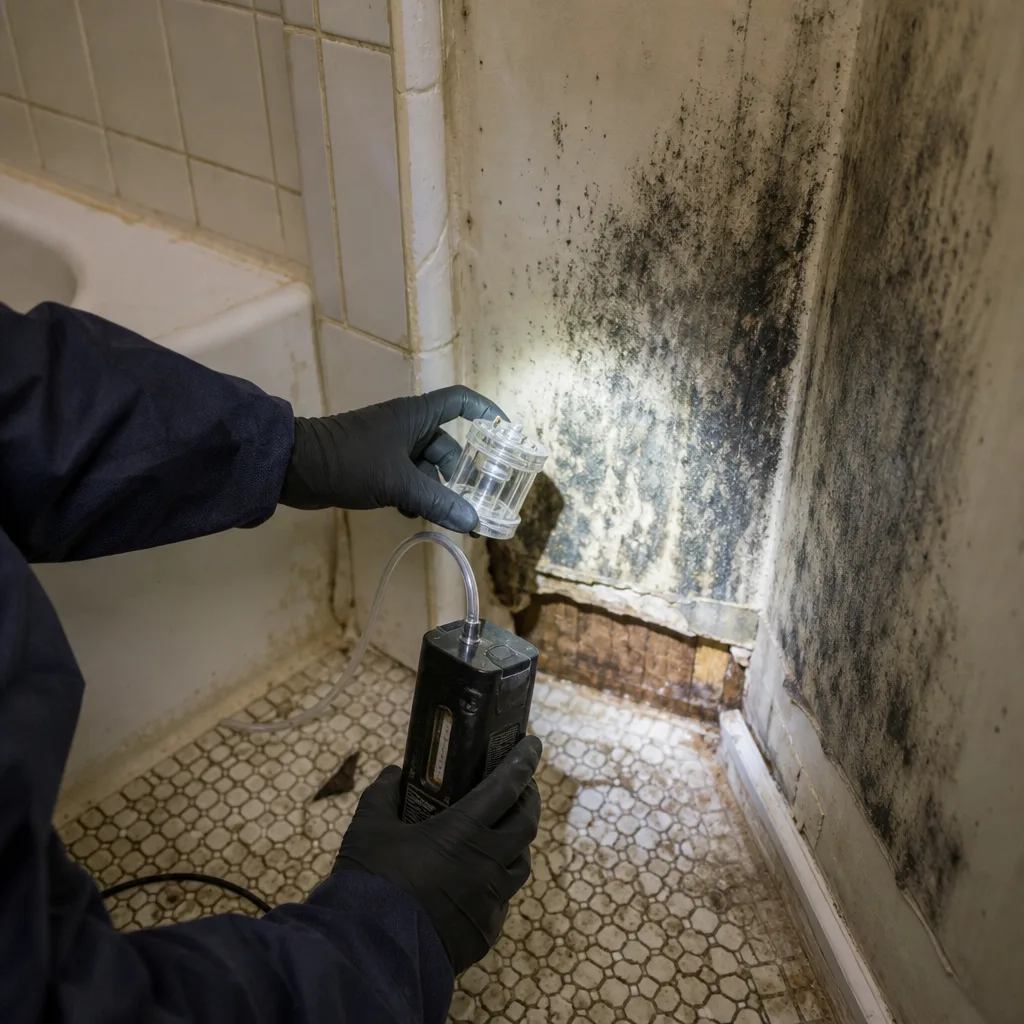
Every job starts with a real inspection: penetrating moisture meters on plaster and lath, air sampling where odor is present without visible growth, and a written assessment of what we found. For a pre-war building, the inspection should include checking the unit above and below, because a ceiling stain on your side of the floorboards usually means a leak on the other side.
Mold Removal
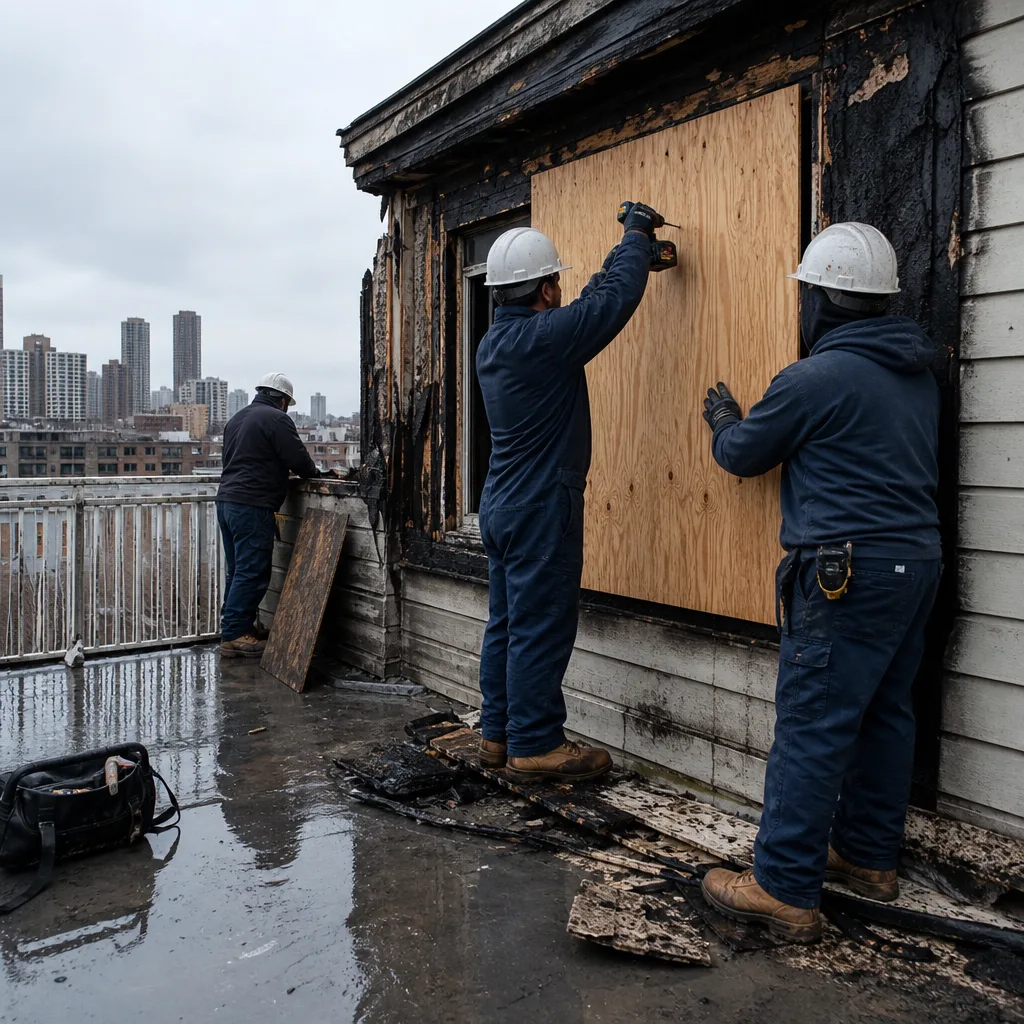
Removal means physical removal, not spraying and painting. In Upper Manhattan’s plaster buildings, that often includes cutting back sections of saturated plaster, removing wet insulation, and treating the wood lath behind it before any rebuild happens. Our Mold Remediation team handles this every week, and the difference between a clean removal and a callback is what happens inside the wall cavity.
Black Mold Remediation
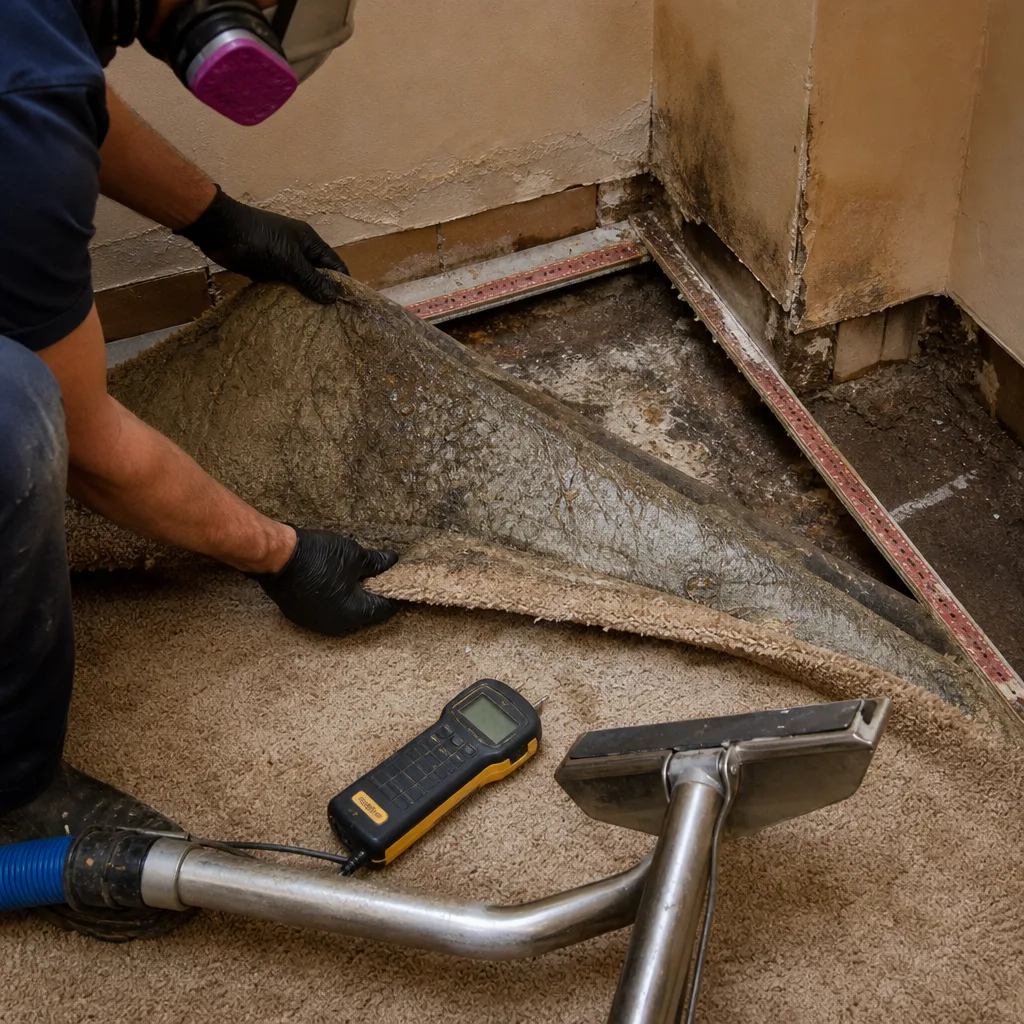
Stachybotrys, the black mold people worry about, appears in Upper Manhattan where water has been sitting untreated for weeks or months: behind a slow radiator leak, under a bathroom floor, inside a wall cavity that never dries. We treat it with full containment, negative air, and aggressive HEPA scrubbing. No job gets closed until the air tests clean.
Air Quality Restoration
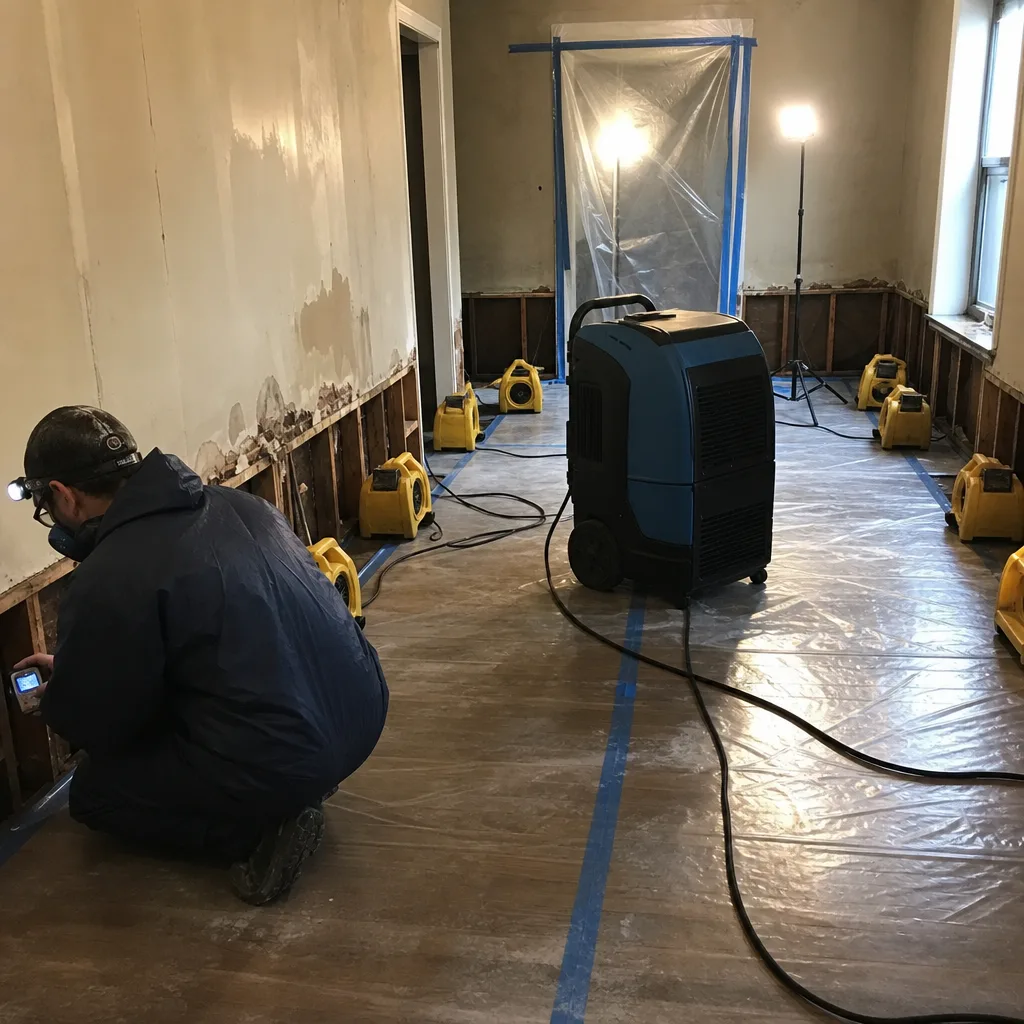
Spores move through pre-war buildings faster than the visible mold does. We run HEPA air scrubbers during every containment job, and we can bring in independent air quality testing if you want clearance verified by a third party. Post-remediation, we can also address humidity control so the building doesn’t grow the same problem again.
Crawl Space Treatment
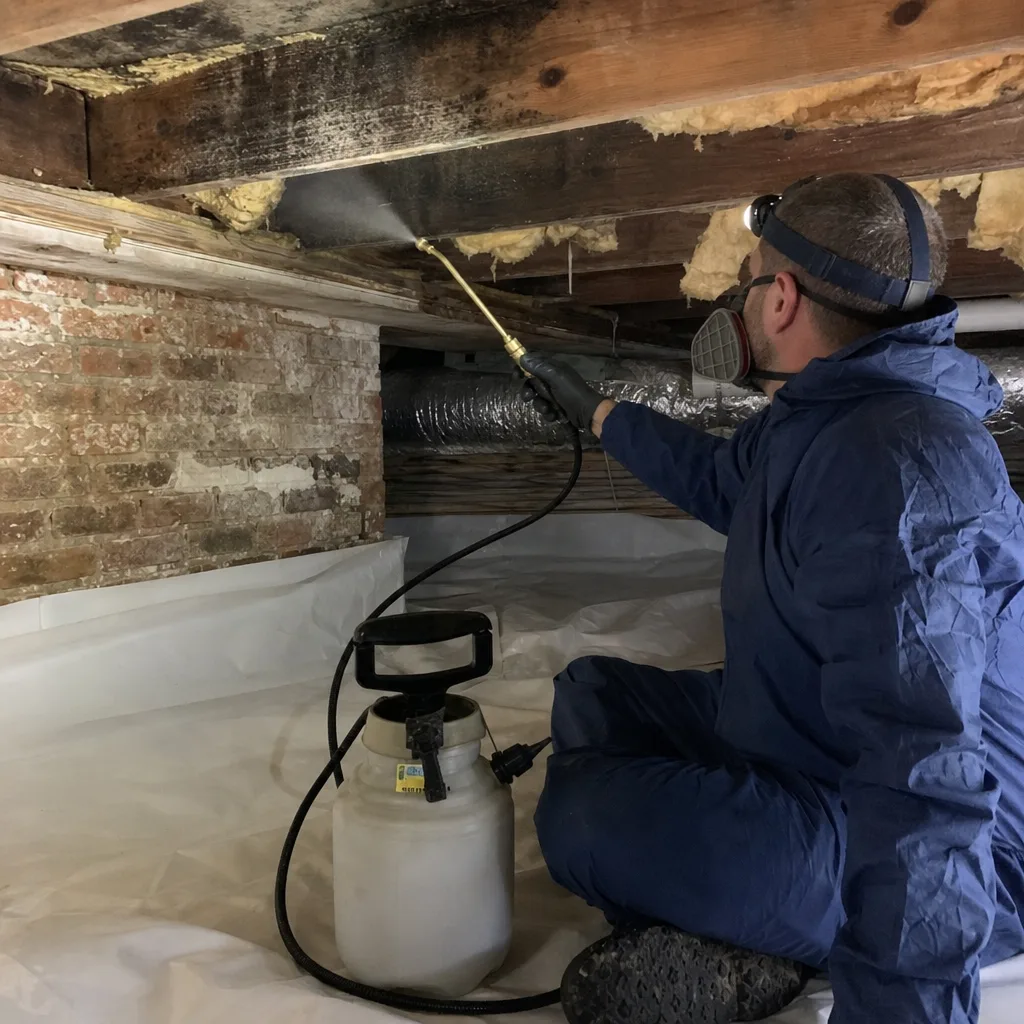
Some Upper Manhattan rowhouses and brownstones have shallow crawl spaces under a rear extension or ground-floor addition. Moisture collects there, and mold follows. We treat the framing, install vapor barriers where the space allows, and set up dehumidification if it’s needed. In a building with shared walls, treating the crawl space before spores migrate upward saves a lot of grief.
Moisture & Humidity Control
In a pre-war building with steam heat, indoor humidity swings hard through the year. We assess the unit’s humidity profile, recommend where dehumidification or better ventilation makes sense, and set up monitoring where a problem is likely to recur. If your unit reads high on a moisture meter but you can’t see mold, that’s the time to fix the moisture. We’d rather prevent a remediation than sell one.
What happens when you call
- 1
A real person answersNo phone trees - you reach a local pro.
- 2
You get an upfront price rangeHonest numbers before anyone is dispatched.
- 3
A background-checked tech heads outLicensed & insured, dispatched right away.
- 4
You approve before work beginsNothing starts until you say go.
Mold Remediation Costs in Upper Manhattan, NY
Mold remediation in Upper Manhattan costs more than in the outer boroughs because the buildings are older, denser, and subject to more regulation. A contained Level 2 remediation typically runs $1,800 to $3,500. A Level 3 job that opens plaster walls, runs extended drying, and requires multiple air clearance tests runs $3,500 to $6,500. A full Level 4 multi-unit loss, especially one that triggers DEP lead and asbestos clearance, can run $8,000 to $15,000 or more depending on how many units are affected.
What moves the price: how much plaster has to be opened, whether the building requires lead paint and asbestos testing before teardown, how many rooms need containment, and how long the drying log has to run. Insurance covers the majority of these jobs when the water event was sudden, and we bill the carrier directly. If it’s out of pocket, we give you a written scope before any work starts, and we stand behind it with the 90-Day Done Right Promise. Call (917) 924-4221 for a free visual inspection and a firm number.
We Also Serve Cities Near Upper Manhattan
Our crews cover Upper Manhattan and the surrounding area, including Fairview, Harrison, East Bronx, and Hunts Point. If your building is on the edge of the service area, call and we’ll tell you straight whether we can reach you within our 45-minute window.
Upper Manhattan Mold Remediation Questions, Answered
Why does mold keep returning in my pre-war Harlem apartment after the landlord said it was fixed?
It keeps returning because the plaster and wood lath behind the visible mold were never actually dried. A surface-level cleaning removes visible growth, but the moisture inside the wall cavity is what feeds mold. In pre-war Harlem buildings with three-coat plaster, standard drying timelines that work in drywall buildings are far too short. The plaster reads dry on the surface while the lath behind it is still wet. We use penetrating moisture meters to read the lath, and we don’t close the wall until the cavity reads under 15% wood moisture equivalent. That’s the part most “fixed” jobs skip. Call (917) 924-4221 and we’ll tell you if the last remediation actually dried the wall.
Do I need to move out during mold remediation in a Washington Heights walk-up?
Usually not, but it depends on the size of the job and where the mold is. For a Level 2 job, containment area sealed with plastic and negative air, most residents stay in the unit. For a Level 3 or Level 4 job that opens walls and runs multiple days of drying, especially in a Washington Heights elevator building with shared hallways, we often recommend relocating for 3-7 days while the drying runs. We’ll tell you honestly before we start, and we’ll work with your schedule where the building allows. In occupied buildings, we keep containment tight and set up negative air so spores stay out of the neighboring units.
Is black mold more common in Upper Manhattan pre-wars than in newer buildings?
Yes, and it’s not because of the buildings being old. It’s because pre-war construction holds moisture longer. Three-coat plaster over wood lath acts like a sponge. A small leak that would dry out in a drywall building in three days stays wet for weeks in a 1920s co-op, and that sustained moisture is exactly what Stachybotrys needs to establish. We find black mold most often behind slow leaks that were painted over or “fixed” by cleaning the surface. If you smell a musty odor and can’t see the source, call us for a moisture inspection before the wall gets opened by a contractor who isn’t reading the lath.
How long does a typical mold remediation take in an Inwood co-op with plaster walls?
Most Inwood co-op remediations run 5 to 10 days total, with days 1-2 spent setting containment and removing wet material, days 3-8 running structural drying, and the final day or two doing clearance testing and closing up the wall. That’s longer than a drywall job because the plaster cavities in these pre-war buildings need extended drying. If the building requires NYC DEP lead and asbestos clearance before we can disturb the plaster, add a day or two for that process. We’ll give you a day-by-day plan before we start, and we update it daily as the drying logs come in.
Can I just clean visible mold with bleach in my East Harlem rental, or do I need professional mitigation?
Bleach does not kill mold on porous surfaces like plaster, wood lath, or drywall. It removes the surface staining but leaves the roots alive inside the material, and the water in the bleach actually adds moisture that the mold uses. In an East Harlem rental, especially a pre-war unit with steam heat, DIY surface cleaning almost always results in “recurring mold” - which is just the same colony regrowing from inside the wall. If the mold covers less than 10 square feet and the moisture source is fixed, a professional cleaning might be enough. If the mold is on plaster that’s been wet for weeks, you need containment and structural drying. We’ll inspect it for free and tell you which one you’re looking at. Call (917) 924-4221.
How fast can you actually get to an Upper Manhattan building for a mold emergency?
We commit to a 45-minute response in Upper Manhattan. Our crews stage through Harlem, Washington Heights, and Inwood, and we know the traffic patterns on Broadway, St. Nicholas Avenue, and the Harlem River Drive. A live dispatcher answers 24/7, so at 2 a.m. you’re talking to a person, not a recording. We’ll get a crew to your building, do a visual inspection and moisture reading, and set up containment the same visit if the situation calls for it.
Will insurance cover mold remediation in an Upper Manhattan co-op or rental?
Most co-op and condo policies and most renters’ policies cover mold remediation when it results from a sudden and accidental water event: a burst pipe, a failed water heater, a storm-related leak. Gradual leaks that went unreported for months are often excluded as maintenance. The building’s master policy may also cover certain common-area losses, and we’ve handled direct billing with carriers across Upper Manhattan for years. We document everything from the first hour, take photos of the loss before teardown, and communicate directly with the adjuster so you’re not negotiating a claim alone. Call us and we’ll walk you through what your policy is likely to cover.
What should I do in the first 30 minutes after I find mold in my Upper Manhattan apartment?
Don’t disturb it. Disturbing mold releases spores into the air and spreads the problem through the unit and into shared hallways. Don’t scrub it, don’t paint over it, don’t run a fan on it. If there’s an active water source, shut off the supply if you can. Move furniture and personal items away from the affected area if you can do so without touching the mold. Then call us at (917) 924-4221. We’ll walk you through what to do while the crew is on the way, and we’ll come do a free visual inspection with moisture readings so you know exactly what you’re dealing with.
Serving Upper Manhattan, NY - Our Local Coverage Area
We’re based in the Upper Manhattan area and know this community well. Use the map below to see our service coverage - if you’re nearby, we can almost certainly help.
Why Choosing the Right Mold Remediation Company in Upper Manhattan Matters
Upper Manhattan’s pre-war buildings are unforgiving to mediocre remediation. A crew that treats plaster like drywall will leave moisture inside the lath, close the wall, and hand you a clearance report that means nothing. Six months later, the mold is back and the building is pointing at the remediation company, who is long gone.
Our crew was called to a six-story brick walk-up in Washington Heights after a steam radiator supply line burst on the top floor, sending water through three units of plaster-and-lath ceilings. We set up containment in the stairwell, ran moisture mapping with penetrating probes, and documented drying logs across 11 days for the plaster cavities - well past the drywall-standard 3-4 days - while our techs removed saturated insulation and treated the wood lath with antimicrobial before rebuild. The final moisture readings showed the plaster at under 15% wood moisture equivalent, and the building passed its NYC DEP-required lead and asbestos clearance before we finished the pack-out. That’s what done right looks like in Upper Manhattan, and that’s why Curt Bowman built Floodline Restoration Co. of Manhattan to do the job once and stand behind it in writing.
Our crews are background-checked, uniformed, and certified to IICRC, RIA, and IFA standards. We run Dri-Eaz, Phoenix, XPOWER, B-Air, and Injectidry equipment. We’ve been proudly serving local communities for over 42 years, and every job is backed by the 90-Day Done Right Promise: if it’s not done right, we make it right. No arguing, no paperwork battles. Our dispatchers answer live around the clock, and our current offers include $50 off any repair over $250, an $89 seasonal tune-up, and a 5% senior and veteran discount, always.
If you have mold in an Upper Manhattan building, call (917) 924-4221. We’ll be there when we say, we’ll give you a straight answer on what you’re dealing with, and we’ll stand behind the work. Done right, backed in writing.
Written by Curt Bowman, Owner at Floodline Restoration Co. of Manhattan, serving Upper Manhattan and the wider NYC metro area.