
Free visual inspection and a written scope of work before any mitigation begins - photos, moisture readings, and drying logs go in your claim file
The scope we write is the scope we bill. Anything new gets shown to you, in writing, before we touch it.






 Before
 After
After Before
 After
After Before
 After
After24/7 Emergency Storm & Disaster Restoration in Upper Manhattan
When wind tears a roof membrane off a pre-war walk-up or a nor’easter sends water cascading through a top-floor apartment in Washington Heights, you need a crew that answers the phone at 2 a.m. and gets extraction running the same visit. Floodline Restoration Co. of Manhattan provides 24-hour emergency storm response across Upper Manhattan, from Inwood down to East Harlem, with live dispatch at (917) 924-4221 and crews staged to reach most buildings within 45 minutes. We start with a free visual inspection, stabilize the damage so it stops spreading, and document everything for your insurance carrier from the first hour. For storm damage, the first hour decides whether you’re drying wet plaster or replacing it entirely.
Understanding Storm & Disaster Restoration Severity in Upper Manhattan Properties
Storm damage in Upper Manhattan rarely looks like it does in the suburbs. Our crews work inside 5-to-10-story brick elevator buildings and walk-ups built between 1900 and 1940, where three-coat plaster over wood lath absorbs water differently than drywall and holds it far longer. A roof breach or window blowout in Harlem or Hamilton Heights saturates plaster walls, pours down through original hardwood flooring, and soaks the lath beneath, creating conditions where hidden mold develops behind walls within 48 to 72 hours. We classify storm flooding the same way we classify all water losses: Category 1 from clean rainwater intrusion, Category 2 when that water picks up contaminants from building materials, and Category 3 when sewer backflow from a combined system enters basement-level units during intense rain events, which has become a recurring problem along the Harlem River corridor since Hurricane Ida in September 2021. The severity of a storm loss in Upper Manhattan is almost always higher than it first appears because plaster holds moisture at depth, original steel windows leak at the anchors, and water travels horizontally through masonry party walls between units.
Why Upper Manhattan Property Owners Choose Floodline Restoration Co. of Manhattan
- 45-minute response commitment across Upper Manhattan. Our crews stage near major routes like Broadway, St. Nicholas Avenue, and the Harlem River Drive so we reach Washington Heights, Inwood, and East Harlem fast when a storm hits.
- A live person answers, 24 hours a day. No answering service, no automated tree. A dispatcher who knows Upper Manhattan’s buildings picks up at 2 a.m. and sends a certified crew.
- IICRC-certified crews trained to WRT, FSRT, and AMRT standards. The people who show up understand pre-war masonry, wet plaster, and the wind-load requirements of NYC building code.
- Free visual inspection before any work begins. You get a written scope, a clear price, and no pressure. We tell you what needs doing and what doesn’t.
- Direct insurance billing with full documentation. Moisture readings, drying logs, and room-by-room photos go straight to your adjuster. You never carry the paperwork between us and the carrier.
- One team from board-up to rebuild. The crew that tarped your roof on day one is the crew that dries the plaster, replaces the windows, and finishes the paint. No mid-job handoff, no inherited crew that doesn’t know your building.
Our Storm & Disaster Restoration Process
Inspection & Assessment
We walk the entire affected area, including adjacent units, with thermal imaging and penetrating moisture meters. In Upper Manhattan’s pre-war buildings, water travels through party walls and chases, so the visible damage is rarely the full extent. We map every affected surface and take baseline moisture readings before any equipment goes in.
Extraction & Stabilization
Standing water comes out with truck-mounted and portable extraction units. We board up broken windows and tarp roof breaches with reinforced, wind-rated materials, not standard plywood. For windward exposures on apartment buildings, this stabilization work has to meet NYC wind-load expectations or the next storm tears it right back off.
Drying & Dehumidification
Dri-Eaz and Phoenix air movers paired with B-Air dehumidifiers run continuously, with daily moisture readings logged until surfaces read below 12% and stay there. Wet plaster in Washington Heights and Hamilton Heights buildings runs 60 to 80% longer than a drywall drying job, and we never rush the clock on that. The moisture log goes to you and your carrier.
Cleaning & Sanitization
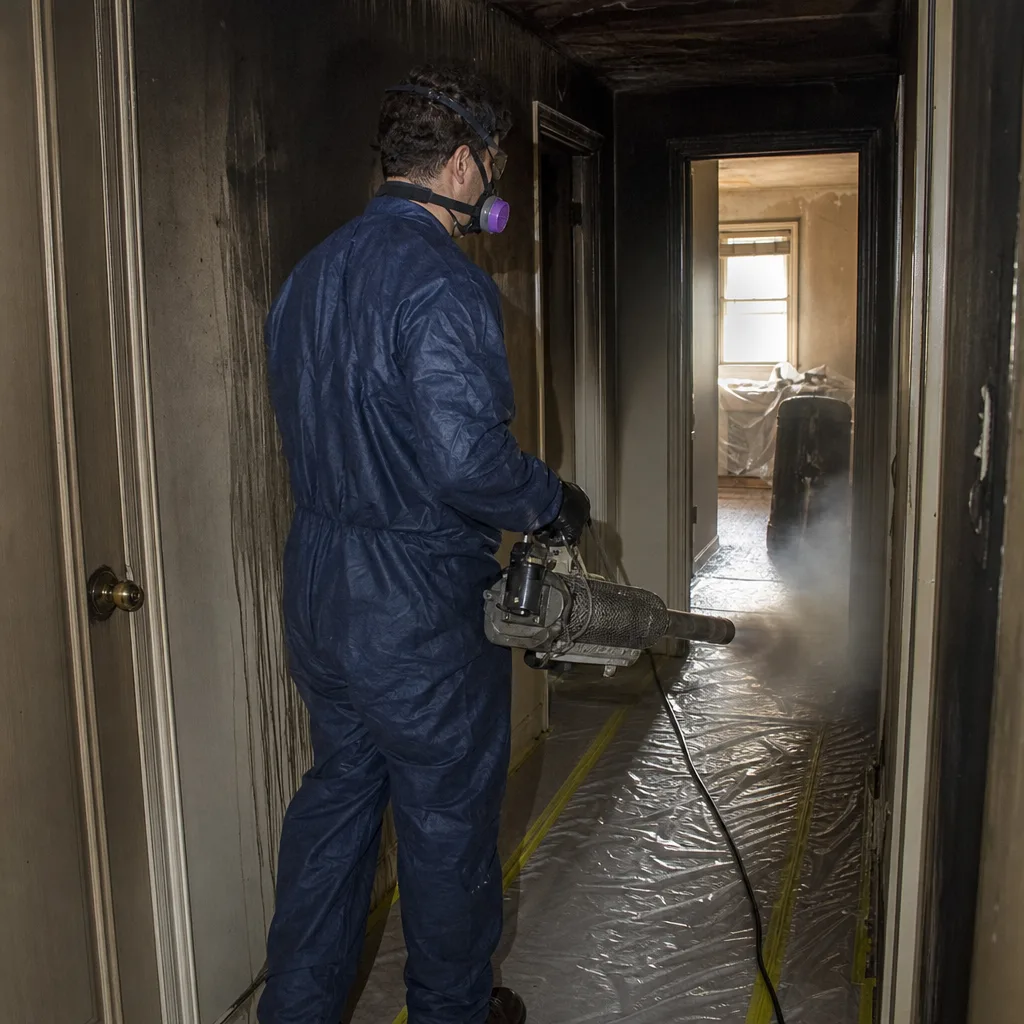
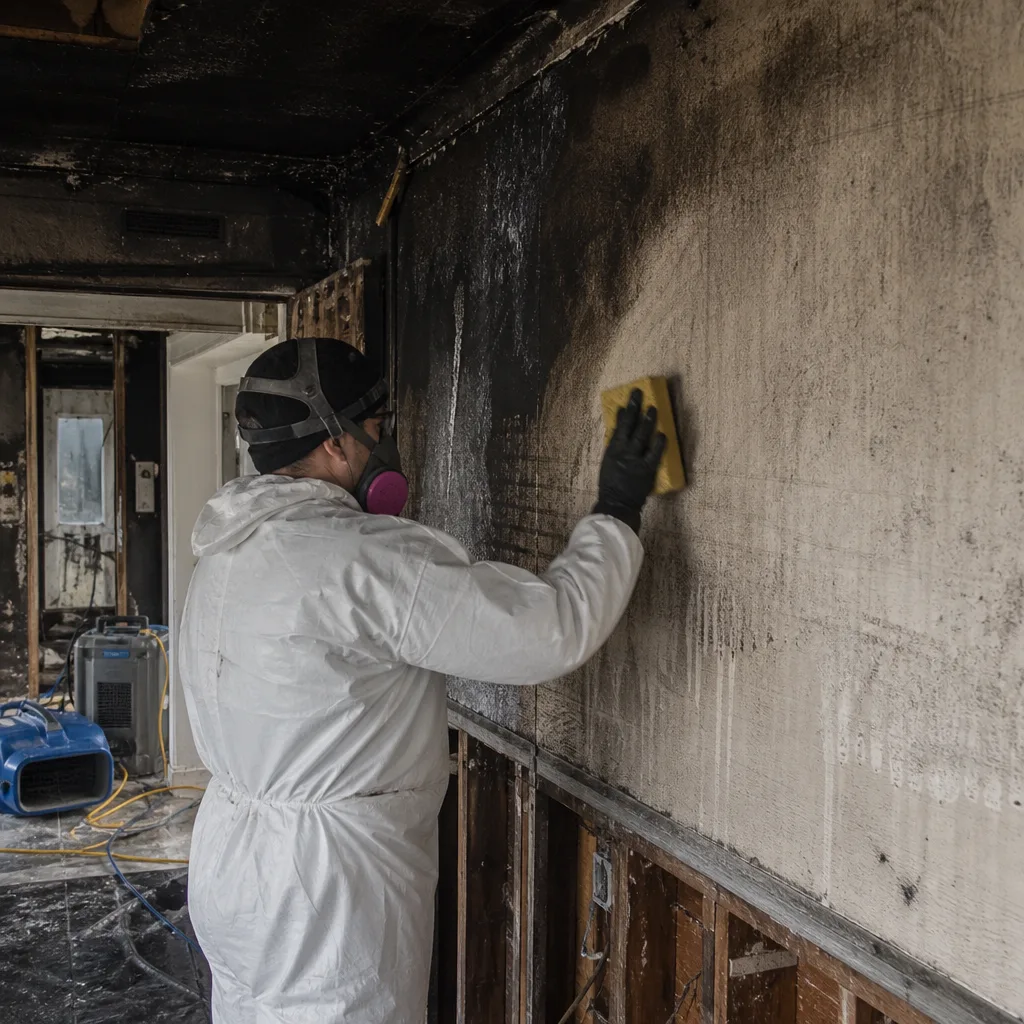
Storm water carries contaminants, so we clean and sanitize every affected surface with professional-grade antimicrobial treatments. HEPA air scrubbers run during the entire process to capture particulates disturbed by wind damage and water intrusion, especially important in older buildings where lead paint and asbestos dust can be present.
Wind Damage Specialty Repair
We assess original steel window frames for anchor embedment issues, reset and reseal track and panel damage, and reinforce wind-rated door assemblies where required. Post-storm repairs on pre-war masonry openings have to account for original steel lintels and plaster returns, or the repair fails in the next storm.
Repairs & Restoration
The same crew handles the rebuild: plaster repair, flooring restoration, paint, and trim. We do not hand the job to a subcontractor. When we finish, the unit is dry, wind-tight, and ready to live in, backed by our 90-Day Done Right Promise in writing.
Need Emergency Storm & Disaster Restoration in Upper Manhattan Now?
Crews minutes away, answering live 24 hours a day. The sooner we start, the less it costs.
Working With Your Insurance Company
Storm damage claims move faster when the carrier gets documentation they can verify. Our team photographs every affected room, logs moisture readings from the first day through the final dry standard, and writes a line-item scope of work that matches industry-standard estimating software. We send everything directly to your adjuster and talk with them on your behalf, so you’re not playing messenger between our crew and your insurance company. For 42 years, property owners across the metro have relied on Floodline Restoration Co. to handle the claim as carefully as the work itself. If your storm loss involves wind-driven rain, roof damage, or sewer backflow, the documentation standard matters as much as the drying itself.
What We Provide Your Insurer
- Thorough documentation of the loss
- Photos of all damage, room by room
- Moisture readings and drying logs
- A detailed, line-item scope of work
- Direct coordination with your carrier
Built for Upper Manhattan’s Loss Calendar
Storm damage in Upper Manhattan follows a rhythm, and anyone who lives here long enough learns it. January and February deep freezes burst cast-iron and galvanized supply lines inside unheated stairwells and utility closets, sending water through five floors of a Harlem pre-war building before anyone notices the ceiling stain. Spring thaw reveals basement seepage in Inwood and along the Harlem River, where older foundation waterproofing lets groundwater push through mortar joints. Summer brings the thunderstorms, the kind that overwhelm combined sewer systems in East Harlem and push Category 3 water into basement-level units and mechanical rooms. Then come the nor’easters from September through April, the storms that tear roof membranes, rip flashing from parapet walls, and drive rain horizontally into original steel windows above 155th Street. Each season has its own storm signature in Upper Manhattan, and our crews prepare for them in advance, staging equipment and dispatch routes so we’re not learning the neighborhood while you watch water spread.
Storm & Disaster Restoration Across Upper Manhattan’s Neighborhoods
Upper Manhattan stretches from 96th Street in the south to the tip of Inwood, and the building stock changes as you move north, but almost all of it is pre-war masonry. In Hamilton Heights and Sugar Hill, the elegant brownstones and large elevator buildings on Convent Avenue and Edgecombe Avenue have original steel casement windows with deep masonry returns, which means wind damage repair here frequently involves resetting anchors in century-old brick. Washington Heights, with its dense clusters of six-story elevator buildings along Fort Washington Avenue and Broadway, sees the most roof tarping calls we handle, because flat built-up roof membranes on 1920s buildings fail at the parapet flashing first. Inwood’s low-lying blocks east of Broadway and north of Dyckman Street flood from combined sewer backflow during intense rain events, a problem that has worsened since Hurricane Ida. And along the Harlem River corridor in East Harlem, wind-driven rain penetrates original steel windows and doors, while basement-level units in older walk-ups take water through foundation walls and floor drains that back up. Our dispatch board reflects this geography: crews staged near the Harlem River Drive, Broadway, and St. Nicholas Avenue can reach any of these neighborhoods within 45 minutes when a storm hits.
Specialized Storm & Disaster Restoration Services We Offer in Upper Manhattan
Emergency Board-Up
When a storm blows out windows or a tree limb crashes through a storefront on Dyckman Street, we board up immediately. But emergency board-up on a pre-war Upper Manhattan building is not the same as nailing plywood over a suburban window. Windward exposures need impact-rated materials and proper anchoring into masonry, or the board-up itself becomes a hazard in the next wind event. We cut openings clean, anchor into the brick with the right fasteners, and document everything for your carrier the same day.
Wind Damage Repair
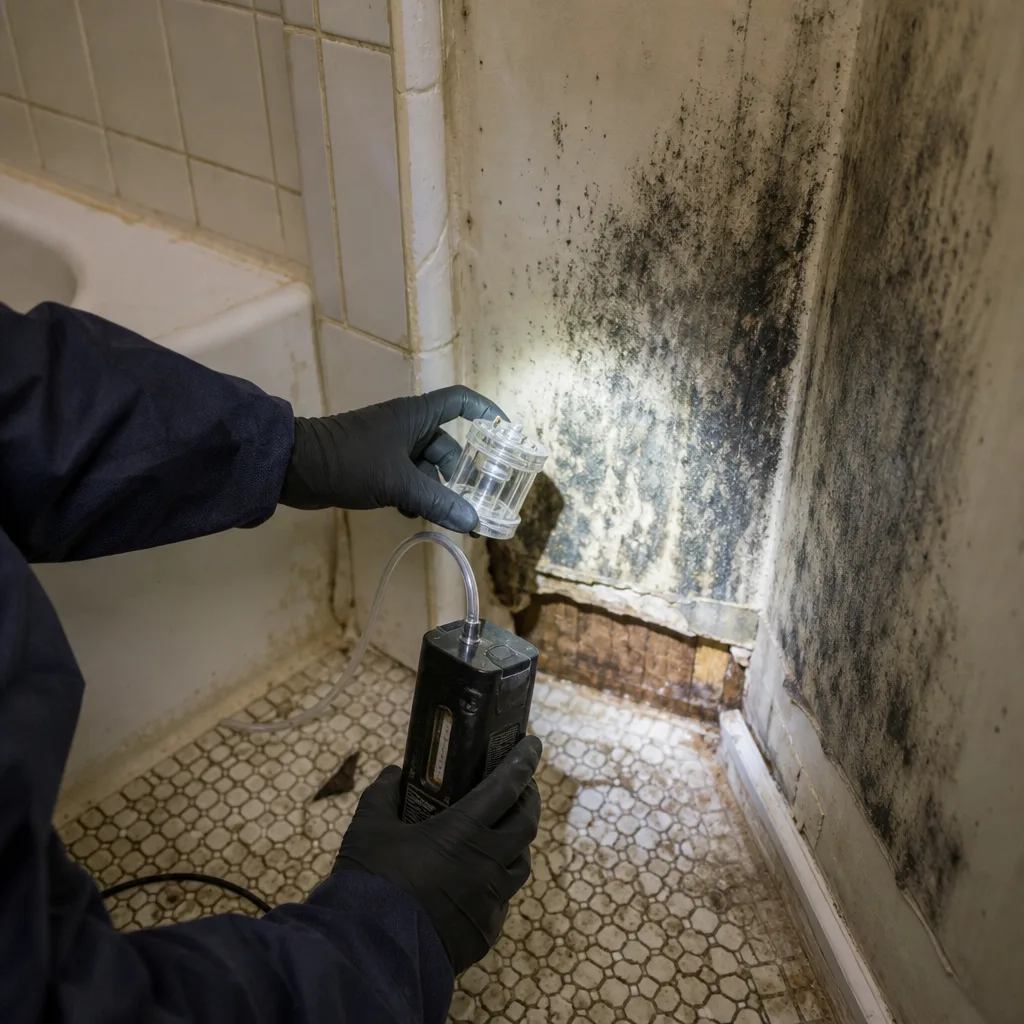
Original steel windows in 1920s and 1930s buildings lose anchor embedment over decades. When a nor’easter blows through Washington Heights, the windows that leak in driving rain are usually the ones whose anchors failed years ago and were never reset. We assess the original anchor points, tighten and replace fasteners, reset track and panel alignment, and reseal the entire assembly. For pre-war buildings under NYC wind-load requirements, this is structural work, not window cleaning.
Roof Tarping
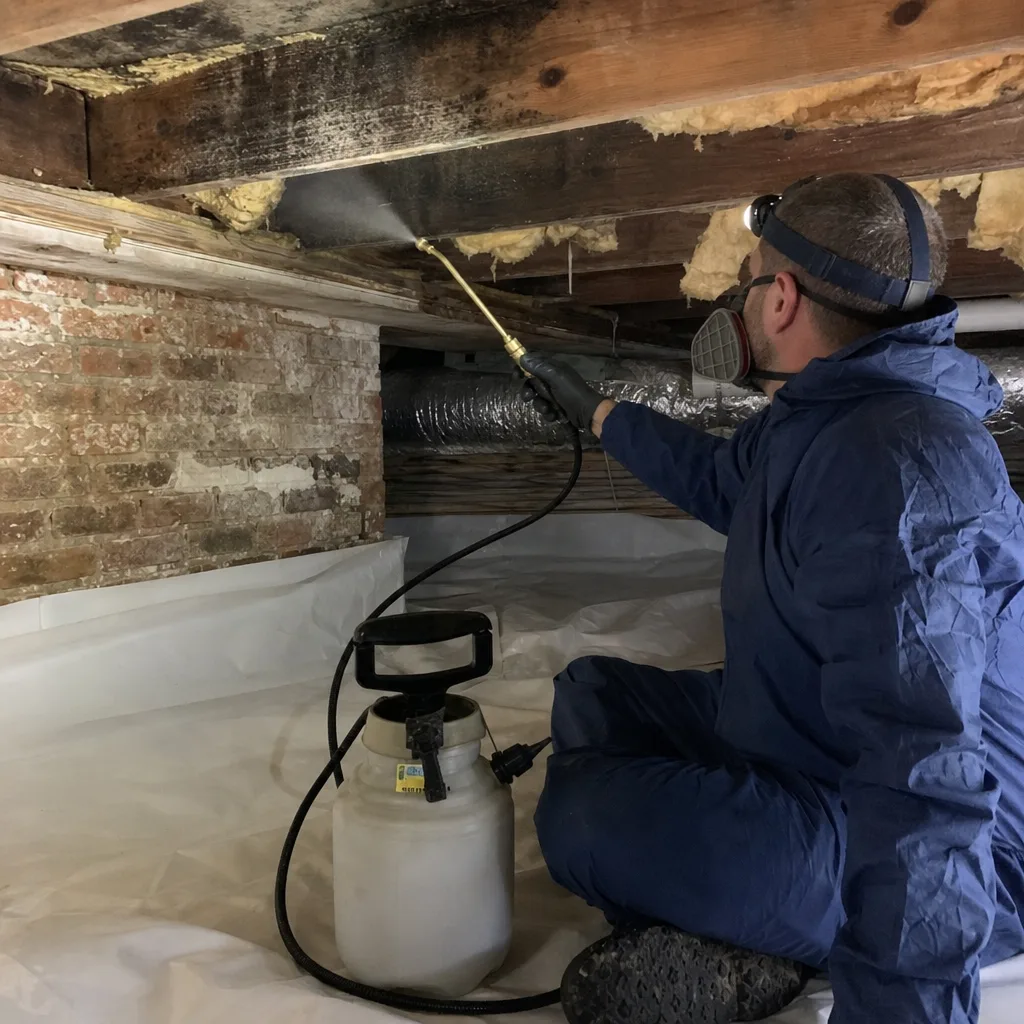
We tarp roof breaches with reinforced, wind-rated membranes anchored to parapet walls, not weighted with sandbags. When a storm tears a roof membrane off a six-story walk-up on W 146th Street in Hamilton Heights, our crew stabilized the damaged section with a reinforced tarp before wind-driven rain could reach the top-floor apartments. We set up containment with negative air and used Dri-Eaz and Phoenix air movers with continuous moisture mapping to dry saturated plaster and lathe, holding moisture readings below 12% for three consecutive days before releasing the drying logs to the co-op board.
Storm Damage Cleanup
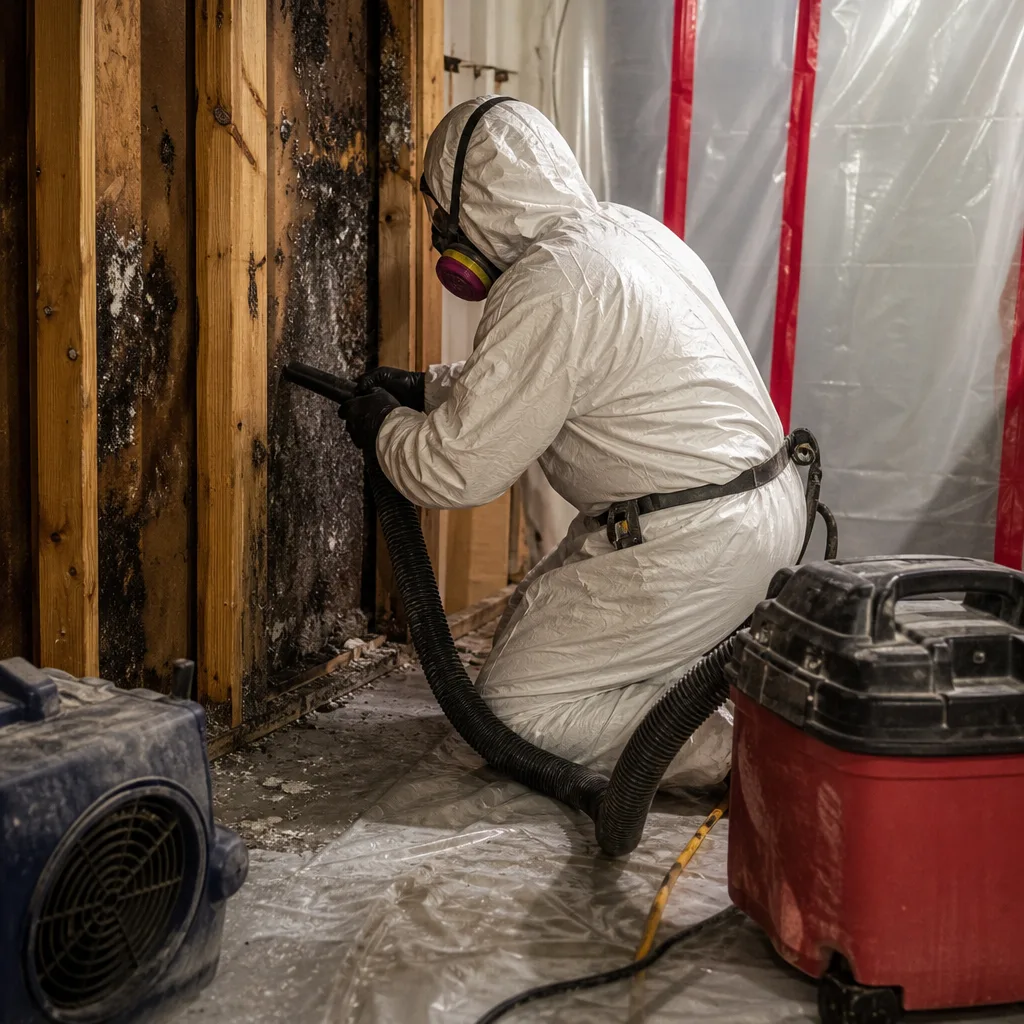
Debris removal is only the first step. Storm cleanup in Upper Manhattan means extracting water from plaster walls, hauling out soaked insulation and damaged lath, sanitizing surfaces that took on contaminated water, and setting up drying equipment that runs until the moisture map says the building is dry. On pre-war floors where water traveled between units, cleanup in one apartment is rarely enough. We assess the full vertical path of the water, including the units below, and clean everything the storm touched.
Flood Damage Restoration
For basement-level units in Inwood and East Harlem that take on Category 3 water during extreme rain events, we follow full contamination protocols: extraction, sanitization, structural drying, and replacement of any porous materials that cannot be safely cleaned. Combined sewer systems in these neighborhoods cannot handle extreme precipitation, and flood damage restoration here means treating the water as what it is: contaminated, requiring professional-grade handling and full documentation for your insurance claim.
What happens when you call
- 1
A real person answersNo phone trees - you reach a local pro.
- 2
You get an upfront price rangeHonest numbers before anyone is dispatched.
- 3
A background-checked tech heads outLicensed & insured, dispatched right away.
- 4
You approve before work beginsNothing starts until you say go.
Storm & Disaster Restoration Costs in Upper Manhattan, NY
Storm damage restoration in Upper Manhattan runs a real range depending on the scope. Emergency board-up on a windward exposure typically costs $400 to $900 for a standard window or door opening. Roof tarping for a partial membrane failure on a pre-war flat roof runs $750 to $1,800 depending on the size of the breach and the anchoring required. Full wind damage repair on original steel casement windows, including anchor reset and resealing, typically runs $350 to $750 per window. Water extraction and structural drying for a storm-flooded basement-level unit runs $2,200 to $5,500, with the higher end covering Category 3 contamination and multiple drying days. Full storm restoration on a saturated pre-war apartment floor, including plaster repair, flooring, and rebuild, ranges from $8,000 to $25,000 depending on square footage and materials. The fastest way to a firm number is a free visual inspection: we look at the actual damage, write you a line-item scope, and you know the price before any work starts. Call (917) 924-4221 to schedule one.
We Also Serve Cities Near Upper Manhattan
Our storm and disaster restoration crews serve property owners in Fairview, Harrison, East Bronx, and Hunts Point, along with the full Upper Manhattan area from Inwood to East Harlem. If you’re a board member, managing agent, or homeowner in one of these nearby communities, the same live dispatch, certified crews, and 90-Day Done Right Promise apply.
Upper Manhattan Storm & Disaster Restoration Questions, Answered
Does Upper Manhattan require wind-rated doors and windows on pre-war buildings?
Yes. The New York City Building Code requires impact-rated assemblies for many exposures, but the practical challenge in Upper Manhattan is retrofitting century-old masonry openings where original steel lintels and plaster returns make standard anchor systems fail. Our crews have done this work on Washington Heights elevator buildings and Harlem brownstones, and we know how to anchor into old brick without compromising the structural integrity of the opening. If you’re facing a pre-storm reinforcement project or a post-storm repair, call (917) 924-4221 and we’ll walk you through what the code requires for your specific building.
How does your crew dry wet plaster in a Washington Heights apartment without tearing it out?
We use penetrating moisture meters to map the actual moisture content inside the plaster and lath, then run Dri-Eaz and Phoenix air movers paired with B-Air dehumidifiers with daily readings logged until the material reads below 12% for three consecutive days. Wet plaster in pre-war buildings runs 60 to 80% longer than drywall drying, and crews who apply standard timelines consistently generate mold callbacks months later because moisture trapped inside three-coat plaster never registered as dry. We give you the drying log, and we do not release the equipment until the numbers hold.
What does a failing pre-storm door mean for an Upper Manhattan apartment building?
A failing pre-storm door, especially on a windward exposure, means the building envelope is already compromised before the storm arrives. Original steel doors and frames in 1920s buildings lose anchor embedment over decades, and doors that rattle in normal wind will leak in a nor’easter. We reinforce wind-rated door assemblies, reset anchors into masonry, and replace seals so the building is wind-tight before the storm hits, not after. A free visual inspection will tell you if your doors and windows are storm-ready.
How do you handle post-storm track and panel damage on original steel windows?
We assess the original anchor embedment first. Most post-storm track and panel damage on original steel windows in Upper Manhattan is the result of anchors that loosened years ago, not new wind damage. We reset the anchors, repair or replace the track and panel components, align the sash, and reseal the entire assembly. Patching the visible damage without checking the anchors is exactly how windows fail again in the next storm.
Why do we need containment on a storm-damaged pre-war floor?
Because pre-war Upper Manhattan buildings almost universally contain lead paint and asbestos-containing materials, and storm damage disturbs those materials. NYC DEP-compliant testing and abatement clearance is a mandatory prerequisite before any drying or rebuilding work can begin on these structures. We set up containment with negative air pressure and HEPA air scrubbers to protect residents and workers, and we handle the clearance documentation your co-op board or managing agent will require. Skipping containment on a pre-war floor is not a shortcut; it’s a regulatory and health risk.
How fast can a crew actually get to Upper Manhattan after a storm?
Our commitment is 45 minutes to most Upper Manhattan addresses. We stage crews near major routes like Broadway, St. Nicholas Avenue, and the Harlem River Drive, and our dispatch board is live 24 hours a day. A real person answers the phone at 2 a.m., and the crew that arrives is IICRC-certified with the right equipment on the truck, not a salesperson in a car. Call (917) 924-4221 and you’ll know exactly when we’ll be there.
Will my insurance cover storm damage in Upper Manhattan?
Most storm damage from wind, rain, and water intrusion is covered under a standard property policy, though sewer backflow from a combined sewer system may require a specific endorsement. We document everything from the first hour, photograph every affected room, and work directly with your adjuster so the claim moves without you playing messenger. If the carrier denies or disputes part of the claim, we provide the moisture readings, drying logs, and scope of work they need to reconsider.
What should I do in the first 30 minutes after storm damage?
First, get people out of any flooded or wind-damaged area and shut off electricity to affected rooms if you can do so safely. Then call (917) 924-4221. Do not enter standing water in a basement, do not touch original steel windows that may have loosened anchors, and do not attempt to tarp a roof yourself. The first 30 minutes are about safety, not cleanup. Our live dispatcher will tell you what to do while the crew is on the way.
Serving Upper Manhattan, NY - Our Local Coverage Area
We’re based in the Upper Manhattan area and know this community well. Use the map below to see our service coverage - if you’re nearby, we can almost certainly help.
Contact Floodline Restoration Co. of Manhattan
If you own a co-op unit, manage a rental building, or hold a board seat in Harlem, Washington Heights, Inwood, or East Harlem, storm damage is not something to wait on. Call (917) 924-4221 for a free estimate, and a live person will answer, day or night. We’ll walk you through what we see, write you a scope, and handle the insurance directly. Done right, backed in writing, from the first tarp to the final coat of paint.
Written by Curt Bowman, Owner at Floodline Restoration Co. of Manhattan, providing Storm & Disaster Restoration across Upper Manhattan and the surrounding area.