
Free visual inspection and a written scope of work before any mitigation begins - photos, moisture readings, and drying logs go in your claim file
The scope we write is the scope we bill. Anything new gets shown to you, in writing, before we touch it.
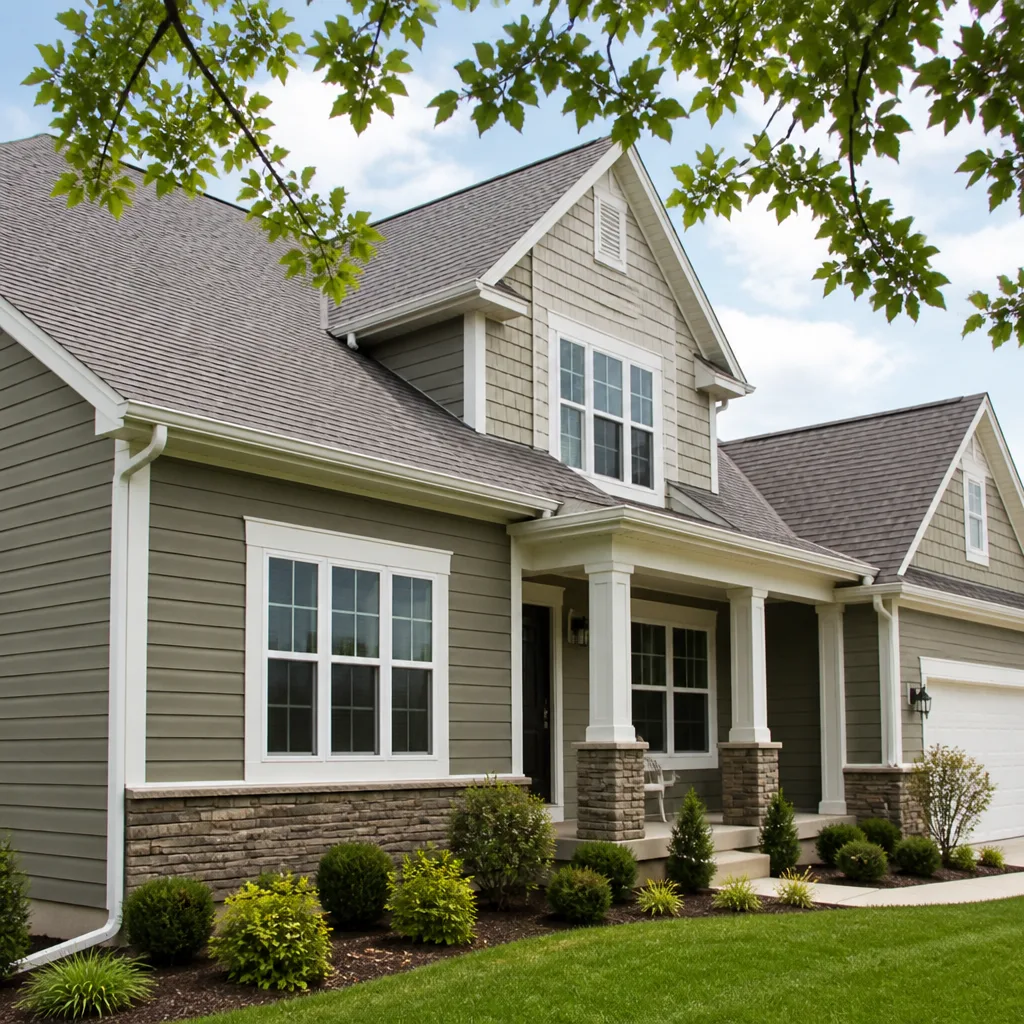
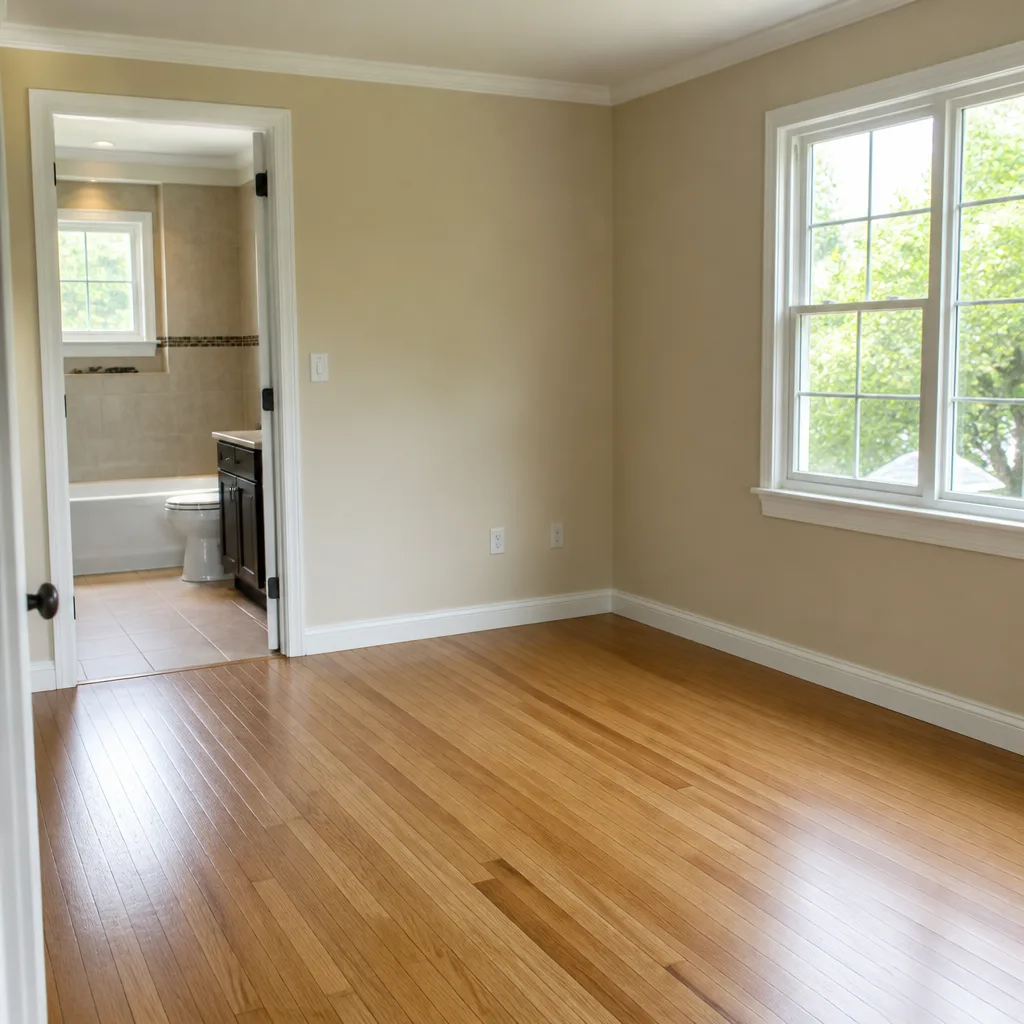
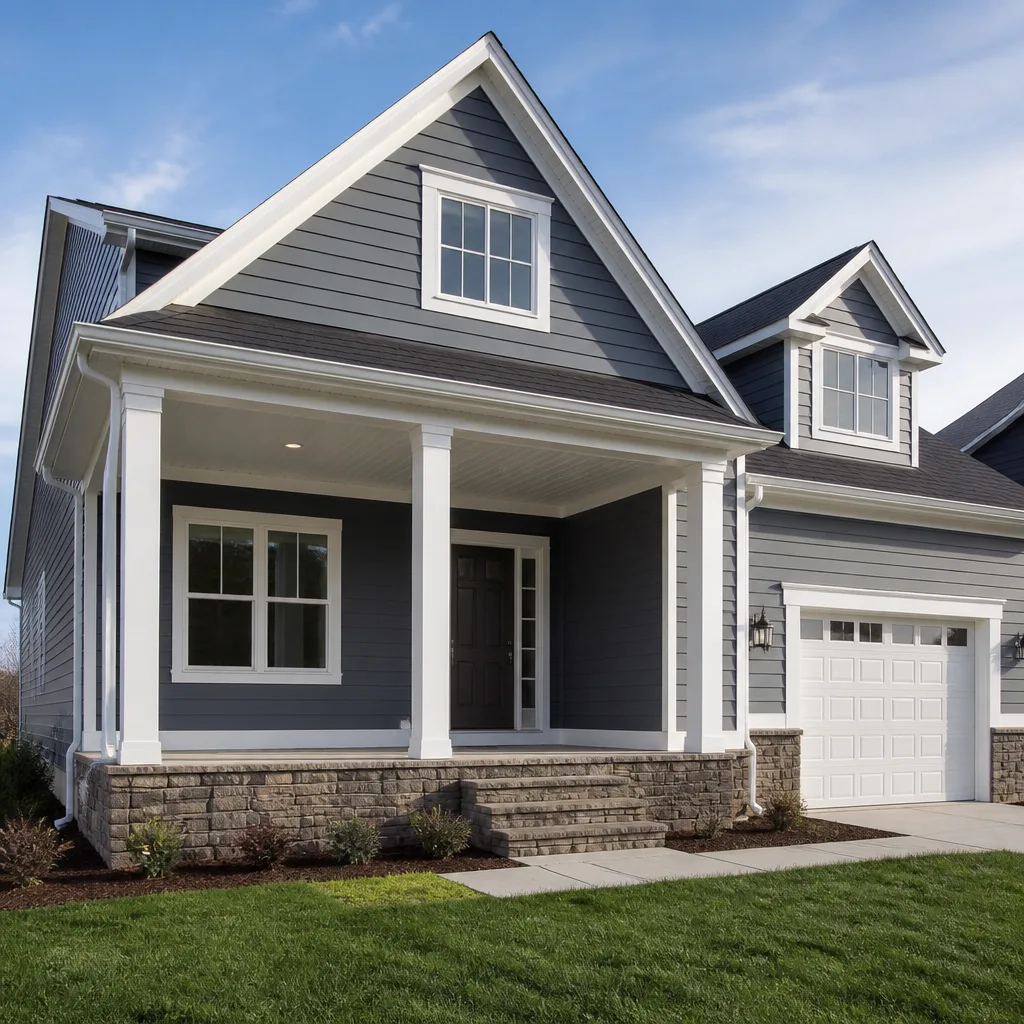
 Before
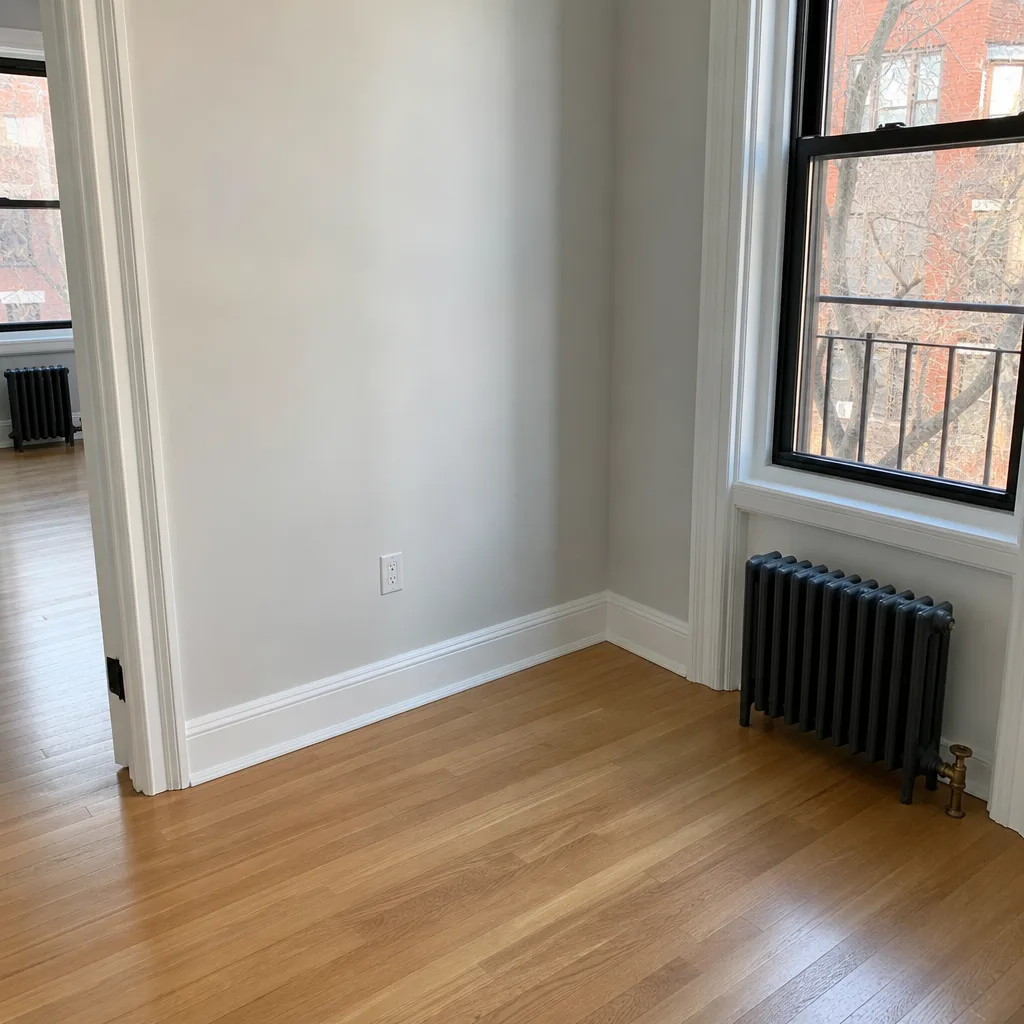 After
After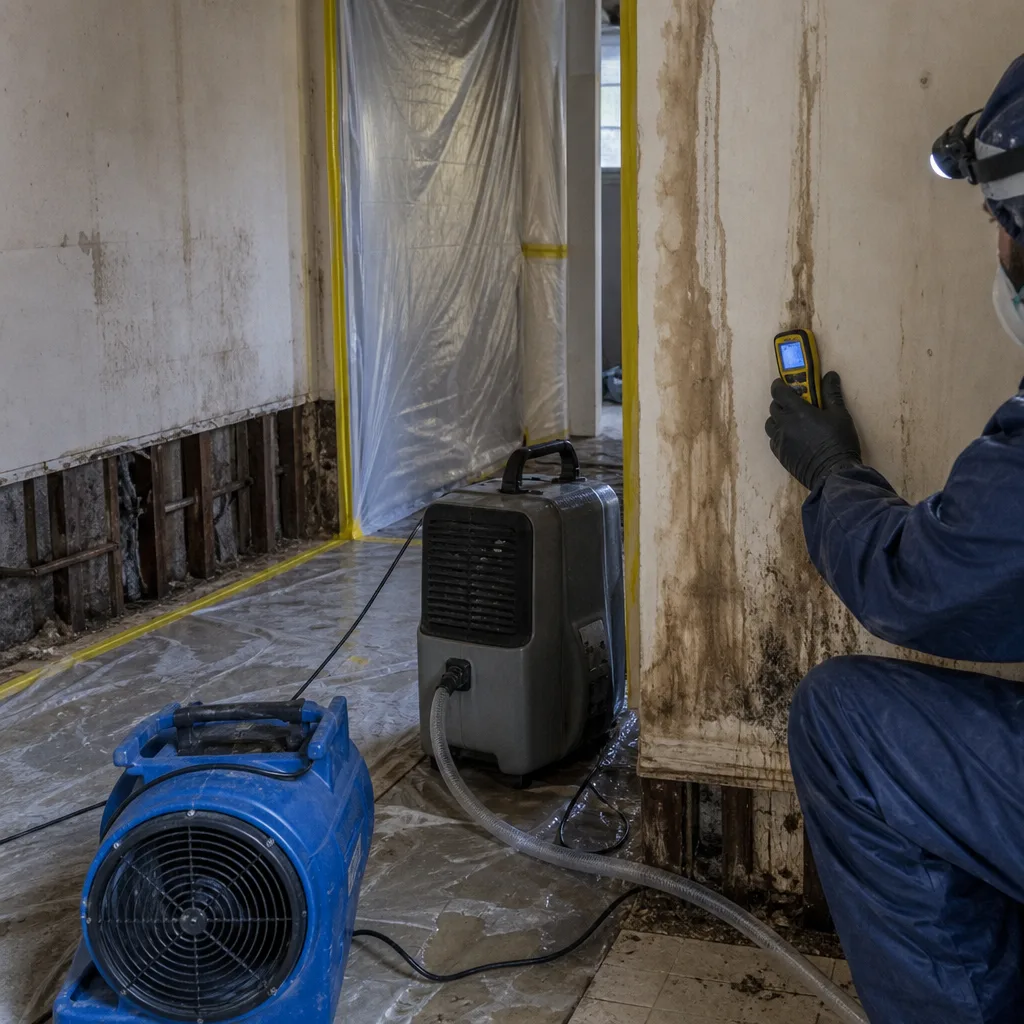 Before
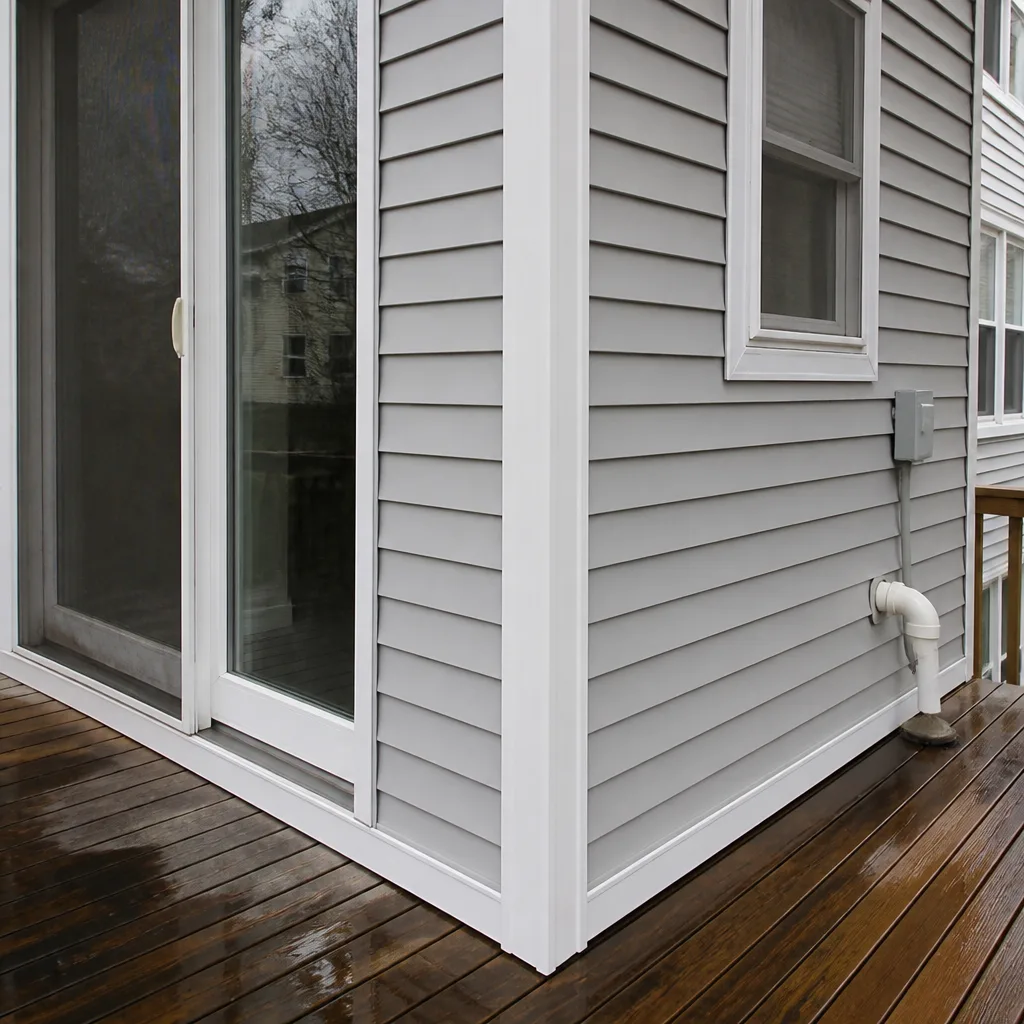 After
After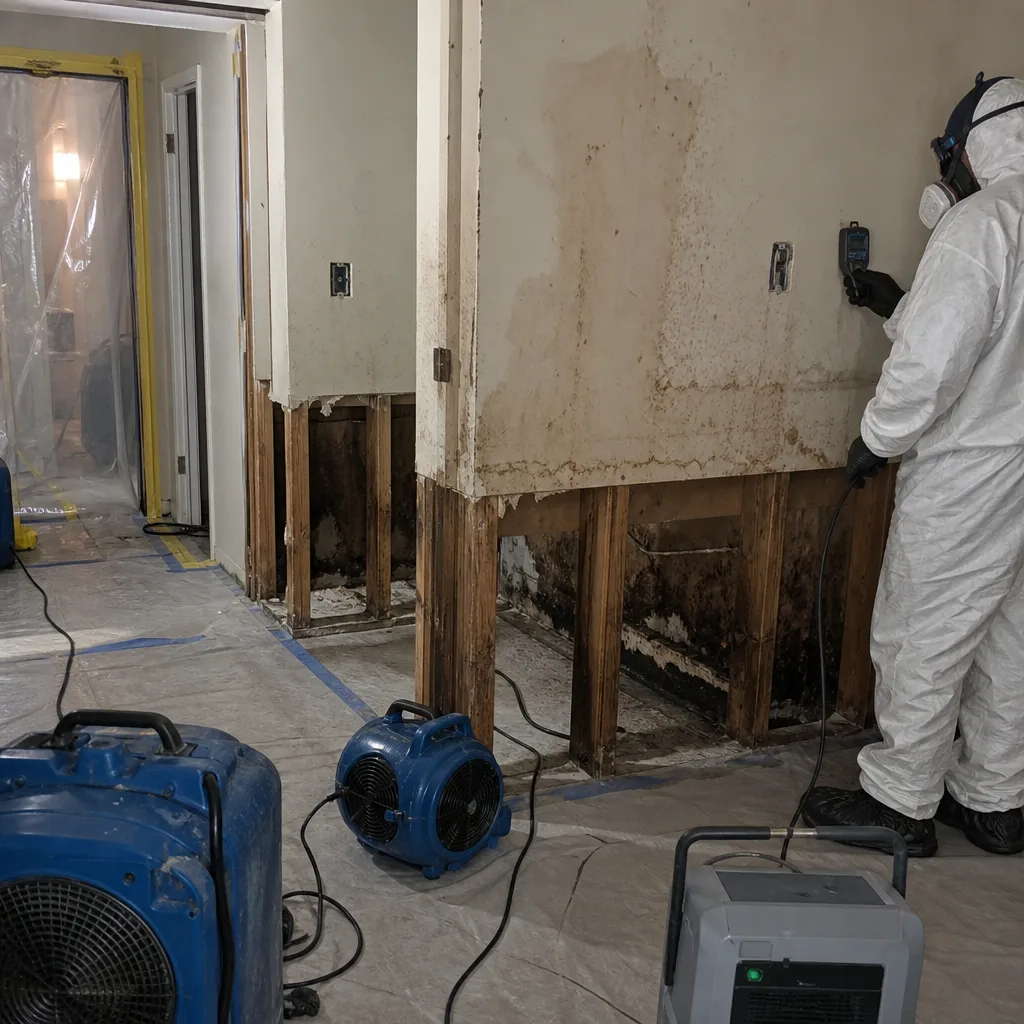 Before
 After
After24/7 Emergency Mold Remediation in West New York
Mold remediation in West New York typically runs $1,800-$6,500 depending on how many rooms and how many stacked units are involved, and a certified crew can usually be on site within 45 minutes of your call. When you call (917) 924-4221, a live dispatcher answers, not a recording. That matters here more than almost anywhere: in West New York’s pre-war brick walk-ups, a leak above you doesn’t stay above you. It moves through plaster ceilings into the apartments below, and every hour it sits means more containment, more drying time, and a larger scope of work. We dispatch crews into West New York around the clock, and the first visual inspection is free.
Understanding Mold Remediation Severity in West New York Properties
West New York’s housing stock creates a severity curve you won’t find in the single-family towns across the Hudson County line. The vast majority of residential buildings here are 4-6 story brick walk-ups built between the 1920s and 1950s, with plaster-over-lath walls that swallow moisture for weeks before any visible sign appears. By the time a ceiling blisters or a baseboard stains, the water has typically been moving through joist bays for days, and what started as a Category 1 clean-water leak has often degraded into Category 2 or Category 3 contamination. Containment becomes the first priority, not the last: in stacked units, mold spores travel along plumbing chases and electrical penetrations between floors, so treating one apartment without sealing airflow through the walls means recontamination within weeks. We run negative-air pressure with HEPA-scrubbed exhaust and log daily moisture readings in every affected unit until the dry standard is met, then we test before we tear out containment. In West New York, half the job is knowing where the water went that never showed a stain.
Why West New York Property Owners Choose Floodline Restoration Co. of Manhattan
- 45-minute response commitment - a live dispatcher confirms the address, and the crew is moving toward West New York while you’re still on the phone.
- 24/7 live answer, always a person - 2 a.m. on a Sunday, someone picks up. No answering service gatekeeping the schedule.
- IICRC-certified crews - trained to the water restoration (WRT), applied microbial remediation (AMRT), and fire/smoke (FSRT) standards, with the same background-checked, uniformed technicians on every visit.
- Free visual inspection - we’ll assess the visible damage, check the moisture pattern, and give you an honest read before anyone signs anything.
- Direct insurance billing - we prepare the estimate, document the loss, and work with your adjuster so you’re not the messenger between contractor and carrier.
- One team, first extraction to finished rebuild - the same crew that sets containment does the drying, the treatment, and the reconstruction. No mid-job handoff to strangers.
Our Mold Remediation Process
Inspection & Assessment
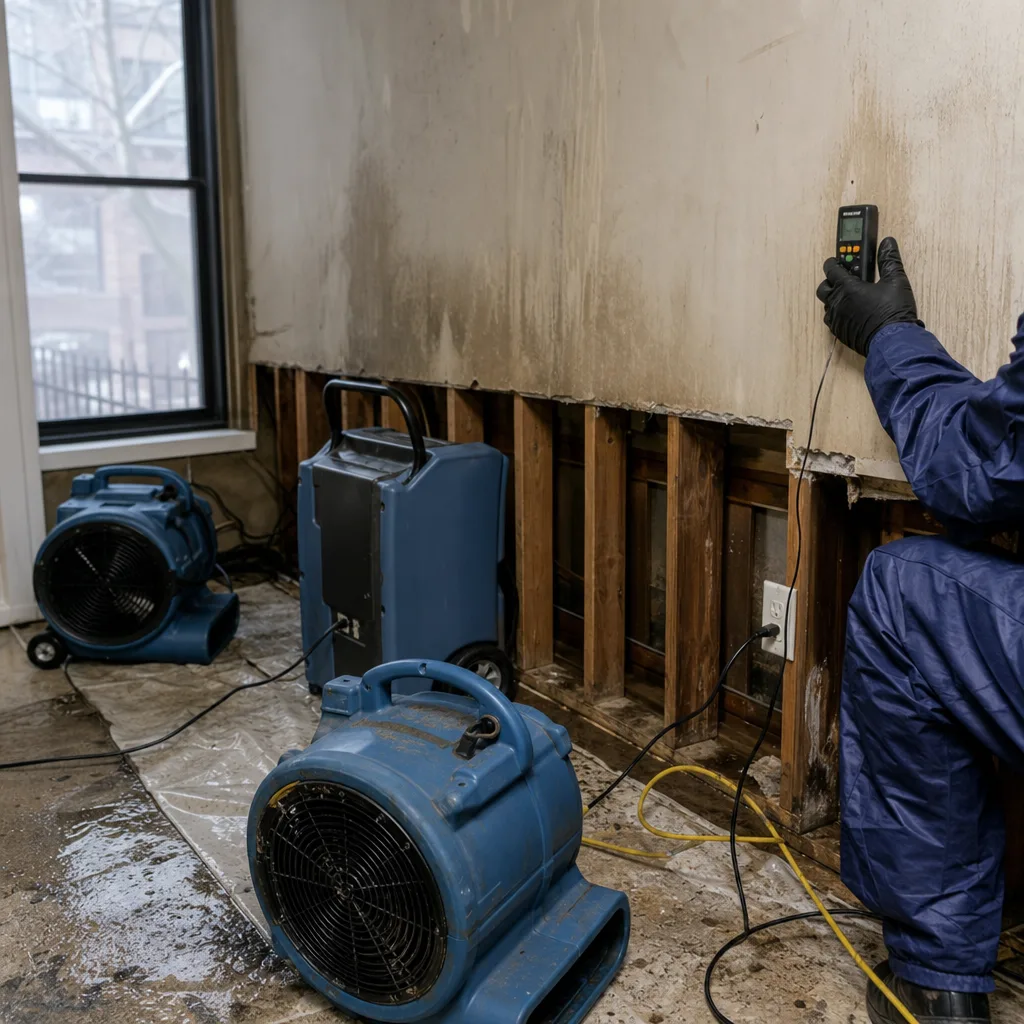
We start with a visual walkthrough and moisture mapping using thermal imaging and hygrometers. In plaster-and-lath buildings, the question isn’t just “where is it wet” but “where has it been wet for weeks without showing.” We identify the source, the extent, and the class of water loss.
Extraction & Stabilization
Standing water comes out first, including water trapped in ceiling cavities above finished plaster. We cut controlled access points where needed and stop the active moisture from spreading into more joist bays or the units below.
Containment & Air Filtration
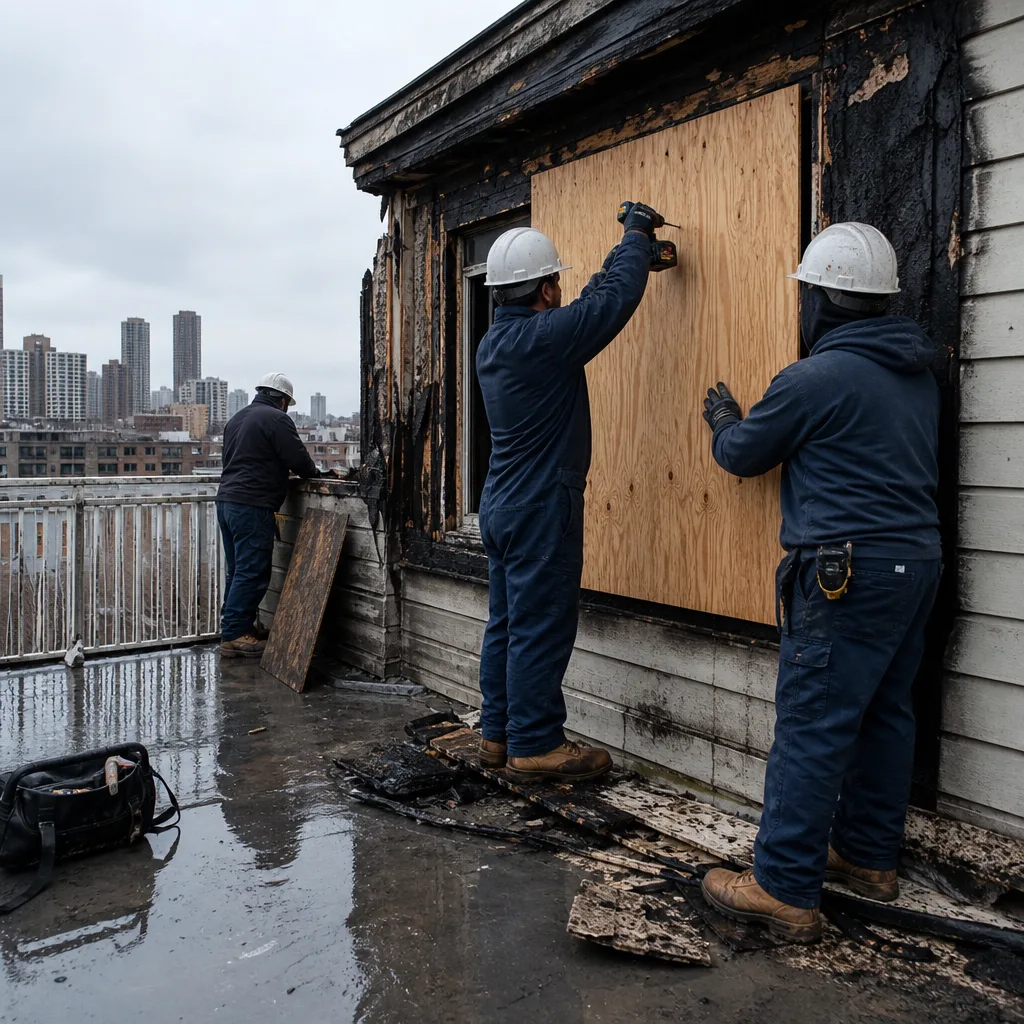
Before anything moves, we seal the affected area with 6-mil poly and run HEPA air scrubbers under negative pressure. In stacked West New York buildings, this step is what prevents a 2nd-floor job from becoming a 1st-floor job through wall chases and gaps around risers.
Drying & Dehumidification
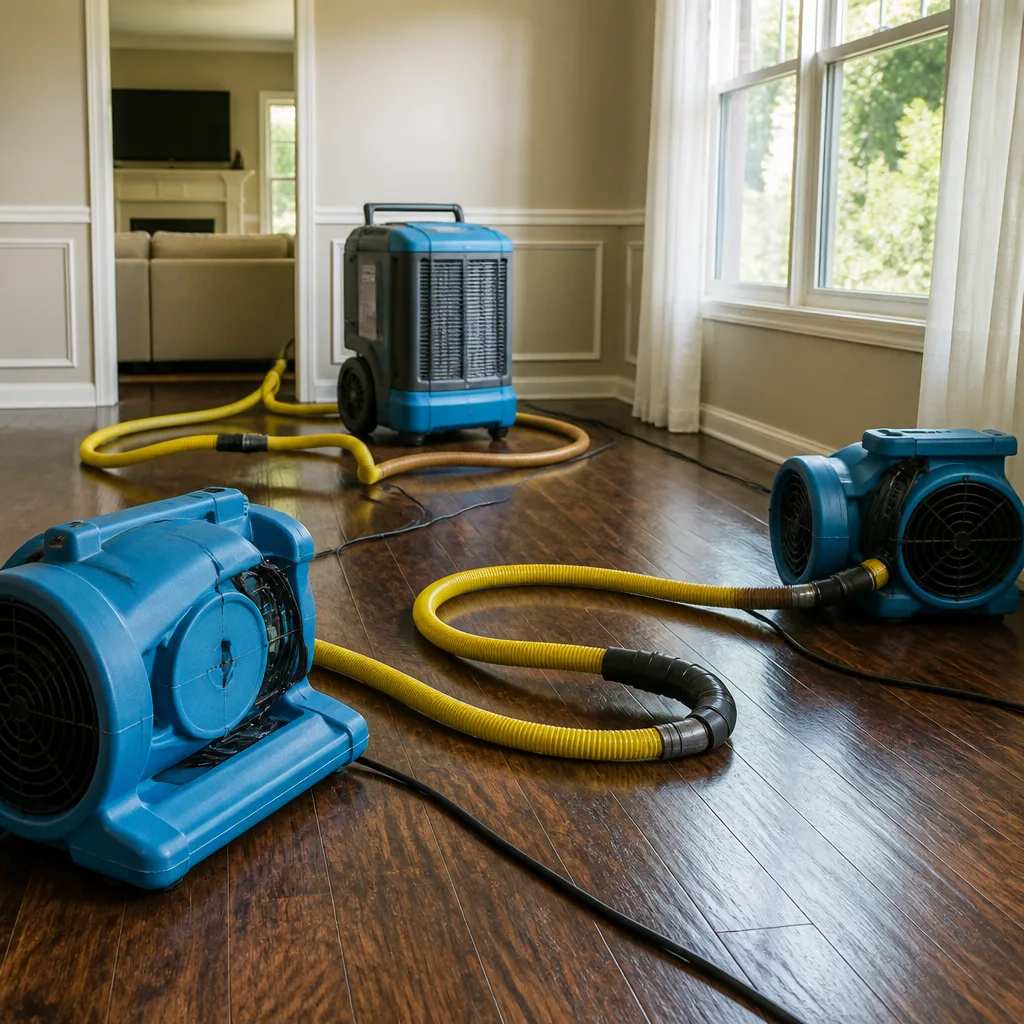
Dri-Eaz and Phoenix dehumidifiers and XPOWER air movers run continuously, with daily moisture readings logged in writing. In dense plaster assemblies, drying takes patience: surface feels dry, but the joist bays don’t release moisture that fast. We stay until the dry standard is met and the log proves it.
Antimicrobial Treatment & Removal
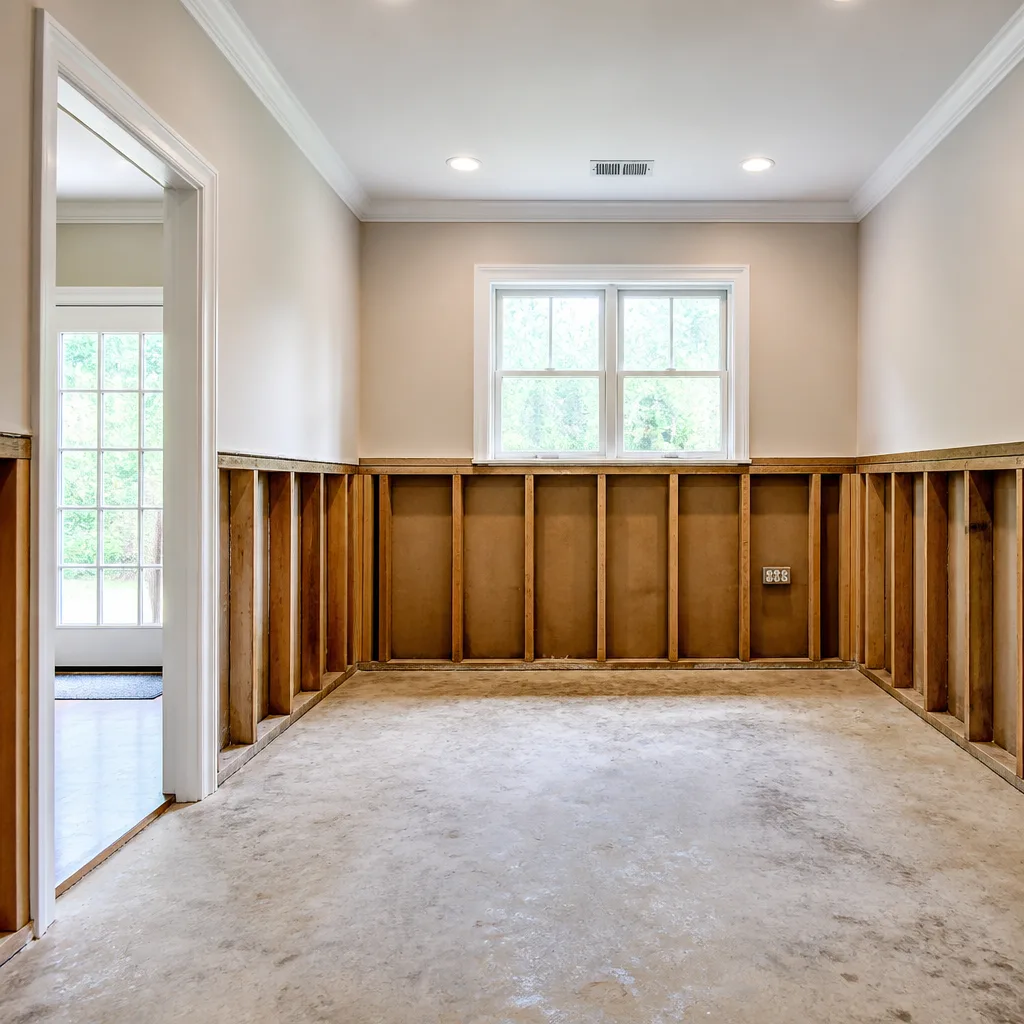
Affected porous materials like drywall and insulation come out. Semi-porous and non-porous surfaces get HEPA vacuuming and antimicrobial treatment. We follow containment protocols through every removal, because mold spores don’t clock out at the doorway.
Repairs & Restoration
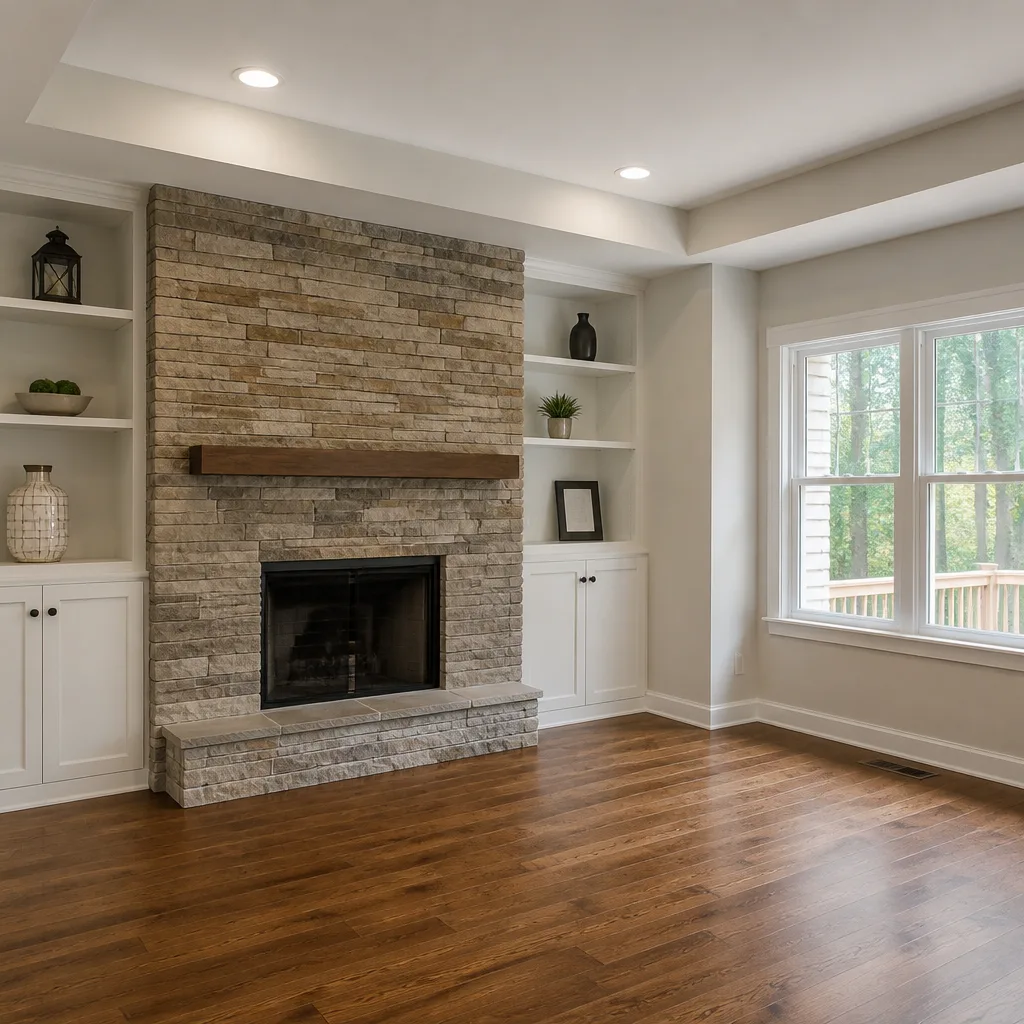
The same crew that handled the emergency rebuilds the walls, ceilings, and finishes. We hand you the drying log and the 90-Day Done Right Promise in writing. If it’s not done right, we make it right. No paperwork battles, no arguing.
Need Emergency Mold Remediation in West New York Now?
Crews minutes away, answering live 24 hours a day. The sooner we start, the less it costs.
Working With Your Insurance Company
In West New York, where one leak often means four or five affected units and two or three different carriers on the same loss event, documentation is everything. We start building the claim file in the first hour: photos of every affected surface before anything is touched, moisture readings from the first inspection, and a line-item scope of work that a claims adjuster can actually read. We talk to your adjuster directly, because after 42 years in restoration we’ve learned that homeowners who carry messages between contractor and carrier wait longer for approval. Floodline handles the paperwork and the back-and-forth. If your policy covers mold remediation, we document it properly. If it doesn’t, we give you a straight number before work starts so there are no surprises on the bill.
What We Provide Your Insurer
- Thorough documentation of the loss
- Photos of all damage, room by room
- Moisture readings and drying logs
- A detailed, line-item scope of work
- Direct coordination with your carrier
Built for West New York’s Loss Calendar
West New York’s mold season doesn’t follow a single calendar. January deep freezes burst the galvanized supply lines that run through 1920s-era walls, and the water finds the path of least resistance: down through plaster and lath, across joist bays, into the unit below. Spring brings groundwater seepage through the traprock face on the upper Palisades streets, where basement moisture rises through unsealed foundations even when it hasn’t rained in weeks. Lower-elevation blocks near the river, the same ones that took direct surge during Sandy in 2012, stay in flood risk zones and see humidity-driven mold activity all summer. And in the 90-degree stretches, old cast-iron drain stacks that have been holding for generations finally give way, sending Category 3 water into wall cavities that haven’t been opened since the building went up. We plan crews around this reality. The question in West New York isn’t whether a building has moisture. It’s whether anyone has found it yet.
Mold Remediation Across West New York’s Neighborhoods
Work along Bergenline Avenue‘s commercial blocks usually means storefronts on the ground floor with apartments stacked above, and a leak in a 3rd-floor unit shows up as a water stain in a deli’s drop ceiling before anyone upstairs knows anything happened. In the residential streets off Boulevard East, the pre-war co-op buildings have thicker plaster assemblies and more lead paint, which means remediation often triggers abatement coordination when demolition starts. Down in the lower blocks near 60th Street and the waterfront, flood exposure and salt air keep relative humidity high enough that mold colonizes faster than in the cliffside buildings, and we adjust drying targets accordingly. Around Kennedy Boulevard‘s southern stretch, the walk-ups have narrow stairwells with no service elevators, so equipment staging happens from the street and every air mover goes up by hand. It’s not complicated, but it takes a crew that knows the buildings before the job starts. We do.
Specialized Mold Remediation Services We Offer in West New York
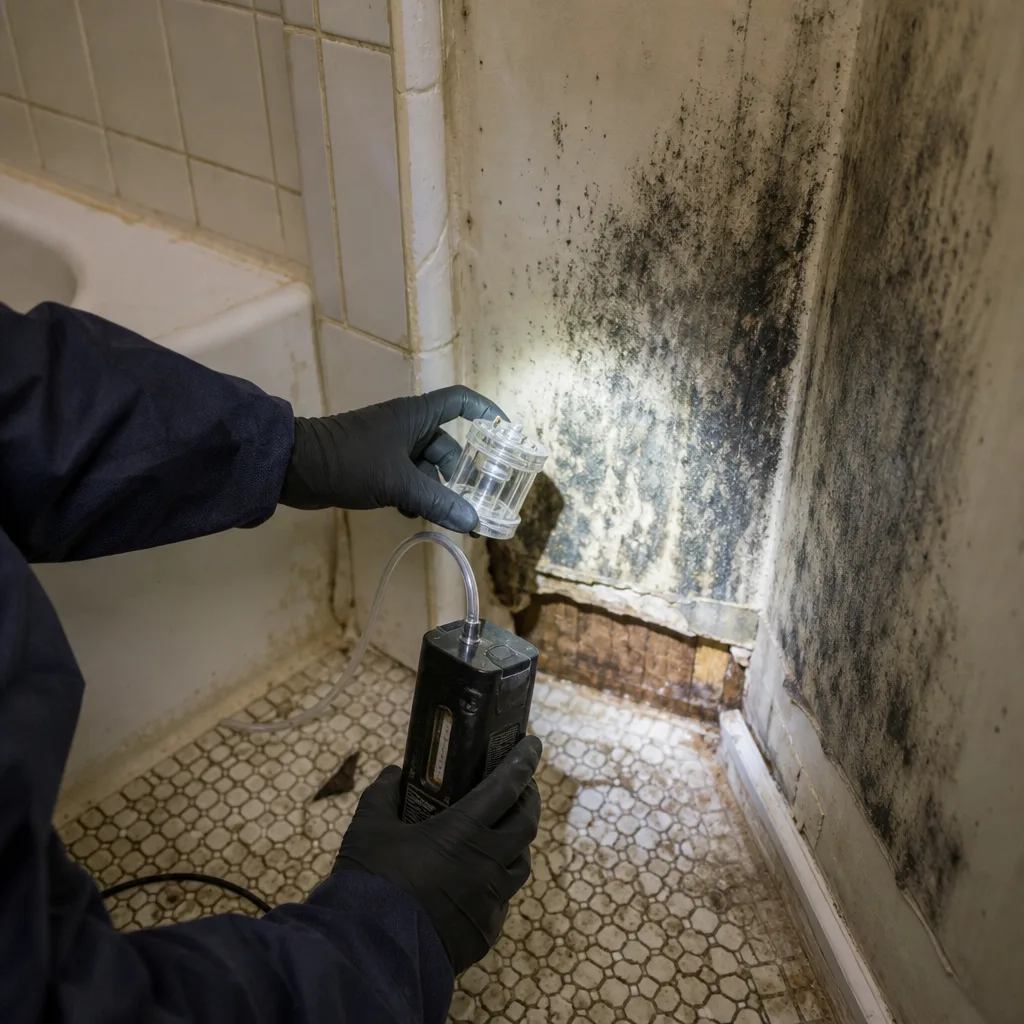
Mold Inspection & Testing
Before we touch anything, we map the moisture, not just the mold. In West New York’s vertically stacked buildings, a visible patch in one apartment almost always traces to a source in another unit or a common area. We test, we measure, and we give you a written scope that shows the difference between what needs remediation and what just needs cleaning.
Containment
Containment is the step that separates proper remediation from a mold spreading exercise. We seal affected areas under negative air pressure and HEPA filtration, because in a 5-story walk-up, spores travel through stairwells, riser penetrations, and shared wall cavities faster than most people believe. We don’t skip this step, no matter how small the visible patch is.
Moisture & Humidity Control
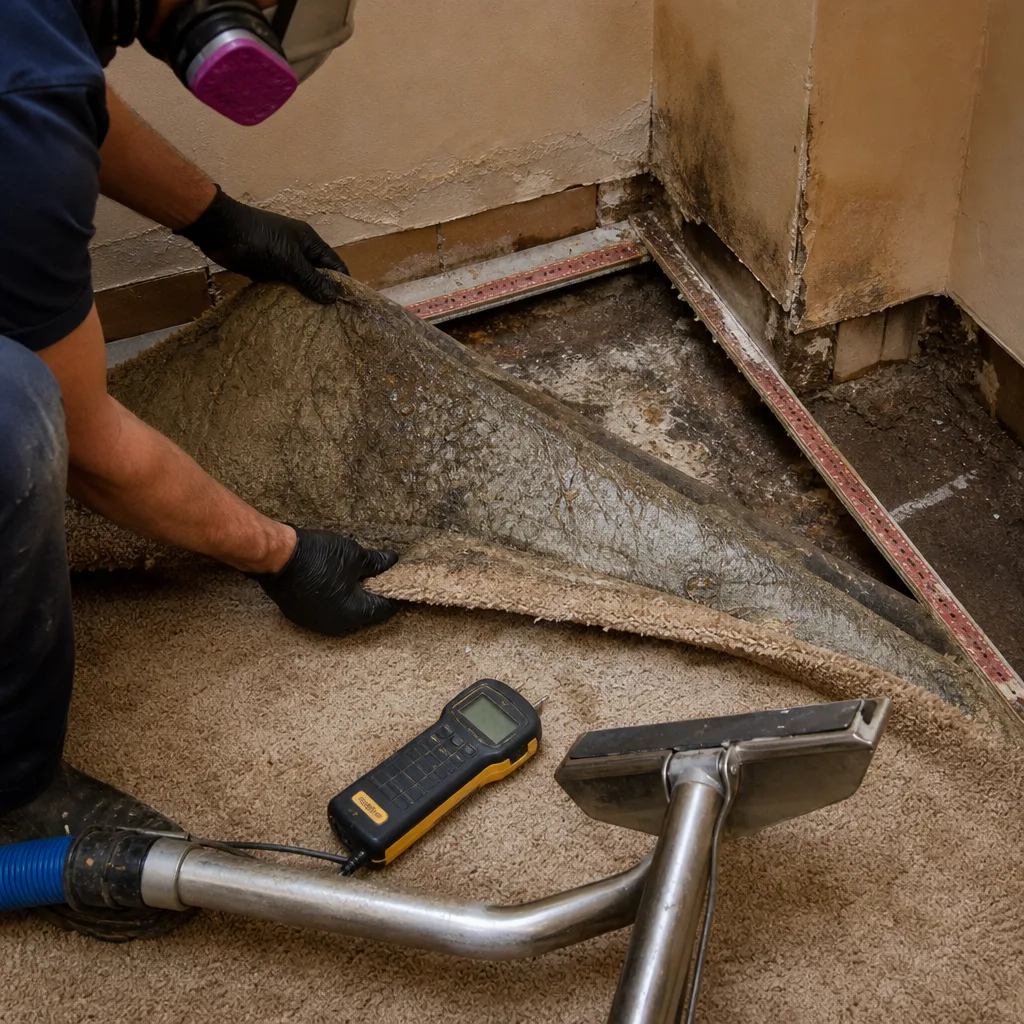
Persistent basement dampness on the Palisades side or ground-floor units near the river isn’t just a comfort problem; it’s a mold incubator. We identify the source, whether that’s groundwater seepage, a failed vapor barrier, or stack-effect humidity, and we correct it so the mold doesn’t return in eight months.
Black Mold Remediation
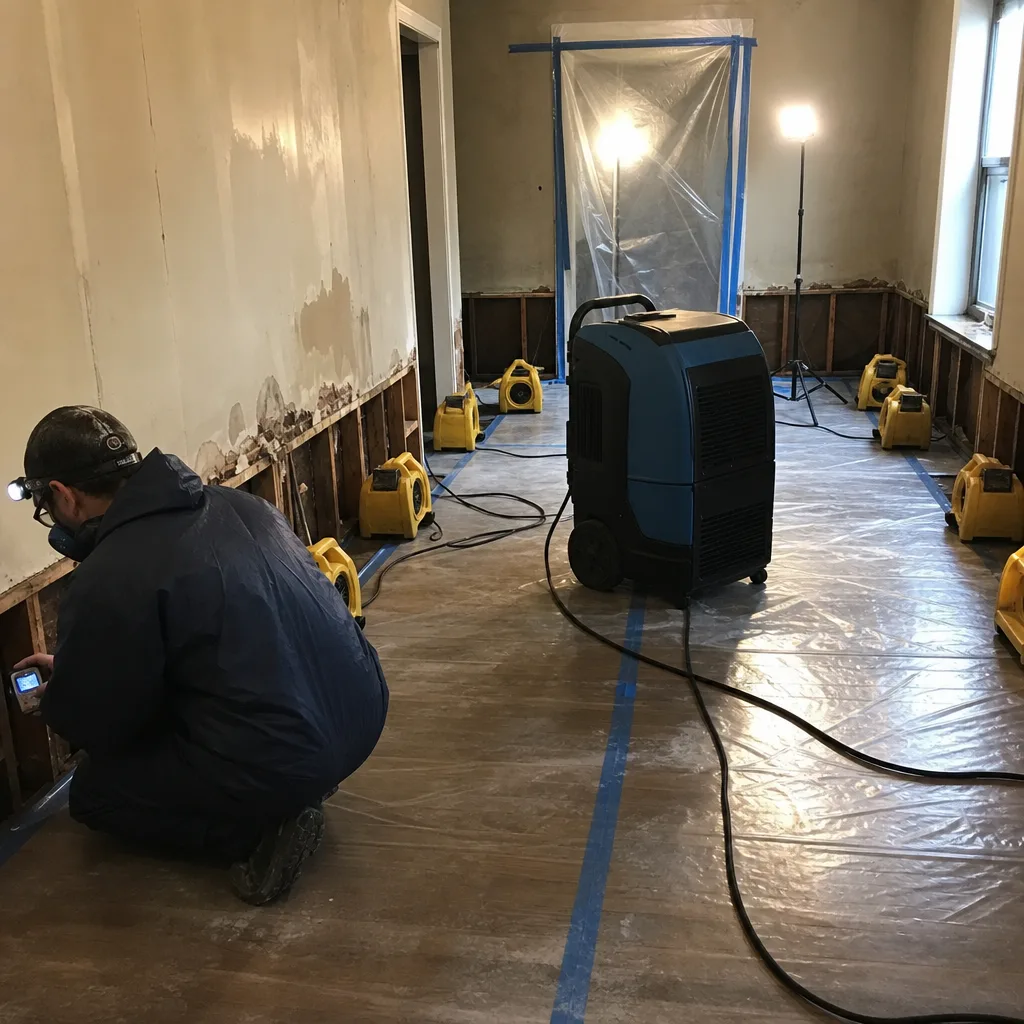
Stachybotrys gets the headlines, but the real story in West New York is that black mold thrives in the same conditions as every other mold: chronically wet cellulose. We treat it with the same containment, removal, drying, and treatment protocol, and we test after remediation to prove the counts are back to normal background levels.
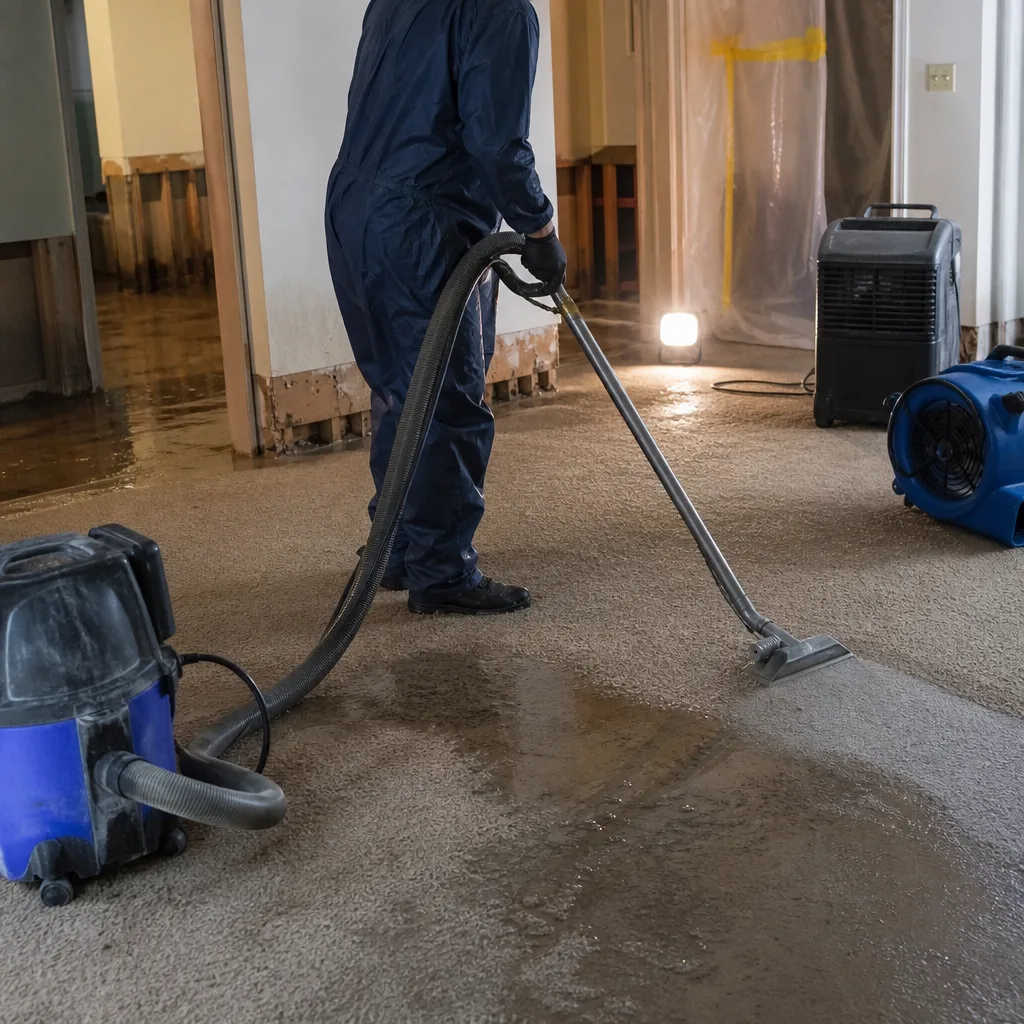
Air Quality Restoration
After physical removal and drying, we run HEPA air scrubbing to pull airborne spores out of the living space. In a pre-war building with shared ventilation and window-unit AC, the air quality in one apartment is rarely independent from the hallways and units around it. We measure before and after, and we give you the numbers.
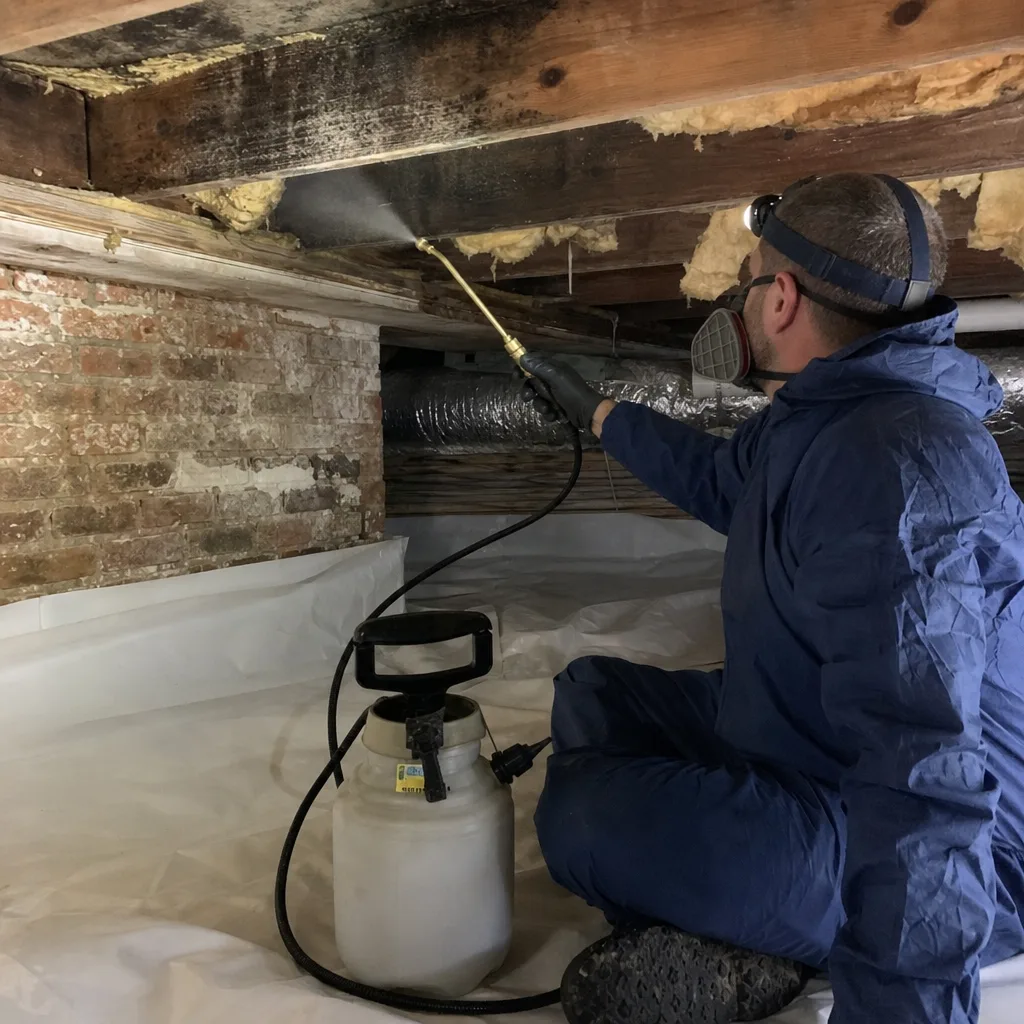
Crawl Space Treatment
Ground-floor units in West New York don’t have basements the way the suburbs do, but the crawl spaces under older buildings hold the same moisture. We treat the surfaces, seal the entry points, and install or repair vapor barriers where the building allows access.
What happens when you call
- 1
A real person answersNo phone trees - you reach a local pro.
- 2
You get an upfront price rangeHonest numbers before anyone is dispatched.
- 3
A background-checked tech heads outLicensed & insured, dispatched right away.
- 4
You approve before work beginsNothing starts until you say go.
Mold Remediation Costs in West New York, NJ
What does Mold Remediation actually cost in West New York? A single-room mold job with containment and antimicrobial treatment typically runs $1,800-$3,500. A bathroom leak that has spread through a ceiling into the unit below usually lands between $3,500 and $6,500 by the time demolition, drying, treatment, and rebuild are complete. Whole-floor or multi-unit jobs, which happen more here than in any neighboring town because of how the buildings are stacked, start around $8,000 and rise with the number of affected units and the presence of lead paint or asbestos disturbed by the water. Crawl space treatment and moisture control run $1,200-$4,000 depending on access and square footage. If insurance covers the loss, we bill your carrier directly. If it doesn’t, you get the number in writing before work starts. The free inspection gives you that number.
We Also Serve Cities Near West New York
Our crews work throughout Hudson and Bergen counties. If you’re in Alpine, Bergenfield, Bogota, or Carlstadt, the same live dispatch line, the same certified technicians, and the same written guarantee applies. The buildings differ, the standards don’t.
Serving West New York, NJ - Our Local Coverage Area
We’re based in the West New York area and know this community well. Use the map below to see our service coverage - if you’re nearby, we can almost certainly help.
West New York Mold Remediation Questions, Answered
Why does mold spread faster between apartments in West New York than in single-family homes?
Because the buildings share wall cavities, plumbing chases, and joist bays between units, so moisture and spores move vertically through the structure. In a single-family house, water finds a low spot and sits there. In a 4-story brick walk-up, water on the 4th floor travels through the same joist bays that carry the plumbing to the 3rd, 2nd, and 1st floors. By the time one unit shows a stain, the cavities above and below are usually already colonized. That’s why containment and structural drying have to be planned across the whole path of the water, not just the visible room. Call (917) 924-4221 and we’ll explain what your building needs.
Do I need my landlord’s permission for mold remediation in a West New York rental?
Yes, if you’re a tenant, your landlord owns the building and carries the responsibility for mold remediation under New Jersey habitability law. But our free inspection can document the conditions so you have a professional record of what’s happening, not just photos on your phone. We’re also experienced working with landlords who delay remediation hoping the problem stays quiet. The honest truth: it never stays quiet. It spreads through the building. The longer it waits, the bigger the scope. If you’re a tenant, call us for an assessment. If you’re a landlord, call us before the tenant reports it to the town.
How does the flood risk from the Hudson River affect mold growth in lower West New York?
The blocks closer to the river sit at lower elevation and stay in flood risk zones, with higher ambient humidity and, after any surge event, saturated wall assemblies that never fully dried. That creates a persistent moisture load that supports mold growth even without an active leak. Buildings that were properly dried after Sandy are generally stable, but any that weren’t have been producing slow, hidden mold in the lower floors for years. We handle these jobs with longer drying targets and humidity control plans that address the building’s baseline conditions, not just the wet spot. Call (917) 924-4221 for an assessment.
Can mold from a basement groundwater seep on the Palisades cliffs be completely removed?
Yes. Groundwater seepage through the traprock creates persistent dampness, but the mold itself can be removed and the moisture source controlled with proper drainage, vapor barriers, and dehumidification. The key is fixing the water first and treating the mold second. Anyone who tells you mold is permanently removed from a basement that still seeps groundwater is guessing, not restoring. We solve the water, then we solve the mold, and the 90-Day Done Right Promise covers the result in writing.
How do you get drying equipment into a 5th-floor walk-up in West New York without an elevator?
By hand, carefully, and with a plan. We stage equipment on the street, break down units at the truck, and carry everything up narrow stairwells with two-person teams. It adds labor time and cost, but partial staging doesn’t work here. If air movers sit in the van while moisture sits in the walls, secondary mold grows. So the equipment goes up when we go up. It’s part of why we train crews on Hudson County building types before we send them out.
How fast can you actually get to West New York?
We commit to 45 minutes from the time you hang up, and we hit that in the vast majority of West New York calls. Dispatch is live, 24/7, and we keep crews positioned around Hudson County so the response time isn’t theoretical. In an emergency, you’re not leaving a message and waiting for a callback. A person answers and the clock starts.
Will my insurance cover mold remediation?
It depends on the source of the water and the language in your policy. Sudden and accidental water damage, like a burst supply line, often carries coverage for resulting mold remediation. Long-term seepage or deferred maintenance usually doesn’t. We document the cause and the timeline properly, because the difference in coverage often comes down to how the loss is characterized in the file. We handle that communication with your adjuster directly and give you a straight answer whether or not coverage applies. Call (917) 924-4221 and we’ll walk through your specific situation.
What should I do in the first 30 minutes after I find mold in my West New York apartment?
Don’t disturb it. Don’t wipe it, don’t spray bleach on it, don’t run fans at it. Spores that are sitting quietly become airborne the moment you agitate them, and in a pre-war building they’ll find the next apartment through the walls. Shut the door to the affected area if you can, note whether there’s an active water source like a dripping pipe, and call us at (917) 924-4221. We’ll tell you what to do next and get a crew moving.
In West New York, a single mold job often spans multiple stacked units in pre-war brick walk-ups. A leak on an upper floor saturates plaster-and-lath ceilings below, and suddenly containment and drying logs have to run across four apartments at once. That’s a coordination burden absent in neighboring single-family towns, and it’s exactly the kind of work we’ve done here for years. On a 4th-floor unit in a 1920s walk-up off Bergenline Avenue, a slow galvanized supply-line leak had wicked through plaster ceilings into three units below. We ran moisture mapping and found readings above 20% in the joist bays; our crew set containment, used XPOWER air movers and Dri-Eaz dehumidifiers, and performed antimicrobial treatment on all affected surfaces, restoring all four units to pre-loss condition with a single coordinated scope of work.
If you have mold in West New York, call (917) 924-4221 for a free visual inspection and an honest assessment. We’ll give you a written scope, a straight price, and a plan that accounts for how your building is actually built. Done right, and backed in writing.
Written by Curt Bowman, Owner at Floodline Restoration Co. of Manhattan, serving West New York and Hudson County since 2010.