
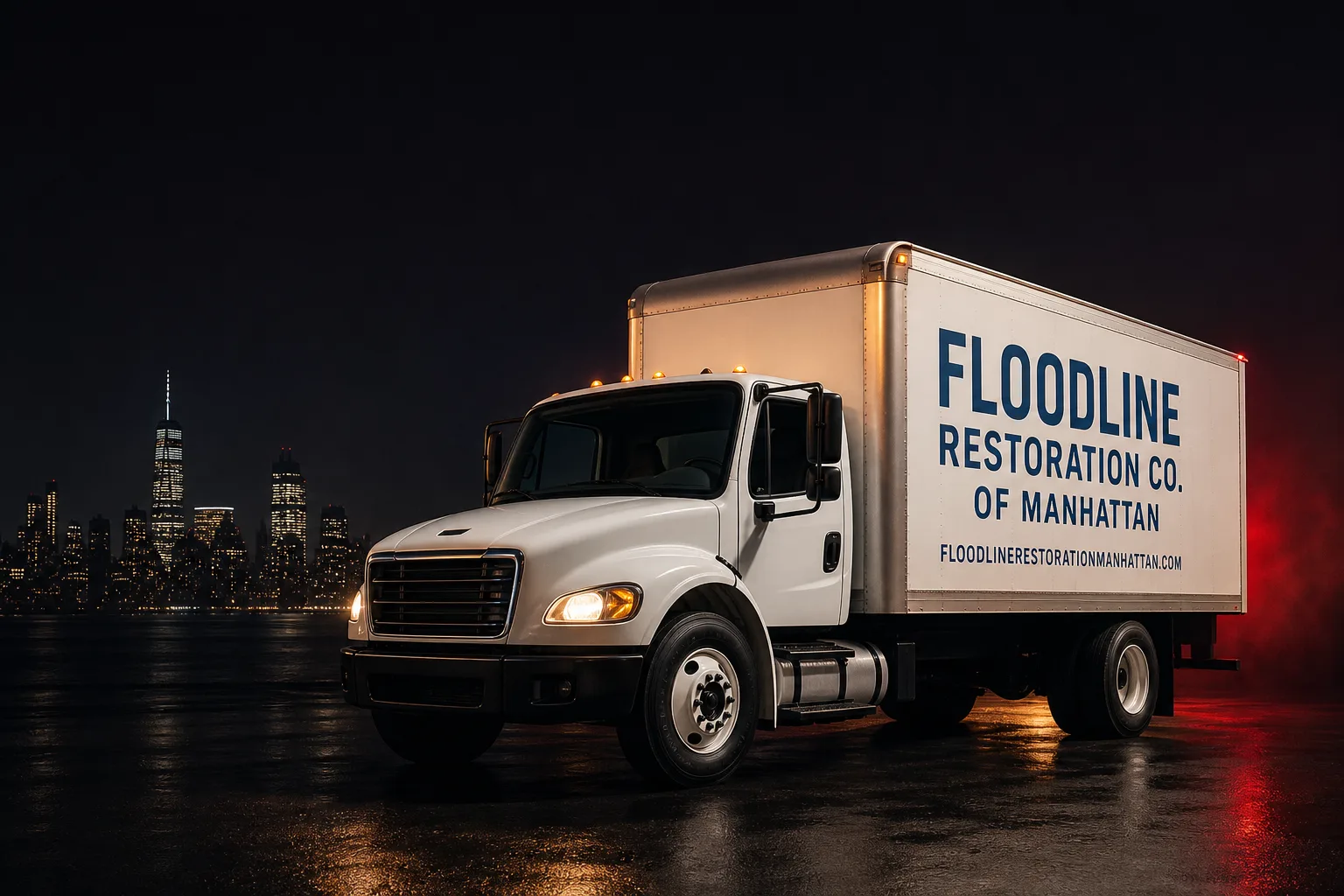
Free visual inspection and a written scope of work before any mitigation begins - photos, moisture readings, and drying logs go in your claim file
The scope we write is the scope we bill. Anything new gets shown to you, in writing, before we touch it.






 Before
 After
After Before
 After
After Before
 After
After24/7 Emergency Sewage Cleanup in West New York
Sewage cleanup in West New York, NJ typically costs $1,800-$4,200 for a single-unit category 3 backup, and $6,000-$18,000 when a cast-iron drain stack failure spreads black water through multiple stacked units and requires plaster-and-lath removal. We answer the phone live at (917) 924-4221 at any hour, and a background-checked crew can reach most West New York buildings within 45 minutes. The first hour matters because category 3 water, which carries bacteria, viruses, and parasites from raw sewage, wicks upward through plaster-over-lath walls at roughly an inch per hour. In a 1920s brick walk-up, that means the difference between a contained bathroom cleanup and a three-floor gut by morning.
Understanding Sewage Cleanup Severity in West New York Properties
All sewage losses are category 3 water: grossly contaminated, requiring full PPE, containment, and removal of porous materials. But West New York’s housing stock makes even a small toilet overflow behave differently than it would in a single-family house. Most residential buildings here are four to six story brick walk-ups built between the 1920s and 1950s, with cast-iron drain stacks that have been corroding from the inside for seventy to a hundred years. When a stack cracks or a lower-floor line backs up, category 3 water travels the path of least resistance: down through chases, behind plaster-and-lath walls, and into ceiling cavities of the units below. What starts as a visible backup on the fourth floor is often an active contamination event across three, four, or five stacked units by the time we arrive. Moisture mapping with thermal imaging and penetrating meters tells us where the water actually went, not just where it pooled. The drying standard for pre-war plaster-and-lath construction is stricter than for drywall. We do not dry contaminated plaster in place. We remove it, because the lath behind it traps sewage-laden moisture in a way no dehumidifier can reach.
Why West New York Property Owners Choose Floodline Restoration Co. of Manhattan
- 45-minute response commitment. Our dispatch board is built around West New York’s street grid and parking reality, so we send the nearest available crew, not the next name on a rotation list.
- 24/7 live answer. A real dispatcher picks up at 2 a.m. You will never hear a recording when sewage is backing up into a rental unit.
- IICRC-certified crews. Our technicians hold WRT and ASD certifications and follow IICRC S500 standards for category 3 water. Background-checked and uniformed, every visit.
- Free visual inspection. We assess the loss, map the moisture, and give you a written scope before any demolition starts. No charge, no pressure.
- Direct insurance billing. We bill your carrier directly and speak with your adjuster ourselves, so you never play messenger.
- One team from extraction to reconstruction. The same crew that extracts the black water also rebuilds the plaster, matches the original profiles, and sees the job through the HOA’s architectural review approval.
Our Sewage Cleanup Process
Inspection & Assessment
We arrive, walk every affected unit plus the units above and below, and use thermal imaging and penetrating moisture meters to map the full extent of the contamination. In a West New York walk-up, that means checking the plumbing chases, not just the visible bathroom floor. We then give you a written scope and a firm price before any work starts.
Containment & Extraction
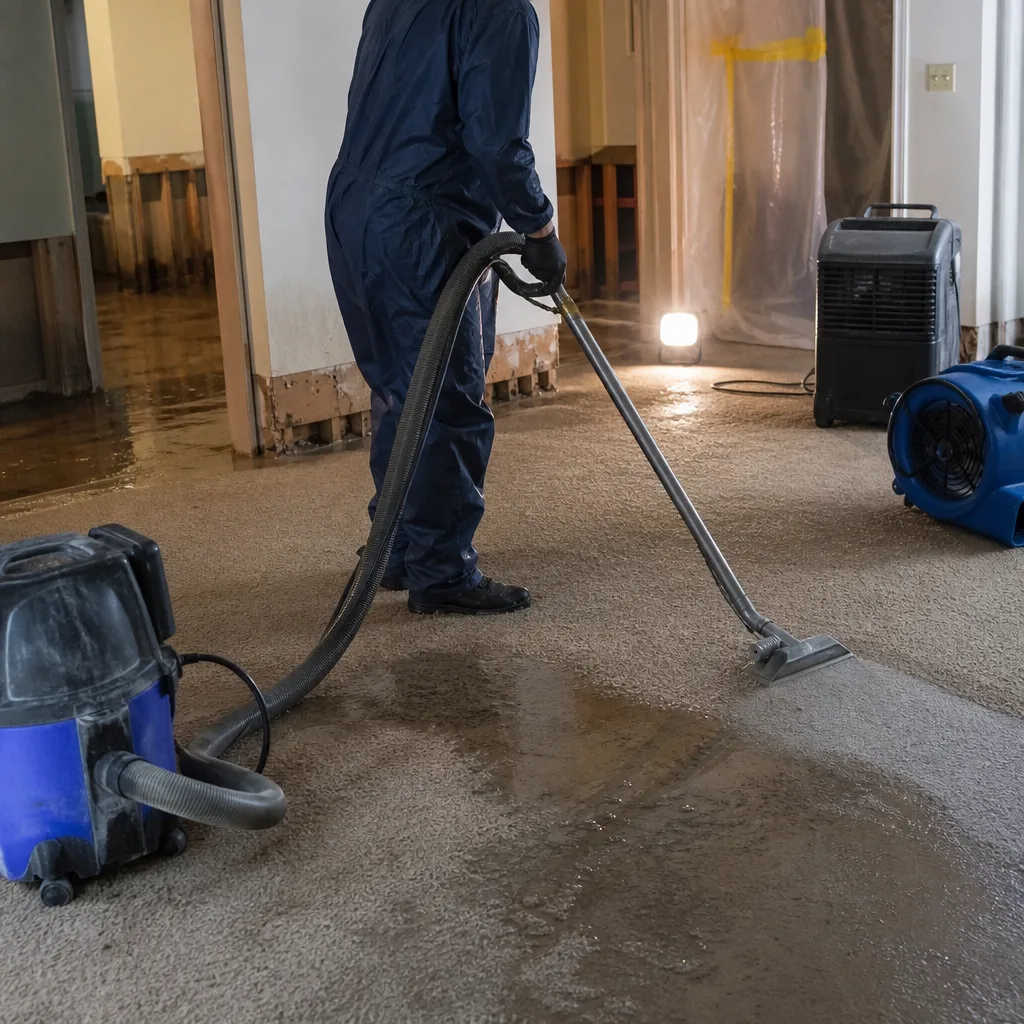
We set up 6-mil containment barriers and negative air pressure on each affected floor, which matters enormously in buildings with no service elevator and shared stairwells. Then we extract standing category 3 water using truck-mounted and portable Dri-Eaz extractors.
Contaminated Material Removal
In West New York’s pre-war buildings, this usually means cutting out sewage-soaked plaster and lath, removing contaminated trim, and bagging the debris for hand-carry down the narrow stairwell. We test for asbestos and lead paint before we cut, because most of these buildings predate the 1978 lead paint ban.
Cleaning & Sanitization
We apply EPA-registered antimicrobials to every surface in the affected area, including the framing and floor joists behind the walls. We follow IICRC S500 protocols for category 3 water, which require more than a surface wipe-down. Then we HEPA-vacuum and air-scrub the space.
Structural Drying
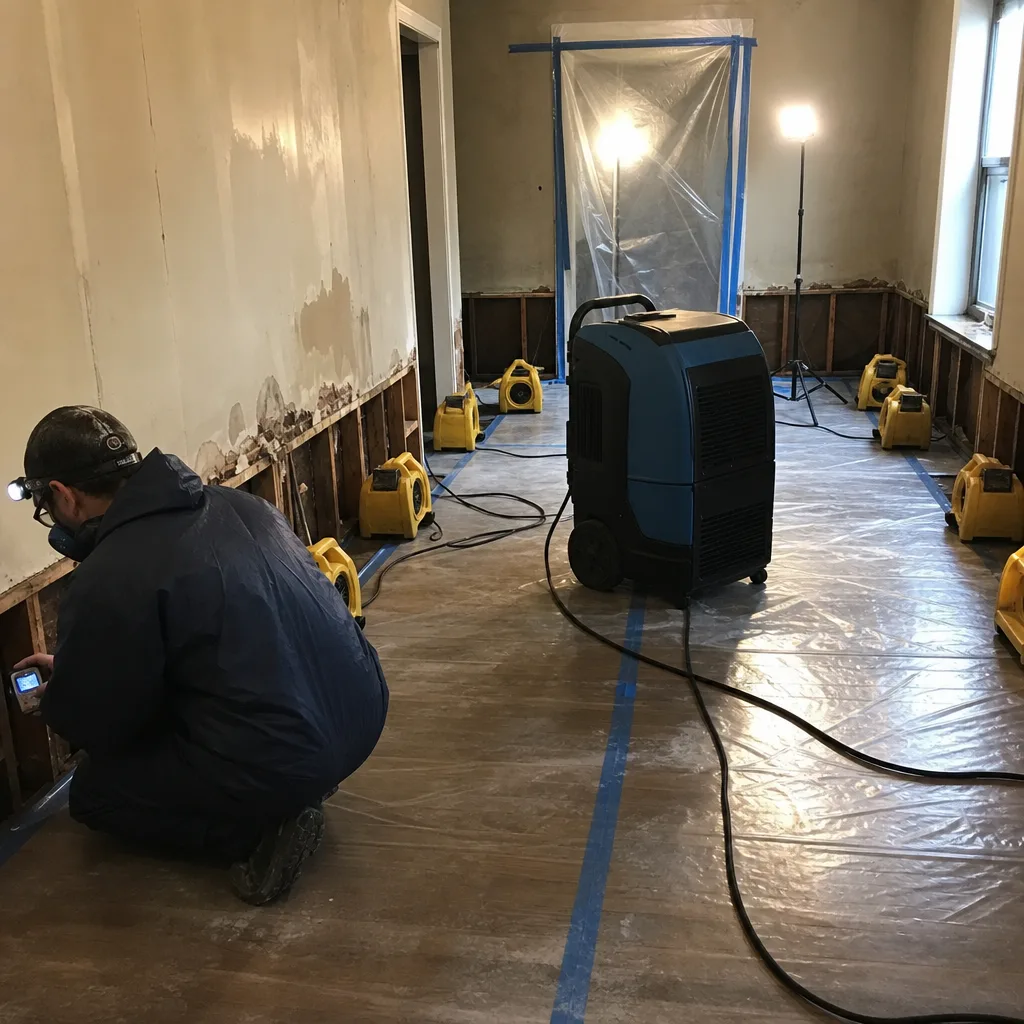
We set up Phoenix and XPOWER air movers and dehumidifiers, with daily moisture readings logged until the structural wood and remaining plaster hit the dry standard. The log goes to you and your carrier. In a pre-war building with no through-wall ventilation, this step cannot be rushed.
Repairs & Restoration
We rebuild to match the original pre-loss condition, which is exactly what West New York HOAs and architectural review boards require. That includes matching plaster profiles, paint, and tile, then walking the finished work with you and, when needed, your building’s board representative.
Need Emergency Sewage Cleanup in West New York Now?
Crews minutes away, answering live 24 hours a day. The sooner we start, the less it costs.
Working With Your Insurance Company
Most sewage backups in West New York are covered losses, but the claim gets complicated fast when multiple units and multiple carriers are involved. That is the norm here, not the exception. We have handled hundreds of stacked-unit losses in pre-war brick buildings, and we know what adjusters need to see: documentation from the first hour, a defensible scope, and a moisture log that proves the drying was done correctly. We photograph every room, every cut wall, every contaminated material before and after removal. We provide your carrier with a line-item scope in industry-standard Xactimate format, and we talk directly with your adjuster so you never have to translate technical questions between us and them.
What We Provide Your Insurer
- Thorough documentation of the loss
- Photos of all damage, room by room
- Moisture readings and drying logs
- A detailed, line-item scope of work
- Direct coordination with your carrier
Built for West New York’s Loss Calendar
West New York’s sewage losses follow a pattern we can set a calendar by. January and February bring deep freezes that crack already-fragile cast-iron stacks and galvanized supply lines, and the resulting backups flood bathrooms and kitchens in buildings where every unit stacks above another. Spring thaw exposes groundwater seepage into below-grade floors along the lower-elevation blocks near the Hudson, where storm surge from Sandy in 2012 left a permanent reminder of what this town’s waterfront can do. Summer brings sudden thunderstorm downpours that overwhelm the combined storm and sanitary sewers in the older sections of town, sending sewage back through floor drains in basement-level units. Autumn nor’easters pile on the same problem with days of saturated ground. The constant through all of it: century-old drain stacks with little tolerance for another season of stress, and plaster-and-lath walls that hide the damage until it is already on the floor below.
Sewage Cleanup Across West New York’s Neighborhoods
Along Bergenline Avenue, the commercial-residential mix means a restaurant grease clog at street level can force sewage back into the apartments above, and street parking restrictions around the commercial corridor make equipment staging a scheduling exercise before we ever set foot inside. Over near Miller Park and the blocks around 54th Street, the five and six story brick walk-ups are packed tight, and interior stairwells narrow enough that every piece of extracted debris goes out by hand. In the residential streets east of Park Avenue toward Boulevard East, the upper-floor units look down on the Hudson, but their plumbing runs through the same aging stacks as everything else in town, and a backup on the third floor is a race against time for the two units below it. And on the lower blocks near River Road and the waterfront, basement-level units see sewage backflow through floor drains during heavy rain events, which means we coordinate with the property owner and the municipal sewer authority in the same trip. Each part of West New York has its own access problems, its own building types, and its own loss patterns. We know them block by block. Our Sewage Cleanup team has worked every corridor in this town.
Specialized Sewage Cleanup Services We Offer in West New York
Sewage Backup Cleanup
A backup in a West New York walk-up is rarely a one-unit problem. We inspect every unit below the failure point, because what looks like a fourth-floor bathroom backup is usually already dripping into the third floor ceiling cavity and the second floor wall chase. We scope the full stack, not just the visible spill, then clean and sanitize to category 3 standards before any drying begins.
Black Water Extraction
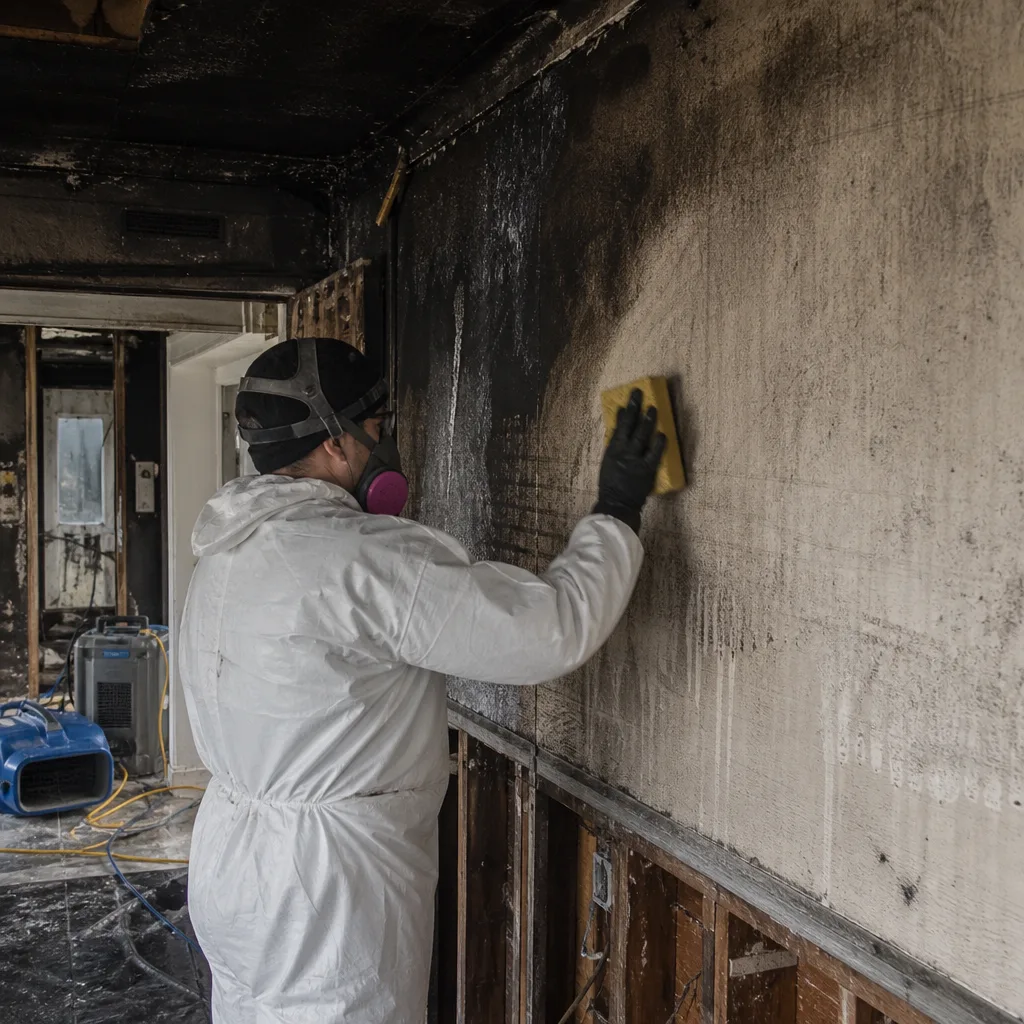
Black water from raw sewage carries pathogens that require full PPE, containment, and removal of every porous surface it touched. In West New York’s plaster-over-lath buildings, that typically means removing the plaster and lath back to the studs in affected areas, not merely drying it. We use Dri-Eaz extractors and truck-mounted units, and we never cut a wall without checking for asbestos and lead first in these pre-war buildings.
Toilet Overflow Cleanup
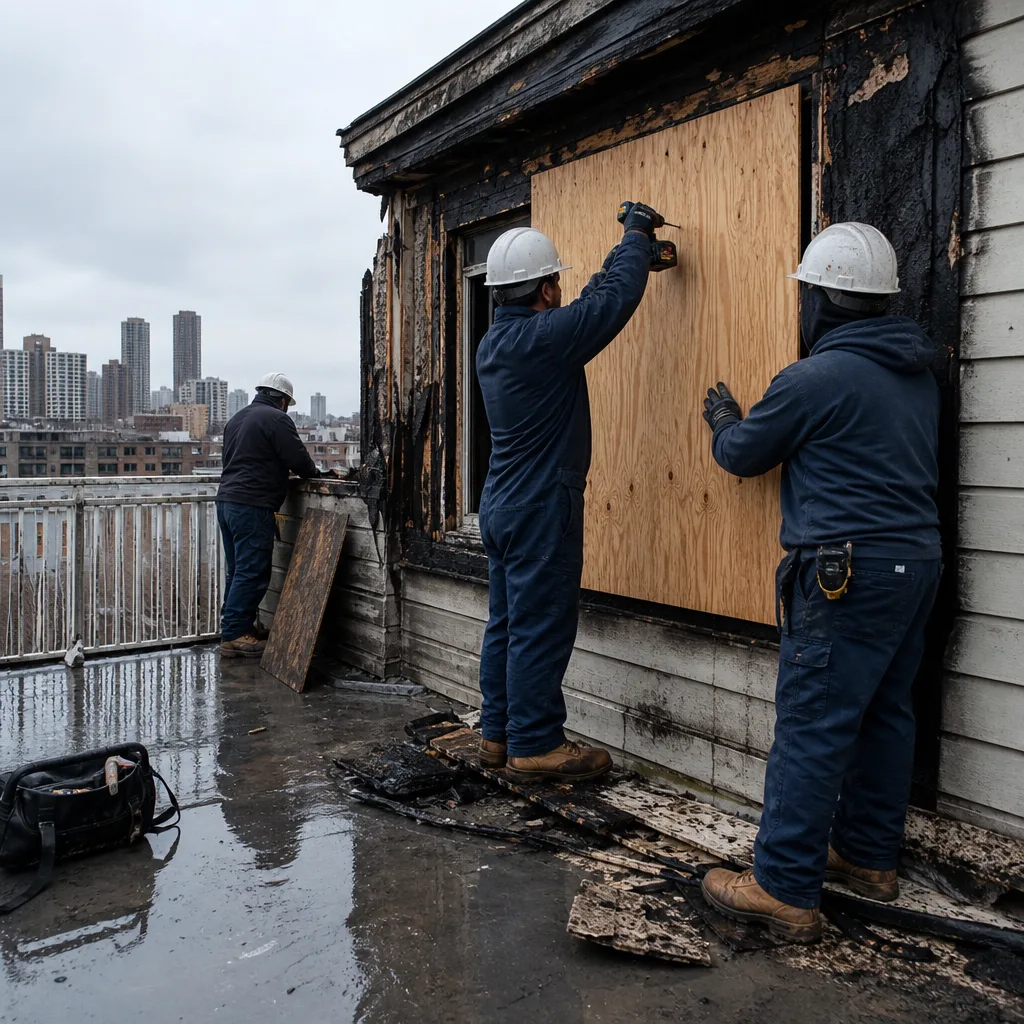
Toilet overflows in rental buildings are more common than full stack failures, but the contamination path is the same: category 3 water across tile, up baseboards, and under the floor into the ceiling below. We extract, remove contaminated flooring and wall material as needed, sanitize the affected joists and framing, and coordinate access with the tenant, the landlord, and the unit below.
Sanitization & Disinfection
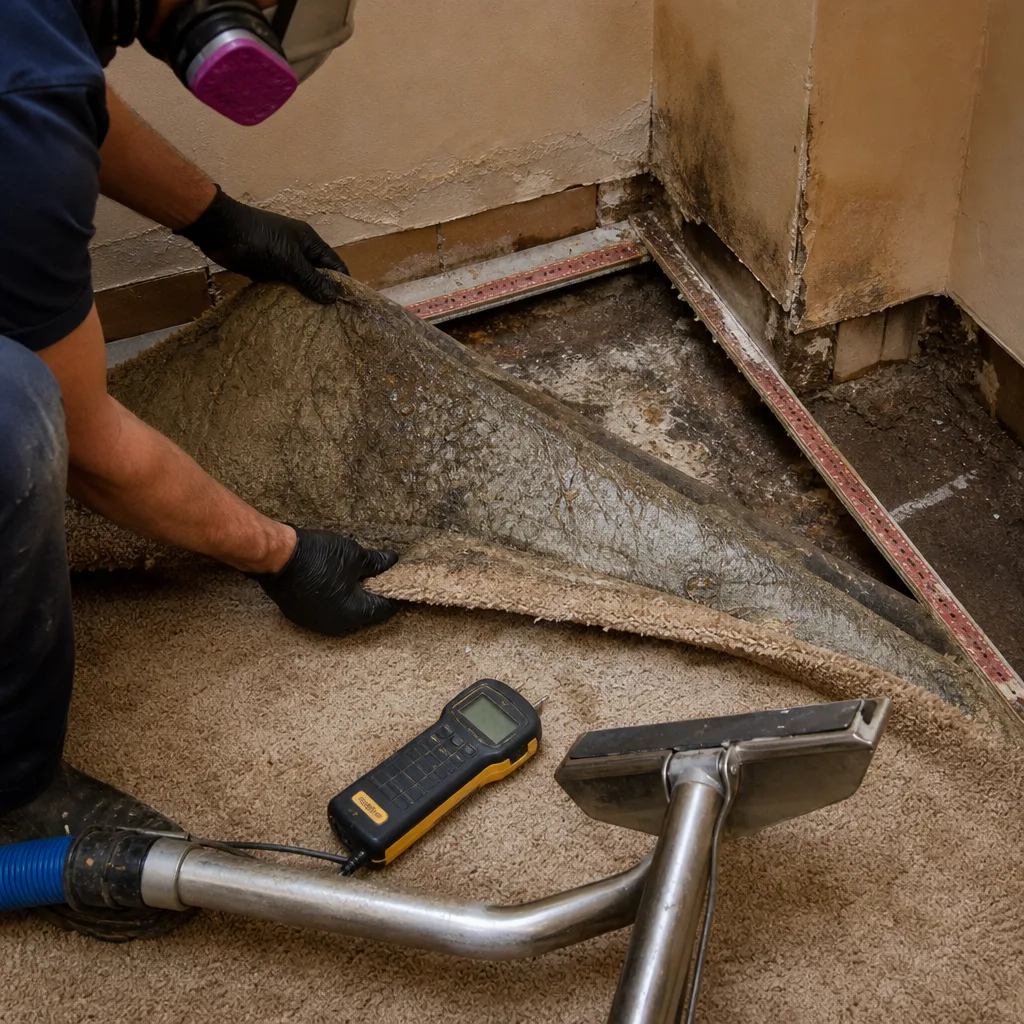
After sewage is extracted and contaminated materials are removed, we sanitize every remaining surface with EPA-registered antimicrobials, following IICRC S500 protocols. In a multi-unit West New York building, that includes common stairwells, the plumbing chase, and any shared hallways we used for access, because tenants on unaffected floors deserve to know no contamination was dragged through their home.
Septic Failure Cleanup
A smaller share of West New York properties are on private septic systems, but the older single-family homes in the residential streets off Park Avenue occasionally have them. Failure there means saturated yards, sewage pooling near foundations, and indoor backup. We handle the indoor extraction, sanitization, and repair, then coordinate outdoor remediation with the septic contractor.
What happens when you call
- 1
A real person answersNo phone trees - you reach a local pro.
- 2
You get an upfront price rangeHonest numbers before anyone is dispatched.
- 3
A background-checked tech heads outLicensed & insured, dispatched right away.
- 4
You approve before work beginsNothing starts until you say go.
Sewage Cleanup Costs in West New York, NJ
A contained toilet overflow in a single West New York rental unit typically runs $1,800-$4,200, including extraction, containment, demolition of contaminated flooring or lower wall sections, sanitization, and drying. A full cast-iron drain stack failure that sends sewage through three to five stacked units, requiring plaster-and-lath removal on multiple floors, asbestos and lead coordination, pack-out of tenant belongings, and multi-day structural drying, runs $6,000-$18,000. The variables are the number of units, whether asbestos-containing plaster or lead paint is present, and whether the HOA requires architectural review approval before repairs begin, which they usually do. Most sewage losses are covered by insurance, subject to the owner’s policy. We give you a written scope before work starts, and we bill your carrier directly. If you are paying out of pocket, we still give you the same line-item scope with the same 90-Day Done Right Promise, in writing. Call (917) 924-4221 for a free inspection and a firm number.
We Also Serve Cities Near West New York
Our crews regularly respond in West New York and the surrounding Hudson County communities, including Alpine, Bergenfield, Bogota, and Carlstadt. The building types are often similar, but every town has its own access patterns and its own building departments. We work with owners and managers across all of them.
West New York Sewage Cleanup Questions, Answered
How does West New York’s aging cast-iron drain stack design affect which sewage cleanup sub-service is needed?
It changes the job from a simple spill cleanup to a structural contamination event. Cast-iron stacks in 1920s-1950s buildings corrode from the inside, and when they fail, sewage travels behind plaster-and-lath walls and into ceiling cavities. That means you typically need black water extraction plus sanitization and disinfection across multiple floors, not just a toilet overflow cleanup in the unit where the water appeared. Call (917) 924-4221 and we will trace the actual path of the water before recommending any scope.
Do I need to worry about my HOA’s architectural review board when removing sewage-damaged plaster and lath?
Yes. Most West New York co-op and condo boards require approval before common-area repairs or changes to unit finishes, and sewage damage that extends into walls or ceilings almost always triggers that review. We prepare the scope, document the pre-loss condition with photos, and work with the board’s architectural review process so the finished repairs match the original profiles and materials. You do not have to handle that negotiation alone.
What does containment actually look like in a West New York building with no service elevator and narrow stairwells?
We set up 6-mil containment barriers at the entrance to each contaminated floor, run negative air pressure machines so airborne contaminants do not migrate to unaffected units, and carry all used materials and equipment down the stairwell by hand in sealed bags. It is slower than an elevator building, which is part of why West New York sewage jobs take more labor hours than comparable jobs in buildings with freight elevators. We plan the access route before we arrive, and we coordinate street parking permits so equipment staging does not get the building a fine.
How quickly can mold start in a West New York plaster-over-lath wall after a sewage backup?
Within 48 to 72 hours, given the right temperature and the fact that plaster-and-lath holds moisture far longer than drywall. Sewage introduces organic material that feeds mold growth, and a pre-war wall chase with no airflow is a near-perfect incubator. That is why we do not dry contaminated plaster in place. We remove it, sanitize the framing, and dry the structure to the IICRC dry standard before any rebuild starts.
Why is sewage cleanup here more often a multi-party insurance claim than in surrounding towns?
Because West New York is among the most densely populated municipalities in the country, and most housing is stacked multi-unit brick walk-ups. A single stack failure on the fourth floor damages units on the third, second, and sometimes first floors, and each unit may have a different owner, a different tenant, and a different carrier. That means three or more adjusters, multiple deductibles, and coordination between owners who may not know each other. We handle the documentation and direct communication with every carrier on the claim, which removes the single biggest source of delay in these jobs.
How fast can you actually get to West New York for a sewage backup?
In most cases, within 45 minutes. We maintain live dispatch around the clock, and because we know the town’s street grid and parking restrictions, we send crews who know where they can stage without getting ticketed. On a bad night, during a major storm event, it can take longer. We will tell you honestly when we will be there, and we will be there when we say.
Will my insurance cover sewage cleanup in West New York?
Most homeowner and condo policies cover sudden and accidental sewage backup, subject to your policy terms and any water backup coverage limits. What differs in West New York is the multi-unit factor. If your neighbor’s stack failure caused the damage, your carrier may pursue subrogation against the responsible party’s carrier. We document everything from the first hour so whichever carrier ultimately pays has a defensible claim file. We also bill your carrier directly and handle the adjuster communication.
What should I do in the first 30 minutes after a sewage backup in West New York?
Shut off the water to the affected fixture if you can. Do not flush. Do not run water in adjacent units. Move people and pets away from the affected area, and close the door to the room if possible. Turn off the HVAC system so the blower does not push contaminated air through the building. Then call (917) 924-4221. We answer live, and we will tell you exactly what to do until we arrive. Do not attempt to clean category 3 water yourself without full PPE.
Serving West New York, NJ - Our Local Coverage Area
We’re based in the West New York area and know this community well. Use the map below to see our service coverage - if you’re nearby, we can almost certainly help.
What Sets Floodline Apart in West New York
On a six-story brick walk-up off Bergenline Avenue, a corroded cast-iron drain stack in a fourth-floor bathroom sent category 3 water down through the plaster-over-lath walls into three units below. Our crew used Dri-Eaz extractors for black water extraction, set up containment with negative air movers on each floor, and followed IICRC scope of work to remove contaminated plaster and lath before structural drying. We coordinated pack-out of tenant belongings through the narrow stairwell, worked the street parking restrictions for equipment staging, and handled the HOA’s architectural review board requirements to match the original pre-loss condition. That is the job in West New York. It is never just a cleanup. It is a multi-unit, multi-carrier, pre-war building logistics problem with a sewage problem inside it. We handle all of it from extraction to rebuild, backed by our 90-Day Done Right Promise, the Keystone Standard, in writing. If it is not done right, we make it right. No arguing, no paperwork battles.
Floodline Restoration Co. of Manhattan has been answering the phone with a live person at (917) 924-4221 for over four decades, and our crews are background-checked, uniformed, and certified to IICRC, RIA, and IFA standards. We use Dri-Eaz, Phoenix, XPOWER, B-Air, and Injectidry equipment, we moisture-map from day one, and we hand you the drying log. Homeowners 55 and older and veterans receive a 5% discount, always. Every job over $250 qualifies for $50 off. We give you a square deal: no surprises on the bill, and a name you can hold accountable. Call (917) 924-4221 for a free inspection, anytime, day or night.
Written by Curt Bowman, Owner at Floodline Restoration Co. of Manhattan, serving West New York since the company was founded.