
Free visual inspection and a written scope of work before any mitigation begins - photos, moisture readings, and drying logs go in your claim file
The scope we write is the scope we bill. Anything new gets shown to you, in writing, before we touch it.






 Before
 After
After Before
 After
After Before
 After
After24/7 Emergency Reconstruction & Cleanup in East Village
A burst pipe in an East Village tenement is rarely a one-unit problem. Shared plumbing stacks in pre-war walk-ups mean water from a fifth-floor apartment on Avenue A can be running down interior walls into four or more floors below within an hour. When that happens, you need a reconstruction and cleanup crew that understands multi-tenant buildings, not a generic water mitigation team that has only worked in single-family homes. Call (917) 924-4221 any hour, any day. A live dispatcher answers, and a certified crew is dispatched inside 45 minutes to assess the full stack, set containment, and stop the damage from spreading further through plaster, lathe, and original wood joists. The first hour determines whether you are looking at drywall replacement and paint or full reconstruction across six floors. We start at the waterline and stay through the finished rebuild.
Understanding Reconstruction & Cleanup Severity in East Village Properties
East Village housing stock is overwhelmingly 5 to 6 story old-law and new-law tenements built between the 1880s and 1929. That matters for reconstruction and cleanup in ways that never come up in a suburban colonial. Plaster-and-lath walls hold water differently than modern drywall. They wick moisture up from the baseboard line, saturate over days, and often require cutting access holes every 16 inches to dry the cavity correctly. Cast-iron and lead supply lines, original to many buildings on East 7th and East 10th Streets, corrode from the inside and fail under freeze-thaw stress. When one lets go, water is typically Category 2 or 3 within hours because it picks up decades of dust, rodent debris, and oxidation from inside pipe chases.
Mold colonization in these buildings is faster than in most of New York. The density of uninsulated interior walls and minimal mechanical ventilation means summer humidity hovers in wall cavities. After a water intrusion event, mold can establish in 24 to 48 hours. That compresses the window for extraction and structural drying. We run moisture mapping with thermal imaging and hygrometers from the point of origin down every affected floor. On a new-law tenement near Tompkins Square Park, we recently logged readings across five stacked kitchens after a supply line failed on the top floor. Four of those five required drywall removal and rebuild. Two required joist repair. One needed full kitchen reconstruction down to the subfloor. Severity in East Village is rarely about how much water spilled. It is about how many floors it traveled through and what the walls were made of before the water ever arrived.
Why East Village Property Owners Choose Floodline Restoration Co. of Manhattan
- 45-minute response commitment. Crews are dispatched from our New York City office and arrive in East Village fast, with extraction equipment running the same visit.
- 24/7 live answer, never an automated system. A real person picks up the phone at 2 a.m. and starts the dispatch. No voicemail, no callback wait.
- IICRC-certified crews, including WRT and FSRT. Technicians are background-checked, uniformed, and trained to RIA and IFA standards as well. The crew reading your moisture map on day one is the same crew rebuilding your kitchen on day twelve.
- Free visual inspection. We assess the full extent, from the obvious damage to what is hidden inside wall cavities and under flooring, before any work is scoped.
- Direct insurance billing. We bill your carrier directly and handle adjuster communication so you are not playing messenger.
- One team from extraction to reconstruction. No mid-job handoff to a third-party contractor. Our Reconstruction & Cleanup crews handle every phase.
Our Reconstruction & Cleanup Process
Inspection & Assessment
We walk every affected unit and the shared areas between them. Thermal imaging finds water inside walls that looks dry on the surface. We document the loss with photos, moisture readings, and a written scope before any demolition starts.
Extraction & Stabilization
Professional-grade truck mounts and portable extractors pull standing water from floors, wall cavities, and subfloor spaces. We stabilize the structure, shut down affected electrical where needed, and set containment to prevent cross-contamination.
Drying & Dehumidification
Dri-Eaz and Phoenix dehumidifiers paired with high-volume air movers create the air exchange pre-war buildings lack naturally. We log daily readings until materials reach the dry standard, then hand that log to you and your carrier.
Cleaning & Sanitization
HEPA air scrubbers run throughout the work zone. We clean salvageable surfaces, treat for microbial growth, and remove debris through building stairwells with floor protection in place.
Contents Restoration & Pack-Out
In multi-floor losses, we pack out salvageable contents, inventory them, and either clean and restore them or store them on-site in containers. Rent-stabilized tenants with decades of belongings are treated with the same care as building owners.
Repairs & Restoration
Drywall replacement, plaster repair, flooring, trim, paint, and full reconstruction where needed. The same certified crew that read the moisture map does the rebuild. It is finished to the 90-Day Done Right Promise, in writing.
Need Emergency Reconstruction & Cleanup in East Village Now?
Crews minutes away, answering live 24 hours a day. The sooner we start, the less it costs.
Working With Your Insurance Company
Insurance claims for East Village tenement losses are more complicated than a typical single-family water claim. You are dealing with building ownership, individual rent-stabilized tenants, and their separate policies. We handle that coordination from the first hour. Our documentation starts with photos of every affected unit before demolition, moisture readings from every floor, and a line-item scope that separates building systems from tenant contents. We communicate directly with adjusters from the building owner’s carrier and each tenant’s carrier as needed. The goal is simple: a claim that moves through cleanly because the documentation is thorough enough that no one has to guess what happened, when we responded, and what we did about it.
What We Provide Your Insurer
- Thorough documentation of the loss
- Photos of all damage, room by room
- Moisture readings and drying logs
- A detailed, line-item scope of work
- Direct coordination with your carrier
Built for East Village’s Loss Calendar
January and February are the sharpest months for burst pipes in East Village. Freeze-thaw cycles stress the aging cast-iron and lead supply lines inside uninsulated pipe chases along Avenue B and Avenue C. When the temperature swings from single digits to the 40s over a weekend, a line that has been quietly corroding for 90 years finally lets go, usually at a joint. That is a stacked, multi-floor Category 2 or 3 loss from the moment the first tenant notices water coming through a ceiling light fixture.
Spring brings thaw runoff and basement seepage into buildings with fieldstone foundations and original coal chutes. Summer is the mold window. High humidity trapped in minimally ventilated pre-war hallways allows microbial growth in damaged wall cavities within a day or two of any water event. Fall and early winter are nor’easter season, when wind-driven rain finds its way through aging parapets and roof scuttles into top-floor units. Knowing the calendar means our response equipment and drying plans are already matched to what East Village actually throws at us each season.
Reconstruction & Cleanup Across East Village’s Neighborhoods
Alphabet City between Avenue A and Avenue D has the highest concentration of old-law tenements, many with original plaster walls, shared stairwell access, and narrow building frontages. When water runs through a five-floor building on East 3rd Street, our crews work floor by floor, setting containment in the stairwell and coordinating with the superintendent about which entrance gets equipment traffic. The East Village Historic District, roughly from East 2nd Street to East 6th Street between Second Avenue and Avenue B, includes buildings where restoration must respect Landmarks Preservation Commission requirements. That affects material choices, window restoration, and sometimes the scope of what can be removed during reconstruction.
The corridor along Second Avenue near East 7th Street carries another layer of caution. The 2015 gas explosion that leveled three tenements there remains a reference point for local contractors. We assess sub-slab gas line condition early on any reconstruction job where water has penetrated below the slab, because older ConEd infrastructure on certain blocks has a known failure history. The area around Stuyvesant Town and Peter Cooper Village, while not tenement stock in the same way, still has dense multi-building systems where a single riser failure affects multiple units. Each pocket of East Village has a different building profile, and the reconstruction plan has to match it.
Specialized Reconstruction & Cleanup Services We Offer in East Village
Full-Service Reconstruction
When a burst pipe has destroyed kitchen cabinets, flooring, and two walls of plaster across three stacked units, we rebuild all of it. That means drywall, plaster repair, subfloor replacement, trim, paint, and fixture reinstallation. We work from the same moisture map we created on day one, so we know exactly what had to come out and what goes back.
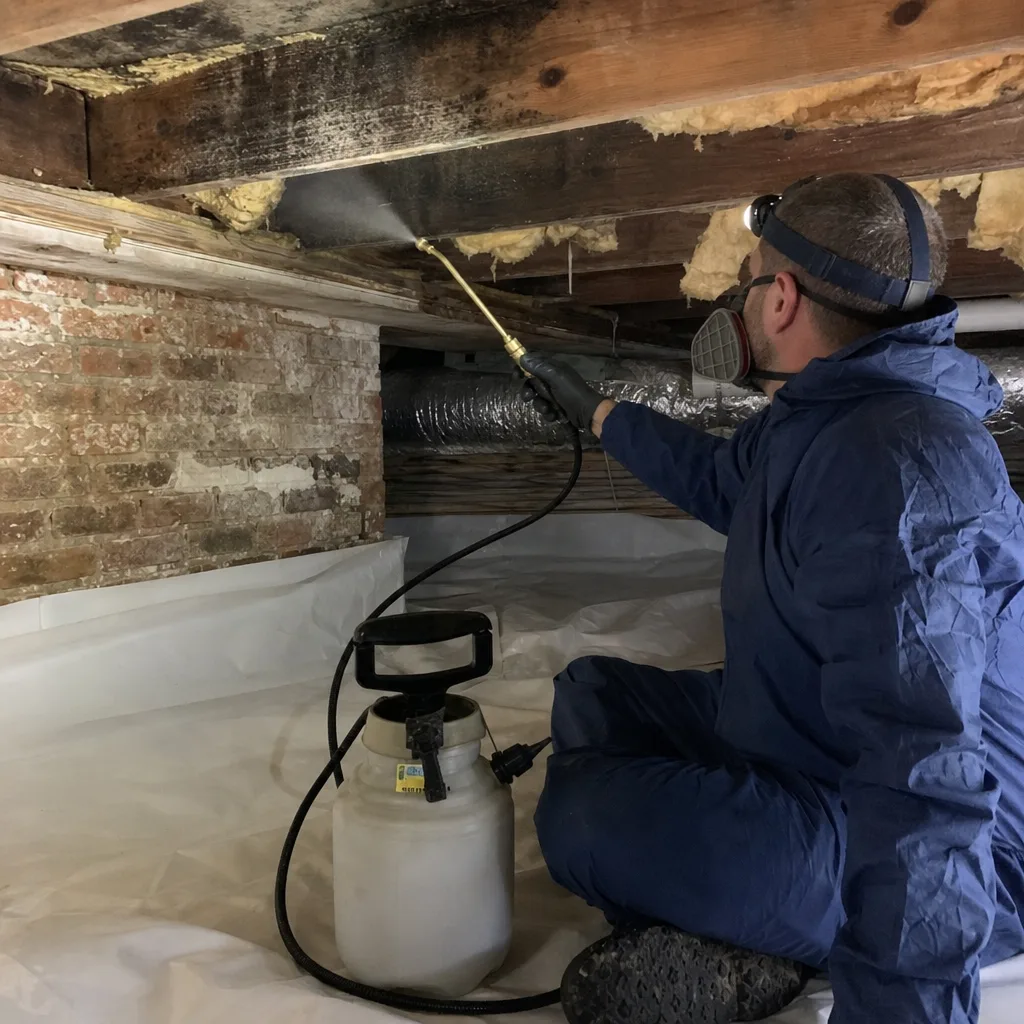
Drywall & Flooring Repair
Post-mitigation repairs in East Village tenements often mean matching plaster profiles in pre-war rooms where the walls are not perfectly square. We repair and replace drywall, patch plaster with appropriate materials, and handle hardwood floor repair where original oak boards have cupped or delaminated. The finish matches the room, not a cookie-cutter spec sheet.
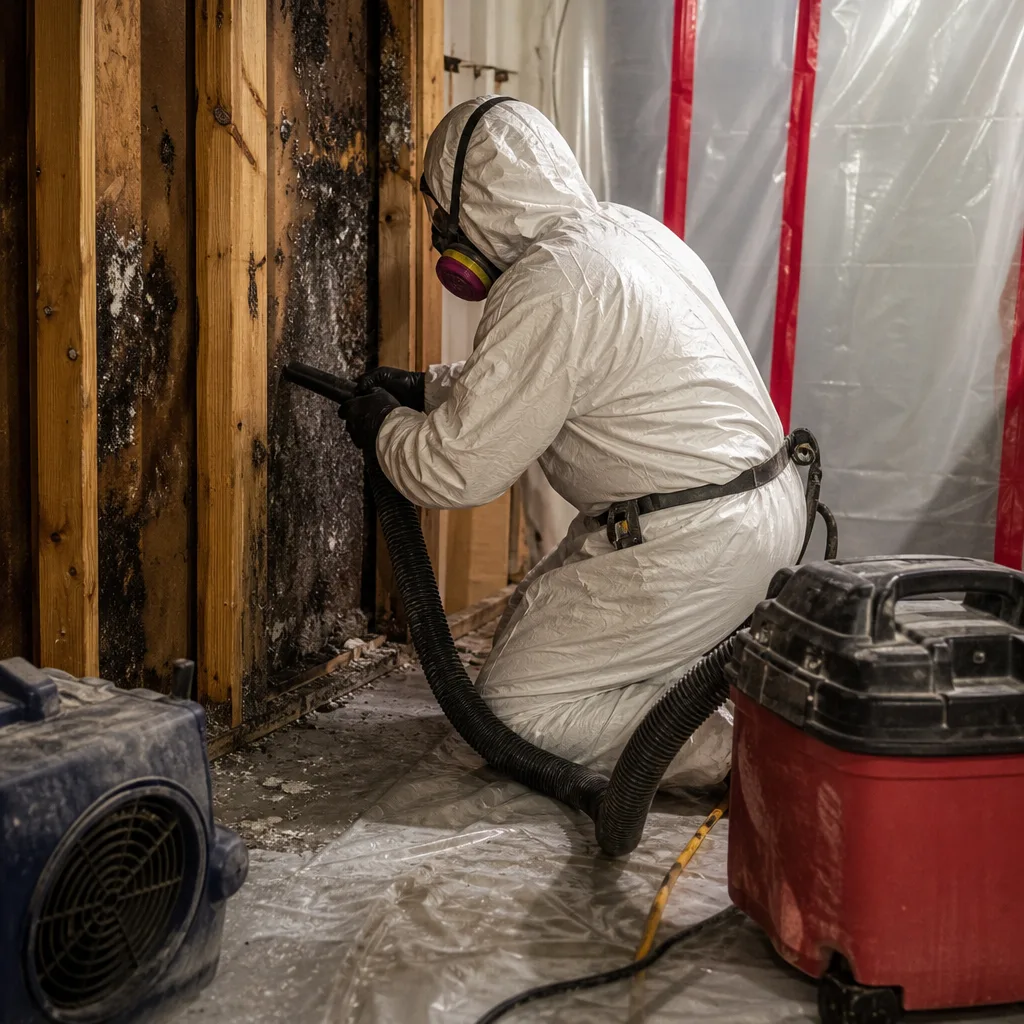
Contents Restoration & Pack-Out
When four or five units flood from one stack failure, contents packing becomes a full operation. We inventory, pack out, clean, and restore salvageable belongings. For tenants who have lived in the building for decades, we move carefully. Family photos, books, furniture, and the stuff that cannot be replaced get individual attention.
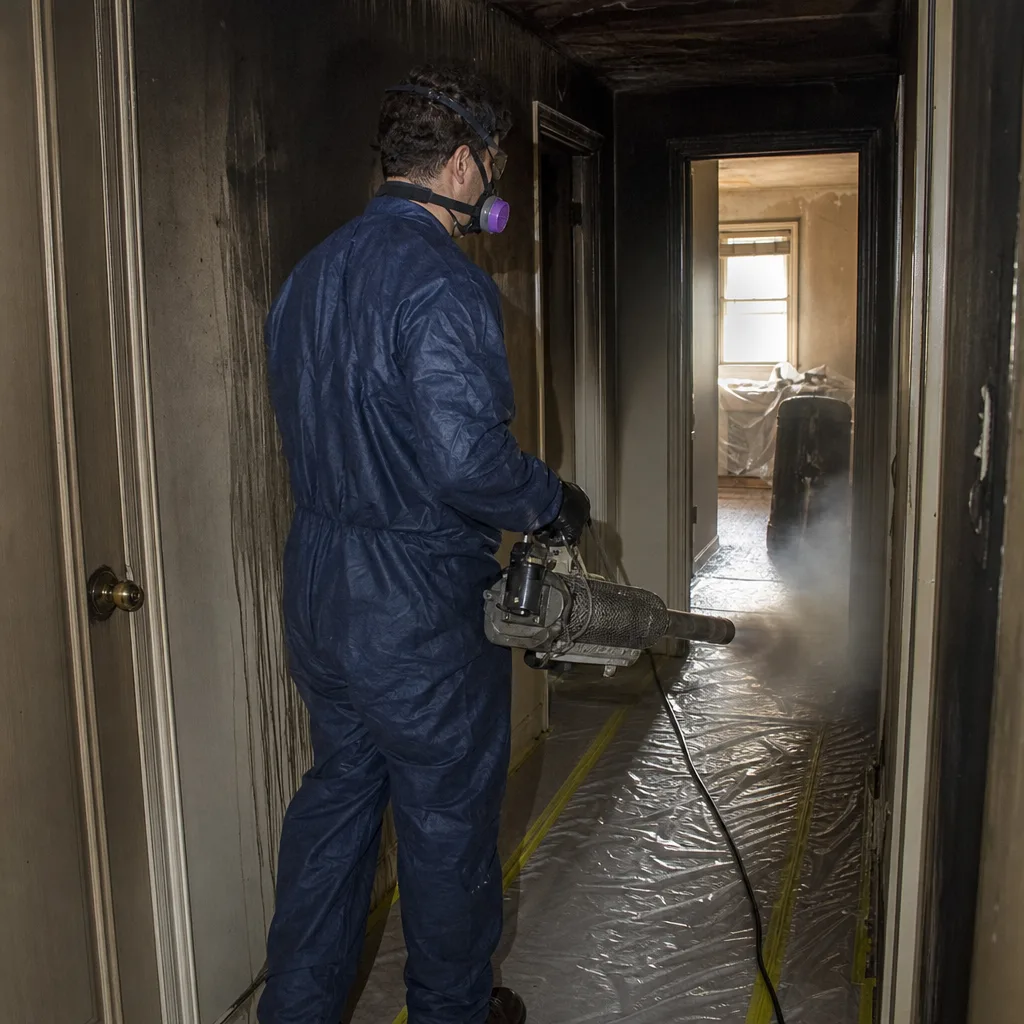
Carpet & Upholstery Cleaning
For losses contained to a single unit with clean-water damage and minimal wall impact, professional carpet and upholstery cleaning may be the full restoration path. We use truck-mounted extraction and professional cleaning agents, then dry the materials in place or at our facility.
Post-Construction Cleanup
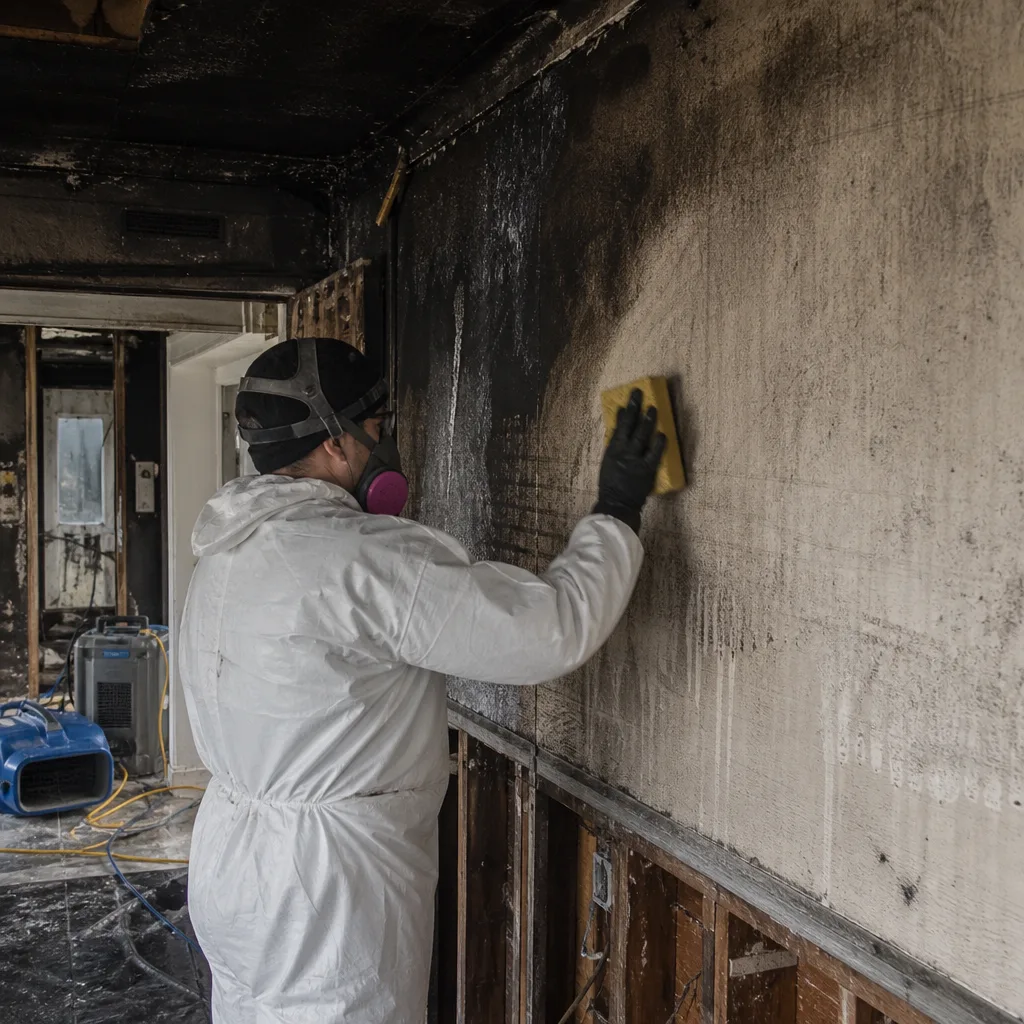
After any reconstruction project, there is fine dust everywhere: plaster dust, drywall sanding residue, construction debris. We run HEPA air scrubbing, wipe down every surface, clean ducts where needed, and leave the unit ready for move-back without an additional cleaning crew coming through after us.
What happens when you call
- 1
A real person answersNo phone trees - you reach a local pro.
- 2
You get an upfront price rangeHonest numbers before anyone is dispatched.
- 3
A background-checked tech heads outLicensed & insured, dispatched right away.
- 4
You approve before work beginsNothing starts until you say go.
Reconstruction & Cleanup Costs in East Village, NY
A drywall-and-paint repair after a contained Category 1 water loss in a single East Village unit typically runs $900 to $1,800. Once multiple floors are involved and we are talking about kitchen rebuilds, the range moves to $8,000 to $30,000 or more depending on the number of units and whether original flooring or cabinetry can be saved. Plaster remediation in pre-war walls costs more than drywall replacement, often $12 to $18 per square foot including finish, because the material and labor differ entirely from modern construction.
Asbestos testing and abatement, when triggered by demolition in old-law and new-law tenements, adds another layer. A simple pipe-wrap asbestos abatement in a chase can be $1,500 to $4,000. Floor tile abatement across a 600-square-foot unit runs $5,000 to $12,000. These are real numbers from East Village jobs. The free visual inspection gets you a firm, written scope with line-item pricing before any work starts, so you make decisions with numbers in hand, not estimates pulled from a suburban rate sheet. Call (917) 924-4221 for a free estimate.
We Also Serve Cities Near East Village
Our crews also respond throughout Fairview, Harrison, East Bronx, and Hunts Point, with the same 45-minute response commitment and live 24/7 dispatch.
East Village Reconstruction & Cleanup Questions, Answered
How does shared-stack plumbing affect reconstruction and cleanup scope in an East Village tenement after a burst pipe?
Shared-stack plumbing means a burst pipe on one floor routinely wets four to six stacked units, so the scope must include every affected unit, the stairwell chase, and the building’s common areas. Our crews set containment floor by floor, document each unit separately for each tenant’s insurer, and dry the vertical chase from the roof scuttle to the basement so no hidden cavity moisture lingers. Call (917) 924-4221 for an assessment of your building’s stack.
Do East Village pre-war buildings always require asbestos testing before reconstruction?
If demolition will disturb plaster-and-lath walls, pipe wrap, floor tiles, or ceiling texture in a building constructed before the early 1980s, NYC regulations require asbestos assessment first. Many East Village old-law and new-law tenements have asbestos in exactly those materials. We coordinate testing through licensed inspectors before any cutting begins. Skipping this step is a legal and health liability.
What is the realistic response window for water damage in an East Village walk-up during summer?
Mold can establish inside saturated pre-war wall cavities within 24 to 48 hours when summer humidity is high and ventilation is minimal. That means extraction and structural drying should start within hours of the first sign of water, not days. Our crews arrive inside 45 minutes of the call and run extraction the same visit. Call (917) 924-4221 immediately if you see ceiling staining or warped floors.
Does Floodline Restoration Co. of Manhattan handle multi-tenant coordination for category 3 water in East Village buildings?
Yes. Category 3 water, which carries sewage or other gross contamination, requires sealing off the affected area, full PPE, and careful coordination with every occupied unit. We work directly with building ownership, individual rent-stabilized tenants, and the NYC Department of Buildings when permits or inspections are triggered. One field vignette from an Avenue B new-law tenement involved a category 2 supply line burst on the fifth floor. We set containment in the stairwell, mapped moisture on all four floors below, and coordinated pack-out with tenants while Injectidry systems dried the shared plumbing chase from the roof scuttle to the basement.
How do East Village narrow clearances and street access affect reconstruction and cleanup logistics?
Narrow stairwells, low door clearances, and restricted street parking change how equipment moves into a building. We use compact extraction units and staging equipment through the most accessible entrance, often coordinating with the super for stairwell floor protection and neighbor notification. Dumpsters and debris removal require street permits in some Historic District blocks, which we handle as part of the scope.
Will my insurance cover multi-floor reconstruction in a tenement building?
Building systems like shared plumbing, walls, and common areas are generally covered by the building owner’s policy. Tenant contents and betterments are covered by each tenant’s policy. We document every unit separately and bill each carrier directly, so the loss is sorted by what belongs to whom. Call (917) 924-4221 and we will walk through your building’s coverage picture.
How long does full reconstruction take after a multi-floor water loss?
Drying typically takes 3 to 7 days with professional equipment running continuously. Reconstruction after that depends on the scope. A single-unit drywall and paint repair can be done in under two weeks. A full kitchen rebuild across two units with plaster remediation and flooring may run 6 to 10 weeks. We provide a written timeline with the scope before work begins.
What should building owners do in the first 30 minutes after discovering a burst pipe in an East Village tenement?
Shut off the main water supply, kill power to the affected area if water is near outlets or panels, and call (917) 924-4221. Do not open walls or disturb wet plaster. Do not attempt to dry the space with household fans. The first 30 minutes are about stopping the source and getting professional extraction running before water migrates further down the stack.
Serving East Village, NY - Our Local Coverage Area
We’re based in the East Village area and know this community well. Use the map below to see our service coverage - if you’re nearby, we can almost certainly help.
Need a Real Answer on Your East Village Building? Call the Crew That Works There
We have spent 42 years in New York City restoration work, and the jobs that stick with you are the tenement floods. The water always travels further than the first call suggests. The plaster is always older than it looks. The hazmat question is always waiting in the wall. We know how to work those buildings, coordinate those tenants, and finish with dry walls and a written promise instead of a lingering smell.
Call (917) 924-4221 now for a free estimate. A live person answers, 24 hours a day, every day. We will be there when we say we will.
Written by Curt Bowman, Owner at Floodline Restoration Co. of Manhattan, serving East Village.