
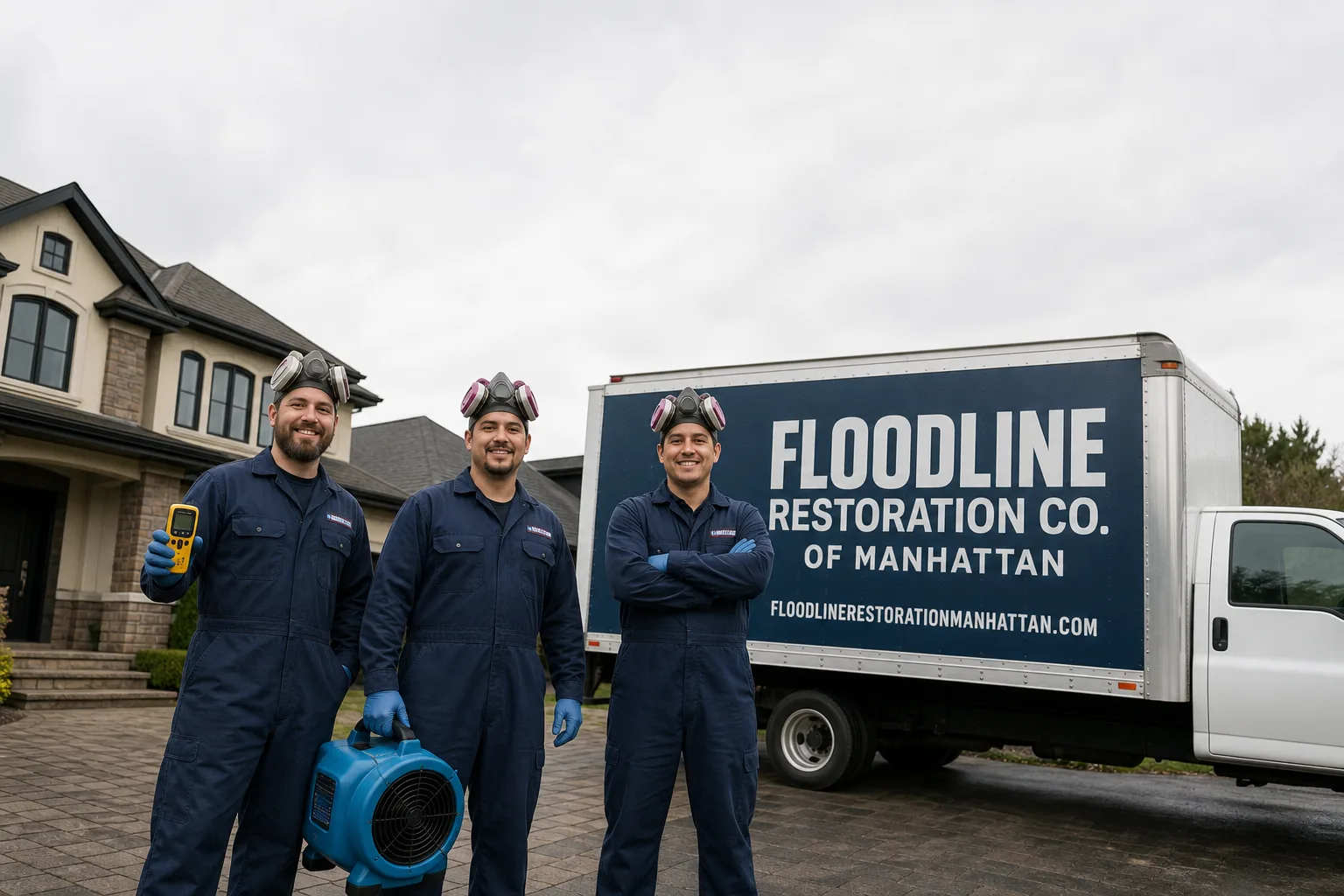
Free visual inspection and a written scope of work before any mitigation begins - photos, moisture readings, and drying logs go in your claim file
The scope we write is the scope we bill. Anything new gets shown to you, in writing, before we touch it.






 Before
 After
After Before
 After
After Before
 After
After24/7 Emergency Water Damage Restoration in Kearny
Water damage restoration in Kearny costs between $2,800 and $7,500 for a typical basement flood, and the first hour determines whether you’re facing a three-day dry-out or a three-week mold remediation. We answer live at (917) 924-4221 around the clock, every day of the year, and a certified crew from Floodline Restoration Co. of Manhattan reaches Kearny properties fast, because every minute of standing water in a 1920s row house basement moves deeper into plaster-and-lath walls and the unit next door. One call starts extraction the same visit, with a free visual inspection before any work is authorized. The line the water left on your foundation wall is where we start, and we don’t hand the job off until the moisture log says dry.
Understanding Water Damage Restoration Severity in Kearny Properties
Not all water in a Kearny basement is the same, and treating it as if it were is how restoration jobs go wrong. The industry divides water into three categories. Category 1 is clean water from a burst supply line or overflowing tub. Category 2 carries contaminants from appliances or sump discharge. Category 3, called black water, contains sewage, river backflow, or pathogens, and it requires full containment, disposal protocols, and PPE. Here’s what matters in Kearny specifically: the town’s combined sewer system ties directly to the Passaic River, so when the river rises during a nor’easter, municipal lines reverse and sewage pushes back through floor drains in the Manor Section, the Arlington district, and anywhere on the low-lying blocks near the Meadowlands edge. A call logged as “basement water damage” is frequently a confirmed Category 3 event. Our IICRC-certified technicians classify the water source before touching a pump, because the category changes everything: containment, antimicrobial treatment, disposal, and whether wall cavities need to be opened or can be dried in place. Kearny’s early-to-mid 20th-century housing stock, mostly two-family homes and attached row houses with full unfinished basements, makes moisture mapping more complex than it is in new construction. Plaster and lath holds water far longer than drywall, and semi-attached walls mean moisture migrates between units. We read the building the way it was built, not the way a national franchise template assumes.
Why Kearny Property Owners Choose Floodline Restoration Co. of Manhattan
- 45-minute response commitment. When you call with a live emergency in Kearny, we commit to a 45-minute dispatch window. A real person answers, confirms your address, and a crew rolls. We’ll be there when we say.
- 24/7 live answer, never an automated system. At 2 a.m. during a nor’easter, a live dispatcher picks up, not a phone tree. That’s how a company planning to be in town in thirty years runs a dispatch board.
- IICRC-certified crews, trained to RIA and IFA standards. Our technicians hold WRT and ASD certifications, and every background-checked, uniformed tech follows the K.E.Y.S. values code: Krafted right, Every time, Your home first, Standing behind it.
- Free visual inspection before any work begins. We assess the damage, classify the water, and give you a written scope. No pressure, no overselling. A square deal: no surprises on the bill.
- Direct insurance billing. We document the loss from the first hour, coordinate with your adjuster, and bill the carrier directly. You don’t play messenger between our office and your insurance company.
- One team from extraction to reconstruction. The same certified crew that reads the moisture map on day one handles daily readings, dries the structure, and rebuilds what needs rebuilding. No mid-job handoff, no inherited crew.
Our Water Damage Restoration Process
Inspection & Assessment
We arrive, walk the property, and classify the water by category. Using thermal imaging and moisture meters, we map how far water has traveled through flooring, baseboards, and wall cavities. You get a written scope of work before anything else happens.
Extraction & Stabilization
We extract standing water with truck-mounted and portable units, lift carpet where salvageable, and remove unsalvageable materials. If we find Category 3 water, containment goes up first, before any negative air pressure is applied.
Drying & Dehumidification
We set Dri-Eaz LGR dehumidifiers, Phoenix air movers, and Injectidry systems where wall cavities and under-floor spaces need directed airflow. Daily moisture readings are logged until the dry standard is met, not until the surface feels dry.
Cleaning & Sanitization
Affected surfaces get antimicrobial treatment appropriate to the water category. HEPA air scrubbers run throughout the drying period to capture airborne contaminants. For sewage events, that means full biohazard protocols and verified disposal.
Hydrostatic Pressure Check
On Kearny slabs poured before 1950, we check for groundwater wicking through unsealed concrete. If the water table is pushing up, we address the foundation seal, not just the surface water. This is the step generic crews skip.
Repairs & Restoration
We rebuild walls, replace trim, reset flooring, and finish the job to the standard that was there before, or better. The 90-Day Done Right Promise applies to everything we touch. If it’s not done right, we make it right, in writing.
Need Emergency Water Damage Restoration in Kearny Now?
Crews minutes away, answering live 24 hours a day. The sooner we start, the less it costs.
Working With Your Insurance Company
Most Kearny water damage claims involve a homeowners policy, and the way the first 24 hours are documented determines whether a claim is approved, delayed, or denied. We photograph everything, room by room, before we touch a single wet surface. We log moisture readings daily and maintain a drying log your adjuster can review. We write a detailed, line-item scope of work using the same estimating language carriers expect. Then our office communicates directly with your adjuster, so you’re not faxing paperwork at 9 p.m. or leaving voicemails that don’t get returned. For recurring flood claims on Kearny’s chronically affected blocks, we know the difference between flood insurance, sewer backup endorsements, and standard homeowners coverage, and we document accordingly from the first hour. The 90-Day Done Right Promise applies regardless of who pays the bill.
What We Provide Your Insurer
- Thorough documentation of the loss
- Photos of all damage, room by room
- Moisture readings and drying logs
- A detailed, line-item scope of work
- Direct coordination with your carrier
Built for Kearny’s Loss Calendar
Kearny doesn’t have one flood season. It has several, and they overlap in ways that catch homeowners off guard. January and February bring deep freezes that burst supply lines in unheated basements and exterior walls, especially in those 1910 to 1950 two-family homes along Kearny Avenue and the blocks off Bergen Avenue. March and April deliver spring thaw and heavy rain onto ground that’s already saturated from the high water table beneath Meadowlands fill, so basement seepage begins even before the river rises. July and August thunderstorms dump an inch of rain in 40 minutes, overwhelming the combined sewer system and sending water through floor drains on the low-lying peninsula. Then September through November brings nor’easters, and with them Passaic River backflow that reverses municipal lines and turns clean-water extraction calls into Category 3 sewage events. If you own a home in Kearny, you’ll likely deal with water damage eventually, and the remediation needs to account for which trigger caused it. That’s the local knowledge that changes the cost, the containment, and the drying timeline.
Water Damage Restoration Across Kearny’s Neighborhoods
The Manor Section, with its 1920s row houses and shared party walls, sees water migrate between units faster than anywhere else in town. A burst pipe at 2 a.m. in one home becomes a plaster-and-lath drying problem in the neighbor’s wall by morning. On the blocks near the Passaic River east of Kearny Avenue, we handle recurring river backflow through floor drains, which means Category 3 protocols every single time, not just after named storms. The Arlington district’s pre-war colonials and duplexes, many with original foundation slabs, deal with hydrostatic pressure pushing groundwater up through unsealed concrete after any sustained rain. Over by West Hudson Park and the blocks toward North Arlington, basement water removal calls tend to come from roof leader discharge overwhelming perimeter drains during summer downpours. And along the Belleville Turnpike corridor, older commercial-residential mixed buildings face the same combined sewer issues but with larger square footage and more complicated drying plans. We dispatch crews based on these patterns. A call from the Manor Section gets a technician who already knows to check the adjoining unit’s wall cavity before writing the scope. A call from the river side of town gets someone who assumes Category 3 until the water tests otherwise. That’s what serving Water Damage Restoration in Kearny means in practice.
Specialized Water Damage Restoration Services We Offer in Kearny
Emergency Water Extraction
Standing water in a Kearny basement is an active hazard and a structural threat. We run truck-mounted extraction units to pull hundreds of gallons per hour, then follow with portable extractors for tight corners and wall cavities. The goal is to remove all free water within the first visit, before it wicks into plaster, lath, or the unit next door.
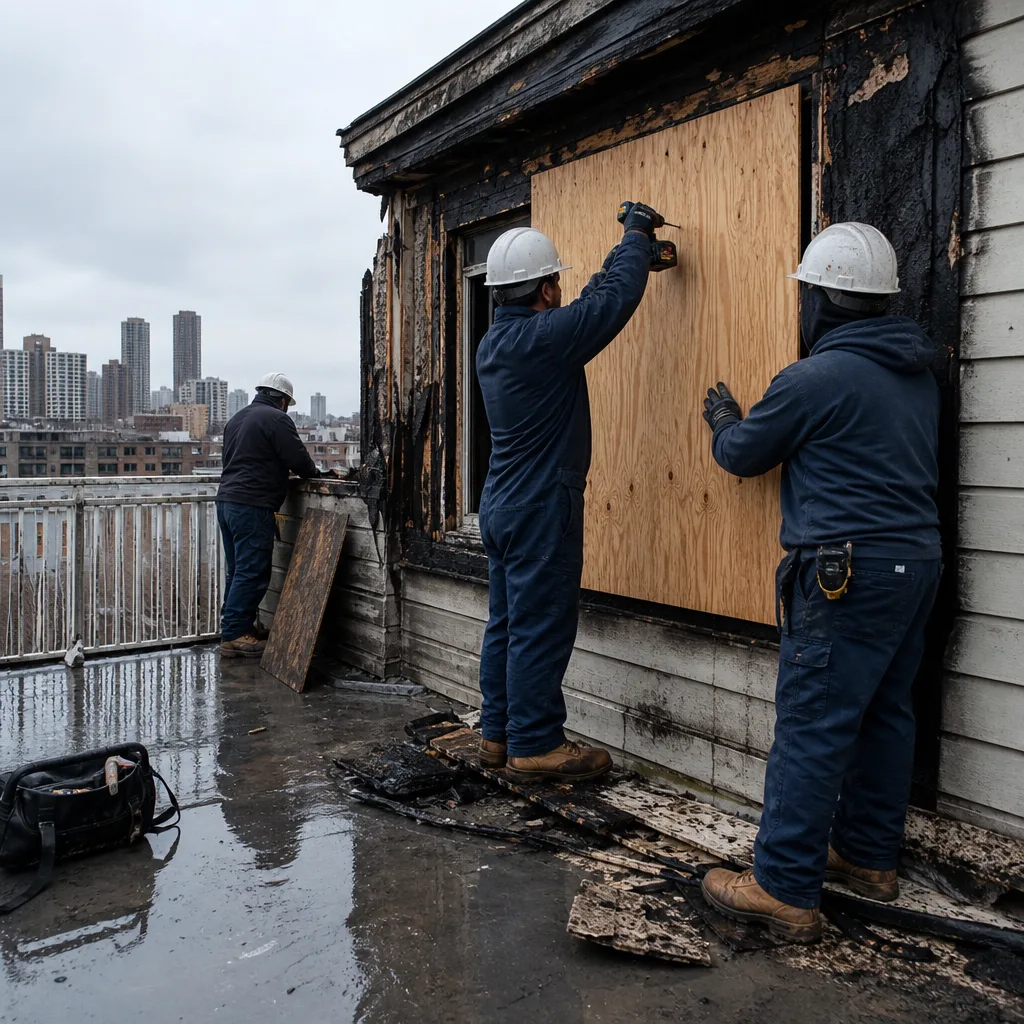
Structural Drying & Dehumidification
Kearny’s older homes dry on their own schedule, not the one a national franchise’s software predicts. We set Dri-Eaz LGR dehumidifiers and Phoenix air movers based on moisture readings, then hold them until plaster-and-lath walls actually reach dry standard. Daily logs, adjusted airflow, and no cutting the dry-out short because the schedule says so.

Flood Cleanup
Whether it’s Passaic River backflow through the floor drain or a nor’easter surge across the Meadowlands blocks, Kearny flood cleanup requires Category 3 containment more often than not. We handle the biohazard side, the disposal, the antimicrobial treatment, and the structural drying in one continuous process with one accountable crew.

Burst Pipe Restoration
When a supply line lets go behind a finished wall in a Kearny two-family home, the water travels fast through old framing and across shared party walls. We stop the source, extract, open only what needs opening, and dry the cavity with Injectidry systems where directed airflow reaches what surface drying can’t. Then we rebuild to the original finish.

Basement Water Removal
Kearny’s full unfinished basements are ground zero for every water problem this town throws at a house. We remove the water, classify the source, check the foundation for hydrostatic pressure, and set up drying that accounts for the high water table beneath the slab. A pump-out without the pressure check is a temporary fix, and we don’t do temporary fixes.
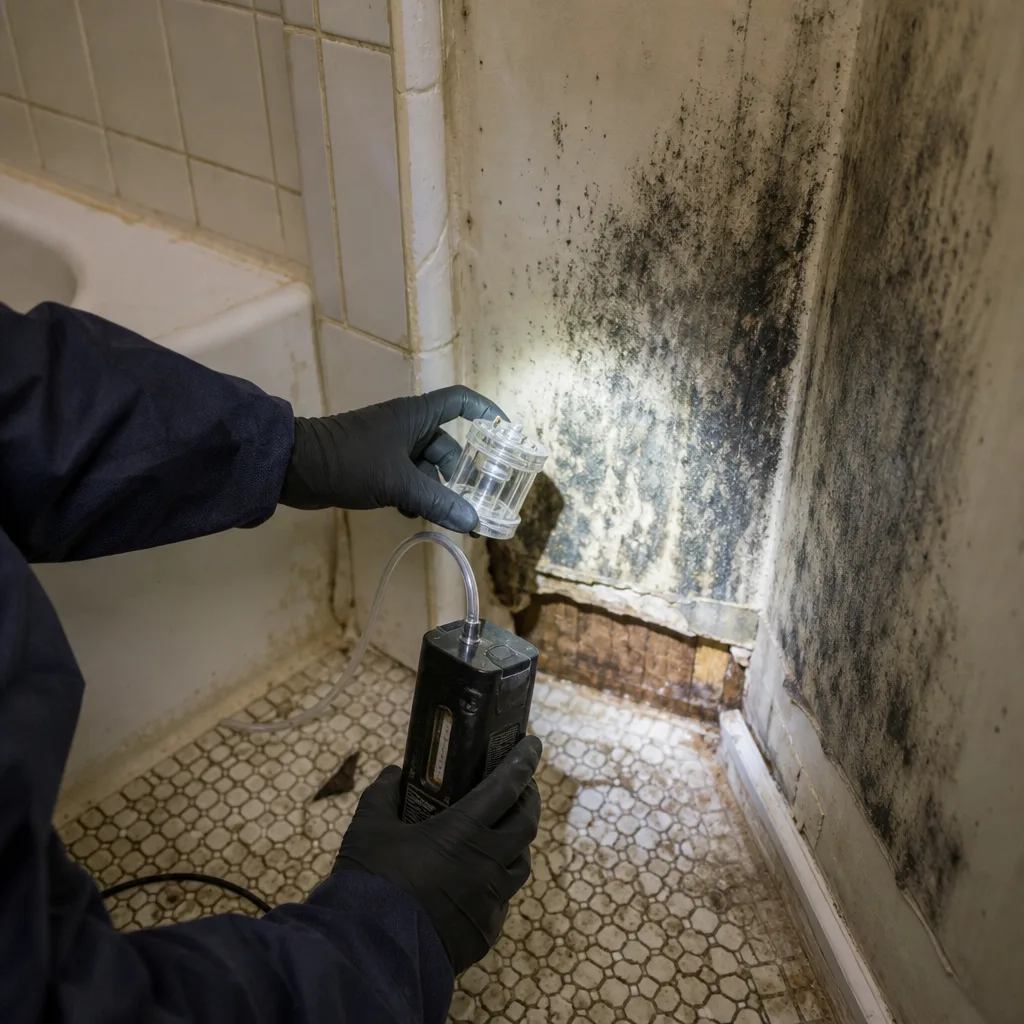
What happens when you call
- 1
A real person answersNo phone trees - you reach a local pro.
- 2
You get an upfront price rangeHonest numbers before anyone is dispatched.
- 3
A background-checked tech heads outLicensed & insured, dispatched right away.
- 4
You approve before work beginsNothing starts until you say go.
Water Damage Restoration Costs in Kearny, NJ
A typical basement water damage restoration in Kearny runs $2,800 to $7,500. The spread depends on water category, square footage affected, and whether wall cavities need to be opened. Emergency water extraction alone runs $900 to $2,200. Structural drying and dehumidification for a standard Kearny basement runs $1,200 to $2,800 for the drying period. Category 3 sewage or river backflow jobs add $1,000 to $3,000 for containment, PPE, biohazard disposal, and antimicrobial treatment. The big variable in Kearny is whether the water migrated into attached party walls, which turns a one-unit job into a two-unit drying plan. Insurance often covers these costs, minus your deductible, and we bill the carrier directly. Call (917) 924-4221 for a free visual inspection, and we’ll give you a firm written scope before any work starts. We also always honor our current offers: $50 off any repair over $250, the $89 seasonal tune-up, and a 5% discount for seniors and veterans.
We Also Serve Cities Near Kearny
Our crews serve the surrounding Hudson County communities with the same live dispatch and certified team, including Harrison, North Arlington, Lyndhurst, and Jersey City. If you own property in any of these towns and need Water Damage Restoration, the same equipment, standards, and guarantee apply.
Serving Kearny, NJ - Our Local Coverage Area
We’re based in the Kearny area and know this community well. Use the map below to see our service coverage - if you’re nearby, we can almost certainly help.
Kearny Water Damage Restoration Questions, Answered
Why do Kearny basements flood even when the Passaic River hasn’t crested?
Kearny’s high water table, the result of the town’s position on Meadowlands fill between the Passaic and Hackensack rivers, means groundwater pushes up through unsealed foundation slabs and perimeter drains after any sustained rain, even before the river reaches flood stage. We see this regularly on blocks east of Kearny Avenue and throughout the Arlington district. If your basement seeps after a normal storm, the water table is usually the culprit, and sealing the slab is part of the real fix. Call (917) 924-4221 and we’ll verify the source with a free inspection.
How do I know if my Kearny basement water is Category 3 sewage instead of clean rainwater?
If the water came up through a floor drain during heavy rain or a nor’easter, assume it’s Category 3 until tested otherwise. Kearny’s combined sewer system ties directly to the Passaic River, so river rise reverses municipal lines and sends sewage back through drains. A technician can test and classify the water on site, but the safe protocol is to treat any storm-related floor drain backup as contaminated, which means full PPE, containment, and biohazard disposal. That’s how our crews approach every local call.
Does water damage spread between attached row houses in Kearny?
Yes, and it happens faster than most owners expect. Semi-attached walls in 1920s row houses, especially in the Manor Section, share wall cavities. Water from one unit wicks through plaster and lath into the adjoining unit, and mold follows within days. We check the neighboring side of any shared wall on every row house job, and we set containment between units when moisture readings cross the party line. Ignoring this is how one homeowner’s burst pipe becomes two units’ mold problem.
Why does drying take longer in Kearny’s older homes than in new construction?
Plaster and lath, standard in Kearny homes built 1910 to 1950, absorbs and holds water far longer than modern drywall. A wall that would dry in four days in new construction can take seven to ten days in a pre-war row house. Old baseboards and floor systems trap moisture, and the high ambient humidity near the Meadowlands slows evaporation. We log daily readings and hold equipment until the dry standard is actually met, not until the surface reads dry. That’s the difference between a completed job and a callback.
What should I do right after a sewer backup in a Kearny basement?
Do not enter the area without rubber boots and gloves. Keep children and pets out. Turn off electricity to the basement if it’s safe to reach the panel without stepping in water. Do not use a household vacuum or fan, which spreads sewage pathogens into the air. Call us immediately at (917) 924-4221. We contain the area, classify the water, and begin Category 3 mitigation with full PPE. The first 30 minutes determine how much of your basement can be saved.
How fast can a crew reach my Kearny home?
We commit to a 45-minute dispatch window from the time you call. In practice, our crews are often on scene sooner because we keep teams staged in the Kearny area during storm events. A live dispatcher answers at any hour, confirms your location, and gets a certified technician rolling. For water damage, every hour of standing water increases the cost and extends the drying timeline, so we treat speed as part of the service.
Will my insurance cover water damage restoration in Kearny?
The common answer is yes, if the damage is sudden and accidental, like a burst pipe or appliance failure. Flood and sewer backup coverage depend on your specific policy, and we’ve learned exactly how to document both scenarios for carriers that handle Hudson County claims. We photograph everything before extraction starts, log daily moisture readings, write the line-item scope, and bill the carrier directly. You get a square deal regardless of how the claim is structured.
Are your technicians certified and background-checked?
Yes. Every Floodline Restoration Co. technician is background-checked, uniformed, and certified to IICRC standards, with RIA and IFA training on the team. We use professional-grade Dri-Eaz and Phoenix equipment, and every job is backed by the 90-Day Done Right Promise, in writing. Crews answer to the company owner, Curt Bowman, not to a franchise office in another state.
Water damage in Kearny is not a generic problem, and it doesn’t get fixed with a generic pump-out. The town’s combined sewer system, its high water table, and its pre-1950 row houses change the category of the water, the containment it requires, and the drying timeline it will follow. Floodline Restoration Co. of Manhattan, led by Curt Bowman, has handled water damage restoration for over 42 years with live dispatch, certified crews, and the 90-Day Done Right Promise in writing. We answer at (917) 924-4221 around the clock, every day, and we’ll be there when we say. Done right, and backed in writing.
Written by Curt Bowman, Owner at Floodline Restoration Co. of Manhattan.