
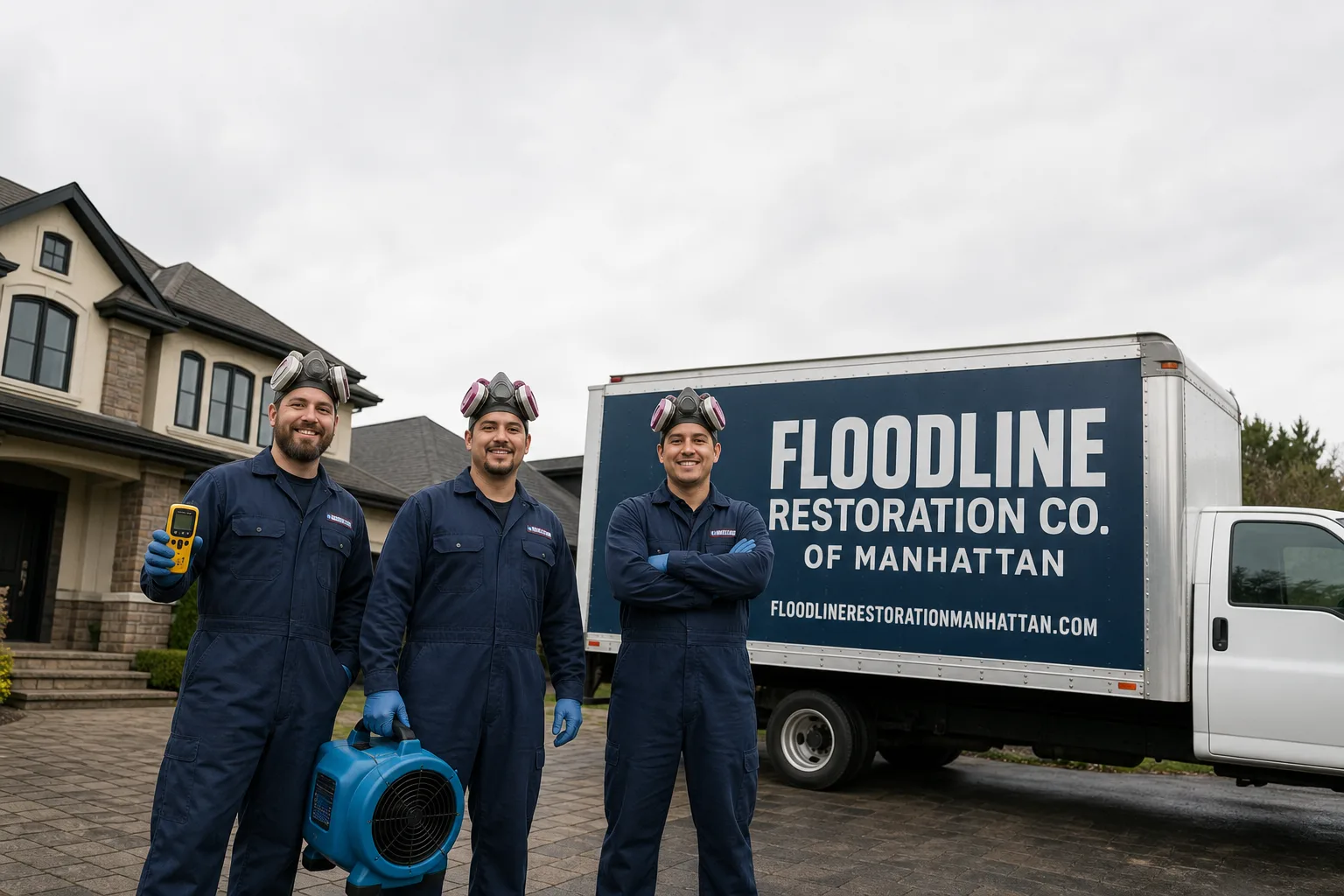
Free visual inspection and a written scope of work before any mitigation begins - photos, moisture readings, and drying logs go in your claim file
The scope we write is the scope we bill. Anything new gets shown to you, in writing, before we touch it.






 Before
 After
After Before
 After
After Before
 After
After24/7 Emergency Water Damage Restoration in Kew Gardens
Water damage restoration in Kew Gardens typically runs $1,800-$7,500 for a mid-size loss, and emergency extraction crews can usually reach your building within 45 minutes of your call. We answer the phone live at (917) 924-4221 around the clock, every day of the year. The first hour matters because water moves fast through pre-war plaster-and-lath: it wicks into original hardwood, saturates lathe behind walls, and follows cast-iron chaseways down through multiple co-op units. A live dispatcher takes your call, a uniformed crew rolls into Kew Gardens, and extraction starts the same visit.
Floodline Restoration Co. of Manhattan has been running a dispatch board, not a sales desk, since 2010. That means when you call about a burst supply line on Austin Street or a sewer backup in a Forest Park-adjacent co-op basement, you get a person who can commit a crew to your address. Not a recording. Not a callback sometime tomorrow.
Understanding Water Damage Restoration Severity in Kew Gardens Properties
Water damage comes in three categories, and in Kew Gardens the category dictates everything downstream. Category 1 is clean water from a supply line or tub overflow. Category 2 carries contaminants from appliances or sump failures. Category 3, the one we see in older co-op basements and sewer backups, includes bacteria and requires full containment, antimicrobial treatment, and often selective demolition. Moisture mapping is the first honest step. We use thermal imaging and penetrating moisture meters to find water that never showed on the surface.
Kew Gardens’s pre-war housing stock changes the math. Original plaster-and-lath walls hold moisture longer than modern drywall. Cast-iron waste stacks and galvanized supply lines, many approaching or past service life, fail without warning. A thirty-year-old galvanized riser lets go at a threaded joint on the fifth floor, and by the time anyone notices, water has traveled inside wall cavities to the third floor. Structural drying in these buildings means daily hygrometer readings, targeted air movement, and a documented dry standard, not just a fan running in one room. In co-op buildings, there is also the NYC DEP variable: asbestos bulk sampling is required before we can legally disturb pre-1980 plaster, pipe insulation, or floor tile. We coordinate that from day one so your drying timeline does not stall for weeks.
Why Kew Gardens Property Owners Choose Floodline Restoration Co. of Manhattan
- 45-minute response commitment: Our Kew Gardens coverage area is tight, and our crews stage from dispatch points inside Queens. When you call with an active leak, we commit to a crew on-site within 45 minutes.
- 24/7 live answer, no answering service: A human being picks up the phone at 2 a.m. That person can read a dispatch board, not a script. You get a straight answer about when we can be there.
- IICRC-certified crews, WRT and ASD codes: Our technicians hold current IICRC Water Damage Restoration Technician and Applied Structural Drying certifications, plus RIA and IFA training. They know the difference between drying a 1927 co-op and a 2005 condo conversion.
- Free visual inspection: We don’t charge to look, and we don’t manufacture scope out of panic. You get a written assessment before any work is authorized.
- Direct insurance billing: We bill your carrier directly and speak with your adjuster on your behalf. You are not the messenger.
- One team from extraction to reconstruction: The same certified crew that maps moisture on day one hands you the drying log and rebuilds what needs rebuilding. No mid-job handoff.
Our Water Damage Restoration Process
Inspection & Assessment
We locate the water source, identify the category, and map moisture across every affected surface. In Kew Gardens co-ops, we also flag anything that requires NYC DEP asbestos or lead survey before we touch it.
Extraction & Stabilization
Standing water comes out with truck-mounted and portable extraction units. We stop the active water movement and secure the area so no further damage spreads.
Drying & Dehumidification
Dri-Eaz air movers and Phoenix dehumidifiers run on a drying plan built from the moisture map. Daily readings are logged. Nothing is considered dry until the dry standard is met, not guessed at.
Cleaning & Sanitization
Affected surfaces are cleaned and treated. Category 2 and 3 losses get antimicrobial application and HEPA air scrubbing where required.
Structural Drying Verification
We verify dry conditions inside wall cavities and under flooring, not just on surfaces. In plaster-and-lath construction, this is where hidden damage gets caught.
Repairs & Restoration
We rebuild what needed to come out, from baseboards to full sections of wall. One crew, one scope of work, one written guarantee.
Need Emergency Water Damage Restoration in Kew Gardens Now?
Crews minutes away, answering live 24 hours a day. The sooner we start, the less it costs.
Working With Your Insurance Company
Most Kew Gardens co-op and single-family water losses are covered under a homeowners or co-op policy, but the claim only goes smoothly if the documentation holds up. We start building the file the first hour. Photos of every affected room. Moisture readings from day one through final dry standard. A line-item scope with clear classifications so your adjuster sees exactly what was damaged, what was dried, and what was rebuilt. Curt Bowman built Floodline around the principle that insurance work should be direct, documented, and settled without the homeowner acting as project manager. Our team coordinates with your adjuster and the co-op board’s carrier when both policies are in play. We carry the documentation burden so you don’t have to.
What We Provide Your Insurer
- Thorough documentation of the loss
- Photos of all damage, room by room
- Moisture readings and drying logs
- A detailed, line-item scope of work
- Direct coordination with your carrier
Built for Kew Gardens’s Loss Calendar
Kew Gardens does not get the storm surge that hit coastal Queens during Sandy. The neighborhood sits at modest inland elevation, which spares it from the worst tidal flooding. But its pre-war masonry and flat-section roof assemblies take a beating from nor’easters and winter freeze-thaw cycles. Wind-driven rain punches into deteriorated mortar joints on Tudor Revival facades and finds its way inside. January deep freezes are the busiest stretch: galvanized supply lines and uninsulated riser chases freeze, crack, and let go. Spring thaw brings basement seepage through original masonry foundations on the quieter residential streets near Forest Park. Summer thunderstorms overwhelm aging roof drains and flat roofs on six- and seven-story co-ops, sending water down interior walls. The pattern is consistent: old buildings, original systems, and water that moves through them faster than owners expect.
Water Damage Restoration Across Kew Gardens’s Neighborhoods
The Tudor Revival co-ops along Kew Gardens Road and Austin Street are the densest concentration of pre-war apartment stock in the area. These buildings, mostly 1920s and 1930s construction, carry cast-iron waste stacks and galvanized supply lines that are well past service life. When a fifth-floor riser fails on Austin Street, our trucks come in from Queens Boulevard and we are setting containment inside 40 minutes. South of the LIRR tracks, the leafy streets of Kew Gardens Hills mix detached Tudor Revival homes with smaller co-op buildings. Those homes have their own profiles: knob-and-tube wiring near original plaster, slate or clay-tile roofing that fails unevenly, and basements that seep in a wet spring. Around Forest Park, we see basement water removal calls after heavy rain, when groundwater pushes through original stone foundations. The building stock changes block by block, but the common thread is age: almost everything here predates modern waterproofing, and most systems are original.
Specialized Water Damage Restoration Services We Offer in Kew Gardens
Emergency Water Extraction
Standing water in a Kew Gardens co-op does not wait for business hours. We extract with truck-mounted units where building access allows, and portable units for upper-floor and stairwell work. Extraction starts the same visit, not the next day.
Structural Drying & Dehumidification
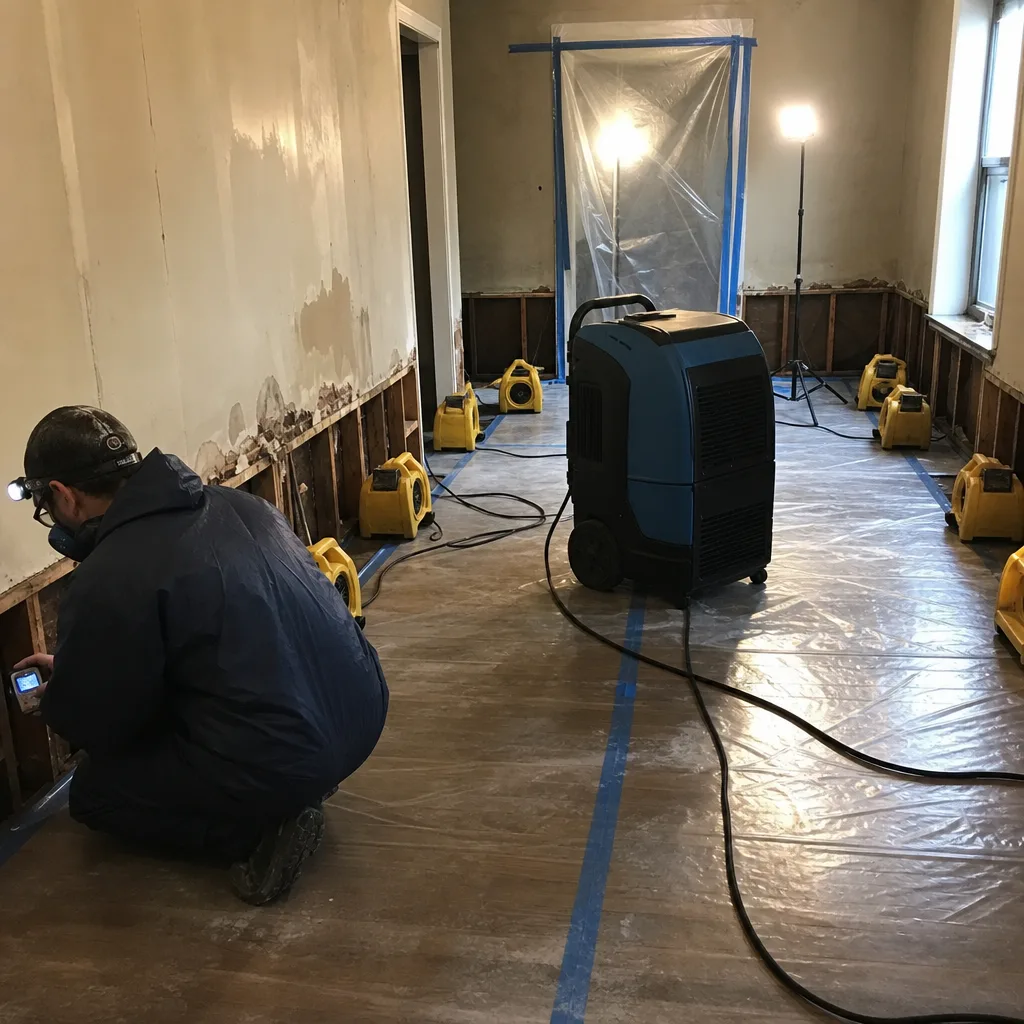
Plaster-and-lath walls and original oak parquet demand a precise drying plan. Our Water Damage Restoration team uses Dri-Eaz air movers and Phoenix dehumidifiers with daily moisture readings until the dry standard is met. We dry in place where possible, which saves co-op owners from needless demolition.
Burst Pipe Restoration
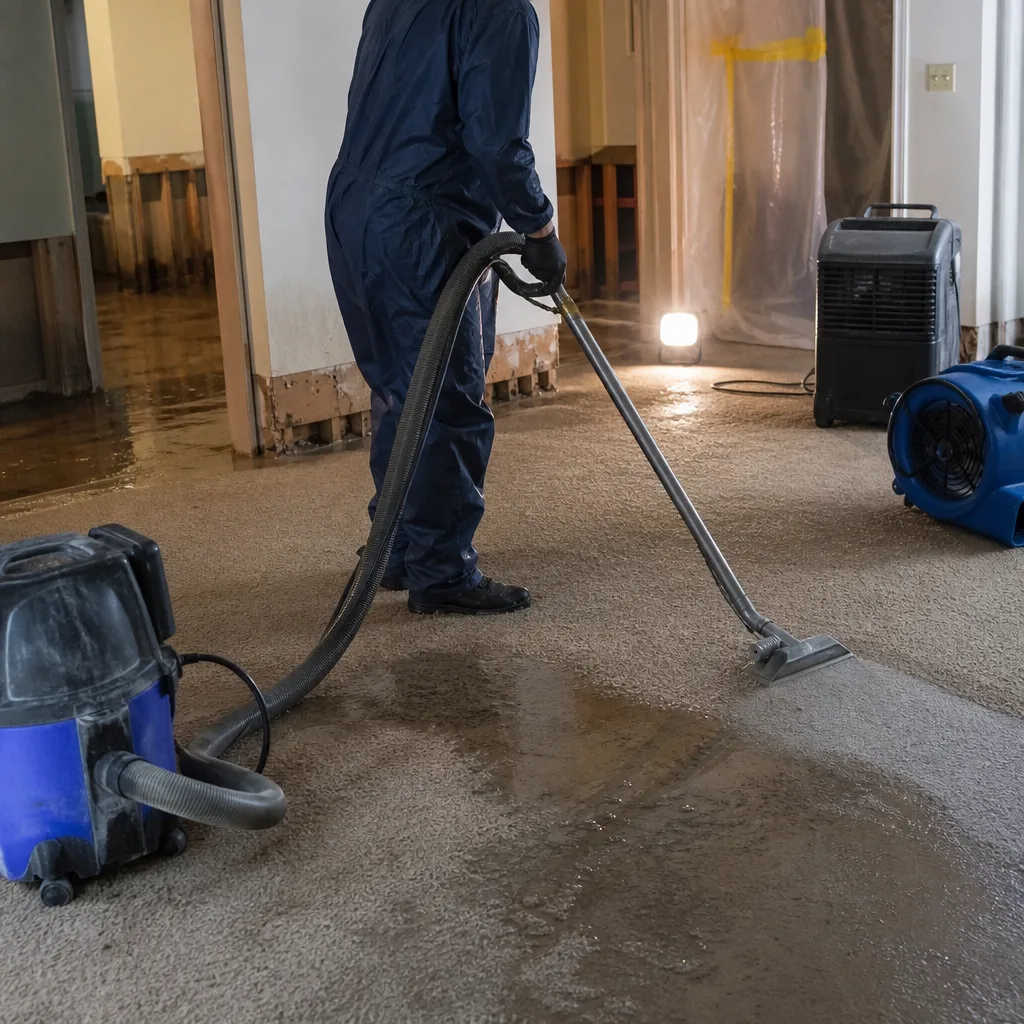
Galvanized supply lines in Kew Gardens’s pre-war buildings fail at joints and along pinhole corrosion lines. We stop the leak, dry the affected areas, and coordinate with the co-op board on the pipe repair or replacement. The drying and the plumbing work stay coordinated under one scope.
Flood Cleanup
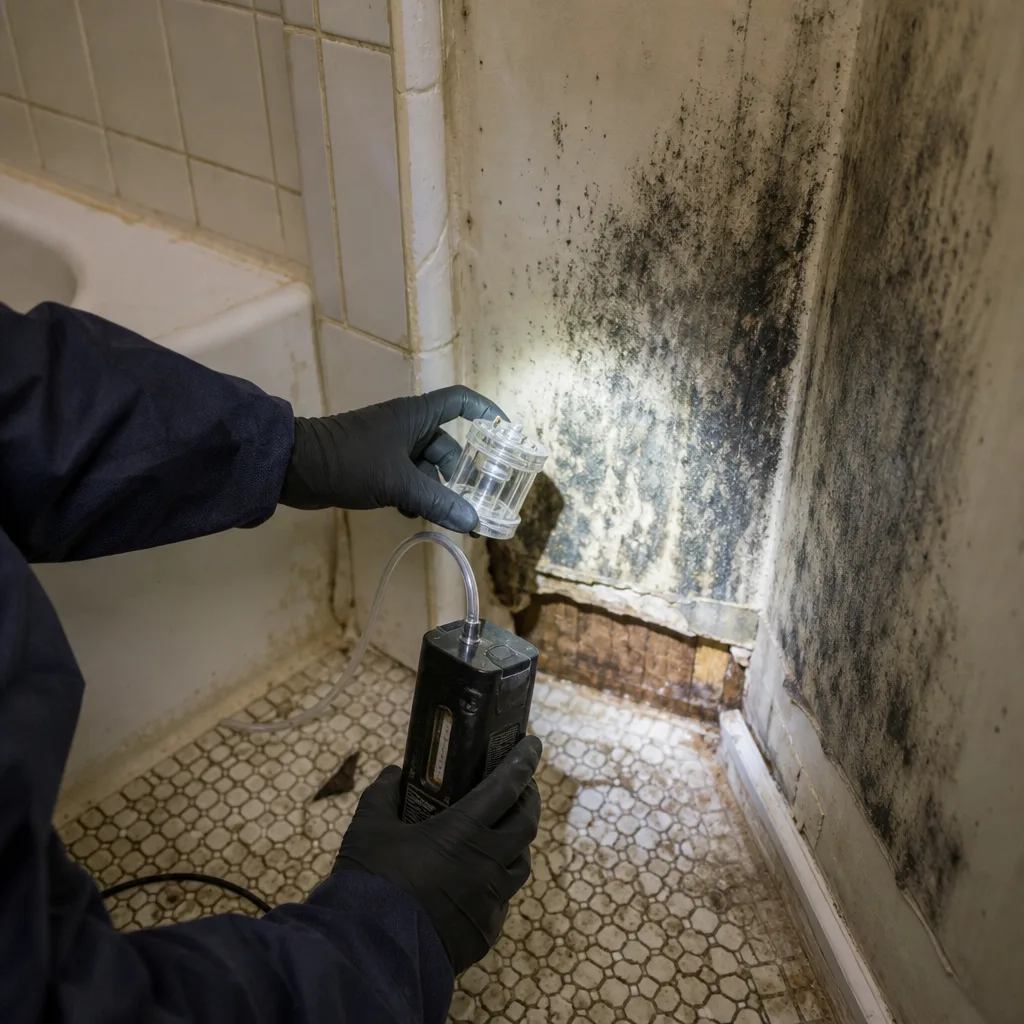
Nor’easter wind-driven rain and flash thunderstorms both cause interior flooding in Kew Gardens, especially through deteriorated masonry and aging roof drains. We extract, dry, sanitize, and document. Where DEP asbestos rules apply, we sequence the work legally from day one.
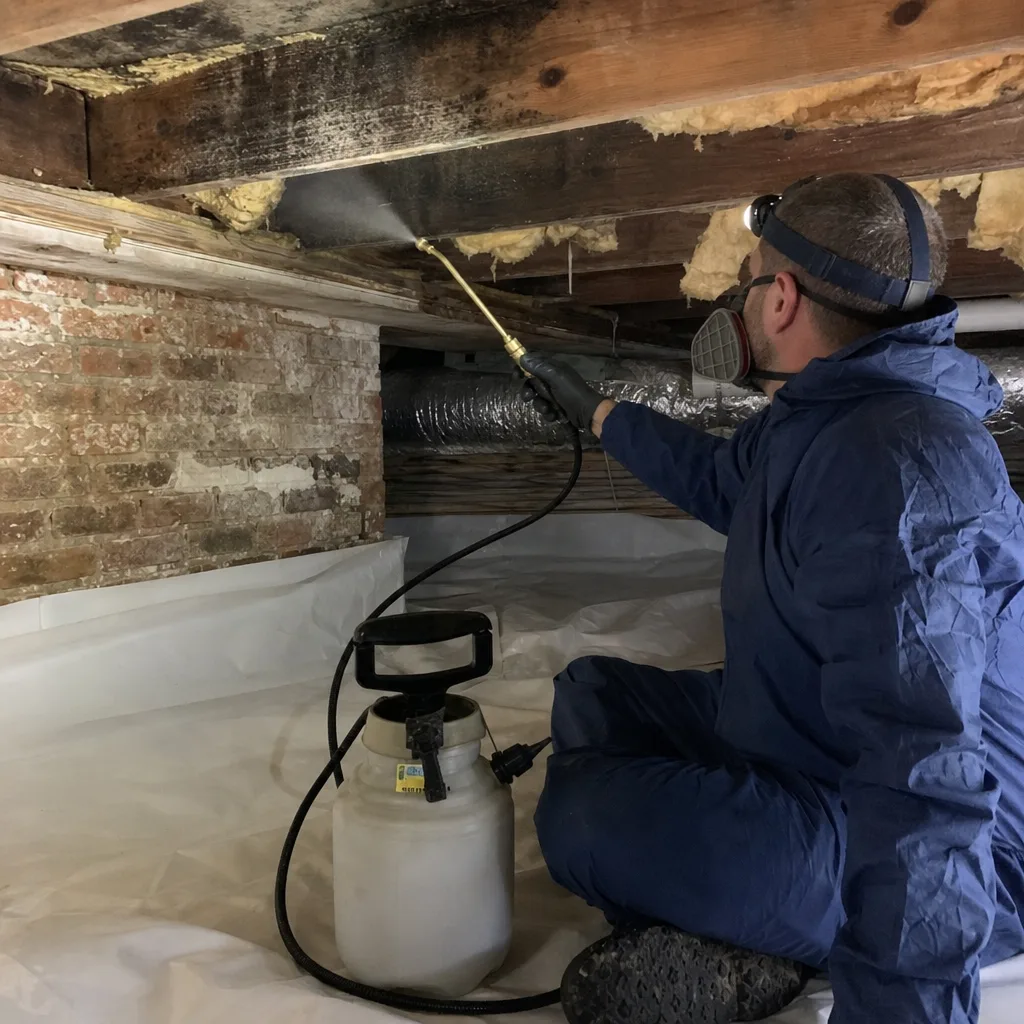
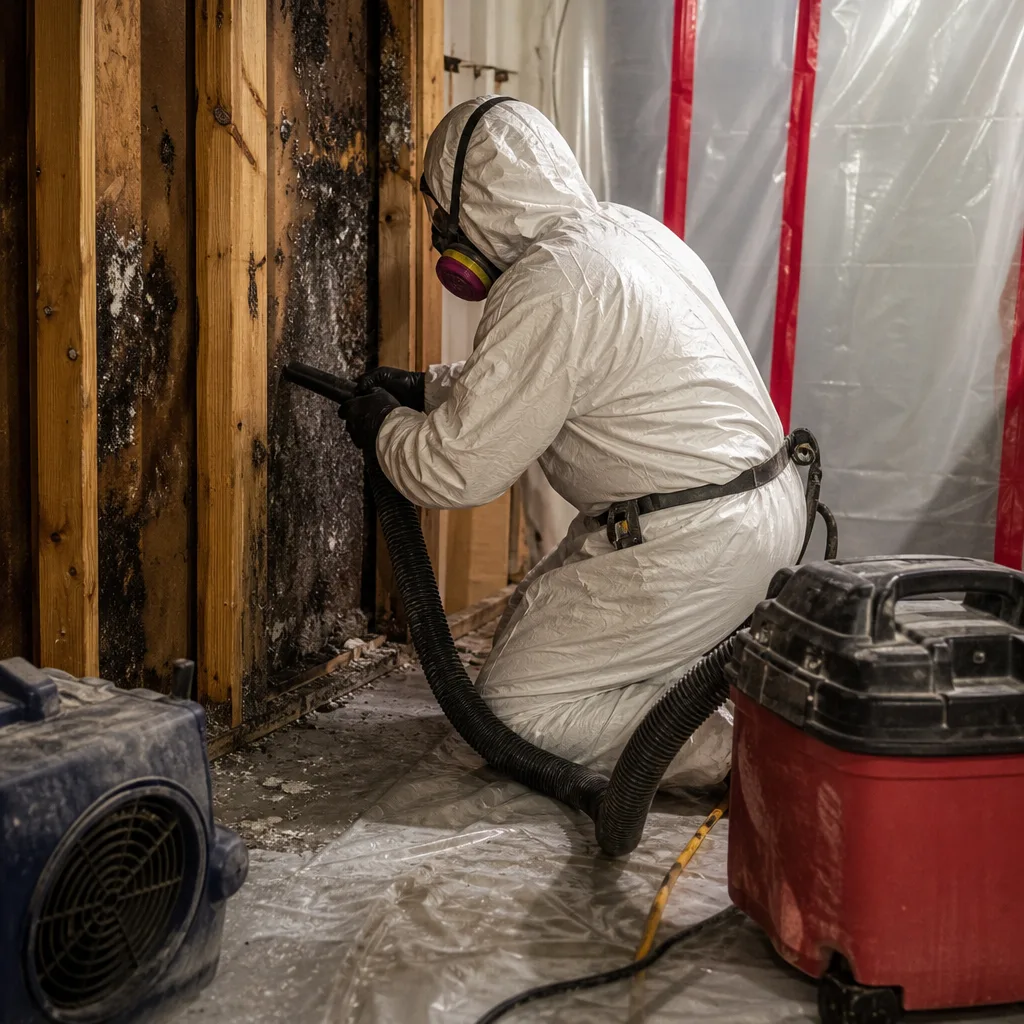
Basement Water Removal
Original masonry foundations in Kew Gardens homes and co-op basements let groundwater in during wet seasons. We pump, dry, treat, and then tell you straight what needs waterproofing and what simply needs a dehumidifier.
What happens when you call
- 1
A real person answersNo phone trees - you reach a local pro.
- 2
You get an upfront price rangeHonest numbers before anyone is dispatched.
- 3
A background-checked tech heads outLicensed & insured, dispatched right away.
- 4
You approve before work beginsNothing starts until you say go.
Water Damage Restoration Costs in Kew Gardens, NY
What you will pay depends on the category of water, the square footage affected, and whether DEP asbestos surveys are required before we can disturb plaster. A small clean-water extraction from a supply line in a single co-op unit typically runs $1,800-$3,200. A multi-unit burst pipe loss with structural drying across three floors runs $5,000-$9,500. Category 3 sewer backups in basements, with full containment and antimicrobial treatment, start around $4,000 and go up from there. Most policies in Kew Gardens cover water damage restoration when the loss is sudden and accidental. The free visual inspection gives you a firm written scope before any money is committed. Call (917) 924-4221 for pricing on your specific situation.
We Also Serve Cities Near Kew Gardens
Our crews cover the surrounding Queens neighborhoods, including Kew Gardens proper as well as Richmond Hill, South Richmond Hill, Forest Hills, and Woodhaven. If your building sits just outside Kew Gardens, we likely have a crew closer than you think.
Kew Gardens Water Damage Restoration Questions, Answered
Does water damage restoration in a Kew Gardens pre-war co-op require asbestos testing before we can start drying?
Yes, in most cases. NYC DEP requires asbestos bulk sampling before any disturbance of pre-1980 plaster, floor tile, or pipe insulation. If your co-op building has original materials, which most Kew Gardens Tudor Revivals do, we sequence the survey first. Drying can sometimes begin in unaffected areas while abatement is scheduled, but we never disturb suspect material without clearance. Call (917) 924-4221 and we will walk you through the exact sequence for your building.
What happens when a pipe bursts above the sixth floor in a Kew Gardens co-op building?
Water travels down through wall cavities, floor assemblies, and cast-iron chaseways. A sixth-floor rupture commonly shows damage through three or four units below. We map moisture on every affected floor, not just the source unit, then coordinate with the co-op board’s carrier and any required abatement work. The full drying scope is documented for every affected shareholder.
Can you dry our original plaster-and-lath walls without tearing them out?
Often, yes. Plaster-and-lath can be saved if we get to it quickly and dry it correctly. We use Dri-Eaz air movers and Phoenix dehumidifiers with daily readings to dry in place. Selective demolition only happens when the material is unsalvageable or contamination requires it. The goal is keeping your original walls, not replacing them.
How does your crew handle a category 3 water loss from a sewer backup in a Kew Gardens basement?
Category 3 water carries bacteria and requires full containment, antimicrobial treatment, HEPA air scrubbing, and usually selective removal of saturated materials. In Kew Gardens basements with original stone or masonry foundations, we pump first, then build a drying and sanitization plan that accounts for the porous surfaces. We document everything for your insurer.
Do we need to remove our contents when you dry our Kew Gardens co-op unit after a leak?
Not always. We move and block furniture as needed to create drying chambers, and we pack out contents only when they are saturated or in the way of necessary demolition. Most Kew Gardens co-op units dry in place with careful content handling, saving you the cost and disruption of off-site storage.
How fast can you actually get to Kew Gardens?
Our commitment is 45 minutes or less for active water emergencies in Kew Gardens. Dispatch runs from inside Queens, not from Manhattan or Long Island. A live person confirms the address and commits a crew while you are still on the phone.
Will my co-op board’s insurance or my own policy cover this?
Most Kew Gardens co-op policies cover the building structure and common elements, while your individual shareholder policy covers your unit’s interior finishes and contents. Sudden and accidental water losses are typically covered by one or both. We bill directly and coordinate with both carriers so you are not left playing messenger. We document from the first hour to support the claim.
What should I do in the first 30 minutes after discovering water damage?
Call (917) 924-4221. Then, if safe, shut the water at the nearest valve and turn off electricity to the affected area. Do not enter standing water near outlets. Move small valuables out of the water path if you can do so safely. Take photos. Then let us handle the rest.
Serving Kew Gardens, NY - Our Local Coverage Area
We’re based in the Kew Gardens area and know this community well. Use the map below to see our service coverage - if you’re nearby, we can almost certainly help.
When a Kew Gardens Burst Pipe Becomes a DEP Chess Match
Most restoration contractors in Queens got their start in single-family suburban homes. They know how to dry a Sheetrock wall. Kew Gardens is a different job entirely. In the pre-war co-ops along Kew Gardens Road and Austin Street, a simple pipe burst is rarely simple. The building is co-op owned, which means the board’s insurance and your shareholder policy both have a say. The plaster is original, which means NYC DEP asbestos rules apply before we can legally disturb it. The pipes are galvanized and past service life, so a patch job on one floor can turn into repeat leaks down the same stack. Contractors who skip the DEP surveys get shut down mid-mitigation when an inspector flags disturbed material. That leaves your unit open to the walls for weeks while lawyers and board presidents sort out who failed to file what. We have worked inside 1920s Tudor Revival buildings long enough to know the sequence: survey first, contain second, dry third, rebuild last, document every step. The line the water left is where we start, and the paperwork gets done right alongside the drying.
On Austin Street, our crew responded to a thirty-year-old galvanized supply line rupture inside a fifth-floor co-op unit. Using Dri-Eaz air movers and Phoenix dehumidifiers, we established containment and began moisture mapping across three affected units below, while coordinating with the co-op board’s insurance carrier and an asbestos abatement firm for DEP-mandated bulk sampling of the original plaster-and-lath walls. After category 1 water extraction from the oak parquet flooring, we documented drying logs to pre-loss condition, saving the original wood instead of triggering a full pack-out. That is the job done the way Kew Gardens requires: legal, documented, and complete in one pass.
Floodline Restoration Co. of Manhattan backs every job with the 90-Day Done Right Promise, our Keystone Standard. If the work is not done right, we make it right. In writing. No arguing, no paperwork battles. That guarantee is tied to the K.E.Y.S. values code we have run on since Curt Bowman founded the company in 2010: Krafted right, Every time, Your home first, Standing behind it. Our technicians are background-checked, uniformed, and trained to IICRC, RIA, and IFA standards. Our three standing offers are always available: $50 off any repair over $250, the $89 seasonal tune-up, and a 5 percent discount for seniors and veterans. A square deal, no surprises on the bill.
If you have water moving through a Kew Gardens co-op right now, call (917) 924-4221. A live person answers. A crew gets dispatched. And the job gets done right, with the paperwork to prove it.
Written by Curt Bowman, Owner at Floodline Restoration Co. of Manhattan, serving Kew Gardens with full-cycle water damage restoration, drying, and rebuild.