
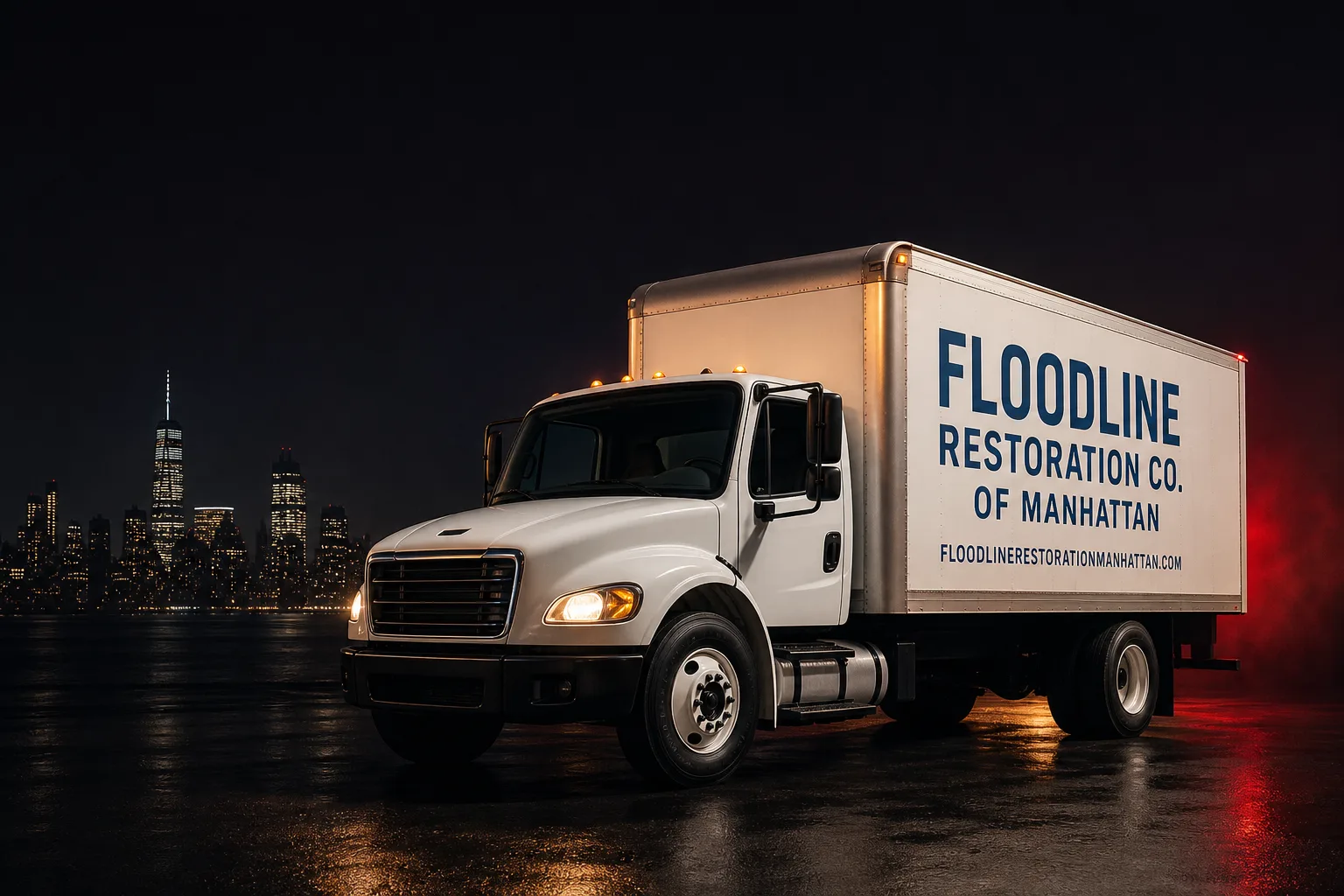
Free visual inspection and a written scope of work before any mitigation begins - photos, moisture readings, and drying logs go in your claim file
The scope we write is the scope we bill. Anything new gets shown to you, in writing, before we touch it.






 Before
 After
After Before
 After
After Before
 After
After24/7 Emergency Reconstruction & Cleanup in Lower Manhattan
When a water line fails in a converted TriBeCa loft or storm surge backs up through a Financial District sub-grade, you need a crew that knows Lower Manhattan’s buildings. Floodline Restoration Co. of Manhattan answers live around the clock, every day of the year. A real dispatcher picks up when you call (917) 924-4221, and a certified crew is dispatched inside the Lower Manhattan area, fast. The first hour after floodwater hits matters because salt water and black water contaminants move into drywall, subfloor, and structural cavities before you can see the damage. Our free visual inspection tells you exactly what is wet, what can be dried, and what has to come out. We send the same Reconstruction & Cleanup team from first extraction through finished rebuild.
Key Takeaways:
- Live phone answer 24/7, not a recording, with crews dispatched to Lower Manhattan immediately.
- Free visual inspection and a written scope before any work starts.
- One certified team handles drying, remediation, and reconstruction; no mid-job handoffs.
- Direct insurance billing with photo documentation and detailed moisture logs.
- Every job backed by the 90-Day Done Right Promise in writing.
Understanding Reconstruction & Cleanup Severity in Lower Manhattan Properties
Lower Manhattan is not like the rest of the city. Most of the residential inventory sits in 19th- and early 20th-century masonry commercial and warehouse buildings converted into lofts and condos, alongside the planned 1980s and 1990s towers of Battery Park City. Those buildings have thick masonry walls that hold moisture for weeks after a flood event, deep sub-grade basements at or near the water table, and legacy industrial plumbing chases that complicate drying considerably. When we assess reconstruction and cleanup scope, we classify every loss by water category. Category 1 is clean supply water from a burst pipe. Category 2 carries significant contamination from a washing machine overflow or sump failure. Category 3, the one we see most often in Lower Manhattan storm events, is grossly contaminated water carrying sewage, harbor pathogens, and salt. In this neighborhood, any water that entered from street level during a nor’easter or hurricane surge is treated as Category 3 until proven otherwise. The masonry construction changes the drying math too. We use structural drying with Dri-Eaz and Phoenix equipment, thermal imaging to find water trapped in wall cavities, and hygrometers tracking daily progress until the dry standard is met, not just until the surface feels dry. That distinction is what keeps mold from showing up months later inside a finished wall.
Why Lower Manhattan Property Owners Choose Floodline Restoration Co. of Manhattan
- Answer live, 24 hours a day: A person picks up the phone at 2 a.m. No call menu, no answering service. If a basement is flooding at midnight, you speak to someone who can send a crew now.
- Certified, background-checked crews: Our technicians hold IICRC WRT, FSRT, and AMRT certifications, along with RIA and IFA training. They arrive in uniform and show identification before entering your home.
- Free visual inspection with a written scope: Before any work starts, you get a line-item scope of work and honest pricing. No pressure, no inflated estimates, no surprises on the bill.
- One team from start to finish: The same crew that reads the moisture map on day one handles daily readings, hands you the drying log, and rebuilds what needs rebuilding. No mid-job handoff to a subcontractor you never met.
- Direct insurance billing: We document everything, communicate with your adjuster directly, and bill your carrier. You are not the messenger between Floodline and the insurance company.
- 45-minute response commitment within Lower Manhattan: Our lower Manhattan dispatch proximity means a crew can be on site quickly when water is moving and every minute counts.
Our Reconstruction & Cleanup Process
1. Inspection & Assessment
We begin with a full visual inspection plus moisture mapping across floors, walls, and sub-grade spaces. We identify the water category, map the damage, and locate shutoffs. In post-Sandy Lower Manhattan high-rises, shutoffs and mechanicals are often relocated above grade, so we document where everything actually is before demolition starts.
2. Extraction & Stabilization
Standing water is extracted with truck-mounted and portable extraction units. Saltwater from storm surge is handled as Category 3 with full containment, antimicrobial application, and aggressive corrosion control for structural steel and electrical systems.
3. Drying & Dehumidification
We place Dri-Eaz dehumidifiers, Phoenix air movers, and XPOWER equipment according to a drying map. Daily hygrometer readings are logged, and the log is shared with you and your carrier until the dry standard is met. Thick Lower Manhattan masonry walls take longer than modern drywall construction.
4. Cleaning & Sanitization
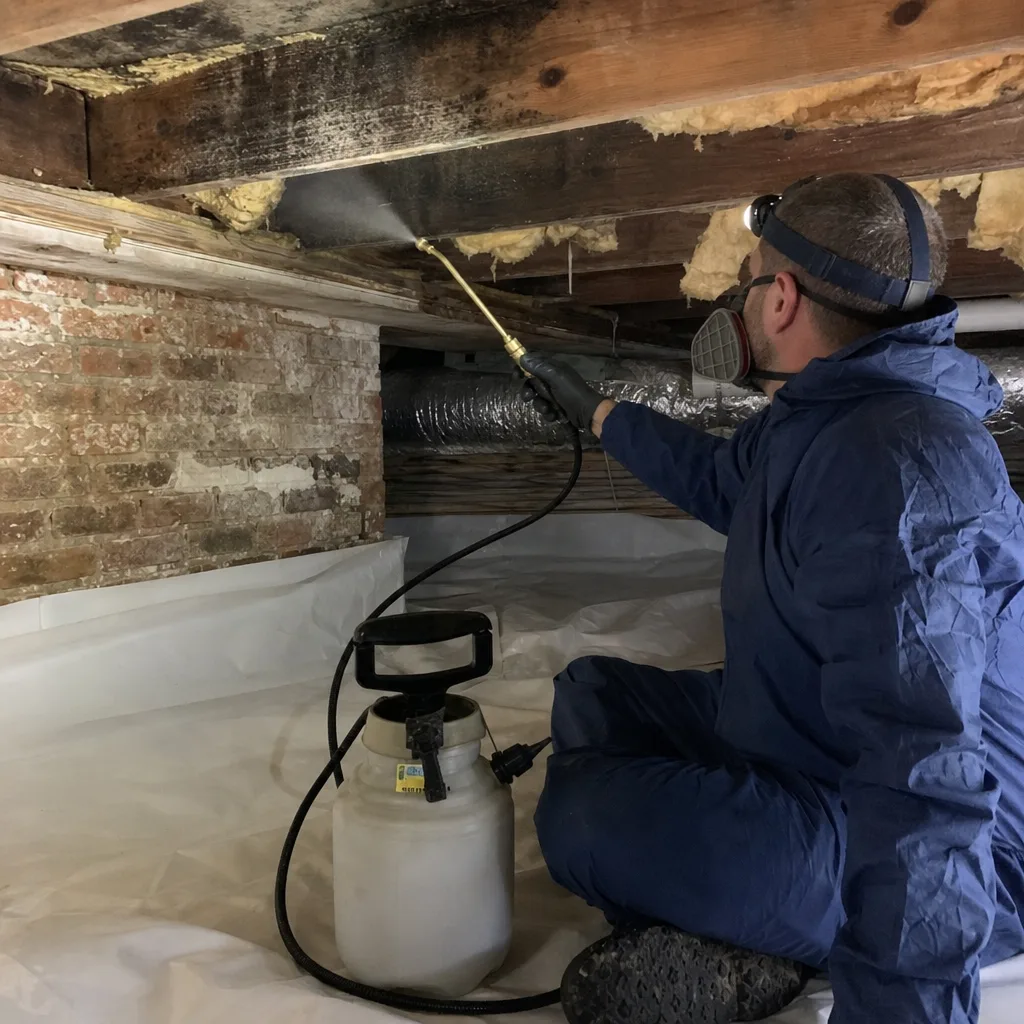
All affected surfaces are cleaned, sanitized, and treated with antimicrobials appropriate for the water category. Category 3 losses get aggressive treatment to prevent recontamination inside finished wall cavities.
5. Specialty Treatment
For Lower Manhattan properties we check for salt chloride residue on concrete, steel, and electrical components after any surge event. Chlorides accelerate corrosion even after drying. We also treat any groundwater intrusion points beneath Battery Park City and landfill sections where the water table runs high.
6. Repairs & Restoration
The same certified crew replaces drywall, re-installs flooring, repairs finishes, and handles carpentry and paint so the space is usable again. If contents were packed out, we coordinate their return after the rebuild is complete.
Need Emergency Reconstruction & Cleanup in Lower Manhattan Now?
Crews minutes away, answering live 24 hours a day. The sooner we start, the less it costs.
Working With Your Insurance Company
Most Lower Manhattan reconstruction and cleanup losses are covered insurance events, but only if the documentation is thorough from the first hour. We build the file as we work, not after the fact. That means photos of every affected wall and floor before demolition, moisture readings from day one through the final dry standard, and a line-item scope of work your adjuster can review line by line. We talk directly with your carrier so you do not have to explain restoration terminology or argue about whether a wall needed to come out. Our 90-Day Done Right Promise, the Keystone Standard, is in writing and stands behind every job completed by Floodline Restoration Co. of Manhattan. We have been in the restoration business since 2010, built around a dispatch board, not a sales desk, and we plan to be in town in thirty years. That changes how we file claims and how we stand behind work.
What We Provide Your Insurer
- Thorough documentation of the loss
- Photos of all damage, room by room
- Moisture readings and drying logs
- A detailed, line-item scope of work
- Direct coordination with your carrier
Built for Lower Manhattan’s Loss Calendar
Lower Manhattan has a rhythm of damage that does not match Uptown or Midtown. January and February freeze-thaw cycles split aging supply lines in converted pre-war lofts and warehouse conversions, sending Category 1 water through multiple floors before a shutoff can be reached. In older cast iron TriBeCa buildings, those supply lines run through oversized mechanical chases originally built for industrial plumbing, so a burst travels further and through more finished space. Spring brings rising groundwater from the high water table beneath the Battery Park City landfill sections, which means chronic sub-grade seepage into basements and parking levels even when no storm is present. Summer thunderstorms dump intense rain in a few hours, overwhelming perimeter drainage on a low lying peninsula with little geographic buffer. Nor’easter season is the heavy one. Storm surge from the Hudson, East River, or New York Harbor pushes black water into sub-grade spaces across the Financial District and Battery Park City. We plan our Lower Manhattan response around this calendar, keeping extraction equipment and drying capacity staged within reach during surge season.
Reconstruction & Cleanup Across Lower Manhattan’s Neighborhoods
Response routes matter in a dense neighborhood with narrow one-way streets. When a TriBeCa loft on Greenwich Street floods, our crew navigates cobblestone blocks and narrow access points, hauling equipment through freight elevators and service entrances that were built for cargo, not passenger convenience. In Battery Park City, residential towers built on landfill have deep parking structures and sub-grade mechanical rooms where groundwater intrusion is the chronic concern; we know the access points and loading docks. The Financial District’s converted office buildings present vertical water pathways through shared risers and legacy plumbing chases, so a leak on the 14th floor shows up as damage on the 9th. Around South Street Seaport, old maritime commercial structures have thick timber and masonry construction that hides moisture in joist ends and sill plates. As a fully certified IFA member with dispatch coordinated from our New York City office, we route Lower Manhattan jobs through a live dispatcher who knows the difference between a Chelsea high rise and a Seaport timber building.
Specialized Reconstruction & Cleanup Services We Offer in Lower Manhattan
Full-Service Reconstruction
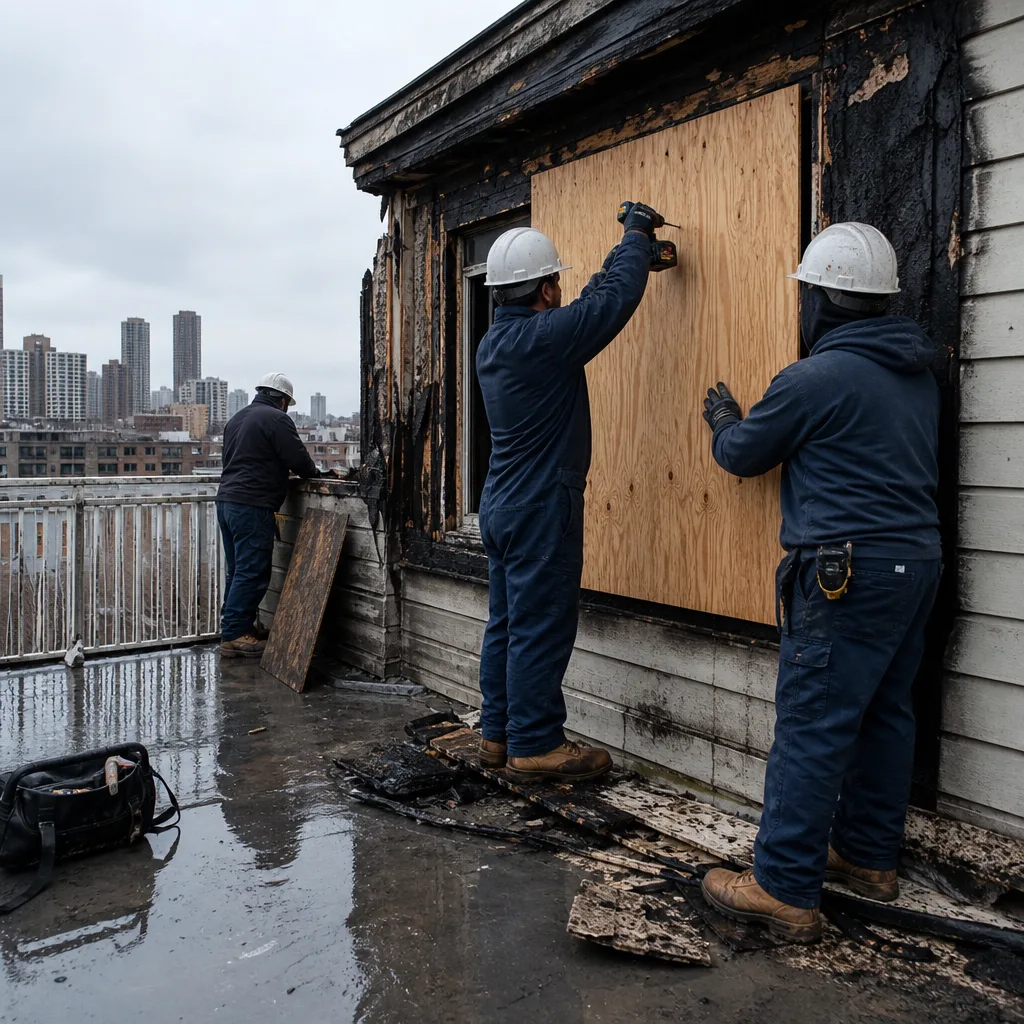
When we say full service, we mean the same crew that extracts water installs the new drywall, paints, and finishes. Lower Manhattan flood losses often require demolition of wet drywall, treatment of the underlying masonry or steel, and rebuilding to current code. We coordinate with building management where needed, especially in Battery Park City towers with post-Sandy retrofits.
Drywall & Flooring Replacement
Lower Manhattan’s flood zone designation means drywall and engineered flooring replacement after Category 3 water has to meet a stricter standard than in Midtown. We remove and replace contaminated materials, treat stud cavities and masonry with antimicrobials, and install new materials after moisture readings confirm the substrate is dry. Installing new drywall over groundwater-damp masonry will fail within months, so we test before we hang.

Contents Restoration & Pack-Out
Furniture, clothing, documents, and electronics that were wet by clean water can often be restored in place or at our facility. Items contaminated by Category 3 surge water require different handling. We inventory and pack out contents, clean and restore what can be saved, and document for your claim.

Carpet & Upholstery Cleaning
After a reconstruction job, dust and fine particulates settle into carpets and fabric. We run professional-grade cleaning on carpets and upholstery so the space is clean, not just rebuilt. This is particularly important for older Lower Manhattan residents in Battery Park City and TriBeCa who want the job done completely.

Post-Construction Cleanup
Construction dust is more than cosmetic. We remove drywall dust, debris, and residue from the job so you are not living with fine particles in the air for weeks. This includes HEPA vacuuming of all surfaces, cleaning of duct openings, and final detail work.
Insurance Claim Documentation
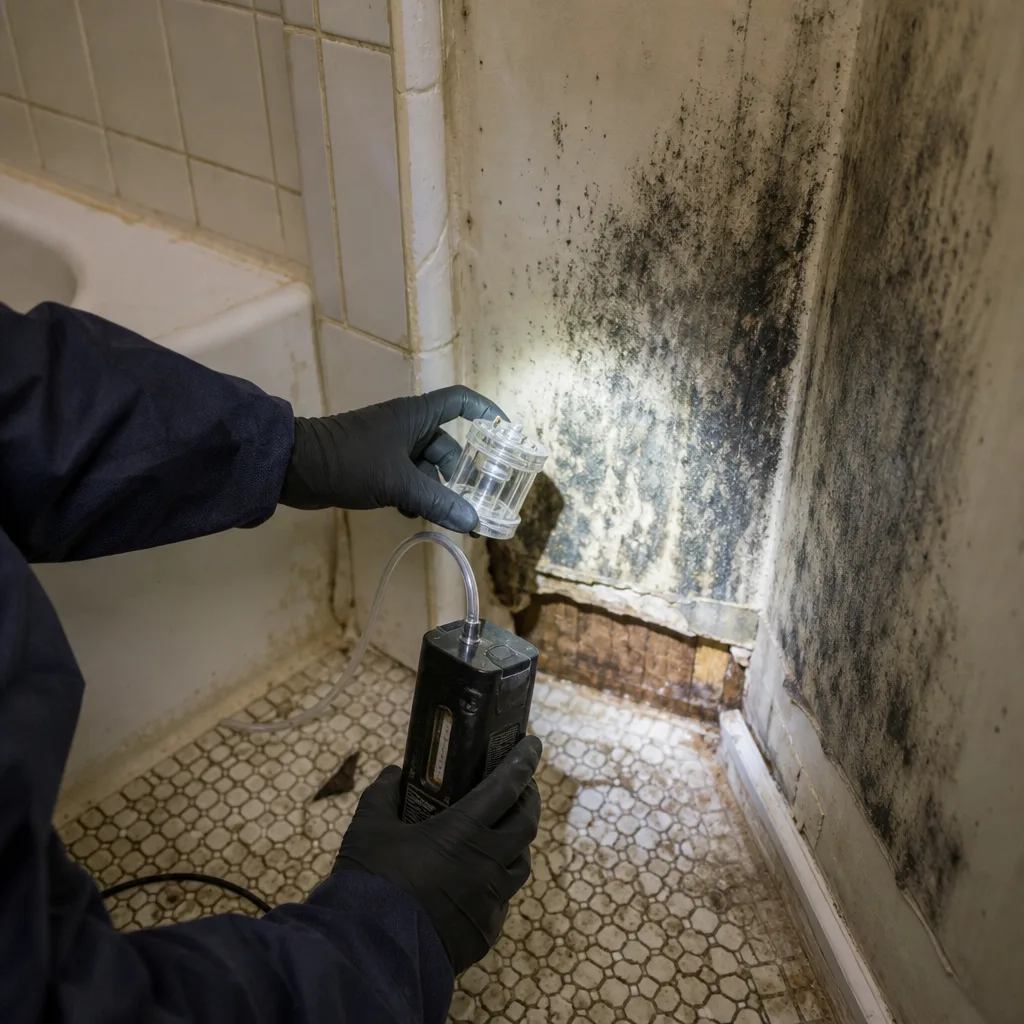
This service runs through every job we do. Photos, moisture logs, line-item scopes, and adjuster communication. We prepare the file so your claim moves without you having to advocate for every line item. The written documentation also supports the 90-Day Done Right Promise if anything needs follow-up.
What happens when you call
- 1
A real person answersNo phone trees - you reach a local pro.
- 2
You get an upfront price rangeHonest numbers before anyone is dispatched.
- 3
A background-checked tech heads outLicensed & insured, dispatched right away.
- 4
You approve before work beginsNothing starts until you say go.
Reconstruction & Cleanup Costs in Lower Manhattan, NY
Lower Manhattan pricing is shaped by access, building age, and flood zone requirements. A standard drywall and flooring repair from a Category 1 pipe burst in a TriBeCa loft typically runs $2,800 to $6,500. Post-construction cleanup after a moderate loss runs $750 to $2,200. Full-service reconstruction after a Category 3 surge backup in a Battery Park City sub-grade can run $40,000 to $150,000 or more depending on the size of the affected space and the extent of salt corrosion and masonry treatment required. Contents restoration and pack-out for a one-bedroom loft typically runs $3,000 to $9,000. Every job starts with a free visual inspection that produces a written, line-item scope. That is the only way to get a real number for Lower Manhattan’s specific conditions. If you have insurance, we bill your carrier directly and advocate for the correct scope so you are not paying for shortcuts that fail later. Call (917) 924-4221 to schedule your free estimate.
We Also Serve Cities Near Lower Manhattan
Our Lower Manhattan crews also cover Fairview, Harrison, East Bronx, and Hunts Point. If your property sits just outside the neighborhood boundary, call us and a live dispatcher will route the nearest available certified crew.
Lower Manhattan Reconstruction & Cleanup Questions, Answered
Why does Lower Manhattan reconstruction require different drywall and flooring replacement standards than Midtown?
Lower Manhattan sits in FEMA Flood Zone AE, a low-lying tidal peninsula where storm surge from the Hudson, East River, and New York Harbor carries Category 3 black water with sewage and salt. That means drywall and flooring must be treated for floodwater pathogens and chlorides that are barely a concern one mile north. Skipping that treatment leads to recontamination inside finished walls and chloride corrosion that shows up months later.
How does the high water table under Battery Park City affect sub-grade reconstruction after a flood?
The water table beneath the landfill sections of Battery Park City sits high, which means chronic groundwater intrusion into basements and parking structures even when no storm is present. Any drywall or flooring installed without addressing sub-slab moisture will fail within months, so we test for moisture before we rebuild and recommend drainage corrections where needed.
Why do Lower Manhattan high-rises have shutoffs and equipment in non-standard locations after Sandy?
After Hurricane Sandy, dozens of Lower Manhattan residential high-rises relocated boilers, electrical switchgear, and elevator machinery from basements to upper floors or rooftops. That means the system you need to shut off is often nowhere near the flooded floor. Our crews document shutoff locations as part of the pre-demolition scope, which saves hours on site and prevents misread damage pathways.
What is the difference between water extraction and structural drying in a converted TriBeCa loft with thick masonry walls?
Extraction removes standing water, but Lower Manhattan’s 19th-century masonry holds moisture deep in the wall system. Structural drying uses dehumidifiers, air movers, and daily hygrometer readings to drive moisture out of masonry, joist ends, and wall cavities until the dry standard is met. That can take weeks in a TriBeCa loft; stopping when the surface feels dry invites mold.
Can contents be restored after category 3 surge water in a Financial District loft?
Some contents can be restored, but Category 3 water is grossly contaminated, so porous items like upholstered furniture, mattresses, and paper often cannot be safely restored. Non-porous items can be cleaned and sanitized. We inventory everything, document what was damaged, and submit the documentation with your claim.
How fast can a Floodline Restoration crew get to my Lower Manhattan property?
We commit to a 45-minute response within Lower Manhattan. A live dispatcher answers the phone immediately, and the closest certified crew is routed to your address that same visit. Extraction starts on the first trip. Call (917) 924-4221 any time.
Will my insurance cover Lower Manhattan reconstruction and cleanup?
Most standard property policies cover sudden and accidental water damage, including storm surge with the right flood coverage. We document the loss thoroughly, work directly with your adjuster, and bill your carrier directly, so you are not stuck negotiating scope or terms. What matters is proper documentation from the first hour.
What should I do in the first 30 minutes after a flood in Lower Manhattan?
Shut off power to the affected area if you can do so safely, avoid walking through the water, and call (917) 924-4221. Do not touch electrical panels or wiring that has been wet. Take photos from the edge of the water if safe. If the water came from outside, treat it as contaminated and keep family and pets away.
Serving Lower Manhattan, NY - Our Local Coverage Area
We’re based in the Lower Manhattan area and know this community well. Use the map below to see our service coverage - if you’re nearby, we can almost certainly help.
Call Floodline Restoration Co. of Manhattan
If you are looking at water damage in Lower Manhattan right now, call (917) 924-4221. A live person answers, any hour, and a certified crew is on the way. Free visual inspection. Written scope before any work begins. One team from first extraction to finished rebuild, and the 90-Day Done Right Promise in your hands. Floodline Restoration Co. of Manhattan is led by Curt Bowman and has served local communities since 2010, built around a dispatch board, not a sales desk. Current standing offers: $50 Off Any Repair Over $250, the $89 Seasonal Tune-Up, and a Senior & Veteran 5% Discount, always.
Written by Curt Bowman, Owner at Floodline Restoration Co. of Manhattan, serving Lower Manhattan since 2010.