

Free visual inspection and a written scope of work before any mitigation begins - photos, moisture readings, and drying logs go in your claim file
The scope we write is the scope we bill. Anything new gets shown to you, in writing, before we touch it.






 Before
 After
After Before
 After
After Before
 After
After24/7 Emergency Reconstruction & Cleanup in Munsey Park
Reconstruction and cleanup in Munsey Park typically costs between $2,800 and $14,000 depending on how much of the home’s original pre-war construction is involved, and our crews respond to the village within 45 minutes, 24 hours a day. Call (917) 924-4221 and a live dispatcher answers, not a recording. We arrive, assess the damage against Munsey Park’s specific building stock, and start extraction or stabilization the same visit.
Water moving through a 1930s Colonial Revival on Manhasset Avenue behaves nothing like water in a 1990s drywall house. Horsehair plaster holds moisture. Old-growth oak flooring swells slowly and releases moisture even slower. Every hour a nor’easter leak or sewer backup sits unmitigated, the drying timeline stretches further and the risk of secondary mold inside wall cavities climbs. We dispatch from our New York City office with crews that know these houses because we have rebuilt them for years.
Understanding Reconstruction & Cleanup Severity in Munsey Park Properties
Severity here is not measured only by how much water is standing. It is measured by what the water touched. Category 1 water from a burst supply line inside a finished basement on Hunt Lane requires aggressive extraction, moisture mapping, and structural drying with desiccant or low-grain-refrigerant dehumidifiers, but the finishes are often salvageable if we get there fast. Category 3 water from a cast-iron sewer lateral compromised by the village’s mature root systems is a different job entirely: full containment, removal of saturated porous materials, antimicrobial application, and air scrubbing before any rebuild starts.
Munsey Park homes complicate this because virtually every wall assembly is horsehair plaster over wood lath, and every floor is old-growth oak or chestnut. These materials absorb water differently than modern drywall. A moisture meter reading of 11% wood moisture content in a modern stud wall tells you something useful. The same number in a 1930s chestnut floor with 90 years of seasonal movement tells you less. Our technicians are trained to read the material, not just the number. For fire and smoke losses, the concern is smoke migration through original plaster walls and unsealed floor cavities. Soot from a kitchen fire on Remington Road can travel through the joist bays and settle in rooms two floors up, and the cleaning protocol has to account for that migration path, not just the visible damage.
The village’s own code oversight adds another layer. Munsey Park protects its architectural character, which means a repair that would pass in a postwar development will not pass here. That is not a frustration for us. It is the standard we already work to.
Why Munsey Park Property Owners Choose Floodline Restoration Co. of Manhattan
- 45-minute response commitment to any address in Munsey Park, with crews staged from our metro dispatch and a live person on the phone at 2 a.m.
- 24/7 live answer from a dispatcher who knows the village’s streets, not an automated phone tree that routes you to a voicemail.
- IICRC-certified crews holding WRT, ASD, and AMRT certifications, trained on pre-war construction materials that most restoration technicians never see outside a textbook.
- Free visual inspection before any scope is written, so you get a straight answer about what needs full reconstruction versus what can be cleaned and dried.
- Direct insurance billing with photo documentation and line-item scopes your adjuster can read without a single phone call from you.
- One team from extraction to finished rebuild, including the trim, flooring, and plaster work, so there is no mid-job handoff to a subcontractor who has never seen a Munsey Park home.
Our Reconstruction & Cleanup Process
Inspection & Assessment
We start every Munsey Park job with thermal imaging and penetrating moisture meters on the actual materials present: horsehair plaster, old-growth flooring, original lath. We map the moisture boundary and document everything photographically before we move anything.
Extraction / Stabilization
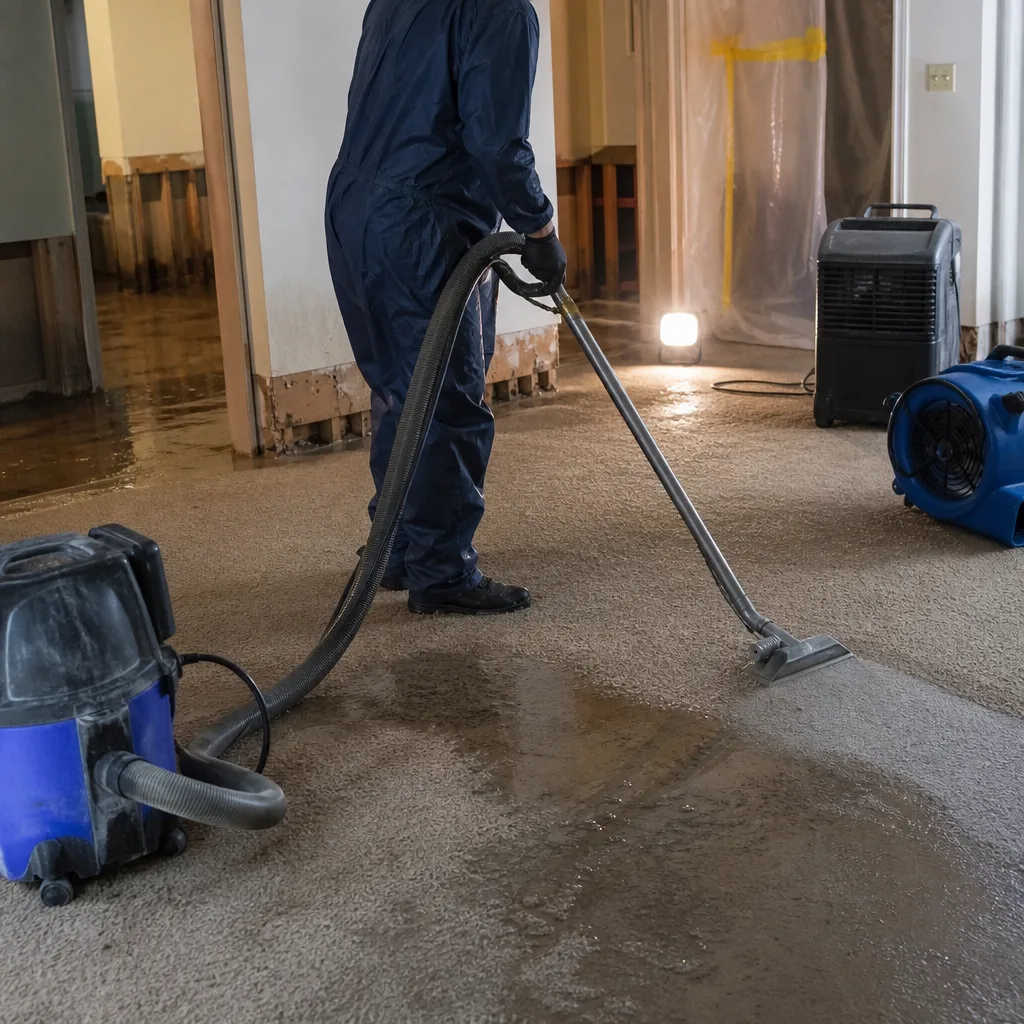
Standing water comes out first, using truck-mounted and portable extraction units. If a tree limb has punctured a slate roof, we tarp and set containment before interior work begins, so the loss stops growing while we work.
Drying & Dehumidification
This is where Munsey Park jobs diverge from standard protocol. We run Phoenix and Dri-Eaz dehumidifiers and high-volume air movers, but we also expect drying timelines 30 to 50% longer than modern construction. Daily readings in wall cavities and subfloor spaces continue until the dry standard is met, and every reading goes into the log your insurer gets.
Cleaning & Sanitization
For Category 3 water, fire soot, or mold, this means HEPA air scrubbing, antimicrobial treatment, and containment protocols that protect the rest of the home. We handle contents on site or pack out for off-site restoration when the damage warrants it.
Period Material Matching & Specialty Treatment
Original chestnut flooring is sanded and refinished where possible, or milled to match where not. Plaster is patched with compatible materials, not skimmed with drywall compound. Slate and copper are sourced to match the existing roof. The goal is a repair no one can find.
Repairs & Restoration
The drywall, flooring, trim, paint, and rebuilt assemblies go in only after moisture readings confirm the structure is dry. Then we walk the job with you, hand over the moisture log and the 90-Day Done Right Promise in writing, and leave the house as if we were never there except for the fact that it is whole again.
Need Emergency Reconstruction & Cleanup in Munsey Park Now?
Crews minutes away, answering live 24 hours a day. The sooner we start, the less it costs.
Working With Your Insurance Company
We have sat across the table from enough adjusters to know what slows a claim: vague photos, missing moisture logs, scopes written in shorthand. So we build the file from the first hour. Our crews photograph every affected room before demolition starts, log daily moisture readings on the pre-war materials that make Munsey Park claims different, and write line-item scopes that name the actual repair, not a generic category. We talk to your adjuster directly, which means you are not the middleman explaining why plaster costs more than drywall. When the carrier has questions about the drying timeline on a 1930s wall assembly, we answer them with data, not argument.
What We Provide Your Insurer
- Thorough documentation of the loss
- Photos of all damage, room by room
- Moisture readings and drying logs
- A detailed, line-item scope of work
- Direct coordination with your carrier
Built for Munsey Park’s Loss Calendar
January in Munsey Park means deep freezes finding the weak point in galvanized supply lines that have been in the ground since the Coolidge administration. When a supply line fails inside a finished basement, the water is Category 1 and the finishes are often salvageable if extraction starts within hours. March brings the spring thaw, when snowmelt and saturated ground push groundwater against fieldstone foundations and through the smallest cracks in original basement slabs. Summer thunderstorms cause flash flooding in low-lying sections of the village, and the cast-iron sewer laterals that have been infiltrated by the same root systems that give Munsey Park its canopy get overwhelmed quickly.
Then comes nor’easter season. November through March, sustained wind-driven rain works beneath aging slate flashings and into the unventilated attic spaces common in these older homes. A nor’easter that drops a mature oak limb through a slate roof creates a combined roof-puncture and interior water loss that needs emergency tarping, extraction, extended drying, and eventually a period-correct rebuild. The village’s proximity to Manhasset Bay keeps ambient humidity elevated all year, which means any water that does get into a wall cavity has a head start on mold if we do not dry aggressively from day one.
Reconstruction & Cleanup Across Munsey Park’s Neighborhoods
Munsey Park is small enough that we know it by street, not by quadrant. The homes along Manhasset Avenue and Hunt Lane run to large Georgian and Colonial Revival estates with steep slate roofs and original copper flashing, which is where most of our roof-puncture and wind-driven-rain calls originate. Around Remington Road and the streets feeding off it, the Tudors carry more original half-timber detailing, and water intrusion tends to travel along the beam pockets and around the masonry, making thermal imaging the only reliable way to find the full moisture boundary. The Colonial Revivals on the side streets near the village center often have finished basements with original oak floors, which means Category 3 sewer backups from root-compromised cast-iron laterals hit finished space, not just storage. And the homes bordering the village’s parkland and mature stands lose more limbs to nor’easters than anyone in a newer subdivision would guess. Every one of these calls starts with the same two questions: what material got wet, and how long ago.
After a nor’easter dropped a mature oak limb through a slate roof on Manhasset Avenue, our crew performed emergency water extraction and set containment before documenting the pre-loss condition of the home’s original chestnut flooring and horsehair plaster. We ran extended structural drying with Phoenix dehumidifiers and air movers, taking moisture readings daily in wall cavities where the plaster slowed evaporation, then rebuilt the damaged slope with salvaged slate and restored the interior to match the 1930s Colonial Revival details, with no visible transition between old and new.
Specialized Reconstruction & Cleanup Services We Offer in Munsey Park
Full-Service Reconstruction
When a Munsey Park home needs more than drying, we rebuild it. That means structural repairs to framing and sheathing, plaster restoration, flooring replacement or refinishing, trim and millwork that matches the original profiles, and paint that matches the home’s period palette. We do not hand the rebuild to a subcontractor. The same crew that ran the drying handles the reconstruction, and Curt Bowman’s name is on the work.
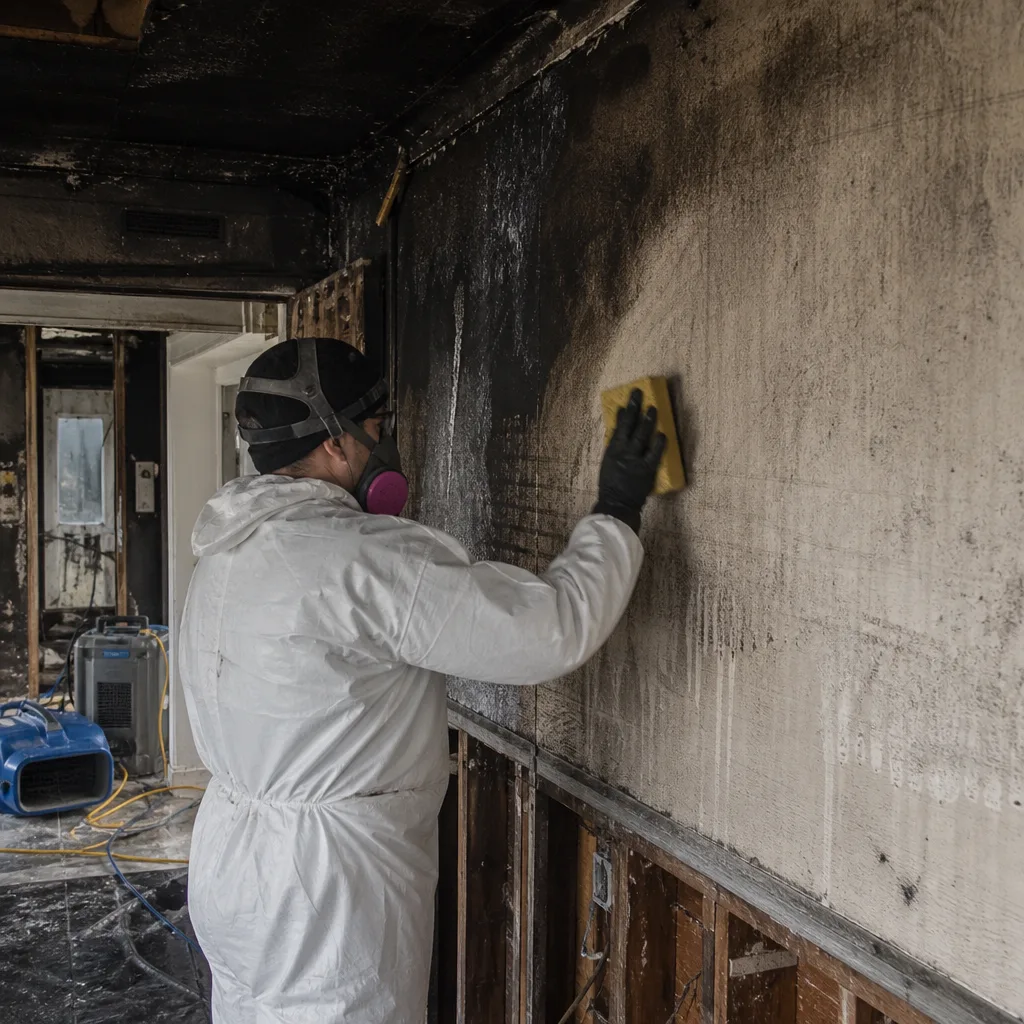
Drywall & Flooring Repair
In most houses, this is straightforward. In Munsey Park, it requires matching. We source and mill old-growth oak and chestnut flooring to match existing widths and grain, repair horsehair plaster with compatible materials rather than modern substitutes, and match paint-grade trim profiles from the 1920s and 1930s. The repair should disappear into the room.
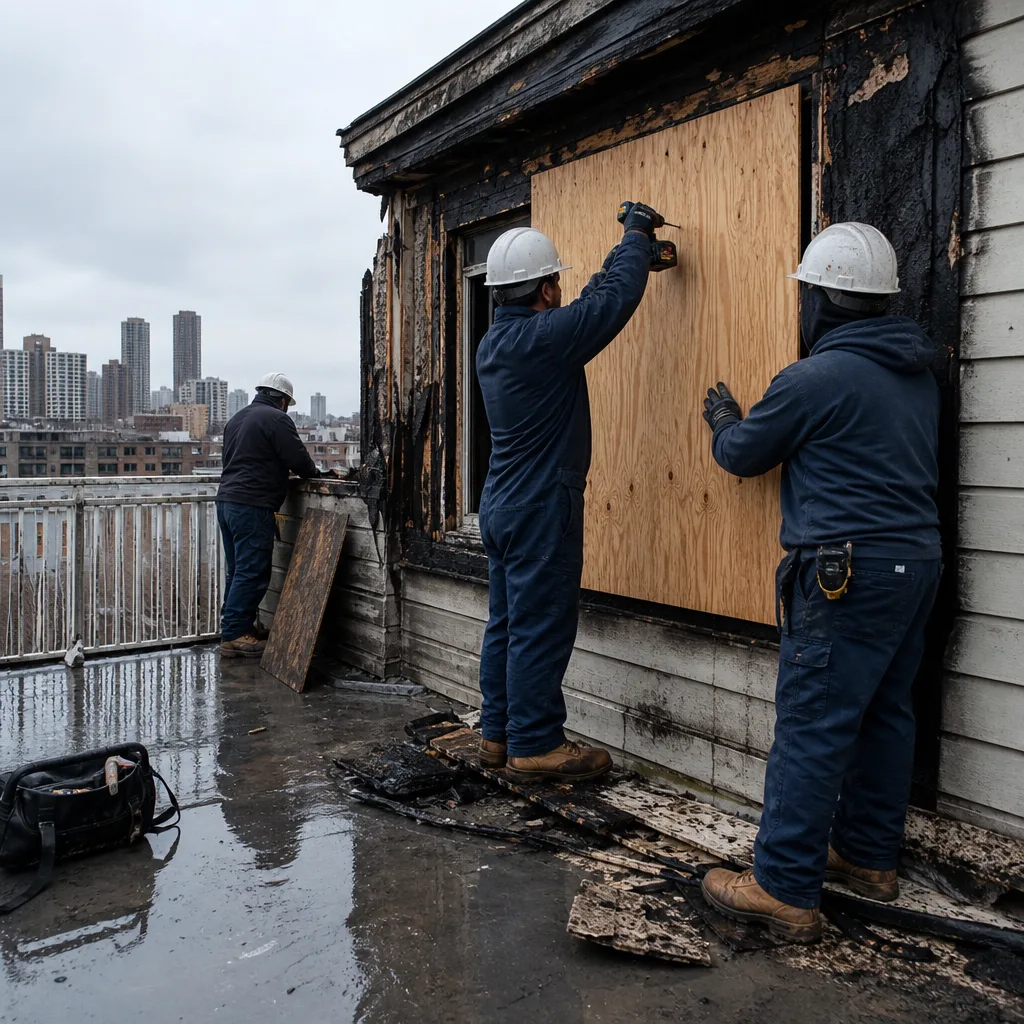
Contents Restoration & Pack-Out
When a finished basement floods on Hunt Lane, the contents matter as much as the structure. We inventory, photograph, pack out, and restore what is restorable, using professional-grade drying chambers for documents, textiles, and wood furnishings. Items that cannot be restored are documented for the claim with the same detail.
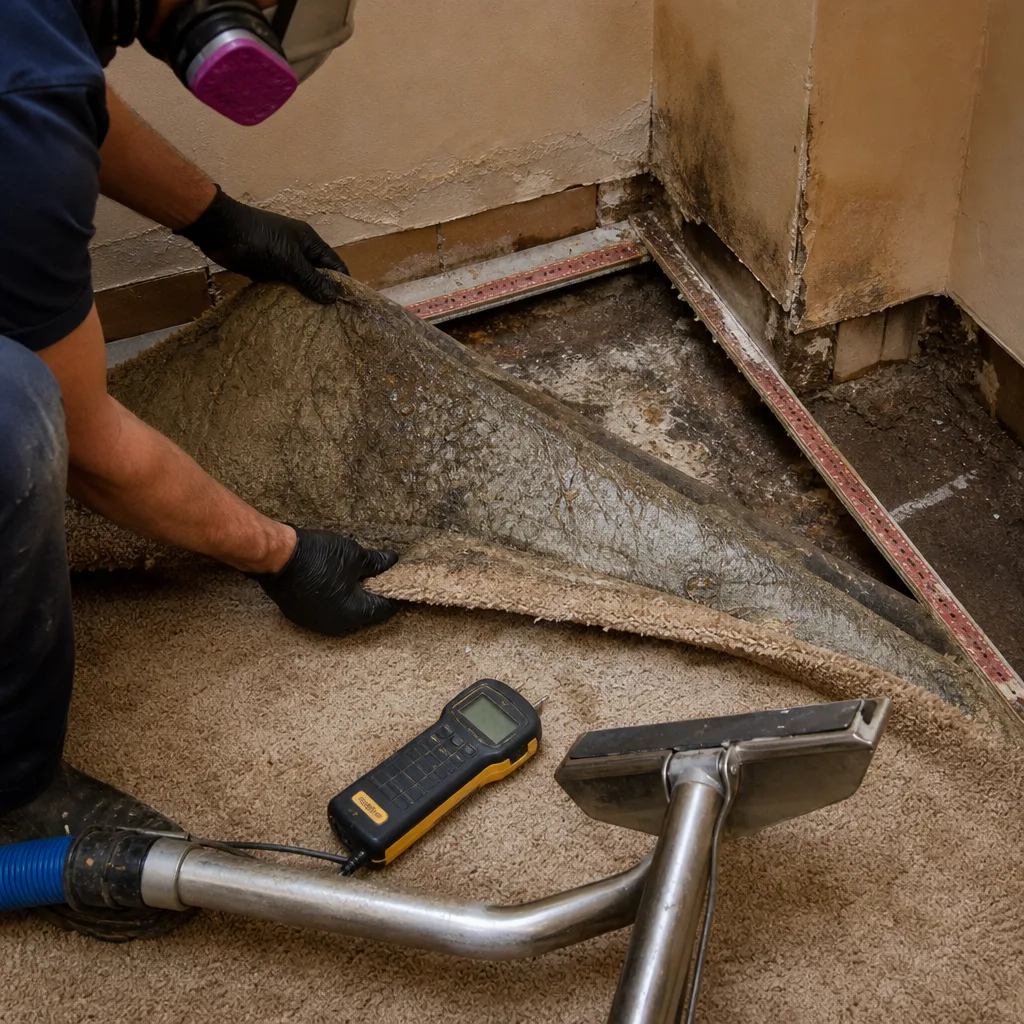
Carpet & Upholstery Cleaning
Water and soot damage does not always mean replacement. Our carpet and upholstery cleaning uses hot-water extraction and professional-grade equipment to remove contaminants and odors from salvageable textiles, with drying and deodorizing as part of the same visit.
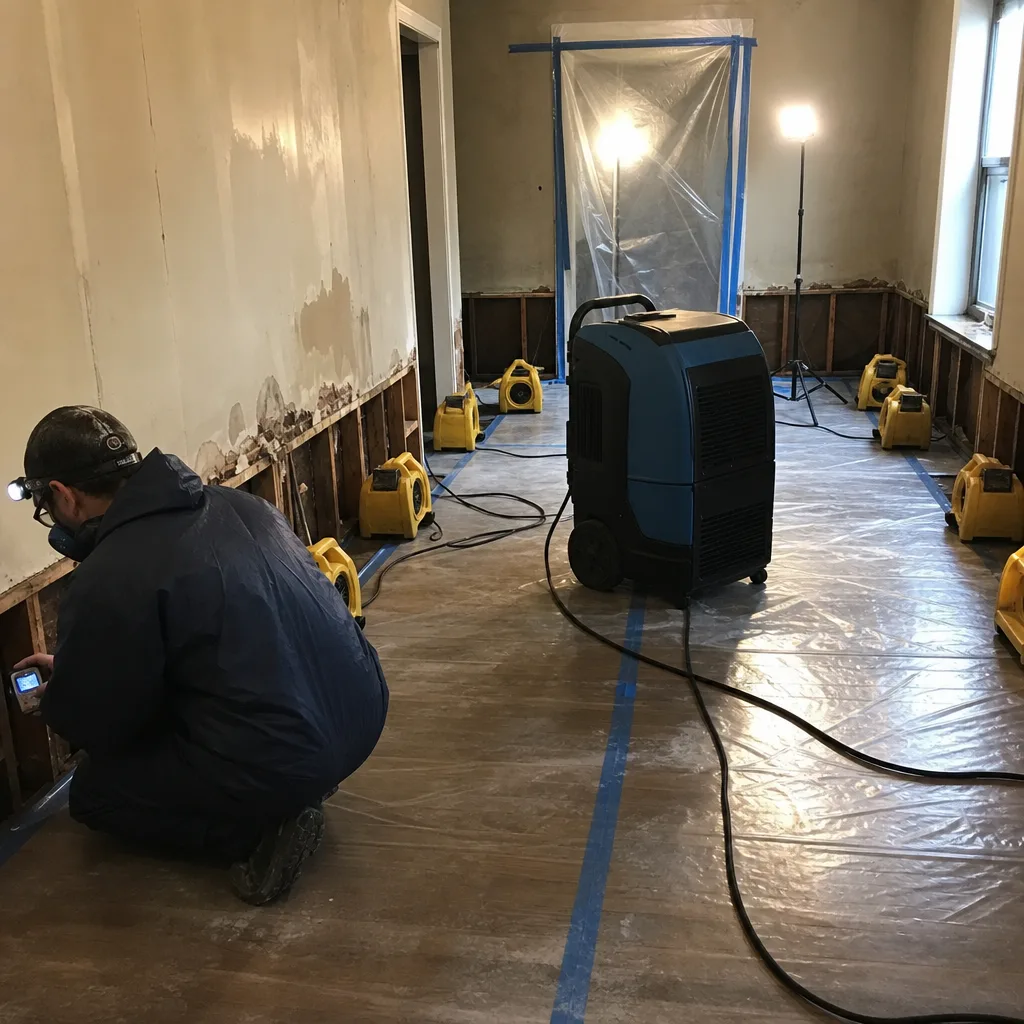
Post-Construction Cleanup
After we rebuild, we clean. HEPA-filtered air scrubbing, surface cleaning, and final detailing mean the home is ready to live in when we leave, not ready for another crew to come behind us.
What happens when you call
- 1
A real person answersNo phone trees - you reach a local pro.
- 2
You get an upfront price rangeHonest numbers before anyone is dispatched.
- 3
A background-checked tech heads outLicensed & insured, dispatched right away.
- 4
You approve before work beginsNothing starts until you say go.
Reconstruction & Cleanup Costs in Munsey Park, NY
A typical water mitigation job in Munsey Park, with extraction, drying, and restoration of a finished basement, runs $4,200 to $11,500. Fire and smoke reconstruction on a single room starts around $6,000 and can reach $20,000 or more when period plaster, flooring, and trim are involved. Contents pack-out and restoration typically adds $1,800 to $6,000 depending on volume and material type. Sewer backup cleanup from root-compromised laterals runs $3,500 to $9,000 for full containment, removal, sanitization, and rebuild. The single biggest cost variable in Munsey Park is whether the damage touched original materials: a modern drywall patch is cheap, but a horsehair plaster repair and old-growth floor match is not. We give you a written scope before work starts, with a line item for every dollar, and we bill your carrier directly when coverage applies. Call (917) 924-4221 and we will give you a straight answer, free of charge, before anything gets signed.
We Also Serve Cities Near Munsey Park
Our crews respond to Reconstruction & Cleanup calls throughout the surrounding area, including Fairview, Harrison, East Bronx, and Hunts Point, with the same 45-minute commitment and the same 90-Day Done Right Promise in writing.
Serving Munsey Park, NY - Our Local Coverage Area
We’re based in the Munsey Park area and know this community well. Use the map below to see our service coverage - if you’re nearby, we can almost certainly help.
Munsey Park Reconstruction & Cleanup Questions, Answered
Why does drying take longer in Munsey Park homes compared to newer construction?
Horsehair plaster and old-growth oak flooring absorb and release moisture far more slowly than modern drywall and engineered lumber, so structural drying in Munsey Park routinely runs 30 to 50% longer than a typical restoration timeline. We plan for that from the first moisture reading, and we keep daily logs on every affected cavity until the dry standard is actually met, because premature rebuild traps moisture and guarantees a second loss.
Can you match original slate roofing and copper flashings after a tree limb puncture?
Yes, we source salvaged slate and match existing copper work so the repaired slope looks continuous with the original roof. Munsey Park’s village code and homeowner expectations simply do not permit a visible modern substitute, and honestly, neither do our standards.
Do you handle sewer backup cleanup from tree-root infiltration in Munsey Park?
Yes, and this is one of the most common calls we get after a storm. The same mature root systems that give Munsey Park its character infiltrate the cast-iron sewer laterals running beneath these older properties, and when the line backs up, it is Category 3 water in a finished basement. We contain, extract, sanitize, and rebuild, and we document the root cause so the claim reflects the actual failure, not just the cleanup.
Will you pack out and restore contents from our finished basement after a nor’easter flood?
Yes, we inventory and photograph every item before it moves, pack out what is restorable, and run professional-grade drying and cleaning on documents, textiles, and wood furnishings. Items that cannot be restored are documented for your carrier with the same photographic detail we use for the structure.
How do you document damage for insurance claims involving original plaster and hardwood in Munsey Park?
At its core, this is a promise: a real person answers the phone at any hour, our crew arrives in 45 minutes or less, and every job finishes with the 90-Day Done Right Promise in writing. The guarantee was put in place by Curt Bowman and it is tied to the values code we run on: Krafted right, Every time, Your home first, Standing behind it.
How fast can someone actually get to my Munsey Park home?
Our commitment is 45 minutes to any address in the village, and we answer the phone live when you call. That is not a dispatch center that logs a ticket; it is a person who knows the difference between Manhasset Avenue and Hunt Lane and can get a crew moving immediately.
Can I stay in my Munsey Park home during reconstruction?
It depends on the scope. For a single-room water loss with containment set, most homeowners stay. For Category 3 water, fire soot migration, or any job involving mold clearance, we recommend temporary relocation until the air scrubbing and clearance testing are complete. We will tell you straight, based on what our instruments say, not on what is convenient for the schedule.
What should I do in the first 30 minutes of a water or sewage loss in Munsey Park?
Call (917) 924-4221 before you move anything. Shut off the water to the fixture if you can do so safely, and do not enter standing water if there is any chance it is from a sewer backup. Then let us handle it. The first hour determines whether your original flooring and plaster are salvageable or replacement material, and in Munsey Park, replacement material is the expensive path.
For a free visual inspection in Munsey Park and a straight answer about your home, call (917) 924-4221. A live person answers, day or night. We will be there when we say.
Written by Curt Bowman, Owner at Floodline Restoration Co. of Manhattan, serving Munsey Park and surrounding communities.