
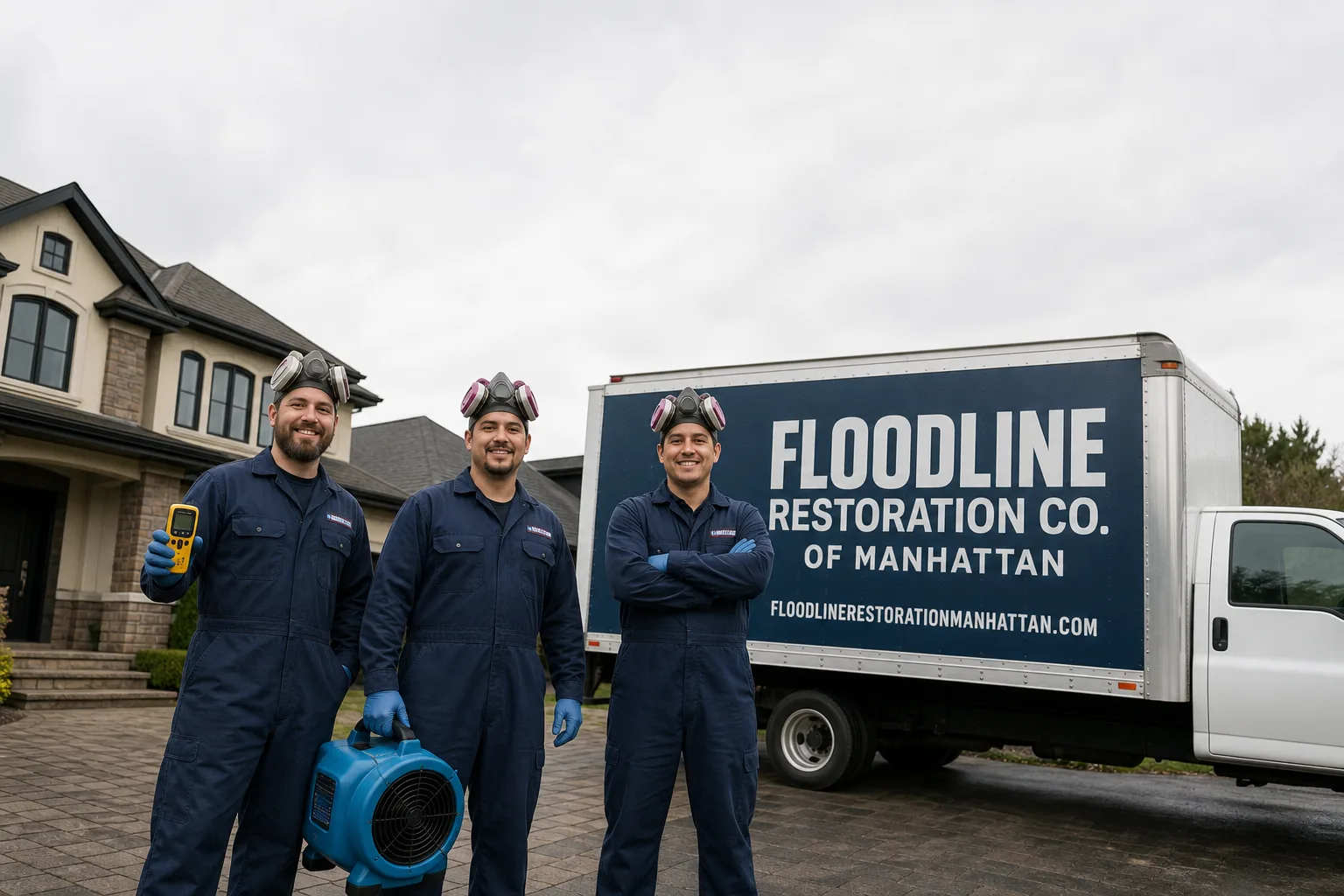
Free visual inspection and a written scope of work before any mitigation begins - photos, moisture readings, and drying logs go in your claim file
The scope we write is the scope we bill. Anything new gets shown to you, in writing, before we touch it.






 Before
 After
After Before
 After
After Before
 After
After24/7 Emergency Reconstruction & Cleanup in Palisades Park
Reconstruction and cleanup in Palisades Park typically runs $1,800 to $14,000 depending on how far water traveled through plaster walls and shared floor assemblies, and the first call you make determines whether a kitchen loss stays a kitchen loss or becomes a three-unit rebuild. We answer live at (917) 924-4221, every hour of every day, and a Floodline Restoration Co. crew can be on-site in Palisades Park within 45 minutes of your call. The sooner extraction and drying begin, the less reconstruction you pay for. That is not a sales line. It is the difference between replacing drywall and replacing studs.
Our Reconstruction & Cleanup team handles the full cycle: water extraction, structural drying, demolition, rebuild, and final cleanup, without handing you off to a third-party general contractor. If you’re searching for Reconstruction & Cleanup in Palisades Park, you’ll find we do the work the way this borough’s older buildings demand: carefully, with a moisture map, and with a written scope before anything gets torn out.
Understanding Reconstruction & Cleanup Severity in Palisades Park Properties
In Palisades Park, severity is rarely about how much water you see. It’s about what the water is doing inside original plaster-and-lath assemblies. Most of the borough’s housing stock went up between the late 1940s and the 1970s. Those walls are not like modern drywall cavities. Plaster is dense, lime-based, and porous in a way that wicks water upward and outward, then holds it against wood lath and studs for days, sometimes weeks. A Category 1 supply-line break that would dry in 72 hours in a sheetrocked Fort Lee condo can require 6 to 9 days of active drying in a Palisades Park two-family.
Then there’s the Category 2 and Category 3 reality of shared cast-iron waste lines. When a drain stack under a Broad Avenue restaurant fails mid-service, the grey water that drops into the unit below is contaminated, and it migrates through chase walls into adjacent apartments. We moisture-map every affected surface, not just the visible stain. That map drives the demolition scope, the drying plan, and the rebuild. Guessing at this stage is how homeowners end up with a musty smell six months after the contractor left.
Why Palisades Park Property Owners Choose Floodline Restoration Co. of Manhattan
- 45-minute response commitment to Palisades Park - a live dispatcher confirms a crew and an ETA before you hang up. Not a recording, not a callback.
- 24/7 live answer, every day of the year - at 2 a.m. you get a person who can dispatch. You do not get a voicemail.
- IICRC-certified technicians - WRT for water damage, FSRT for fire and smoke, AMRT for mold. Background-checked, uniformed, and trained to the standard, not to a sales script.
- Free visual inspection with a written scope - you’ll know what we found, what we recommend, and what it costs before demolition starts. No pressure, no surprises.
- Direct insurance billing - we document the loss, submit the line-item estimate, and talk to your adjuster so you don’t have to play messenger.
- One team from first extraction to final paint - the same crew that reads the moisture map on day one rebuilds what needs rebuilding. No mid-job handoff, no inherited subcontractor.
Our Reconstruction & Cleanup Process
Inspection & Assessment
We arrive, walk the property, and use thermal imaging and moisture meters to find water you cannot see. In Palisades Park’s plaster walls, that hidden water is the whole ballgame. You get a written scope and a straight answer.
Extraction / Stabilization
Standing water comes out with truck-mounted and portable extraction units. We stabilize the site: power where safe, contents moved, plumbing stopped at the source. The goal is to stop the loss from spreading to the unit below.
Drying & Dehumidification
We place Dri-Eaz and Phoenix air movers and dehumidifiers based on a calculated drying chamber, not scattered around the room. Daily moisture readings get logged. The log goes to you and your carrier until dry standard is met.
Cleaning & Sanitization
Affected surfaces are cleaned, disinfected where category requires, and cleared. Carpet, upholstery, and hard surfaces get treated to the standard appropriate for the water category. We do not mask odors; we remove their source.
Specialty Treatment: Plaster & Structural Assessment
Original plaster that is still sound gets dried and saved wherever possible. Plaster that has lost its key to the lath comes out. We check joists, sills, and shared wall assemblies before any rebuild begins.
Repairs & Restoration
Drywall, flooring, trim, paint, and any structural repair is done by our own crew. The 90-Day Done Right Promise covers the finished work in writing. If it is not done right, we make it right.
Need Emergency Reconstruction & Cleanup in Palisades Park Now?
Crews minutes away, answering live 24 hours a day. The sooner we start, the less it costs.
Working With Your Insurance Company
We document the loss from the first hour. Photos, room by room. Moisture readings with date, time, and location. A detailed, line-item scope of work that uses industry-standard estimating software your carrier recognizes. We communicate with your adjuster directly, submit the documentation, and push for the coverage your policy provides. You should not be the one explaining the difference between a Category 1 supply-line break and a Category 3 sewer backup. That is our job. We have been doing it since 2010, and the carriers know our paperwork.
What We Provide Your Insurer
- Thorough documentation of the loss
- Photos of all damage, room by room
- Moisture readings and drying logs
- A detailed, line-item scope of work
- Direct coordination with your carrier
Built for Palisades Park’s Loss Calendar
Palisades Park’s damage season runs year-round, but the causes shift. January deep freezes snap galvanized supply lines in unheated basements of 1960s garden apartments along Grand Avenue and 10th Street. March and April thaw saturates the ground and pushes water through foundation cracks into below-grade units, and the borough’s dense footprint means that runoff has almost nowhere to go. July and August bring the thunderstorms that track up the Hudson corridor and dump rain faster than flat, low-slope roofs can shed it; the ponding roof becomes a reservoir feeding the shared wall below.
September through November is when nor’easters hit hardest. Wind-driven rain finds every failed parapet flashing and every aging window well in a three-story garden apartment block. The water that enters one unit is rarely contained to one unit. And in the winter, the cycle restarts. Having a restoration company that knows which failure mode matches which season means we arrive already asking the right questions. That saves you time and money.
Reconstruction & Cleanup Across Palisades Park’s Neighborhoods
The response patterns differ block by block. Along Broad Avenue, the mixed-use buildings present the toughest calls. A restaurant on the ground floor with residential units above means a commercial kitchen fire-suppression discharge or a failed drain stack sends water and residue through commercial and living space in the same call. We often run containment there because the restaurant cannot close for two weeks while plaster dries behind the wok line.
In the two-family home streets off East Harriet Avenue and West Harriet Avenue, the losses are usually supply-line breaks or heating system failures in the cellar that wick up into first-floor kitchens. The structures are wood-frame with plaster interior partitions; water moves vertically through balloon framing faster than anyone expects. In the garden apartment complexes near Roosevelt Elementary and along 9th Street, the calls are typically roof and window-well intrusion after a heavy storm, plus cast-iron drain backups that cross unit lines. In the high-rise and mid-rise buildings closer to the Edgewater boundary, we see unit-to-unit plumbing losses where the scope has to include the neighbor’s ceiling. Each pattern has a scope, a drying plan, and a rebuild approach. The difference is knowing which one you are standing in during the first walkthrough.
Specialized Reconstruction & Cleanup Services We Offer in Palisades Park
Full-Service Reconstruction
When drying ends, rebuild begins. We do both. In Palisades Park, that often means matching original details: plaster repair, trim profiles, hardwood flooring that matches the 1950s original. We write the scope, we do the work, and we stand behind it for 90 days in writing.
Drywall & Flooring Repair
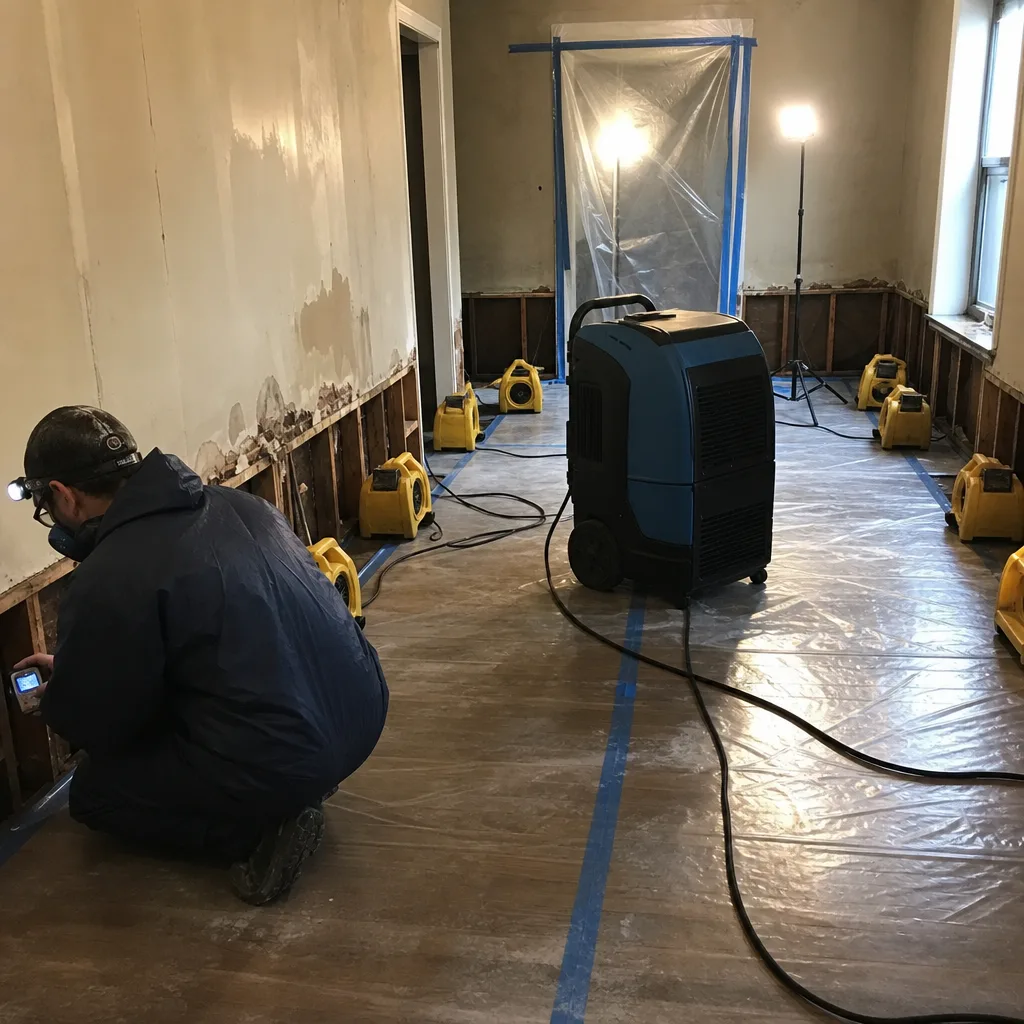
Where modern drywall exists, we cut back to the dry line, replace, tape, and finish. Where original flooring stays, we dry it in place using Injectidry systems before considering replacement. A Palisades Park homeowner should not lose a 60-year-old oak floor because a contractor was in a hurry to rip it out.
Contents Restoration & Pack-Out
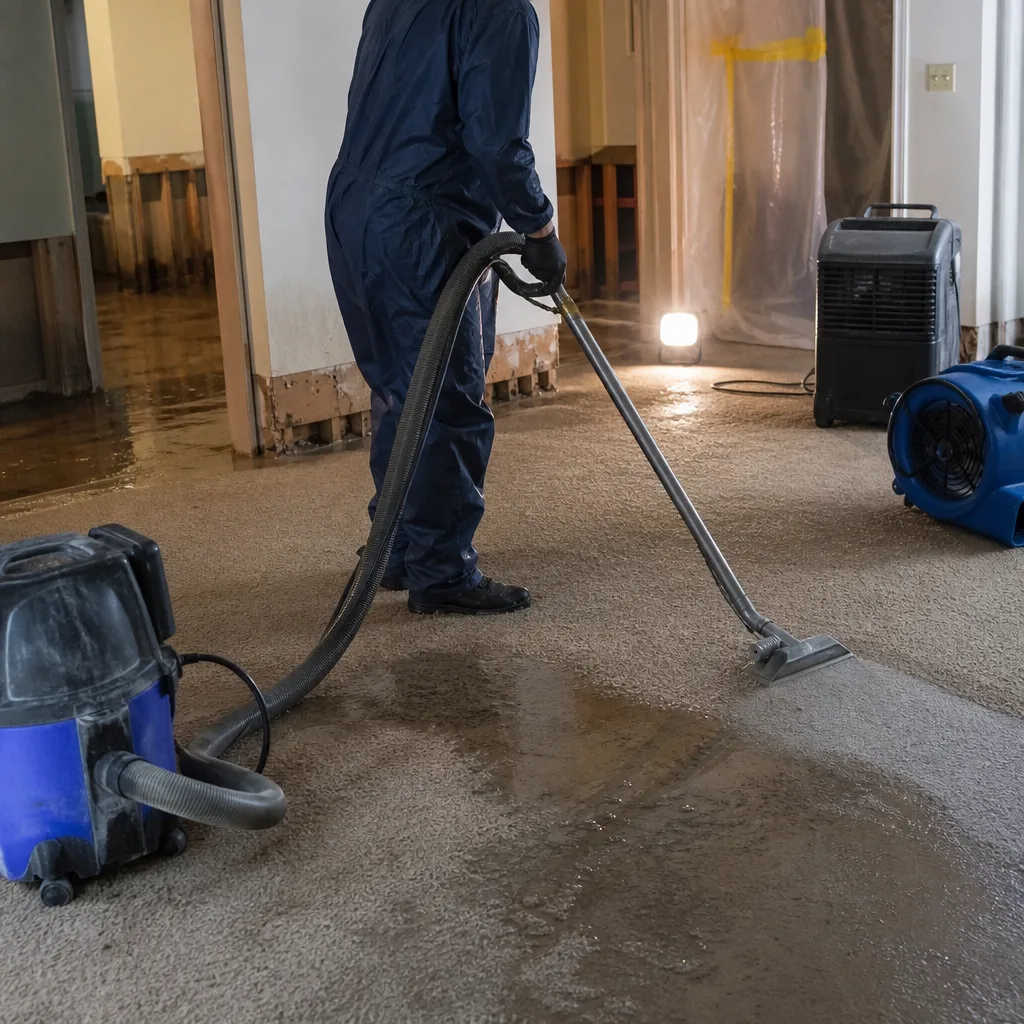
We pack out, inventory, clean, and store contents, then return them after rebuild. In a third-floor Broad Avenue mixed-use unit, pack-out means carrying furniture down narrow stairwells without damaging the plaster on the way out. We do it carefully and document everything.
Carpet & Upholstery Cleaning
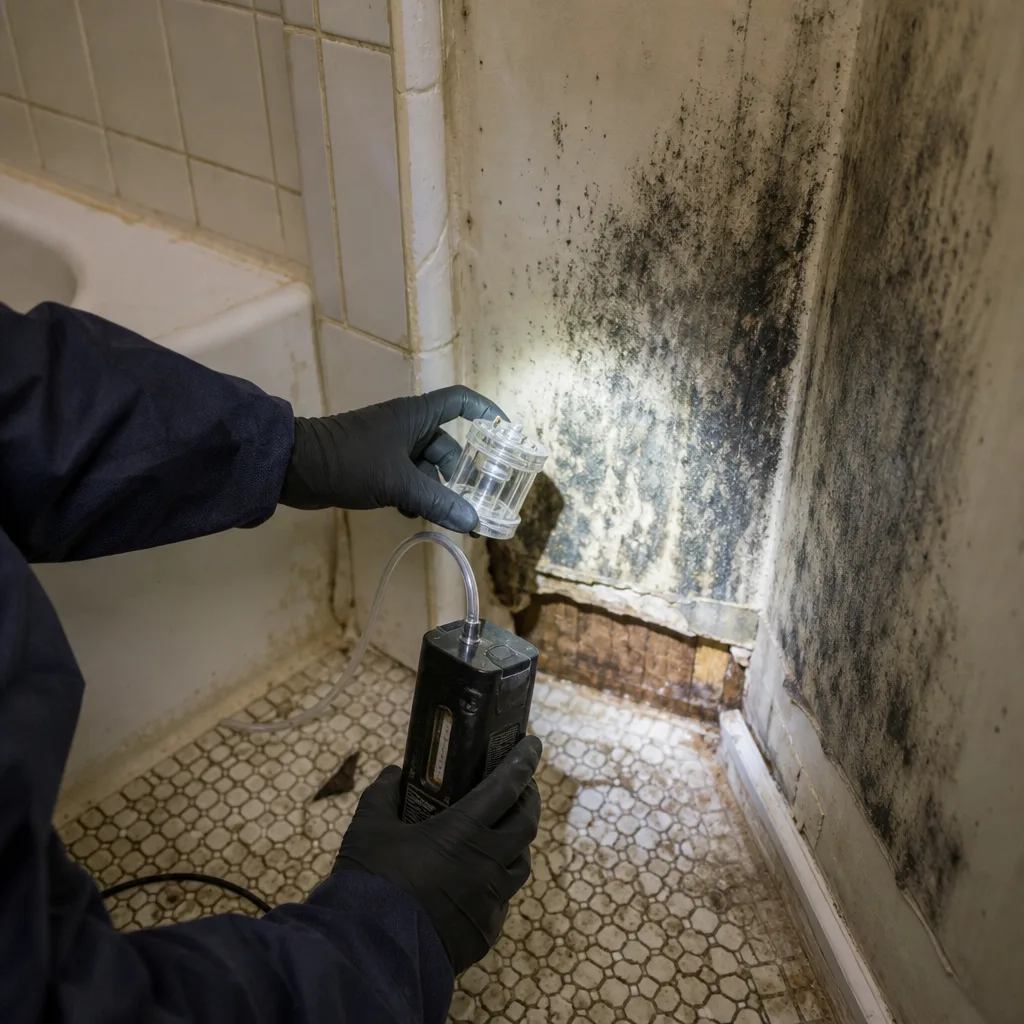
After a Category 1 water loss, carpet in good condition can often be saved. Our cleaning is extraction-based, not surface shampoo, and we test for dryness afterward so you’re not living with a damp pad under a clean-looking carpet.
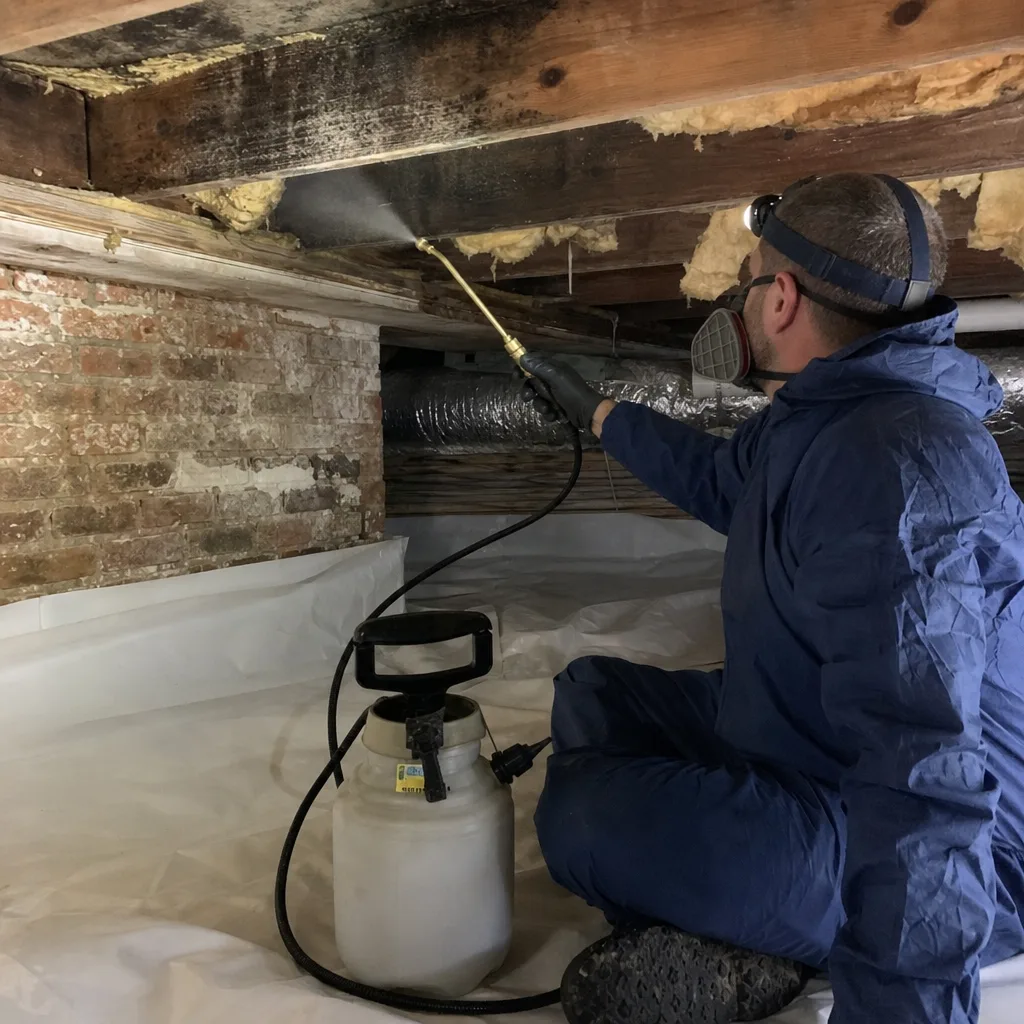
Post-Construction Cleanup
When reconstruction finishes, the dust is ours to remove. We clean the full unit: floors, surfaces, vents, and windows. You should be able to walk back in and cook dinner, not spend a weekend wiping drywall dust off every shelf.
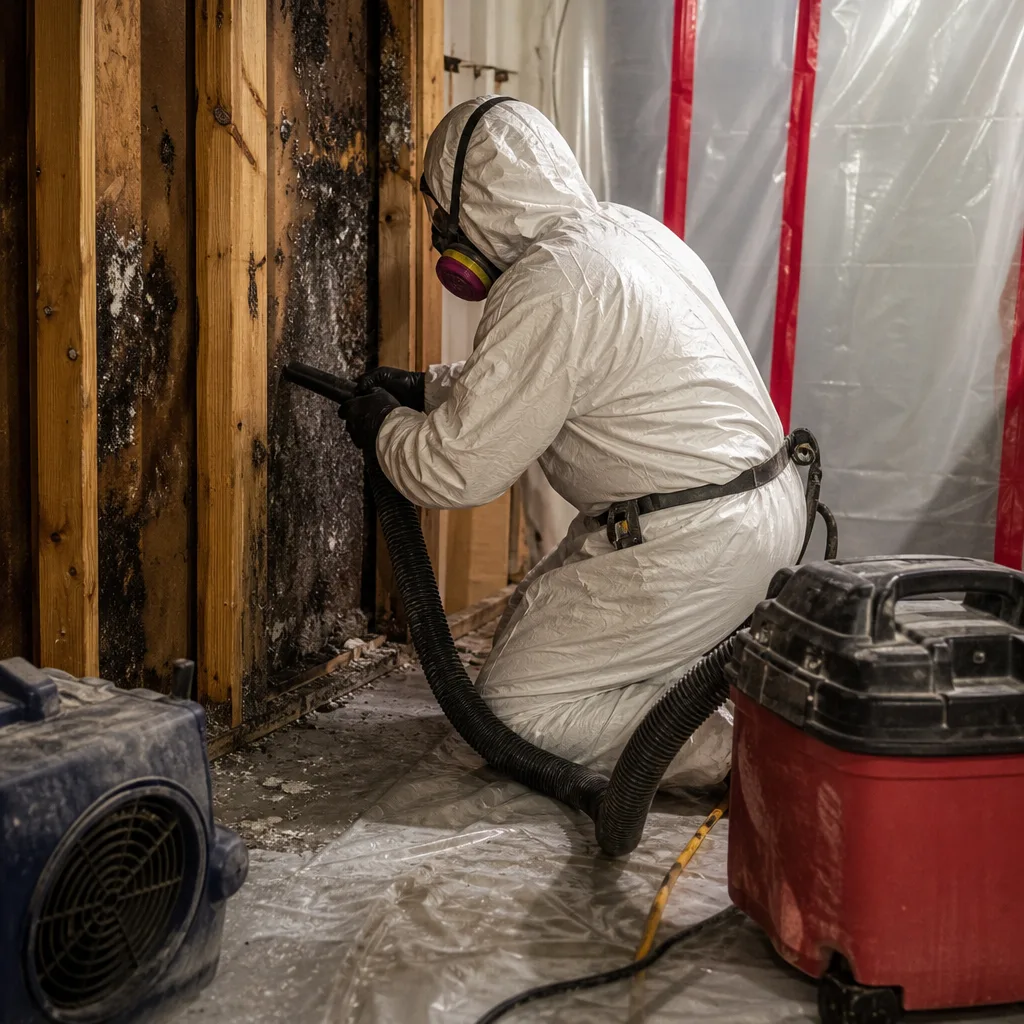
What happens when you call
- 1
A real person answersNo phone trees - you reach a local pro.
- 2
You get an upfront price rangeHonest numbers before anyone is dispatched.
- 3
A background-checked tech heads outLicensed & insured, dispatched right away.
- 4
You approve before work beginsNothing starts until you say go.
Reconstruction & Cleanup Costs in Palisades Park, NJ
Honest numbers, because that’s the only kind that help. A small Category 1 supply-line leak in a Palisades Park two-family, contained to one room with no structural damage, typically runs $1,800 to $3,500 including drying and drywall repair. A Category 2 or Category 3 loss crossing multiple units, with packed-out contents and a shared-wall rebuild, runs $8,000 to $14,000 and up. The variables are how many wall assemblies the water entered, whether original plaster can be dried or must be removed, and whether flooring can be saved in place. Insurance often covers the majority, minus your deductible. We provide a free visual inspection and a written scope before any work begins, so the price is real. Call (917) 924-4221 and you’ll know what you’re looking at without paying for the answer.
We Also Serve Cities Near Palisades Park
Our crews regularly respond to Ridgefield, Fort Lee, Leonia, and Edgewater. If your property is in one of those towns and you’re seeing water where it shouldn’t be, the same 45-minute response and the same written scope apply.
Serving Palisades Park, NJ - Our Local Coverage Area
We’re based in the Palisades Park area and know this community well. Use the map below to see our service coverage - if you’re nearby, we can almost certainly help.
Palisades Park Reconstruction & Cleanup Questions, Answered
Why does water damage in Palisades Park often smell worse than in newer towns?
Because original plaster-and-lath walls hold moisture far longer than modern drywall, and that extended wet period lets bacteria and mold establish inside the wall cavity before you ever see a stain. Palisades Park’s mid-century housing stock was built with dense plaster that wicks water and releases it slowly, so the musty smell can linger for weeks if drying is not done to a measured standard. The fix is aggressive structural drying with daily moisture logs, not air freshener. Call (917) 924-4221 and we’ll find the source of the smell, not cover it.
Do I have to tear out my original plaster walls after a Category 1 water loss in a Palisades Park two-family?
No. Category 1 water is clean, and plaster that is still sound can usually be dried in place using controlled air movement and dehumidification. We drill small weep holes at the base, run Injectidry systems where needed, and monitor daily until the dry standard is met. Plaster only comes out when it has lost its bond to the lath or is structurally unsound. We always prefer to save original materials when it is safe and correct to do so.
How do you handle pack-out from a third-floor unit in one of the Broad Avenue mixed-use buildings?
We inventory every item, photograph it, pack it in clean boxes, and carry it down those narrow stairwells without chipping plaster or blocking the commercial tenant below. Contents go to a climate-controlled storage facility, then come back after rebuild. You get a complete inventory so nothing disappears and nothing is a surprise during the insurance claim.
What do I do when my landlord says the garden apartment below is dry but my floor still feels wet?
Trust the moisture meter, not the hand test. Your floor can feel dry to the touch while the subfloor and joist cavities beneath are still saturated. We document the readings in writing, with photos, and flag the discrepancy to the property owner and, if needed, your own insurance carrier. A wet cavity under a dry surface is exactly how mold colonizes inside a Palisades Park garden apartment. Call (917) 924-4221 and we’ll run the readings.
Can you document my water damage for an insurance claim in Palisades Park when the loss crosses multiple units?
Yes. We photograph every affected surface in every affected unit, run moisture readings, mark the boundaries of the loss, and produce a line-item scope that your carrier can review line by line. Multi-unit losses in Palisades Park’s shared-wall buildings are common, and the carriers accept our documentation because it is thorough, dated, and specific. We also coordinate directly with your adjuster and with the neighbor’s carrier when the loss crosses property lines.
How fast can someone actually get to my Palisades Park address?
Within 45 minutes, most days. We dispatch from the metro office and maintain crews available for Palisades Park specifically. You call (917) 924-4221, a live dispatcher confirms the crew and ETA before you hang up, and the same crew that arrives is the one that does the work.
How long does drying take in a Palisades Park apartment with plaster walls?
Usually 5 to 9 days for a plaster-and-lath wall assembly, compared to 2 to 4 days for modern drywall. The plaster’s density slows moisture release, and we run daily readings until the dry standard is met. Rushing this stage is how you get a smell that returns six months after the contractor leaves. We do not rush it.
What should I do in the first 30 minutes after I discover the water?
Turn off the water at the source if you can do so safely. Move small items off the wet floor. Do not use a household vacuum on standing water. Then call (917) 924-4221. The first hour is when the water is still mostly on the surface. Every hour after that, it is moving deeper into plaster, subfloor, and the unit below.
Written by Curt Bowman, Owner at Floodline Restoration Co. of Manhattan, serving Palisades Park since 2010.