
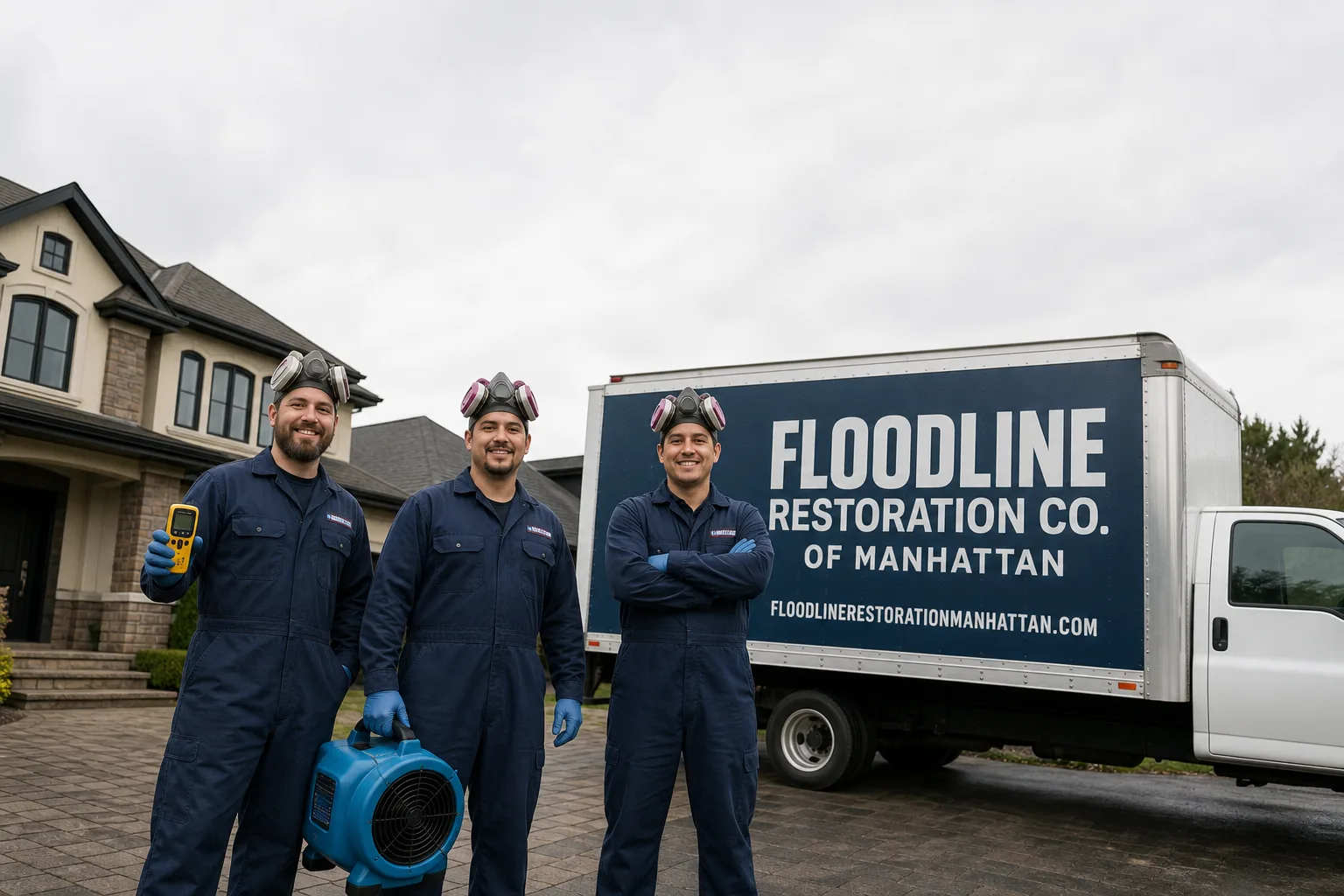
Free visual inspection and a written scope of work before any mitigation begins - photos, moisture readings, and drying logs go in your claim file
The scope we write is the scope we bill. Anything new gets shown to you, in writing, before we touch it.






 Before
 After
After Before
 After
After Before
 After
After24/7 Emergency Water Damage Restoration in Palisades Park
Water damage restoration in Palisades Park, NJ typically costs between $1,800 and $5,400 for a standard category 1 or 2 loss, and our crews reach most borough addresses within 45 minutes of your call. When a supply line lets go behind a plaster wall or a drain stack fails in a three-story garden apartment, the water doesn’t wait, and neither do we. Call (917) 924-4221 right now and a live dispatcher answers, not a recording. A certified crew rolls toward Palisades Park the same visit, because the first hour is what separates a drying job from a gut-and-rebuild.
What makes water damage in this borough different is the age and density of the buildings. Most of Palisades Park’s residential stock went up between the late 1940s and the 1970s. The original plaster-and-lath walls, galvanized supply lines, and cast-iron drain stacks inside those buildings hold water differently than modern drywall. Left alone, a hidden leak that started as clean category 1 water turns into a mold problem inside 24 to 48 hours. We start extraction the same visit because waiting is the single most expensive decision a homeowner can make here.
Understanding Water Damage Restoration Severity in Palisades Park Properties
Not every water loss in Palisades Park is the same animal. Restoration professionals classify water in three categories, and the classification changes everything about how we attack the job. Category 1 is clean water, usually from a burst supply line or an overflowing tub. Category 2 carries some contamination: think washing machine overflow or a sump pump that backed up with gray water. Category 3 is the one that scares people, and for good reason. It’s water from a sewer backup, a flooded below-grade unit that took in storm drain overflow, or any water that sat long enough to grow bacteria. On Palisades Park’s lots, where basement window wells sit below the street grade on the escarpment side, category 3 losses happen more often than homeowners expect.
Severity also depends on what got wet and how long it stayed wet. Plaster-and-lath assemblies, common throughout the borough’s two-family homes and garden apartments, wick water deep into the substrate and hold it there. Modern drywall dries in days. Horsehair plaster can hide moisture for weeks, which is why we moisture-map every affected wall with thermal imaging and log readings until the dry standard is met, not until the surface feels dry. Structural drying in Palisades Park is a slower, more deliberate process than in newer construction, and cutting corners on it is how you end up with mold behind a freshly painted wall.
Why Palisades Park Property Owners Choose Floodline Restoration Co. of Manhattan
- 45-minute response commitment. We dispatch crews from our New York City office to Palisades Park addresses immediately, and most jobs see a certified technician on site within 45 minutes of the call.
- 24/7 live answer, always a real person. No phone trees, no overnight answering service that takes a message. A dispatcher picks up at 2 a.m. and a crew is on the road.
- IICRC-certified crews, WRT and ASD trained. Our technicians hold Water Damage Restoration Technician and Applied Structural Drying certifications, plus RIA and IFA training. They know what dry standard means and how to prove it.
- Free visual inspection with every emergency response. We assess the loss, map the moisture, and give you a written scope before any work begins. No surprises.
- Direct insurance billing. We bill your carrier directly and send adjusters the documentation they need: photos, moisture logs, line-item scopes. You don’t play messenger.
- One team from extraction to reconstruction. We start at the floodline and stay through the rebuild. No handoff to a subcontractor you’ve never met.
Our Water Damage Restoration Process
Inspection & Assessment
We arrive with thermal imaging cameras and hygrometers. We find the water that isn’t visible, map exactly how far it migrated through walls and floors, and classify the water by category. You get a plain-English explanation of what we found and a written scope before we start.
Extraction & Stabilization
We remove standing water with truck-mounted and portable extraction units, then stabilize the structure. In Palisades Park garden apartments, this often means sealing off shared stairwells and containing the affected units before the water migrates further.
Drying & Dehumidification
We place Dri-Eaz dehumidifiers and high-volume air movers according to a drying plan built around the building’s actual assemblies, not a generic template. Daily moisture readings are logged every 12 hours until every affected wall hits pre-loss condition.
Cleaning & Sanitization
Category 2 and 3 losses require antimicrobial treatment and, in many cases, controlled demolition of saturated plaster or drywall. We contain the work area, treat what can be saved, and remove what cannot.
Structural Drying Verification
Plaster-and-lath in this borough holds water deep. We verify with penetrating moisture meters, not surface checks, and we don’t call the job dry until the numbers say dry. You get the full moisture log for your records and your insurer.
Repairs & Restoration
The same Floodline crew that did the extraction handles the rebuild, from new drywall and trim to full kitchen restoration. Done right, and backed in writing by our 90-Day Done Right Promise.
Need Emergency Water Damage Restoration in Palisades Park Now?
Crews minutes away, answering live 24 hours a day. The sooner we start, the less it costs.
Working With Your Insurance Company
Water damage in Palisades Park is a claim most homeowners should file, and the first 48 hours of documentation decide how that claim goes. We photograph every room before we touch anything, log moisture readings from day one, and write a line-item scope our technicians can defend to an adjuster. Our team communicates with your carrier directly, so you’re not translating construction notes over the phone. Curt Bowman built this company in 2010 around a simple rule: the homeowner gets the work their policy covers, done correctly, without having to fight for it.
What We Provide Your Insurer
- Thorough documentation of the loss
- Photos of all damage, room by room
- Moisture readings and drying logs
- A detailed, line-item scope of work
- Direct coordination with your carrier
Built for Palisades Park’s Loss Calendar
Water damage in Palisades Park follows a seasonal rhythm, and we staff and stock for it. January and February bring the deep freezes that split galvanized supply lines in unheated utility closets and along exterior walls in the borough’s 1950s and 60s garden apartments. March and April thaw the ground, and the saturated soil pushes groundwater into basement window wells, especially on the eastern slope down toward the Hudson. Summer brings the convective storms that track up the Hudson corridor and dump rain faster than the borough’s nearly impermeable surfaces can shed it, overwhelming below-grade entries. Fall nor’easters drive wind-blown rain under flat and low-slope roofs. Every one of these is a call we’ve answered in Palisades Park.
Water Damage Restoration Across Palisades Park’s Neighborhoods
Response routes matter in a borough this tight. We run crews up Broad Avenue past the commercial kitchens toward the northern two-family blocks, where midnight supply-line failures spread through shared walls before a neighbor even notices water at the baseboard. Down Brinkerhoff Street and the side streets running east toward the escarpment, we see more basement water, driven by storm runoff and the slope of the land itself. The garden apartment complexes between Palisades Avenue and the Fort Lee line are a different job entirely: one failed cast-iron stack in a third-floor unit sends water cascading through five or six apartments below. Around the Grand Avenue and Central Boulevard corridors, mixed-use buildings put residential units directly above restaurant spaces, which changes the containment plan before we even start.
Each of these areas writes its own damage profile. The two-family homes on the residential streets off Broad Avenue have original 1950s plumbing that fails in predictable patterns: corroded galvanized nipples, deteriorating cast-iron drain lines, failed saddle valves. The garden apartments have shared wall cavities that connect units in ways the original drawings don’t fully capture. The mixed-use buildings combine residential water losses with grease and kitchen runoff. We’ve worked all of them, and we know before we arrive what the building type means for the drying plan.
Specialized Water Damage Restoration Services We Offer in Palisades Park
Emergency Water Extraction
Standing water in a Palisades Park garden apartment or two-family home needs to come out now, not in the morning. We run truck-mounted and portable extraction units on the same visit, pull up saturated carpet and pad where salvageable, and stop hidden migration before it crosses into the next unit. Call (917) 924-4221, a live person answers, and extraction starts within the hour.
Structural Drying & Dehumidification
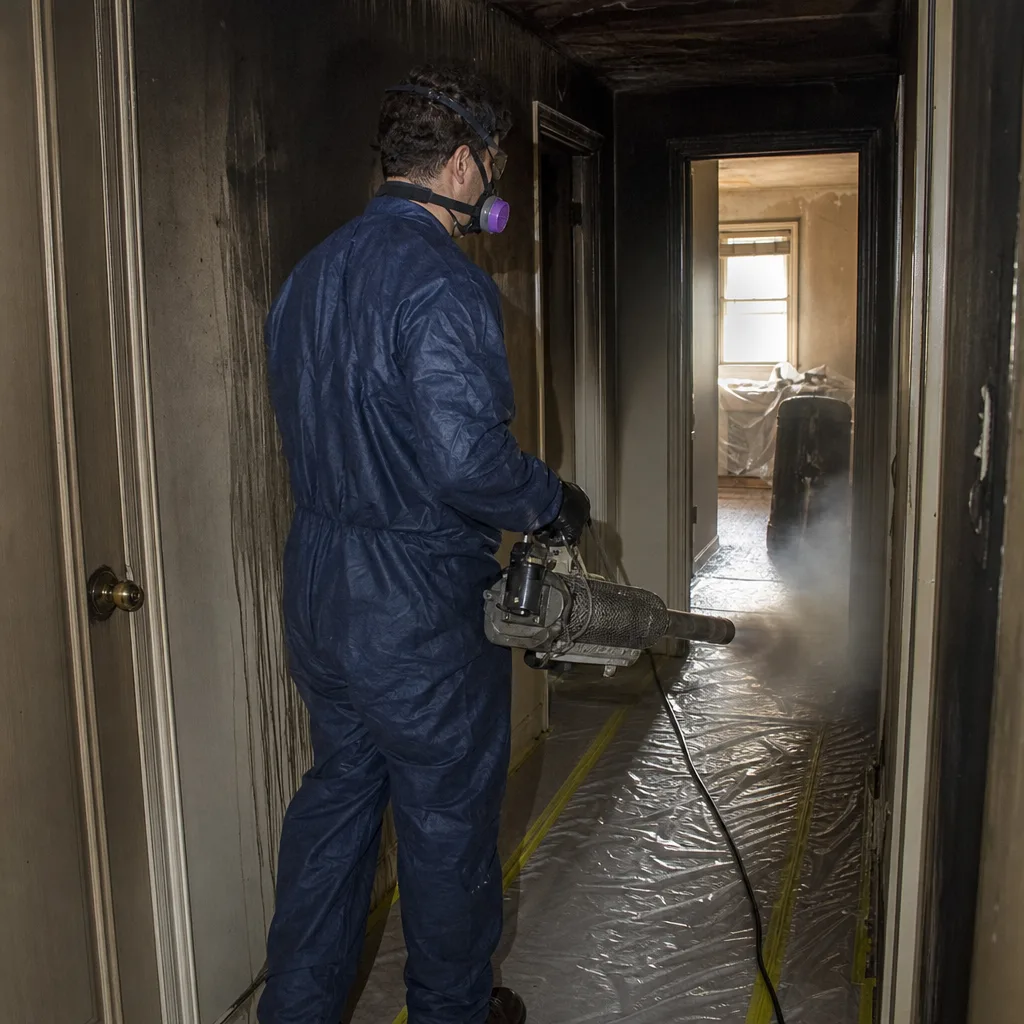
Drying Palisades Park’s plaster-and-lath walls and hardwood floors is a science, not a guess. We set Dri-Eaz dehumidifiers and air movers to a drying plan written for your building’s actual assemblies, monitor moisture daily, and hand you the log when it’s done. We don’t call it dry until the numbers say dry.
Flood Cleanup
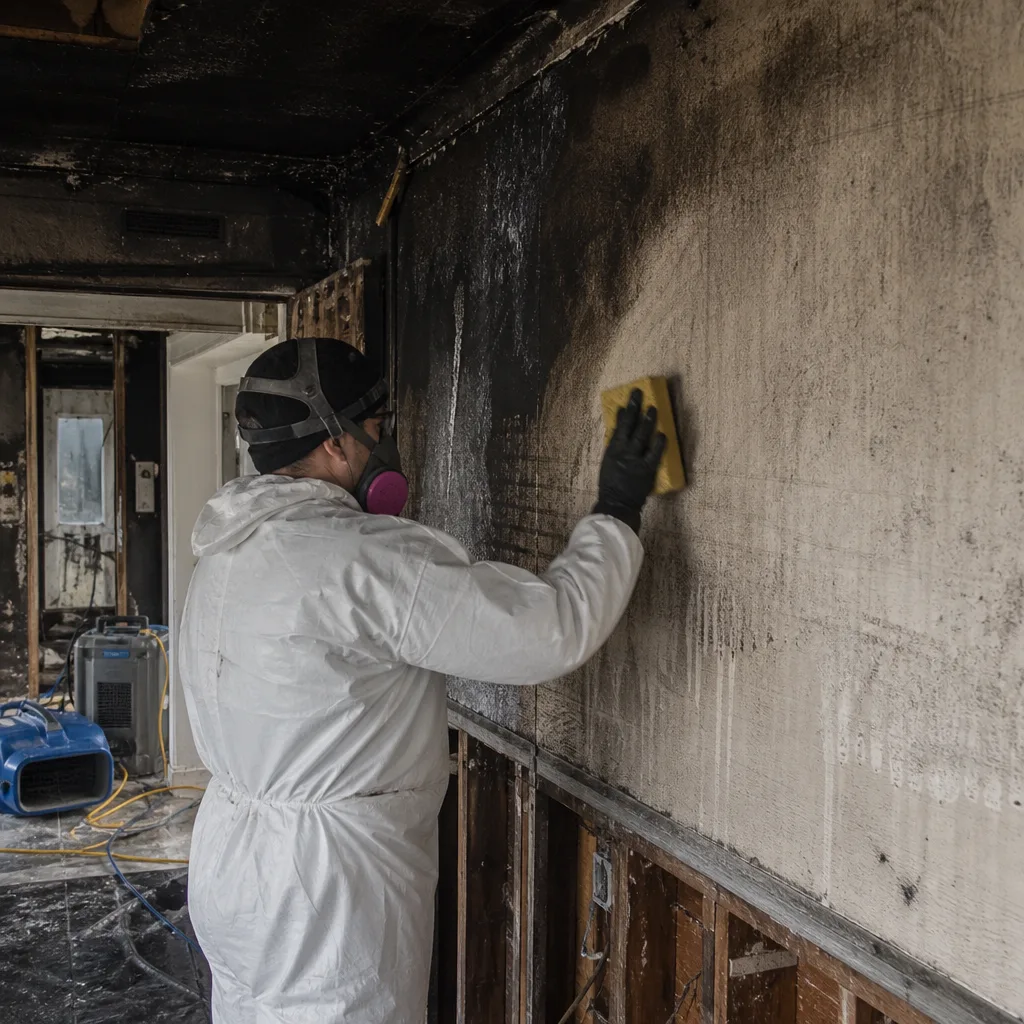
When stormwater overcomes a below-grade entry or window well on the escarpment side, the water coming in is rarely clean. We treat flood losses as category 3 until proven otherwise: containment, antimicrobial treatment, and removal of saturated materials that cannot be dried safely.
Burst Pipe Restoration
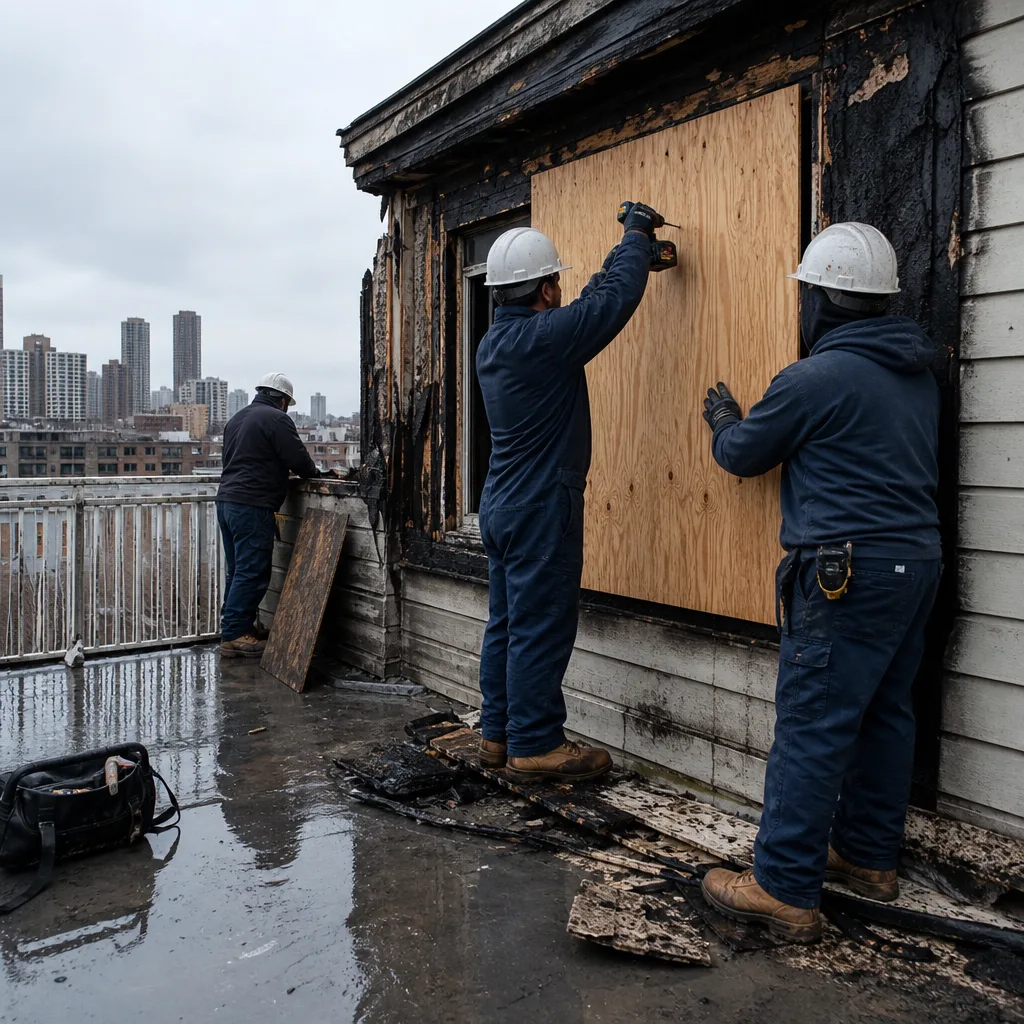
A failed galvanized supply line behind a Palisades Park kitchen wall can run for hours before anyone sees it. We locate the break, stop the flow, map the migration, and coordinate the plumbing repair with a licensed plumber while our team handles extraction and drying.

Basement Water Removal
Basements in this borough flood from three directions: groundwater in spring, storm drain backup in summer, and interior plumbing failures year-round. We pump, extract, treat, and dry, then tell you plainly what needs rebuilding and what can be saved. Our Water Damage Restoration team handles the whole job from the first pump-out to the last coat of paint.

What happens when you call
- 1
A real person answersNo phone trees - you reach a local pro.
- 2
You get an upfront price rangeHonest numbers before anyone is dispatched.
- 3
A background-checked tech heads outLicensed & insured, dispatched right away.
- 4
You approve before work beginsNothing starts until you say go.
Water Damage Restoration Costs in Palisades Park, NJ
Here’s what Palisades Park homeowners should expect to pay for water damage work. A small category 1 loss, like a washing machine supply line that drips onto tile, generally runs $800 to $1,500. A single-room mitigation with extraction, drying, and minor drywall repair lands between $1,800 and $3,200. A multi-room loss in a garden apartment unit, particularly one involving plaster walls and category 2 water, typically costs $3,500 to $6,500. Full basement losses involving category 3 water, full content manipulation, and controlled demolition run $6,000 and up, sometimes considerably up. What moves the price: the category of the water, the number of affected rooms, whether shared walls pulled water from an adjacent unit, and how long the water sat before we arrived. Insurance covers most of these losses under standard homeowner policies, and we bill your carrier directly. The free visual inspection is how you get a firm number instead of a guess. Call (917) 924-4221 and we’ll put a written scope in your hands.
We Also Serve Cities Near Palisades Park
When a water loss hits a neighboring town, we respond just as fast. Floodline Restoration Co. of Manhattan provides Water Damage Restoration in Palisades Park and the surrounding communities of Ridgefield, Fort Lee, Leonia, and Edgewater, with the same 24/7 live dispatch, certified crews, and written guarantee.
Serving Palisades Park, NJ - Our Local Coverage Area
We’re based in the Palisades Park area and know this community well. Use the map below to see our service coverage - if you’re nearby, we can almost certainly help.
Palisades Park Water Damage Restoration Questions, Answered
Why do water damage jobs in Palisades Park garden apartments take longer to dry than in Fort Lee or Leonia?
Because the wall assemblies in this borough’s 1940s through 1970s garden apartments are mostly original plaster-and-lath, and horsehair plaster holds water far longer than the drywall you find in newer Fort Lee construction. Drying a plaster wall takes days longer than drying gypsum board, and shared wall cavities between units slow evaporation further. We plan for that extended drying window and monitor moisture until the numbers verify the wall is dry, not until the surface feels dry.
A pipe burst above my unit in a Palisades Park two-family house and water is coming through the ceiling - what should I lay out before your team arrives?
Move small items and electronics out of the path of the water if you can do it safely. Place plastic sheeting or trash bags over furniture that can’t be moved. Take photos of everything before anything shifts. Do not enter a room where water is pooling around electrical outlets or ceiling fixtures. Then call (917) 924-4221. Our team will handle the rest, including shutting off water and power to affected rooms, because electricity and standing water are a fatal combination.
Does restoration of a category 3 water loss in a Palisades Park basement always require removing the drywall and carpet?
Almost always, yes, and that’s the correct answer, not the upsell. Category 3 water from a sewer backup or storm drain overflow carries bacteria and pathogens that drywall and carpet cannot be reliably sanitized against. We remove saturated drywall, carpet, and pad, treat the framing and concrete with antimicrobials, and rebuild. Attempting to “save” those materials is how you get a house that smells like a sewer every humid summer. We’d rather tell you the truth and do the job once.
How do you dry a shared wall between two Palisades Park units without opening every unit in the building?
We start with thermal imaging and penetrating moisture meters to map exactly how far water migrated into the shared wall cavity. In most cases, we can access the wet side of the cavity from the affected unit and direct airflow through the wall assembly using the void space itself as a drying chamber. We coordinate with the adjacent unit’s occupant for access if needed, but we only open what must be opened. The goal is to dry the wall, not rebuild the building.
What’s the difference between a standard water cleanup and a Korean restaurant Ansul discharge in Palisades Park?
Night and day. An Ansul wet-chemical suppression system discharge leaves a thick, alkaline, corrosive foam-and-char slurry coating every surface in a commercial kitchen. Standard water extraction won’t touch it. The chemistry must be neutralized before any drying or restoration begins, and the water component is often category 2 or 3 from the cooking residue. Broad Avenue commercial kitchens produce this call regularly, and we treat it as a specialty damage profile, not a mop job.
How fast can a crew actually get to my Palisades Park address?
Most borough addresses see a certified technician on site within 45 minutes of your call. Our dispatch is live around the clock, and crews are staged with the equipment already loaded. When you call (917) 924-4221 at 2 a.m., a real person answers and a crew is rolling. Extraction starts the same visit.
Will my homeowner’s insurance cover water damage restoration in Palisades Park?
Most standard homeowner policies cover sudden and accidental water losses: burst supply lines, failed water heaters, appliance overflows. The key phrase is sudden and accidental. Gradual leaks or long-term seepage may fall outside coverage, and every policy reads differently. We photograph everything from the first hour, write our scope in insurance-standard language, and work directly with your adjuster so the claim is documented correctly from day one. Call (917) 924-4221 and we’ll help you understand what your policy covers before we spend a dollar.
Can my family stay in the home during water damage restoration?
For small, isolated category 1 losses, often yes. For larger losses, category 2 or 3 water, or any job requiring controlled demolition in occupied rooms, we recommend relocating temporarily, especially if anyone in the home has respiratory issues or a compromised immune system. We’ll give you a straight answer within the first hour based on what we find, plus documentation your insurer can use for a loss-of-use claim if your policy includes it.
Why Palisades Park Demands a Different Water Damage Restoration Approach
Every water damage claim in this borough is a small case study in why generic restoration advice fails here. In Palisades Park’s 1940s through 1970s two-family houses and three-story garden apartments, a single burst supply line or failed cast-iron drain stack routinely spreads through shared plaster-and-lath walls to flood six to ten units before shutdown. That cascade pattern, driven by the borough’s extreme density and legacy plumbing, is something crews in neighboring towns rarely see. One unit’s water is always somebody else’s problem, often before the first unit’s owner even knows the pipe failed.
We responded to an overnight pipe burst in a three-story garden apartment near Broad Avenue and Brinkerhoff Street, where a corroded original galvanized supply line let go behind a plaster-and-lath partition and sent category 1 water cascading into six adjacent units. Our team sealed off the building’s shared stairwell, used thermal imaging to map moisture that had wicked deep into the horsehair plaster, then ran structural drying with Dri-Eaz dehumidifiers and air movers for five days, logging moisture readings every 12 hours until every wall assembly hit pre-loss condition without a single room of unnecessary demolition. That’s the difference between a crew that reads the building and a crew that just sets fans.
In a borough this tightly packed, every decision compounds. Dry only your unit and the shared wall re-wets from the neighbor’s side inside hours. Skip containment on a category 3 basement loss and you’ve spread contaminated water through the stairwell. Rush the dry-out on plaster and you’ve sealed mold into the wall behind new paint. The density of Palisades Park is what makes the work harder. It’s also why the work matters. We start at the floodline, the honest mark the water left on the wall, and we don’t hand the job off until extraction, drying, and rebuild are finished by the same certified crew. The 90-Day Done Right Promise says the rest: if it’s not done right, we make it right. In writing, no arguing.
If you’re standing in water right now, call (917) 924-4221. A live dispatcher answers. A crew is on the way. And if you’re not sure whether it’s serious, call anyway, because the free visual inspection costs you nothing, and waiting is the one thing that makes water damage in Palisades Park worse every single time.
Written by Curt Bowman, Owner at Floodline Restoration Co. of Manhattan, providing water damage restoration and full-cycle rebuild services to Palisades Park, NJ.