
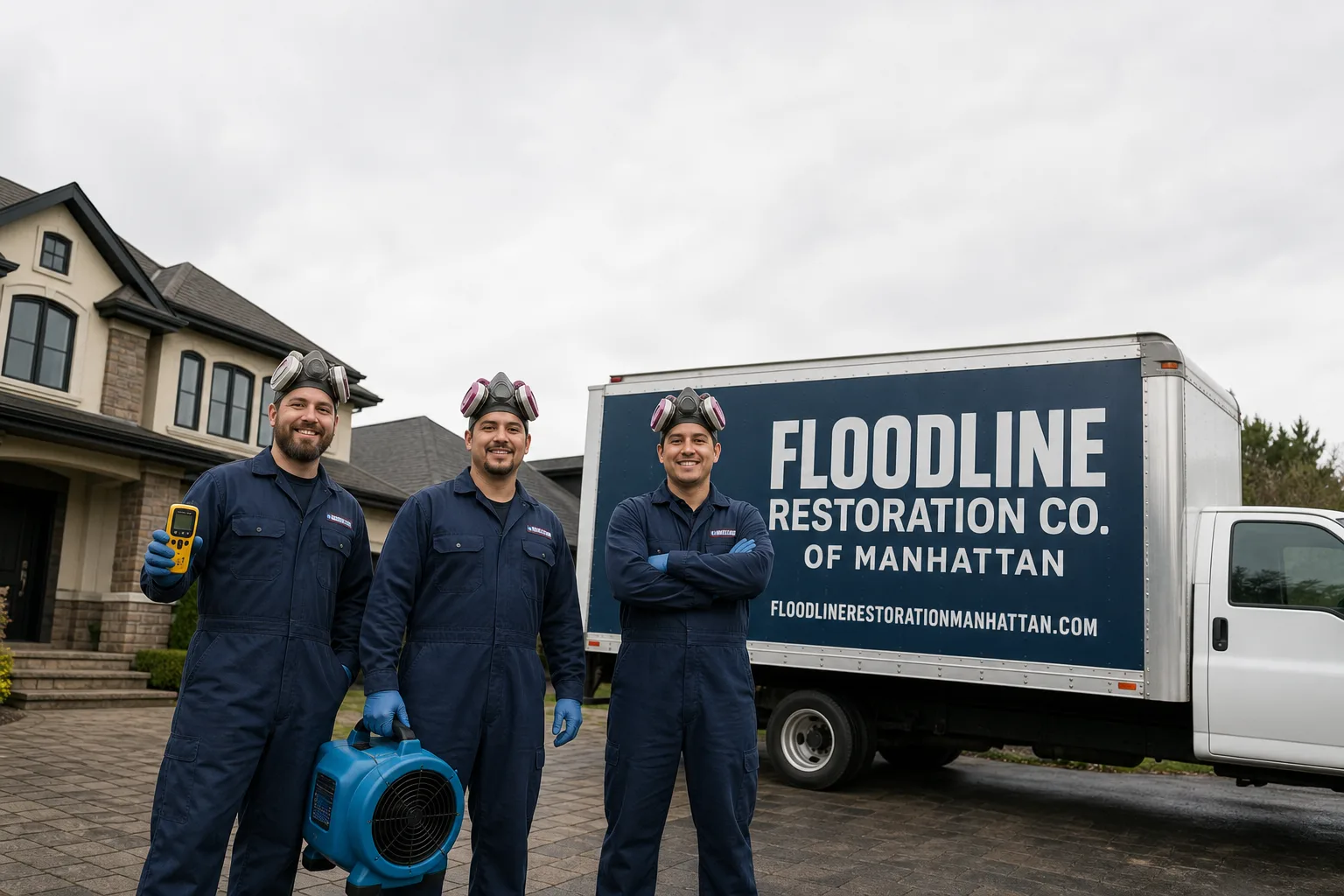
Free visual inspection and a written scope of work before any mitigation begins - photos, moisture readings, and drying logs go in your claim file
The scope we write is the scope we bill. Anything new gets shown to you, in writing, before we touch it.






 Before
 After
After Before
 After
After Before
 After
After24/7 Emergency Reconstruction & Cleanup in Port Washington
When a nor’easter pushes Manhasset Bay over its banks or a January freeze splits a supply line in a 1930s Manorhaven Colonial, the damage doesn’t wait for business hours, and neither do we. Floodline Restoration Co. of Manhattan answers live at (917) 924-4221 around the clock, with crews dispatched into Port Washington inside 45 minutes. The first hour determines whether you’re looking at a controlled dry-out or a gut to the studs, because saltwater from Hempstead Harbor and Manhasset Bay keeps working its way through plaster, framing, and flooring long after the surface looks dry. Our team arrives with thermal imaging, moisture meters, and industrial air movers already loaded, does a free visual inspection, and gets extraction running the same visit. Not a recording, not a callback queue. A person picks up, and a uniformed, background-checked crew rolls out.
Understanding Reconstruction & Cleanup Severity in Port Washington Properties
The severity of a Reconstruction & Cleanup job on the Cow Neck Peninsula runs deeper than the water line you can see. Category 1 water from a burst supply line is the simplest: clean water, fast extraction, targeted drying. Category 2 contains contaminants, common when a dishwasher drain backs up or a sump pump fails after heavy rain. Category 3 is what Port Washington sees after storm surge, sewage, or bay water intrusion: bacteria, silt, and salt that demand full antimicrobial treatment, not just drywall removal. In 1920s through 1950s homes here, original balloon framing wicks saltwater vertically from the basement sill into upper wall cavities. Plaster walls hold that moisture for weeks, and the salt left behind keeps pulling humidity from the air. Our moisture mapping pins down exactly how far water traveled, because guessing wrong means hiding mold behind fresh drywall. We use structural drying protocols, hygrometers, and daily moisture logs until the dry standard is met and verified, not just assumed.
Why Port Washington Property Owners Choose Floodline Restoration Co. of Manhattan
- A live dispatcher answers at 2 a.m. Not a machine. When you call (917) 924-4221, a real person picks up and starts moving equipment toward Port Washington while you’re still on the line.
- 45-minute response commitment across the peninsula. From Manorhaven to Harbor View, our crews know the low-lying streets that flood first and the quickest routes around storm debris.
- IICRC-certified crews, trained to WRT, FSRT, and AMRT standards. That means Water Restoration Technician, Fire and Smoke Restoration Technician, and Applied Microbial Remediation Technician credentials on the job, not just in a brochure.
- Free visual inspection before any work begins. No pressure, no sales pitch. We identify the full extent of damage, then put a written scope in your hands.
- Direct insurance billing. We document from hour one, coordinate with your adjuster directly, and you never play messenger between us and the carrier.
- One team from first extraction to finished rebuild. No mid-job handoff to a subcontractor. The same certified crew that reads the moisture map on day one rebuilds what needs rebuilding.
Our Reconstruction & Cleanup Process
Inspection & Assessment
We start with thermal imaging, moisture meters, and a room-by-room walkthrough. In Port Washington’s older homes, that means checking balloon framing, basement sills, and wall cavities, not just visible surface damage.
Extraction & Stabilization
Water Damage Restoration - Port Washington starts with submersible pumps and truck-mounted extractors. For saltwater intrusion, we begin flushing structural surfaces early, because brine left in place eats fasteners and accelerates corrosion.
Drying & Dehumidification
Dri-Eaz and Phoenix dehumidifiers paired with high-velocity air movers create the evaporation and removal cycle that works. On sandy glacial-till soil, we monitor sub-slab moisture carefully, because the ground under a 1930s basement can keep feeding humidity upward.
Cleaning & Sanitization
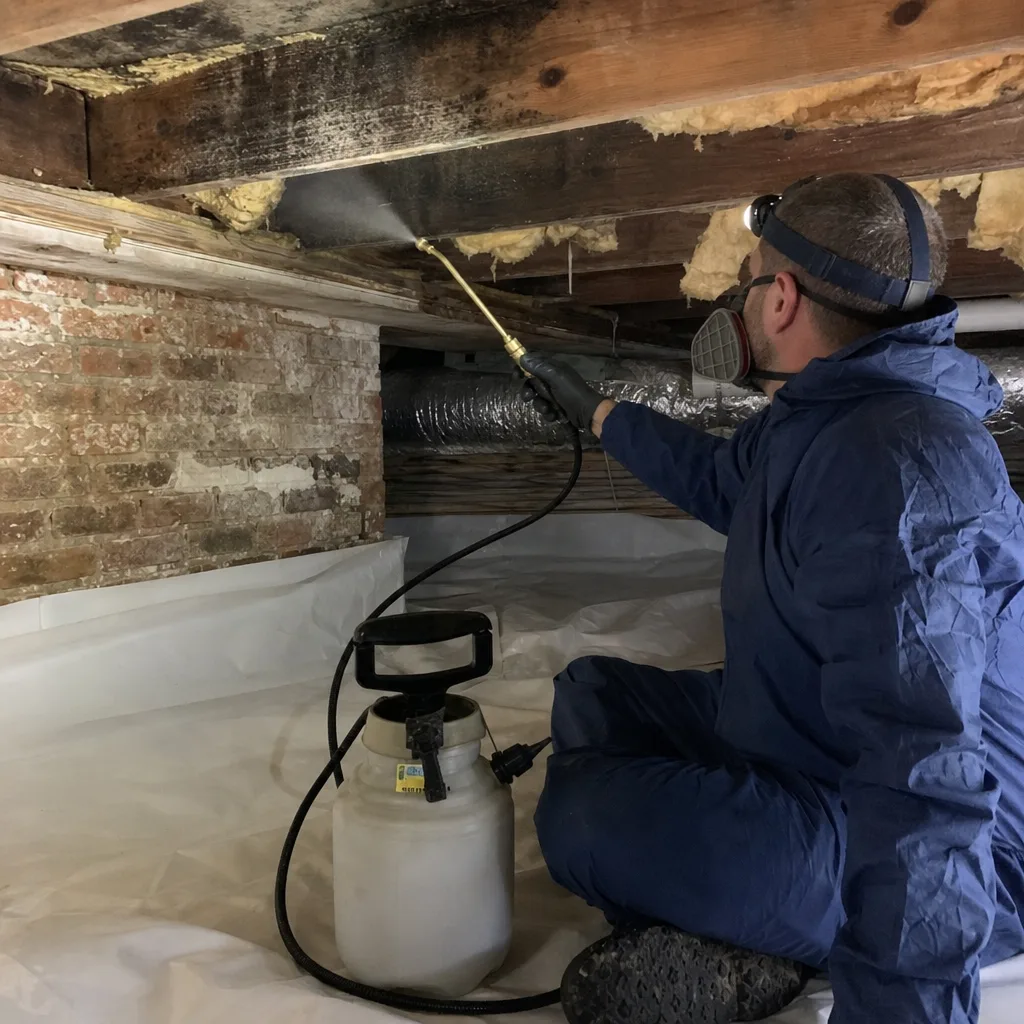
Category 3 water demands antimicrobial application and HEPA air scrubbing. We build containment where needed and log every step, so your insurer sees exactly what was done and why.
Corrosion & Salt Treatment
Port Washington’s salt air and storm surge create a distinct problem: brine attacking garage-door hardware, fasteners, HVAC components, and electrical connections. We inspect, treat, and replace corroded components before reconstruction begins.
Repairs & Restoration
Drywall, flooring, trim, paint, cabinetry. We rebuild to pre-loss condition, hand you a full moisture log, and back the work with our 90-Day Done Right Promise in writing.
Need Emergency Reconstruction & Cleanup in Port Washington Now?
Crews minutes away, answering live 24 hours a day. The sooner we start, the less it costs.
Working With Your Insurance Company
We bill your carrier directly and build the claim file from the first hour on site. Photos of every affected room before anything is moved. Moisture readings from day one through final dry standard. A line-item scope with specific equipment, hours, and materials. Our team communicates with your adjuster directly, so you’re not the one translating between a contractor and a claims department. Port Washington homeowners who’ve been through Sandy know what a difference documentation makes. We also offer the Senior & Veteran 5% discount, and every job carries our 90-Day Done Right Promise, the Keystone Standard: if it’s not done right, we make it right, in writing, with no argument.
What We Provide Your Insurer
- Thorough documentation of the loss
- Photos of all damage, room by room
- Moisture readings and drying logs
- A detailed, line-item scope of work
- Direct coordination with your carrier
Built for Port Washington’s Loss Calendar
January brings deep freezes that split supply lines in uninsulated crawl spaces and utility rooms across Port Washington. February’s nor’easters push storm surge up the low-lying streets off Shore Road and into basements from both bay sides at once. Spring thaw saturates the sandy glacial till under 1920s foundations, and basement seepage starts in earnest by March. Summer thunderstorms dump inches in an hour, overwhelming the older storm drains in Manorhaven and Baxter Estates. Come fall, tropical remnants track up the coast and test every roof penetration and exterior seal on Gold Coast-era Colonials. Salt air works year-round here, corroding garage-door springs, hinge hardware, and exterior fasteners faster than anywhere inland Nassau County. Our Reconstruction & Cleanup team is built around this calendar, with the equipment staged for what the peninsula actually throws at us.
Reconstruction & Cleanup Across Port Washington’s Neighborhoods
Manorhaven sits low against the water, and when Manhasset Bay surges, streets like Manorhaven Boulevard and Orchard Beach Road take water into attached garages and unfinished basements first. We’ve pulled Category 3 seawater from those blocks enough times to know exactly where the drains back up and which houses wick saltwater into 1940s balloon framing. In Harbor View and Beacon Hill, the mid-century ranches and split-levels on compact lots tend to collect storm runoff against foundation walls. The damage there is often newer construction meeting older drainage. Sands Point and the Gold Coast estates have a different profile entirely: large, stucco-and-slate homes built between the wars, where a hidden roof leak or failed moisture barrier runs unseen behind original plaster for weeks. Each area has its own failure pattern, and our crews read the neighborhood as carefully as the moisture meter. When we respond to a water loss in Port Washington, we already know what the 1950s footing drains, the tidal soil table, and the salt air are likely to have done.
Specialized Reconstruction & Cleanup Services We Offer in Port Washington
Full-Service Reconstruction
Port Washington Commercial Restoration means matching new work to old bones. We rebuild from the studs inward, matching framing methods to the balloon construction of pre-war Colonials and the timber dimensions of 1920s waterfront homes. Salt-damaged fasteners get replaced with stainless. Structural repairs get documented for your insurer. The same crew that extracted and dried handles the rebuild, so nothing gets lost between teams.
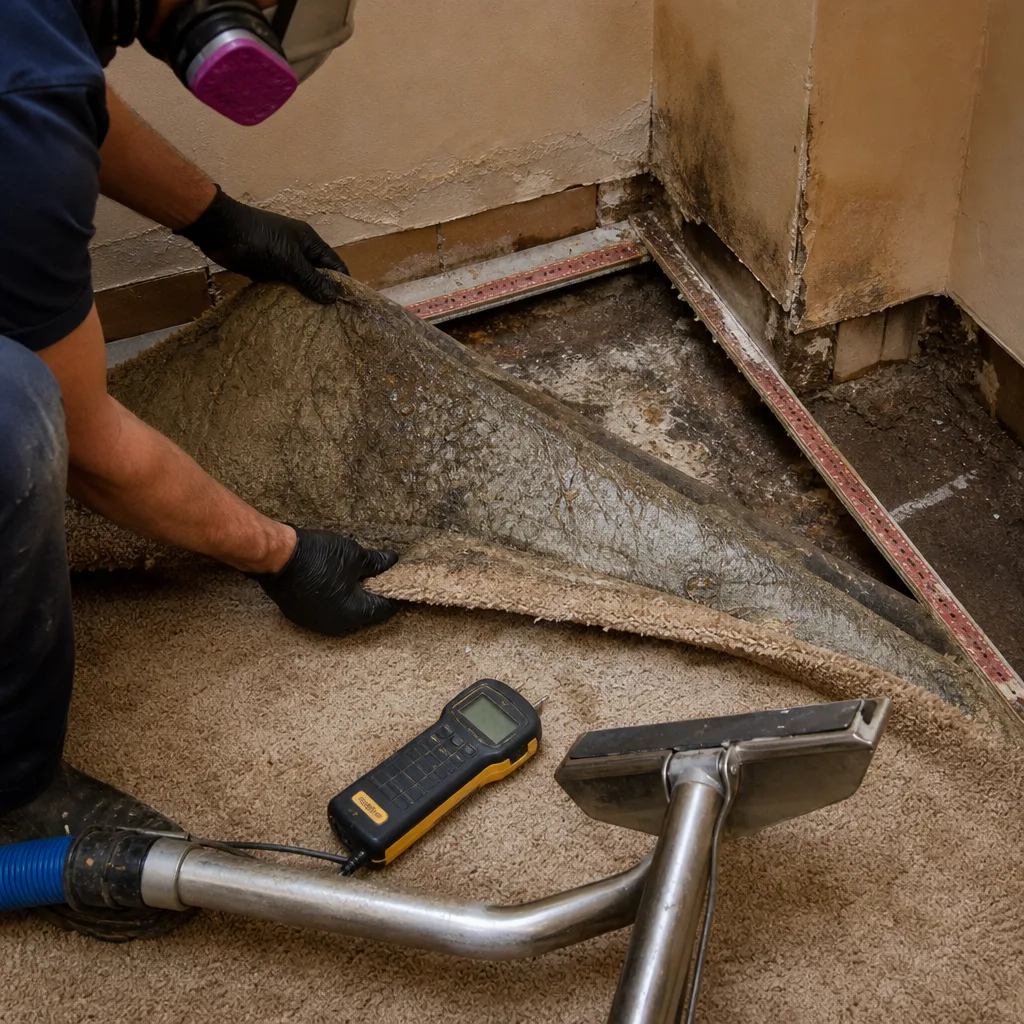
Drywall & Flooring Repair
After saltwater intrusion, drywall in Port Washington basements often holds salt crystals even when the moisture meter reads dry. We cut to the actual damage line, inspect what’s behind it, and treat before rehanging. Hardwood on 1930s Gold Coast floors tends to cup and warp after prolonged humidity, and we assess whether boards can be dried and refinished or require selective replacement. Subfloor on sandy glacial till gets a moisture check before new flooring goes down.
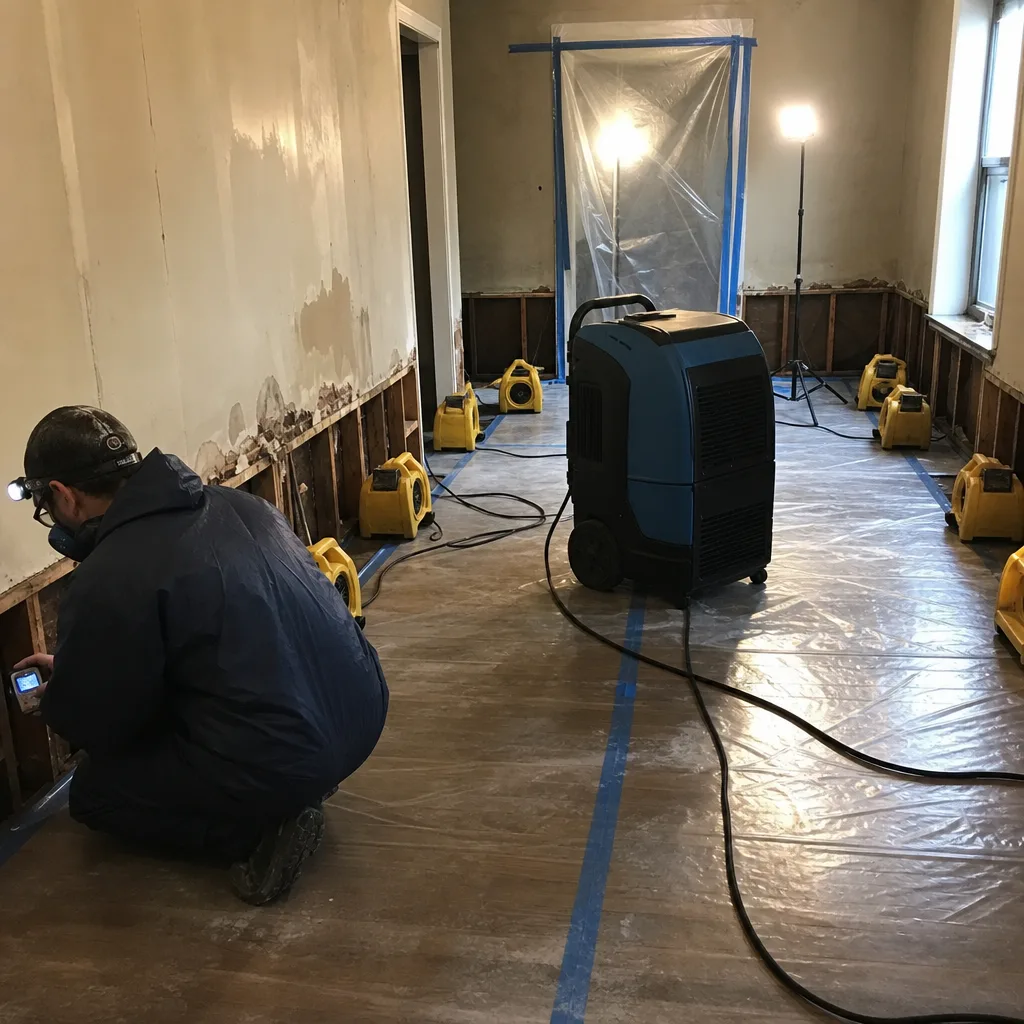
Contents Restoration & Pack-Out
Furniture, documents, electronics, and keepsakes get inventoried, packed out, and restored where possible or stored in a climate-controlled facility. For older Port Washington homeowners, we know packed-out contents often include forty years of photographs, tax files, and grandchildren’s school projects. Those get handled with the same care as the structure. Documentation of every item supports your claim, and our pack-out keeps salvageable contents from sitting in a damp, salt-laden house while reconstruction runs.
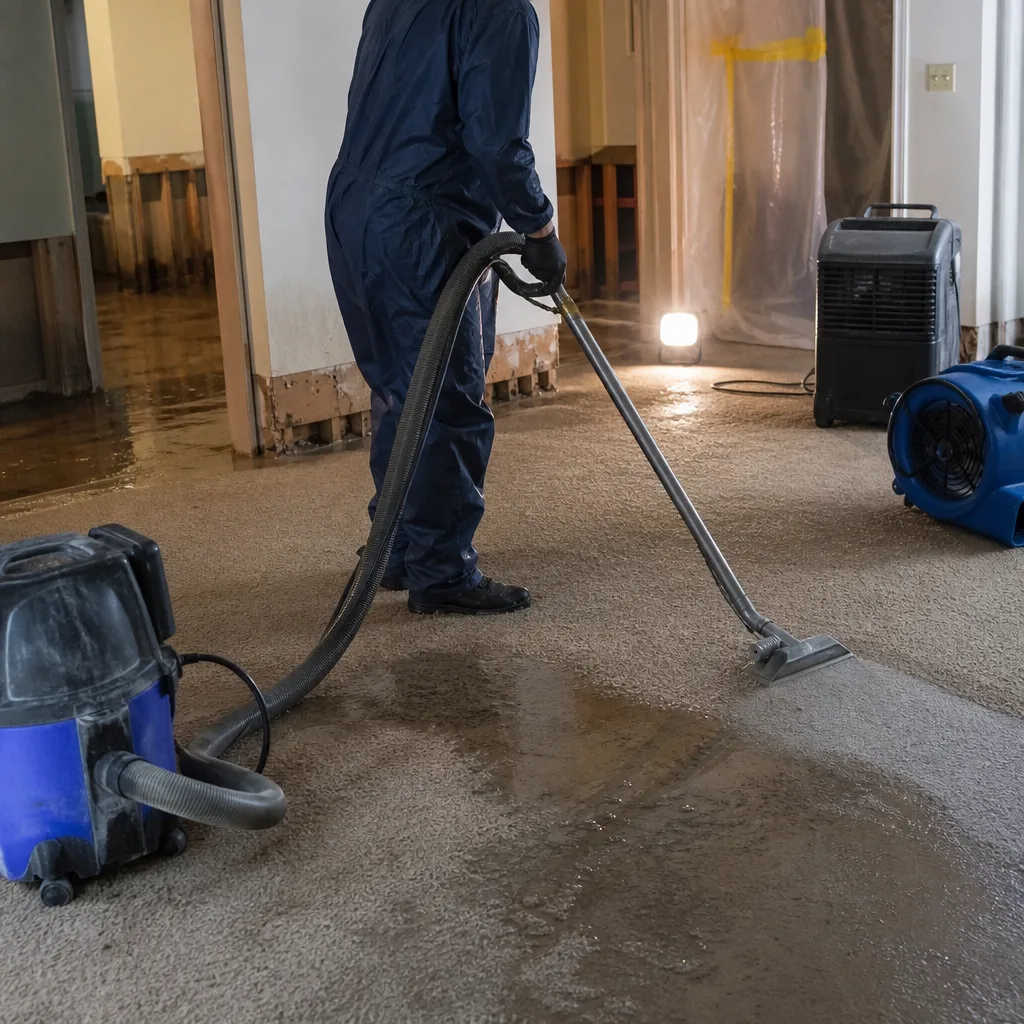
Carpet & Upholstery Cleaning
Saltwater and sewage demand hot-water extraction, antimicrobial treatment, and proper drying, not a quick shampoo. We bring truck-mounted extraction to Port Washington properties and dry in place with Dri-Eaz equipment. For cheaper carpet that absorbed Category 3 water, we recommend replacement rather than restoration, and we say so plainly rather than selling a cleaning that won’t hold up.
Post-Construction Cleanup
After reconstruction, we remove construction dust and debris with HEPA filtration, clean windows, wipe down surfaces, and leave the home ready to live in, not just ready to inspect. Port Washington’s salt air means final cleanup includes checking exterior penetrations and fasteners for early corrosion before we call the job done.
What happens when you call
- 1
A real person answersNo phone trees - you reach a local pro.
- 2
You get an upfront price rangeHonest numbers before anyone is dispatched.
- 3
A background-checked tech heads outLicensed & insured, dispatched right away.
- 4
You approve before work beginsNothing starts until you say go.
Reconstruction & Cleanup Costs in Port Washington, NY
A typical water extraction and structural drying job in Port Washington runs $2,800 to $5,500, depending on how many rooms are involved and whether saltwater intrusion demands additional flushing and antimicrobial work. Full basement remediation after bay-water flooding, including drywall removal, treatment, drying, and reconstruction, commonly lands between $9,000 and $22,000. A garage-door hardware replacement due to salt corrosion runs $350 to $900, with our current offer of $50 off any repair over $250. Contents pack-out and restoration adds $2,000 to $8,000 depending on inventory volume. The price moves with the age of the home: a 1920s Colonial with original plaster and balloon framing costs more to dry properly than a 1980s raised ranch with modern sheetrock. Insurance covers most Category 1 and many Category 2 losses we handle in Port Washington, and we bill directly. Call (917) 924-4221 for a free estimate with no obligation.
We Also Serve Cities Near Port Washington
Beyond Port Washington itself, our crews serve Port Washington‘s neighbors: Sea Cliff, Manhasset, Glen Cove, and Great Neck. Same live answer, same 45-minute response, same 90-Day Done Right Promise.
Serving Port Washington, NY - Our Local Coverage Area
We’re based in the Port Washington area and know this community well. Use the map below to see our service coverage - if you’re nearby, we can almost certainly help.
Port Washington Reconstruction & Cleanup Questions, Answered
Why does my Port Washington garage door hardware fail faster than my friend’s in Manhasset?
It’s the salt air plus the dual-bay exposure. Port Washington sits on a peninsula with Manhasset Bay on one side and Hempstead Harbor on the other, and that means constant airborne salt, not just during storms. Torsion springs, hinges, rollers, tracks, and opener chains corrode years faster than they do a few miles inland. In Port Washington, we commonly replace snapped torsion springs on doors that are only five or six years old. The fix is galvanized or coated springs, stainless fasteners, and nylon rollers. Our corrosion inspection checks all of it before it fails.
After Sandy, my home was remediated quickly, but now I smell mustiness after every heavy rain. Is this a Port Washington thing?
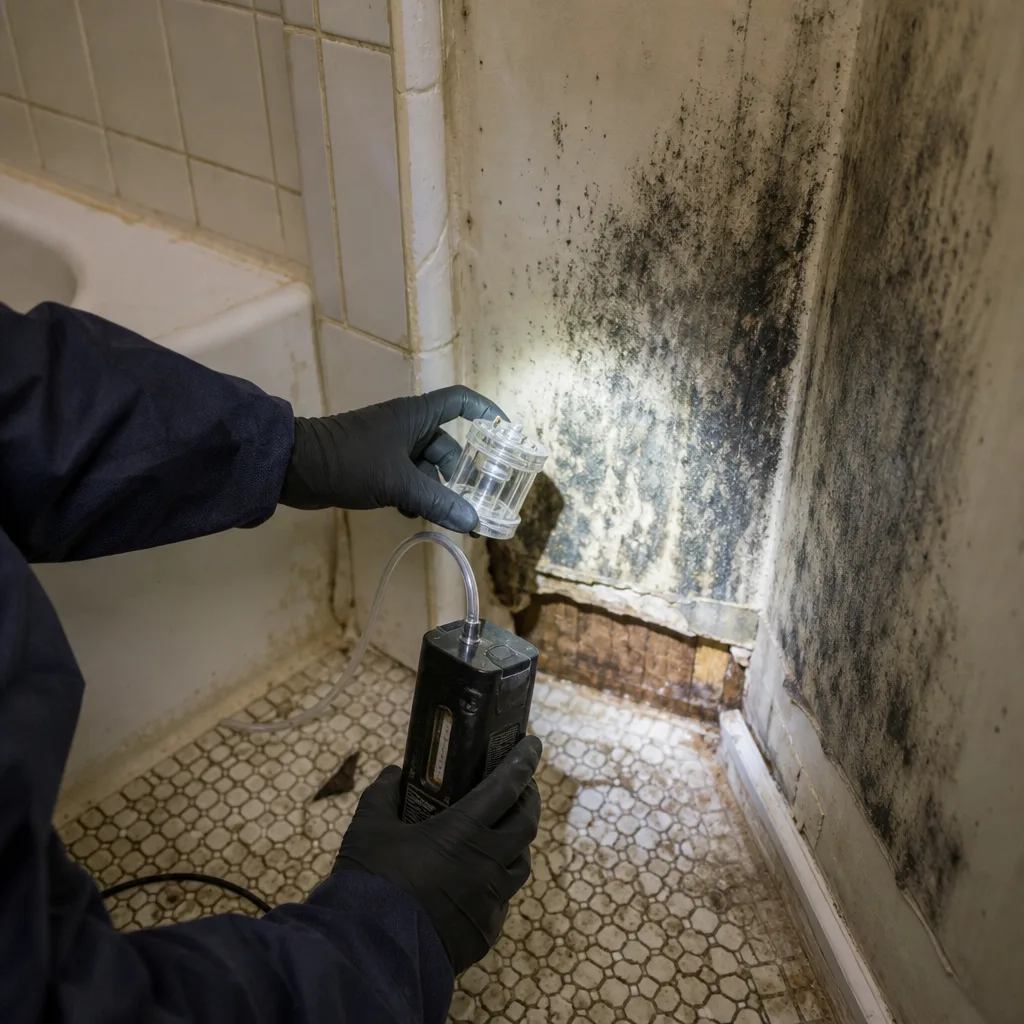
Yes, and we see it constantly in Manorhaven and other low-lying waterfront blocks. Homes were remediated quickly after Sandy, rebuilt, and resold. But residual salt crystals and dormant Mold Remediation in Port Washington triggers remained inside wall cavities. Every heavy rain or humid stretch reactivates them. It’s a second-remediation pattern unique to this peninsula. The answer is opening the affected cavities, treating with antimicrobials, verifying with air clearance testing, and then drying to pre-loss condition with a full moisture log. Call (917) 924-4221 to have it checked.
My basement flooded with bay water during the last nor’easter. Can you still salvage the drywall, or does the salt mean it has to come out?
Bay water is Category 3 water, and salt means it has to come out. Drywall absorbs saltwater deep into the gypsum core and paper facing, and no amount of drying removes the salt. Left in place, it wicks moisture from the air and feeds mold indefinitely. We cut to the actual water line plus a margin, treat the framing behind, and rebuild. Insulation gets replaced. Studs can be saved if treated properly, but the drywall cannot.
What does a ‘corrosion inspection’ on my garage door include, and how often should I get one in Port Washington?
We inspect torsion springs for rust pitting and fatigue cracks, check hinges and track fasteners for galvanic corrosion, examine the opener chain and rail, and test the balance. In Port Washington’s salt air, we recommend an annual inspection, ideally in late fall before nor’easter season. The inspection is free as part of our visual assessment. If we find a spring near failure, it’s replaced with a galvanized or coated spring, not another bare steel part that’ll snap in two years.
Is it possible to fully dry out a 1930s basement on sandy glacial till after saltwater intrusion, or will moisture keep coming back?
It is possible, but it takes the right equipment and patience that a template restoration company won’t give you. Sandy glacial till drains reasonably well compared to clay, but it also lets moisture move upward through a 1930s slab that was never poured over a vapor barrier. We use low-grain refrigerant dehumidifiers, monitor sub-slab moisture, and run the drying cycle until every reading is stable, not just until the surface feels dry. In most Port Washington basements of that era, full drying takes three to seven days, sometimes longer after double-bay surge events.
How fast can someone actually get to my house in Port Washington?
Our goal is 45 minutes from your call to our crew at your door, anywhere on the peninsula. A live dispatcher answers at (917) 924-4221 at any hour, and equipment rolls immediately. In Manorhaven, Harbor View, Port Washington Estates, or Beacon Hill, we know the routes and the low spots.
Will my insurance cover saltwater damage from a nor’easter?
Most standard homeowner policies cover wind-driven rain and water that enters through storm-related openings, but flood damage from storm surge is generally a separate flood policy. The distinction matters. We document exactly how the water entered, which helps your adjuster classify the loss correctly. We also bill direct and talk to the adjuster ourselves, so you’re not stuck negotiating on your own.
What should I do in the first 30 minutes after discovering water damage?
Cut power to the affected area if it’s safe to reach the panel, move valuables and electronics to dry ground, and photograph everything before anything is moved. Do not use a shop vac on saltwater or sewage. Then call (917) 924-4221. The faster extraction starts, the less drywall, flooring, and framing needs to come out. In Port Washington’s climate, waiting even overnight lets saltwater work deeper into plaster and timber.
Written by Curt Bowman, Owner at Floodline Restoration Co. of Manhattan, serving Port Washington, NY with full-cycle restoration from the floodline to the finished rebuild.