

Free visual inspection and a written scope of work before any mitigation begins - photos, moisture readings, and drying logs go in your claim file
The scope we write is the scope we bill. Anything new gets shown to you, in writing, before we touch it.






 Before
 After
After Before
 After
After Before
 After
After24/7 Emergency Reconstruction & Cleanup in Richmond
Reconstruction and cleanup after a lake-effect snow roof collapse or a burst pipe in an unheated cottage along Honeoye Lake means acting within hours, not days. Every day of delay lets water keep moving through balloon-frame wall cavities, turning a contained repair into a full gut-and-rebuild. Our live dispatch answers at (917) 924-4221 around the clock, and we route a crew toward Richmond the moment you call because we know what these older houses do when moisture sits. The first step is always a free visual inspection: we map the damage, mark the moisture line, and give you a written scope before any work starts.
When a Richmond farmhouse ceiling comes down from 50-plus pounds of snow load per square foot, the questions are not abstract. They’re about whether the joists can carry the new drywall, what the lath-and-plaster walls soaked up, and whether the subfloor under that 1900s pine flooring is still sound. We answer those questions with moisture meters in hand, not from a sales script. A live person answers the phone at 2 a.m. because Richmond’s worst losses happen at 2 a.m., and the clock starts running the minute water breaches the envelope. When the damage is extensive, Richmond Commercial Restoration may be needed to get the property fully operational again.
Understanding Reconstruction & Cleanup Severity in Richmond Properties
Water damage gets classified by contamination level: Category 1 is clean supply-line water, Category 2 carries significant biological or chemical contamination from washing machine overflow or sump failure, and Category 3 is grossly contaminated from sewage backups or standing lake water. Richmond’s older housing stock complicates every category. Balloon-frame construction in 19th-century farmhouses means wall stud bays run uninterrupted from foundation to attic, so Category 1 water from a burst second-floor pipe travels four stories down inside a wall in under an hour, saturating every layer on its way. A modern platform-framed house contains that water to one floor. That’s why our crews carry thermal imaging cameras and moisture meters that read through plaster and shiplap before we open anything up. If you’re facing an active leak, Water Damage Restoration in Richmond should begin immediately to limit how far that moisture travels.
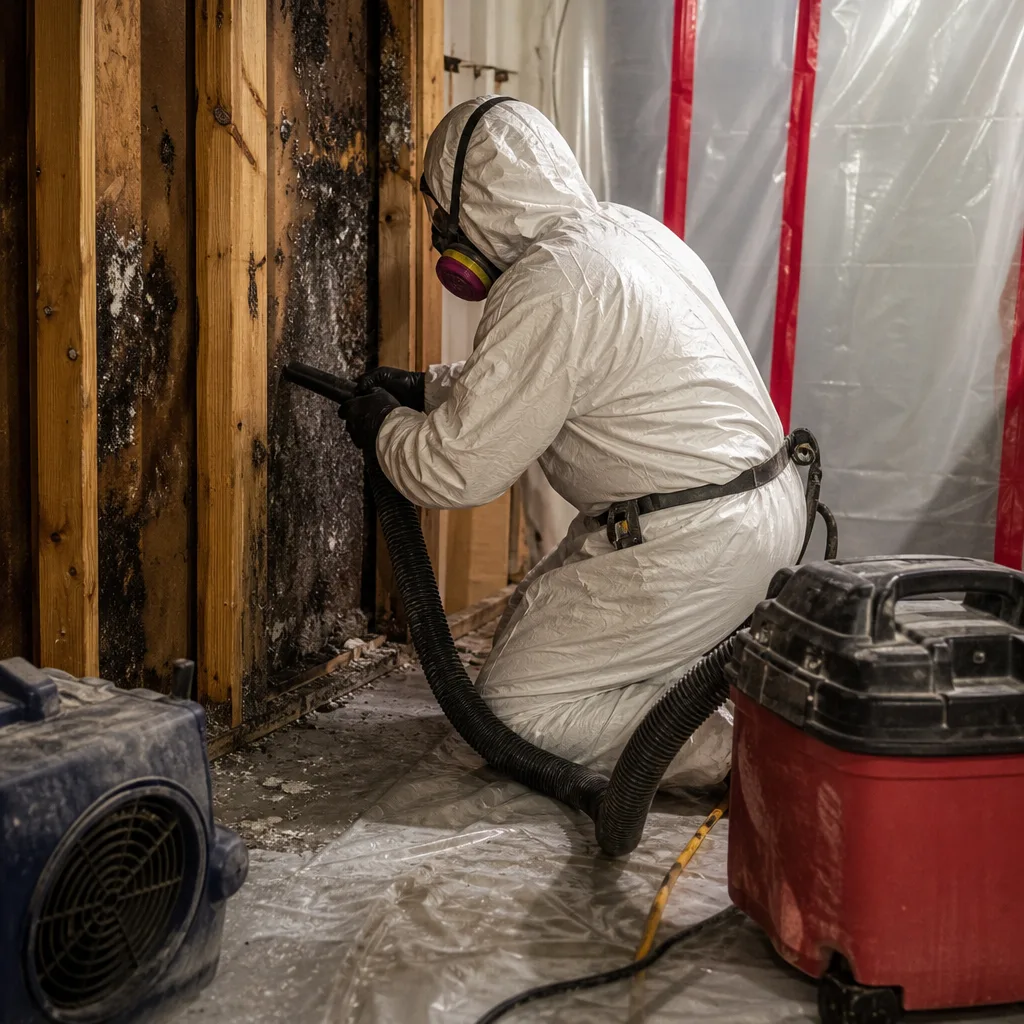
Mold follows a water event in Richmond faster than most homeowners expect because these old farmhouses breathe differently than new construction. Uninsulated wall cavities hold damp air at temperatures that support mold growth within 48 to 72 hours, especially behind cedar shakes and under balloon-frame sills near Honeoye Lake’s damp microclimate. We run containment with HEPA-filtered air scrubbers when mold is present or suspected, not because it’s protocol but because opening a lath-and-plaster wall without negative air pressure spreads spores through the entire house. The severity assessment drives everything: a Category 1 leak with no mold gets structural drying; a Category 2 event with visible growth gets full contain-and-remove through Mold Remediation - Richmond protocols that protect the rest of the house.
Why Richmond Property Owners Choose Floodline Restoration Co. of Manhattan
- 45-minute response commitment for Richmond emergency calls. We dispatch from our New York City office with crews staged for Ontario County, so a certified technician reaches a Canadice Hill or Honeoye Lake address fast when every hour saves structure.
- 24/7 live answer, never an automated system. A dispatcher picks up the phone at (917) 924-4221 at any hour, because a flooded farmhouse at 3 a.m. needs a person who can send a crew, not a voicemail prompt.
- IICRC-certified crews trained to WRT and AMRT standards. Water damage restoration and applied microbial remediation technicians carry current IICRC credentials, plus RIA and IFA training where the job calls for it.
- Free visual inspection with a written scope before work begins. We do not quote blind and we do not upsell. You get a line-item plan you can read, question, and approve first.
- Direct insurance billing with adjuster coordination. We document, photograph, and log everything from hour one, then work directly with your carrier so you are not the messenger.
- One crew from first extraction to finished reconstruction. No mid-job handoff, no inherited subcontractors. The same Floodline team that dries the structure rebuilds it.
Our Reconstruction & Cleanup Process
Inspection & Assessment
We trace the moisture migration path through the structure, using thermal imaging and penetrating moisture meters to find water the naked eye can’t. On Richmond balloon-frame walls, that means reading behind baseboards and sills before determining what comes out and what gets dried in place.
Extraction & Stabilization
Industrial extractors pull standing water from floors and wall cavities while we shore up any sagging ceilings or compromised joists. For ice-dam-soaked walls, we open the affected plaster or drywall just enough to stop capillary wicking from continuing upward.
Drying & Dehumidification
We set air movers and LGR dehumidifiers from Dri-Eaz and Phoenix, plus Injectidry floor mats for hardwood and subfloor systems. Daily moisture readings get logged against the dry standard until every affected material reaches target equilibrium, not a guess.
Cleaning & Sanitization
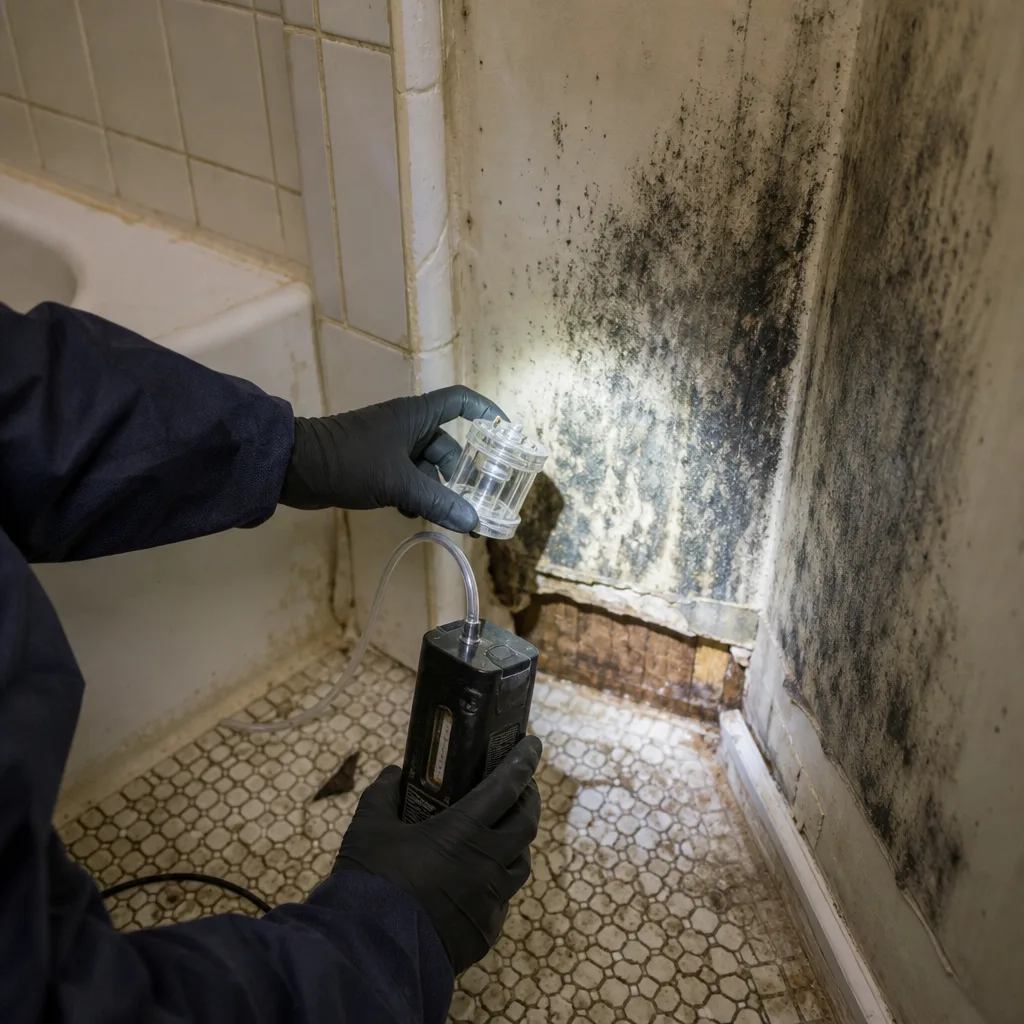
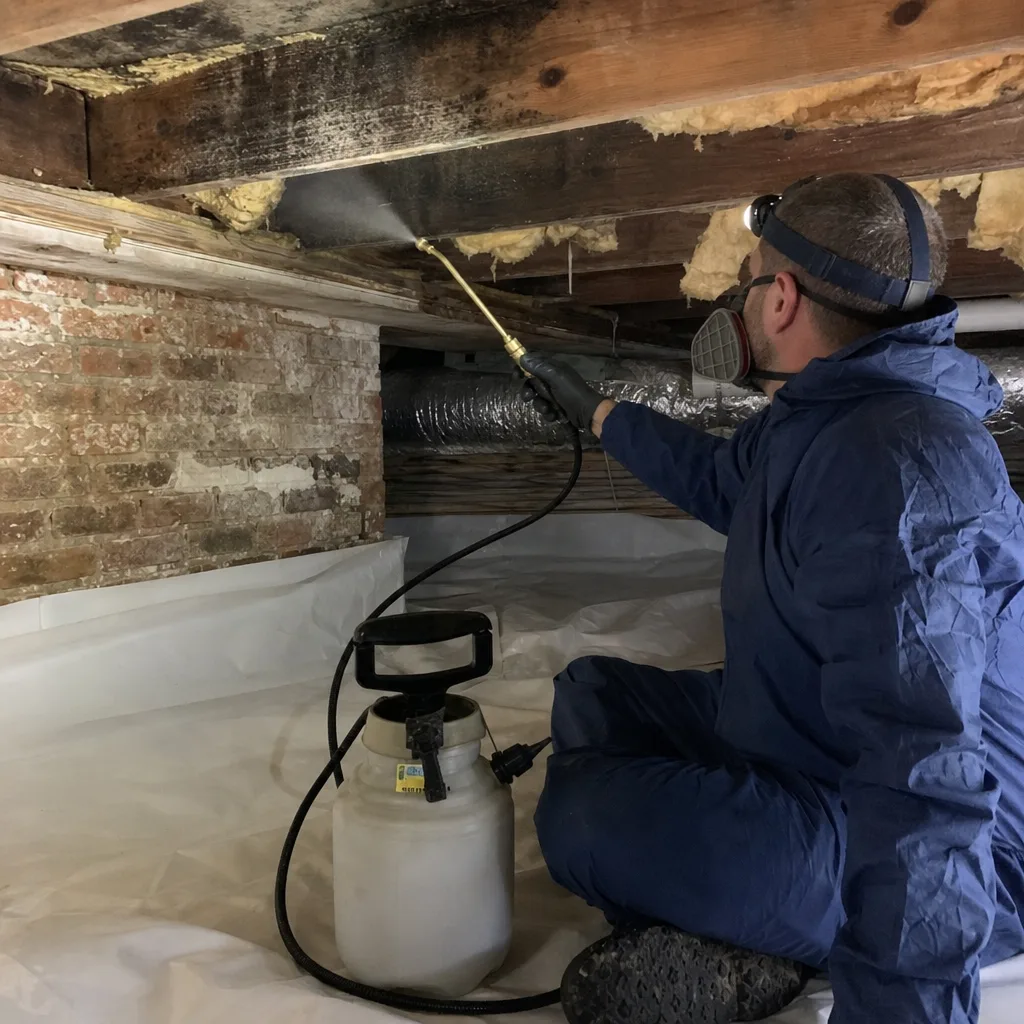
Affected surfaces get HEPA-vacuumed, cleaned, and treated with EPA-registered antimicrobials where appropriate. If mold is present, containment stays up with air scrubbers running until clearance samples tell us the space is clean.
Contents Restoration & Pack-Out
Furnishings, heirloom quilts, and family photos from a 19th-century Richmond farmhouse get inventoried, packed, cleaned, and stored offsite in climate-controlled space while we rebuild. Every item gets logged so nothing disappears in the shuffle.
Repairs & Restoration
We rebuild to match the original character of the house: new drywall or lath-and-plaster patches, refinished or replaced flooring, repainted trim. The 90-Day Done Right Promise covers the work in writing when we hand you the keys back.
Need Emergency Reconstruction & Cleanup in Richmond Now?
Crews minutes away, answering live 24 hours a day. The sooner we start, the less it costs.
Working With Your Insurance Company
We walk Richmond homeowners through the claim from the first phone call because the documentation standard matters as much as the drying. From hour one, our team photographs every affected room, logs moisture readings on a daily schedule, and builds a line-item scope that mirrors the estimating software your carrier uses. Adjusters respond better to a file that already has room-by-room photos, water classification confirmed, and a clear mitigation plan. We send that to your carrier directly and coordinate with the adjuster on your behalf, so you are never relaying messages between us. If the adjuster pushes back on a line item, we handle the back-and-forth with documentation in hand. The goal is simple: get the claim approved for what the job actually costs, not what a desk adjuster assumes it should cost from a photo in a file.
What We Provide Your Insurer
- Thorough documentation of the loss
- Photos of all damage, room by room
- Moisture readings and drying logs
- A detailed, line-item scope of work
- Direct coordination with your carrier
Built for Richmond’s Loss Calendar
Richmond’s reconstruction calendar runs in a rhythm that anyone who has lived here ten years can set a clock by. January and February bring lake-effect snow events that dump wet, heavy snow at rates measured in inches per hour. Roofs on 19th-century farmhouses never designed for modern snow loads start to fail, and ice dams force meltwater backward under cedar shake roofing into uninsulated attics. March and April are when the thaw comes: the Honeoye Lake water table rises, sump pumps start cycling, and basements that have been dry for fifteen years suddenly are not. We see the same pattern every March on Canadice Hill Road and the lakefront cottages off West Lake Road.
May through September brings a different set of losses: burst PEX-to-copper transitions in seasonal cottages opened for the summer, plus the occasional thunderstorm-driven foundation seepage. The unheated winter cottage is Richmond’s most predictable insurance claim, and February is when those pipes let go. By the time the owner opens the door in May, the subfloor under the kitchen sink has been feeding mold for two months. Fall is the quiet season, which is exactly when smart homeowners in Richmond schedule the inspection and repair work that keeps the winter losses manageable. We’ll be here for all of it.
Reconstruction & Cleanup Across Richmond’s Neighborhoods
The lakefront cottages along Honeoye Lake’s western shore on West Lake Road are our most common spring call. These are mid-century seasonal structures, many with original single-pane windows and uninsulated crawlspaces, where a single February freeze can split a supply line and feed water into the subfloor for months before anyone notices. The failure pattern is familiar: burst PEX-to-copper transitions under kitchen sinks, swollen particleboard under vinyl flooring, and mold colonies behind the lower cabinets. When we open those walls in April, the moisture readings tell the story before we cut.
The farmhouse corridor along Canadice Hill Road and County Road 37 is older stock: 19th-century balloon-frame homes with cedar shake siding, lath-and-plaster interiors, and attics that were never meant to be heated. Ice dams are the enemy here. Meltwater backs up behind frozen eaves, soaks through the shake layer, and saturates wall cavities from the top down. By the time peeling paint shows at the baseboards, the stud bays have been wicking Category 2 water for weeks. We regularly rebuild the upper wall sections on these houses, replacing water-damaged lath with plywood sheathing and new drywall while keeping the original trim where it’s salvageable. The homes along the lake’s eastern side near the Honeoye Lake Outlet see more basement seepage and high-water-table issues in early spring, with sub-slab moisture pushing up through unsealed foundations.
Specialized Reconstruction & Cleanup Services We Offer in Richmond
Full-Service Reconstruction
When a Richmond farmhouse roof fails under lake-effect snow load, we rebuild it all: structural repair, drywall, insulation, trim, paint, and flooring. Our Reconstruction & Cleanup team works to match the original character of the house, because a 1900s farmhouse should not get a 2025 flip-house finish.

Drywall & Flooring Repair
Water-soaked drywall and warped subflooring in Richmond homes get removed to the dry line and replaced with properly dried, properly fastened materials. We match plaster thickness on older walls and source pine or fir flooring that matches what was there before the loss.

Contents Restoration & Pack-Out
Farmhouse contents, from cast-iron cookware to hand-stitched quilts to generations of family photos, get inventoried, packed, and restored offsite. We clean with appropriate methods for each material, then store in climate-controlled space until the rebuild is done. Nothing gets thrown away without your approval.
Carpet & Upholstery Cleaning
Smoke-damaged or water-stained carpet and upholstered furniture in Richmond homes get cleaned with truck-mounted hot-water extraction and appropriate upholstery cleaning processes. We test for colorfastness and delamination risk before any cleaning chemical touches your furniture.
Post-Construction Cleanup
After the rebuild, we leave the home clean enough to move back in: HEPA-vacuumed floors, wiped-down surfaces, and no construction dust in the air supply. The last thing a Richmond homeowner wants after weeks of reconstruction is a layer of drywall dust on every windowsill.
What happens when you call
- 1
A real person answersNo phone trees - you reach a local pro.
- 2
You get an upfront price rangeHonest numbers before anyone is dispatched.
- 3
A background-checked tech heads outLicensed & insured, dispatched right away.
- 4
You approve before work beginsNothing starts until you say go.
Reconstruction & Cleanup Costs in Richmond, NY
Richmond reconstruction costs run higher than nearby towns with newer housing stock because balloon-frame repairs involve more labor per square foot and materials that match old construction. A full-room drywall replacement with plaster removal in a Richmond farmhouse typically runs $2,800 to $5,200 per room. Subfloor replacement in a lakefront cottage after a winter pipe burst averages $1,900 to $4,100, depending on whether the joists are salvageable. A contents pack-out with cleaning and offsite storage for a three-bedroom farmhouse often lands between $3,500 and $8,000. Ceiling reconstruction after an ice-dam roof failure starts around $3,000 and climbs with structural work.
| Service | Typical Richmond Range |
|---|---|
| Room drywall replacement (plaster removed) | $2,800 - $5,200 per room |
| Subfloor repair after winter pipe burst | $1,900 - $4,100 |
| Contents pack-out + restoration (3BR home) | $3,500 - $8,000 |
| Ceiling rebuild after ice-dam failure | $3,000 - $7,500+ |
| Post-construction cleanup | $450 - $1,800 |
What moves the price is what we find after the visible damage is removed: how far water traveled through balloon-frame cavities, whether joists and sills survived, and whether mold has established in uninsulated wall sections. Insurance covers most of these losses when the damage is sudden and accidental, which lake-effect roof failures and burst pipes are. The free inspection is how you get a firm number instead of a range. Call (917) 924-4221 and we’ll produce a written scope you can file with your carrier the same week.
We Also Serve Cities Near Richmond
Our Reconstruction & Cleanup in Richmond crews regularly work neighboring communities including Fairview, Harrison, East Bronx, and Hunts Point. If your property sits within a thirty-minute drive of Richmond in Ontario County, we can likely have a certified crew on site just as fast as the local competition.
Serving Richmond, NY - Our Local Coverage Area
We’re based in the Richmond area and know this community well. Use the map below to see our service coverage - if you’re nearby, we can almost certainly help.
Richmond Reconstruction & Cleanup Questions, Answered
What part of a Richmond balloon-frame farmhouse is most often rebuilt after ice-dam damage?
The upper wall sections and ceilings are rebuilt most often, because meltwater from ice dams enters at the roofline and saturates down through the stud bays. In balloon-frame construction, those bays run continuously from attic to foundation, so we typically replace the top four to six feet of drywall or lath-and-plaster, along with any insulation that wicked the water. Ceiling joists usually survive unless the snow load itself caused structural movement. Call (917) 924-4221 for an exact scope on your house.
How long can a Honeoye Lake cottage left unheated in winter sit after a pipe burst before subfloor replacement is unavoidable?
Subfloor replacement becomes unavoidable within about three to four weeks if particleboard or OSB stays wet continuously. In Richmond’s cold winter air, evaporation is slow, and water that reaches the subfloor under vinyl or laminate flooring sits in contact with wood for months. By spring, the moisture levels have supported full mold colonization in the wood fibers. The faster a crew can get extraction and drying running after the discovery, the more subflooring we can save. Injectidry floor mats pull water out of engineered wood much faster than ambient drying alone.
Why does Richmond see a spike in reconstruction calls every March and April that nearby Honeoye Falls doesn’t?
The direct lake-effect influence on Richmond produces heavier, wetter snow loads than Honeoye Falls sees, and the spring thaw raises the local water table around Honeoye Lake and surrounding wetlands. That combination means Richmond gets both roof load failures and sudden basement seepage in the same six-week window. Homes on older balloon-frame construction show the damage faster than newer platform-framed houses. The result is a predictable March and April surge in calls for ceiling rebuilds, wall reconstruction, and sump system failures.
Do you pack out and restore the contents of a 19th-century farmhouse differently than a modern home?
Yes. A 19th-century Richmond farmhouse contains items that are fragile, irreplaceable, and often stored in unheated attics or damp cellars for decades. We inventory everything with photos and written descriptions before anything moves, then clean each category appropriately: wood furniture gets hand-cleaned and deodorized, textiles get gentle wet or dry cleaning depending on fiber, and paper items get freeze-drying when water damaged. The inventory log goes to you and your carrier, so settlement is based on what actually exists.
Which reconstruction materials are needed most often in Richmond after lake-effect snow roof failures?
We most often replace drywall, batt insulation, roof sheathing, and the upper sections of exterior wall framing on Richmond farmhouses after ice-dam and snow-load failures. Balloon-frame walls with minimal insulation hold water longer and wick it farther than modern construction, so more material comes out per affected room. We also regularly replace cedar shake siding sections and the flashing at the eave line where meltwater entered. The repair needs to match the original building’s breathability, or the same ice-dam problem returns next winter.
How fast can crews actually get to a Richmond emergency?
We commit to a 45-minute response for emergency calls in the Richmond area, with a live dispatcher confirming the route the moment you call (917) 924-4221. Crews are staged for Ontario County through our New York City dispatch, so a certified technician can often arrive faster than the industry average. The first visit includes extraction setup and a full visual assessment with a written scope.
Will my insurance cover reconstruction after a burst pipe in a seasonal Honeoye Lake cottage?
Most Richmond homeowners policies cover sudden and accidental water damage from burst pipes, including the reconstruction, as long as the property was heated or the system was properly winterized. If the cottage was left unheated and un-winterized, the carrier may argue negligence and deny the claim. That’s why we document everything from the first hour: photos of the failure point, moisture logs, and a line-item scope that tells the full story. We coordinate directly with your adjuster on these disputes.
What should I do in the first 30 minutes after finding water damage in my Richmond home?
Shut off the water at the main supply if the leak is active, then kill power to affected circuits if water is near outlets or wiring, then call (917) 924-4221. Move small items out of standing water if safe, but do not try to open walls or run consumer fans, which spread airborne contamination. The first hour determines how much material can be dried versus replaced, so get a crew with proper extraction equipment started as fast as possible.
Richmond’s lake-effect snow and spring thaw patterns shape every reconstruction scope we write here. The same water that soaks a farmhouse wall on Canadice Hill Road behaves differently in a seasonal cottage on West Lake Road, and we rebuild each accordingly. When you call Richmond home, you need a Reconstruction & Cleanup team that has worked these streets, these roofs, and these foundations before. Call (917) 924-4221 for a free inspection and a firm written quote. We answer live, around the clock, every day of the year, and we stand behind the work with the 90-Day Done Right Promise, in writing.
Written by Curt Bowman, Owner at Floodline Restoration Co., serving Richmond, NY and surrounding Ontario County communities since 2010.