
Free visual inspection and a written scope of work before any mitigation begins - photos, moisture readings, and drying logs go in your claim file
The scope we write is the scope we bill. Anything new gets shown to you, in writing, before we touch it.






 Before
 After
After Before
 After
After Before
 After
After24/7 Emergency Reconstruction & Cleanup in Upper East Side
Reconstruction after a riser leak or steam-line rupture in an Upper East Side prewar building starts with one call: (917) 924-4221. A live dispatcher answers at 2 a.m., not a recording, and a background-checked, uniformed crew is en route to the Upper East Side within minutes. The first hour after a Category 2 or 3 water release determines how much original horsehair plaster, parquet, and millwork can be saved versus removed. A free visual inspection gives you a straight read on the damage and a written scope before any work begins. Floodline Restoration Co. of Manhattan handles every phase, from first extraction to finished rebuild, so you never get handed off to an inherited crew mid-job.
Understanding Reconstruction & Cleanup Severity in Upper East Side Properties
Water damage in Upper East Side buildings runs the same three categories as anywhere else, but the consequences are different when the walls are 1920s horsehair plaster over masonry and the floors are original hand-laid parquet. Category 1 water is clean supply-line water, Category 2 carries contaminates from sump failures or condensate, and Category 3 is sewage or floodwater carrying pathogens. In a prewar co-op, Category 2 confined inside a party wall can silently wet the plaster on three floors before anyone sees a stain. We use thermal imaging and penetrating moisture meters to map the full extent through original plaster, then run structural drying with Dri-Eaz and Phoenix equipment until the dry standard is met. Moisture that stays in thick plaster or beneath parquet leads to mold, and in Upper East Side co-ops with shared wet-column risers, the source is rarely limited to one unit.
Why Upper East Side Property Owners Choose Floodline Restoration Co. of Manhattan
- 45-minute response commitment. A live dispatcher confirms your call, and a crew is dispatched inside the Upper East Side area immediately.
- 24/7 live answer, every time. You speak to a person, not an automated system, at any hour of any day.
- IICRC-certified crews. Technicians certified to the IICRC’s WRT, FSRT, and AMRT standards, trained to RIA and IFA standards as well.
- Free visual inspection. A square deal starts with an honest look at what you’re facing before any number is put in writing.
- Direct insurance billing. We bill your carrier directly and communicate with your adjuster so you don’t play messenger.
- One team, start to finish. The same crew that reads the moisture map on day one handles daily readings and rebuilds what needs rebuilding.
Our Reconstruction & Cleanup Process
Inspection & Assessment
We map moisture through original plaster and beneath parquet using thermal imaging and penetrating meters. If the building is landmarked or in a historic district, we identify every surface that may require LPC review before work begins.
Extraction & Stabilization
Standing water is removed with professional-grade extraction units. We stabilize saturated plaster, secure loose parquet, and set containment where Category 3 water is present.
Drying & Dehumidification
Dri-Eaz and Phoenix air movers and dehumidifiers run continuously, with daily readings recorded in a dry log. The same log goes to the homeowner and the carrier.
Cleaning & Sanitization
We clean and sanitize affected surfaces, including contents packing and off-site cleaning when the loss requires it. HEPA air scrubbers run where mold or sewage is a concern.
Specialty Restoration
Original horsehair plaster is repaired in kind. Hand-laid parquet is dried, re-set, and refinished where possible. Historic millwork is documented and restored to pre-loss condition.
Repairs & Reconstruction
The same crew that handled extraction rebuilds what needs rebuilding. The Keystone Standard, our 90-Day Done Right Promise, is put in writing before you sign anything.
Need Emergency Reconstruction & Cleanup in Upper East Side Now?
Crews minutes away, answering live 24 hours a day. The sooner we start, the less it costs.
Working With Your Insurance Company
Insurance claims on Upper East Side co-op water losses are rarely simple. Shared riser liability, landmarked finishes, and multi-unit damage all complicate the file. We document from the first hour, photograph every layer of demolition, and generate industry-standard, line-item estimates your adjuster can act on. We coordinate directly with your carrier, your board, and your building manager. You don’t chase paperwork, and you don’t get caught between two parties with different interests.
What We Provide Your Insurer
- Thorough documentation of the loss
- Photos of all damage, room by room
- Moisture readings and drying logs
- A detailed, line-item scope of work
- Direct coordination with your carrier
Built for Upper East Side’s Loss Calendar
Upper East Side buildings fail on a predictable rhythm. January deep freezes burst supply lines in uninsulated riser chases along Park and Fifth Avenue co-ops. February brings steam-heat system malfunctions and radiator overflows in Carnegie Hill and Lenox Hill prewar buildings. Spring snowmelt and heavy rain push seepage into Yorkville basement-level walk-ups where cast-iron drains have quietly corroded for sixty years. Summer thunderstorms overwhelm roof drains on 10-to-20 story co-ops, sending water down interior walls and through original plaster ceilings. Nor’easters in the fall drive wind-driven rain into windows and envelope gaps. Every season has a known pattern here, and a crew that knows Upper East Side building systems reads the damage faster because they’ve seen the same failure mode three buildings down the block.
Reconstruction & Cleanup Across Upper East Side’s Neighborhoods
Carnegie Hill co-ops, between 86th and 96th Streets off Fifth Avenue, have the densest concentration of landmarked facades and original decorative plaster in the neighborhood. A riser leak there means LPC documentation before any removal. Lenox Hill, from 60th to 77th along Lexington and Park, has grand prewar co-ops where wet-column risers run through party walls and soak multiple stacked units. Yorkville, east of Third Avenue into the 80s and 90s, has more modest prewar walk-ups and 1950s-to-70s postwar brick buildings where galvanized supply lines and cast-iron drains corrode behind tile walls. Along East End Avenue, high-floor co-ops see wind-driven rain and facade flashing failures that saturate plaster behind radiators without ever showing a stain on the wall surface.
Specialized Reconstruction & Cleanup Services We Offer in Upper East Side
Full-Service Reconstruction
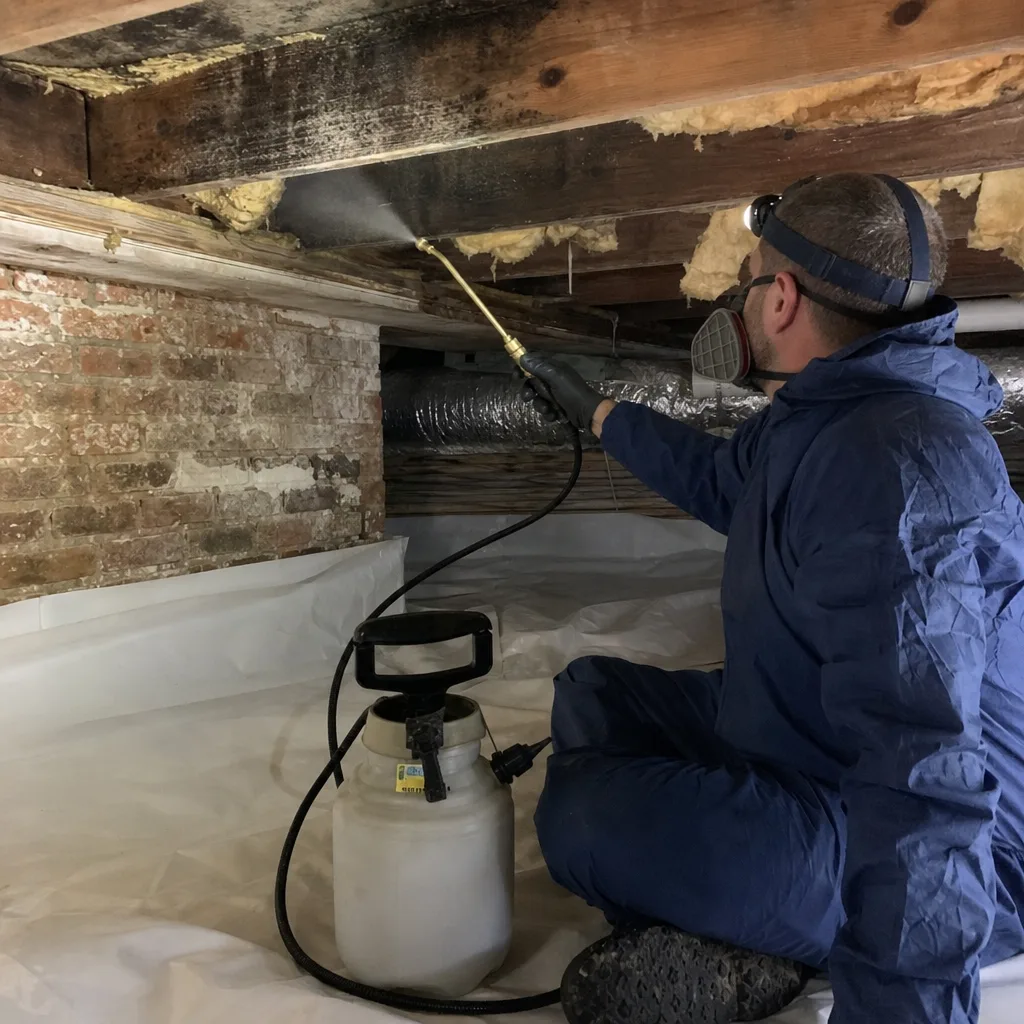
When a riser failure or steam leak destroys original plaster and parquet, standard drywall-and-paint remediation doesn’t meet the building’s standard. Our Reconstruction & Cleanup team rebuilds in kind. Horsehair plaster is restored, not replaced with blue board. Parquet is re-set and refinished. Millwork is repaired, not removed. The goal is a finish that matches the rest of the apartment, not a patch that reads as a patch.
Drywall & Flooring Repair
Post-war buildings in Yorkville and the 70s off First Avenue often have standard drywall and strip flooring. Repairs there move faster and cost less. We match plaster and paint textures, re-set loose tongue-and-groove flooring, and replace damaged subflooring where needed. Every repair is scoped in writing before work starts.
Contents Restoration & Pack-Out
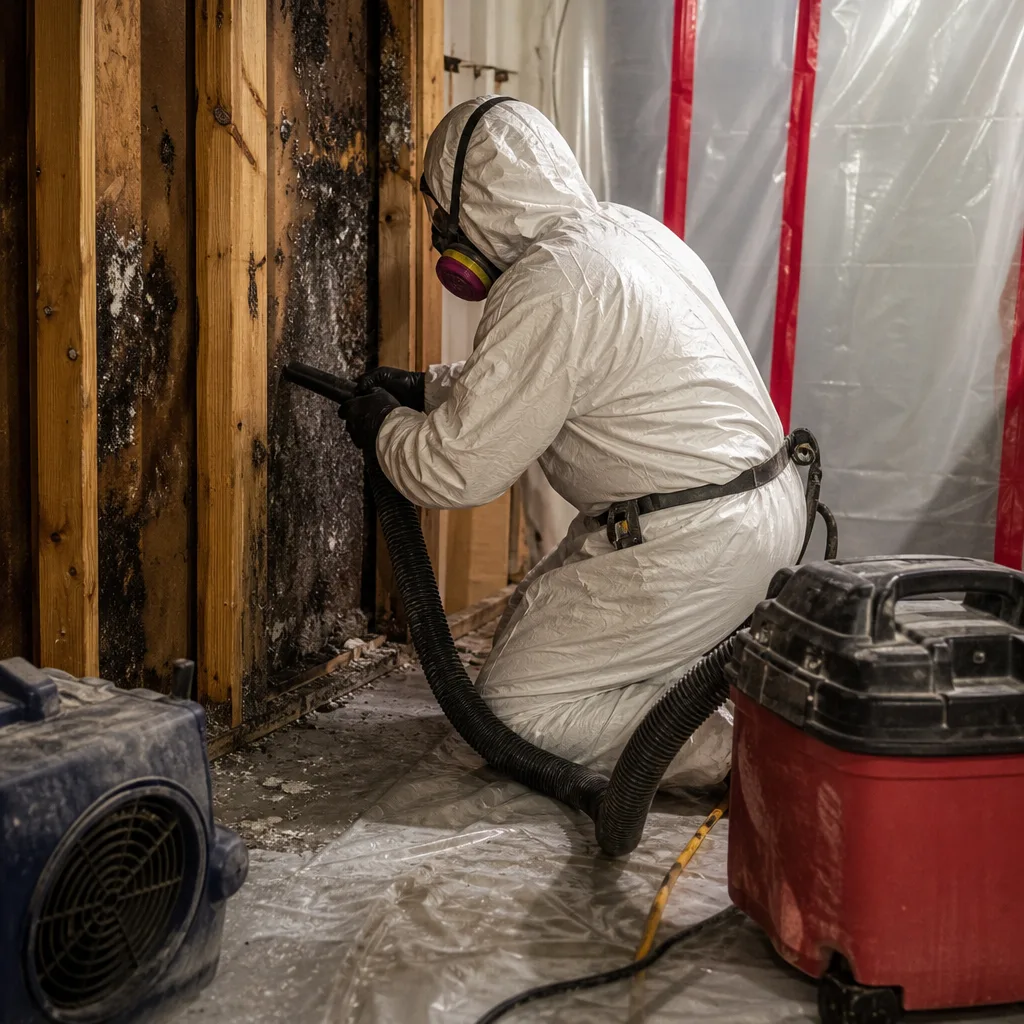
A multi-floor riser leak in an Upper East Side co-op often requires packing out furniture, rugs, art, and clothing while drying and reconstruction happen. We inventory, photograph, pack, transport, and store contents off-site, then return and reset them when the work is done. Artwork and rugs go to specialty cleaners familiar with high-value pieces.
Carpet & Upholstery Cleaning
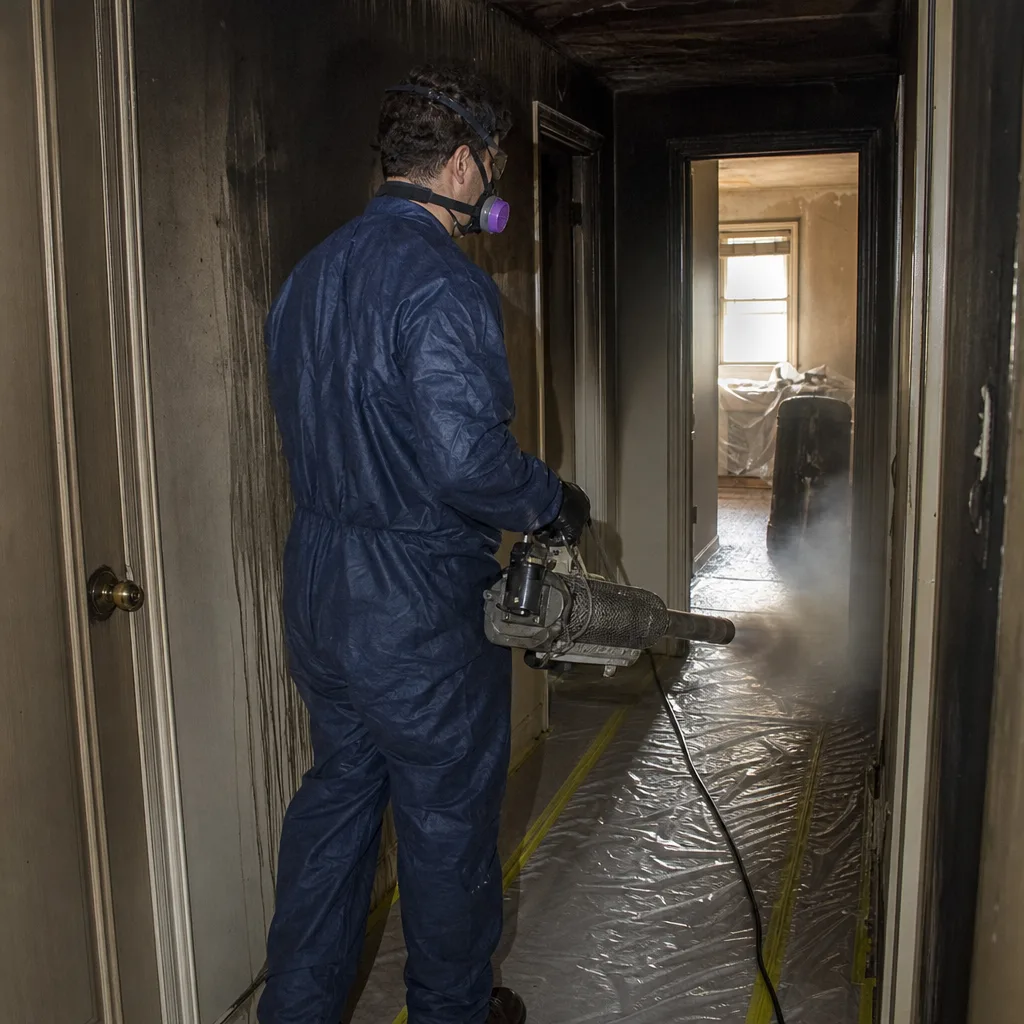
Category 2 or 3 water exposure on carpet and upholstery calls for hot-water extraction, sanitization, and deodorization. In prewar co-ops, area rugs over parquet often trap moisture that prevents the floor beneath from drying. We lift and dry rugs, clean them off-site when necessary, and document everything for the carrier.
Post-Construction Cleanup
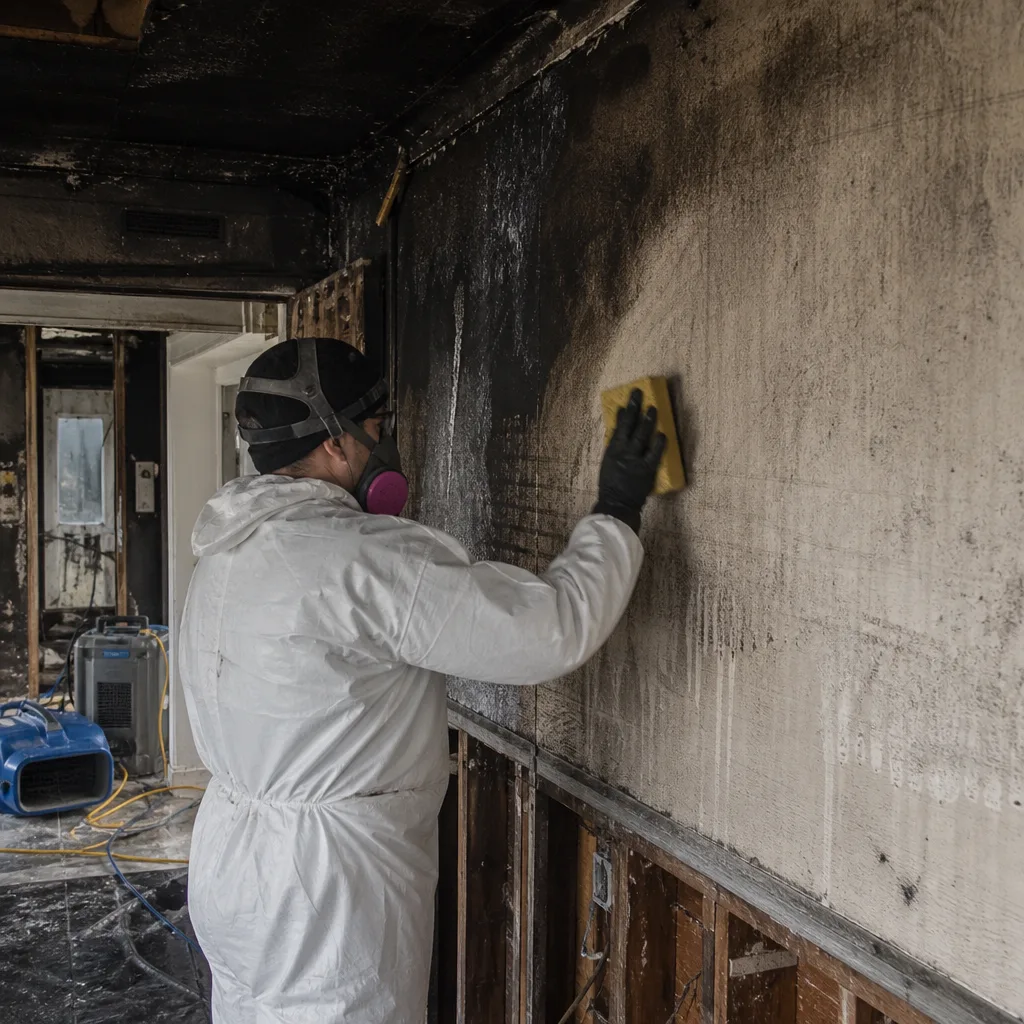
After reconstruction, we remove construction dust from every surface, clean HVAC returns, and leave the apartment in move-in condition. Dust from horsehair plaster and old mortar is abrasive and gets into every crevice. A proper post-construction clean is the difference between a finished job and a construction site with furniture in it.
What happens when you call
- 1
A real person answersNo phone trees - you reach a local pro.
- 2
You get an upfront price rangeHonest numbers before anyone is dispatched.
- 3
A background-checked tech heads outLicensed & insured, dispatched right away.
- 4
You approve before work beginsNothing starts until you say go.
Reconstruction & Cleanup Costs in Upper East Side, NY
A single-unit Category 2 water loss in an Upper East Side prewar co-op typically runs $6,500 to $14,000 for drying, selective demolition, and reconstruction. Multi-unit riser failures routinely run $45,000 to $180,000 depending on the number of floors affected, landmarked finishes, and LPC review requirements. Drywall and flooring repair in a standard post-war apartment in Yorkville runs $3,200 to $8,500. Contents pack-out and cleaning adds $1,800 to $7,500 depending on volume. Carpet and upholstery cleaning after a water loss runs $450 to $1,600. The free visual inspection gives you a firm, written scope before any work begins, and direct insurance billing means we deal with the carrier while you deal with your life.
We Also Serve Cities Near Upper East Side
Our crews frequently handle reconstruction and cleanup in Upper East Side and the surrounding area, including Fairview, Harrison, East Bronx, and Hunts Point. If your building is near the neighborhood line, call and we’ll confirm dispatch coverage immediately.
Upper East Side Reconstruction & Cleanup Questions, Answered
How does Upper East Side landmarks preservation affect reconstruction after a water loss?
Any building in a Landmarks Preservation Commission-designated historic district, or an individual landmark, requires LPC review before exterior-facing or interior landmarked elements are altered or removed. That includes original decorative plaster, facade elements, and historically significant millwork. We document every layer photographically and prepare submittals that keep the LPC’s process moving without delaying your drying and stabilization work.
What should our co-op board expect when a riser leak damages multiple units in our building?
Expect a written scope of work for each affected unit, moisture mapping that shows exactly where water traveled, daily drying logs, and direct communication with the building’s insurance carrier. The board should also expect us to coordinate access approvals unit by unit so restoration moves forward without conflicts between shareholders.
Can you restore original horsehair plaster and parquet floors instead of replacing them?
Yes. Horsehair plaster is often restorable when drying begins quickly and the plaster is not structurally compromised. Parquet that has buckled can frequently be re-set, sanded, and refinished to match. We restore before we replace, and we document the distinction for your carrier.
How fast can you respond to a Category 2 or 3 water release in a Yorkville prewar walk-up?
We commit to a 45-minute response inside the Upper East Side. A live dispatcher confirms the call, and a certified crew is dispatched immediately. For Category 3 releases, faster extraction means less contaminated plaster and flooring that has to be removed.
Do you help with insurance documentation for multi-unit Upper East Side claims?
Yes. We photograph every layer of demolition, log daily moisture readings, and generate line-item scopes that break down cause, category, and affected finishes. We also coordinate directly with your adjuster and with the co-op’s master policy carrier, so liability for shared risers is properly allocated.
Will insurance cover reconstruction in a prewar co-op?
Most building master policies cover the structure, including original plaster and flooring, but shareholder-level finishes and improvements often fall under your individual unit policy. We help you identify which policy covers what and document accordingly so you’re not left covering a gap out of pocket.
How long does reconstruction take after a riser leak in Upper East Side?
Drying typically takes 3 to 5 days with professional-grade equipment. Selective demolition and reconstruction for a single unit runs 1 to 2 weeks. Multi-floor riser failures with landmarked finishes can run 4 to 8 weeks depending on LPC review and board approvals.
What should I do in the first 30 minutes after discovering a water release in our apartment?
Shut off the water at the fixture or riser valve if you can do so safely. Move loose items off the floor, place towels at doorways to contain spread, and call (917) 924-4221. Do not wait to see if the wet area dries on its own. In prewar co-ops with thick original plaster and parquet, visible drying on the surface almost always means moisture is still moving inside the wall assembly.
Serving Upper East Side, NY - Our Local Coverage Area
We’re based in the Upper East Side area and know this community well. Use the map below to see our service coverage - if you’re nearby, we can almost certainly help.
Reconstruction and Cleanup in Upper East Side: Why the Old Buildings Change Everything
Most reconstruction contractors treat a water loss like a drywall job. That works in a suburban house with gypsum board and strip flooring. It does not work at 1040 Fifth Avenue or in a Yorkville prewar walk-up built in 1927. The Upper East Side’s housing stock is dominated by 10-to-20 story prewar masonry co-ops with original wet-column plumbing risers, cast-iron steam radiators, horsehair plaster walls, and elaborate millwork. Rebuilding with standard drywall in a building where landmarked millwork and original plaster are required fails LPC review and doubles the job cost. Skipping moisture mapping on a multi-floor riser leak means hidden moisture behind original plaster re-wets newly installed finishes weeks after the crew leaves. And assuming a single-unit pack-out is enough when a wet-column failure has saturated party walls and parquet in adjacent apartments that share the riser is the most expensive mistake a board can make.
Manhattan’s freeze-thaw cycles and steam-heat system malfunctions in older buildings cause condensation, pipe sweating, and slow plaster saturation that building staff commonly misidentify as surface staining. That delay allows mold to establish inside thick original plaster and beneath parquet before a restoration contractor is ever called. In the grand prewar co-ops of Carnegie Hill and the Lenox Hill corridor, shared wet-column risers run inside party walls, so a slow leak on the 10th floor can silently saturate plaster and parquet on the 9th, 8th, and 7th floors before the first tenant complains. What should be a one-apartment job becomes a multi-unit, multi-board-approval restoration event that routinely runs six figures and requires LPC sign-off on any original decorative plaster or historic facade element.
When a 10th-floor riser leak in a Carnegie Hill co-op soaked through to the 9th and 8th floors, our crew coordinated with the board and building management to perform water extraction, moisture mapping, and structural drying before any reconstruction began. We removed only the Category 3 saturated horsehair plaster, documented every layer for the Landmarks Preservation Commission, and restored the original parquet to pre-loss condition while keeping the building’s drying logs transparent for insurance. That’s how the job gets done right on the Upper East Side: one team, no handoffs, and a written 90-Day Done Right Promise backing every repair.
Floodline Restoration Co. has built a business on the principle that the floodline is where the work starts, not where the estimate starts. We’re proud to serve Upper East Side property owners with straight pricing, direct insurance billing, and a live person on the phone at any hour. If you’re facing a reconstruction project after a water loss, call (917) 924-4221 for a free visual inspection. We’ll give you a square deal in writing before any work begins.
Written by Curt Bowman, Owner at Floodline Restoration Co., serving Upper East Side since 2010.