
Free visual inspection and a written scope of work before any mitigation begins - photos, moisture readings, and drying logs go in your claim file
The scope we write is the scope we bill. Anything new gets shown to you, in writing, before we touch it.






 Before
 After
After Before
 After
After Before
 After
After24/7 Emergency Sewage Cleanup in East Village
Sewage cleanup in East Village tenement buildings is rarely a single-apartment problem. When a waste line backs up in one of these pre-war walk-ups, the shared vertical plumbing stack usually means Category 3 black water spreads through multiple floors within the hour. Floodline Restoration Co. of Manhattan answers the phone live at (917) 924-4221 around the clock, and our crews reach East Village addresses fast enough to stop sewage before it saturates the plaster-and-lath walls that make these buildings so unforgiving after a backup. The first hour decides whether you’re dealing with a contained toilet overflow or a four-floor restoration project with multiple rent-stabilized tenants, building management, and an insurance carrier all needing answers. We start with a free visual inspection. Then we run extraction the same visit.
Understanding Sewage Cleanup Severity in East Village Properties
Sewage falls under Category 3 water: grossly contaminated, carrying bacteria, viruses, parasites, and often chemical waste from building drains. In East Village, the housing stock compounds the problem. Old-law tenements built before 1901 and new-law walk-ups from 1901-1929 share vertical cast-iron waste stacks that run through uninsulated interior walls. One corroded joint on the third floor sends black water down through the ceiling of the second, into the first, and often into the cellar. We classify every sewage loss by category and class, then map moisture across affected assemblies with thermal imaging and hygrometers. Why does that matter here specifically? Because plaster-and-lath walls concealed behind decades of paint hold moisture like a sponge, and those cavities stay wet long after the visible puddle is gone. Left untreated, that hidden moisture colonizes mold within 24 to 48 hours in East Village’s summer humidity. Drying isn’t done when the floor looks dry. It’s done when our moisture readings hit the dry standard across every affected cavity, including the wall bays adjacent to the shared stack.
Why East Village Property Owners Choose Floodline Restoration Co. of Manhattan
- 45-minute response commitment. When sewage is migrating through a tenement’s shared stack, every minute spreads contamination. Our East Village dispatch targets a 45-minute arrival window. We’ll be there when we say.
- Live answer, 24/7. A real person picks up at 2 a.m., not a recording. That’s been true since Curt Bowman founded this company in 2010 around a dispatch board, not a sales desk.
- IICRC-certified crews. Our technicians hold WRT and ASD certifications and train to IICRC, RIA, and IFA standards. They’re background-checked and uniformed on every job.
- Free visual inspection. Before any work begins, we walk the loss with you and explain what we’re seeing. No charge for that assessment, no obligation after.
- Direct insurance billing. We bill your carrier directly and handle adjuster communication. You don’t play messenger between us and the insurance company.
- One team from extraction to reconstruction. The same certified crew that extracts sewage handles drying, sanitization, and any rebuild work. No mid-job handoff to a crew you’ve never met.
Our Sewage Cleanup Process
Inspection & Assessment
We identify the source of the backup, classify the water as Category 3, and map affected areas with thermal imaging and moisture meters. In East Village tenements, we always check the shared plumbing stack, because an upstairs backup is rarely isolated to one unit.
Extraction & Stabilization
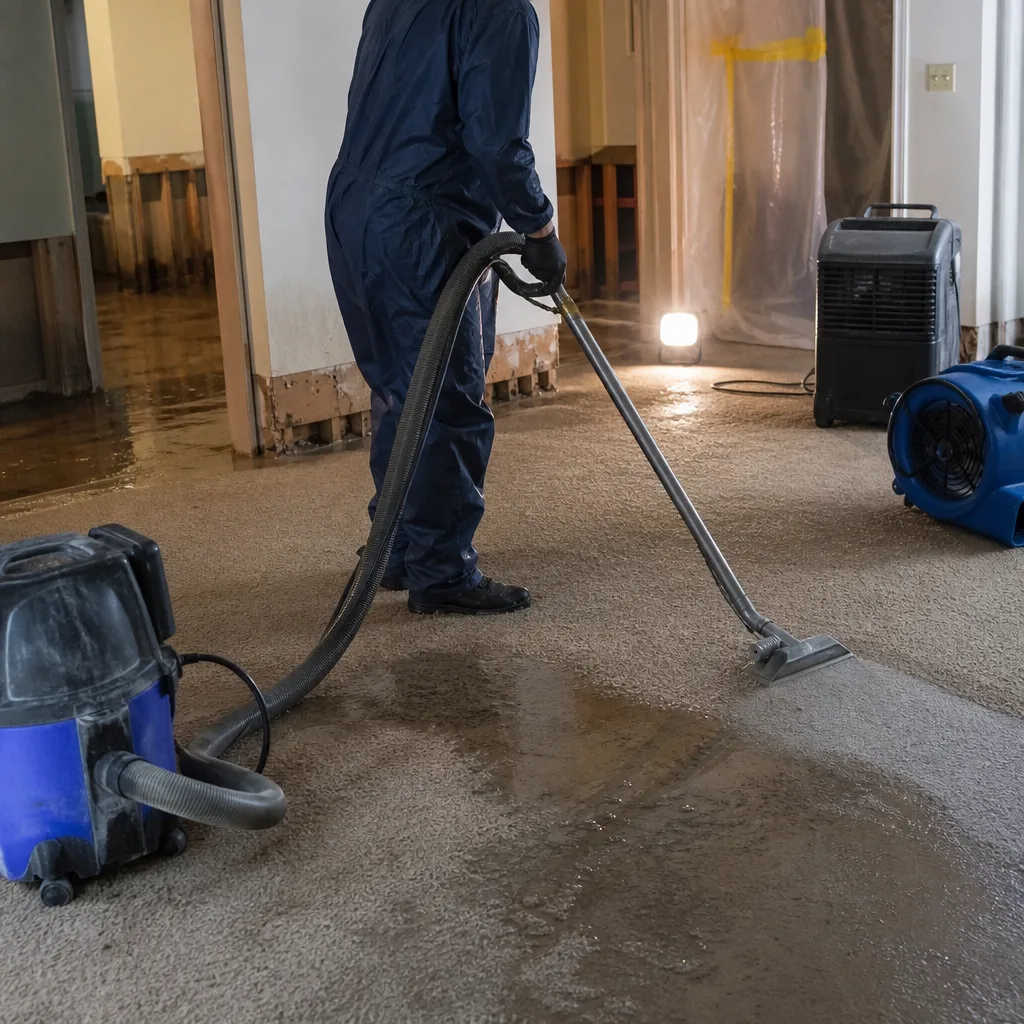
Black water comes out first. We run truck-mounted extraction units and staged containment to prevent cross-contamination to unaffected apartments across the shared stack. This is where the clock matters most.
Drying & Dehumidification
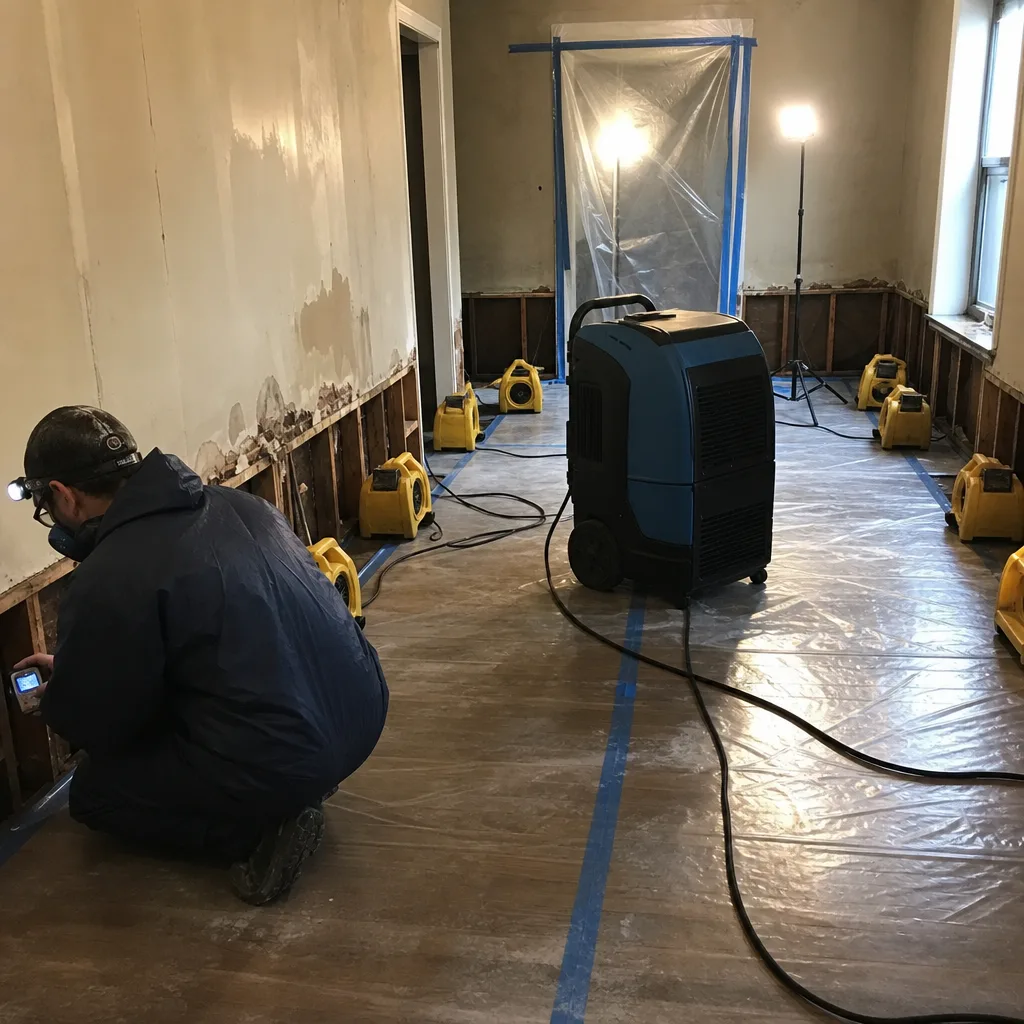
Dri-Eaz dehumidifiers and XPOWER air movers run behind containment to pull moisture from plaster-and-lath cavities, floor joists, and subfloor layers. We log daily moisture readings until the dry standard is met.
Cleaning & Sanitization
Contaminated surfaces are cleaned with EPA-registered disinfectants appropriate for Category 3 sewage. Porous materials that absorbed black water, like carpet and drywall, are removed and properly disposed of. Non-porous surfaces get mechanical cleaning and disinfection.
Containment & Air Scrubbing
HEPA air scrubbers run throughout the affected area to capture airborne contaminants released during sewage disturbance. In East Village walk-ups, we stage containment on each affected landing to protect tenants in adjacent units.
Repairs & Restoration
After the building is dry and sanitized, we handle what needs rebuilding: plaster repair, flooring replacement, pipe wrap replacement, and finish work. The same crew that read the moisture map on day one rebuilds what needs rebuilding.
Need Emergency Sewage Cleanup in East Village Now?
Crews minutes away, answering live 24 hours a day. The sooner we start, the less it costs.
Working With Your Insurance Company
Sewage backup coverage in New York City is not automatic. It lives in riders and endorsements, and the language in your policy determines whether a sudden, accidental discharge is covered. We deal with that reality every week in East Village, which is why our documentation starts the moment we arrive. We photograph every affected room before we touch a wall. We log moisture readings daily. We keep the drying log that goes to you and to your carrier. When the adjuster calls, our office talks to them directly, with the industry-standard estimate format they recognize and a line-item scope of work that matches the photos. You get a written scope before work starts, not a surprise bill after.
What We Provide Your Insurer
- Thorough documentation of the loss
- Photos of all damage, room by room
- Moisture readings and drying logs
- A detailed, line-item scope of work
- Direct coordination with your carrier
Built for East Village’s Loss Calendar
East Village sewage losses follow a distinct seasonal rhythm, and knowing it matters when you’re deciding whether to act or wait. Deep freezes in January and February stress aging cast-iron waste lines and uninsulated pipe chases in pre-war walk-ups. Metal contracts. Joints crack. A three-inch freeze crack in a waste stack behind a kitchen wall becomes a silent Category 3 leak that only announces itself when the ceiling below starts staining. Spring thaw brings saturated sub-slab soils that push hydrostatic pressure against old building drains, triggering backups in cellars and first-floor units. Summer humidity is the multiplier: once sewage has been extracted, the challenge in East Village is drying multi-layer plaster walls fast enough to prevent mold from colonizing within 24 to 48 hours, because these buildings have little mechanical ventilation and no air conditioning in common areas. Our crews read the moisture map daily and don’t pull equipment until the dry standard holds across every affected cavity.
Sewage Cleanup Across East Village’s Neighborhoods
Response routes matter when sewage is spreading through a shared stack. Our crews know the difference between a pre-war walk-up on Avenue A and a corner building off Second Avenue. Around Tompkins Square Park, old-law tenements from the 1880s and 1890s pack six floors of rent-stabilized units onto a single footprint, meaning a third-floor toilet overflow is a six-unit problem if it isn’t caught fast. Along Avenue B and Avenue C, newer construction sits next to 1905 new-law buildings with original cast-iron supply and waste lines, and we stage our XPOWER air movers in stairwell landings where space allows. East of First Avenue toward the FDR, buildings run larger, but the vertical plumbing logic doesn’t change: one stack, multiple floors, fast spread. We dispatch crews who know these blocks, know where parking is realistic, and know how to get extraction equipment through a narrow entry vestibule without blocking a fire escape.
Specialized Sewage Cleanup Services We Offer in East Village
Sewage Backup Cleanup
A sewage backup in East Village rarely belongs to one unit. When the shared waste stack backs up, multiple apartments are implicated. We contain, extract, and sanitize across every affected floor, coordinating with building management and tenants who may not have realized their walls absorbed sewage. Full stop: we treat the loss as a building-level event, not a single-room job.
Toilet Overflow Cleanup
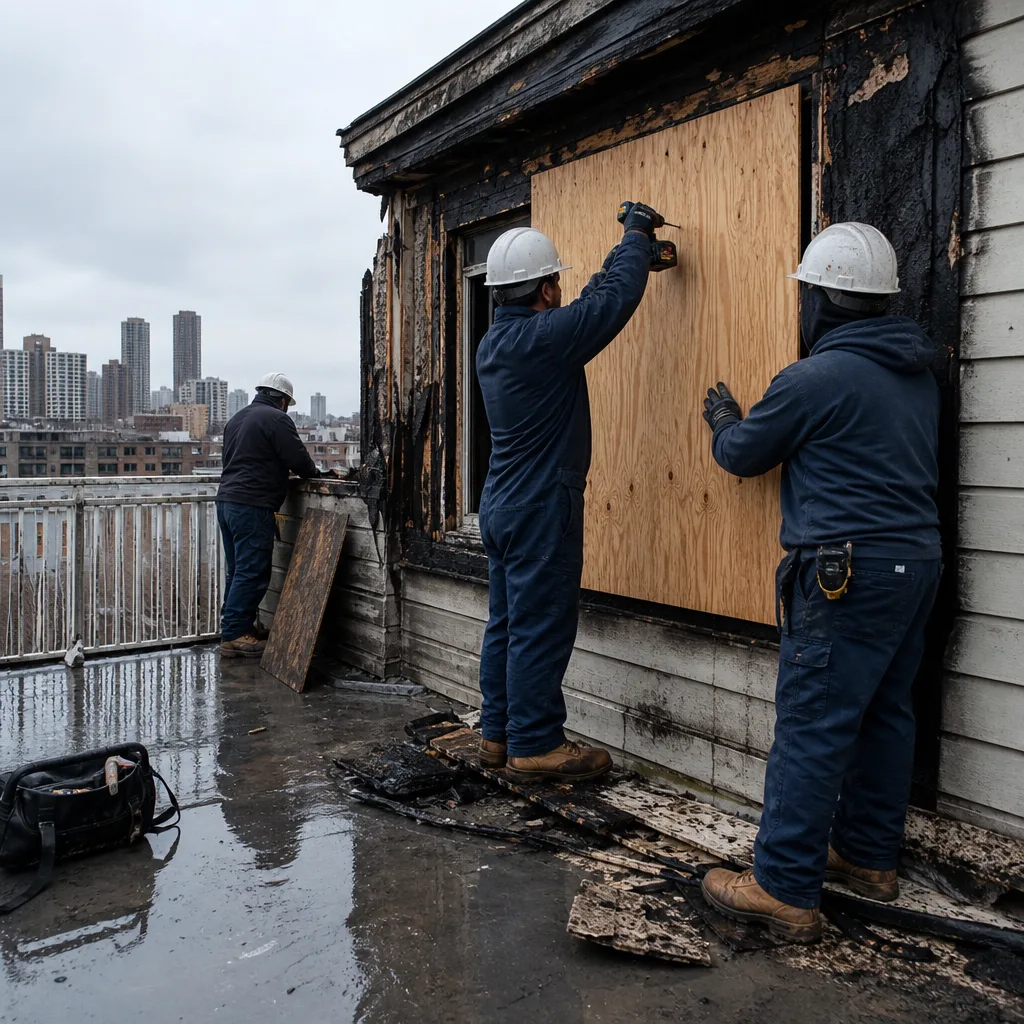
Toilet overflows are the most common sewage event we handle in East Village, and the most dangerous to underestimate. A toilet overflow in a fourth-floor walk-up runs down the stack and through the ceiling assemblies below. We’ve handled exactly this on Avenue B near Tompkins Square Park. See the field note below.
Septic Failure Cleanup
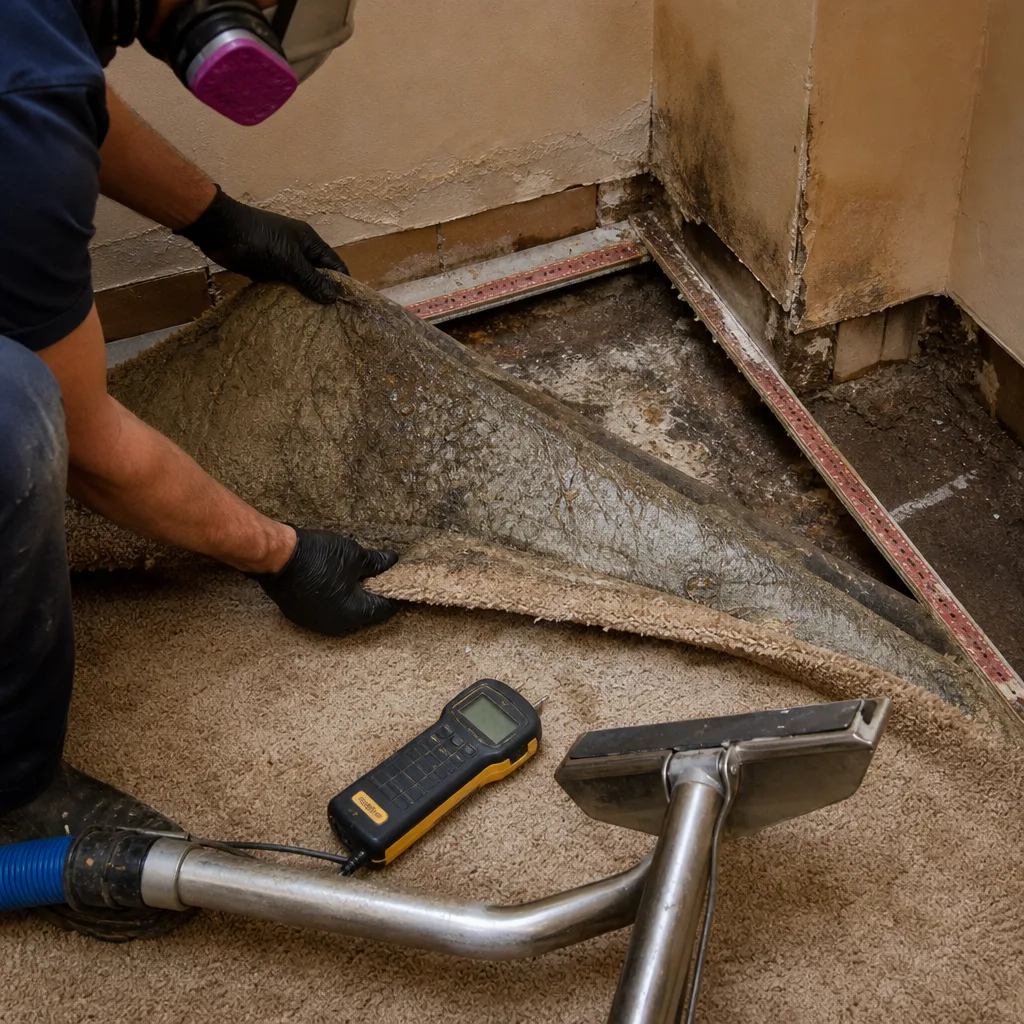
Septic systems are rare in East Village proper, but low-lying properties and some East Village-adjacent structures still rely on aging subsurface systems. When a drain field fails, the sewage has to go somewhere, and that somewhere is usually the basement. We pump, excavate, and restore the affected service area.
Black Water Extraction
Category 3 sewage extraction requires specific equipment and staging protocols. We run truck-mounted extraction units where street access allows, portable extraction pumps where it doesn’t. East Village alley-load doors and narrow building entryways are a constraint we plan for before we arrive, not after.
Sanitization & Disinfection
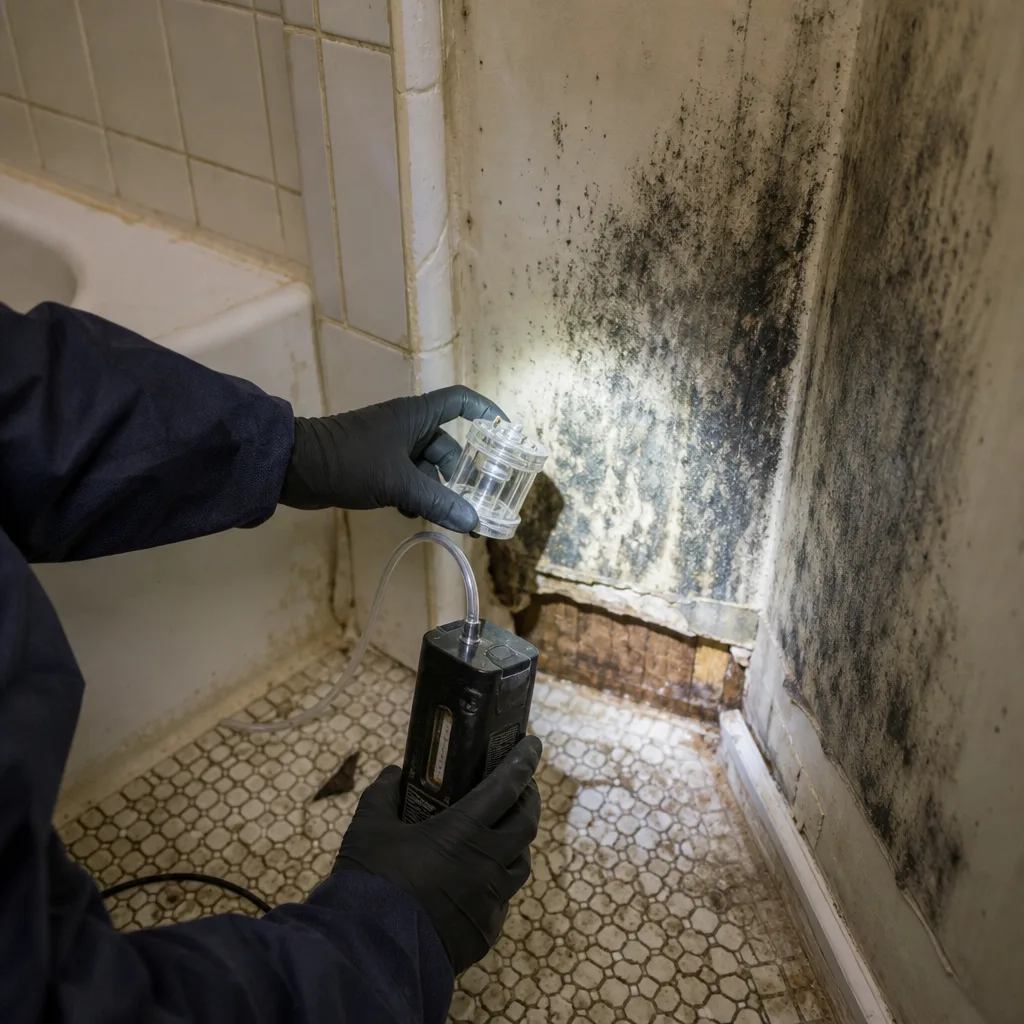
After black water removal, the real work begins: EPA-registered disinfectants applied to every contaminated surface, containment maintained until the environment passes clearance, and porous materials removed rather than “cleaned.” In pre-war buildings, that often means cutting out plaster and lath where sewage saturated the wall cavity.
What happens when you call
- 1
A real person answersNo phone trees - you reach a local pro.
- 2
You get an upfront price rangeHonest numbers before anyone is dispatched.
- 3
A background-checked tech heads outLicensed & insured, dispatched right away.
- 4
You approve before work beginsNothing starts until you say go.
Sewage Cleanup Costs in East Village, NY
A typical toilet overflow cleanup in East Village runs $2,800 to $6,500 depending on how far the black water spread and how many floors are involved. A multi-unit sewage backup across a shared stack in a pre-war walk-up typically runs $15,000 to $45,000 once containment, pack-out, structural drying, and reconstruction are included. Black water extraction only, handled fast before deep saturation, can run as low as $2,000 for a single apartment. Sanitization and disinfection after sewage removal adds $1,500 to $4,000 on average for a single-unit loss. What moves the price in East Village more than anything is whether the shared stack is involved. If your neighbor’s sewage came through your ceiling, we’re treating parts of your apartment plus parts of the building. That’s not upsell. That’s geometry. The free visual inspection is how we give you a firm written scope before you commit to anything.
We Also Serve Cities Near East Village
The same live dispatch and certified crews serve Fairview, Harrison, East Bronx, and Hunts Point. If sewage is spreading through a shared stack or a single-family drain just outside East Village, call (917) 924-4221 and we’ll route the nearest available crew.
East Village Sewage Cleanup Questions, Answered
How do you prevent sewage from a second-floor East Village tenement backup from seeping into the apartment below?
We contain the affected floor and run moisture mapping across the ceiling assembly immediately, because black water travels down through the joist bays before it ever shows up as a stain on the floor below. In East Village walk-ups with shared stacks, a second-floor toilet overflow means we’re reading moisture in the first-floor ceiling within the first hour. We cut containment and drop the ceiling where readings confirm saturation, then dry the cavity from below while the upstairs unit is extracted.
What additional hazards come with sewage cleanup in pre-war East Village buildings?
Asbestos is the one most overlooked by other companies. Pre-war tenement pipe wrap, floor tiles, and ceiling texture frequently contain asbestos, and cutting into an affected wall or ceiling without testing can trigger a stop-work order from the NYC Department of Buildings. We assess that before we cut. There’s also lead paint, which requires proper containment during any demolition. And there are the shared stacks themselves: a sewage backup in one unit often means sewage pockets in wall cavities above and below. Skipping those is how you get a clean-up that fails. Our thermal imaging catches what the eye misses.
Can you work around East Village street parking restrictions during a sewage emergency?
Yes, and we plan for it before we dispatch. East Village street parking is constrained at midnight, and it’s worse during morning hours with alternate-side rules. Our crews pack extraction and drying equipment in units sized for walk-up entryways and narrow vestibules. For larger equipment where street access matters, we coordinate with our dispatch office and arrive in vehicles that can be staged legally and out of the fire lane. The caller doesn’t solve parking. We do.
Do you need to enter neighboring apartments when only one East Village unit has a sewage backup?
Often, yes, and that’s not overreach. In a shared-stack tenement, sewage from a third-floor bathroom can pass through the ceiling assembly of the second-floor apartment without those tenants ever seeing it. Our moisture mapping tells us where the contamination went. When readings show sewage water in a neighboring unit’s wall or ceiling cavity, we coordinate access with the property manager and tenants before we cut. State law and building management rights vary, but our first move is always documentation and communication, not demolition.
How quickly can you begin black water extraction in an East Village walk-up?
We target a 45-minute arrival for East Village emergency calls, and extraction typically begins within the first visit, not on a follow-up. Our crews bring portable extraction pumps and containment ready to deploy on stairwell landings and inside the unit. For walk-ups on Avenue A, Avenue B, and around Tompkins Square Park, staging equipment inside the apartment rather than outside the building is often the faster move, and we know that before we knock.
Will my insurance cover a sewage backup in my East Village apartment?
It depends on your policy’s sewage endorsement. Standard homeowners and co-op/condo policies in New York often exclude sewage backup unless you’ve added a specific rider. We document the loss from the first hour, photograph every affected surface before demo, and provide the line-item scope and drying logs your adjuster needs. We also bill your carrier directly where coverage exists, so you’re not fronting cash and then waiting on reimbursement. The free inspection gives you a written assessment you can take to your agent before work begins.
How long does sewage cleanup and drying take in a pre-war East Village building?
Extraction and sanitization of a contained single-unit toilet overflow typically takes one to two days. Drying in pre-war construction takes longer than in modern buildings because plaster-and-lath walls and old-growth joists release moisture slowly. Expect three to six days of running Dri-Eaz dehumidifiers and XPOWER air movers with daily moisture readings on a typical East Village sewage loss. Multi-floor shared-stack losses take longer because containment, pack-out, and cavity drying multiply the scope. We hand you a drying log with each day’s readings; you’re not guessing when the job is dry.
What should I do in the first 30 minutes after a sewage backup in East Village?
Call (917) 924-4221. Then shut off the water supply if the flow is from a fixture, keep people and pets away from the affected area, and do not flush any toilet in the building until a plumber or our crew has assessed the shared stack. Do not use bleach or household cleaners on sewage water. Do not run fans across standing black water; that aerosolizes contaminants. Close the door to the affected room if you can do so without wading through sewage. We’ll handle the rest from the moment our crew arrives.
A Note From the Field: Avenue B, Tompkins Square Park
We handled a toilet overflow cleanup on Avenue B near Tompkins Square Park after a corroded cast-iron line in a 1905 new-law walk-up sent black water through four floors in under an hour. Our crew deployed XPOWER air movers and Dri-Eaz dehumidifiers behind containment on each landing, performed moisture mapping with thermal imaging across the shared stack, and coordinated pack-out with tenants whose plaster-and-lath walls had absorbed sewage. The building passed its post-mitigation moisture readings within three days, and our drying logs documented every step for the property manager. That’s the job. Done right, and backed in writing.
The 90-Day Done Right Promise
Every sewage cleanup we handle in East Village carries the 90-Day Done Right Promise in writing. It’s the Keystone Standard, our internal code: Krafted right, Every time, Your home first, Standing behind it. If something isn’t right after we finish, we come back and make it right. No arguing, no paperwork battle. We’ve been doing this since Curt Bowman founded Floodline Restoration Co. in 2010, and we plan to be answering the phone in East Village for decades more. You can hold us to that.
Serving East Village, NY - Our Local Coverage Area
We’re based in the East Village area and know this community well. Use the map below to see our service coverage - if you’re nearby, we can almost certainly help.
Call Floodline Restoration Co. of Manhattan for Sewage Cleanup in East Village
If sewage is spreading through an East Village tenement right now, call (917) 924-4221. A live dispatcher picks up. A certified crew heads your way. We’ll do the free visual inspection, we’ll start extraction the same visit where the situation calls for it, and we’ll hand you a written scope before any work begins. For over 42 years in this trade, the same principle has held: the line the water left is where we start. Call today, and let’s start there together.
Written by Curt Bowman, Owner at Floodline Restoration Co., serving East Village and the greater New York City metro area since 2010.
Current standing offers: $50 Off Any Repair Over $250 | $89 Seasonal Tune-Up | Senior & Veteran 5% Discount - Always.