
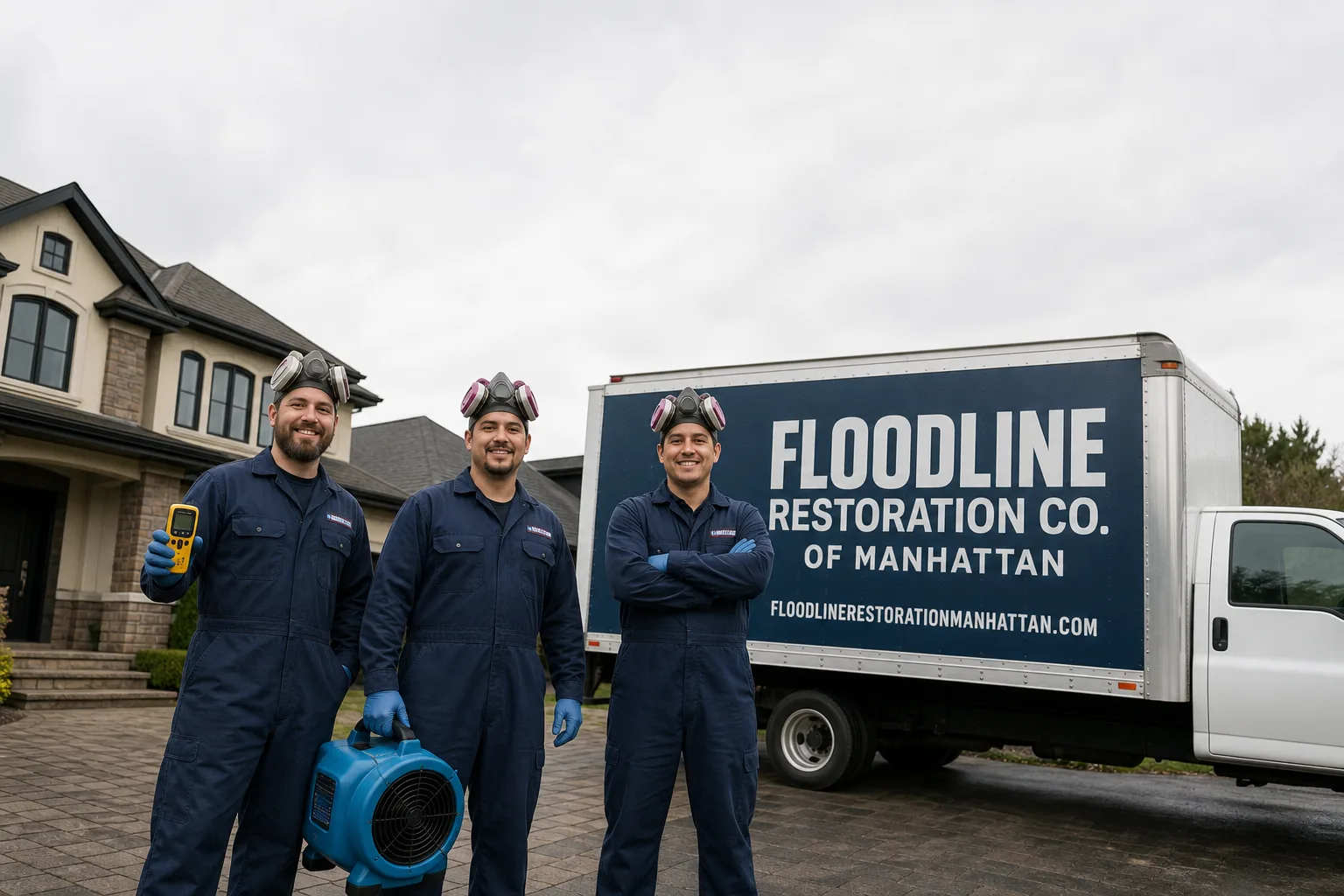
Free visual inspection and a written scope of work before any mitigation begins - photos, moisture readings, and drying logs go in your claim file
The scope we write is the scope we bill. Anything new gets shown to you, in writing, before we touch it.






 Before
 After
After Before
 After
After Before
 After
After24/7 Emergency Sewage Cleanup in Kearny
When sewage backs up into your Kearny basement, you need a crew that treats it as a biohazard from the first minute, not after a salesman has sized up the job. Floodline Restoration Co. of Manhattan answers the phone with a live dispatcher 24 hours a day and has crews staged to reach Kearny neighborhoods fast. Call (917) 924-4221 now for a free visual inspection and a written scope before any work begins. The first hour matters because Category 3 water from a backed-up sewer line spreads bacteria through floor drains, baseboards, and every porous surface it touches. We arrive, classify the water correctly, set containment, and start extraction the same visit.
Understanding Sewage Cleanup Severity in Kearny Properties
Sewage cleanup is not one job. It depends on what came out of the pipe and how far it traveled. Clean water from a burst supply line is Category 1. Gray water with soap or food particles is Category 2. But sewage, septic overflow, and anything pushed backward through a municipal sewer main is Category 3, also called black water. Category 3 contains pathogens, bacteria, and particulate matter that make the affected area unsafe without full personal protective equipment and containment barriers. In Kearny, the difference gets sharper because the town’s combined sewer system ties directly to the Passaic River. When the river rises above flood stage, it reverses flow through the municipal lines, and what starts as a floor drain backup becomes a Category 3 event that requires air scrubbing, hard-surface disinfection, and removal of saturated plaster and lath, not just mopping and fans. Kearny’s housing stock, dominated by two-family homes and attached rowhouses built between 1910 and 1950, means sewage water in one unit migrates through party walls into the next. Misclassifying that water is the costliest mistake a restoration crew can make here.
Why Kearny Property Owners Choose Floodline Restoration Co. of Manhattan
- 45-minute response commitment. We commit to a crew reaching your Kearny property within 45 minutes of your call, because sewage water keeps moving through plaster and flooring until extraction starts.
- 24/7 live answer. A real person picks up at 2 a.m. No phone tree, no answering service, no wait for a callback. You tell the dispatcher what happened, and a crew is on the way.
- IICRC-certified crews trained to WRT, FSRT, and AMRT standards. Our technicians arrive background-checked, uniformed, and certified in water damage restoration, fire and smoke restoration, and applied microbial remediation. The certifications matter when a Passaic River surge has pushed Category 3 water through your basement slab.
- Free visual inspection. We look at the loss, explain what you’re looking at, and hand you a written scope so you know exactly what the job will cost before any equipment is unloaded.
- Direct insurance billing. We prepare the estimate, photograph the damage, and coordinate directly with your adjuster. You don’t carry paperwork between us and the carrier.
- One team from extraction to reconstruction. The same certified crew that sets containment and pulls standing sewage water also handles drying, drywall replacement, and rebuild. No handoff, no inherited crew, no arguing about who did what.
Our Sewage Cleanup Process
Inspection & Assessment
We walk the affected area with thermal imaging and moisture meters to map exactly where Category 3 water has traveled, including inside walls and under slab. In attached Kearny rowhouses, we check the party walls because sewage water moves laterally between units. You get a written scope and a firm price before work starts.
Extraction & Stabilization
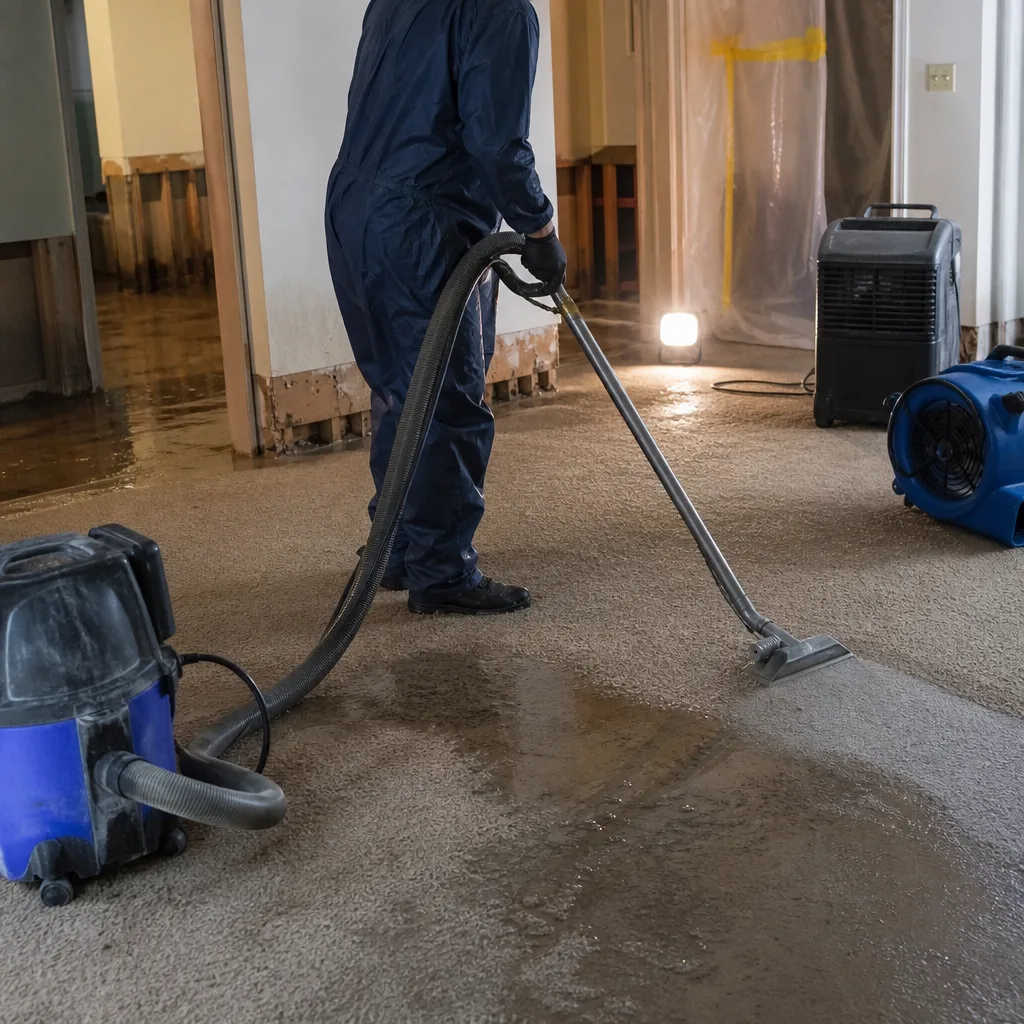
We remove standing water using truck-mounted and portable extraction units, then stop further migration by setting containment barriers where necessary. In basements, we remove sewage-saturated carpet, pad, and any lower wall sections that cannot be salvaged. On legacy plaster-and-lath walls, we cut away only what the moisture map says is contaminated.
Drying & Dehumidification
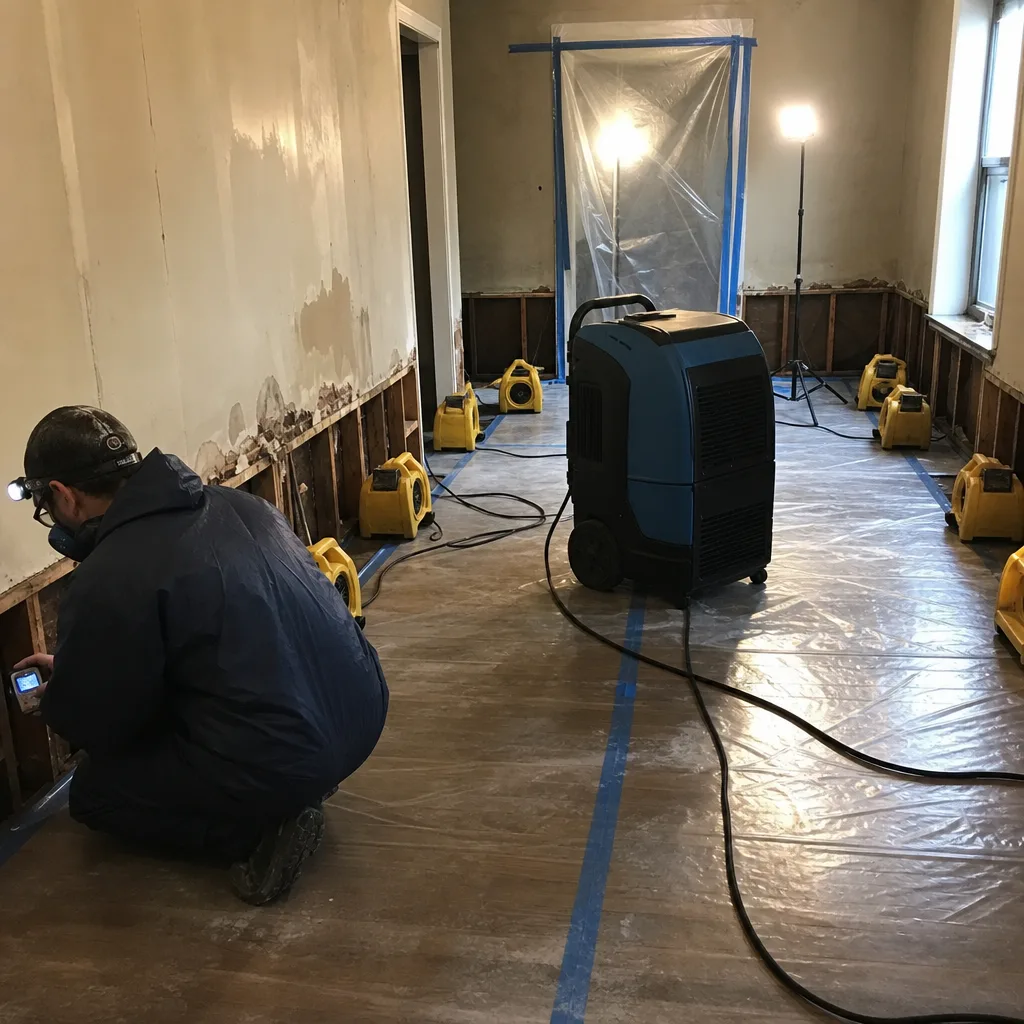
We place Dri-Eaz and Phoenix air movers with low-profile dehumidifiers to drive moisture out of structural cavities. Daily readings are logged in a drying record we share with you and your insurer. We don’t stop when the surface feels dry. We stop when hygrometers and moisture meters confirm the dry standard has been met inside the plaster, lath, and framing.
Cleaning & Sanitization
Every hard surface that came into contact with Category 3 water is cleaned with an EPA-registered disinfectant. We run HEPA air scrubbers to capture airborne particulate. The goal is not just a room that smells clean. The goal is a room with no culturable pathogens left behind.
Crawl Space & Slab-Specific Treatment
Kearny’s high water table changes how we handle sewage under the house. In crawl spaces, we extract contaminated water, remove sewage-laden soils where necessary, and apply a hospital-grade antimicrobial. Foundation walls are inspected for cove joint seepage that allowed the water in. If hydrostatic pressure from the Meadowlands water table is implicated, we document it for the adjuster.
Repairs & Restoration
Once the structure is dry and sanitized, we rebuild what was removed. Drywall, baseboard, plaster repair, flooring, insulation. Since our crews also handle full reconstruction, you’re not waiting on a second contractor. When the job is done, you receive our 90-Day Done Right Promise in writing, along with your drying log.
Need Emergency Sewage Cleanup in Kearny Now?
Crews minutes away, answering live 24 hours a day. The sooner we start, the less it costs.
Working With Your Insurance Company
Sewage cleanup claims in Kearny have a specific rhythm, and we know it. A Passaic River surge that backs up the combined sewer is usually covered under a standard homeowners policy, but the claim has to be documented from the first hour. We photograph the loss before we touch anything, log moisture readings at the start and every day after, and prepare a line-item scope using industry-standard pricing. When your adjuster calls, we speak to them directly. We answer their questions about Category 3 classification, the containment perimeter, and why certain materials had to be removed rather than dried in place. What we hand your carrier matters as much as what we hand you.
What We Provide Your Insurer
- Thorough documentation of the loss
- Photos of all damage, room by room
- Moisture readings and drying logs
- A detailed, line-item scope of work
- Direct coordination with your carrier
Built for Kearny’s Loss Calendar
Kearny gets hit from multiple directions, and the loss pattern changes with the season. In late winter and early spring, back-to-back nor’easters push the Passaic River over its banks and reverse the combined sewer. That means March and April bring the highest volume of confirmed black-water calls: basements with floor drains bubbling backward, toilets that won’t flush, shower pans filling with river water. Summer thunderstorms overwhelm the storm drains fast and send surface water running through basement windows and side doors. Autumn’s heavy rain saturates the Meadowlands fill, and with Kearny’s naturally high water table, groundwater starts pushing through foundation walls and floor slabs even before the river crests. Winter adds a different complication: frozen drain lines and cold weather make drying slower, so our dehumidifier layout and daily monitoring schedule shift to match the outside temperature. On a block of two-family homes near the Passaic River, our crew responded to a sewage backup after a nor’easter pushed the river into the combined sewer main. Moisture mapping showed hydrostatic pressure had forced Category 3 water through the cove joint and up through the basement slab, so we set full containment, extracted standing water, removed saturated plaster-and-lath lower wall sections, and ran Dri-Eaz air movers with daily drying logs until moisture readings matched pre-loss condition. That’s what a Kearny-specific response looks like.
Sewage Cleanup Across Kearny’s Neighborhoods
Response routes and building types shift neighborhood by neighborhood. In the Arlington section off Kearny Avenue, the two-family homes and attached rows sit close together, and sewage water from a flooded basement tracks through shared party walls and under front porches. On Belgrove Drive and the streets that slope toward the Passaic, we see more cove joint seepage and floor drain backups during river surges. The Manor section, with its mid-century homes and full unfinished basements, tends to trap sewage water under the slab, requiring longer drying runtimes before we can certify the space dry. In the South Kearny industrial area and residential blocks near it, soil compaction and old utility corridors mean sewer laterals shift, crack, and let groundwater mix with sewage during heavy rain, which changes the source but not the protocol. We run the same assessment and classification process in every neighborhood because a Category 3 loss demands the same standard of care whether it’s a rowhouse on Elm Street or a larger two-family near Riverbank Park.
Specialized Sewage Cleanup Services We Offer in Kearny
Black Water Extraction
When the Passaic River reverses Kearny’s combined sewer, the water in your basement is Category 3 black water, and it requires extraction under full containment with air scrubbing. We bring truck-mounted extraction units rated for biohazard work and remove standing sewage before it spreads through baseboards and wall cavities. This is the baseline service for any backup tied to the municipal line.
Sanitization & Disinfection
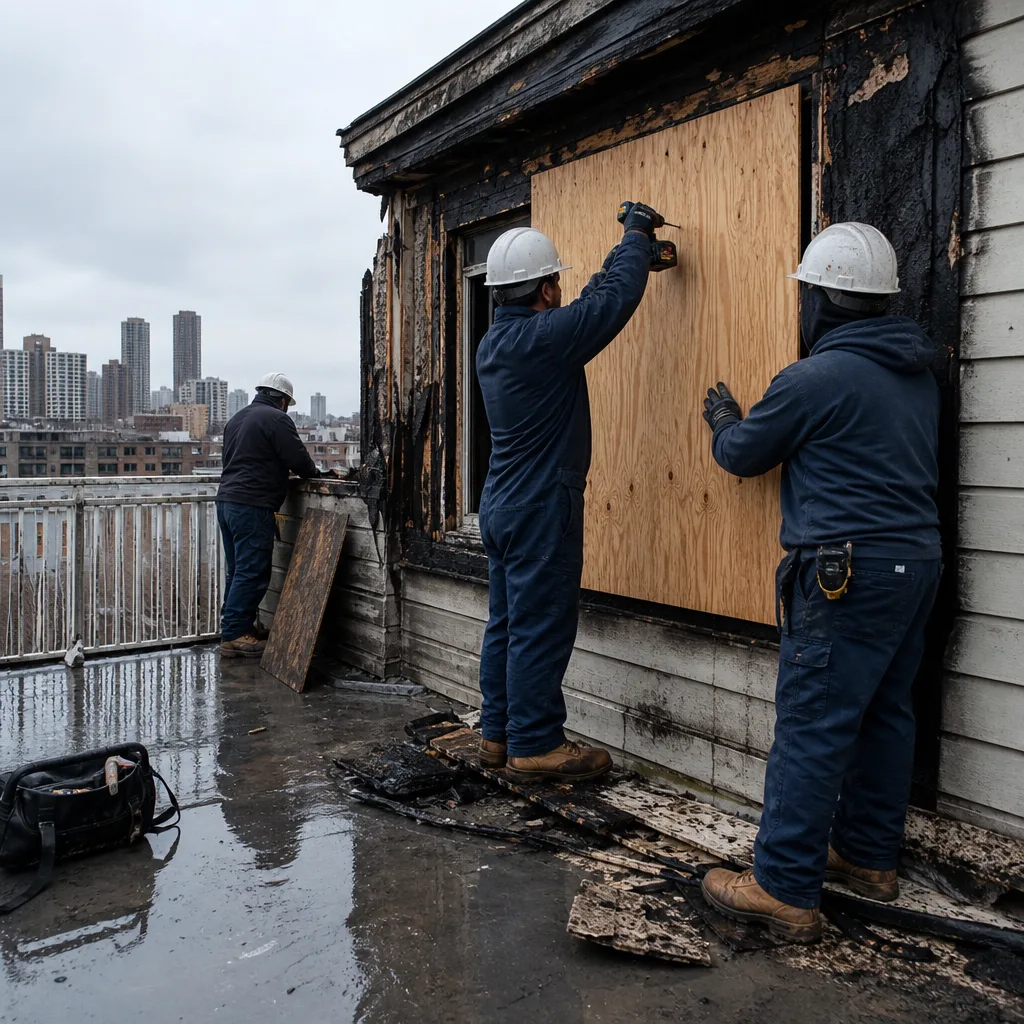
After extraction, every hard surface in the affected perimeter is cleaned with an EPA-registered disinfectant. Wood studs, concrete slabs, stair stringers, and any salvaged furniture are treated. In attached Kearny homes, we also test and treat the shared wall cavities because sewage odor and particulate travel through them. A surface clean is not enough. We make the environment a place people can safely reenter.
Crawl Space Sewage Removal
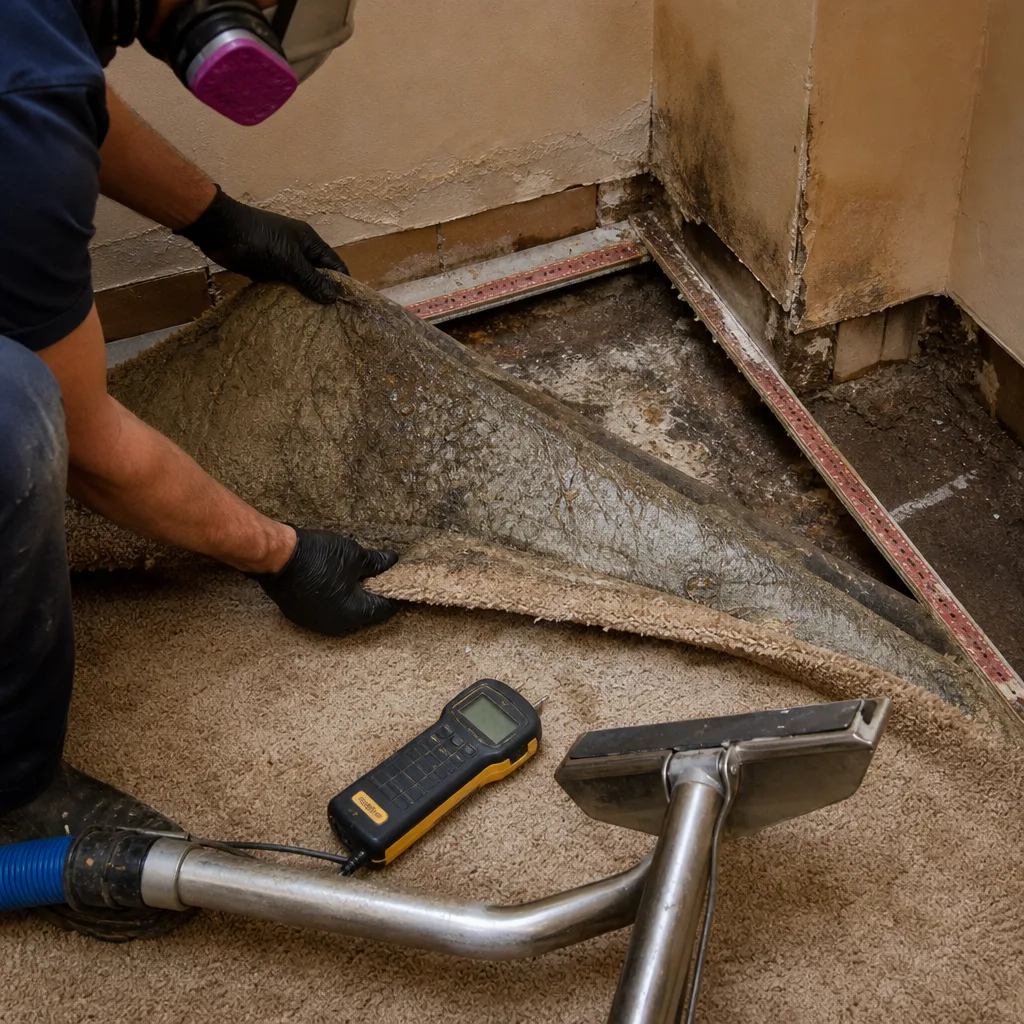
Kearny’s high water table makes crawl spaces a recurring problem. When sewer lines back up, contaminated water pools under the house, and because the Meadowlands water table sits close to the surface, it doesn’t drain away on its own. We pump it out, remove contaminated soil and insulation, and apply antimicrobial treatment to the joists and subfloor. We also document the hydrostatic pressure issue so your insurer understands why this was a structural contamination event, not a simple spill.
Toilet Overflow Cleanup
A toilet that overflows once and is cleaned within the hour is a gray water cleanup. A toilet that backs up repeatedly because the municipal sewer is surging is a Category 3 event. We classify based on the water source and the affected area, not based on how the call was logged. You’ll know what you’re dealing with inside the first inspection.
Septic Failure Cleanup
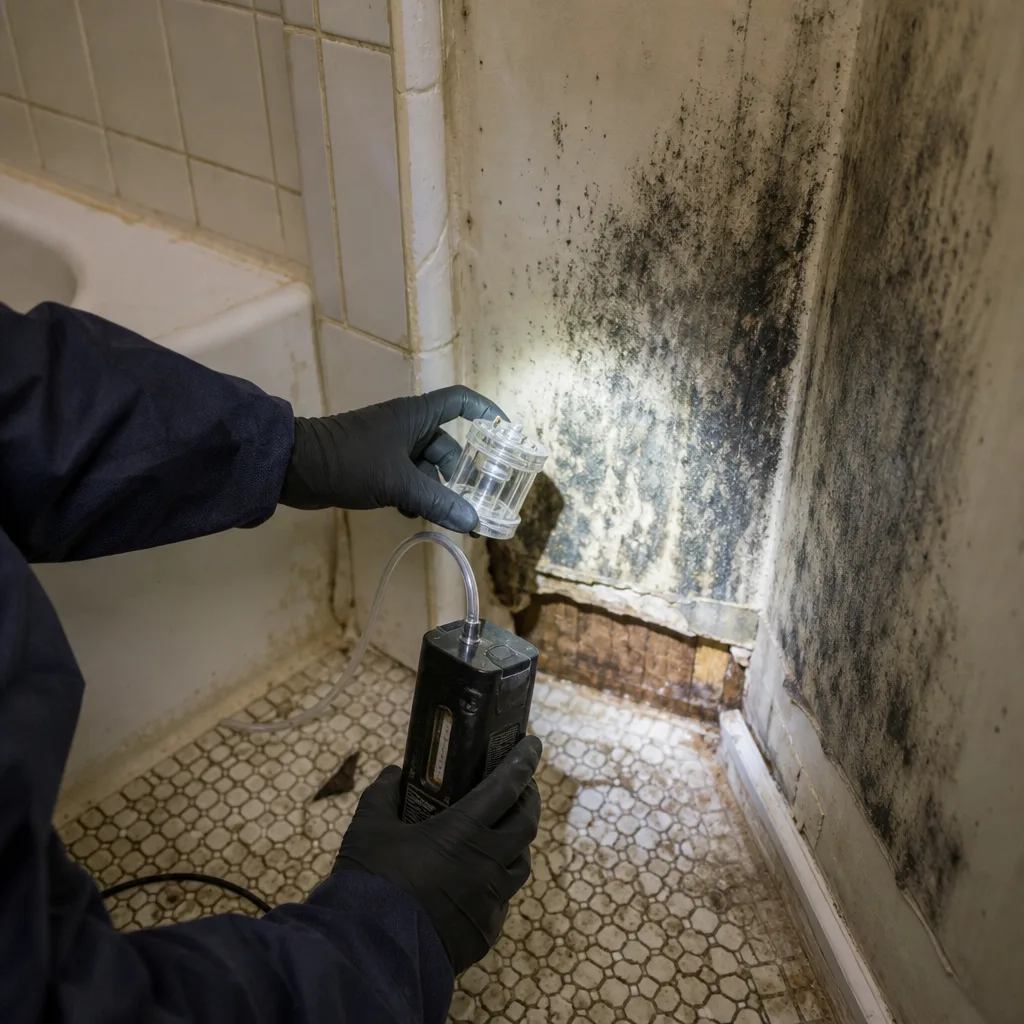
Septic failures in Kearny are less common than combined sewer backups, but when a lateral collapses or a system fails, raw sewage saturates the surrounding soil and sometimes pushes under the foundation. We remove the affected soil, extract standing waste, and sanitize the area before determining what structural material must come out. We also work with your insurer to document the source and scope so the claim doesn’t stall.
What happens when you call
- 1
A real person answersNo phone trees - you reach a local pro.
- 2
You get an upfront price rangeHonest numbers before anyone is dispatched.
- 3
A background-checked tech heads outLicensed & insured, dispatched right away.
- 4
You approve before work beginsNothing starts until you say go.
Sewage Cleanup Costs in Kearny, NJ
A straightforward Category 3 basement backup in Kearny with no structural contamination typically runs $2,800 to $5,400, including extraction, containment, sanitization, and drying. When a Passaic River surge reverses the combined sewer and pushes sewage through floor drains and the cove joint, the scope expands, and costs in Kearny commonly land between $6,500 and $12,000 because saturated plaster-and-lath lower walls must be removed rather than dried in place. Crawl space sewage removal runs $3,800 to $7,500 depending on how much contaminated soil has to be excavated and replaced. A toilet overflow contained to a bathroom is the least expensive at $1,800 to $3,200. What moves the price most is the classification of the water, the linear feet of wall removal, and whether contaminated material crossed a party wall into an adjoining unit. The path to a firm number is a free visual inspection, a written scope, and a fixed quote before any work begins. Call (917) 924-4221 and we’ll tell you what you’re looking at.
We Also Serve Cities Near Kearny
If you own property in a neighboring town, we run the same certified crews and the same 24/7 live dispatch into Sewage Cleanup jobs across Harrison, North Arlington, Lyndhurst, and Jersey City. The river and the combined sewer conditions don’t stop at the town line. Neither do we.
Serving Kearny, NJ - Our Local Coverage Area
We’re based in the Kearny area and know this community well. Use the map below to see our service coverage - if you’re nearby, we can almost certainly help.
Kearny Sewage Cleanup Questions, Answered
How does the Passaic River reversing into Kearny’s combined sewer change sewage cleanup scope and cost?
It changes the classification from a routine backup to a Category 3 biohazard event. When the river tops flood stage and pushes backward through the municipal line, the water entering your basement is black water, which requires full containment, HEPA air scrubbing, and removal of saturated porous materials that could not be safely dried in place. The scope and cost increase because we’re doing more than extracting water; we’re removing contaminated drywall, plaster, insulation, and flooring, then sanitizing the structural frame. A backup tied to the combined sewer system typically costs $6,500 to $12,000 in Kearny. Call (917) 924-4221 for an exact quote.
Do rowhouses in Kearny need different containment than detached homes for sewage cleanup?
Yes. In attached rows, sewage water and airborne particulate travel through shared party walls and under common foundations, so the containment perimeter has to extend beyond the visible affected area. We set barriers along the party wall line and check the adjoining unit for moisture migration before we open anything. Detached homes get a standard containment perimeter around the loss area. In a rowhouse, we treat the structure as a shared system because that’s what it is.
How fast can we start sewage cleanup in a Kearny basement after a Passaic River surge?
We commit to a 45-minute dispatch window to Kearny properties after your call. The crew arrives with extraction equipment, containment supplies, and personal protective equipment already on the truck. Extraction starts the same visit. The first hour matters because sewage water keeps wicking upward through plaster and framing, and every hour of saturation increases what has to be removed. Call (917) 924-4221 and you’ll have a live person setting the dispatch in motion immediately.
Will my Kearny plaster-and-lath walls need to be removed after a Category 3 backup?
Usually, yes, from the flood line down plus a margin. Plaster-and-lath from Kearny’s 1910 to 1950 building era absorbs water and holds it against the framing far longer than modern drywall. Category 3 water makes that material unsalvageable where it has been saturated, because sewage particulate cannot be fully removed from the plaster matrix. We cut away only what the moisture map and contamination assessment dictate. This is a linchpin of safe sewage cleanup in older Kearny homes.
Does Kearny’s high water table make crawl space sewage cleanup more likely to reoccur?
Yes, and that’s why we document the hydrostatic pressure issue for your carrier. Kearny sits on Meadowlands fill with a naturally high water table, so groundwater starts pushing through foundation walls and floor slabs after any significant storm. If sewage-laden water enters through the cove joint or under the slab, the source isn’t just a single broken pipe; it’s the water table finding a path. We remove the contaminated water and soil, treat the joists and subfloor, and document the hydrostatic condition so your claim reflects the mechanisms at play. Repeat events are addressed with drainage corrections where the scope of work warrants it.
Will my insurance cover sewage cleanup from a combined sewer backup?
Most Kearny homeowners policies cover sewage backup, especially when the source is the municipal combined sewer reversing during a river surge. The claim hinges on classification and documentation. We photograph the source, log the initial moisture readings, and provide a line-item scope that your adjuster can verify. We also bill your carrier directly and speak to the adjuster on your behalf. If your policy has a specific water backup endorsement or a separate limit, we’ll tell you exactly how to apply it. Call (917) 924-4221 and we’ll walk you through what your policy likely covers.
What certifications do your sewage cleanup crews hold?
Our technicians are background-checked and trained to IICRC standards, including Water Damage Restoration Technician, Fire and Smoke Restoration Technician, and Applied Microbial Remediation Technician. We also follow RIA and IFA training guidelines. For sewage cleanup, the AMRT certification is the one that matters most because it covers the containment, air scrubbing, and disinfection protocols required for Category 3 water. You can ask to see the certifications at the door. We’ll show them.
What should I do in the first 30 minutes after a sewage backup?
Keep everyone out of the affected area, including pets. Don’t run the HVAC system, because it will move sewage-laden air through the house. Don’t flush toilets or run water. If you can safely reach the main water shutoff, turn off the supply to the affected fixture. Don’t try to extract the water yourself; sewage is a biohazard. Call us at (917) 924-4221 and a live dispatcher will get a certified crew on the way. Take photos from the doorway if you can, but don’t enter the standing water.
If you’re standing at the top of your basement stairs watching sewage push through the floor drain, call (917) 924-4221. A live person answers, a crew is dispatched, and the job gets classified correctly from the first minute. We serve Kearny and the surrounding towns with the same 24/7 response and the same written guarantee: done right, and backed in writing.
Written by Curt Bowman, Owner at Floodline Restoration Co. of Manhattan, serving Kearny and the Meadowlands region since 2010.