
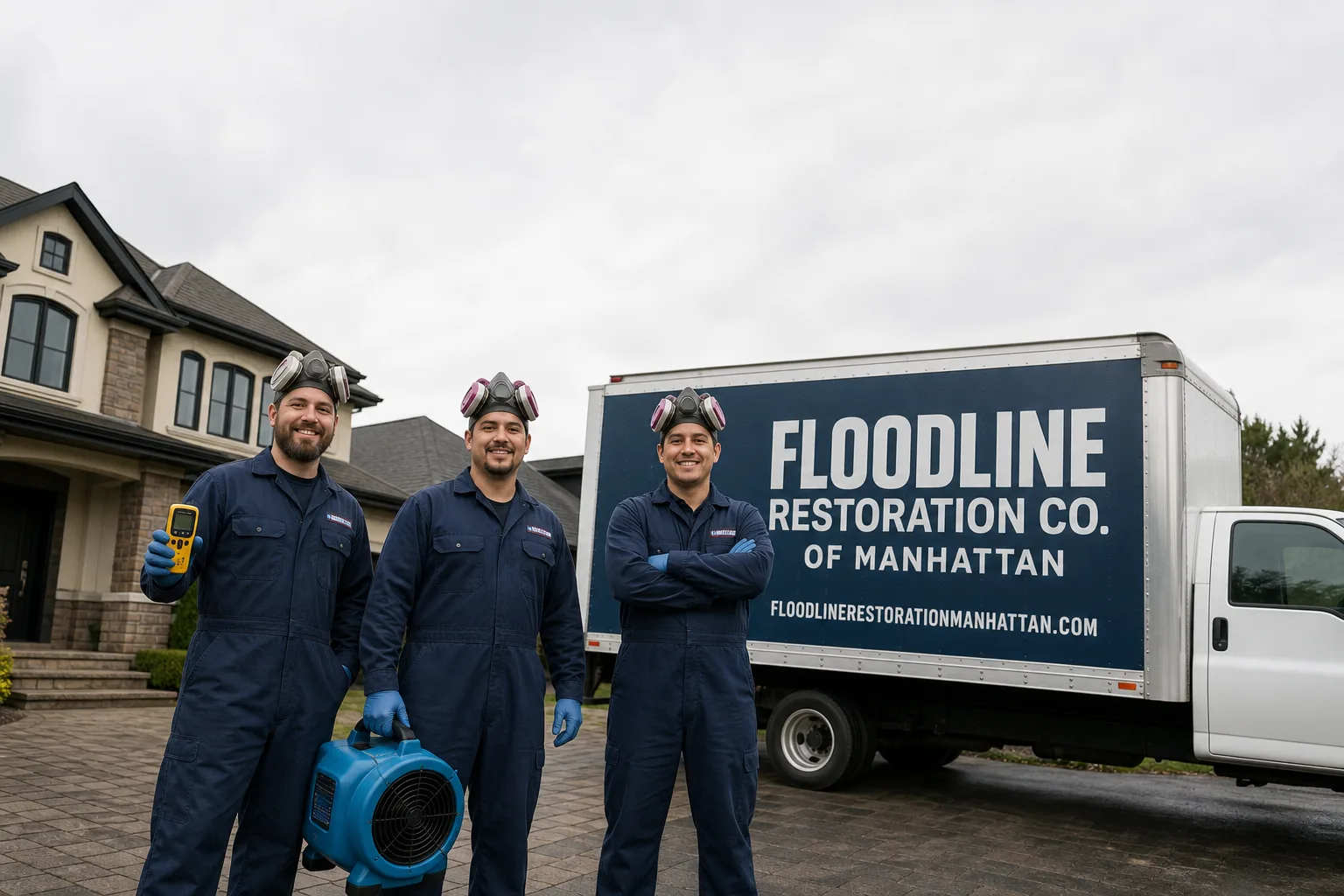
Free visual inspection and a written scope of work before any mitigation begins - photos, moisture readings, and drying logs go in your claim file
The scope we write is the scope we bill. Anything new gets shown to you, in writing, before we touch it.






 Before
 After
After Before
 After
After Before
 After
After24/7 Emergency Sewage Cleanup in Palisades Park
Sewage cleanup in Palisades Park runs $1,800 to $6,500 for a typical category 3 backup in a garden apartment or two-family home, with the first crew at your door in about 45 minutes. When a cast-iron drain stack fails or a nor’easter pushes the borough’s combined sewer past capacity, raw sewage rises through first-floor tubs, sinks, and toilets, and every hour it sits means deeper contamination into plaster-and-lath walls and subflooring. Call (917) 924-4221 right now and a live dispatcher answers – not a recording – and schedules a certified crew with extraction equipment to begin work the same visit.
Understanding Sewage Cleanup Severity in Palisades Park Properties
Not every backup is the same. We classify water damage by category, and sewage is always category 3: black water, heavily contaminated with bacteria, viruses, and parasitic organisms from human waste. That classification drives every decision afterward. In Palisades Park’s post-war two-family homes and three-story garden apartments, the real complication is what the sewage saturates. Original plaster-and-lath assemblies wick category 3 water upward behind walls, trapping pathogens in a damp, dark cavity where they multiply. Cast-iron waste lines – original to most of these buildings – crack at the hub joints after seventy years of settling, and sewage seeps laterally through wall cavities before anyone sees or smells it. On Broad Avenue, the equation shifts again: restaurant grease congeals inside old cast-iron laterals, backing up sewage mixed with decaying organic solids.
Category 1 is clean water from a supply line; category 2 carries detergents or mild contaminants; category 3 is sewage, floodwater, or anything from a toilet or drain backup. We treat category 3 differently from the first minute: full containment, personal protective equipment, negative air pressure where needed, and removal of porous materials that cannot be safely sanitized. Palisades Park’s housing stock – much of it built between 1948 and 1975 – has wall and floor assemblies that hold category 3 water longer than modern drywall, so we cut farther, dry longer, and verify with moisture meters and daily readings until the dry standard is met and logged.
Why Palisades Park Property Owners Choose Floodline Restoration Co. of Manhattan
- 45-minute response commitment – our dispatch board targets arrival inside 45 minutes for backup calls in the Palisades Park area, with extraction running the same visit.
- 24/7 live answer, always a person – a dispatcher picks up at 2 a.m., asks about the backup, and sends a certified crew; never an answering service that takes a message.
- IICRC-certified crews – our techs carry WRT (Water Damage Restoration Technician) and ASD (Applied Structural Drying) certifications, and we train to RIA and IFA standards as well.
- Free visual inspection – we assess the scope, photograph the damage, and hand you a written plan before any work begins.
- Direct insurance billing – we bill your carrier directly and coordinate with your adjuster, so you don’t play messenger between us and the insurance company.
- One team from extraction to reconstruction – the same certified crew that extracts category 3 water also dries the structure, replaces what cannot be saved, and rebuilds – no mid-job handoff to a subcontractor.
Our Sewage Cleanup Process
Inspection & Assessment
We map the full extent of the intrusion with thermal imaging and moisture meters, identify the source – your unit’s line or the shared building stack – and document everything with photos from the first hour. This is when we determine what’s salvageable and what comes out.
Extraction/Stabilization
Black water comes out first, using truck-mounted extraction. In garden apartments we contain the affected area across shared hallways and entries so contamination doesn’t spread to neighboring units.
Drying & Dehumidification
We place air movers and dehumidifiers, take daily moisture readings, and log every number until the dry standard is met. Plaster-and-lath in older Palisades Park buildings can take three to four days to dry properly.
Cleaning & Sanitization
Every affected surface gets cleaned, then treated with an EPA-registered disinfectant appropriate for category 3 contamination. We also run HEPA air scrubbers to pull airborne pathogens out of the living space.
Drying of Cavities & Hidden Spaces
Injected drying into wall and floor cavities using Injectidry systems reaches the spaces behind plaster and beneath flooring where sewage wicked unseen. This step is what separates us from crews that dry only what they can see.
Repairs & Restoration
We cut and replace saturated plaster-and-lath, replace damaged flooring, and rebuild what the backup damaged – all under one work order, one crew, one warranty. The 90-Day Done Right Promise covers the whole job in writing.
Need Emergency Sewage Cleanup in Palisades Park Now?
Crews minutes away, answering live 24 hours a day. The sooner we start, the less it costs.
Working With Your Insurance Company
Sewage backup claims in Palisades Park usually fall under a homeowner’s water backup endorsement, and many of our clients discover they have coverage only after the loss happens. We handle the claim from the first hour: photographs before any material is moved, moisture readings logged daily, and a line-item scope of work your adjuster can review without follow-up calls. When the carrier asks for documentation, we send it directly. Our techs have sat through enough adjuster inspections in Bergen County to know what gets a claim approved and what gets it delayed, so we build the file accordingly from day one. The homeowner never plays messenger between Floodline and the carrier, and the bill goes straight to insurance when coverage applies.
What We Provide Your Insurer
- Thorough documentation of the loss
- Photos of all damage, room by room
- Moisture readings and drying logs
- A detailed, line-item scope of work
- Direct coordination with your carrier
Built for Palisades Park’s Loss Calendar
Palisades Park sits atop the Hudson Palisades escarpment, and its nearly impermeable urban surface means rain that would soak into the ground elsewhere runs off fast and hard. Nor’easters that track up the Hudson corridor from October through April overwhelm the borough’s combined sewer system, and when that system backs up, it backs up into the lowest drain in the building – usually a first-floor tub or toilet in a post-war garden apartment. That is a category 3 event, not a drain clog.
January and February bring deep freezes that crack old supply lines feeding uninsulated exterior walls in two-family homes, and a cracked line above a shared ceiling dumps clean water through plaster before anyone notices. Spring thaw saturates the already shallow ground around basement window wells, and summer thunderstorms out of the Hudson corridor produce flash flooding that overwhelms window wells and below-grade unit entries. The pattern across the year is consistent: older cast-iron, dense buildings, and fast water. Our crews plan around this calendar because Palisades Park’s loss profile is predictable to anyone who has worked the borough long enough.
Sewage Cleanup Across Palisades Park’s Neighborhoods
Response routes through Palisades Park run along Broad Avenue, Grand Avenue, and Palisade Avenue, and each corridor has its own failure pattern. Around the Broad Avenue commercial strip, restaurant grease loads congeal inside aging cast-iron laterals, producing chronic backups that get misdiagnosed as simple clogs until sewage surfaces through a floor drain. The three-story garden apartments off East Columbia and West Ruby are dense enough that a shared drain stack backup on one floor commonly surfaces through the next unit’s shower pan, meaning we always trace the stack before we remediate the visible room.
The two-family homes between Highland Avenue and Brinkerhoff Avenue – mostly built from the late 1940s through the 1960s – sit on original waste lines that crack at the hub joints after decades of settling. What starts as a slow seep behind plaster-and-lath becomes an odor problem first, then a mold problem. Up along the residential blocks near Sherwood Place and the parks, we see fewer commercial grease issues but more storm-driven window well intrusions during summer downpours. Each area of Palisades Park requires a slightly different playbook, and our techs know them from thousands of jobs across this one square mile.
Specialized Sewage Cleanup Services We Offer in Palisades Park
Sewage Backup Cleanup
When a cast-iron main drain collapses beneath a Palisades Park building, raw sewage pushes back through every first-floor fixture. We set containment across shared entries, extract the black water with truck-mounted equipment, and trace the failure to its actual source – your line or the building stack – so we remediate the real problem, not just the visible room. Sewage Cleanup is the core of what we do, and in dense multi-family buildings it means working with property managers and neighboring units as carefully as your own.
Toilet Overflow Cleanup
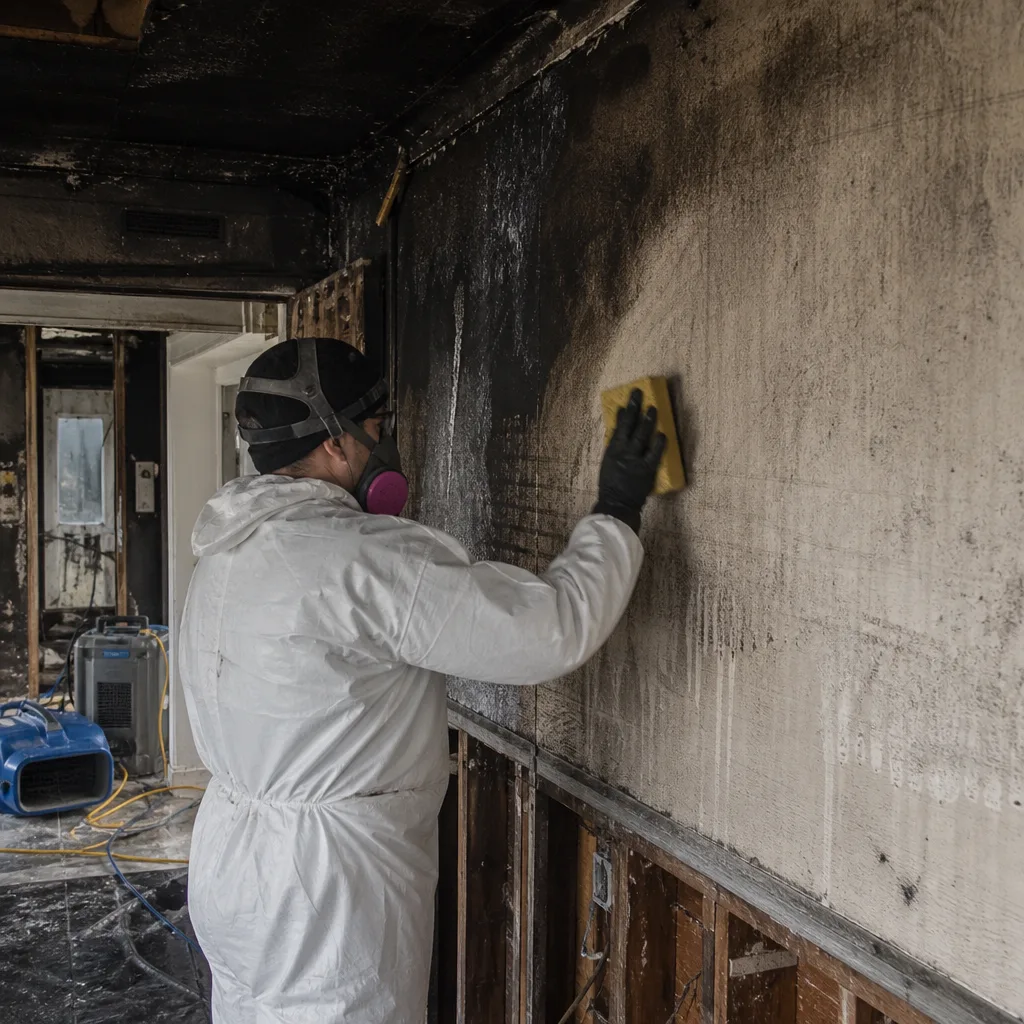
A toilet overflow in a 1950s two-family home is rarely contained to the bathroom. In many of these buildings the overflow drops through a saturated floor assembly and wicks into the plaster-and-lath wall below. We open the cavity, dry what can be dried, cut what cannot, and replace it – treating the full migration path, not just the puddle you can see.
Septage & Black Water Extraction
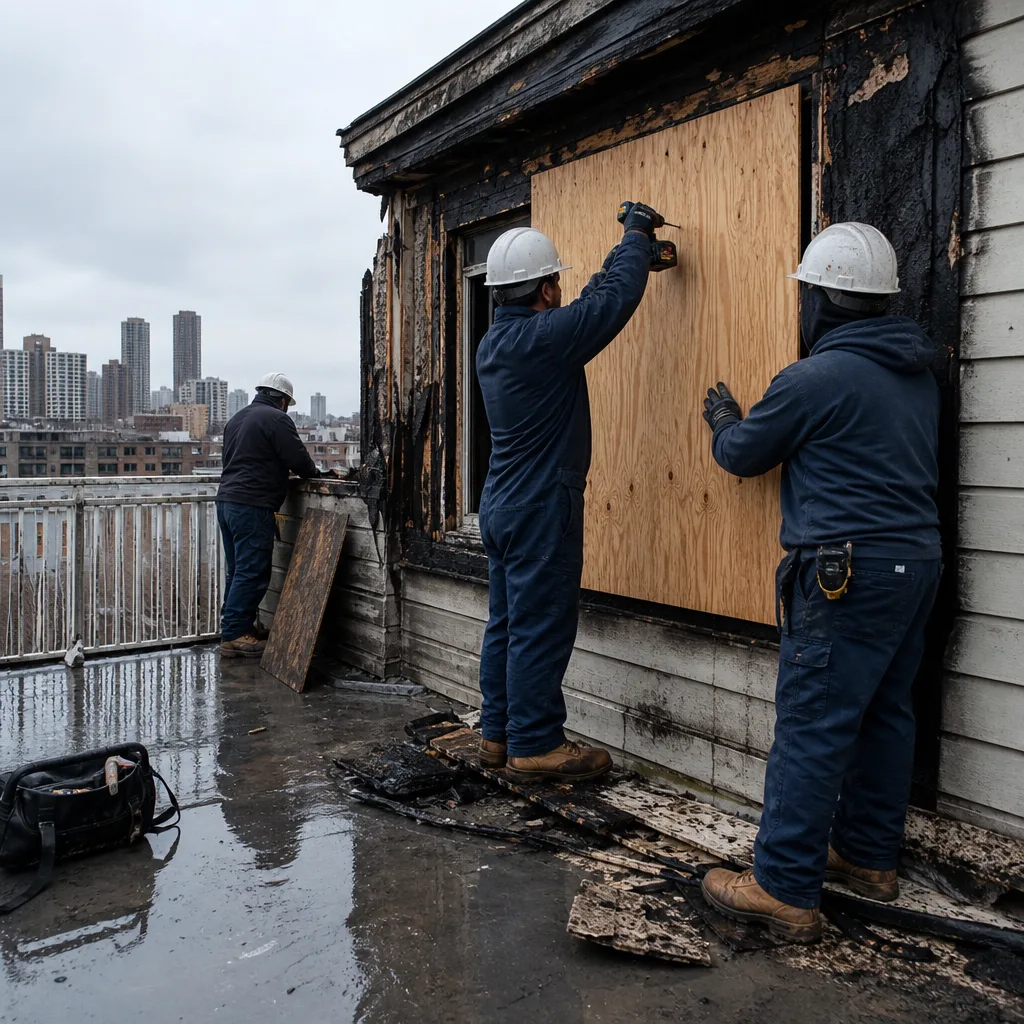
Black water extraction in Palisades Park almost always involves a structural cavity: behind baseboards, under the first-floor sheathing, inside stairwell chases. Extraction is the foundation of every sewage job. If it is rushed or incomplete, everything downstream – drying, sanitizing, rebuilding – is compromised. We extract to field capacity, then move directly into drying with a plan based on daily readings.
Septic Failure Cleanup
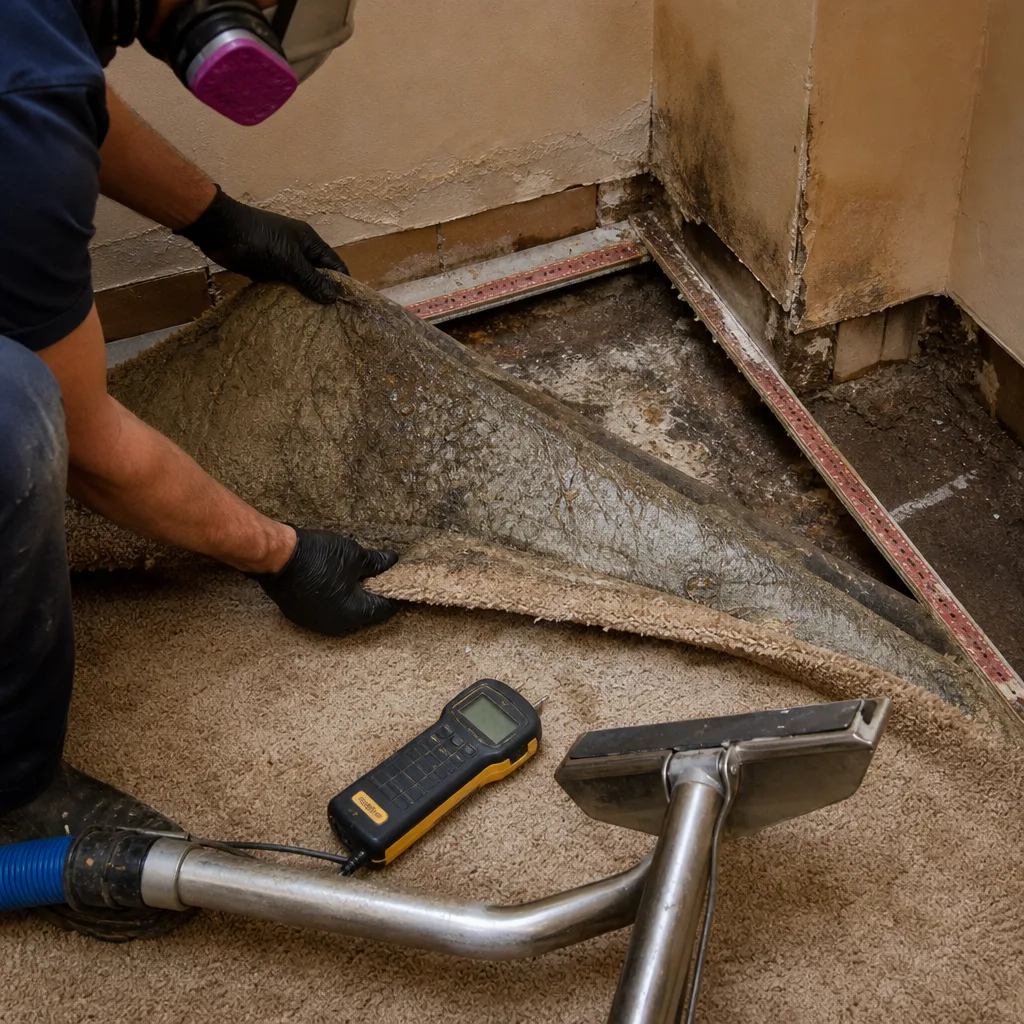
Septic systems are rare in this borough, but a handful of older properties still have private systems. When a septic field fails after heavy rain, raw effluent can surface or back into floor drains, carrying the same category 3 load as a sewer backup. We treat it the same way: containment, extraction, sanitization, drying, and restoration.
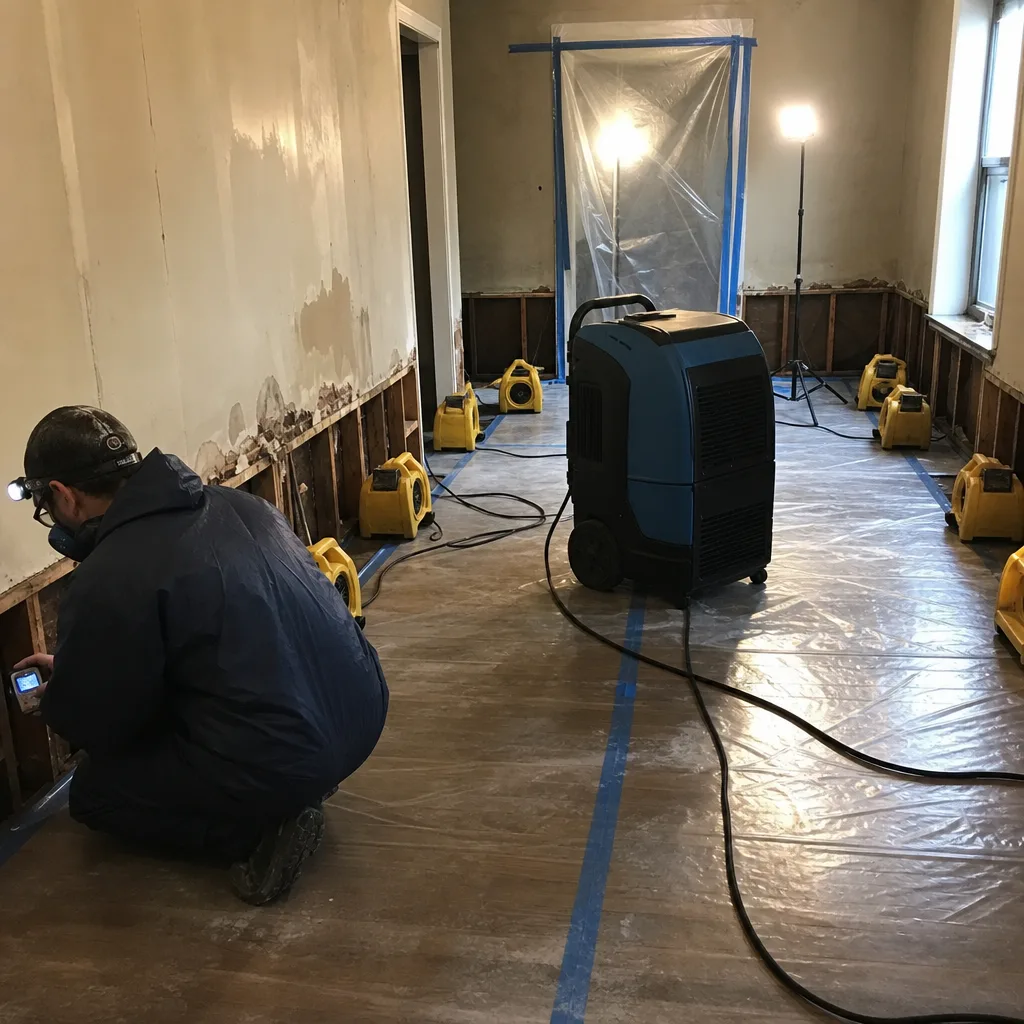
Sanitization & Disinfection
After extraction and drying, we apply EPA-registered disinfectants rated for category 3 contamination, then verify the entire affected area with moisture readings and visual inspection. On restaurant jobs along Broad Avenue we also neutralize residues from fire-suppression discharge where the two damage types intersect – an alkaline foam-and-char slurry that requires specialized chemical handling before restoration can begin.
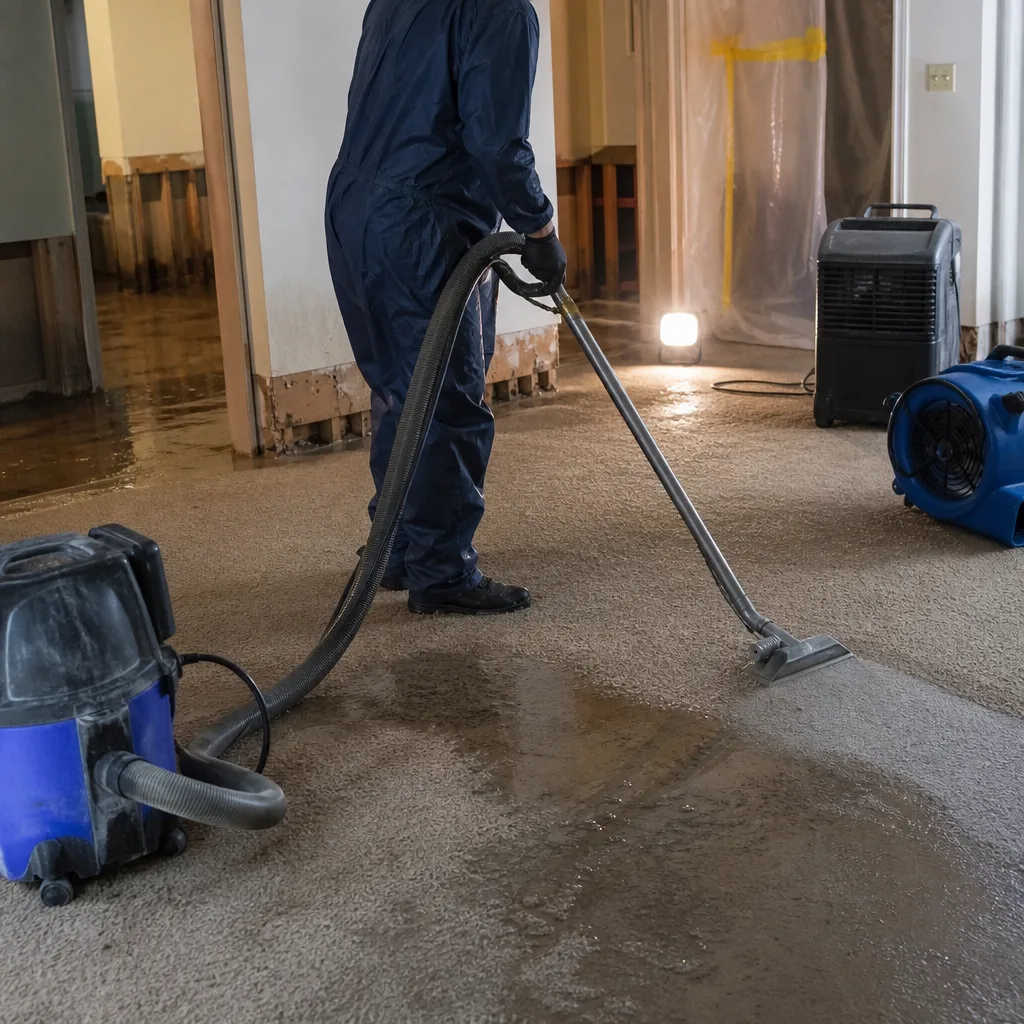
What happens when you call
- 1
A real person answersNo phone trees - you reach a local pro.
- 2
You get an upfront price rangeHonest numbers before anyone is dispatched.
- 3
A background-checked tech heads outLicensed & insured, dispatched right away.
- 4
You approve before work beginsNothing starts until you say go.
Sewage Cleanup Costs in Palisades Park, NJ
Here is what we see in this market: a contained single-fixture toilet backup in a two-family home runs $1,800 to $3,200. A category 3 backup affecting a first-floor unit in a garden apartment runs $3,500 to $6,500 once you account for containment across shared entries, plaster-and-lath cutting, drying, and rebuilding. A fully collapsed cast-iron main under a building, with sewage backing through multiple fixtures across multiple floors, can push past $10,000.
What moves the price: how far the category 3 water wicked into wall and floor cavities, whether the building stack or your private line failed, and how fast you called. The free visual inspection gives you a written scope and a firm number before work starts, so there is no surprise billing. We bill directly to insurance wherever coverage applies, and our techs carry the documentation your adjuster wants to see. Call Palisades Park homeowners line at (917) 924-4221 for an exact quote – estimates are free.
We Also Serve Cities Near Palisades Park
Our crews work the same neighborhoods from Ridgefield and Fort Lee through Leonia and Edgewater, so the same certified team that handles a backup in Palisades Park can also reach your property quickly if you are just over the borough line. Same dispatch, same equipment, same guarantee.
Serving Palisades Park, NJ - Our Local Coverage Area
We’re based in the Palisades Park area and know this community well. Use the map below to see our service coverage - if you’re nearby, we can almost certainly help.
Palisades Park Sewage Cleanup Questions, Answered
How fast can a crew get to my Palisades Park apartment?
Our dispatch targets 45 minutes from your call to the doorway for sewage backup calls in Palisades Park, with extraction typically running within the first hour of arrival. The live dispatcher assigns the nearest available certified crew the moment you call.
How do we know if the sewage backup in a Palisades Park garden apartment is from our unit’s line or the shared building stack?
We start by tracing the stack, not the visible room. If a backup surfaces through a shower pan while the floor below reports odor at the base of the stairwell, the source is almost always the shared cast-iron stack. We use camera inspection and flow testing to confirm, then give you written documentation showing whose line failed – which matters for insurance and landlord-tenant responsibility.
Can our plaster-and-lath walls be saved after a black water backup in a 1950s two-family home?
Sometimes, but not always. Plaster-and-lath holds category 3 water longer than drywall and needs injected drying to reach the cavity behind the face coat. We save what can be dried and sanitized safely, and cut and replace what cannot. If the plaster is saturated to the lath line and wicking into the studs, replacement is the safer call, and we document why with moisture readings for your insurer.
Why do Broad Avenue restaurant kitchens need specialized cleanup after a sewage backup or Ansul discharge?
Two reasons. First, restaurant grease congeals inside old cast-iron laterals and produces recurring sewage backups that need mechanical removal followed by full sanitization, not a snake-and-go. Second, Ansul wet-chemical suppression discharges coat kitchen interiors in an alkaline foam-and-char slurry that must be neutralized before any sewage extraction or structural drying begins. We handle both in one work scope.
Will my insurance cover a sewage backup in Palisades Park?
Many policies cover sewage backup only with a specific water backup endorsement, and coverage limits for that endorsement often fall between $5,000 and $10,000. We document the loss from the first hour, photograph room by room, and provide daily drying logs so your claim has what the adjuster needs. Call (917) 924-4221 and we will start the file before anyone moves a piece of damaged material.
Do I really need full remediation, or can we just clean it up?
Category 3 sewage water is a health hazard, not a spill. Cleaning the visible surface without removing saturated porous materials, drying the cavity, and sanitizing the full migration path leaves pathogens breeding behind walls and under flooring. We always recommend the full scope when category 3 water is involved, and we show you exactly what that means in writing before work starts.
What extra containment steps do we take for sewage cleanup in attached row-style two-family homes?
We build full containment across any shared surface – entryways, stairwells, wall cavities – using plastic sheeting and negative air pressure where necessary, so category 3 contamination cannot migrate into the adjoining unit. In Palisades Park’s dense housing, this step is as important as the extraction itself.
How quickly can mold appear in a Palisades Park summer after a toilet overflow in an old garden apartment?
Mold can establish within 48 to 72 hours in a humid Palisades Park summer, and faster inside a plaster-and-lath wall cavity with zero airflow. That clock starts the minute the water hits porous material. This is why we dispatch so aggressively: the first 24 hours determine whether you are drying a structure or remediating mold.
Written by Curt Bowman, Owner at Floodline Restoration Co. of Manhattan, serving Palisades Park and the surrounding Bergen County communities.