
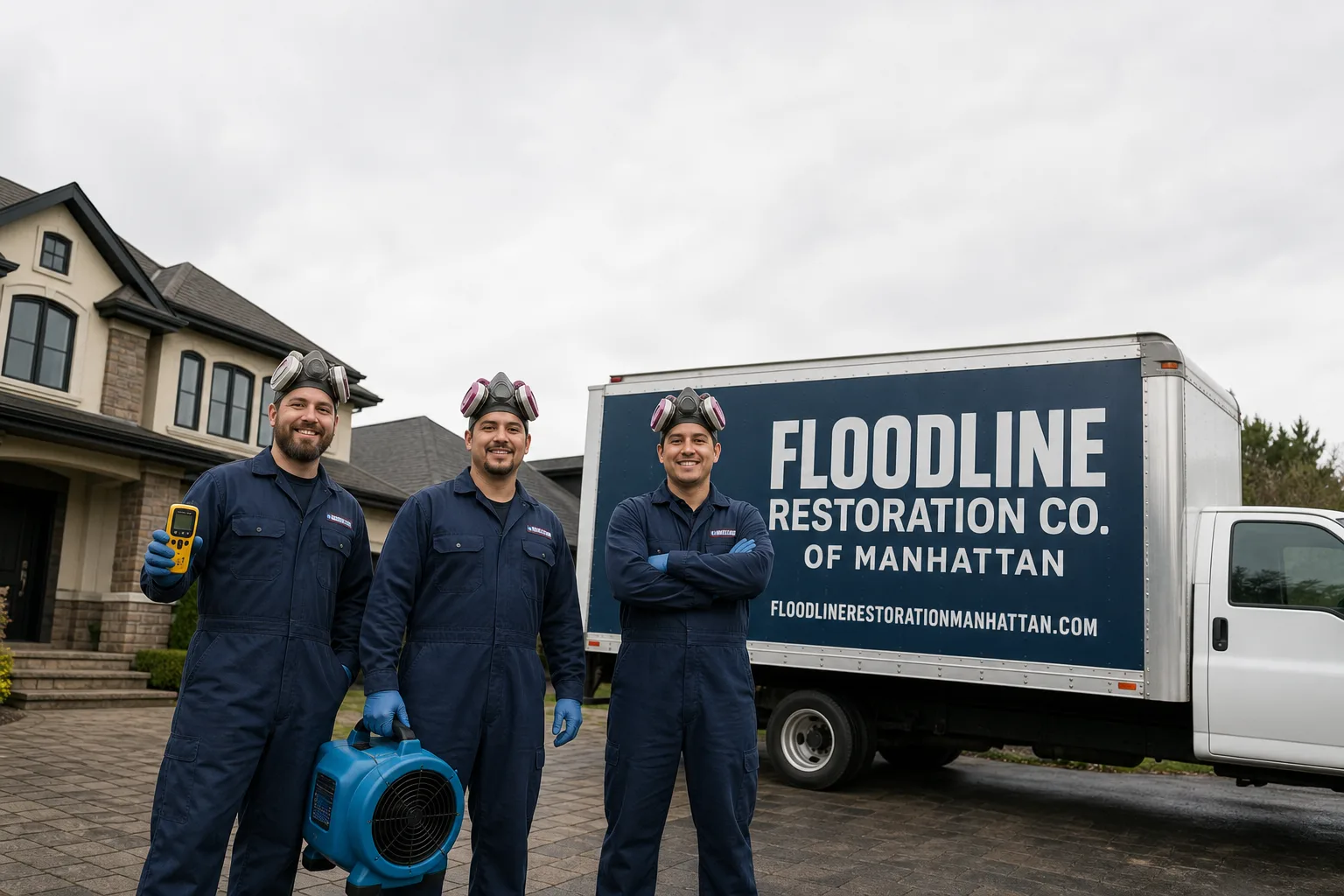
Free visual inspection and a written scope of work before any mitigation begins - photos, moisture readings, and drying logs go in your claim file
The scope we write is the scope we bill. Anything new gets shown to you, in writing, before we touch it.






 Before
 After
After Before
 After
After Before
 After
After24/7 Emergency Sewage Cleanup in Upper West Side
Sewage backup in an Upper West Side co-op or brownstone needs a crew on site now, not a callback tomorrow. Black water from a failed riser or branch line spreads fast through stacked units and into century-old plaster. We answer the phone with a live dispatcher at any hour, and a certified crew reaches your building inside 45 minutes, usually faster. Call (917) 924-4221 for a free visual inspection. The first hour determines how much flooring, plaster and personal property we can save.
Understanding Sewage Cleanup Severity in Upper West Side Properties
Not all water is the same. Clean water from a supply line is Category 1. Gray water from a washing machine or sink carries some contamination and is Category 2. Sewage backup, toilet overflow and any water that has touched feces or stagnant waste is Category 3, sometimes called black water. Category 3 water carries bacteria, viruses and parasites. It requires full containment, antimicrobial treatment, and removal of any porous material it touched, not just surface cleaning.
In Upper West Side buildings the severity question is complicated by what the water runs through before it pools in your kitchen. A cast-iron branch line failure in a pre-war co-op pushes black water through wall cavities, under herringbone parquet and behind lath-and-plaster before it ever shows up on the floor. Moisture mapping with thermal imaging and penetrating meters tells us how far the contamination traveled, because what you can see is usually a small fraction of what got wet. Original hardwood, plaster walls and built-in cabinetry absorb sewage quickly, and if drying is skipped to save time, the contamination comes back as odor and mold inside weeks. Our technicians are certified to IICRC, RIA, and IFA standards and treat every Category 3 event as a structural hazard, not a mop job.
Why Upper West Side Property Owners Choose Floodline Restoration Co. of Manhattan
- 45-minute response commitment – we dispatch from our New York City office and reach Upper West Side addresses fast, including after midnight and on weekends.
- 24/7 live answer, never a recording – a dispatcher picks up at 2 a.m., takes the address, and a crew is rolling. No menu trees, no answering service.
- IICRC-certified crews – our technicians hold WRT, FSRT and AMRT certifications and train on pre-war building systems, not just modern sheetrock homes.
- Free visual inspection – before any work begins, we walk the affected unit and give you a straight read on what is salvageable and what is not.
- Direct insurance billing – we bill your HO-6 carrier or the building’s master policy directly, with line-item documentation from the first hour.
- One team from extraction to rebuild – Floodline Restoration Co. does not hand the job off after dry-out. The same certified crew handles demolition, drying, sanitizing and reconstruction.
Every job carries the 90-Day Done Right Promise, in writing. If it is not done right, we make it right, no paperwork battles and no arguing. We have been doing restoration work since 2010, built around a dispatch board and a values code we call K.E.Y.S.: Krafted right, Every time, Your home first, Standing behind it.
Our Sewage Cleanup Process
Inspection & Assessment
We locate the source and map the full path of contamination with thermal imaging and penetrating moisture meters. In a UWS co-op, this includes checking floor-to-floor penetrations where sewage can travel through original chase walls.
Extraction & Stabilization
Black water is removed with truck-mounted extraction and submersible pumps. Category 3 contaminated materials are removed only after the scope is documented and, where required, the building’s managing agent signs off.
Containment & Negative Air
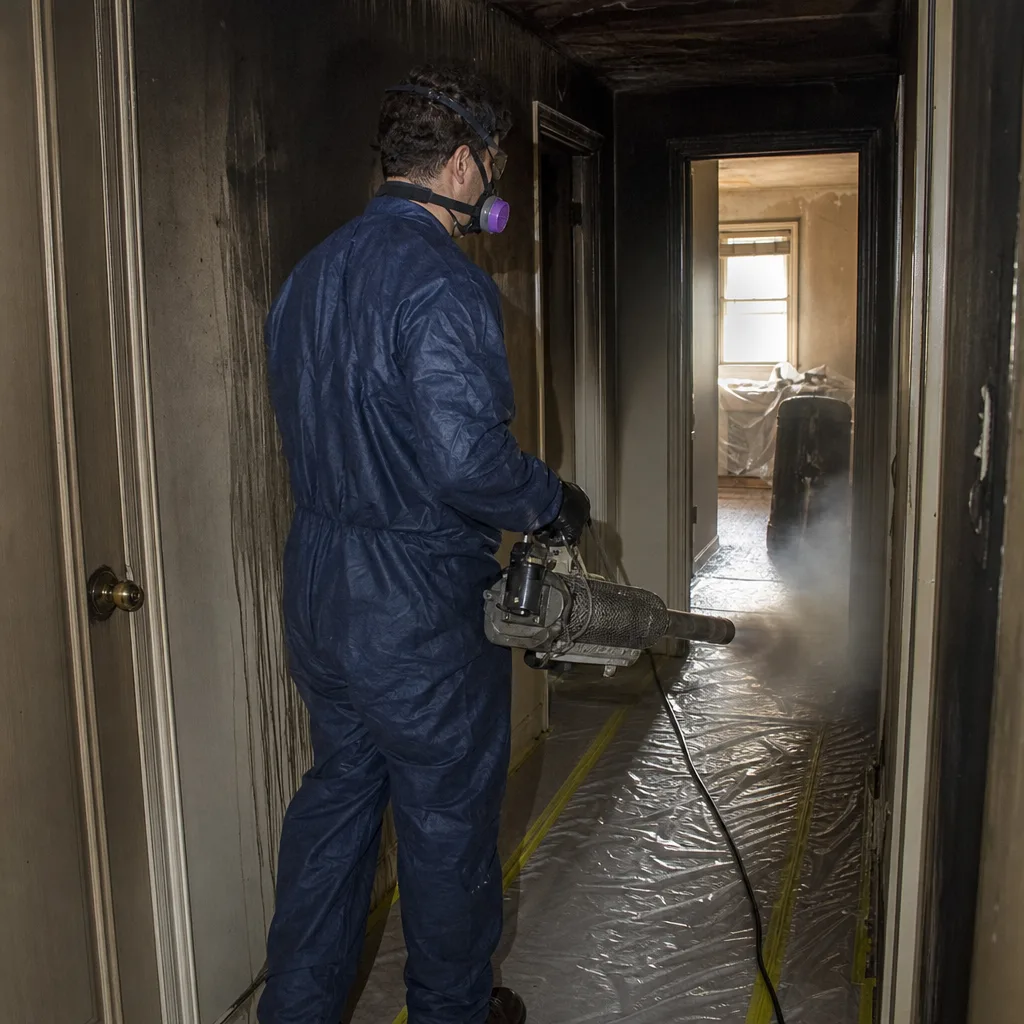
Containment barriers with pressure-tested seals isolate the affected unit. Negative air machines and HEPA scrubbers prevent aerosolized sewage from drifting into neighboring apartments through plaster chase walls and old pipe penetrations.
Drying & Dehumidification
We set Phoenix dehumidifiers and XPOWER air movers, then log moisture readings hourly until the dry standard is met. Daily readings go to you and your carrier, so the drying log matches what the adjuster needs on a HO-6 claim.
Cleaning, Sanitization & Antimicrobial Treatment
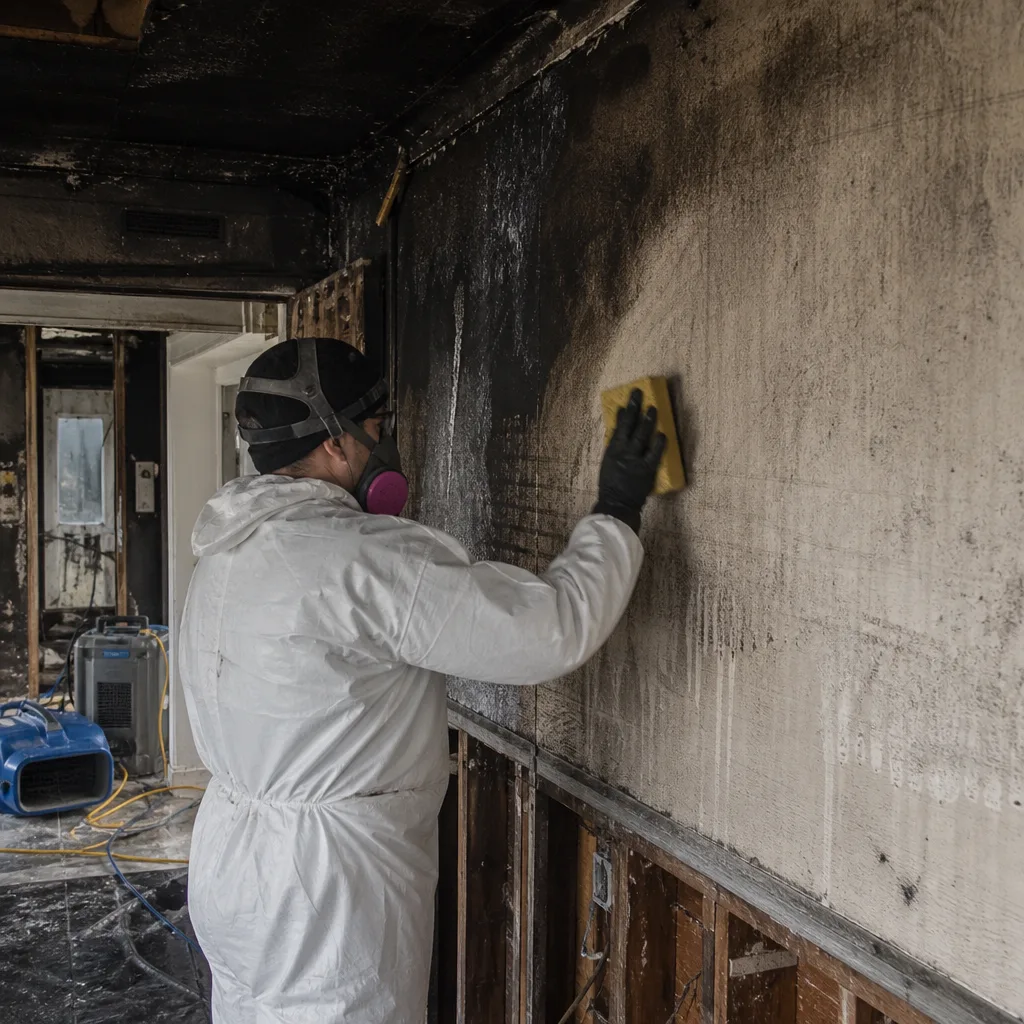
Surfaces are cleaned with professional-grade agents and treated with an EPA-registered antimicrobial. Porous materials that cannot be fully sanitized are documented and removed. Non-porous surfaces get a detailed cleaning pass.
Repairs & Restoration
Floodline handles rebuild in house. That means matching century-old plaster cove, tin ceilings, herringbone parquet and mahogany wainscot, not just swapping in drywall and LVP. The same crew that dried the unit rebuilds it.
Need Emergency Sewage Cleanup in Upper West Side Now?
Crews minutes away, answering live 24 hours a day. The sooner we start, the less it costs.
Working With Your Insurance Company
We have handled hundreds of Upper West Side sewage claims, and we know how co-op insurance works. Your HO-6 policy covers damage inside your unit, but the liability line between building and owner depends on your proprietary lease. We pull the governing documents before scoping work, so mitigation and billing start from the right party. From the first hour we photograph everything, log every moisture reading, and produce a line-item scope of work your adjuster can process without back-and-forth. We communicate directly with the carrier, so you are not the messenger.
What We Provide Your Insurer
- Thorough documentation of the loss
- Photos of all damage, room by room
- Moisture readings and drying logs
- A detailed, line-item scope of work
- Direct coordination with your carrier
Built for Upper West Side’s Loss Calendar
The Upper West Side sees sewage backups on a pattern that follows the city’s weather and the age of its plumbing. January deep freezes push thermal stress through cast-iron and galvanized waste lines in pre-war buildings, and we respond to burst risers and cracked branch lines when temperatures drop below 20 for days at a time. Late winter snow melt and roof ice damming on tall masonry buildings along Riverside Drive and Central Park West sends water into cornices, top-floor apartments, and down through internal plumbing chases. Summer thunderstorms overwhelm combined storm-sanitary sewers in older sections of the city, and nor’easters from late summer into fall push storm surge and street-level backups into basements and cellars on the Riverside Drive corridor. The calendar matters because the same cast-iron pipe that holds through June can fail in February. We schedule preventive inspections around these seasonal peaks for buildings that have already had one event.
Sewage Cleanup Across Upper West Side’s Neighborhoods
The Upper West Side is not one building type. On Riverside Drive, the grand pre-war co-ops sit on elevated ground above the Hudson. Sewage damage there tends to come from internal riser and branch line failures, not river flooding, and the finishes inside are some of the finest in the city, herringbone parquet, plaster cove, mahogany wainscot, so rebuild work is slow and exacting.
Central Park West buildings like the San Remo and the Eldorado carry the same pre-war plumbing in even taller stacks, and a single riser backup can push black water into four or five units, one above the other. Cross streets in the West 70s, 80s and 90s hold brownstone rowhouses where the waste lines are original clay or cast iron, and a toilet overflow on the parlor floor can migrate down through the joists into the garden unit. Further north in Morningside Heights, buildings near Columbia University mix pre-war co-ops with converted rental stock, and the plumbing age varies block by block. Around Lincoln Square and Columbus Avenue, mixed-use buildings put restaurants and residential units on the same waste stacks, meaning grease-related blockages are more common. We respond to all of it, and we know which building types hide what.
Specialized Sewage Cleanup Services We Offer in Upper West Side
Sewage Backup Cleanup
A riser backup in a pre-war co-op on West End Avenue or Riverside Drive can push Category 3 water into three, four or more stacked units in minutes. We contain the release before it migrates through floor-to-floor penetrations, then extract, treat and dry every affected unit to the dry standard, with moisture logs shared with each owner and the managing agent.
Toilet Overflow Cleanup
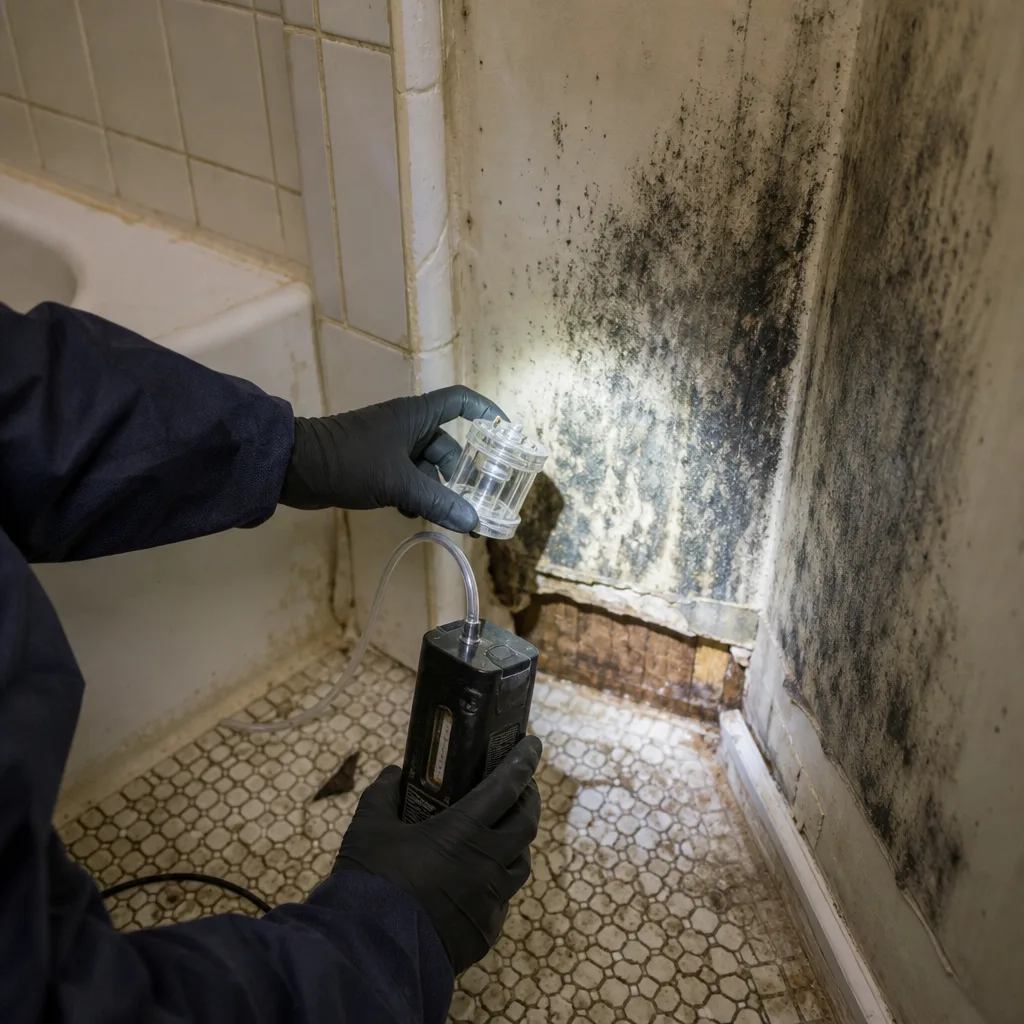
A toilet overflow in an Upper West Side brownstone is a Category 3 event the moment sewage touches the bathroom floor. If the overflow happened on an upper floor, we check joist bays and ceiling cavities below. Black water follows gravity, and in 100-year-old framing it travels fast.
Black Water Extraction
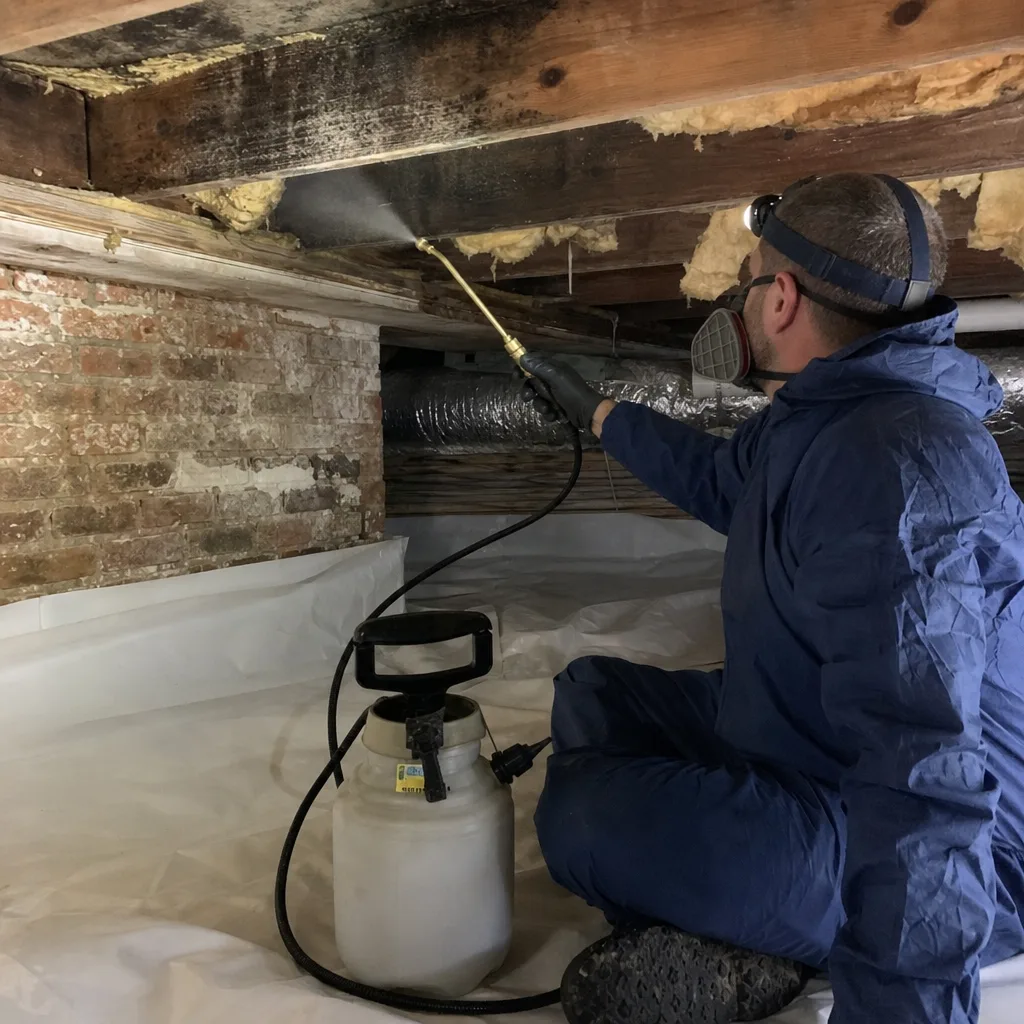
Black water is the most dangerous water category, and it needs to come out now. We use truck-mounted extraction and submersible pumps to pull sewage from floors, then set containment and run HEPA air scrubbing to stop aerosolized contamination from drifting into adjacent apartments.
Sanitization & Disinfection
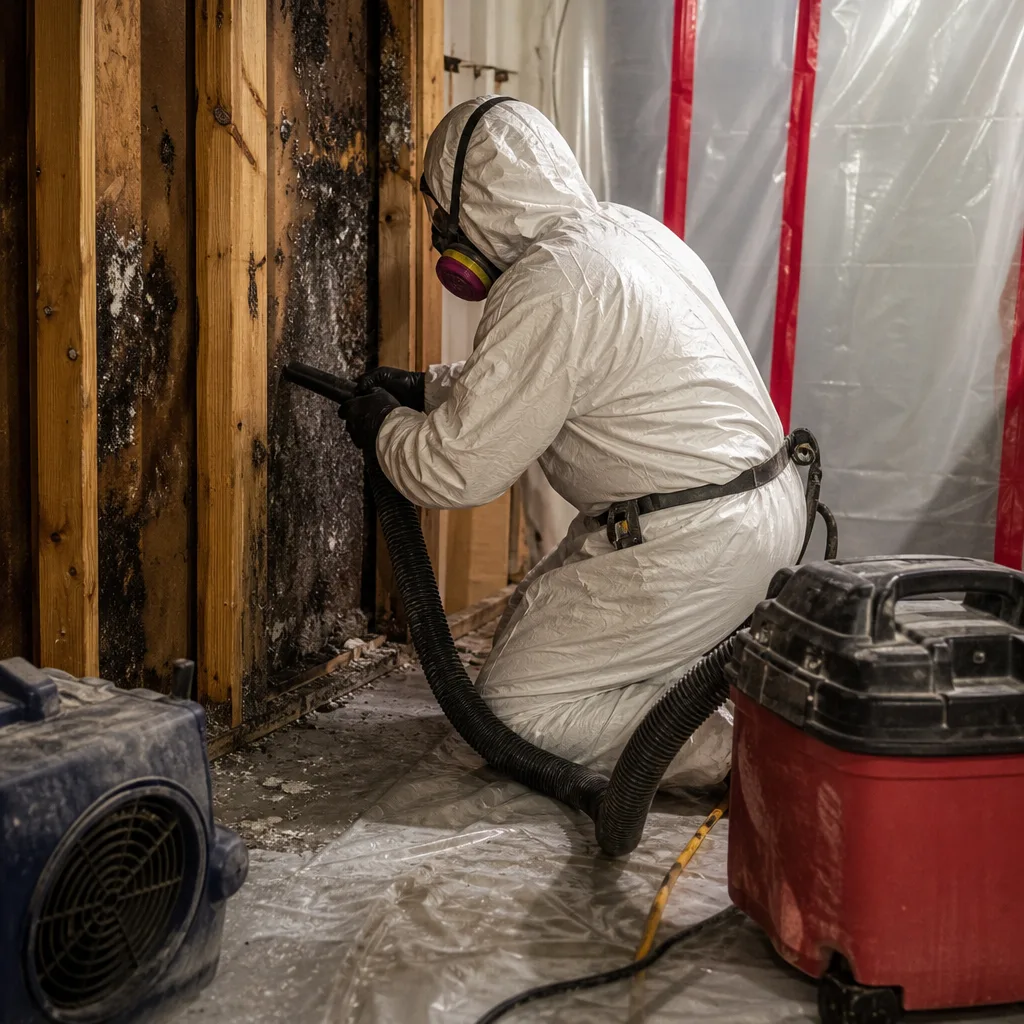
Extraction and drying do not kill bacteria. After the water is gone, we clean, sanitize and treat every affected surface with EPA-registered antimicrobial products. Porous materials that cannot be fully sanitized, like soaked plaster or particle board underlayment, are documented and removed.
Septic Failure Cleanup
Most Upper West Side buildings are on city sewer, not septic, but a handful of older rowhouses on the western cross streets still have private systems. When a septic line backs up into a cellar or garden level, we treat it as a full Category 3 event with the same containment and documentation protocols.
What happens when you call
- 1
A real person answersNo phone trees - you reach a local pro.
- 2
You get an upfront price rangeHonest numbers before anyone is dispatched.
- 3
A background-checked tech heads outLicensed & insured, dispatched right away.
- 4
You approve before work beginsNothing starts until you say go.
Sewage Cleanup Costs in Upper West Side, NY
Sewage cleanup in Upper West Side runs higher than the borough average because the buildings are older, the finishes are more expensive, and containment in a high-rise co-op is more complex than in a standalone house. A contained toilet overflow with limited spread typically runs $1,800 to $3,400. A branch line failure that pushes sewage through a kitchen and into a neighboring room runs $4,500 to $9,500. A stacked-unit riser backup affecting three to five units can run $12,000 to $35,000 across the affected apartments, with most covered by the building’s master policy or the individual owner’s HO-6 policy depending on the proprietary lease language. What moves the price: how far the black water traveled, whether original plaster and parquet can be saved, how much pack-out and storage is needed for personal property, and whether the building’s managing agent requires special documentation. A free visual inspection gives you a firm, line-item scope before any work starts, so you know the number up front. We never bill blind.
We Also Serve Cities Near Upper West Side
Floodline Restoration Co. crews respond across the Upper West Side and into the surrounding neighborhoods, including Fairview, Harrison, East Bronx and Hunts Point. If you are in one of these areas and dealing with a sewage backup, call (917) 924-4221 and we will have a crew dispatched quickly.
Serving Upper West Side, NY - Our Local Coverage Area
We’re based in the Upper West Side area and know this community well. Use the map below to see our service coverage - if you’re nearby, we can almost certainly help.
Upper West Side Sewage Cleanup Questions, Answered
If a sewage pipe bursts in my Upper West Side co-op apartment, who pays for the cleanup-the building or me?
It depends on your proprietary lease. If the source pipe is classified as a riser, the building’s master policy usually pays for cleanup in the affected units. If it is a branch line serving only your unit, your HO-6 policy typically carries the cost. We pull your building’s governing documents before scoping work so mitigation starts with the right payer identified, and we bill that carrier directly.
Can you match the original crown molding and plaster cove after a sewage backup in our pre-war UWS living room?
Yes. Our rebuild crews specialize in period-correct restoration on Upper West Side buildings, including hand-run plaster cove, dentil crown molding, tin ceilings, mahogany wainscot and herringbone parquet. We do not swap century-old finishes for modern replacements unless the material is beyond salvage, and we document everything before removal.
How do you keep sewage odors from spreading to neighboring co-op units in a high-rise on Riverside Drive?
We set containment with pressure-tested seals and run negative air machines with HEPA scrubbers in the affected unit. That stops aerosolized sewage particles and odor from traveling through the original lath-and-plaster chase walls and pipe penetrations that connect stacked units in pre-war buildings. We also treat the source and all affected cavities with antimicrobial agents before reconstruction begins.
What does antimicrobial treatment involve after a toilet overflow in a UWS brownstone with original parquet floors?
After extraction and drying, we apply an EPA-registered antimicrobial to every affected surface. For original parquet, we often need to lift individual boards to treat the subfloor and joist bays beneath, because black water seeps between the boards and hides in the framing. Boards that are too compromised are documented, saved where possible and matched when reinstallation happens.
Can you start sewage cleanup in a UWS co-op before the building’s insurance adjuster arrives?
Yes, and in most cases you should. Mitigation is time-sensitive, and waiting for an adjuster usually means more demolition and more cost. We photograph everything before touching it, document pre-loss condition, and log every step so the adjuster sees what we saw. Direct insurer coordination is part of how we work, not an extra.
How fast can a crew actually reach my Upper West Side apartment?
Our commitment is 45 minutes or less for emergency calls in Upper West Side. We dispatch from our New York City office and know the quickest routes up West End Avenue, Broadway and Riverside Drive. A live dispatcher is on the phone 24 hours a day, every day.
Do I need full sewage remediation or just a cleaning?
If the water is Category 3, meaning it contains sewage or has touched human waste, a surface cleaning is not enough. Porous materials that absorbed the water hold bacteria and will smell and support mold growth within days. Full remediation includes extraction, containment, antimicrobial treatment, drying to standard and removal of unsalvageable materials. A free visual inspection tells you which category you are dealing with and what the right scope is.
What should I do in the first 30 minutes after a sewage backup in my Upper West Side home?
Do not flush toilets or run water. Shut off the water supply to the affected fixture if you can reach it safely. Keep people and pets out of the affected area. Take photos of the visible damage for your records. Then call (917) 924-4221. The first 30 minutes decide how much flooring, plaster and personal property gets saved. We answer live and dispatch immediately.
We serve the Upper West Side with the same crew from first extraction to final paint, and we stand behind the work. If you are in a pre-war co-op on West End Avenue, a brownstone in the West 80s, or a high-rise near Lincoln Square, call (917) 924-4221 for a free estimate. A live person answers, day or night. Ask about the $50 Off Any Repair Over $250, the $89 Seasonal Tune-Up, and the Senior & Veteran 5% Discount. Floodline Restoration Co. has been doing restoration since 2010, and every job is backed by the 90-Day Done Right Promise. If it is not done right, we make it right.
Written by Curt Bowman, Owner at Floodline Restoration Co. of Manhattan, serving Upper West Side with certified sewage cleanup and restoration crews.