
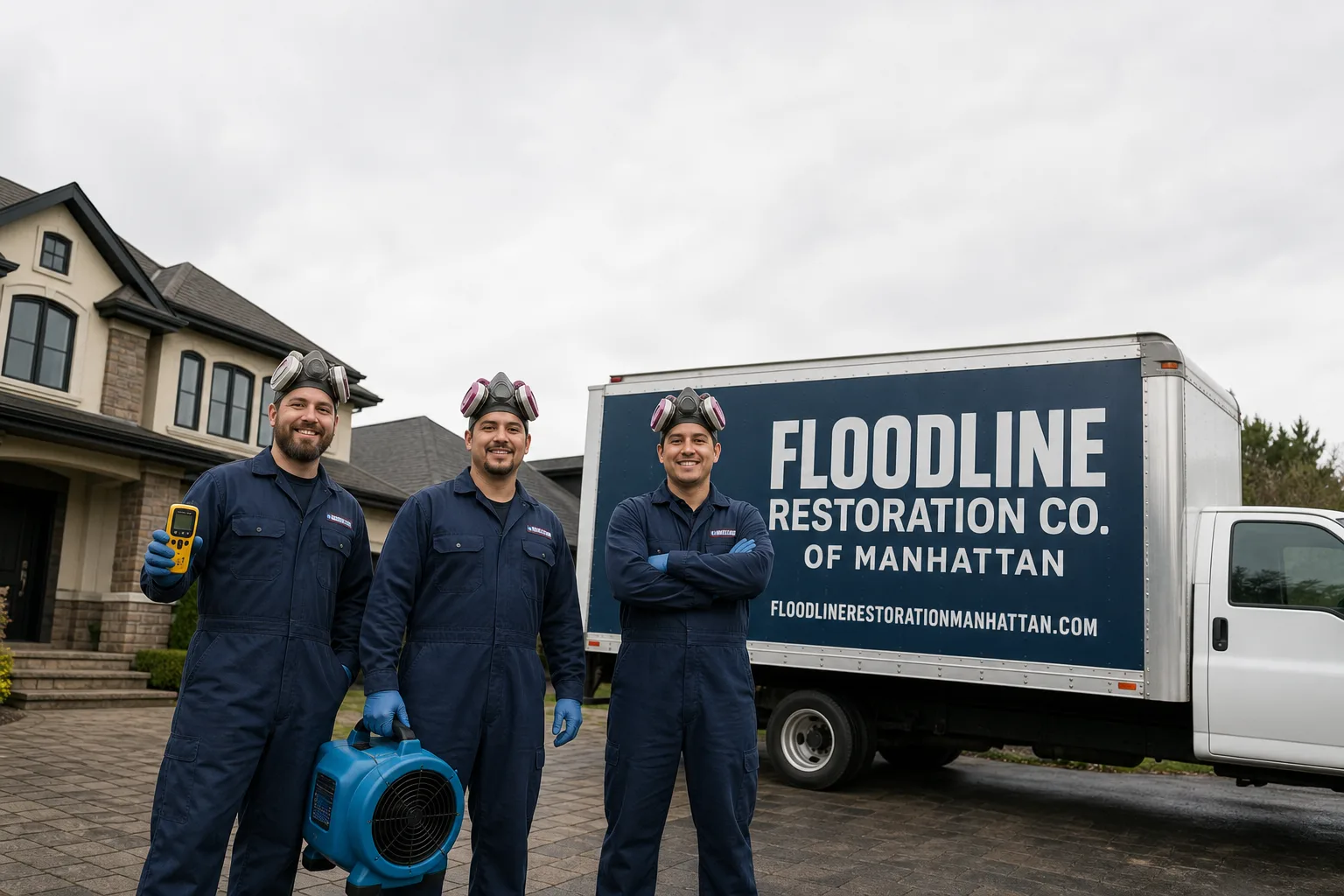
Free visual inspection and a written scope of work before any mitigation begins - photos, moisture readings, and drying logs go in your claim file
The scope we write is the scope we bill. Anything new gets shown to you, in writing, before we touch it.






 Before
 After
After Before
 After
After Before
 After
After24/7 Emergency Reconstruction & Cleanup in Upper West Side
Reconstruction and cleanup after a water loss, fire, or sewage backup in Upper West Side typically requires a team that can start within the hour and finish the rebuild weeks later without handing the job off, which is why our Upper West Side Commercial Restoration team stays on the job from start to finish. That’s how we work. A live dispatcher answers (917) 924-4221 at any hour, every day, and a background-checked, uniformed crew can be on site inside the Upper West Side area the same visit. The first hour matters because water migrating through a pre-war building’s cast-iron riser chases can turn a one-unit loss into a four-unit loss before the building super even locates the shutoff. We do free visual inspections, we document everything for the carrier from the first photo, and the same certified crew that tears out the wet plaster rebuilds it to match.
Understanding Reconstruction & Cleanup Severity in Upper West Side Properties
Reconstruction severity in Upper West Side depends less on the cause and more on the building’s bones. Most of the neighborhood’s housing stock went up between 1900 and 1940, which means original lath-and-plaster over wood lath, herringbone parquet, galvanized and cast-iron supply lines, and one- or two-pipe steam heat. When a Category 2 or 3 water release (grey or black water from a failed steam condensate line or a sewage backup) saturates those assemblies, you’re not looking at a drywall swap. You’re looking at controlled demolition behind containment, structural drying of century-old framing, and a rebuild that matches the pre-loss condition. A thermal imaging camera and moisture meters tell us where water traveled inside plaster walls and under parquet, because visible staining on a ceiling in one unit almost never marks the full perimeter of the migration. In co-op buildings especially, that migration crosses property lines, and the severity conversation becomes a legal one: whose proprietary lease covers the riser, whose covers the branch, and whose master policy pays for the hallway.
Why Upper West Side Property Owners Choose Floodline Restoration Co. of Manhattan
- 45-minute response commitment: For active water or fire losses in Upper West Side, we commit to having a crew on the way within 45 minutes of your call to (917) 924-4221.
- 24/7 live answer: A real person picks up at 2 a.m., not a recording. Live dispatch never closes.
- IICRC-certified crews: Our technicians hold WRT, FSRT, and AMRT certifications where the scope calls for them, and they train to RIA and IFA standards as well.
- Free visual inspection: We walk the loss with you before any work is authorized, and the estimate is free.
- Direct insurance billing: We bill your carrier directly and coordinate with the adjuster, so you’re not playing messenger.
- One team, start to finish: The same Floodline Restoration Co. of Manhattan crew that extracts the water rebuilds the wall. No mid-job handoff to a sub you’ve never met.
Our Reconstruction & Cleanup Process
Inspection & Assessment
We start with thermal imaging and moisture mapping across the affected unit and the stacks above and below it. In an Upper West Side co-op, we also request the proprietary lease before writing the scope, because riser versus branch classification decides who pays. The visual inspection is free, and the assessment goes to you and your adjuster in writing.
Extraction & Stabilization
Standing water comes out with truck-mounted and portable extraction equipment, then we open the wet assemblies under containment. Stabilization includes salvage assessment: what plaster can be dried in place, what parquet can be re-set, and what must come out.
Drying & Dehumidification
We run professional-grade Dri-Eaz and Phoenix air movers and dehumidifiers, with daily hygrometer readings logged until the dry standard is met. In plaster assemblies that can take weeks. You get the moisture log, and so does the carrier.
Cleaning & Sanitization
After drying, surfaces are cleaned and sanitized to the appropriate standard for the water category involved. HEPA air scrubbers run during cleanup when the loss involves sewage, mold, or fire residue.
Reconstruction Matching
This is where Upper West Side work separates from everywhere else. We repair or replicate crown moldings, plaster profiles, and herringbone parquet to match the pre-loss condition. No flat stock where there was profile. No standard drywall where there was lath and plaster.
Repairs & Restoration
Full-service reconstruction wraps the job: drywall and flooring repair, painting, trim, and final clearance. The 90-Day Done Right Promise is in writing before you pay the final invoice. If it’s not done right, we make it right.
Need Emergency Reconstruction & Cleanup in Upper West Side Now?
Crews minutes away, answering live 24 hours a day. The sooner we start, the less it costs.
Working With Your Insurance Company
On a multi-floor co-op loss in Upper West Side, the insurance file is often the hardest part of the job. We’ve handled enough of them to know the adjuster needs more than a photo of a wet ceiling. They need a line-item scope that separates building responsibility from unit-owner responsibility, moisture readings that show where the water actually went, and photos taken before anything gets opened up. We provide all of that. Curt Bowman founded Floodline Restoration Co. in 2010 around the idea that the homeowner should never be the one translating between the contractor and the carrier. We call the adjuster, we send the documentation, and we bill directly. You get a copy of everything.
What We Provide Your Insurer
- Thorough documentation of the loss
- Photos of all damage, room by room
- Moisture readings and drying logs
- A detailed, line-item scope of work
- Direct coordination with your carrier
Built for Upper West Side’s Loss Calendar
The Upper West Side’s water damage season runs on the same calendar as its building stock. January and February bring deep freezes that stress the neighborhood’s aging cast-iron and galvanized supply lines, and a burst riser in a 12-story pre-war building never stays in one apartment. Late winter ice damming along cornices on tall masonry buildings along Riverside Drive and Central Park West sends melt water into top-floor units and down chases. Spring thaw pushes groundwater into cellars and sub-cellars through old foundation walls. Summer thunderstorms overwhelm combined sewers and back up into basement lines. Nor’easters in the fall drive wind-driven rain through aging window flashing and roof bulkheads. Each of these has a different mitigation sequence and a different insurance path, and in co-ops, a different set of responsible parties. We plan our dispatch and our scope documents around that reality.
Reconstruction & Cleanup Across Upper West Side’s Neighborhoods
The job on Riverside Drive is not the same as the job on Columbus Avenue. Along Riverside Drive, the pre-war towers sit on elevated ground above the Hudson, so river flooding is rare, but masonry envelope failures and ice damming hit the top floors harder than anywhere else in the neighborhood. The cross streets between West 72nd and West 86th are dense with brownstone rowhouses, where basement sewer backups and party-wall water migration between adjoining houses are the recurring pattern. Central Park West buildings, including the grand Beaux-Arts co-ops like the Apthorp and the Belnord, carry ornate plaster and parquet detail that has to be matched by hand, not ordered from a supply house. Down near Lincoln Center and along Broadway, mixed-use buildings with commercial ground floors bring restaurant grease-line breaks into the same stack as residential units. We send crews to all of it. Upper West Side is a neighborhood of specific building types, and the Reconstruction & Cleanup in Upper West Side work we do reflects that, block by block.
Specialized Reconstruction & Cleanup Services We Offer in Upper West Side
Full-Service Reconstruction
From the first cut of wet plaster to the final coat of paint, one Floodline team handles it. In Upper West Side co-ops, that means a single point of contact for the board, the managing agent, the unit owner, and the adjuster. Our Reconstruction & Cleanup team rebuilds plaster profiles, matches parquet, and restores period trim so the finished unit looks like it did before the loss, not like a renovation that lost the building’s character.
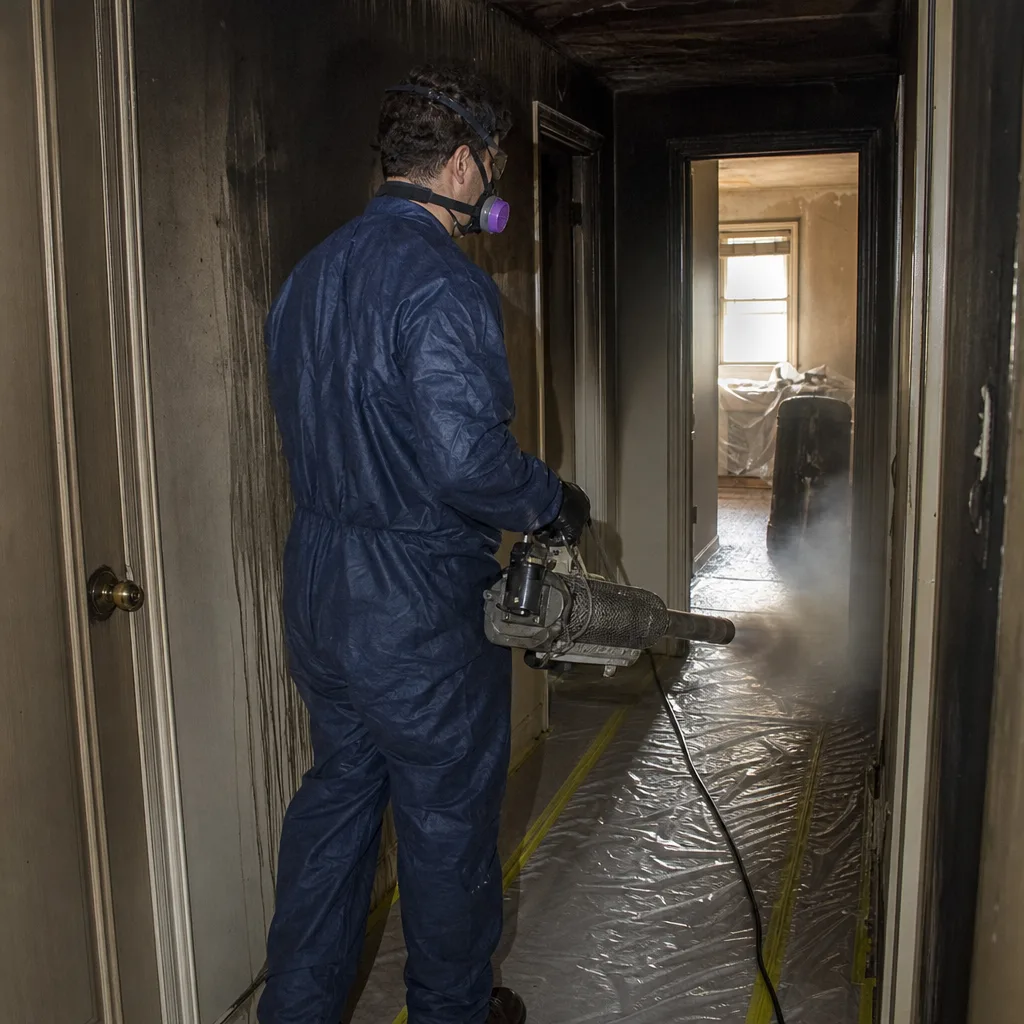
Drywall & Flooring Repair
Where new drywall is appropriate, we install and finish it to a level that matches the surrounding surface. Where the building has original plaster, we repair with compatible materials and methods. Flooring runs the same way: engineered or solid wood matching species, width, and stain, with herringbone and parquet patterns laid by hand when the unit calls for it.
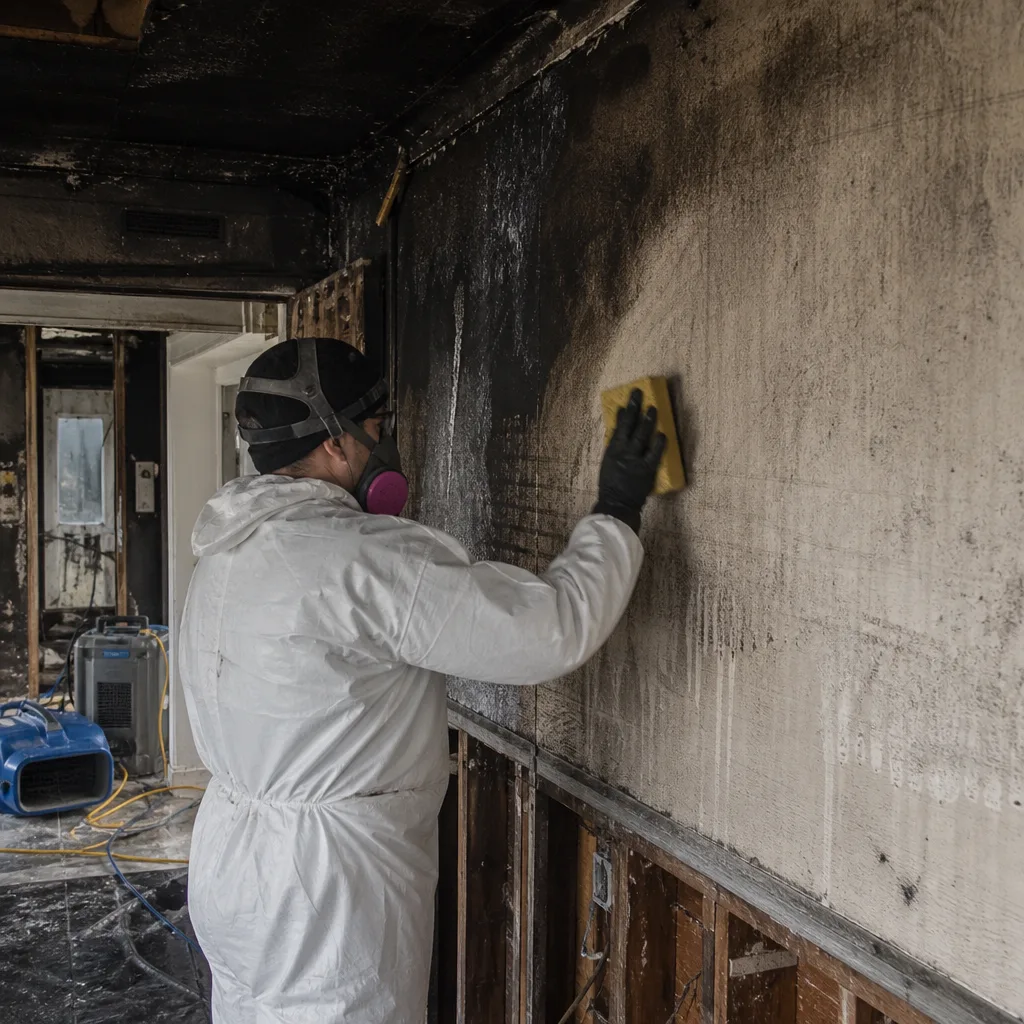
Contents Restoration & Pack-Out
We pack out affected contents, inventory them in writing, and move them to a secure, climate-controlled facility for cleaning and storage. In an Upper West Side building where the freight elevator is booked a week out and the service entrance only opens for three hours on Tuesday, we plan the move around the building’s rules, not ours. Contents come back cleaned, documented, and itemized for the carrier.
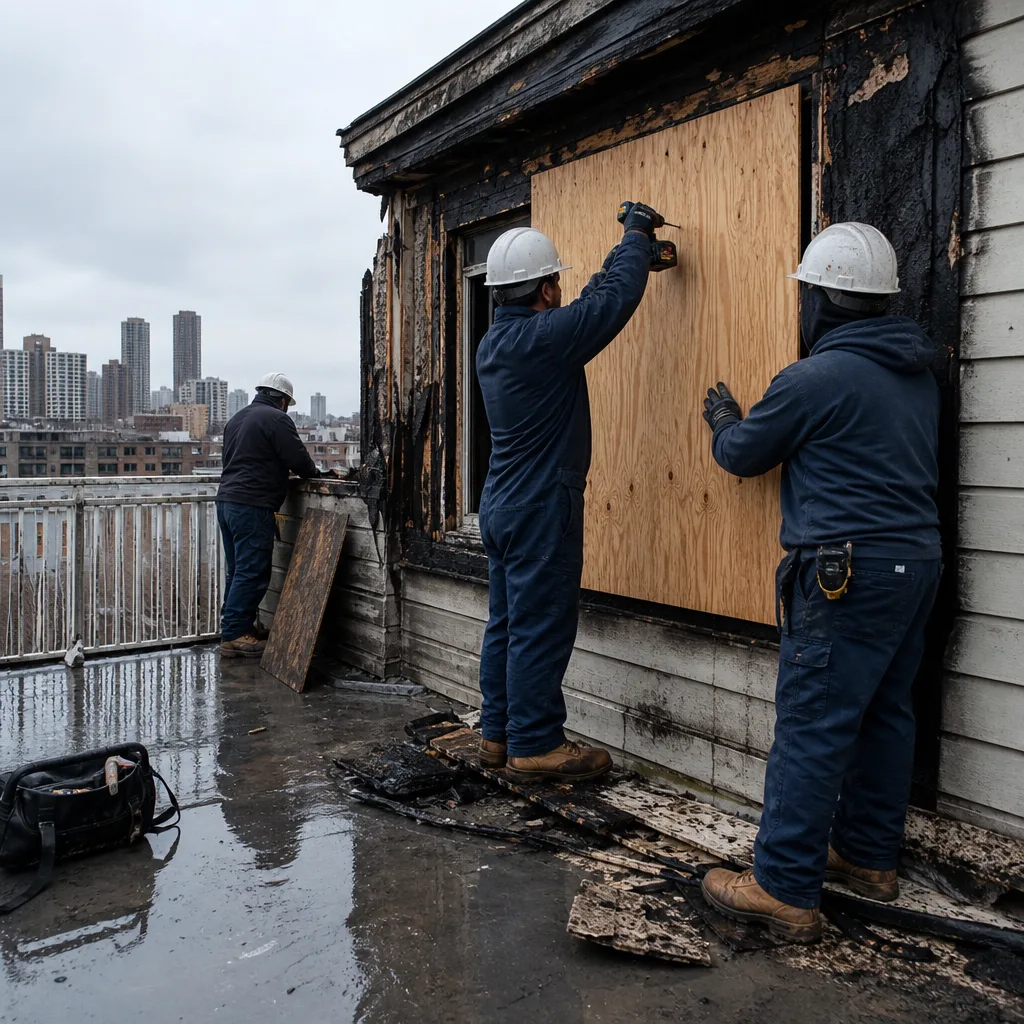
Carpet & Upholstery Cleaning
After a loss, carpet and upholstery often carry soot, odor, or water staining even when they’re structurally salvageable. We clean them on site where possible using truck-mounted hot water extraction and professional-grade equipment from Dri-Eaz and Phoenix. When they can’t be saved, we document why and include replacement in the scope.

Post-Construction Cleanup
After the rebuild finishes, we clean the unit to move-in condition: dust removal from every surface, floor cleaning, window and trim wipe-down, and a final HEPA air scrub where the scope calls for it. The goal is a clean handoff: the same crew that started the job walks you through the finished space with the paperwork in hand.

What happens when you call
- 1
A real person answersNo phone trees - you reach a local pro.
- 2
You get an upfront price rangeHonest numbers before anyone is dispatched.
- 3
A background-checked tech heads outLicensed & insured, dispatched right away.
- 4
You approve before work beginsNothing starts until you say go.
Reconstruction & Cleanup Costs in Upper West Side, NY
Upper West Side reconstruction costs run higher than the metro average, and the reason is the housing stock. Full-service reconstruction in a standard pre-war co-op unit typically runs $12,000 to $45,000 after a multi-room water loss, depending on the extent of the damage and the finishes involved. Drywall and flooring repair alone usually sits in the $4,000 to $15,000 range. Contents restoration and pack-out in Upper West Side runs $2,500 to $9,000 depending on volume and access constraints. Carpet and upholstery cleaning for a standard one-bedroom loss runs $400 to $1,200. Post-construction cleanup after a full unit rebuild runs $800 to $2,500. What moves the number most is the plaster: drying and repairing original lath-and-plaster costs two to three times what standard drywall work does, and in a landmark-quality unit, matching crown moldings and parquet can add thousands. The free inspection gets you a firm, line-item scope before anything is authorized, and the carrier sees the same numbers you do. Call (917) 924-4221 and we’ll walk it with you.
We Also Serve Cities Near Upper West Side
Our crews cover Upper West Side and the surrounding area every day. If you’re across the line in Fairview, Harrison, East Bronx, or Hunts Point, the same 45-minute response commitment applies. Call the same number, (917) 924-4221, and a live dispatcher answers, any hour.
Serving Upper West Side, NY - Our Local Coverage Area
We’re based in the Upper West Side area and know this community well. Use the map below to see our service coverage - if you’re nearby, we can almost certainly help.
Upper West Side Reconstruction & Cleanup Questions, Answered
Does Floodline Restoration Co. of Manhattan know how to read an Upper West Side proprietary lease before quoting reconstruction?
Yes. We pull the governing documents before we write any scope on a co-op loss, because the proprietary lease defines riser versus branch responsibility, and that line decides who pays for what. Skipping that step is how boards and owners end up in payment disputes mid-job. Call (917) 924-4221 and we’ll explain how it applies to your building.
How do you handle contents pack-out in a pre-war co-op where the freight elevator is booked weeks out?
We work with the building’s management and the super to schedule pack-out around freight elevator availability and service entrance hours, and we plan the move so nothing sits in the hallway. If a unit has to be emptied immediately and the freight elevator isn’t available until next Tuesday, we adjust the sequence and keep the contents protected in the interim. Estimates are free.
Can you dry original lath-and-plaster walls in an Upper West Side landmark building without tearing them out?
Often yes. We use thermal imaging and penetrating moisture meters to map how far the water traveled, then run targeted drying with Dri-Eaz and Phoenix air movers and dehumidifiers. Plaster dries slower than drywall, but if the lath and plaster are structurally intact and the moisture has not caused delamination, we can often dry in place and save the original wall. When it has to come out, we repair with materials and profiles that match the pre-loss condition.
Does your reconstruction crew match herringbone parquet and crown moldings in pre-war UWS apartments, or do they just install new flat stock?
We match them. Herringbone parquet gets re-laid by hand with matching species, width, and stain. Crown moldings get replicated from the existing profile, not replaced with stock trim. Curt Bowman built our Reconstruction & Cleanup practice around the idea that a pre-war Upper West Side unit should look like itself after the job, not like a generic renovation.
What documentation do you provide for insurance claims when a steam riser floods multiple co-op units on the Upper West Side?
We provide a line-item scope that separates building responsibility from unit-owner responsibility, photos of all damage room by room, moisture readings and drying logs from day one through the dry standard, and direct coordination with the adjuster and the board’s carrier. You receive copies of everything. Call (917) 924-4221 for a free inspection and we’ll start that file the right way.
How fast can you actually get to an Upper West Side address for a water loss?
For active water and fire losses, we commit to having a crew on the way within 45 minutes of your call to (917) 924-4221. A live dispatcher answers at all hours, so you’re never leaving a message while water migrates through another floor.
Can we stay in our Upper West Side apartment during reconstruction?
It depends on the category of water involved, the extent of the demolition, and whether the building requires shutdown of the steam line or electrical services. For a Category 1 clean-water loss contained to one room, you can often stay. For a Category 3 loss involving sewage, or when we’re running HEPA air scrubbers and full containment across the unit, we’ll recommend alternate arrangements and document that for the carrier. Your HO-6 policy often covers additional living expenses in those cases.
What should I do in the first 30 minutes after a pipe bursts in my Upper West Side co-op?
Shut the water off if you can reach the valve safely, call your building super to locate the riser shutoff, and call us at (917) 924-4221. Don’t use electrical outlets near standing water, and don’t start ripping out wet materials yourself, because the insurance file depends on clean documentation of the pre-loss condition. We’ll be there fast, and we’ll take the photos before anything is disturbed.
Written by Curt Bowman, Owner at Floodline Restoration Co. of Manhattan, serving Upper West Side since 2010.