
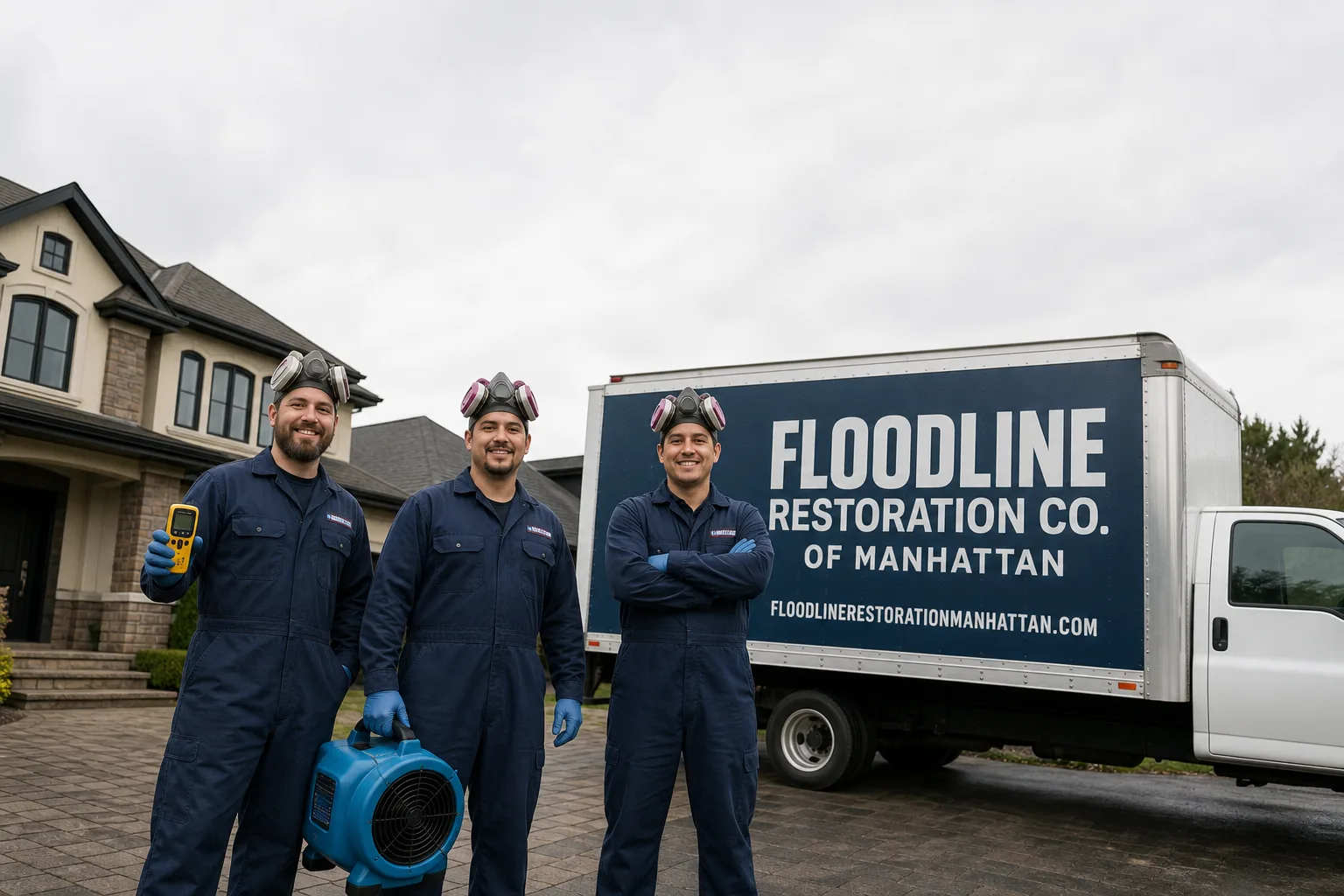
Free visual inspection and a written scope of work before any mitigation begins - photos, moisture readings, and drying logs go in your claim file
The scope we write is the scope we bill. Anything new gets shown to you, in writing, before we touch it.






 Before
 After
After Before
 After
After Before
 After
After24/7 Emergency Storm & Disaster Restoration in Cliffside Park
Storm damage in Cliffside Park moves fast, and so do we. Floodline Restoration Co. of Manhattan answers live around the clock with crews dispatched into Cliffside Park within 45 minutes, because water from a failed parapet or a nor’easter-driven surge doesn’t wait for business hours. The first hour after a storm is when extraction matters most: it stops Category 2 and 3 water from wicking through plaster, flooring, and the shared party walls common in this borough’s 1920s brick rowhouses. Call (917) 924-4221 the moment you see water, a sagging ceiling, or a missing section of roof. We’ll walk you through the first steps on the phone, then get a background-checked, uniformed crew rolling toward your street. The inspection is free, the advice is straight, and the promise is in writing: done right, and backed by the 90-Day Done Right Promise.
Understanding Storm & Disaster Restoration Severity in Cliffside Park Properties
Storm restoration in Cliffside Park is not a one-size job, because the water entering a 1920s walk-up on Palisade Avenue behaves differently than water in a flatland basement in Fairview. We classify water by category: Category 1 is clean supply-line water, Category 2 carries significant contamination, and Category 3 contains sewage, street runoff, or river water. During a heavy summer convective storm, the steep Palisades grade pushes stormwater downhill so fast that ground-floor units and alley-load basements often take Category 3 water within minutes. That changes the cleanup protocol entirely, from antimicrobial treatment to full containment. In pre-war brick buildings, we also run moisture mapping before we trust what the eye sees. Water travels through mortar joints, lath and plaster, and the shared walls between attached rowhouses. A dry-looking party wall can hide a wet core that feeds mold in the neighboring unit two weeks later. We log daily readings with Dri-Eaz and Phoenix equipment until the building hits the dry standard, not a guess.
Why Cliffside Park Property Owners Choose Floodline Restoration Co. of Manhattan
- 45-minute response commitment: When a nor’easter tears open a parapet wall at 2 a.m., we dispatch immediately. You’re not leaving a voicemail for a call-back queue.
- 24/7 live answer: A live dispatcher picks up the phone every hour, every day. No automated menus, no recordings, no “we’ll call you Monday.”
- IICRC-certified crews: Our technicians hold WRT and FSRT certifications and train to IICRC, RIA, and IFA standards. They know what lateral traprock seepage looks like, because they’ve dried it repeatedly.
- Free visual inspection: We walk the property, map the moisture, and hand you a clear scope of work before any equipment comes off the truck. No pressure, no surprise line items.
- Direct insurance billing: We bill your carrier directly and handle adjuster coordination. You don’t play messenger between us and the insurance company.
- One team from extraction to reconstruction: The same certified crew that extracts the water rebuilds the wall. No mid-job handoff, no inheriting a stranger’s mistakes.
Our Storm & Disaster Restoration Process
Inspection & Assessment
We start with thermal imaging and moisture meters across every affected surface, including the traprock-adjacent foundation walls that hide lateral seepage. You get a written scope and a straight answer about what’s wet, what’s salvageable, and what needs to come out.
Extraction & Stabilization
Standing water comes out first, using truck-mounted and portable extraction units suited to tight alley-load access. We stabilize the building with emergency board-up and roof tarping where the storm opened the envelope.
Drying & Dehumidification
Dri-Eaz air movers and Phoenix dehumidifiers run on a moisture-mapped schedule, with daily hygrometer readings logged for you and your insurer. On hillside rowhouses, we monitor party walls closely; hidden water there is the top cause of repeat claims.
Cleaning & Sanitization
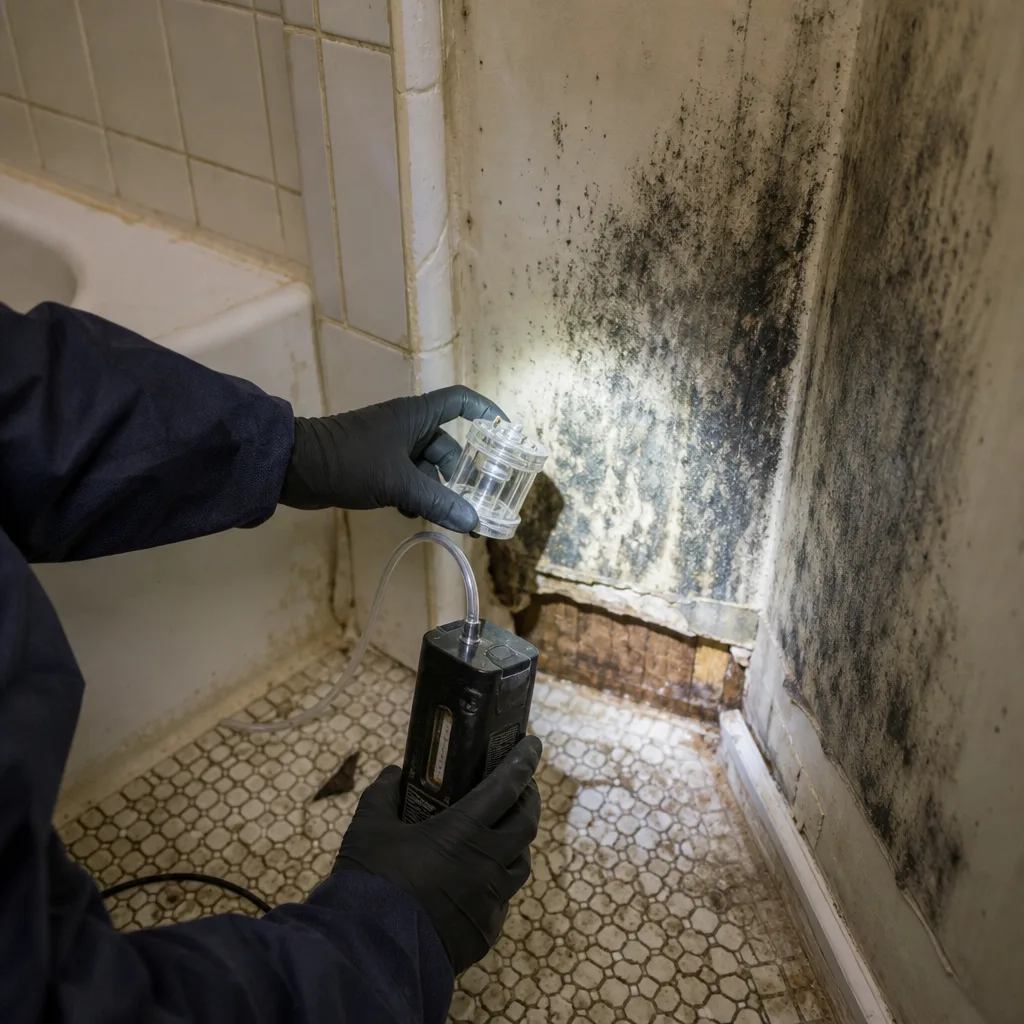
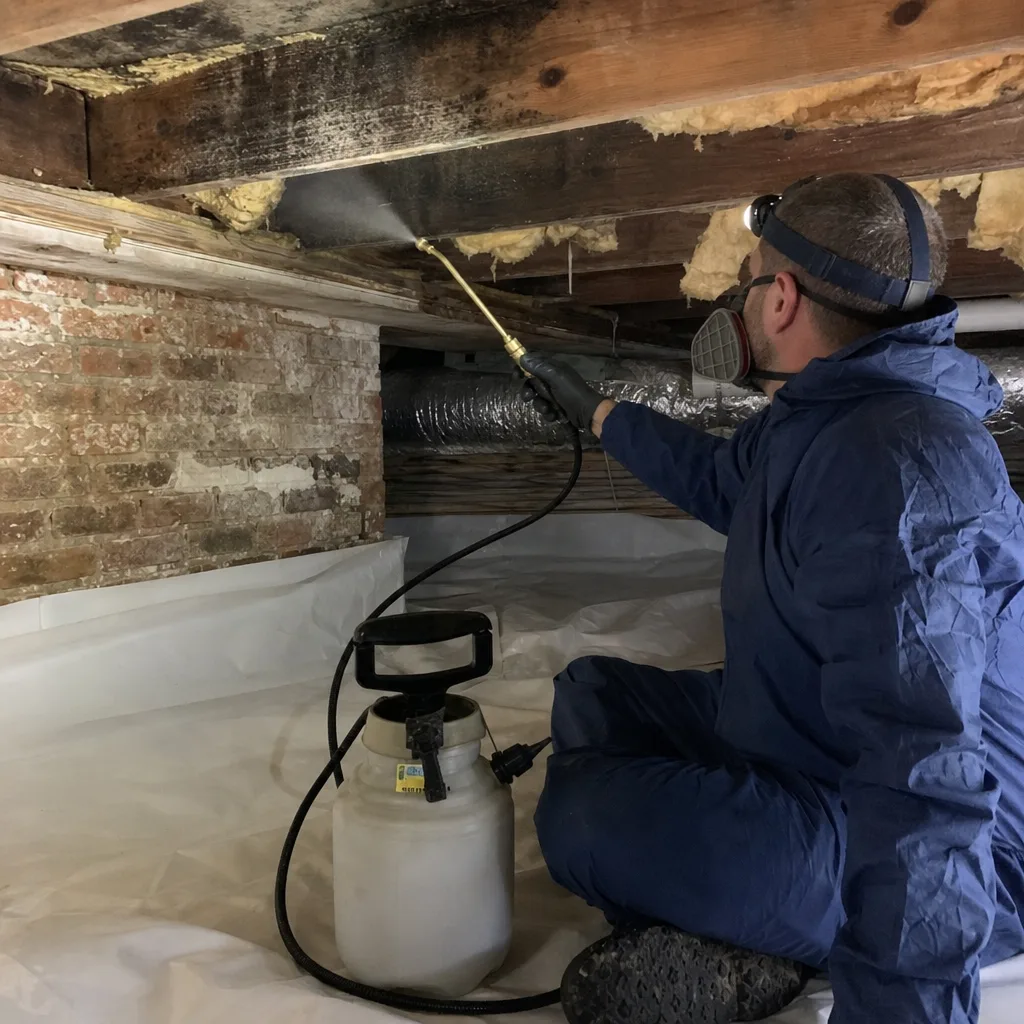
Category 3 water requires antimicrobial treatment and controlled disposal of contaminated materials. We clean salvageable contents, sanitize affected framing, and run HEPA air scrubbers where mold spores have had any window to grow.
Specialty Treatment for Storm Damage
On the upper Palisade blocks, this means addressing lateral bedrock seepage with cliff-face drainage curtain solutions, not just perimeter interior drains. On pre-war brick buildings, it means repairing parapet failures and mortar joints so wind-driven rain can’t re-enter the same way.
Repairs & Restoration
Once the dry standard is met, the same crew rebuilds: drywall, flooring, trim, roof sections, drain lines. We leave the property whole, with the moisture log and the 90-Day Done Right Promise in your hands.
Need Emergency Storm & Disaster Restoration in Cliffside Park Now?
Crews minutes away, answering live 24 hours a day. The sooner we start, the less it costs.
Working With Your Insurance Company
Storm and disaster claims in Cliffside Park usually involve a carrier, and we start documenting from the first hour. Photographs before any demolition, moisture readings taken with calibrated meters, and a line-item scope that matches industry-standard estimating software. When you call Floodline Restoration, you get direct adjuster coordination: we send the documentation, the drying logs, and the rebuild scope straight to your carrier, and we bill them directly. Curt Bowman built this company around a dispatch board, not a sales desk, and that means the paperwork side runs like the work side: steady, complete, and accounted for. You’ll know what your policy covers and what it doesn’t before we put a hammer to anything.
What We Provide Your Insurer
- Thorough documentation of the loss
- Photos of all damage, room by room
- Moisture readings and drying logs
- A detailed, line-item scope of work
- Direct coordination with your carrier
Built for Cliffside Park’s Loss Calendar
Cliffside Park’s storm damage follows a pattern you can set a calendar by. January and February deep freezes attack the borough’s 1920s cast-iron drain lines and copper supply pipes, and the freeze-thaw cycles chewing at the Palisades cliff face push water through deteriorating mortar joints every late winter. March into April, snowmelt and spring rain combine with the steep grade to saturate hillside foundations, and that’s when we see the lateral seepage failures most flatland towns never experience. June through August brings convective storms that dump an inch of rain in twenty minutes, overwhelming the tight urban street grid and flooding alley-load basements and ground-floor units. Late-summer hurricanes and autumn nor’easters tear at the low-slope roofs and parapets on the pre-war brick walk-ups that dominate this borough. We plan our crews and equipment staging around that calendar, because forty-plus years of watching water has taught us when Cliffside Park gets hit.
Storm & Disaster Restoration Across Cliffside Park’s Neighborhoods
Up on the ridge along Palisade Avenue, the traprock escarpment is close enough to the surface that lateral seepage into foundation walls is the signature failure mode. Our Storm & Disaster Restoration team has dried enough of these hillside rowhouses to know that standard perimeter drains won’t stop water that’s wicking sideways out of the bedrock. We bring cliff-face drainage curtain experience to these jobs, not just bigger dehumidifiers. Down along Anderson Avenue and the mid-slope blocks between Gorge Road and the river, the older attached rowhouses share party walls, so a storm that soaks one unit’s parapet sends water sideways into the adjoining home. We moisture-map both sides of the wall, not just the one that called us. In the newer high-rise condominiums built on the ridge near the top of the borough, storm claims become multi-unit coordination jobs: HOA boards, property managers, and carriers all in the loop, with containment and drying schedules that respect occupied units above and below. Zip codes 07010 stretch from the riverward low blocks to the bluff, and we know the parking and access constraints on every block between.
Specialized Storm & Disaster Restoration Services We Offer in Cliffside Park
Flood Damage Restoration
Stormwater flooding in Cliffside Park usually carries the Category 3 designation, because the steep streets deliver street runoff, parking-lot residue, and whatever the storm scoured downhill into ground-floor units and alley-load basements. We extract, treat, dry, and rebuild, with antimicrobial application on every surface the water touched and controlled disposal of anything that can’t be salvaged. On hillside foundations, we check for the lateral seepage that keeps showing up after the standing water is gone.
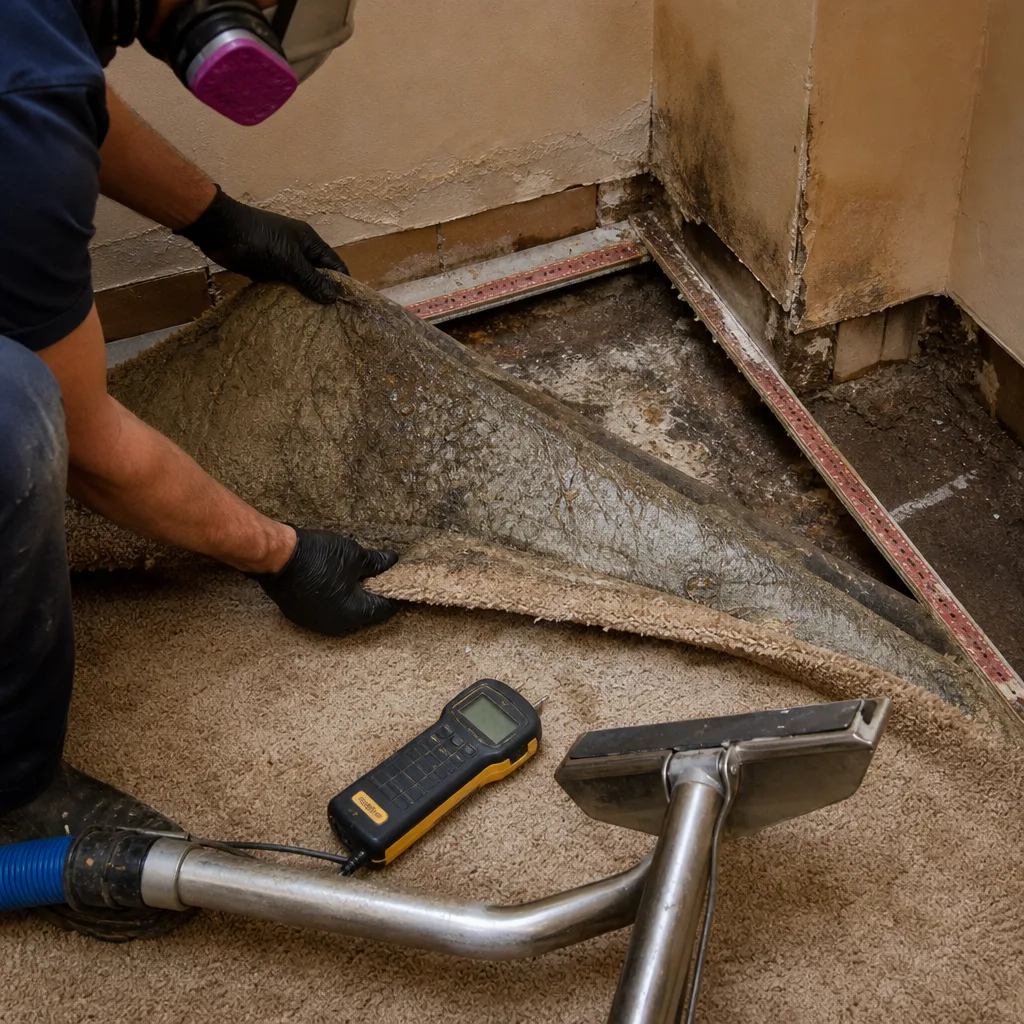
Emergency Board-Up
A storm opens a window, a door, or a roof section, and the building is exposed to wind-driven rain, theft, and animal entry within an hour. Our board-up crews work the tight alley-load access behind Cliffside Park’s rowhouses without blocking the neighbor’s path or leaving the building looking abandoned. We use proper anchoring and clean cuts, not just plywood slapped over a frame, and we document every opening for your insurer.
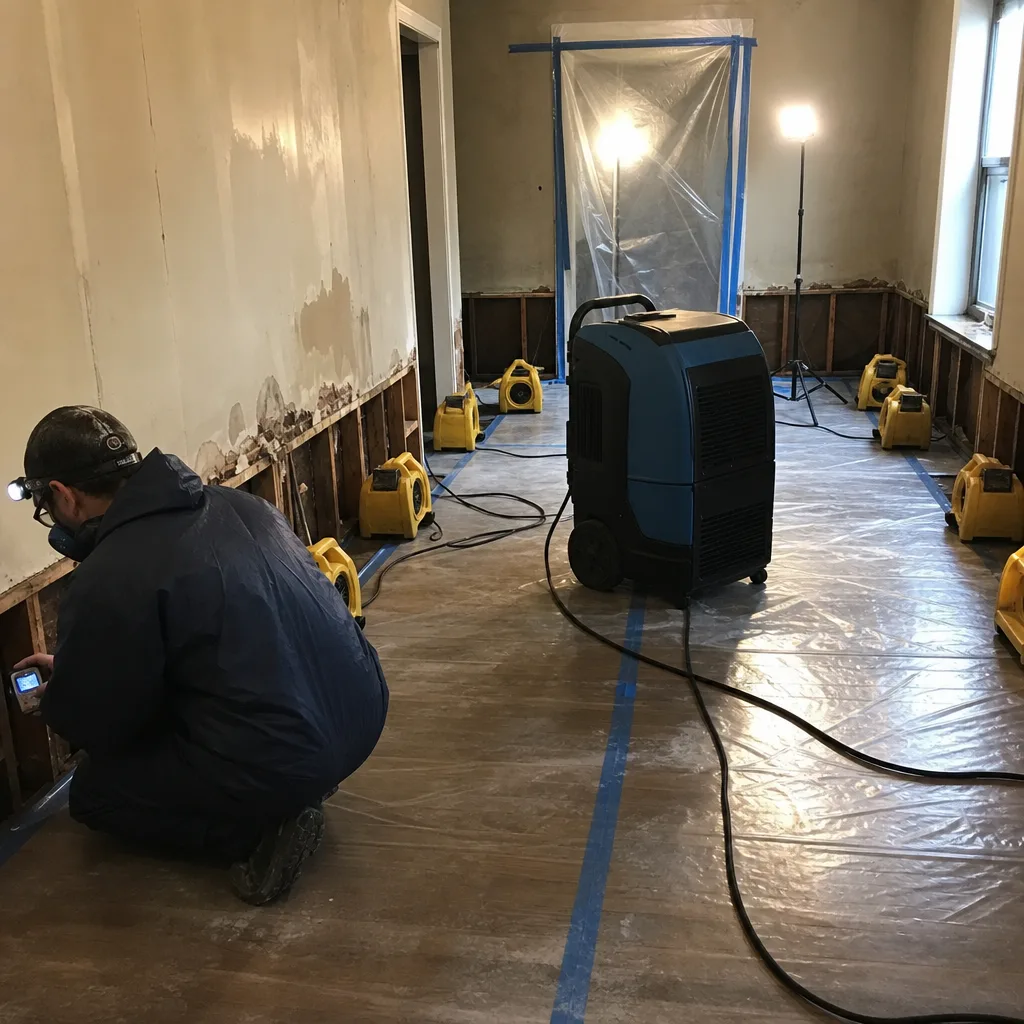
Roof Tarping
Pre-war brick walk-ups with low-slope roofs and aging parapets are the most vulnerable structures in this borough when a nor’easter hits. Contractors unfamiliar with Cliffside Park skip roof tarping after storm damage, and the next rain pours through open mortar joints straight into upper-floor units. We tarp the day we’re called, properly anchored and sealed, because the difference between a tarp that holds a week and one that lasts a night is in how the edges are secured against the wind coming off the Hudson.
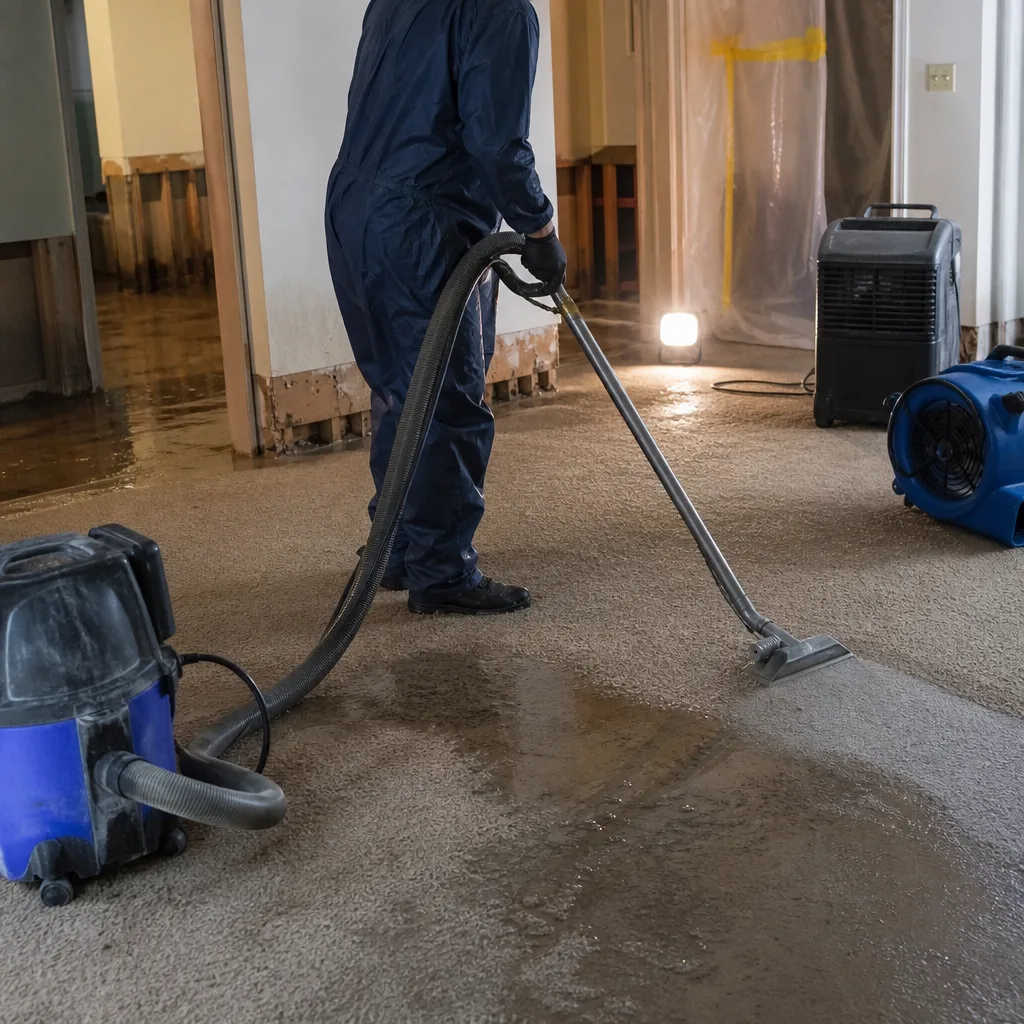
Storm Damage Cleanup
Debris from downed tree limbs, wind-borne roofing material, and the mud and silt pushed into garages and entryways is the first thing a homeowner sees after a storm. We clear it, document it, and separate what’s salvageable from what’s contaminated. On steep streets, we’re careful about where debris goes; pushing it downhill into a neighbor’s stairwell is not how we work. Storm damage cleanup in Cliffside Park runs about $800-$2,500 depending on the extent of the debris and the number of rooms affected.
Debris Removal
After a major storm event, Cliffside Park’s narrow streets and tight building lines mean debris can’t sit in place while you wait for the municipality to handle it. We remove storm debris from yards, alleys, rooftops, and interiors, with haul-away included in the scope. This is a service where the $50 Off Any Repair Over $250 offer applies, and we’ll tell you upfront whether the debris is covered under your storm claim or billed separately.
What happens when you call
- 1
A real person answersNo phone trees - you reach a local pro.
- 2
You get an upfront price rangeHonest numbers before anyone is dispatched.
- 3
A background-checked tech heads outLicensed & insured, dispatched right away.
- 4
You approve before work beginsNothing starts until you say go.
Storm & Disaster Restoration Costs in Cliffside Park, NJ
Storm restoration in Cliffside Park runs a real range, and it’s smarter to show you numbers than to hide behind a free-inspection pitch. A typical storm damage cleanup with extraction in a single rowhouse basement runs $1,800-$4,500, depending on how much water moved through the space and whether the party walls are involved. Emergency board-up on a walk-up usually lands in the $600-$1,400 range, including materials and securing multiple openings. Roof tarping after a nor’easter typically costs $900-$2,200, with the higher end on steep or high-access rooflines along the ridge. Full flood restoration with structural drying, antimicrobial treatment, and rebuild work in a pre-war brick building commonly runs $6,000-$18,000, which is why we push you to file the claim early. The three standing offers always apply: $50 Off Any Repair Over $250, the $89 Seasonal Tune-Up, and a 5% Senior & Veteran Discount. Call (917) 924-4221 and we’ll give you a firm scope after a free inspection, not a hand-wave.
We Also Serve Cities Near Cliffside Park
Our crews respond to storm and disaster calls throughout the surrounding Bergen County area, including Fairview, Edgewater, Ridgefield, and Palisades Park. Each town has its own building stock and flood patterns, and we’ve worked enough of each to know what to look for on arrival. If you’re in one of these nearby communities, call the same live number and ask for the Cliffside Park response team.
Serving Cliffside Park, NJ - Our Local Coverage Area
We’re based in the Cliffside Park area and know this community well. Use the map below to see our service coverage - if you’re nearby, we can almost certainly help.
Cliffside Park Storm & Disaster Restoration Questions, Answered
How does storm restoration on the Palisades ridge differ from flood work in nearby flat towns like North Bergen?
On the Palisades ridge, water often enters through lateral seepage out of the traprock bedrock into foundation walls, while flatland towns deal with groundwater rising from below. That means our Cliffside Park protocols include cliff-face drainage assessment and party-wall moisture mapping, not just perimeter interior drains. The geology changes the fix.
What should Cliffside Park owners in pre-war brick walk-ups expect after a nor’easter soaks parapet walls?
Expect water to travel sideways through the parapet, down through open mortar joints, and into upper-floor units and the shared walls below. You’ll need roof tarping, moisture mapping across both sides of affected party walls, and often masonry repair on the parapet itself before repainting. We handle all of it, including the tarping that stops the bleeding on day one.
Can you handle storm restoration in Cliffside Park’s alley-load rowhouses with no curb parking?
Yes. We stage equipment in alley-load lanes and work within tight clearances without blocking neighbors’ access. Our crews have dried hundreds of Cliffside Park rowhouses, and we know how to thread hoses and run equipment through basements with low headroom and narrow stairs.
What category water typically floods Cliffside Park basements during heavy summer storms?
Category 3 water is the norm during heavy summer convective storms, because the steep Palisades grade pushes street runoff, parking-lot grit, and surface contaminants downhill into ground-floor and basement spaces within minutes. That triggers antimicrobial treatment and controlled disposal, not just drying.
Why does mold appear so fast in Cliffside Park hillside homes after water intrusion?
The combination of dense pre-war construction, shared party walls, and persistent moisture migrating through traprock-adjacent foundations creates warm, humid pockets that feed mold within 48 to 72 hours. Hillside homes here routinely hide water in walls flatland homes don’t, which is why we moisture-map before trusting any visual read. Call (917) 924-4221 if you suspect mold is already moving.
How long does storm drying and remediation take in a Cliffside Park rowhouse?
Most structural drying runs three to five days with Dri-Eax and Phoenix equipment on a logged schedule. When lateral seepage is involved or party walls are saturated, expect five to seven days, because we hold the equipment until readings meet the dry standard, not the calendar. We’ll give you the daily log.
Can we stay in our home during storm restoration?
Usually yes, if the affected area can be sealed off and the electrical and water systems are safe. In Category 3 floods or mold-affected spaces with containment and air scrubbers running, we’ll advise you on whether to stay or relocate temporarily. The answer is based on readings and air quality, not convenience.
What should Cliffside Park homeowners do in the first 30 minutes after storm water enters?
Shut off electricity to affected areas if you can reach the panel safely, move valuables and papers to higher ground, and call us. Call (917) 924-4221 before you start moving soaked contents yourself; Category 3 water carries contaminants, and improper handling spreads the problem. The sooner we start extraction, the less material we have to cut out later.
Written by Curt Bowman, Owner at Floodline Restoration Co. of Manhattan, serving Cliffside Park with storm and disaster restoration since our founding in 2010.