
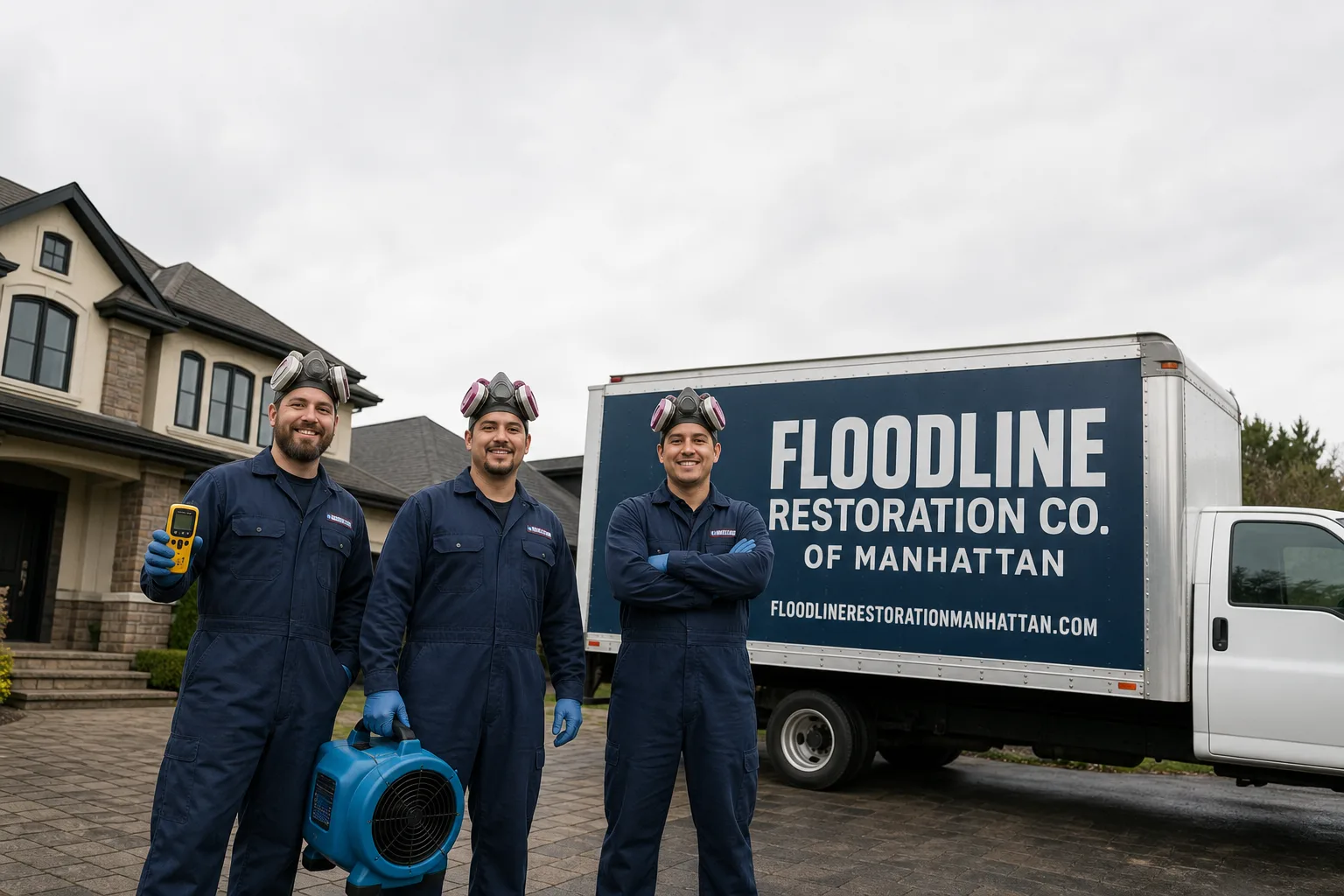
Free visual inspection and a written scope of work before any mitigation begins - photos, moisture readings, and drying logs go in your claim file
The scope we write is the scope we bill. Anything new gets shown to you, in writing, before we touch it.






 Before
 After
After Before
 After
After Before
 After
After24/7 Emergency Storm & Disaster Restoration in College Point
Storm surge, tidal backflow, and nor’easter damage in College Point demand a response that starts the moment water enters a basement or ground floor. Our crews answer live around the clock at (917) 924-4221, and we dispatch into College Point from our New York City office within 45 minutes of your call. The first hour determines whether original plaster walls and old-growth framing can be saved or whether mold gains a permanent foothold. We arrive prepared for the peninsula’s specific threat: saltwater intrusion from Flushing Bay, not the freshwater pipe breaks other neighborhoods see. A free visual inspection gives you a written scope before any work begins.
Understanding Storm & Disaster Restoration Severity in College Point Properties
College Point’s housing stock, built largely between 1930 and 1965, reacts to floodwater differently than modern construction. The full and semi-finished basements common along 23rd Avenue, 130th Street, and throughout the residential core sit behind original fieldstone or early poured-concrete foundations without modern waterproof membranes. When Flushing Bay surges, Category 3 water, meaning water carrying sewage, marine contaminants, and debris, pushes into these cavities and wicks upward through original plaster at a rate that surprises homeowners: three feet of wicking in the first 48 hours is not unusual. Moisture mapping with thermal imaging and penetrating sensors reveals that saltwater wicking travels faster through old-growth wood than through modern engineered studs. That means a nor’easter that leaves an inch of standing water can require cutting a two-foot flood channel at the base of walls to release trapped Category 3 water before structural drying even begins. Skipping that step seals in salt and moisture, and mold follows within days.
Why College Point Property Owners Choose Floodline Restoration Co. of Manhattan
- 45-minute response commitment: When storm surge hits College Point’s low-lying streets, the clock is the enemy. Our dispatchers route the nearest available crew to your address immediately, and we give you a live arrival window, not a recording.
- 24/7 live answer, every time: A person picks up at 2 a.m. during a nor’easter, not a voicemail tree. You explain once, and a certified crew is moving toward College Point.
- IICRC-certified restoration techs: Our crews hold WRT (Water Restoration Technician) and ASD (Applied Structural Drying) certifications, trained to RIA and IFA standards, with saltwater-specific protocol experience.
- Free visual inspection: Before any work starts, you get a written scope with clear pricing. No door-to-door pressure, no surprise line items later.
- Direct insurance billing: We document the loss from the first hour, communicate with your adjuster directly, and bill the carrier so you never play messenger. Floodline has handled FEMA flood-loss documentation and post-Sandy Build It Back compliance files for College Point homeowners.
- One crew from extraction to rebuild: The same team that runs extraction and drying also handles the reconstruction. No mid-job handoff to an unknown subcontractor.
Our Storm & Disaster Restoration Process
Inspection & Assessment
We arrive with thermal imaging cameras and penetrating moisture meters, mapping the full wicking line across original plaster, old-growth framing, and subfloor layers. The inspection identifies Category 3 contamination zones, hidden cavities behind pre-2015 Build It Back renovations, and structural materials that can be saved versus those that require removal.
Extraction & Stabilization
Submersible and truck-mounted extraction units remove standing water from street level and basement simultaneously. We cut a flood channel at the base of affected walls to release trapped Category 3 water from wall cavities, then pack out saturated baseboards, lower drywall, and any compromised insulation.
Drying & Dehumidification
We set Dri-Eaz and Phoenix air movers with low-grain refrigerant dehumidifiers sized to the cubic footage of each affected space. Daily hygrometer readings track moisture content in framing and plaster. Saltwater wicking behaves differently than freshwater, so our drying logs run longer on pre-1965 materials than they would on modern builds.
Cleaning & Sanitization
After structural drying hits the dry standard, we apply antimicrobial treatments to open wall cavities and flooring, targeting the salt residue and marine contaminants that freshwater protocols miss. HEPA air scrubbers run throughout cleaning to capture spores released during material removal.
Legacy Mold & Build It Back Inspection
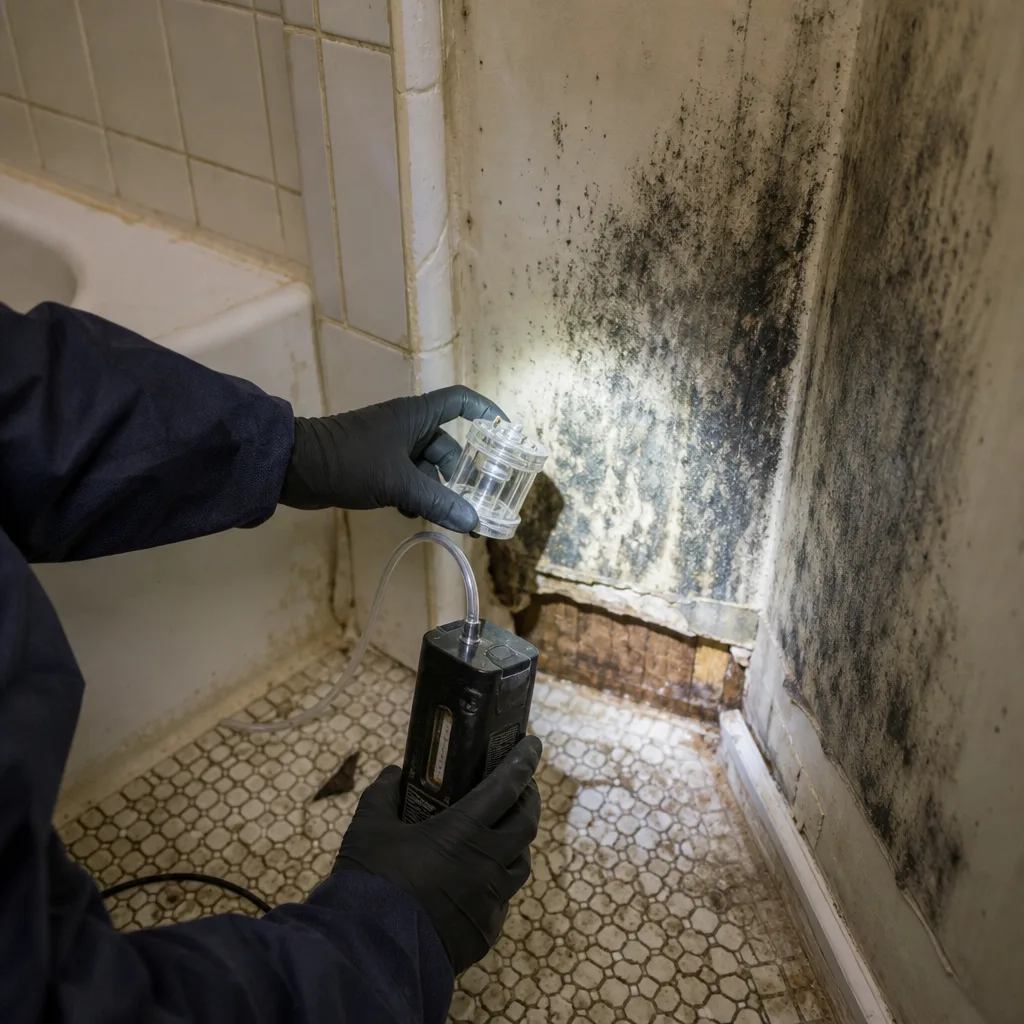
For any ground floor or basement touched by a pre-2015 renovation, we treat the space as potentially carrying hidden mycotoxin colonies behind finished walls. We open a small inspection port in any Build It Back wall assembly, scope the cavity with a boroscope, and document what we find before covering anything back up.
Repairs & Restoration
Once the moisture log confirms pre-loss conditions, the same crew rebuilds. We restore old-growth framing where possible, replace insulation and drywall, and address the waterproofing gaps that let water in the first time. Every job ends with the 90-Day Done Right Promise in your hands, in writing.
Need Emergency Storm & Disaster Restoration in College Point Now?
Crews minutes away, answering live 24 hours a day. The sooner we start, the less it costs.
Working With Your Insurance Company
Flood insurance, whether through FEMA’s NFIP or a private carrier, requires documentation that holds up to scrutiny. We start that documentation the first hour we arrive: photos of the water line, the standing water depth, the materials affected, and the moisture readings before any equipment goes in. Every day, we log new readings and photos. When your adjuster calls, we speak to them directly, walk them through the loss, and provide the line-item scope and drying log they need to process your claim. College Point homeowners who went through Sandy-era claims know how slow this can get when documentation is thin. We build the file so you don’t have to chase it.
What We Provide Your Insurer
- Thorough documentation of the loss
- Photos of all damage, room by room
- Moisture readings and drying logs
- A detailed, line-item scope of work
- Direct coordination with your carrier
Built for College Point’s Loss Calendar
College Point’s loss calendar follows Flushing Bay, not the calendar most New Yorkers know. Nor’easter season from October through April is the main event: a moderate coastal storm can push tidal backflow over bulkheads and up through storm drains on 23rd Avenue, flooding streets and basements from multiple directions at once. Summer brings abrupt thunderstorm downpours that overwhelm the peninsula’s storm sewer capacity, sending water up through floor drains in older basements. January deep freezes hit a different failure point: original cast-iron supply lines and poorly insulated rim joists burst, and the damage inside a 1940s Cape Cod looks nothing like a modern build. Spring thaw brings groundwater intrusion through original fieldstone foundations that have shifted over seven decades. We stock for all of it, with extraction units, generators, and board-up materials staged for College Point’s specific roads and building types.
Storm & Disaster Restoration Across College Point’s Neighborhoods
College Point is not one uniform flood zone. The blocks east of 130th Street down toward the bay, around Hermon A. MacNeil Park, catch the worst of the surge: basements there flood from street level and from groundwater simultaneously during a nor’easter. The residential core between College Point Boulevard and 23rd Avenue, dense with 1930s brick semi-detached homes, deals more with storm-sewer backflow through cast-iron floor drains, a slower flood but one that saturates original wood framing just as thoroughly. North of 14th Avenue, where the housing transitions to 1950s and 1960s colonials, wind-driven rain and roof damage push water down through exterior walls rather than up from the ground. When we respond to College Point, the routing and the initial stabilization plan depend on which side of the peninsula the call comes from. A bay-side surge job needs simultaneous street-level extraction. A Boulevard-adjacent backflow job needs drain-plugging and cavity drying. Different blocks, different first hour, different equipment loadout.
Specialized Storm & Disaster Restoration Services We Offer in College Point
Flood Damage Restoration
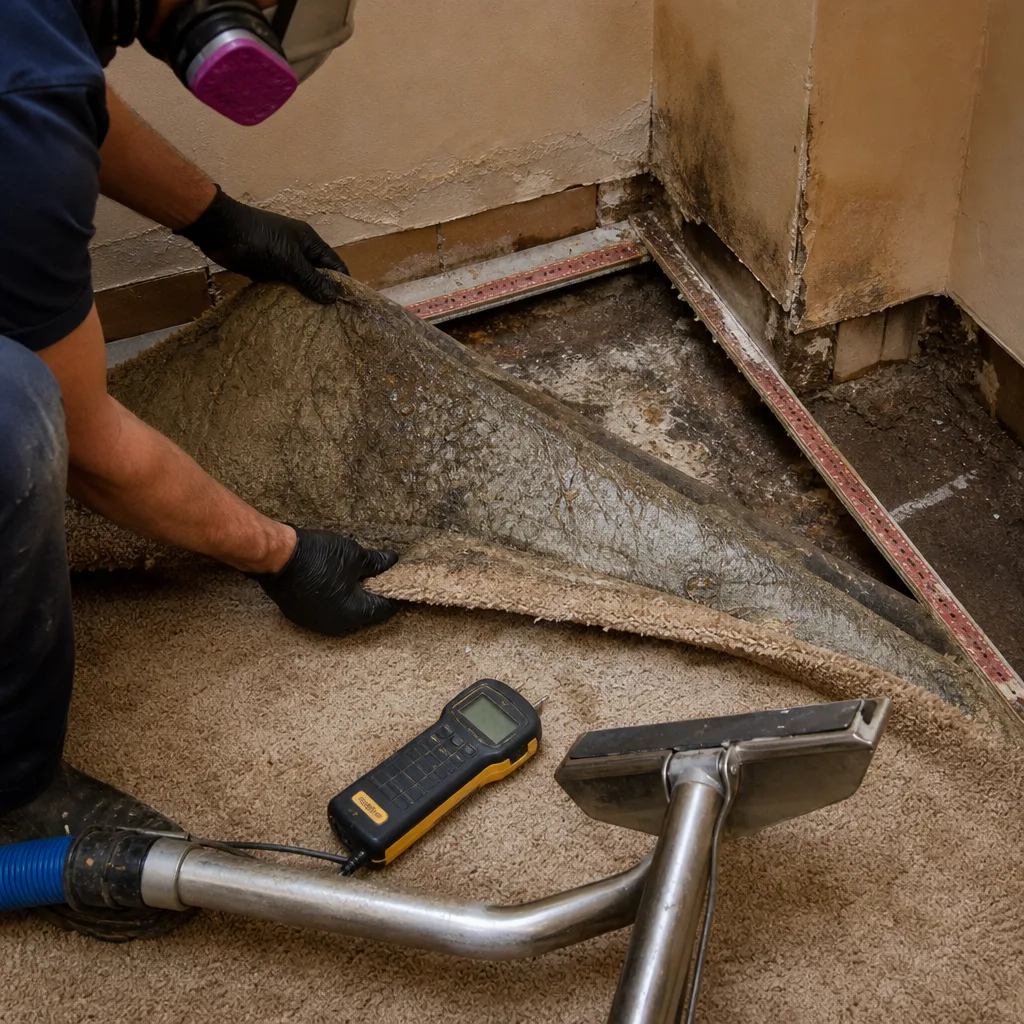
Flood damage in College Point is saltwater damage more often than not, and that changes the protocol. Category 3 saltwater from Flushing Bay carries marine organisms, sewage, and chloride that accelerates corrosion on cast-iron and old-growth framing. Our flood restoration includes full moisture mapping, targeted flood cuts, cavity drying, and antimicrobial treatment designed for saltwater intrusion, not just standing freshwater. We document every step for your FEMA or private flood claim.
Storm Damage Cleanup
After a nor’easter or summer downpour, College Point basements in 1930s and 1940s homes collect what the bay pushed in: mud, debris, and contaminated standing water. We handle pump-out, debris removal, and full sanitization. The goal is to get the space back to a dry, safe condition fast enough that hidden mold never gets a chance to start behind original plaster.
Emergency Board-Up
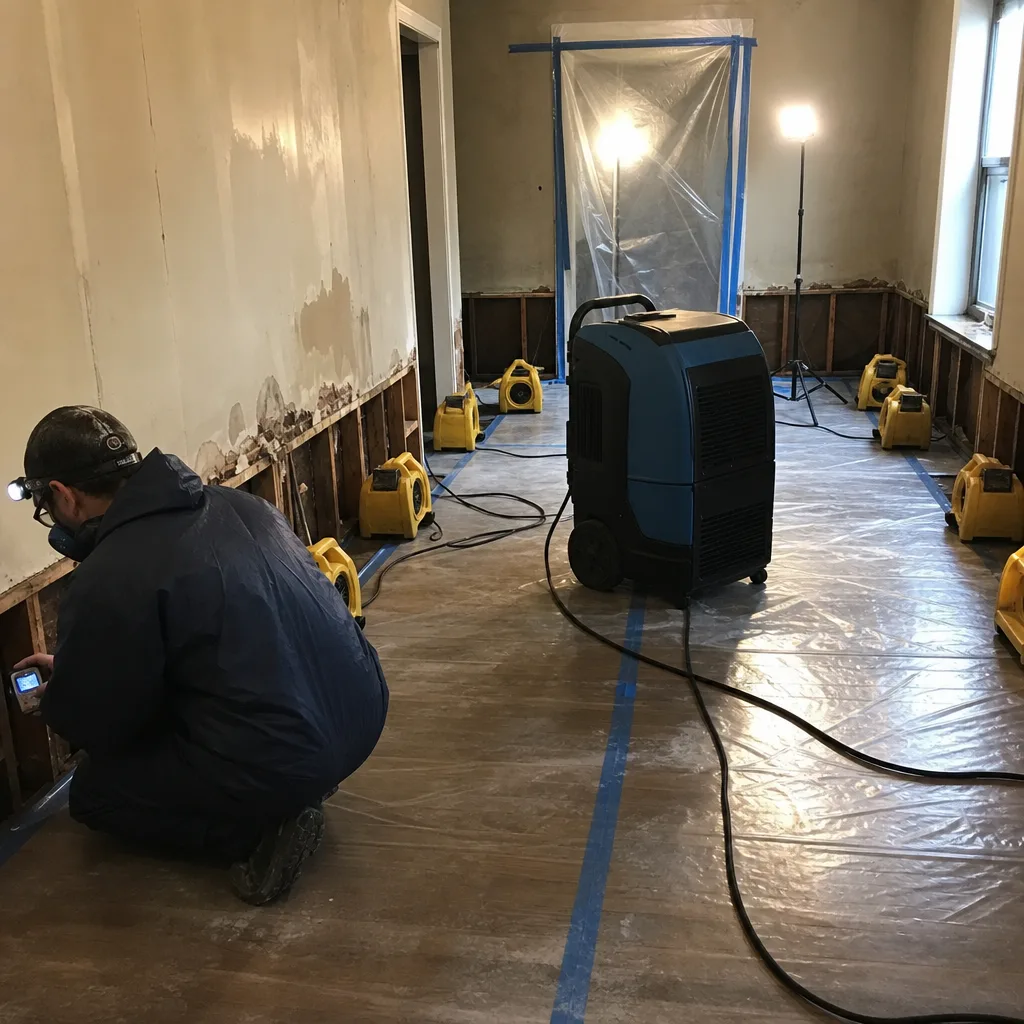
Bay-side wind events put pressure on older single-pane windows, original doors, and porch enclosures around College Point. We board up broken openings with plywood cut to fit the original frames, secured against follow-up wind from a second band of the same storm. Board-up is not a temporary patch job; it keeps rain and trespass out until permanent repairs are scheduled and scoped.
Roof Tarping
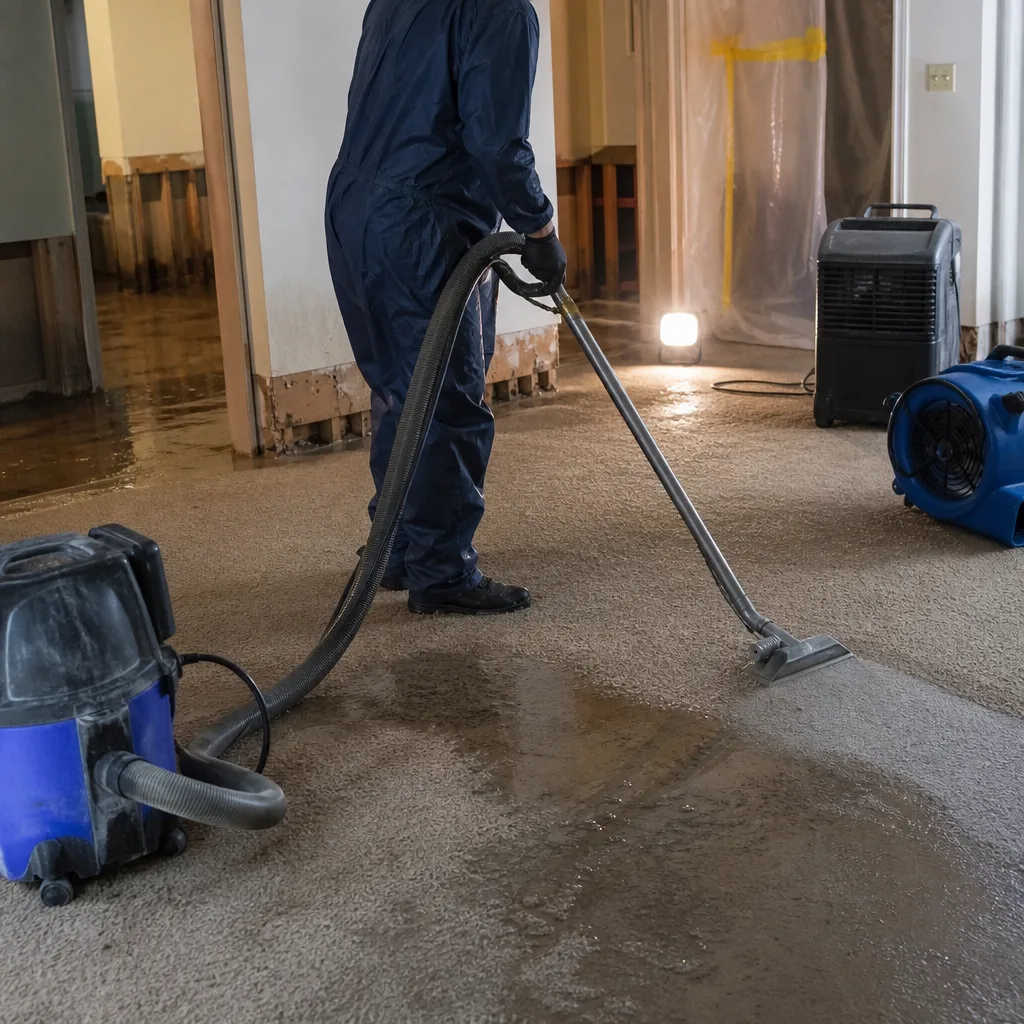
Wind-driven rain off Flushing Bay finds every weak seam in a 1940s or 1950s roof. We tarp damaged roof sections within the same visit, using weight-secured and nailed-down coverings sized to College Point’s roof pitches, mostly shallow-slope Cape Cod and colonial gables. A properly secured tarp holds through the remainder of the storm cycle while your claim and repair scope move forward.
Debris Removal and Wind Damage Repair follow the same principle: same crew, same visit, same written scope. University-grade equipment and a moisture log from start to finish, no matter the size of the loss.
What happens when you call
- 1
A real person answersNo phone trees - you reach a local pro.
- 2
You get an upfront price rangeHonest numbers before anyone is dispatched.
- 3
A background-checked tech heads outLicensed & insured, dispatched right away.
- 4
You approve before work beginsNothing starts until you say go.
Storm & Disaster Restoration Costs in College Point, NY
Storm restoration pricing in College Point runs higher than inland Queens because of what the bay delivers. Saltwater Category 3 cleanup means antimicrobial treatment, longer drying cycles, and more material replacement than a freshwater pipe break would require. Here are honest ranges for College Point’s market:
- Flood extraction and initial mitigation: $2,800 to $6,500 depending on basement size and water depth
- Structural drying (7 to 14 days for pre-1965 construction): $1,800 to $4,200, included in the mitigation scope when we handle both
- Flood cuts and drywall/plaster removal: $900 to $2,800 depending on linear footage
- Emergency board-up: $350 to $900 depending on opening count
- Roof tarping: $400 to $1,200 depending on roof pitch and tarp size
- Debris removal: $600 to $1,400 for typical post-surge residential lots
- Full basement rebuild after Category 3 flood: $14,000 to $38,000 depending on finish level and structural repairs
For a college-point flood loss, your claim should cover these costs if documentation is tight. A free on-site inspection gives you a firm line-item scope in writing, not a vague estimate that changes after the crew leaves. We bill your carrier directly. Senior and veteran homeowners receive 5% off always, and any repair over $250 takes $50 off. The first step is the call: (917) 924-4221.
We Also Serve Cities Near College Point
Our crews cover College Point and the surrounding communities: Flushing, Whitestone, East Elmhurst, and Corona. Each area has its own flood profile. We bring the same College Point playbook, saltwater-aware, older-stock, Build It Back-conscious, wherever the bay reaches.
Serving College Point, NY - Our Local Coverage Area
We’re based in the College Point area and know this community well. Use the map below to see our service coverage - if you’re nearby, we can almost certainly help.
College Point Storm & Disaster Restoration Questions, Answered
Why does College Point require separate moisture mapping before any flood cut in a 1930s basement?
A 1930s College Point basement has original plaster and old-growth wood that wick water differently than modern materials, so you cannot assume the wet line stops where the visible stain ends. We run separate moisture mapping with penetrating meters and thermal imaging to establish the true wicking line before any cut, because saltwater travels further through original framing than through modern gypsum. Cutting on the visible line alone leaves trapped saltwater in the wall, and mold develops behind the plaster within 48 hours.
How do we handle pre-2015 Build It Back renovations when a storm floods a ground floor?
We treat any pre-2015 Build It Back renovation as potentially carrying hidden mold behind finished walls, because that program often performed structural repairs without full cavity drying or mold abatement. Our techs open a small inspection port in the wall assembly and scope the cavity before any new work begins. If legacy mold is present, it gets documented, remediated, and included in the insurance scope so you are not paying for a pre-existing condition out of pocket.
What changes in drying protocol when floodwater is saltwater from Flushing Bay instead of a freshwater interior leak?
Saltwater leaves chloride residue in wood and masonry, which pulls moisture out of the air and slows the drying process significantly. We extend drying timelines, use low-grain dehumidifiers sized for the extra load, and apply antimicrobial treatments designed for salt-contaminated materials. Freshwater protocol dries in days; saltwater on the original framing in a 1940s basement often needs 10 to 14 days to hit the dry standard.
Why can’t we just patch and repaint a 1950s brick semi-detached basement after a nor’easter surge?
A brick semi-detached from that era has a fieldstone or early poured-concrete foundation without modern waterproofing, and once Category 3 water gets inside, the wall cavities saturate behind the finish surface. Patching and repainting seals that contaminated water inside, and mold begins behind the paint within a week. The repair has to start with extraction, a flood cut at the base, cavity drying, and antimicrobial treatment. Then you rebuild over a dry, documented substrate.
Do we need different emergency board-up or tarping after a bay-side storm versus a standard wind event?
Yes. A bay-side nor’easter in College Point often comes in multiple bands, so board-up and tarping have to hold against follow-up wind and rain from the same system. We use fastener patterns and plywood weights rated for sustained coastal gusts, not the light-duty approach used for a single thunderstorm. On 1930s and 1940s original window frames, we also protect the frames themselves, because a second band of wind against an improperly secured board pulls out old wood.
How fast can a crew actually reach my College Point home after I call?
Within 45 minutes from our New York City dispatch desk during a storm response, assuming streets are passable. When College Point streets flood from multiple directions, we stage at the nearest dry intersection and walk equipment in if needed. A live dispatcher stays on the phone with you until the crew arrives, so you always know exactly where things stand. Call (917) 924-4221, day or night.
Will insurance cover storm surge flood damage in College Point?
Standard homeowners insurance does not cover flood damage from tidal surge. It requires a separate NFIP or private flood policy. Many College Point homeowners enrolled in FEMA programs after Sandy and have active flood coverage. We document the loss the way FEMA and private carriers require, with photo evidence from the first hour and daily moisture logs. If your coverage exists, direct billing handles the claim for you.
What should I do in the first 30 minutes after water gets into my College Point basement?
Shut off power to the affected area at the breaker if you can reach it safely, and do not enter standing water that may be energized. Call (917) 924-4221 immediately. The faster extraction starts, the less wicking into original plaster and framing, and the smaller the final repair scope. Do not use a household wet vac on Category 3 water. Wait for the crew, and keep children and pets out of the affected space.
When storm surge puts Flushing Bay water into your College Point basement, you don’t need a sales pitch. You need a crew that knows the difference between a freshwater leak and saltwater intrusion, between a modern drywall cavity and a pre-2015 Build It Back wall, between a fast dry and a complete one. Call (917) 924-4221 for a free inspection and a written scope. We answer live, we show up, and we stand behind the work for 90 days, in writing.
Written by Curt Bowman, Owner at Floodline Restoration Co. of Manhattan, serving College Point and the surrounding Queens communities.