
Free visual inspection and a written scope of work before any mitigation begins - photos, moisture readings, and drying logs go in your claim file
The scope we write is the scope we bill. Anything new gets shown to you, in writing, before we touch it.






 Before
 After
After Before
 After
After Before
 After
After24/7 Emergency Storm & Disaster Restoration in Coney Island
Storm damage in Coney Island moves fast, and so do we. Water from a nor’easter or hurricane surge begins wicking into drywall, subfloor, and framing within minutes, and mold colonization starts within 24 to 48 hours in the unsealed crawl spaces common to this peninsula. Our live dispatchers answer calls around the clock, every day of the year, and a certified crew can be dispatched into Coney Island within 45 minutes. Call (917) 924-4221 now. The first hour after a storm decides whether you’re looking at extraction and drying or full reconstruction.
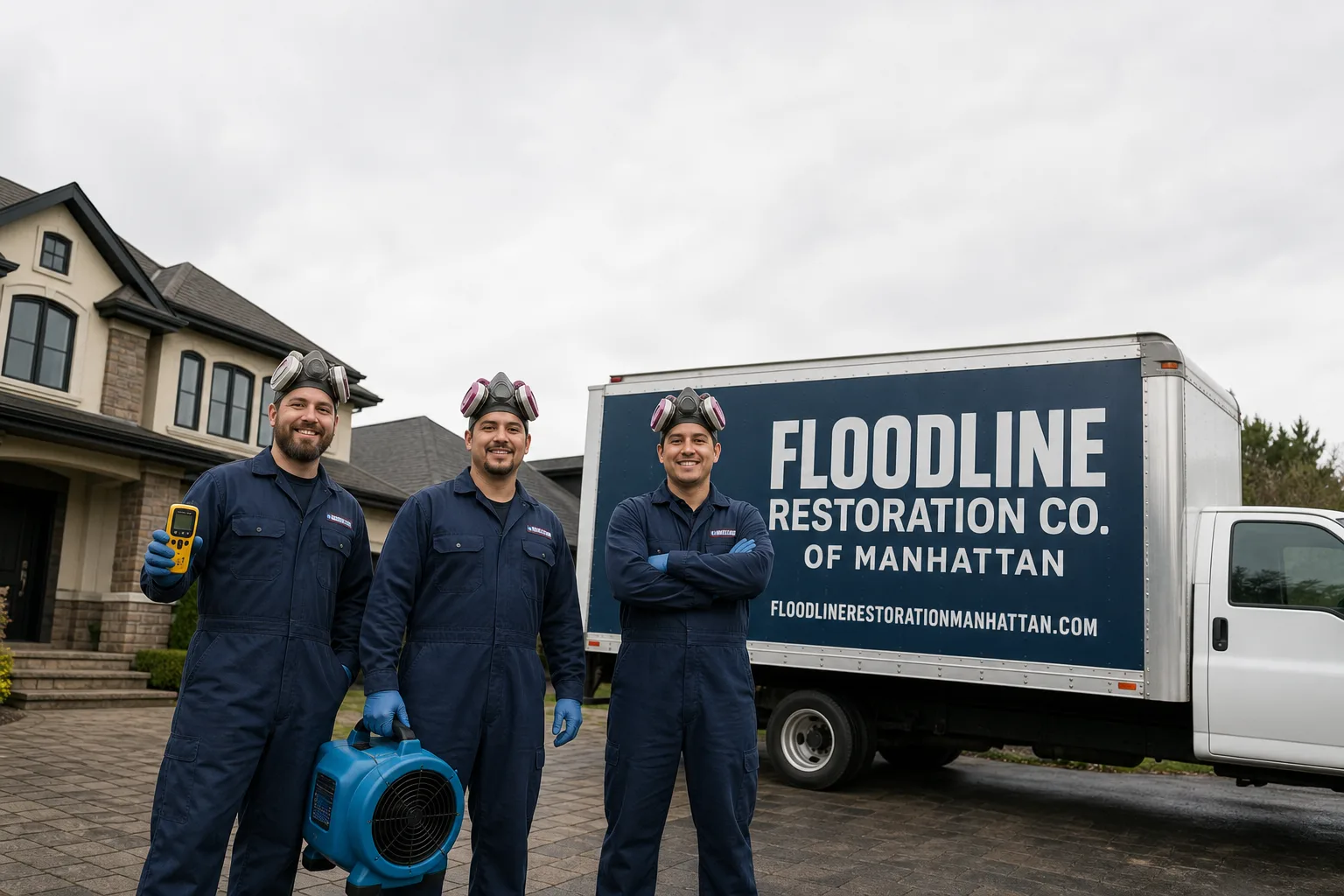
We’re Floodline Restoration Co. of Manhattan, and we’ve built our Storm & Disaster Restoration practice around a simple idea: the line the water left is where we start. When wind blows out a window off Mermaid Avenue or surge water climbs into a bungalow crawl space near the boardwalk, you need a crew that understands this neighborhood’s specific vulnerabilities, not a franchise template. Our team arrives with professional-grade Dri-Eaz and Phoenix equipment, performs a free visual inspection, and gets to work the same visit. We stand behind every job with our 90-Day Done Right Promise, in writing.
Understanding Storm & Disaster Restoration Severity in Coney Island Properties
Not all storm damage is equal, and Coney Island’s housing stock makes the distinction matter more than in inland Brooklyn. Water intrusion falls into three categories: Category 1 is clean water from a broken supply line; Category 2 carries significant contamination from sources like sump pump failures or washing machine overflows; Category 3, the most serious, is grossly contaminated water from storm surge, sewage backup, or rising floodwater. In a neighborhood where FEMA designates nearly the entire peninsula as AE or VE flood zones, Category 3 water is a regular reality after any serious coastal storm. That water carries salt, silt, bacteria, and whatever else Coney Island Creek or the Atlantic pushed in with it.
Here’s what we see in the field: the converted summer bungalows between Mermaid Avenue and the boardwalk, many from the 1920s and 30s, sit on unsealed crawl spaces with never-elevated utilities. When surge water gets under those structures, it doesn’t just wet the framing. It reactivates years of salt-air corrosion already weakening the joists and sills. We moisture-map every affected area with thermal imaging and hygrometers. We log daily readings until the dry standard is met. And we treat pre-existing salt corrosion as a compounding factor, not an afterthought. The NYCHA towers around Coney Island Houses and O’Dwyer Gardens present different challenges: mechanical rooms below grade, electrical rooms that took on water during Sandy, and vertical smoke migration through utility chases when wind-driven fires start.
Why Coney Island Property Owners Choose Floodline Restoration Co. of Manhattan
- 45-minute response commitment in the Coney Island area, with live dispatch coordinating crews by neighborhood, not zip code roulette.
- 24/7 live answer from a real person in our New York City office, never an automated tree. At 2 a.m., you get a dispatcher who knows this territory.
- IICRC-certified crews holding WRT, FSRT, and AMRT certifications, plus RIA and IFA training, so moisture mapping, structural drying, and antimicrobial treatment are done to code, not to guesswork.
- Free visual inspection before any work begins, with a written scope agreed to before we touch your property. No surprises on the bill.
- Direct insurance billing with photo documentation, line-item estimates, and daily drying logs sent to your adjuster, so you’re never the messenger.
- One team from extraction to reconstruction. The same background-checked, uniformed technicians who pull water on day one are the ones who rebuild your walls on day ten.
Our Storm & Disaster Restoration Process
Inspection & Assessment
We arrive, walk the property inside and out, and establish the boundaries of Category 2 or 3 water intrusion, smoke migration, or structural compromise. Thermal imaging and moisture meters map what’s wet, what’s merely damp, and what’s already salt-corroded. The assessment is documented in writing before any equipment comes off the truck.
Extraction & Stabilization
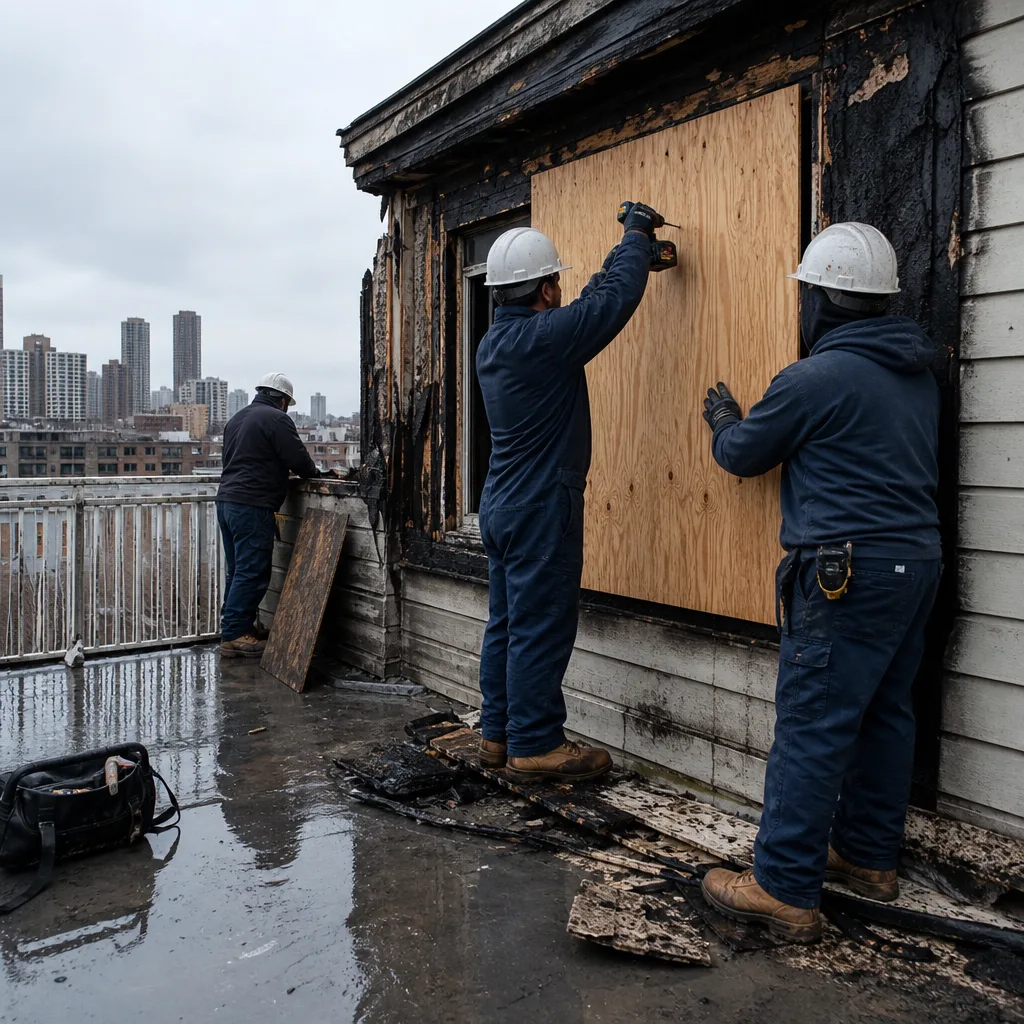
Standing water comes out first. Submersible pumps handle crawl spaces; truck-mounted and portable extraction units clear floors and walls. If windows blew out or the roof is compromised, we secure the structure with board-up and tarping immediately, because nothing else matters if the weather is still coming in.
Drying & Dehumidification
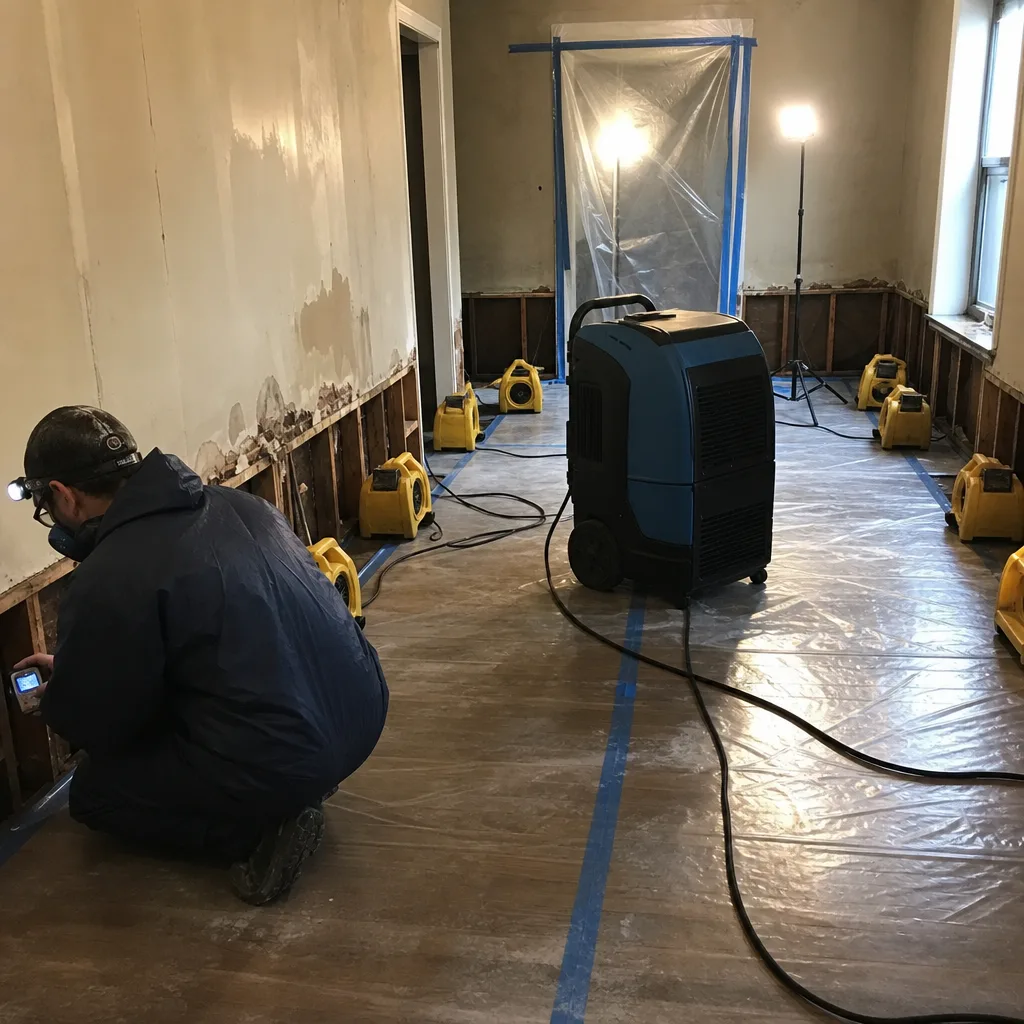
Professional-grade Dri-Eaz, Phoenix, and B-Air air movers and dehumidifiers go in, positioned by airflow science, not guesswork. We install monitoring probes and return daily for readings. The dry standard, usually reached in 3 to 5 days, is a specific moisture content number, not a feel test.
Cleaning & Sanitization
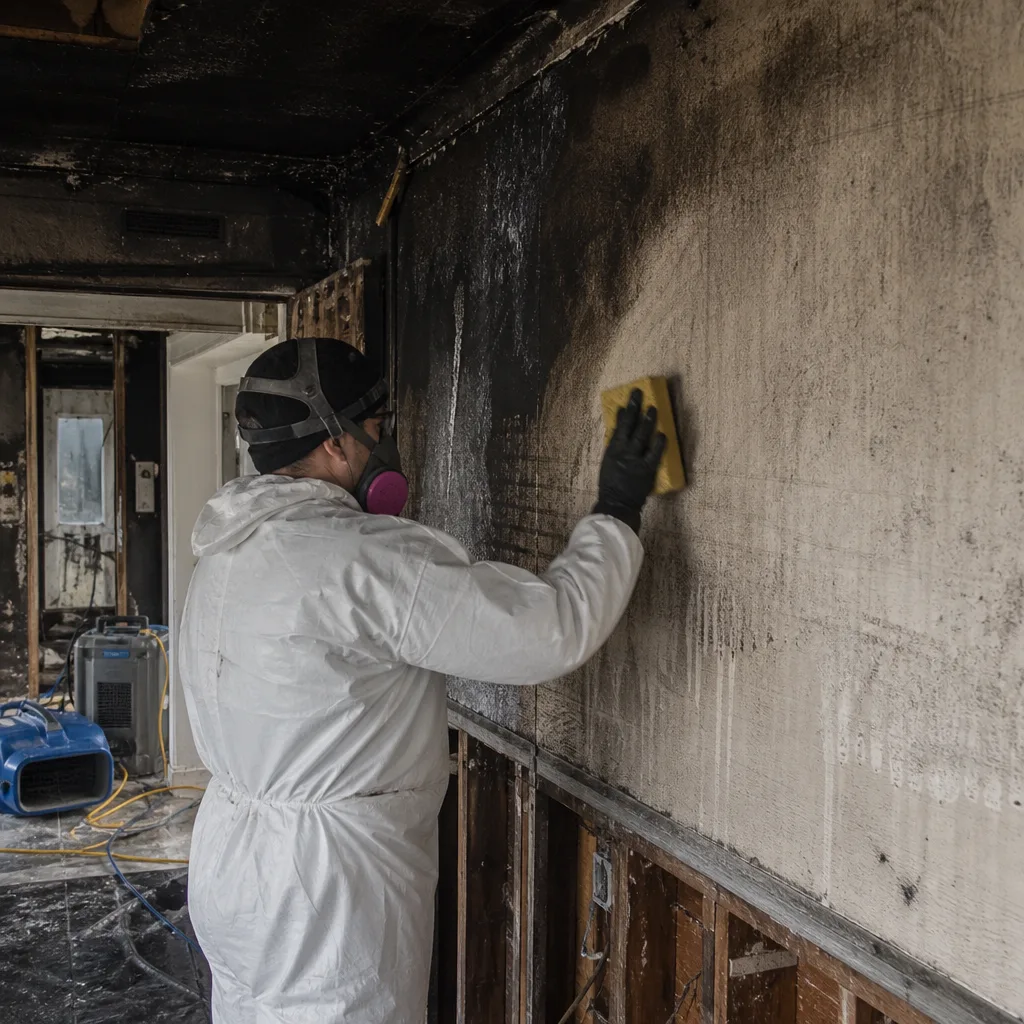
Floodwater brings pathogens, especially Category 3 water. We apply EPA-registered antimicrobials, HEPA-vacuum affected surfaces, and run air scrubbers where contamination spread. No area gets rebuilt until it’s been cleaned to restoration-industry standards.
Salt Corrosion & Mold Prevention
This is the Coney Island-specific step most contractors skip. We inspect fasteners, metal panels, electrical components, and framing for salt-air corrosion, treat it, document pre-loss conditions for insurance, and apply preventive coatings where the marine environment demands it.
Repairs & Restoration
The same crew that extracted and dried now rebuilds, which means no handoff, no inherited scope, and no contractor who doesn’t know what the studs looked like on day one. We handle drywall, flooring, framing, trim, and paint, and we finish with the 90-Day Done Right Promise in writing.
Need Emergency Storm & Disaster Restoration in Coney Island Now?
Crews minutes away, answering live 24 hours a day. The sooner we start, the less it costs.
Working With Your Insurance Company
Insurance claims after a Coney Island storm are complicated by one fact: this neighborhood sits inside FEMA high-risk flood zones, and standard homeowners policies do not cover rising water. Flood insurance, usually through NFIP, is a separate policy. What we do, from the first hour, is document everything in a way your carrier will accept: photos of all damage room by room, moisture readings from day one through the dry standard, a detailed line-item scope of work using industry-standard estimating software, and direct communication with your adjuster. We’ve been working with carriers in New York’s coastal zones for over a decade, and we know what they need to process a claim without stalling.
What We Provide Your Insurer
- Thorough documentation of the loss
- Photos of all damage, room by room
- Moisture readings and drying logs
- A detailed, line-item scope of work
- Direct coordination with your carrier
Built for Coney Island’s Loss Calendar
Coney Island’s storm damage season is not one season. It’s a cycle. January and February bring deep freezes that burst supply lines in the unheated bungalows, and when the thaw comes in March, all that water finds the lowest point: the crawl spaces under Mermaid Avenue homes. Nor’easters hit in March and early December, driving wind-driven rain at roof edges and through aging windows. Summer brings severe thunderstorms whose flash flooding overwhelms the neighborhood’s flat, low-lying drainage, sending Category 2 water into basements that NYCHA mechanical rooms also share. Hurricane season runs June through November, and this peninsula is the first land mass a storm surge meets coming off the Atlantic. Every season has its failure mode here. We plan crews around that calendar, which is why our dispatchers know what they’re sending someone into when a Coney Island address comes up at any time of year.
Storm & Disaster Restoration Across Coney Island’s Neighborhoods
The west end, near Seagate and the border with Gravesend Bay, sees the worst of nor’easter wind damage because there’s no buffer between buildings and open water. We respond to blown-out windows and lifted roof edges there more than anywhere else in the neighborhood. Along Mermaid Avenue, the commercial strip anchors the densest concentration of converted bungalows, and those wood-frame structures take wind-driven rain and surge water hard because their crawl spaces never got sealed and their utilities never got elevated. The boardwalk-facing blocks between Stillwell Avenue and West 8th Street carry the full force of Atlantic storm surge, which means Category 3 water intrusion on ground floors is routine after any named storm. Around the NYCHA developments, including Coney Island Houses and O’Dwyer Gardens, we handle below-grade mechanical rooms, electrical vaults, and vertical utility chases where smoke and water travel faster than in private homes. Each of these pockets demands a different approach, and our crews know the routes from Surf Avenue to Neptune Avenue cold.
Specialized Storm & Disaster Restoration Services We Offer in Coney Island
Storm Damage Cleanup
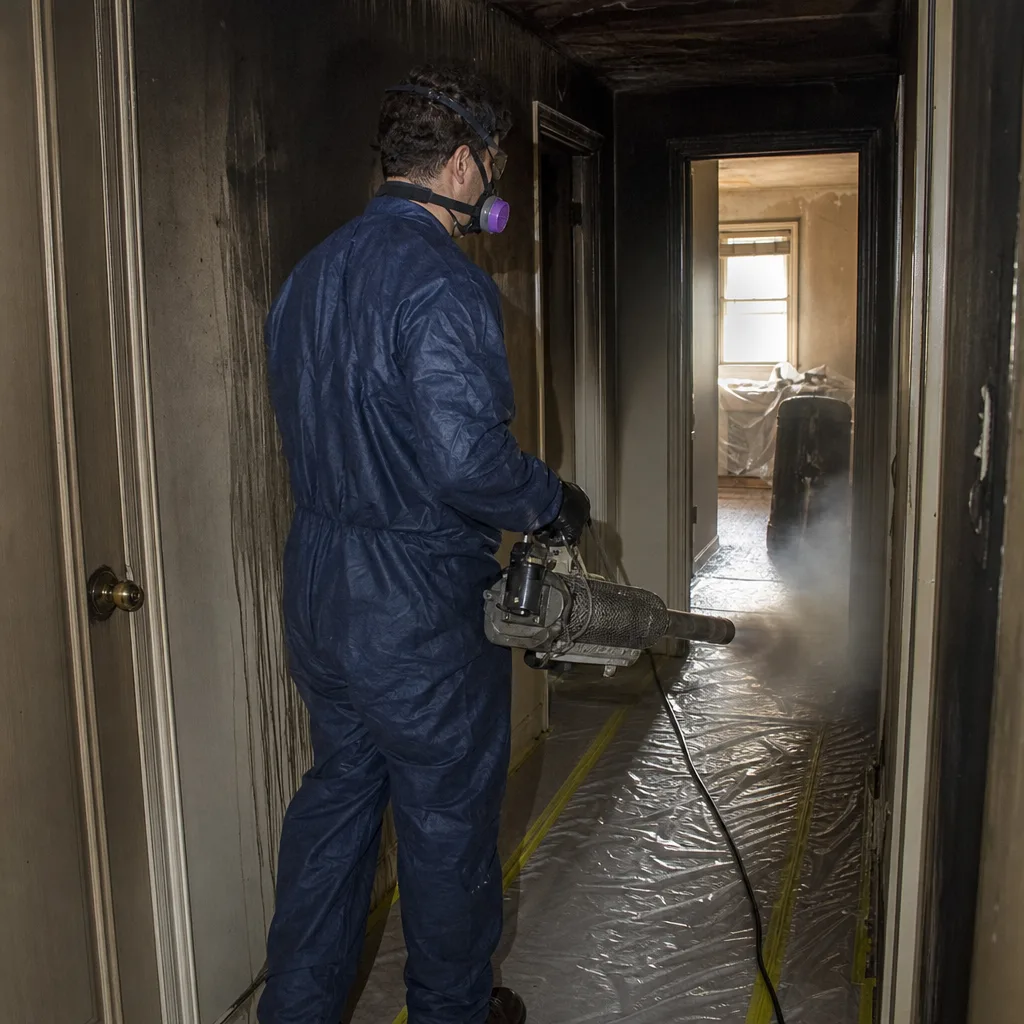
After wind, water, or debris hits a Coney Island property, the first job is containment and removal. We clear broken glass, soaked drywall, ruined insulation, and storm debris, then establish the dry-out perimeter. In bungalow crawl spaces, that means getting down to the joists before mold gets a foothold.
Flood Damage Restoration
Whether the water came from the Atlantic, Coney Island Creek, or a burst pipe during a deep freeze, we extract it, dry the structure, and treat the contamination. Our moisture mapping tells us what to remove and what can be saved, and our daily drying logs give your insurer a defensible record.
Emergency Board-Up
A blown-out window on the boardwalk side of a building is an open invitation to more water and unauthorized entry. We board up openings with plywood cut to the opening, installed to hold against the next gust, and photographed for your claim. Same-visit service, because the weather isn’t waiting.
Roof Tarping
Lifted shingles and punctured roof decks in Coney Island’s windward blocks and bungalow rows need a tarp before the next rain. We install heavy-duty poly tarps with battens sealed to the roofline, and we document the placement for your insurer. It’s temporary, but it buys the time to schedule a proper repair.
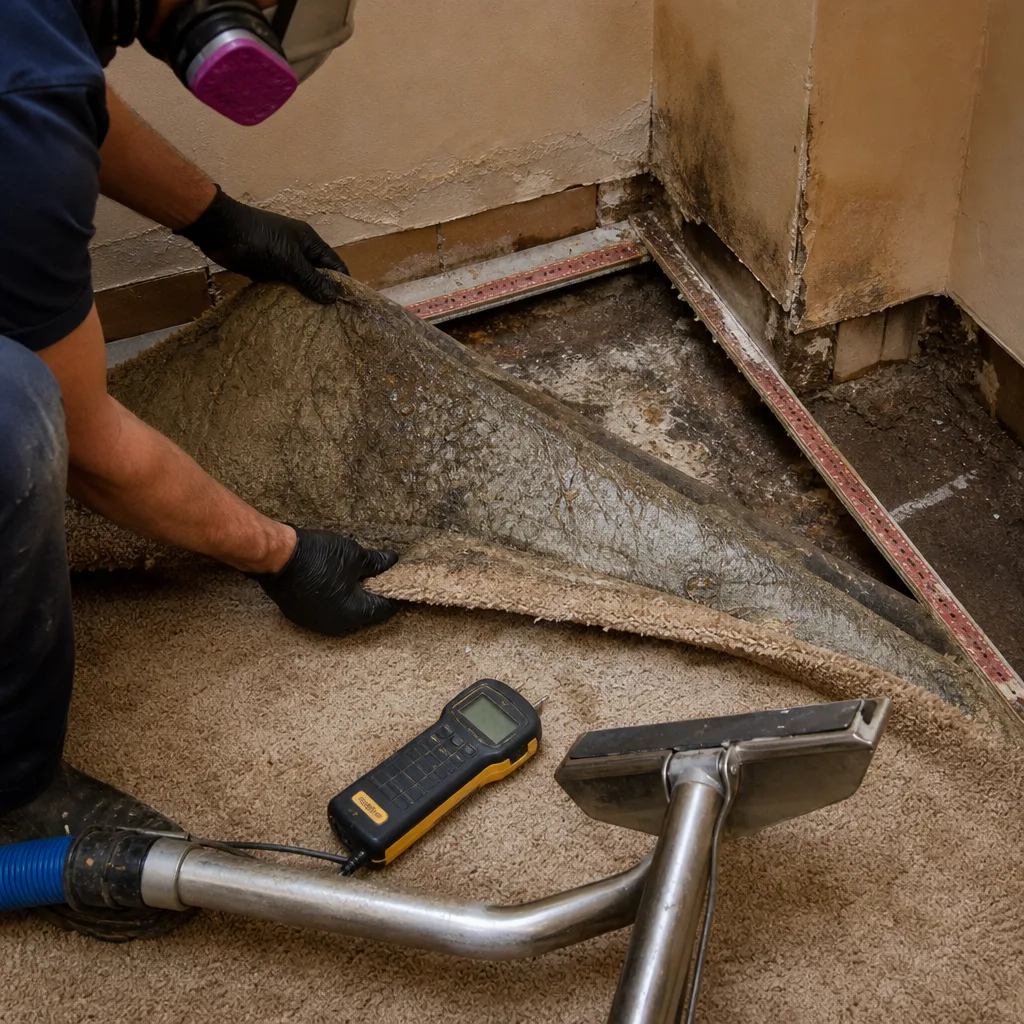
Wind Damage Repair
This is where Coney Island’s marine environment changes the math. Wind damage here often includes pre-existing salt corrosion on fasteners, hinges, and metal panels. We assess what the storm did, identify what the salt air had already weakened, and repair both, so a 20-year-old bungalow door doesn’t fail again in the next nor’easter.
What happens when you call
- 1
A real person answersNo phone trees - you reach a local pro.
- 2
You get an upfront price rangeHonest numbers before anyone is dispatched.
- 3
A background-checked tech heads outLicensed & insured, dispatched right away.
- 4
You approve before work beginsNothing starts until you say go.
Storm & Disaster Restoration Costs in Coney Island, NY
Here’s the honest pricing picture for this neighborhood. Emergency board-up in Coney Island typically runs $275 to $600, depending on the number of openings and whether we’re working at ground level or on an upper story of a NYCHA building. Roof tarping runs $400 to $900 for a standard bungalow roof. Water extraction and drying for a flooded crawl space under a Mermaid Avenue bungalow starts around $1,800 and can reach $4,500 if the joists need antimicrobial treatment and the subfloor comes out. Full Category 3 water restoration, including debris removal, drying, and rebuild, runs $6,000 to $18,000 depending on the square footage and the age of the structure. Insurance coverage depends on your policy and whether the water came from rising floodwater or a wind-driven opening. The free visual inspection is how you get a firm number instead of a guess, and it’s how we start every job in Coney Island.
We Also Serve Cities Near Coney Island
Our crews regularly work storm damage in Fairview, Harrison, East Bronx, and Hunts Point. The coastal conditions change by neighborhood, but the standard doesn’t: live answer around the clock, certified technicians, written scope, and the 90-Day Done Right Promise on every job.
Coney Island Storm & Disaster Restoration Questions, Answered
How quickly can a crew actually reach my Coney Island property?
We commit to a 45-minute response in Coney Island, and most calls get a crew on site faster than that because our dispatchers route by neighborhood. Live dispatch operates 24/7, so a real person is coordinating your crew’s route while you’re still on the phone.
Will my insurance cover storm and flood damage in Coney Island?
Wind damage from a nor’easter is typically covered by standard homeowners policies, but rising floodwater from storm surge requires a separate flood policy, usually through NFIP. We document from the first hour, bill your carrier directly, and coordinate with your adjuster so you’re not guessing at the process.
How quickly should water be extracted after a storm surge floods my Coney Island crawl space?
Within the first 24 hours. Storm surge is Category 3 water, and in the unsealed crawl spaces under Coney Island’s converted bungalows, that contaminated water starts feeding mold colonization within 24 to 48 hours. Call (917) 924-4221 the moment you can access the area safely.
Do Coney Island bungalows need special moisture mapping before storm repairs begin?
Yes. The converted summer bungalows between Mermaid Avenue and the boardwalk sit on unsealed crawl spaces with never-elevated utilities, so moisture mapping has to account for decades of salt-air moisture intrusion in the framing, not just what the storm added. Skipping this step means rebuilding over compromised joists.
What does a failing wind-rated door mean for my Coney Island property before a hurricane?
A door that doesn’t meet its wind-load rating can blow in during sustained nor’easter or hurricane winds, breaching the building envelope and letting wind-driven rain pressurize the interior. In this neighborhood, the load rating matters more than the frame size, and we can assess whether your openings will hold before the next storm.
Are Coney Island boardwalk buildings subject to special wind-load permit requirements?
Buildings in the boardwalk corridor and the most windward blocks face stricter wind-load design requirements under New York City building code, and storm repairs that alter openings, roof structure, or wall framing may require a permit. We work with local code expectations, and we’ll tell you if your repair triggers a review.
Why do post-storm repairs on Coney Island bungalows often reveal more damage than expected?
Because the storm isn’t the whole story. Salt-laden marine air has been corroding fasteners, joists, and metal panels for decades, and once we open a wall or a floor, the pre-existing compromise is visible. We document it, treat it, and include it in your insurance scope, because rebuilding over salt-corroded framing is how you get a second failure.
Can my family stay in the home during restoration?
It depends on the category of water, the extent of structural damage, and whether containment can be established. For most crawl space flooding and wind damage, yes, with containment and negative air pressure. After Category 3 water into living space or significant electrical involvement, we’ll tell you honestly if you should relocate temporarily and help you document it for your claim.
Serving Coney Island, NY - Our Local Coverage Area
We’re based in the Coney Island area and know this community well. Use the map below to see our service coverage - if you’re nearby, we can almost certainly help.
The Coney Island Wind-Load Reality Most Contractors Overlook
Here’s the thing about wind damage on this peninsula. It’s rarely just wind damage. The same salt air that corrodes the hinges on a Mermaid Avenue door also weakens the fasteners hidden behind the siding. A nor’easter that blows out a window or lifts a roof edge is usually finishing work that the marine environment started years ago. That’s why our crews treat pre-existing salt corrosion as part of the job. When we respond to a converted bungalow between Mermaid Avenue and the boardwalk, we expect to find subfloor framing that was already compromised by decades of salt-air moisture intrusion before the storm ever hit. That’s not a surprise to us. It’s the reason moisture mapping and structural reading happen before demolition, not after.
During a March nor’easter, our crew responded to a wood-frame bungalow off Mermaid Avenue where wind-driven rain and surge water had blown out ground-floor windows and soaked the open crawl space. Using moisture mapping and a Dri-Eaz structural drying system with air movers and dehumidifiers, we established containment around the flooded areas, mitigated Category 3 water intrusion, and discovered the floor joists were already salt-corroded from years of marine air, requiring antimicrobial treatment and pre-loss condition documentation before any new framing went in. That’s the job. That’s every job on this peninsula if you’re doing it right.
If you own property in Coney Island, you don’t need a contractor who treats this neighborhood like any other Brooklyn zip code. You need someone who knows what the wind and the salt do to these buildings over time, and who fixes it in a way that holds. We answer live around the clock. We’re IICRC-certified, insured, and bonded. We give you a written scope before we start and the 90-Day Done Right Promise when we finish. Call (917) 924-4221 for a free estimate, or to get a crew dispatched to your door right now.
Written by Curt Bowman, Owner at Floodline Restoration Co. of Manhattan, serving Coney Island since 2010.