
Free visual inspection and a written scope of work before any mitigation begins - photos, moisture readings, and drying logs go in your claim file
The scope we write is the scope we bill. Anything new gets shown to you, in writing, before we touch it.






 Before
 After
After Before
 After
After Before
 After
After24/7 Emergency Storm & Disaster Restoration in East Village
When a storm hits East Village, the damage moves fast, and so do we. Floodline Restoration Co. of Manhattan answers live at (917) 924-4221 around the clock, every day of the year. A certified crew reaches East Village addresses fast, usually within 45 minutes of your call. The first hour after wind tears off roofing, water pushes through a bulkhead, or a sump fails in a cellar determines whether you’re looking at a cleanup or a full reconstruction. We start extraction on the same visit, not the next morning. Our team arrives in uniform, walks the damage with you, and gives you a written scope before any work begins.
Understanding Storm & Disaster Restoration Severity in East Village Properties
Not all storm water is the same, and East Village’s building stock makes the differences matter more. Category 1 water comes from clean sources like a broken supply line. Category 2 carries contaminants from washing machines or sump overflows. Category 3 is grossly contaminated, the kind that backs up from city storm drains or sewers during a hard nor’easter. In a five-story pre-war walk-up with original plaster-and-lath walls, category 2 water left for even 24 hours wicks upward through uninsulated cavities and into adjoining units. Moisture mapping with Dri-Eaz sensors tells us exactly how far the water traveled, and structural drying gets every layer back to a documented dry standard. In East Village, where many buildings still have cast-iron risers and original wood joists, the difference between a fast, correct response and a delayed one often shows up in the studs six months later.
Wind damage carries its own severity scale. A torn roof membrane over Avenue C lets water into multiple floors. Displaced brickwork from a 19th-century parapet becomes a falling-debris hazard on the sidewalk below. We assess for structural stability first, then water intrusion, then what can be saved versus what must come out. The hazards in East Village aren’t theoretical: aged gas lines beneath the street and disturbed asbestos-containing pipe wrap inside walls are both part of the territory, and both require assessment at the start of any storm restoration, not the end.
Why East Village Property Owners Choose Floodline Restoration Co. of Manhattan
- 45-minute response commitment to East Village addresses. A live dispatcher confirms your block, and the crew is rolling. Water waiting in a tenement wall is damage compounding.
- 24/7 live answer, never an automated system. You call at 2 a.m. after a thunderstorm floods your cellar. A person picks up. Not a recording.
- IICRC-certified crews trained to WRT, FSRT, and AMRT standards. The same certification body that sets water, fire, and mold restoration protocols nationwide. We hold to their standards on every East Village job.
- Free visual inspection with every damage call. We walk the affected floors with you, locate the storm entry points, and tell you plain what we see. No charge for the assessment.
- Direct insurance billing. We communicate with your carrier directly and provide the documentation they need. You don’t carry messages between your adjuster and our crew.
- One team from first extraction to finished rebuild. No mid-job handoff to a third-party contractor. The same certified crew that dries the structure rebuilds it, and our Storm & Disaster Restoration team stands behind the entire result.
Every job we complete in East Village is backed by the 90-Day Done Right Promise, our written guarantee. If it isn’t done right, we make it right. No arguing, no paperwork battles. That’s the Keystone Standard, and it’s in your hands before we start.
Our Storm & Disaster Restoration Process
Inspection & Assessment
We trace every storm entry point, from a torn roof membrane on Tompkins Square Park-adjacent blocks to water pooling in a cellar along 1st Avenue. Thermal imaging and moisture sensors map the full extent before we touch a wall. You get a written scope and a firm price.
Extraction/Stabilization
Water is extracted the same visit. Roof tarping and emergency board-up happen before water gets another hour to migrate. We also check sub-slab gas line condition early in East Village, where ConEd emergencies have occurred on multiple block faces in recent years.
Drying & Dehumidification
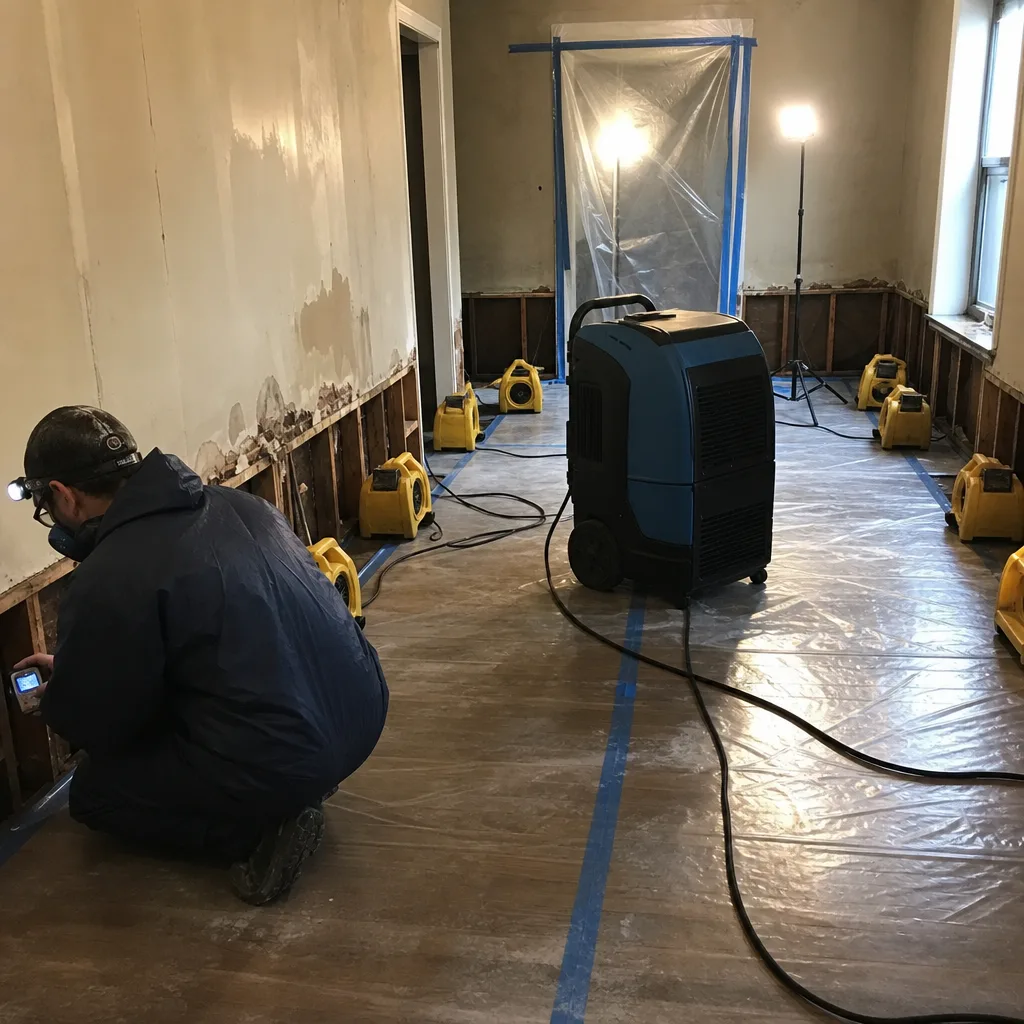
Dri-Eaz and Phoenix air movers and dehumidifiers are placed according to a drying plan, not scattered randomly. Daily moisture readings on original wood joists and plaster walls continue until every affected material meets the dry standard. You get the drying log.
Cleaning & Sanitization
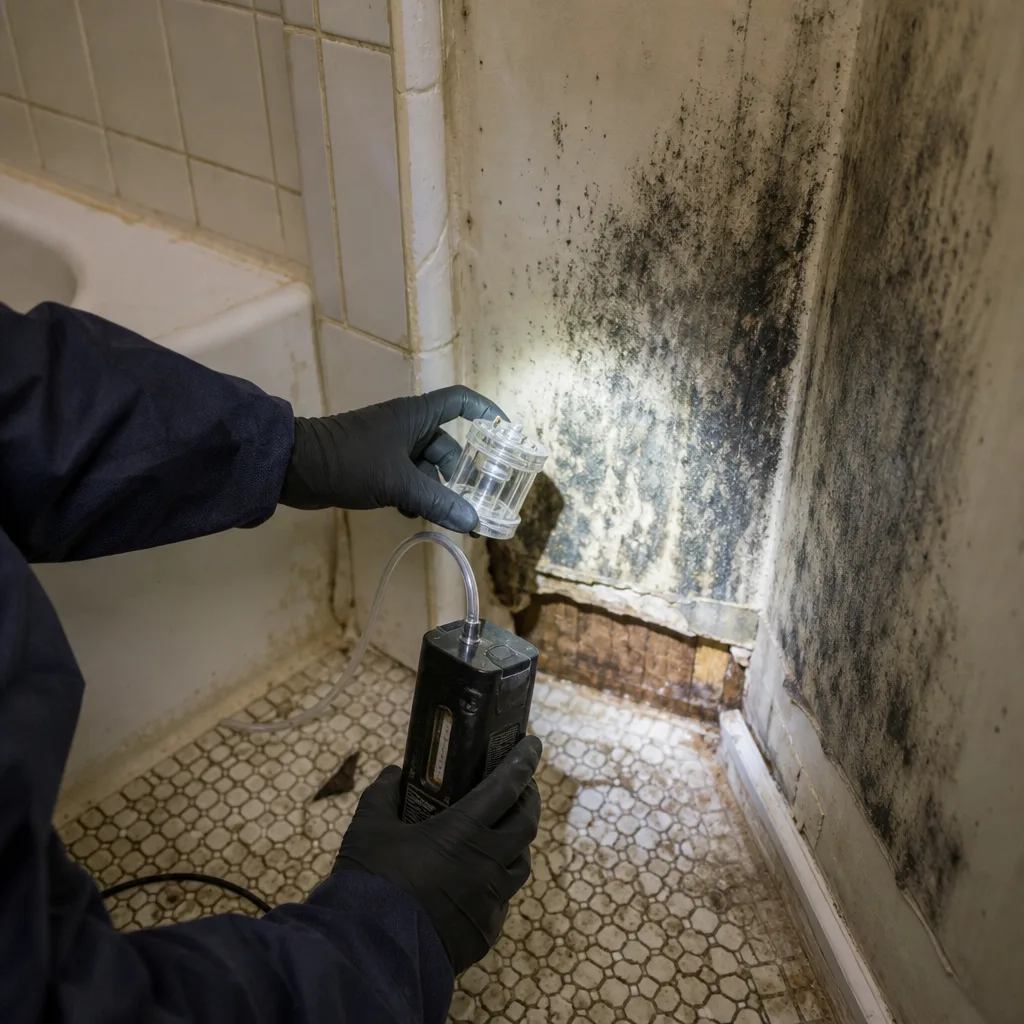
Contaminated surfaces get antimicrobial treatment. HEPA air scrubbers run where storm water disturbed accumulated dust, mold, or asbestos-containing material. Containment is set on each landing in multi-floor East Village jobs so one unit’s problem never becomes another tenant’s problem.
Specialty Storm Treatment
Wind-driven debris removal, facade stabilization, and structural assessment of masonry and parapet walls. We coordinate with the NYC Department of Buildings when a storm event affects the building envelope, and we document everything for your carrier.
Repairs & Restoration
Reconstruction happens under our own crew. We replace damaged framing, restore plaster walls, refinish floors, and paint to match. The moisture log, photo documentation, and final scope go to your insurer, and the 90-Day Done Right Promise goes to you.
Need Emergency Storm & Disaster Restoration in East Village Now?
Crews minutes away, answering live 24 hours a day. The sooner we start, the less it costs.
Working With Your Insurance Company
Storm and disaster claims move faster when the documentation is built correctly from hour one. We photograph every affected room before we move a single piece of debris. We record moisture readings on day one and log them daily until the structure is dry. Then we deliver a line-item scope of work in the format your carrier expects. If your adjuster wants a second walk-through, we walk it with them. If they call with questions, we answer. You don’t sit on hold with your carrier trying to explain what a drying log says. That’s why we bill insurance directly and handle the paperwork ourselves.
What We Provide Your Insurer
- Thorough documentation of the loss
- Photos of all damage, room by room
- Moisture readings and drying logs
- A detailed, line-item scope of work
- Direct coordination with your carrier
Built for East Village’s Loss Calendar
Storm damage in East Village follows a predictable rhythm, and we plan around it. January and February bring the deep freezes that crack uninsulated pipe chases and split aging cast-iron risers. When a supply line bursts on the fifth floor of a new-law tenement, water finds the path of least resistance through original wood joists and lands in four or five occupied apartments below. Spring thaw reveals basement seepage through old rubble foundations. Summer brings thunderstorms that overwhelm the neighborhood’s combined sewer system, backing category 3 water into cellars along Avenue C and Avenue D. Late summer and fall deliver nor’easters and the remnants of tropical systems, with wind-driven rain finding every opening in a 100-year-old parapet. The East Village buildings that survive these events are the ones where restoration starts within the hour, not the next day.
Storm & Disaster Restoration Across East Village’s Neighborhoods
East Village isn’t one uniform grid. Alphabet City, east of Avenue A, holds some of the oldest tenement stock in the neighborhood, much of it pre-1901 old-law construction with wood framing that absorbs water fast and releases it slowly. The blocks around Tompkins Square Park mix new-law walk-ups with post-war infill, and the tree-lined streets there shed debris that clogs roof drains during summer storms. Over near Cooper Square and Astor Place, larger loft conversions and newer construction sit alongside 19th-century row buildings, each with a different ventilation profile and a different drying plan. Along Second Avenue, where the 2015 gas explosion destroyed three tenements between 7th and 8th Streets, we always assess sub-slab gas line condition before structural drying begins. A slow leak under a cellar floor can turn a routine flood job into a structural emergency, and East Village crews who skip that check are gambling. Our Storm & Disaster Restoration in East Village experience means we know which blocks have which building systems, and which failure patterns to expect.
Specialized Storm & Disaster Restoration Services We Offer in East Village
Flood Damage Restoration
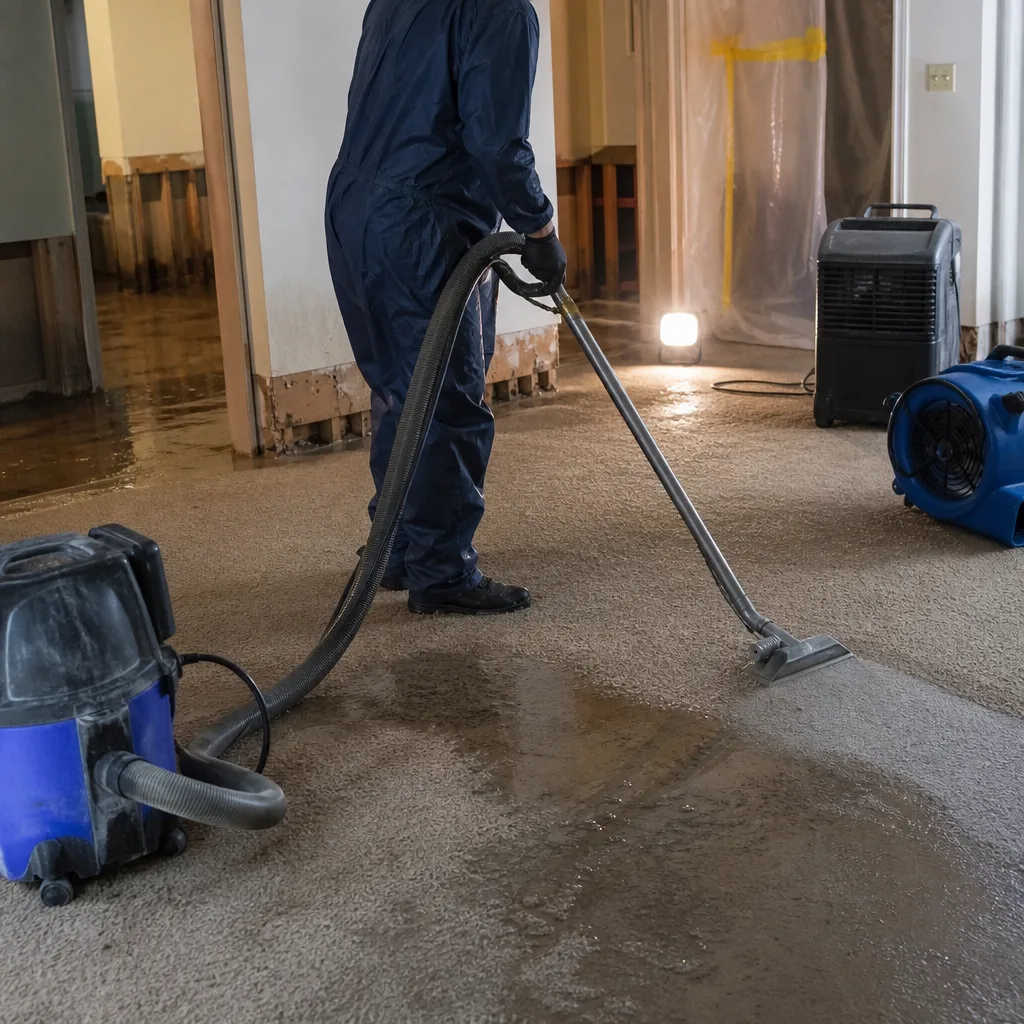
When storm water floods a multi-floor East Village walk-up, the first extraction visit determines the entire outcome. We run extraction on every affected floor the same day we arrive, using truck-mounted and portable extraction units sized for tight tenement hallways. Containment goes up on each landing before any air movement begins, so a mold bloom on one floor never spreads to the next. RIA and IFA protocols guide our work, and our Dri-Eaz moisture mapping gives each affected tenant a documented dry standard.
Emergency Board-Up
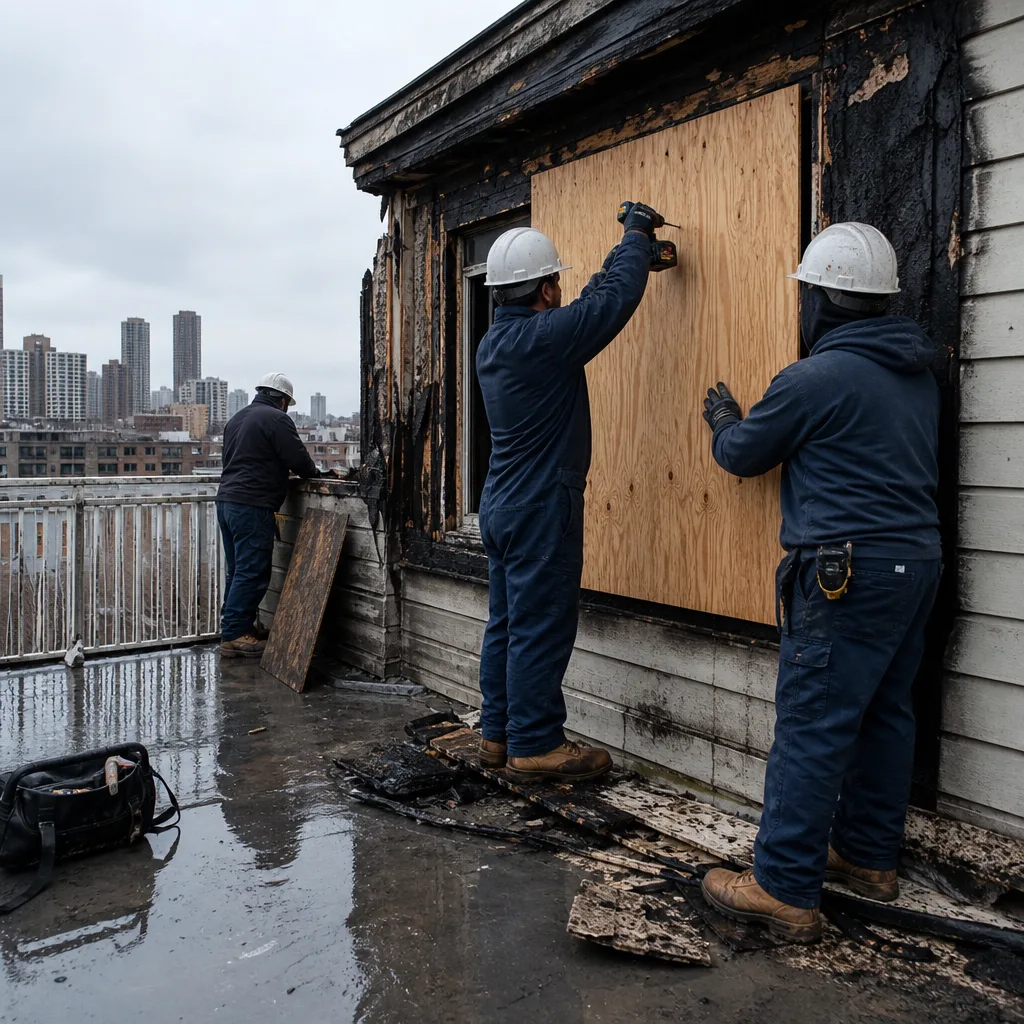
After wind damage or a facade failure, an open window or torn-off door is an invitation to worse. We board and secure openings the same day we assess the damage, keeping the building envelope closed while restoration work continues inside. In East Village, this often means working around occupied units below and coordinating access with building ownership. The goal is simple: lock down the structure so no further water, debris, or unauthorized entry compounds the loss.
Storm Damage Cleanup
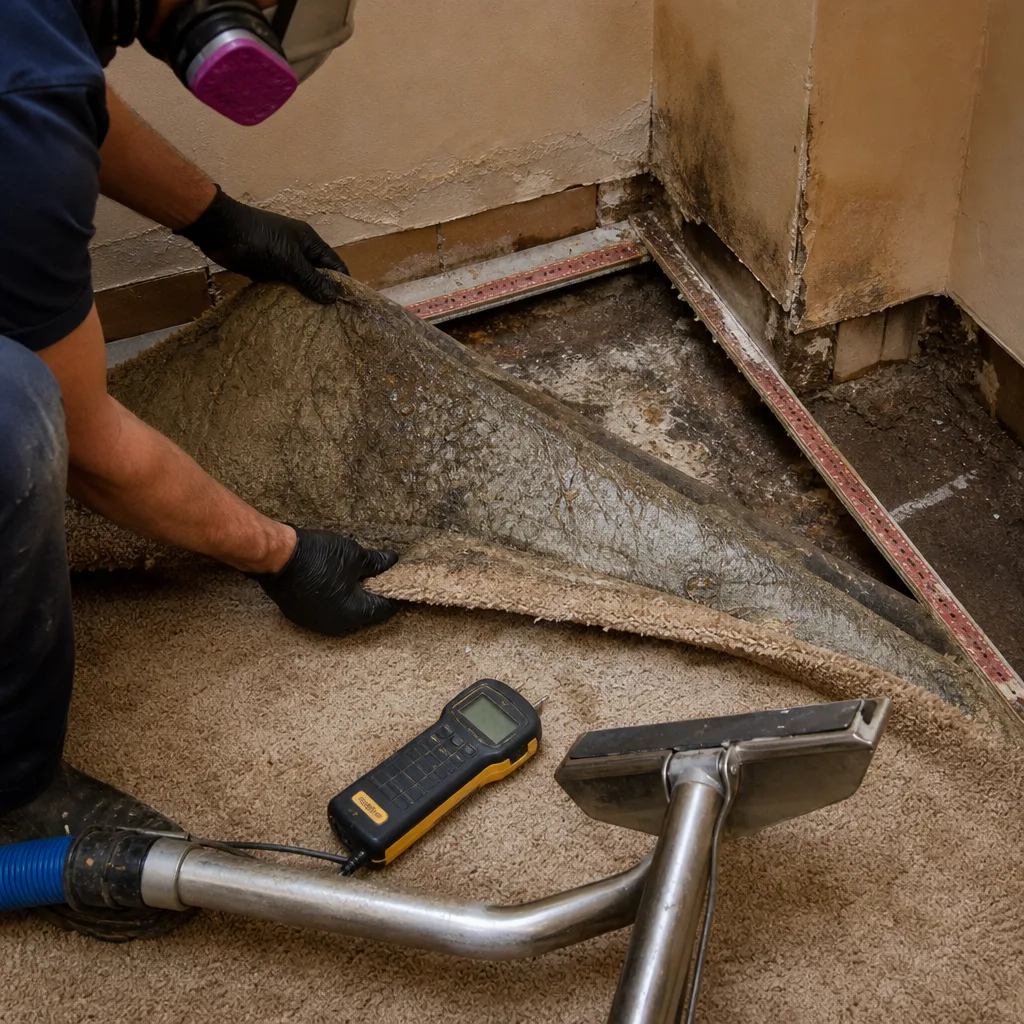
Debris from a nor’easter doesn’t just sit on roofs. It clogs bulkheads, buries sidewalk drains, and works its way into light wells. We remove storm debris from roofs, gutters, areaways, and interior spaces, then assess the water paths it created. Cleanup is followed immediately by drying and repair, because in East Village’s humid summer months, a wet wall cavity has about 24 to 48 hours before mold gets a foothold.
Roof Tarping
A torn membrane over Avenue B needs a tarp that holds through the next storm, not one that flaps off at the first gust. We install reinforced tarping with proper fastening over damaged roofing and parapet areas, and we document the installation for your insurer. The tarp buys time for a full repair, but only if it’s done right the first time.
Debris Removal
Wind-driven debris, fallen masonry, and storm-damaged building materials come out of the property quickly, with disposal handled under proper documentation for your claim. In East Village, this often requires coordinating sidewalk closures and debris staging with NYC Department of Sanitation requirements. We handle that coordination so you aren’t chasing city agencies.
What happens when you call
- 1
A real person answersNo phone trees - you reach a local pro.
- 2
You get an upfront price rangeHonest numbers before anyone is dispatched.
- 3
A background-checked tech heads outLicensed & insured, dispatched right away.
- 4
You approve before work beginsNothing starts until you say go.
Storm & Disaster Restoration Costs in East Village, NY
Storm damage restoration in East Village runs on a wide spread because the neighborhood’s building stock is so varied. A simple single-unit flood extraction with drying typically runs $2,800 to $4,500 in an Alphabet City tenement, where tight hallways and multiple landings add labor hours. A multi-floor burst riser affecting four to six units usually falls between $12,000 and $35,000, driven by containment on each landing, possible asbestos assessment, and coordination across multiple occupied apartments. Emergency board-up and tarping typically runs $800 to $2,200 depending on access and materials. Debris removal from a roof or light well adds $700 to $1,900. The variables are square footage, number of affected floors, whether asbestos-containing materials are present, and how quickly extraction begins. Insurance covers most storm and wind damage claims when a policy is in force. Our free visual inspection gives you a firm, line-item scope before any work starts, so you know the number before you commit. Call (917) 924-4221 for a free estimate.
We Also Serve Cities Near East Village
Floodline Restoration Co. of Manhattan serves East Village and the surrounding communities, including Fairview, Harrison, East Bronx, and Hunts Point. The same live dispatch, the same certified crews, and the same 90-Day Done Right Promise apply wherever we work. If you’re just outside East Village and need storm restoration, call us.
Serving East Village, NY - Our Local Coverage Area
We’re based in the East Village area and know this community well. Use the map below to see our service coverage - if you’re nearby, we can almost certainly help.
East Village Storm & Disaster Restoration Questions, Answered
If my East Village walk-up has a burst pipe that floods multiple floors, do I need to notify the NYC Department of Buildings before restoration starts?
Usually yes if the damage affects structural elements like joists, load-bearing walls, or the building envelope. In multi-floor East Village floods, our team coordinates with the DOB directly and documents that the affected floors are safe to enter before restoration proceeds. We’ve done enough of these to know when an inspection is required and how to schedule it without stalling the drying process.
How fast can mold appear in an uninsulated East Village tenement wall after a water intrusion?
Within 24 to 48 hours in summer humidity. East Village’s pre-war buildings have minimal mechanical ventilation, and a wet plaster-and-lath wall cavity holds moisture exactly the way mold prefers. That’s why extraction and air movement need to start the same day. The window for preventing mold is measured in hours here, not days.
What does category 1, 2, or 3 water mean for my East Village restoration job?
Category 1 water is clean, from a supply line or rainwater that entered through a roof opening. Category 2 carries some contamination, like washing machine overflow or sump water. Category 3 is grossly contaminated, like sewer backup or street-level storm surge. East Village’s old building systems make category 2 water especially likely to pick up additional contamination inside walls, so we treat anything that has spent time in contact with aging pipes or accumulated wall cavity debris as if it may need category 3 protocols.
Can my East Village landlord limit restoration access to my rent-stabilized unit?
Landlords have legal obligations to maintain habitable conditions, but they also control common-area access and sometimes schedule access poorly. Our team notifies building ownership, coordinates with each affected rent-stabilized tenant directly, and documents every interaction. If a landlord stalls, we document that too, because it matters for your claim and for the building’s compliance record.
Why does East Village storm damage restoration always start with a gas line check?
Because East Village sits atop aging gas infrastructure, and the 2015 Second Avenue explosion showed what happens when a sub-slab leak goes undetected. Flood water can expose or disturb old lines beneath cellar floors. Our crew checks for gas odor and suspected leak indicators before structural drying begins, and we flag any concern for ConEd and the DOB the same day. It’s a five-minute assessment that can prevent a structural total-loss.
How quickly can you reach East Village after a storm?
Our crews are dispatched from Manhattan and typically reach East Village addresses within 45 minutes of your call. A live dispatcher confirms your location and block face. In severe weather events that affect the whole city, response times may stretch, but we communicate honestly about when we’ll arrive.
Will my insurance cover storm damage restoration in East Village?
Most homeowners and building policies cover storm and wind damage, including water intrusion that follows a covered peril like a wind-damaged roof. Tenant belongings fall under renters insurance. We document the loss from the first hour with photos, moisture readings, and a line-item scope, and we bill your carrier directly. Call (917) 924-4221 and we’ll walk through your specific policy situation.
Can we stay in our East Village apartment during restoration?
Sometimes, if the affected area can be isolated and containment is holding. But in multi-floor floods where hallways and common areas are wet, or where asbestos-containing materials are disturbed, staying in place is often unsafe. We assess habitability on the first visit and give you a straight answer. If you need alternative housing, we document the conditions your carrier needs to process the claim.
Written by Curt Bowman, Owner at Floodline Restoration Co. of Manhattan. Founded in 2010, serving New York City’s restoration needs with certified crews and a written guarantee. The line the water left is where we start.