
Free visual inspection and a written scope of work before any mitigation begins - photos, moisture readings, and drying logs go in your claim file
The scope we write is the scope we bill. Anything new gets shown to you, in writing, before we touch it.






 Before
 After
After Before
 After
After Before
 After
After24/7 Emergency Storm & Disaster Restoration in Great Kills
Storm and disaster restoration in Great Kills starts with one call to (917) 924-4221, answered live at any hour. We dispatch crews into Great Kills the moment a nor’easter passes, a tree comes through a roof, or surge water finds the basement. The first hour after storm damage determines how much of the house can be saved: sheetrock that gets extraction started early dries in place, while sheetrock that waits a day wicks saltwater up the studs and has to go. Our Storm & Disaster Restoration team arrives fast, assesses the full damage, and starts water removal or board-up the same visit. A free visual inspection in Great Kills tells you exactly what you’re facing before any money changes hands, and most jobs are completed in a single visit with professional-grade Dri-Eaz and Phoenix equipment running.
Understanding Storm & Disaster Restoration Severity in Great Kills Properties
Great Kills homes from the 1950s through 1970s were built before modern wind and flood standards, and the damage we see follows a pattern. The post-World War II Cape Cods, ranches, and colonials near Hylan Boulevard and Nelson Avenue have original cast-iron drain lines, aging electrical panels, and fiberglass or cellulose insulation that absorbs water and salt in ways newer materials don’t. Storm damage falls into three categories we evaluate on site. Category 1 water from a wind-damaged roof is clean and responds to extraction and drying. Category 2 water carries contaminants from failed drains and saturated yards. Category 3 water, what pushes up from Great Kills Harbor or Raritan Bay during a coastal flood, contains salt, sewage, hydrocarbon residue, and whatever the surge picked up along the way. That’s why flood restoration in Great Kills requires more than fans: we moisture-map with thermal imaging and hygrometers, cut drywall to the floodline the water left, and dry to a documented standard, not a guess. Houses on post-Sandy elevated foundations add another layer: the crawl space or piling void under the original floor system traps humidity that migrates upward into rim joist pockets, and that moisture never shows itself as standing water. We inspect those voids on every Great Kills storm job because they fail silently.
Why Great Kills Property Owners Choose Floodline Restoration Co. of Manhattan
- 45-minute response commitment. When you call (917) 924-4221, we commit to having a crew dispatched and moving toward Great Kills within 45 minutes. The clock matters when saltwater is wicking into framing.
- 24/7 live answer, never an automated system. A real dispatcher picks up at 2 a.m. whether it’s a nor’easter surge or a wind-damaged roof. You won’t press numbers or leave a voicemail.
- Certified crews trained to IICRC, RIA, and IFA standards. Technicians hold WRT and FSRT certifications where the work calls for it, and every crew member is background-checked and uniformed.
- Free visual inspection before you commit. We walk the property, map moisture, and give you a written scope. No work starts until you understand what’s needed and why.
- Direct insurance billing. We document photo by photo from the first hour, then bill your carrier directly. You never play messenger between us and the adjuster.
- One team from extraction to reconstruction. The same certified crew that pulls water out and runs drying equipment handles the repairs and rebuild. No mid-job handoff, no inherited strangers in your home.
Our Storm & Disaster Restoration Process
Inspection & Assessment
We arrive, walk every affected room, and document with photos and thermal imaging. In Great Kills, we check for hidden salt line tracking on foundation walls and inspect any post-Sandy elevation voids under the floor system before we write the scope.
Extraction & Stabilization
Floodwater comes out with professional Dri-Eaz truck mounts and submersible pumps. If wind or debris opened the envelope, we board up with plywood and secure openings so no more water enters while restoration proceeds.
Drying & Dehumidification
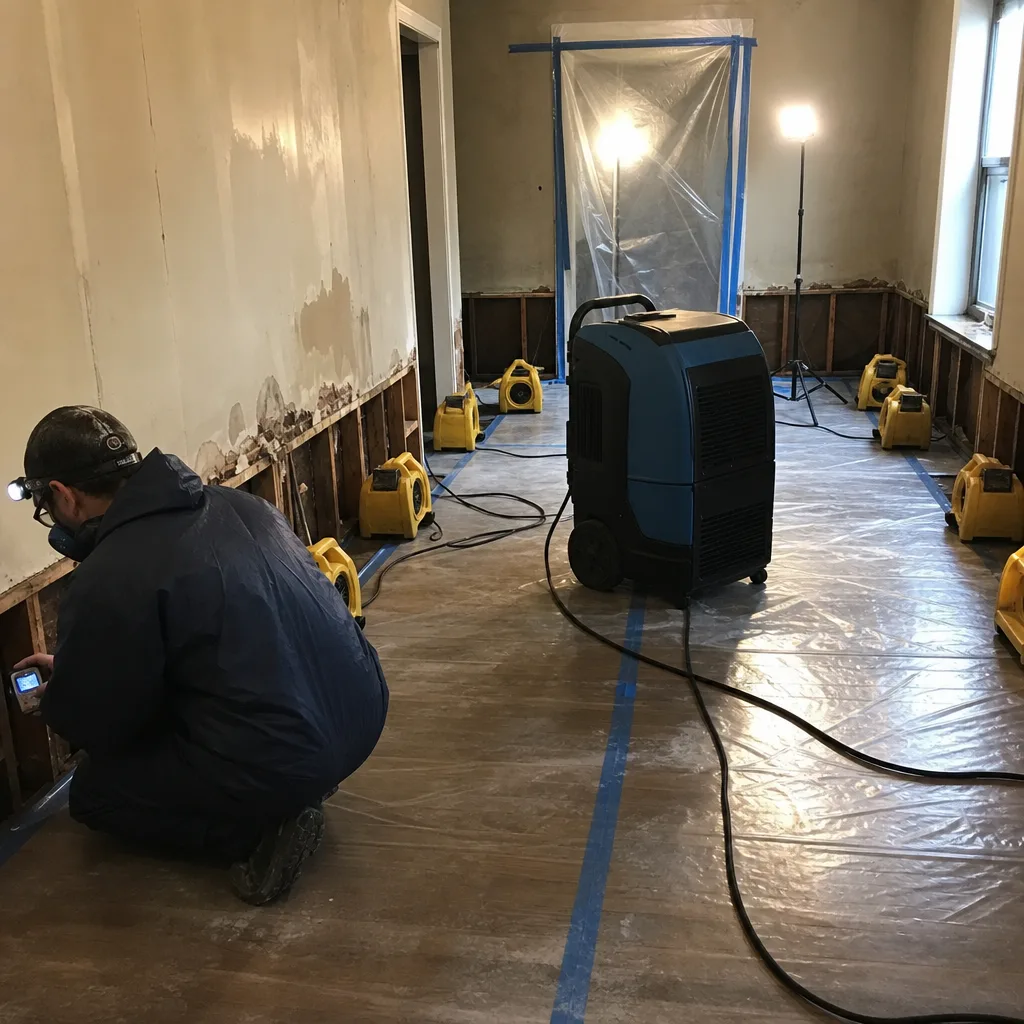
Phoenix dehumidifiers and XPOWER air movers run hard, with Injectidry floor mats on slab and hardwood where saltwater has penetrated. We take moisture readings daily and log them for you and your insurer until the dry standard is met.
Cleaning & Sanitization
Category 3 floodwater demands antimicrobial treatment and HEPA air scrubbing. We clean salvageable surfaces and remove contaminated materials to the studs where salt and sewage have reached.
Salt & Corrosion Treatment
Great Kills’s saltwater intrusions leave hygroscopic salt deposits behind that draw moisture for years. We treat exposed framing, check copper wiring and HVAC components for corrosion, and verify that steel fasteners haven’t begun failing.
Repairs & Restoration
We rebuild what the storm took: drywall, flooring, thresholds, wind-damaged garage doors, roof decking. The same crew that mapped moisture on day one handles the finish work and hands you the completed moisture log.
Need Emergency Storm & Disaster Restoration in Great Kills Now?
Crews minutes away, answering live 24 hours a day. The sooner we start, the less it costs.
Working With Your Insurance Company
Most Great Kills storm claims involve wind, flood, or both, and flood coverage often runs through a separate policy. We document from the first hour so your carrier sees exactly what happened. Our team photographs every affected room before and after demolition, logs moisture readings day by day, and writes line-item scopes using industry-standard estimating software adjusters recognize. We talk directly to your adjuster, answer their questions, and keep the claim moving while you focus on your home. What we provide your insurer:
What We Provide Your Insurer
- Thorough documentation of the loss
- Photos of all damage, room by room
- Moisture readings and drying logs
- A detailed, line-item scope of work
- Direct coordination with your carrier
Built for Great Kills’s Loss Calendar
Great Kills sits on Staten Island’s south shore with Raritan Bay as its front door, and the loss calendar runs hard through every season. January deep freezes split supply lines in unheated basements of 1960s capes and colonials, flooding floors before anyone notices. Spring thaw and heavy rains push groundwater into the same basements through original cast-iron drain lines that have cracked with age. Summer thunderstorms dump rain fast enough that the low-lying streets near Great Kills Harbor and the marina back up, and water finds the path of least resistance into foundations. Then comes hurricane season and the nor’easters that push storm surge through residential streets, the same dynamic that made Great Kills one of the most catastrophically flooded neighborhoods during Sandy in 2012. We don’t wait for the storm to circle on the forecast: homeowners who call us before a front arrives get a free inspection that identifies the weak points, from aging thresholds to wind-rated door panels that have lost their rating. After a storm, the calls come for roof tarping, emergency board-up, and flood extraction, and we’re answering them live, around the clock.
Storm & Disaster Restoration Across Great Kills’s Neighborhoods
The response routes through Great Kills trace the neighborhood’s geography. Along Hylan Boulevard, a commercial spine that runs north-south through Great Kills, we see wind damage to storefront doors and street-facing windows after strong fronts, with debris scattered across parking areas and sidewalks. The residential blocks west of Hylan toward the harbor, around Nelson Avenue and Giffords Lane, flood first in any surge event because the natural grade slopes toward the water with no elevation to speak of. Homes near Great Kills Park and the marina take Category 3 water from the harbor itself, salt-heavy and contaminated, and those jobs almost always require full gut-out to the studs rather than surface drying. East of Hylan toward Amboy Road, the homes sit slightly higher but the post-Sandy FEMA maps put many in AE or VE zones, which means storm restoration triggers elevation certificate questions before structural work can proceed. The 10308 ZIP code spans all of it, but the failure patterns shift block by block, and our crews read those patterns like a map.
Specialized Storm & Disaster Restoration Services We Offer in Great Kills
Wind Damage Repair
Great Kills takes wind off Raritan Bay with almost no geographic buffering, and we see the results in buckled garage doors, torn shingles, and shifted roof decking. A wind-rated door that has been dented or twisted by a nor’easter no longer holds its rating, and a compromised panel can blow inward and pressurize the house, tearing the roof off from inside. We replace damaged panels with impact-rated materials, reinforce the opening, and repair the rotted thresholds where water has been getting in for years.
Emergency Board-Up
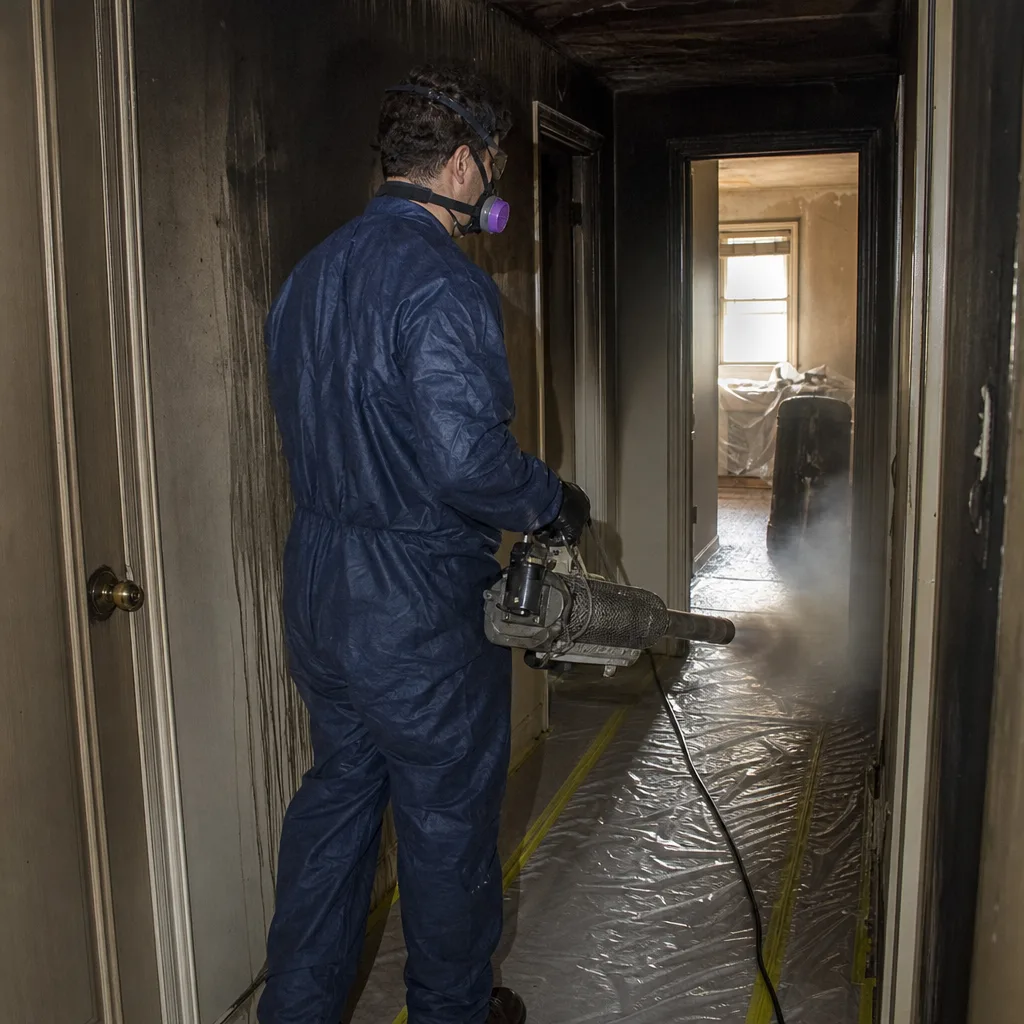
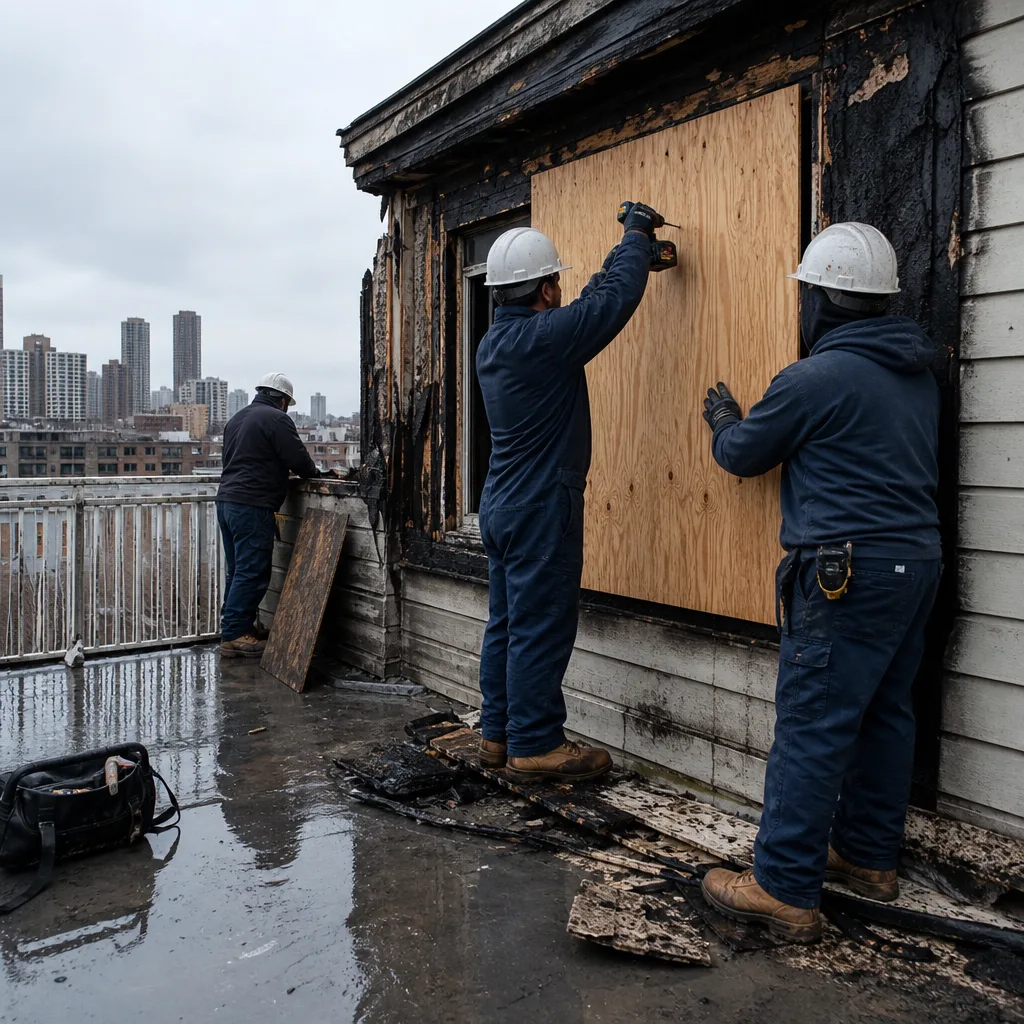
When wind or a falling limb opens a window or door, the next front turns a small opening into a flooded interior. We board up openings with plywood and fasten it properly, not with a few drywall screws into trim. Great Kills homes near the harbor need this done fast because the window between storms is short, and a tarp over a hole in the roof won’t stop driving rain without proper nailing patterns and furring strips.
Flood Damage Restoration
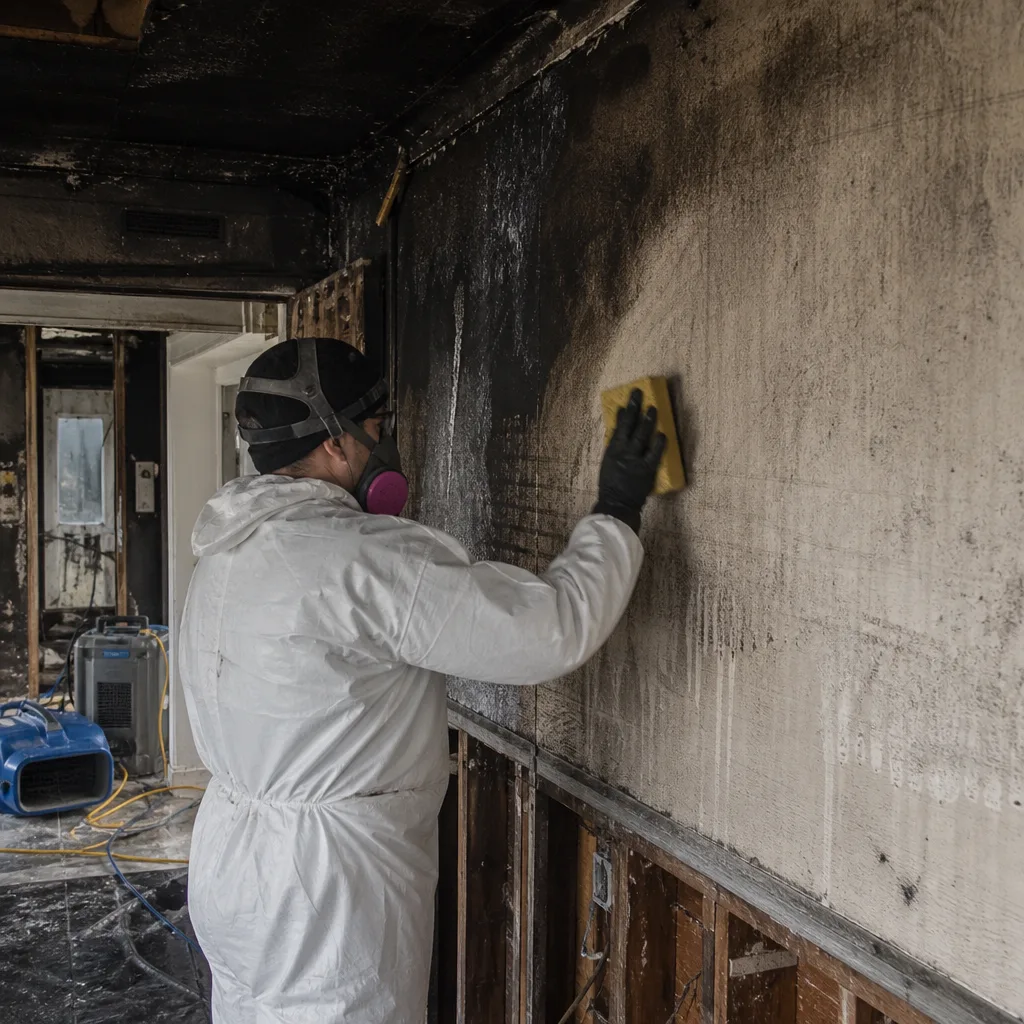
Floodwater in Great Kills carries salt from Raritan Bay and the harbor, and salt changes everything about water damage. Standard freshwater drying leaves hygroscopic salt deposits behind that keep drawing moisture into framing and drywall, which is why so many Great Kills homes that “dried out” after Sandy developed mold years later. Our flood restoration protocol includes full salt assessment of exposed framing, corrosion checks on wiring and fasteners, and a written dry standard we hit before any rebuilding starts.
Roof Tarping
After a storm passes, exposed roof decking becomes an open channel for the next rain. We tarp with heavy-duty materials secured with furring strips and proper fastening, not just laid over the hole. In Great Kills’s coastal winds, a loose tarp becomes a sail and does more damage than the original storm. Our tarping crews work off ladders with tie-offs and follow the same safety standards on every residential roof, including steep Cape Cod pitches.
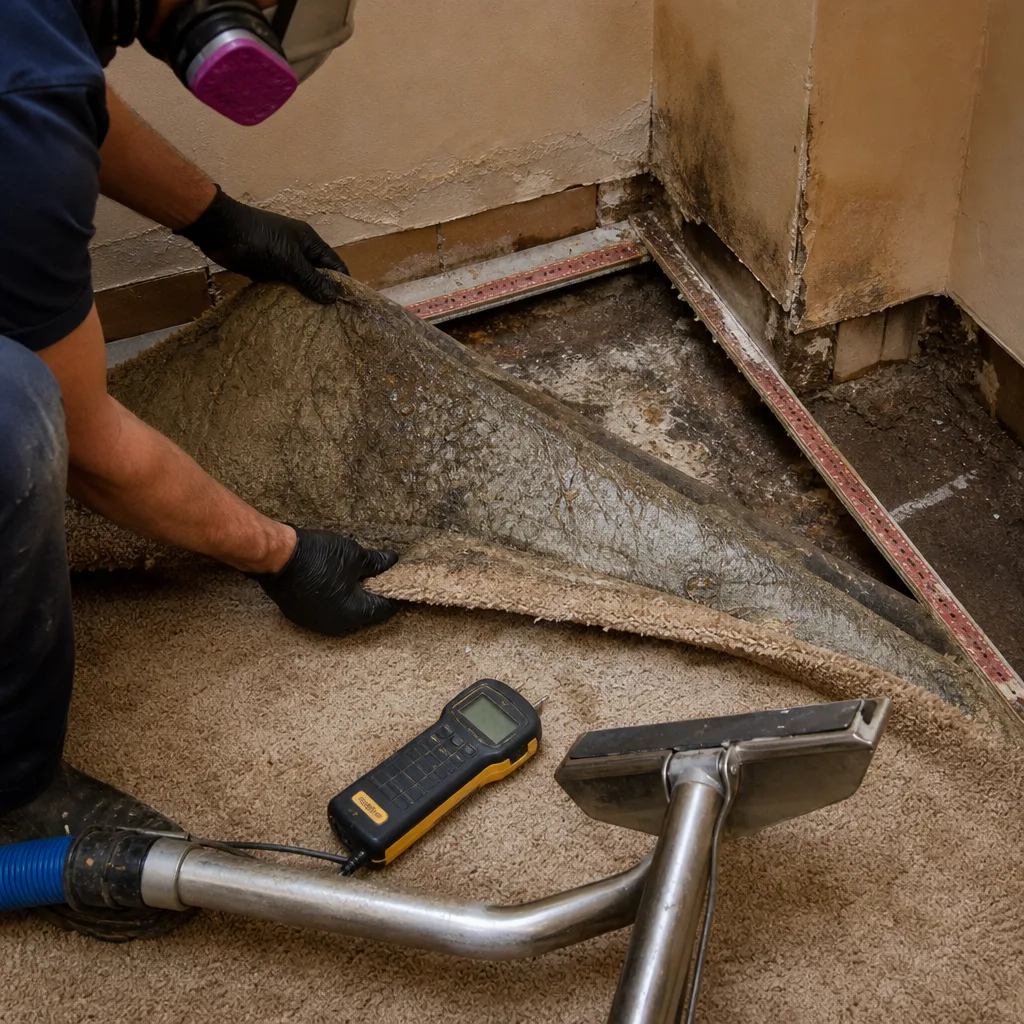
Debris Removal
Storm-tossed debris in Great Kills is rarely just branches and leaves. It’s shingles, siding, insulation, and sometimes pieces of dock or bulkhead material from the harbor. That debris sits against foundations and blocks drainage, and in wet conditions it feeds mold inside wall cavities. We remove it as part of the restoration scope, photographically document everything for your insurer, and dispose of contaminated material properly, including saltwater-soaked insulation that can’t be dried in place.
What happens when you call
- 1
A real person answersNo phone trees - you reach a local pro.
- 2
You get an upfront price rangeHonest numbers before anyone is dispatched.
- 3
A background-checked tech heads outLicensed & insured, dispatched right away.
- 4
You approve before work beginsNothing starts until you say go.
Storm & Disaster Restoration Costs in Great Kills, NY
Pricing in Great Kills reflects the serious exposure: flood restoration with saltwater contamination runs higher than inland freshwater work because more material gets removed and more treatment gets applied. A typical emergency board-up runs $400 to $900 depending on openings and height. Roof tarping on a Cape Cod or ranch runs $500 to $1,200 for a standard deployment. Wind damage repair to a single garage door panel runs $350 to $1,800 depending on whether we’re replacing panels or reinforcing the entire opening with impact-rated materials. Flood extraction and professional drying on a basement starts around $2,500 and commonly reaches $6,000 to $12,000 when gut-out to the studs, salt treatment, and structural drying are needed. Insurance typically covers the restoration scope when the loss is covered, and our direct billing eliminates the money-in-the-middle problem. The free visual inspection gives you a firm written scope before any work starts, so you know your number up front. Call (917) 924-4221 for exact pricing in the 10308 ZIP code.
We Also Serve Cities Near Great Kills
Floodline Restoration Co. of Manhattan serves storm and disaster restoration in Great Kills and the surrounding south Staten Island and nearby areas. Our crews also respond regularly to Fairview, Harrison, East Bronx, and Hunts Point.
Great Kills Storm & Disaster Restoration Questions, Answered
Does my Great Kills home need an elevation certificate before storm damage restoration can start if it was built before the FEMA flood map revisions?
Yes, if your property sits in an AE or VE flood zone and the restoration involves structural work, you typically need an elevation certificate before permits can be issued. Many Great Kills homes built before the post-Sandy remap were never elevated and now sit below base flood elevation, which triggers compliance requirements during repairs. We coordinate this directly with your carrier and the building department. Call (917) 924-4221 and we’ll help you determine whether your property needs one.
Why does floodwater in Great Kills smell different and cause more corrosion than rainwater in inland Staten Island neighborhoods?
Because it’s saltwater from Raritan Bay and Great Kills Harbor, not freshwater runoff. Saltwater carries dissolved minerals, marine organics, and salt ions that corrode copper wiring, HVAC components, and steel fasteners aggressively and leave hygroscopic salt deposits that draw moisture for years. That’s why flood restoration in Great Kills requires specialized salt remediation protocols standard freshwater restoration never touches. We treat exposed framing and check every electrical and mechanical component before rebuilding.
Can a wind-rated garage door really protect my home during a nor’easter, or is that just a sales pitch?
It can, and the physics is real. A garage door is the largest unreinforced opening on most Great Kills homes, and when wind pressure buckles or blows it in, the house pressurizes and lifts the roof from inside. Impact-rated doors and reinforced panels stop that failure chain. On a Hylan Boulevard Cape Cod built in the 1960s, our techs replaced a failed wind-rated door after a nor’easter and reinforced the opening before the next front arrived. If your door is dented, twisted, or no longer seats square, it’s lost its rating. Call us for a free inspection.
How do you handle post-storm debris that contains saltwater-soaked insulation inside walls?
We pack it out. Fiberglass and cellulose insulation that absorbed Category 3 saltwater from the harbor cannot be dried in place reliably. The salt residue prevents the material from ever reaching a stable moisture reading, and leaving it inside the wall cavity invites mold behind your drywall. We remove the contaminated insulation, treat the framing, document everything for your insurer, and install new insulation to current code. Anything less fails in Great Kills.
What are the first signs of wind damage to look for on a Great Kills home before requesting an inspection?
Walk the outside: look for lifted or missing shingles, dented garage door panels, cracked window frames, and gaps where the roof meets fascia. Inside, check for daylight visible through roof sheathing, drywall cracks running from window corners, and nails that have pulled loose. Wind damage often shows up as small failures that the next strong front turns into big ones. We inspect for free, and we’ll tell you what needs work and what can wait. Call (917) 924-4221.
How fast can a crew actually get to Great Kills in an emergency?
We commit to 45-minute response from dispatch. Our phone is answered live by a person at all hours, and crews are staged for the south shore during storm watches. In active weather events when every restoration company in Staten Island is slammed, we still answer the phone with a person, and we tell you exactly when a crew will arrive. Call (917) 924-4221 and you’ll know in one conversation.
Will my insurance cover storm and flood damage restoration in Great Kills?
Wind damage typically falls under standard homeowners policies. Flood damage from storm surge usually requires a separate flood policy, often through FEMA’s National Flood Insurance Program. Many Great Kills homeowners carried flood coverage after Sandy, and we bill carriers directly. We document everything from the first hour with photos and moisture logs, which makes the claim substantially easier. Bring us your policy details at the free inspection and we’ll tell you what we see.
What should I do in the first 30 minutes after storm damage in Great Kills?
Call (917) 924-4221 first. Then, if you can do so safely, shut off electricity at the main breaker if water is rising. Don’t walk through standing water in a flooded basement; it may be energized or contaminated. Don’t attempt to board up or tarp a roof yourself; the exposure is real. Take photos from a safe distance for your insurer, and keep children and pets out of affected areas. We’ll handle the rest, and we’re on the phone live right now.
Serving Great Kills, NY - Our Local Coverage Area
We’re based in the Great Kills area and know this community well. Use the map below to see our service coverage - if you’re nearby, we can almost certainly help.
The Great Kills Restoration Standard
In Great Kills, the post-Sandy FEMA remap placed a large share of homes in AE or VE flood zones, so many storm restoration jobs trigger base flood elevation compliance that requires elevation certificates before structural work can proceed. That’s a regulatory hurdle neighboring inland Staten Island neighborhoods like New Springville do not face, and it changes the pace and cost of restoration. We handle the certificate coordination, the permit path, and the flood-zone documentation, because in Great Kills that’s part of every job. Our team knows the 10308 ZIP code’s flood maps, the homes sitting below base flood elevation, and the elevated homes hiding unencapsulated crawl spaces under their original floor joists. The line the water left is where we start, and we keep working until the house is dry, documented, and rebuilt to a standard that holds.
Written by Curt Bowman, Owner at Floodline Restoration Co., serving Great Kills and the surrounding south shore since 2010.