
Free visual inspection and a written scope of work before any mitigation begins - photos, moisture readings, and drying logs go in your claim file
The scope we write is the scope we bill. Anything new gets shown to you, in writing, before we touch it.






 Before
 After
After Before
 After
After Before
 After
After24/7 Emergency Storm & Disaster Restoration in Greenpoint
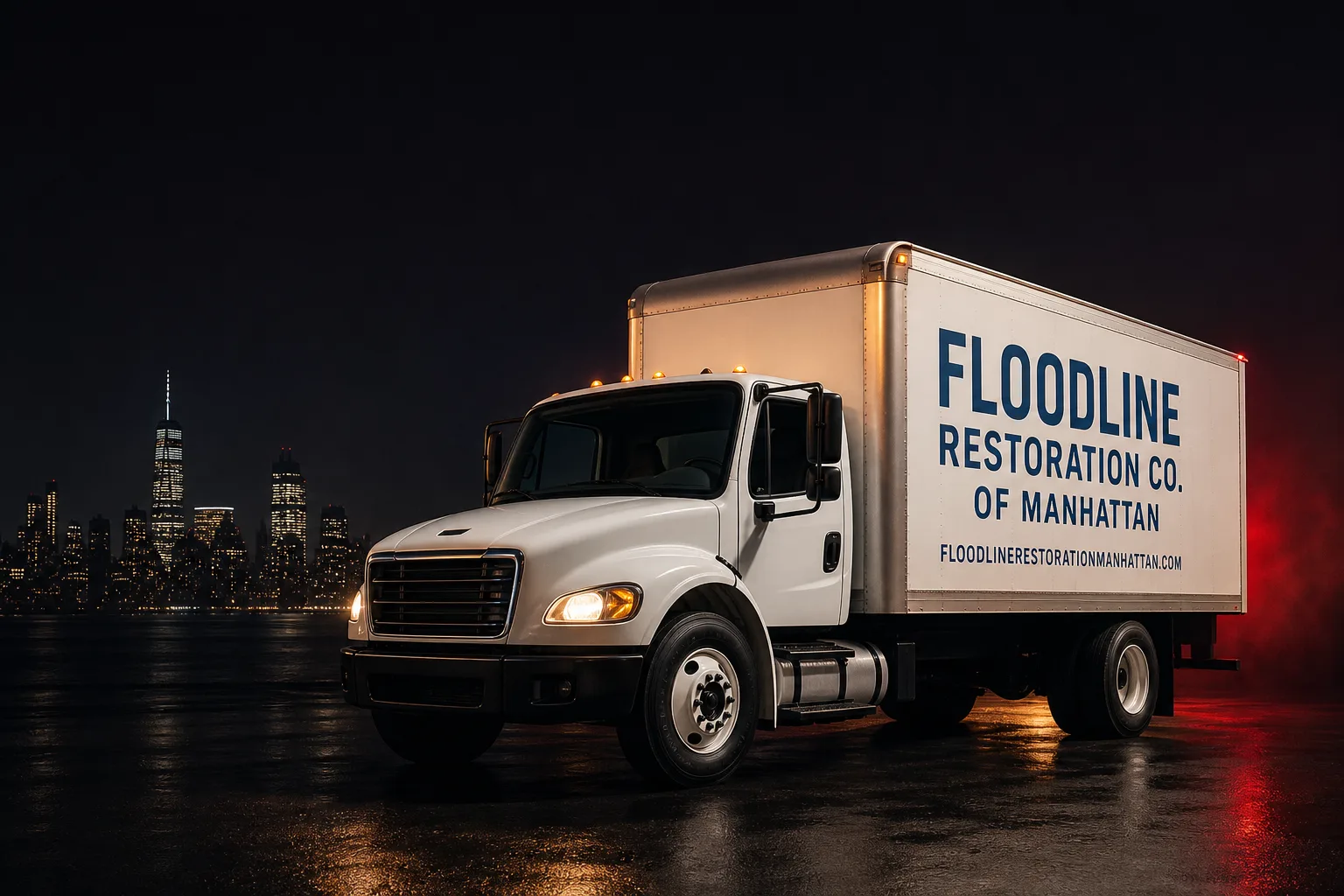
Storm and disaster restoration in Greenpoint moves fast because the neighborhood itself sits low and wet, bounded by Newtown Creek and the East River with a water table that rises before the rain even stops falling. When a nor’easter pushes tidal backflow through the combined sewer system or wind tears a section of roofing off a 1905 rowhouse, the damage compounds by the hour. Call (917) 924-4221 and a live dispatcher answers, any hour, any day. A crew reaches Greenpoint within 45 minutes, runs a free visual inspection, and starts stabilizing the property on the same visit. The first hour determines whether you’re drying a basement or replacing finished walls, flooring, and mechanicals.
Understanding Storm & Disaster Restoration Severity in Greenpoint Properties
Greenpoint’s housing stock was built before modern waterproofing existed. The attached brick rowhouses, railroad tenements, and converted lofts that line streets like Manhattan Avenue and Franklin Street went up between the 1880s and 1920s, most with unreinforced brick or rubble-stone foundation walls and no moisture barrier against the surrounding soil. That matters after a storm. Lateral moisture intrusion through these foundation walls is chronic here, not exceptional, and floodwater that sits against old brick wicks upward through the masonry within hours. We classify this water by category: Category 1 is clean supply water, Category 2 is contaminated gray water, and Category 3 is grossly contaminated water carrying sewage, chemicals, or worse. During a Greenpoint storm surge, combined-sewer backflow routinely delivers Category 3 water into basements. That’s a biohazard situation demanding containment, controlled demolition of saturated porous materials, and professional-grade dehumidification, not a shop vac and box fans.
Wind damage compounds the picture. Many Greenpoint rowhouses still carry original flat-roof membranes or aging parapet copings, and post-storm wind inspections on these buildings frequently reveal lifted seams, punctured flashing, and compromised skylights that let water in long after the storm passes. A failing door or window seal before a storm becomes a plaster-destroying leak after one.
Why Greenpoint Property Owners Choose Floodline Restoration Co. of Manhattan
- 45-minute response commitment. Our dispatch board tracks every crew in real time, and Greenpoint is a core response zone. We’ll be there when we say.
- A live person answers, 24/7. No automated system, no answering service script. You call at 2 a.m., a real dispatcher picks up and a certified crew moves.
- IICRC-certified crews. Our technicians hold WRT, FSRT, and AMRT certifications and train to RIA and IFA standards. The person running your moisture map knows what the readings mean.
- Free visual inspection. We walk the damage with you, explain what we’re seeing in plain terms, and give you a written scope before any work starts.
- Direct insurance billing. We bill your carrier directly and hand you the documentation. You don’t play messenger between Floodline and the adjuster.
- One team from extraction to reconstruction. The same background-checked, uniformed crew that pumps the basement also rebuilds the walls. No mid-job handoff to a subcontractor you’ve never met.
Our Storm & Disaster Restoration Process
Inspection & Assessment
We arrive, walk the property, and identify every affected surface. Thermal imaging and moisture meters tell us where the water actually traveled, which in old brick rowhouses is often farther than visible staining suggests.
Extraction & Stabilization
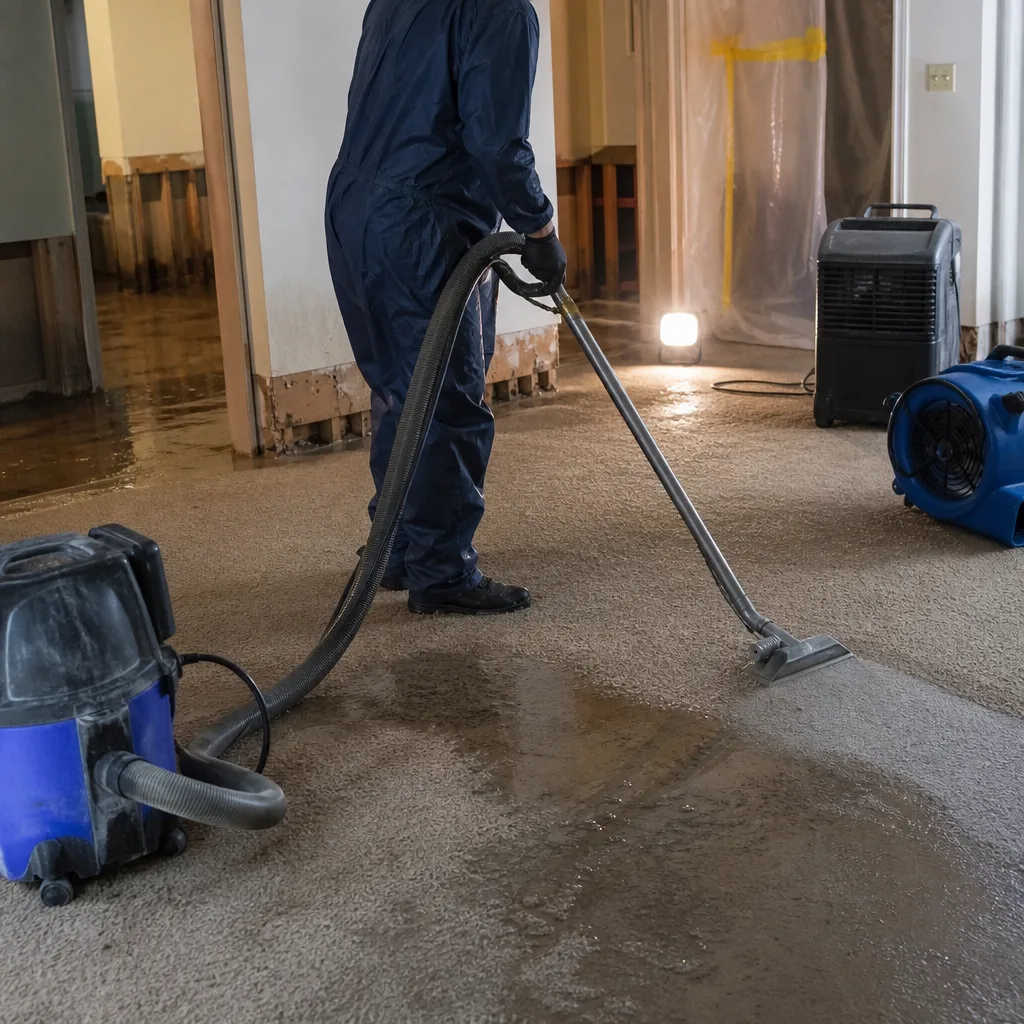
If basement floodwater is present, our first question here is waste characterization. Before pumping a gallon, we determine whether the water is carrying hydrocarbons from the Greenpoint oil spill plume and needs DEC-coordinated disposal. We extract with truck-mounted and portable units, then board up and tarp as needed.
Drying & Dehumidification
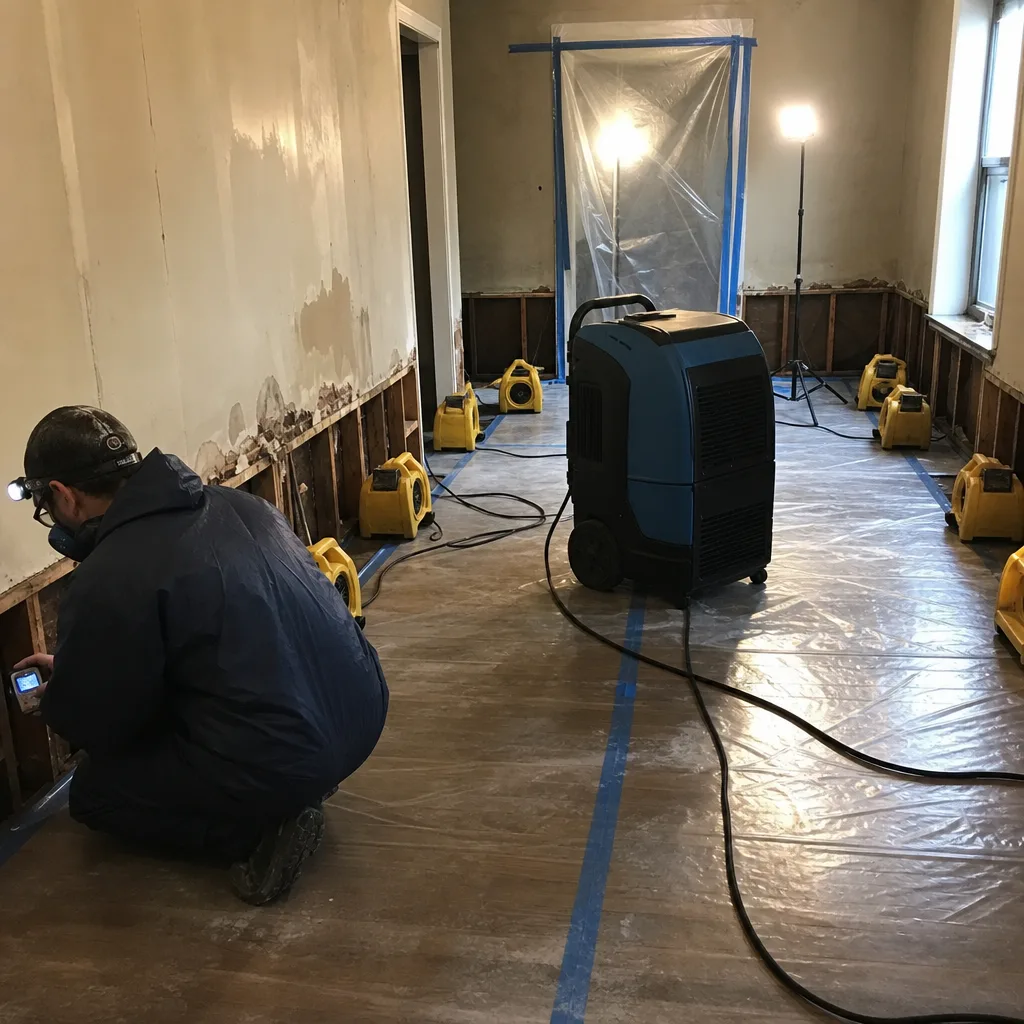
We set up Dri-Eaz and XPOWER air movers and Phoenix dehumidifiers, running daily moisture readings until building materials hit the dry standard. The moisture log goes to you and your carrier.
Cleaning & Sanitization
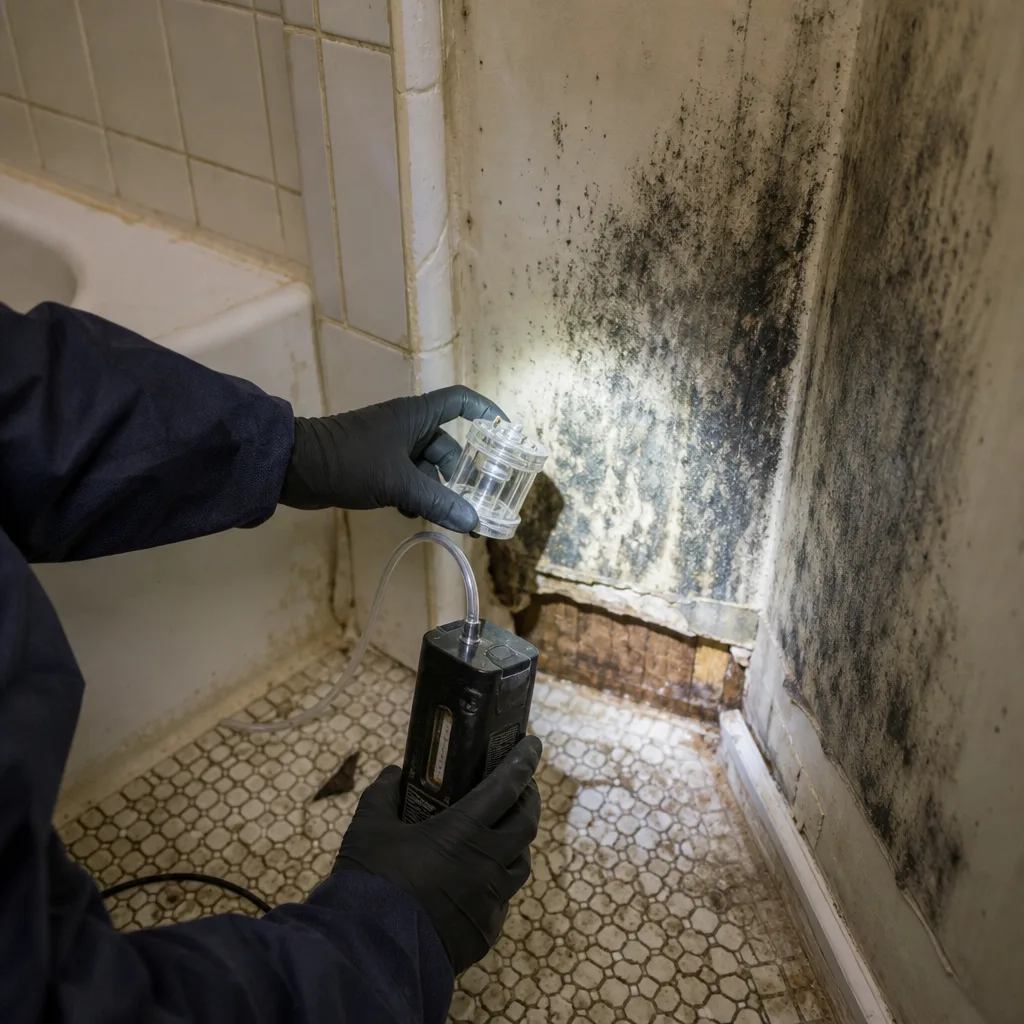
Category 3 water demands antimicrobial treatment and controlled disposal of saturated porous materials. We contain the work area, run HEPA air scrubbing where necessary, and clean all affected surfaces.
Storm-Specific Treatment
This is where Greenpoint differs. We test extracted water for petroleum hydrocarbons before disposal, coordinate with DEC on manifests when needed, and check foundation walls for lateral moisture entry that generic storm cleanup crews miss.
Repairs & Restoration
We rebuild what needs rebuilding: drywall, flooring, trim, electrical, and roofing repairs. The job isn’t done until the same crew that started the work finishes it.
Need Emergency Storm & Disaster Restoration in Greenpoint Now?
Crews minutes away, answering live 24 hours a day. The sooner we start, the less it costs.
Working With Your Insurance Company
Insurance claims after a Greenpoint storm get complicated when petroleum-tainted floodwater enters the picture. Your carrier may not have a protocol for DEC-coordinated disposal, and that’s where our direct adjuster communication makes the difference. We document the loss from the first hour: photos room by room, moisture readings on a running log, a line-item scope of work written in the estimating language adjusters expect. Curt Bowman built Floodline Restoration Co. around this documentation discipline, because a square deal starts with a paper trail the carrier can’t argue with. We bill directly, provide every receipt and manifest, and stay on the phone with your adjuster so you don’t have to.
What We Provide Your Insurer
- Thorough documentation of the loss
- Photos of all damage, room by room
- Moisture readings and drying logs
- A detailed, line-item scope of work
- Direct coordination with your carrier
Built for Greenpoint’s Loss Calendar
Greenpoint’s storm damage calendar runs on a predictable rhythm but with one wildcard that most neighborhoods don’t face. January and February bring deep freezes that burst supply lines in uninsulated pre-war buildings, sending clean Category 1 water through walls and ceilings until someone notices. March nor’easters are the hard-hitters, pushing storm surge up Newtown Creek and forcing combined-sewer backflow into basement drains and toilet bowls. That’s Category 3 by definition, and in Greenpoint it’s occasionally carrying hydrocarbons from the plume underfoot. April brings thaw plus spring rain, saturating ground around foundation walls that were never waterproofed. July and August deliver the thunderstorm downpours that overwhelm street drains in a neighborhood with minimal natural drainage. In the fall, remnants of Atlantic hurricanes arrive as heavy rain events, and Greenpoint’s position as a low-lying peninsula means every one of these carries flood potential that Williamsburg and Long Island City don’t face the same way.
Storm & Disaster Restoration Across Greenpoint’s Neighborhoods
The blocks north of McCarren Park, up around Greenpoint Avenue toward Newtown Creek, carry the heaviest flood exposure. Those streets sit lowest and nearest the creek, and after a nor’easter they’re where we get the most basement extraction calls. Over near the East River along the West Street corridor, wind off the water hits rowhouses on the exposed side with enough force to lift roof membranes and snap old awnings, so we see more wind-damage work and emergency roof tarping there. The Franklin Street and Manhattan Avenue commercial strips, with their converted lofts and mixed-use buildings, have different problems: rooftop HVAC penetrations that leak after heavy rain, parapet failures, and storefronts needing emergency board-up after wind takes out glass. Up around Meserole Avenue and the old industrial edges, many buildings date to the late 1800s with rubble-stone foundations that weep groundwater even without a storm. Each area responds to a storm differently, and a crew that reads the local building patterns gets the scope right the first time.
Specialized Storm & Disaster Restoration Services We Offer in Greenpoint
Storm Damage Cleanup
Wind-blown debris, downed branches, broken glass, saturated drywall, and pooling water. We clear the scene, contain the contamination, and inventory what’s salvageable. In Greenpoint, cleanup after a combined-sewer event means treating surfaces as Category 3 until proven otherwise.
Flood Damage Restoration
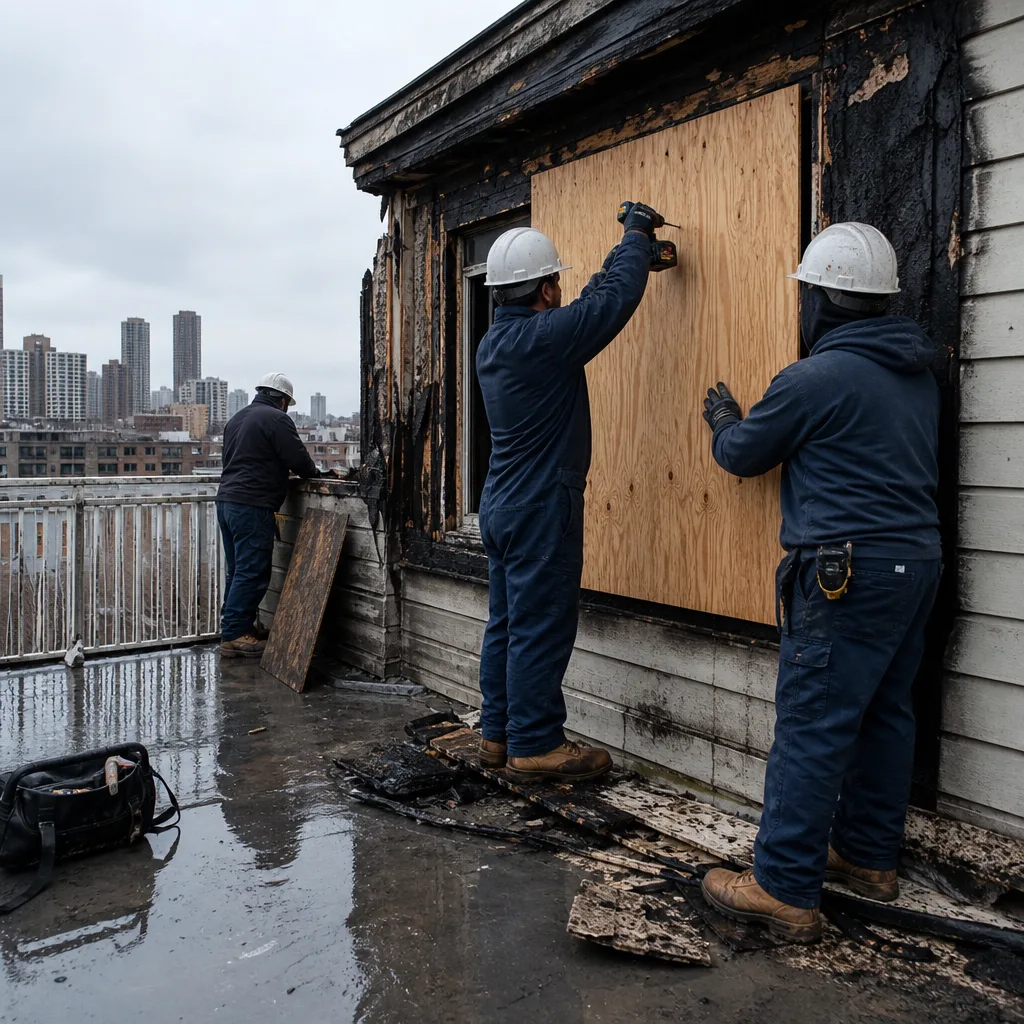
Pumping floodwater here isn’t a standard procedure. Given the petroleum plume beneath the neighborhood, extracted basement water can carry hydrocarbons that require DEC-coordinated hazardous-waste disposal, not a trip to a standard facility. Our crew tests before they pump, and we handle the manifests.
Emergency Board-Up
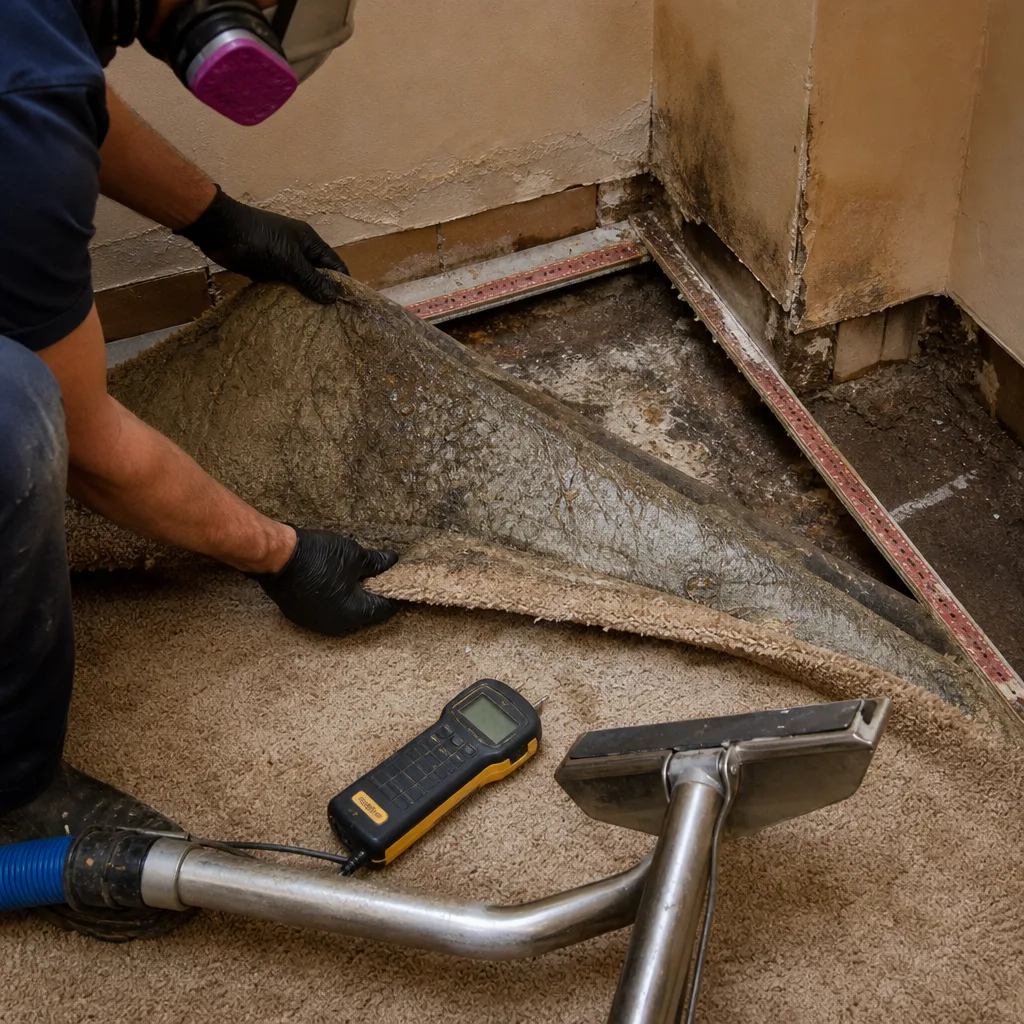
When wind takes out a window or a door fails, your property is open to weather and unauthorized entry. We board up with marine-grade plywood and proper fastening, same visit, any hour. This is also the first step before any restoration work begins on a breached envelope.
Roof Tarping
Greenpoint’s flat roofs and aging parapets don’t take kindly to nor’easter winds. We secure torn membrane sections with heavy-duty tarping, seal the seams, and stop water entry before it destroys ceilings and walls. Permanent repair follows once the weather allows.
Debris Removal
Storm debris blocks access, hides hazards, and slows down every other part of restoration. We haul it, sort it, and dispose of it properly. When the debris is contaminated from floodwater, we handle that classification too.
What happens when you call
- 1
A real person answersNo phone trees - you reach a local pro.
- 2
You get an upfront price rangeHonest numbers before anyone is dispatched.
- 3
A background-checked tech heads outLicensed & insured, dispatched right away.
- 4
You approve before work beginsNothing starts until you say go.
Storm & Disaster Restoration Costs in Greenpoint, NY
A typical flood damage restoration job in Greenpoint runs $2,800 to $8,500 depending on how much water entered, what category it was, and how long it sat. Emergency board-up runs $350 to $900 for a standard window or door opening. Roof tarping on a Greenpoint flat roof costs $450 to $1,400 depending on the torn area and accessibility. Debris removal runs $300 to $1,100 for a standard residential scene. Full storm damage cleanup with Category 3 water, antimicrobial treatment, and structural drying lands between $4,000 and $14,000. What moves the price: the size of the affected area, whether materials are salvageable, whether hydrocarbons are present and require specialized disposal, and how quickly we can start. Many of these costs are covered under your homeowner’s policy, and we handle the billing directly. The free visual inspection gives you a firm, written scope before any money changes hands.
We Also Serve Cities Near Greenpoint
Our crews run the same 45-minute response commitment to Fairview, Harrison, East Bronx, and Hunts Point. If you’re in one of those neighborhoods with storm damage, the same live dispatcher answers and the same certified crew arrives.
Greenpoint Storm & Disaster Restoration Questions, Answered
Why does Greenpoint floodwater sometimes require hazardous-waste disposal instead of standard pumping?
Greenpoint sits atop the Greenpoint oil spill, where an estimated 17 to 30 million gallons of petroleum from decades of refinery operations contaminated the subsurface soil and groundwater. When basements flood and water mixes with that contamination, it can test positive for hydrocarbons, which makes standard disposal at a municipal facility a regulatory violation. That water requires DEC-coordinated hazardous-waste handling. We test before pumping. Call (917) 924-4221 if you’re facing this situation.
How quickly do I need to start structural drying after a nor’easter floods my Greenpoint basement?
Within 24 to 48 hours. After that window, mold spores activate on wet drywall, wood, and insulation, and structural drying becomes a teardown and rebuild rather than a dry-in-place job. In Greenpoint’s old rowhouses, lateral moisture through brick foundation walls means you also need daily moisture readings until materials reach the dry standard. We start same visit when you call.)
Do Greenpoint’s older brick rowhouses need a different wind-damage inspection than newer construction?
Yes. Unreinforced brick walls from the 1880s through 1920s respond to wind load differently than modern framed construction. We check parapet copings, cornices, flat-roof membranes, lintels over windows, and the connections where roof joists meet brick walls. Wind damage on these buildings often shows up weeks later as a ceiling stain from lifted flashing. The inspection has to account for how the building was actually built.
What is Category 3 water, and why is it common in Greenpoint after a big storm?
Category 3 water is grossly contaminated water carrying sewage, pathogens, or toxic substances. Greenpoint gets it after storm surge pushes tidal backflow through combined sewers, sending sewage into basement drains. It’s also common when floodwater mixes with petroleum contamination from the subsurface plume. Category 3 demands antimicrobial treatment, controlled disposal of saturated materials, and professional containment. Do not treat it like clean rainwater.
Does the petroleum plume under Greenpoint mean my flood restoration claim will be more expensive or take longer?
It can, if the extracted water tests positive for hydrocarbons. That adds waste characterization lab work, DEC disposal manifests, and occasionally specialized hauling, all of which go into the documented scope we submit to your carrier. Most policies cover this. The timeline may extend by a few days depending on lab results. We handle every step and bill the carrier directly.
How fast can you actually get to my Greenpoint property?
Our commitment is 45 minutes or less for emergency storm and flood calls in Greenpoint. Dispatch is live 24 hours a day, so a real person confirms the crew’s route and ETA the moment you call (917) 924-4221.
Can I stay in my home during storm damage restoration?
Depends on the damage. If contamination is contained to the basement or a single area and your living space is dry, you can usually stay. We set up containment barriers and HEPA air scrubbing to keep your occupied space safe. If Category 3 water has spread through flooring or walls, or if the structural damage is extensive, you may need to relocate temporarily. We give you a straight answer at the free inspection.
What should I do in the first 30 minutes after storm damage hits?
Shut off electricity to affected areas if it’s safe to reach the panel without standing in water. Don’t enter standing water in the basement. Don’t turn on HVAC equipment that may have water in the ducts. Take photos of the damage. Then call (917) 924-4221. Our dispatcher walks you through the next steps and gets a crew rolling.
Serving Greenpoint, NY - Our Local Coverage Area
We’re based in the Greenpoint area and know this community well. Use the map below to see our service coverage - if you’re nearby, we can almost certainly help.
Our Storm & Disaster Restoration Team Knows Greenpoint
After a March nor’easter sent Category 3 water into an 1890s brick rowhouse basement on Eagle Street, our crew’s first call was to a hazardous-waste characterization lab before pumping a gallon. We ran moisture mapping with our Dri-Eaz and XPOWER gear, set up containment and air movers, and worked with DEC on disposal manifests until drying logs showed the original pre-loss condition was restored. That’s the job in Greenpoint: knowing when the ground under the house changes the rules, and being ready for it before the pump comes off the truck.
If the line the water left on your wall is in Greenpoint, we’re already nearby. Call (917) 924-4221 for a free estimate and a written scope before any work starts. Done right, and backed in writing. The 90-Day Done Right Promise is the Keystone Standard, and we stand behind it.
Written by Curt Bowman, Owner at Floodline Restoration Co., serving Greenpoint since our founding in 2010.