
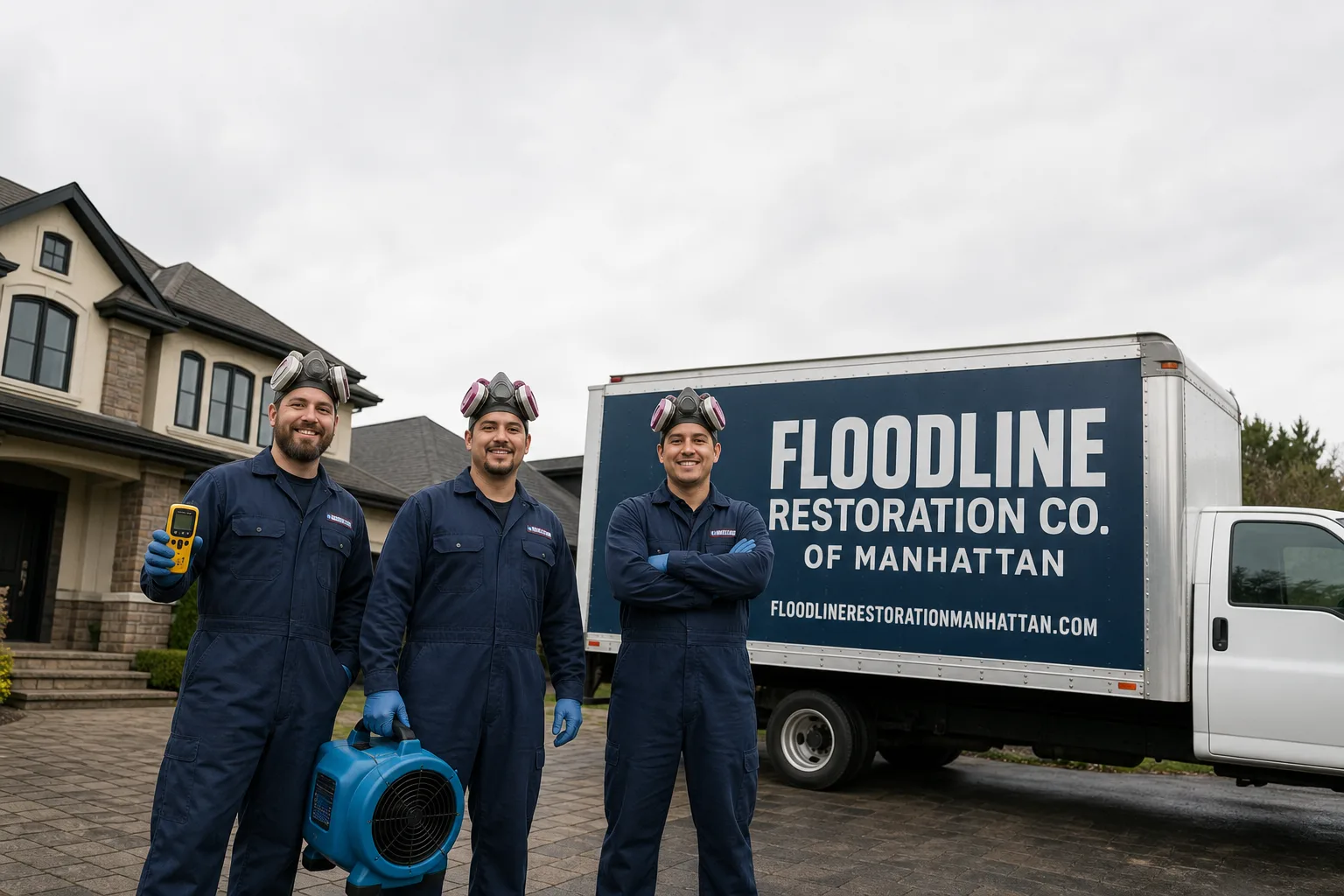
Free visual inspection and a written scope of work before any mitigation begins - photos, moisture readings, and drying logs go in your claim file
The scope we write is the scope we bill. Anything new gets shown to you, in writing, before we touch it.






 Before
 After
After Before
 After
After Before
 After
After24/7 Emergency Storm & Disaster Restoration in Greenville
If storm damage just hit your Greenville home, here’s the straight answer: our crews reach most Greenville properties within 45 minutes, extraction starts the same visit, and you’ll speak to a live dispatcher at (917) 924-4221 no matter the hour. We answer the phone at 2 a.m. with a person, not a recording. The first hour after a tree limb opens your roof or floodwater crosses your sill is when the damage compounds. Every minute that water sits in wall cavities, the wicking climbs higher, the mold window shortens, and the repair bill grows. A free visual inspection tells you exactly where you stand, and we’ll put that in plain terms before any work starts.
Understanding Storm & Disaster Restoration Severity in Greenville Properties
Storm damage is not one problem. It’s a chain reaction, and Greenville’s housing stock makes that chain longer and meaner than it is in suburbs full of newer construction. A storm rips shingles off a low-pitch mid-century cottage roof, meltwater follows the gap, and the original plaster and lath absorbs it like a sponge. The visible ceiling stain is small. The Category 3 water behind the drywall, feeding mold inside an uninsulated wall cavity, is not. In Greenville’s older farmhouses and seasonal bungalows, we routinely find moisture migration that has traveled 20 to 40 inches beyond the visible stain before anyone called. Moisture mapping with thermal imaging and hygrometers tells us the true boundary of the loss. Structural drying with professional-grade dehumidifiers and air movers then brings framing back to a documented dry standard, not a guess. The severity levels matter because a Category 1 clean-water burst pipe treated within hours is a dry-out. The same pipe discovered in April after months of slow bleed is Cat 3 remediation, full containment, and often rebuild. Greenville’s vacant winter cottages turn a lot of Category 1 events into Cat 3 losses before the owner ever sees a drop.
Why Greenville Property Owners Choose Floodline Restoration Co. of Manhattan
- 45-minute response commitment for Greenville storm calls. Our dispatch board routes the nearest certified crew the moment you hang up.
- 24/7 live answer, always a person. A dispatcher picks up at any hour. You’ll never leave a message during an emergency.
- IICRC-certified crews. Our technicians hold WRT, FSRT, and AMRT certifications, so water, fire, and mold protocols are followed to the letter of the standard.
- Free visual inspection. We assess the damage before any invoice exists. You’ll get a written scope, not a sales pitch.
- Direct insurance billing. We coordinate with your adjuster and bill your carrier directly. You’re not the messenger.
- One team from extraction to reconstruction. No mid-job handoff to a third party. The crew that dries your framing is the crew that rebuilds your walls.
Our Storm & Disaster Restoration Process
Inspection & Assessment
We arrive, walk the property, and map the full extent of moisture intrusion using thermal imaging and moisture meters. You get a straight read on what’s wet, what’s salvageable, and what needs to come out.
Extraction/Stabilization
Standing water comes out with professional-grade extraction units. Compromised ceilings are drained, damaged roofing is tarped, and openings are boarded to stop further weather intrusion.
Drying & Dehumidification
Dri-Eaz LGR dehumidifiers and Phoenix air movers go into a containment zone sized to the loss. Daily moisture readings are logged until the dry standard is met, and the log goes to you and your insurer.
Cleaning & Sanitization
Affected surfaces are cleaned and treated with appropriate antimicrobials. In Cat 3 losses, HEPA air scrubbers run throughout the process to capture airborne mold spores and particulate.
Specialty Treatment
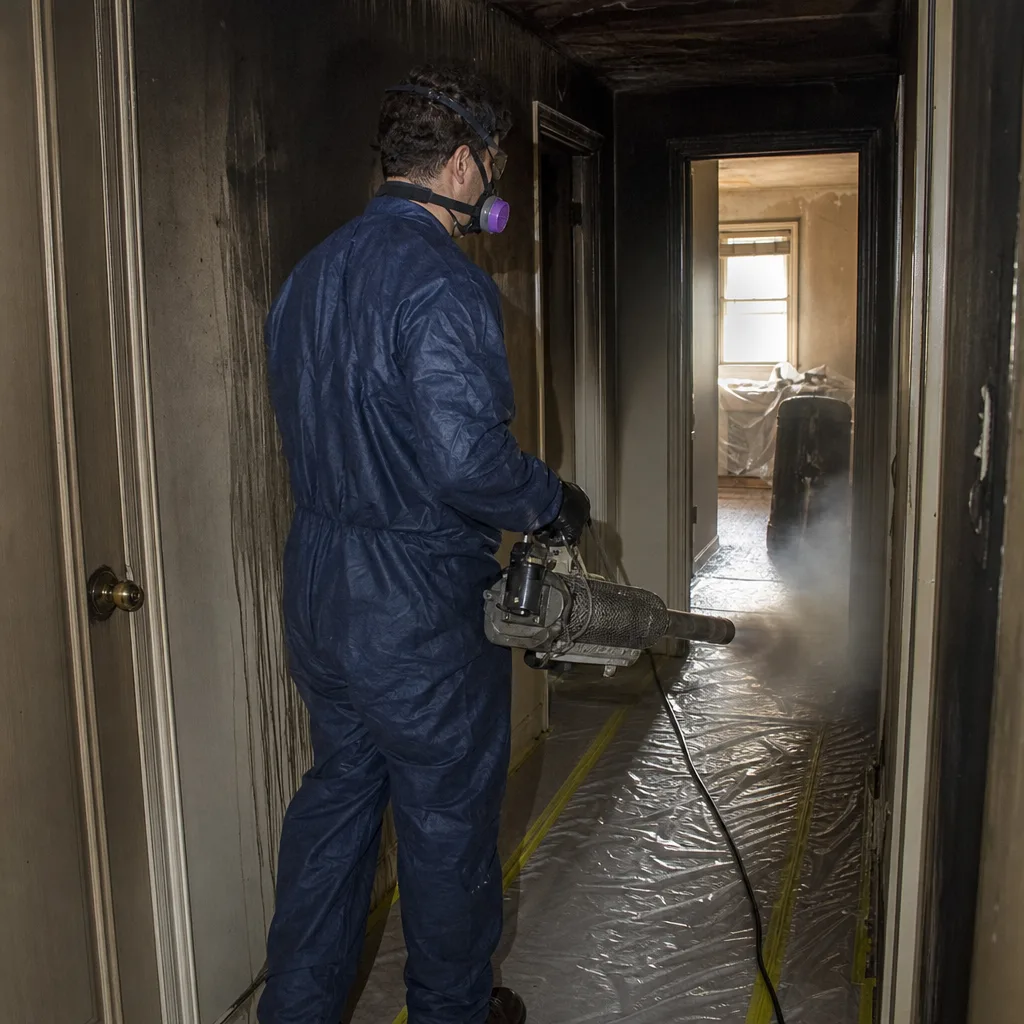
Storm-specific work includes anti-microbial fogging in wall cavities, structural wood treatment for rot-susceptible framing, and subfloor drying using Injectidry systems when hard flooring can be saved.
Repairs & Restoration
Drywall, insulation, flooring, and trim are restored to pre-loss condition. If structural repair is needed, our reconstruction crew handles it without a handoff. The 90-Day Done Right Promise covers the finished work in writing.
Need Emergency Storm & Disaster Restoration in Greenville Now?
Crews minutes away, answering live 24 hours a day. The sooner we start, the less it costs.
Working With Your Insurance Company
Restoration is only half the job. The other half is documentation that stands up to adjuster review. We build the claim file from the first hour: photographs of every affected room, moisture readings from the day we arrive through the day the dry standard is met, and a line-item scope of work that matches industry estimating standards. Our team communicates directly with your adjuster, so you’re not translating restoration terminology into insurance language over dinner. For long-latency Greenville losses, this matters even more. A January pipe burst discovered in April needs a paper trail that makes the timeline defensible. We provide it.
What We Provide Your Insurer
- Thorough documentation of the loss
- Photos of all damage, room by room
- Moisture readings and drying logs
- A detailed, line-item scope of work
- Direct coordination with your carrier
Built for Greenville’s Loss Calendar
Greenville’s storm restoration needs follow a pattern as old as the hills that shape its weather. January deep freezes in Greene County split supply lines in unheated cottages along Route 81 and in the hollows off Red Mill Road. That water sits until spring thaw. April and May bring the discovery season: owners drive up from the city, find the stain on the ceiling, and call. June through August, Catskill thunderstorms drop enough water in ninety minutes to overwhelm creeks and send runoff through stone foundations that were never waterproofed. Autumn brings wind events that peel asphalt shingles off low-pitch roofs and push rain through the gaps. Ice dam season starts in December on those same low-pitch roofs, because the snow load sits, melts from the underside, and refreezes at the eave line. Each season has a signature loss. We’ve seen every one of them repeated across Greenville’s cottages and farmhouses for years, and our crews stock for the calendar, not the forecast.
Storm & Disaster Restoration Across Greenville’s Neighborhoods
Greenville’s storm losses are not evenly distributed. They follow the terrain and the age of the housing. Properties near the Catskill Creek tributaries, especially in the lower-lying stretches west of town, take floodwater first when heavy rain pushes the stream over its banks. Homes along Route 32 and the side roads running east toward the foothills deal more often with wind damage and downed trees, because the elevation exposes the rooflines. The older farmhouses on the flatland off Greenville Center Road sit on stone foundations that leak at the sill during every thaw. The dense knot of mid-century seasonal cottages up toward the county forest gets hit with ice damming and frozen plumbing because those buildings were never insulated for Greene County winters. When we dispatch a crew to a call near a creek crossing versus one on high ground, we already have a pretty good idea what we’ll find. That local pattern recognition is part of what makes our Storm & Disaster Restoration work here faster and more accurate.
Specialized Storm & Disaster Restoration Services We Offer in Greenville
Flood Damage Restoration
Floodwater in Greenville is almost always Category 3: it’s carried creek silt, farm runoff, or snowmelt that has traveled through soil before entering your home. That means full containment, removal of saturated materials, and drying protocols that acknowledge the contamination. Carpets, pad, and drywall that absorbed floodwater come out, not just get dried. The 2011 flooding from Irene already saturated the creek corridors, and properties in those low spots face a recurring cycle. We treat each event as a fresh contamination loss, not a repeat dry-out.

Storm Damage Cleanup
Fallen trees, wind-driven debris, and blown-in rain leave a mess that goes beyond standing water. We remove storm debris, cut and clear fallen limbs from the structure, and document every impact point for the insurance file. In Greenville’s older homes, wind damage often exposes original roofing layers that have been patched over for decades. Our assessment includes looking for hidden water tracks behind that patched work.
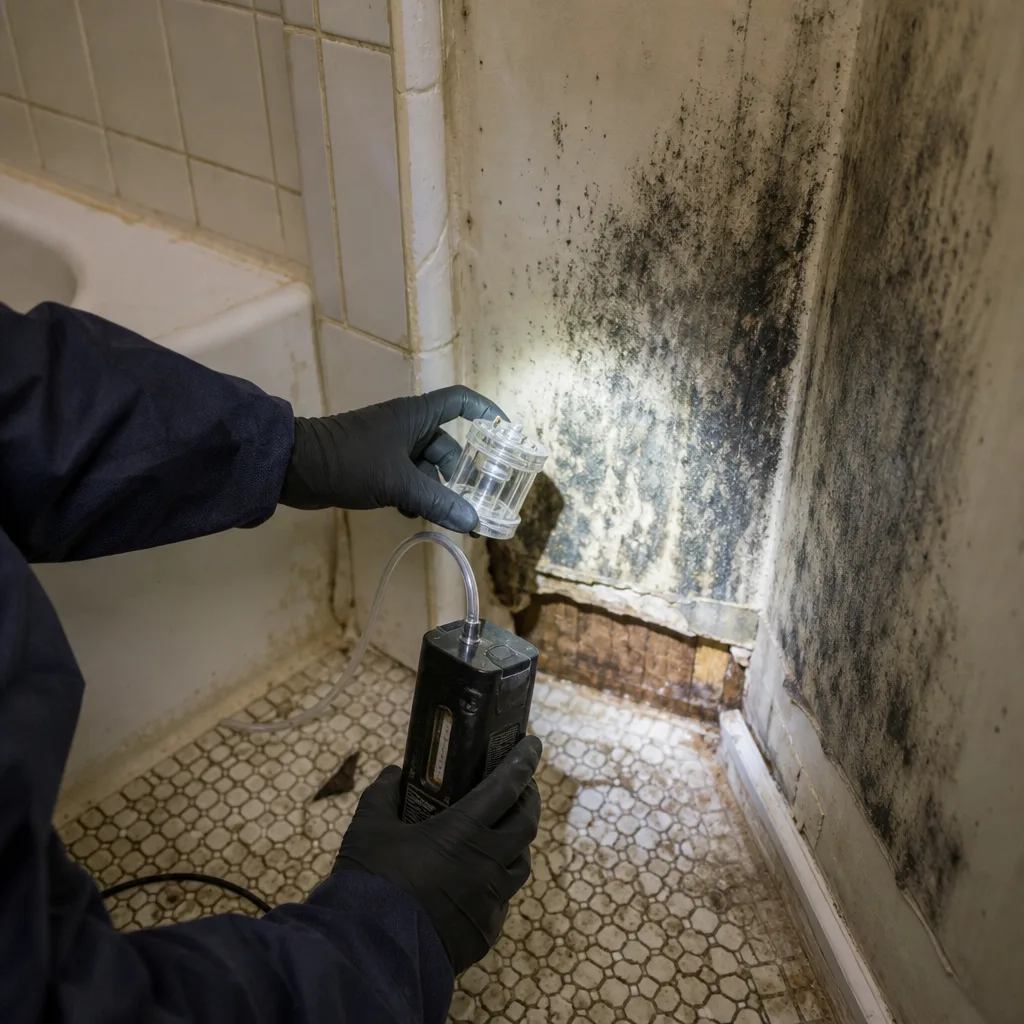
Emergency Board-Up
A missing window on a vacant Greenville cottage in winter is an invitation to more than weather. It lets in rain, snow, animals, and vandals. We board and secure openings the same day, using materials that can remain in place for weeks if the owner can’t get up from the city right away. The board-up is temporary and documented so the final repair is not delayed.
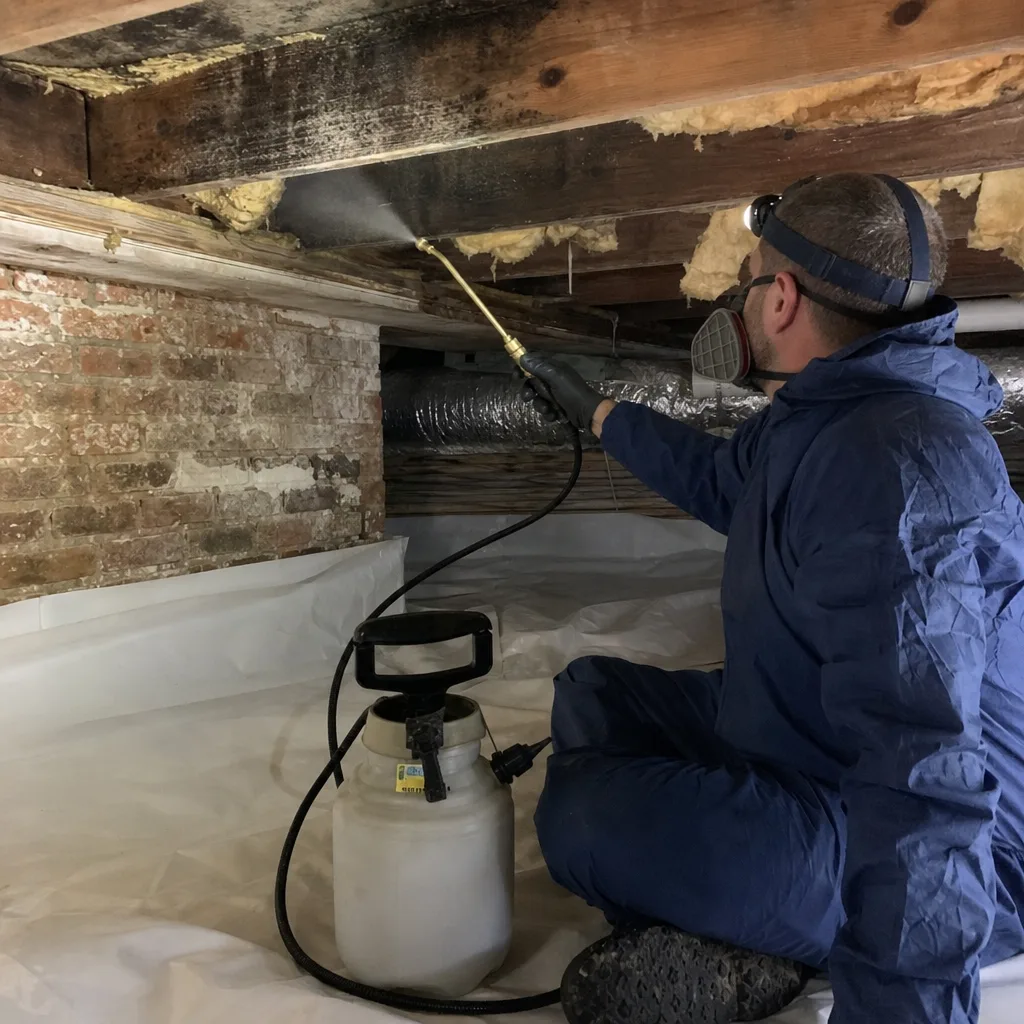
Roof Tarping
When wind takes off shingles or a tree limb opens the decking, the immediate priority is keeping the next rain out. Our crews tarp the damaged section and seal the edges against wind lift. On Greenville’s low-pitch roofs, we see ice damming every winter, so a spring tarp job often uncovers damage that started months earlier. The tarp gives us time to get the full scope into the insurance file before interior repairs begin.
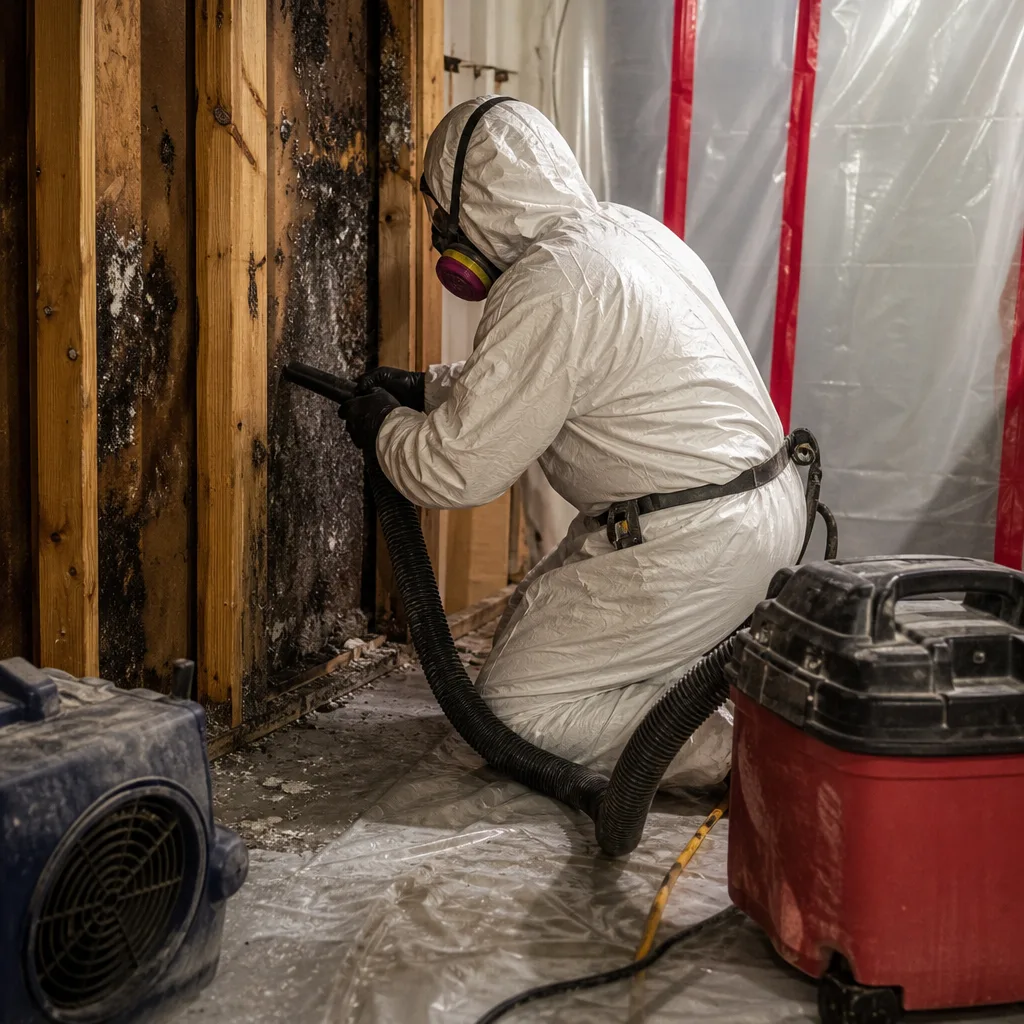
Debris Removal
Storm debris is more than yard waste. It includes saturated insulation, ceiling material, and flooring that has been removed during remediation. We haul it off site and dispose of it properly, including materials that require special handling due to contamination. You don’t get left with a pile of wet drywall on the lawn and a shrug.
What happens when you call
- 1
A real person answersNo phone trees - you reach a local pro.
- 2
You get an upfront price rangeHonest numbers before anyone is dispatched.
- 3
A background-checked tech heads outLicensed & insured, dispatched right away.
- 4
You approve before work beginsNothing starts until you say go.
Storm & Disaster Restoration Costs in Greenville, NY
In Greenville, a straightforward water extraction with structural drying in a single room typically runs $2,800 to $5,200. A full Cat 3 flood remediation in a small cottage, with containment, removal, drying, and rebuild of the affected walls, runs $9,000 to $25,000 depending on square footage and how long the water sat. Roof tarping after wind damage runs $450 to $1,200 as an emergency measure, separate from the permanent repair. Debris removal and board-up typically add $500 to $2,500 depending on volume and access. The single biggest cost driver in Greenville is latency: a pipe burst found in 48 hours is a drying job. The same burst found in April after four months is a mold remediation and rebuild. That’s why we tell every vacation-home owner the same thing: calling early is the cheapest repair decision you’ll make all year. Insurance covers most storm-related losses when the event is sudden and accidental, and we bill your carrier directly. For anything out of pocket, the free visual inspection gives you a firm written scope before you commit.
We Also Serve Cities Near Greenville
Our crews cover the full corridors around Greenville, including Storm & Disaster Restoration in Greenville and the neighboring communities of Red Hook, Chelsea, Shrub Oak, and Shenorock. Same dispatch, same certified crews, same live phone answer.
Serving Greenville, NY - Our Local Coverage Area
We’re based in the Greenville area and know this community well. Use the map below to see our service coverage - if you’re nearby, we can almost certainly help.
Greenville Storm & Disaster Restoration Questions, Answered
If my Greenville cottage sat empty all winter and I just found a burst pipe in April, is it too late for simple water extraction?
Yes, in almost every case. Water that has sat for months has moved beyond clean-water intrusion. It’s a Category 3 loss by that point, meaning the affected drywall, insulation, and flooring must be removed and the framing treated, not just dried. We’ll moisture-map the full extent before anything comes out, so you’ll see exactly where the water went. Call (917) 924-4221 and we’ll walk the property with you whenever you’re up from the city.
What does a storm restoration crew do differently for a 1950s seasonal bungalow vs. a year-round house in Greenville?
The big difference is discovery. In a year-round house, a storm leak gets caught in hours or days. In a seasonal bungalow, it’s usually months old. That means we assume longer moisture exposure, more aggressive mold, and deeper saturation into original timber framing. We also have to work around uninsulated wall cavities and original plaster, which hold water differently than modern drywall assemblies. Drying takes longer and removal is often more extensive.
How do you handle ice damming on the low-pitch roofs common on older Greenville cottages?
Ice dams force meltwater backward under the shingles, and on a low-pitch roof there’s nowhere for the water to go but inside. We start with roof tarping or targeted heat cable work to stop the active intrusion, then address the interior damage: wet insulation comes out, wall cavities get dried and treated, and the affected ceiling is repaired. Long-term we’ll often recommend adding ice-and-water shield when the roof is eventually replaced, but the emergency call is about stopping the water now.
After Hurricane Irene, my property near a tributary of Catskill Creek floods with every heavy rain. What should I expect when I call for flood damage restoration?
Expect us to treat it as a Category 3 contamination event, every time, even if it’s a few inches. Creek water carries silt and biological material, and it soaks into drywall and flooring fast. We remove the saturated material, clean and treat what remains, and run drying equipment until the structure meets the dry standard. We’ll also document the repeat-event history for your insurer, because recurring flood claims need a different conversation with the carrier. Call (917) 924-4221 and we’ll get a crew there quickly.
My Greenville weekend home has original galvanized plumbing that froze and burst. Do I need full restoration or can I just repair the pipe?
Repair the pipe first to stop the source, but the water damage is a separate issue. If the split leaked into a wall cavity and sat, you likely have hidden moisture and possible mold behind the drywall or paneling. We inspect with thermal imaging and moisture meters to find the true extent. In older Greenville homes with uninsulated cavities, we regularly find water had traveled much farther than the visible stain suggests. Skipping the drying step means the rot continues behind your new pipe.
How fast can a crew actually reach my Greenville home in a storm emergency?
Our commitment is 45 minutes or less for most Greenville addresses. Dispatch is live 24/7, so when you call (917) 924-4221, a real person routes the nearest certified crew immediately. In severe weather events with multiple calls stacking, we prioritize based on structural risk: a roof breach outranks a basement leak.
Will my insurance cover storm damage restoration?
Most sudden and accidental storm losses are covered, including wind, falling trees, and burst pipes. What insurers scrutinize is the delay between event and discovery. A January pipe burst reported in April will get questions about mitigation and maintenance. We build a documentation file from the first hour with photos, moisture logs, and a line-item scope, and we handle the adjuster conversation directly. That file is the strongest tool you have in a claim dispute.
What should I do in the first 30 minutes after I find storm damage in my Greenville home?
Call us at (917) 924-4221. Then, if it’s safe to do so, shut off the water at the main or the nearest shutoff, and move small valuables out of the affected area. Don’t enter standing water if electricity is still on or if the water may be contaminated. Don’t use a household vacuum to remove water. Don’t start pulling drywall or flooring yourself, because you’ll disturb contaminated material and complicate both the drying plan and the insurance claim. Let our crew assess it before anything else moves.
Floodline Restoration Co. of Manhattan answers the phone with a live person around the clock and dispatches certified storm restoration crews to Greenville, NY. One call starts the whole process from extraction to rebuild, with direct insurance billing and the 90-Day Done Right Promise in writing. Call (917) 924-4221 for a free visual inspection and a straight answer on what your recovery will take.
Written by Curt Bowman, Owner at Floodline Restoration Co. of Manhattan.