
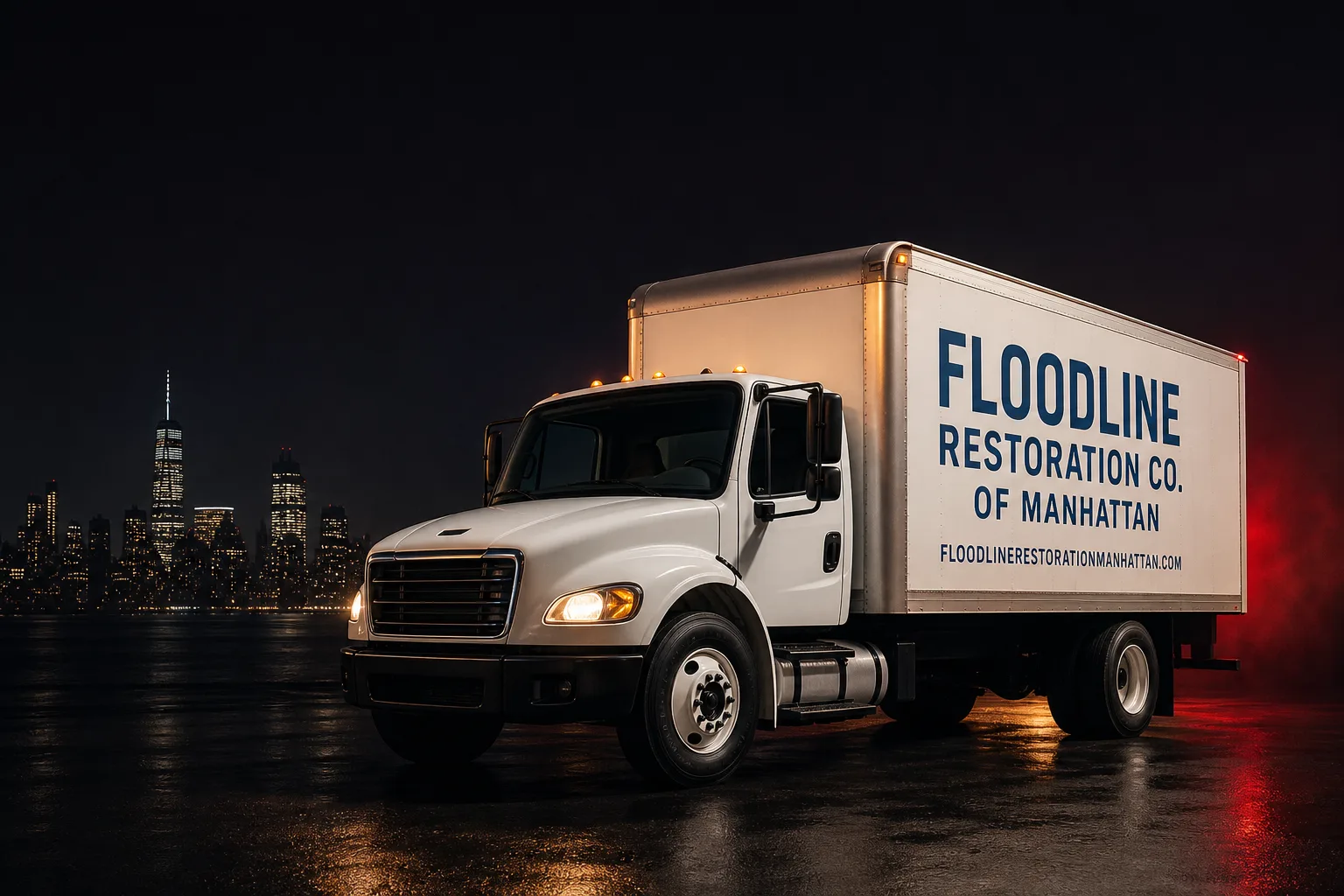
Free visual inspection and a written scope of work before any mitigation begins - photos, moisture readings, and drying logs go in your claim file
The scope we write is the scope we bill. Anything new gets shown to you, in writing, before we touch it.






 Before
 After
After Before
 After
After Before
 After
After24/7 Emergency Storm & Disaster Restoration in Greenwich Village
Storm damage in Greenwich Village moves fast. A nor’easter pushes Hudson River surge into Morton Street cellars within hours, and a wind-driven branch can open a Washington Square rowhouse roof in minutes. When water is moving through horsehair plaster and old-growth framing, waiting until morning is not an option. Our Storm & Disaster Restoration crews answer live around the clock and dispatch into Greenwich Village within 45 minutes. Call (917) 924-4221 now for a free visual inspection. The first hour determines whether you are drying a single room or rebuilding a shared party wall, so we start extraction the same visit.
Understanding Storm & Disaster Restoration Severity in Greenwich Village Properties
Storm water inside a Greenwich Village rowhouse is rarely clean. Rain that enters through a damaged cornice or a failed roof membrane is Category 1 when it falls, but by the time it has passed through a 160-year-old roof assembly and run down a lath-and-plaster wall, it has picked up decades of dust, soot, and rodent residue. That makes it Category 2, which carries bacteria and requires antimicrobial treatment. Storm surge from the Hudson is Category 3: it contains sewage, fuel, and salt. Category 3 water demands full containment, removal of saturated porous materials, and clearance testing before rebuild. The severity is not about how deep the water got; it is about what that water touched on its way in. In Greenwich Village, that path runs through materials that have not been manufactured for a century.
Why Greenwich Village Property Owners Choose Floodline Restoration Co. of Manhattan
You have one chance to dry a rowhouse correctly. These are the commitments we make in writing before work starts.
- 45-minute response commitment: a certified crew reaches Greenwich Village addresses within 45 minutes of your call, day or night, including Hudson Street co-ops and far-west cellar units.
- 24/7 live answer: a real dispatcher picks up at 2 a.m. Not a recording. We are a dispatch board, not a sales desk.
- IICRC-certified crews: our technicians hold WRT, FSRT, and AMRT certifications and are background-checked and uniformed on every job.
- Free visual inspection: we assess the damage, take moisture readings, and give you a written scope before any drying equipment gets plugged in.
- Direct insurance billing: we communicate with your adjuster and bill your carrier. You never play messenger between us and the insurance company.
- One team from extraction to reconstruction: the same crew that maps moisture on day one rebuilds what needs rebuilding. No mid-job handoff.
Our Storm & Disaster Restoration Process
Inspection & Assessment
We start with thermal imaging and moisture mapping to find water you cannot see inside party walls, under heart pine floors, and behind horsehair plaster. Every reading is logged from the first hour.
Extraction & Stabilization
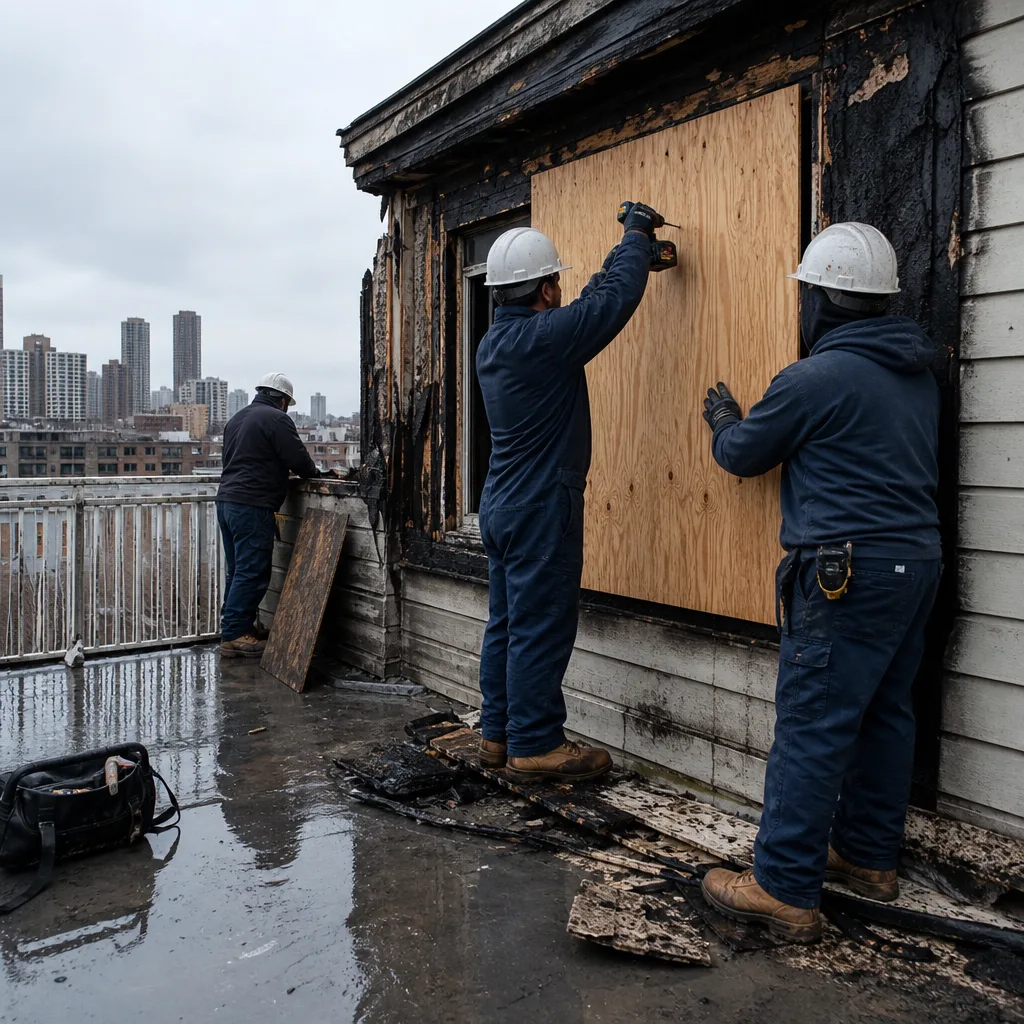
Truck-mounted extraction removes standing water from cellars and lower floors. We also stabilize the structure: board-up, roof tarping, and temporary shoring where wind or water has compromised the envelope.
Drying & Dehumidification
Dri-Eaz LGR dehumidifiers and Phoenix air movers run continuously, with daily hygrometer readings until the dry standard is met. On Hudson-side blocks, we account for the high water table so groundwater does not re-saturate the slab.
Cleaning & Sanitization
We apply antimicrobial treatments to exposed wood framing and hard surfaces, and run HEPA scrubbers to remove storm-driven particulates and any sewage contamination carried by surge water, following the same protocols as our Biohazard & Crime Scene Cleanup in Greenwich Village.
Landmarks-Compliant Repairs
Where storm damage affects exterior elements like cornices, window surrounds, or entry doors in the Historic District, we coordinate LPC review before work proceeds. No stop-work orders. No forced reversals.
Reconstruction & Restoration
We rebuild to pre-loss condition: plaster matched in kind, millwork replicated, floors refinished, as part of our Reconstruction & Cleanup - Greenwich Village. The 90-Day Done Right Promise is in your hands in writing before we consider the job closed.
Need Emergency Storm & Disaster Restoration in Greenwich Village Now?
Crews minutes away, answering live 24 hours a day. The sooner we start, the less it costs.
Working With Your Insurance Company
Storm damage claims in Greenwich Village get complicated when water crosses a party wall into a neighbor’s unit. Your carrier wants to know exactly which surfaces were wet, for how long, and when drying reached the dry standard. We build that file from the first hour: photos of every affected room before we move anything, moisture readings logged daily, and a line-item scope that matches industry-standard estimating software. Our team communicates directly with your adjuster. You get a copy of everything. If the claim involves a co-op building, we coordinate with the board and the building’s own carrier without making you ride herd on either. Call (917) 924-4221 and we will start the documentation today.
What We Provide Your Insurer
- Thorough documentation of the loss
- Photos of all damage, room by room
- Moisture readings and drying logs
- A detailed, line-item scope of work
- Direct coordination with your carrier
Built for Greenwich Village’s Loss Calendar
Storm losses in Greenwich Village follow a predictable rhythm. January and February bring deep freezes that burst cast-iron radiator supply lines in pre-war tenements, flooding apartments three floors below the point of failure. March and April send nor’easters up the coast: wind drives rain sideways into Historic District cornices and roof membranes, and the Hudson’s surge pushes into below-grade units on Morton, Barrow, and Bank Streets. Summer thunderstorms overwhelm the combined sewer system, backing storm water through cellar floor drains faster than pumps can discharge. In the fall, tropical remnants bring wind gusts that strip slate shingles and send limbs through skylights over top-floor railroad apartments. Each season has a signature. Our crews know which one is knocking when the phone rings at 3 a.m. in Greenwich Village.
Storm & Disaster Restoration Across Greenwich Village’s Neighborhoods
Greenwich Village is not one building type. Washington Square and the blocks north of it hold Federal and Greek Revival rowhouses with steep slate roofs that shed wind-driven rain poorly when flashing is original. West of Seventh Avenue, the Italianate and late-19th-century houses along Bleecker, Morton, and Barrow Streets share continuous party walls, so water in one cellar reads as moisture in two neighbors. The far-west blocks near Hudson River Park, including Bank, Bethune, and Christopher Streets, sit on filled land with a water table that turns a wet slab into a persistent mold source within two weeks. East of Broadway, early-20th-century tenements and loft conversions have cast-iron steam systems and long vertical plumbing runs that fail dramatically under storm pressure. Each corridor has a different failure pattern, and a single crew that does not know the difference will over-dry one job and under-dry the next.
Specialized Storm & Disaster Restoration Services We Offer in Greenwich Village
Storm Damage Cleanup
We remove storm debris from interiors and rooftops, extract standing water, and clear blocked drains on roof decks and rear yards. In the Historic District, debris removal on exterior elements requires a light touch: we photograph everything in place before removal for LPC documentation.
Flood Damage Restoration
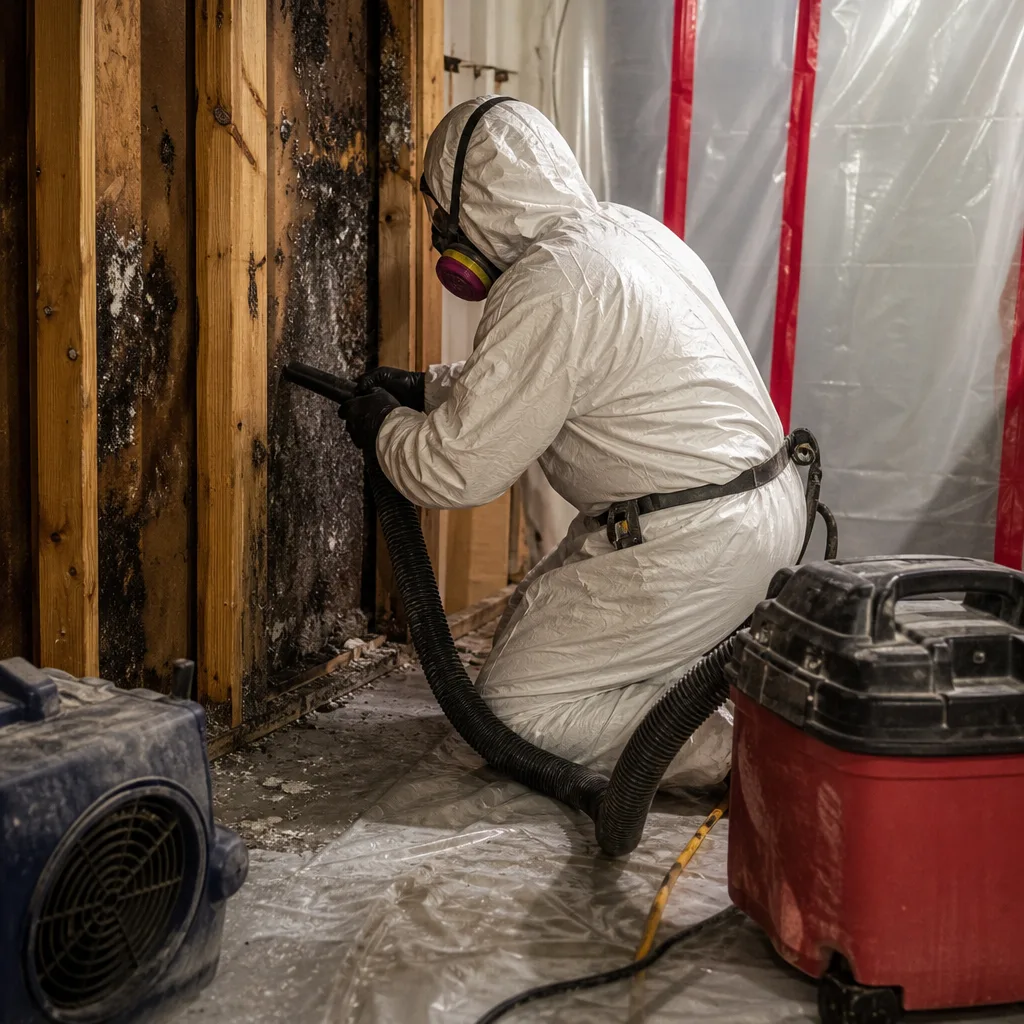
For Hudson-side blocks in Greenwich Village, groundwater intrusion is the real problem, not just rainfall. We combine extraction with sub-slab drying strategies and perimeter drainage assessment, so a Morton Street cellar does not turn into a recurring mold claim. Our team is trained to IFA standards for flood loss.
Emergency Board-Up
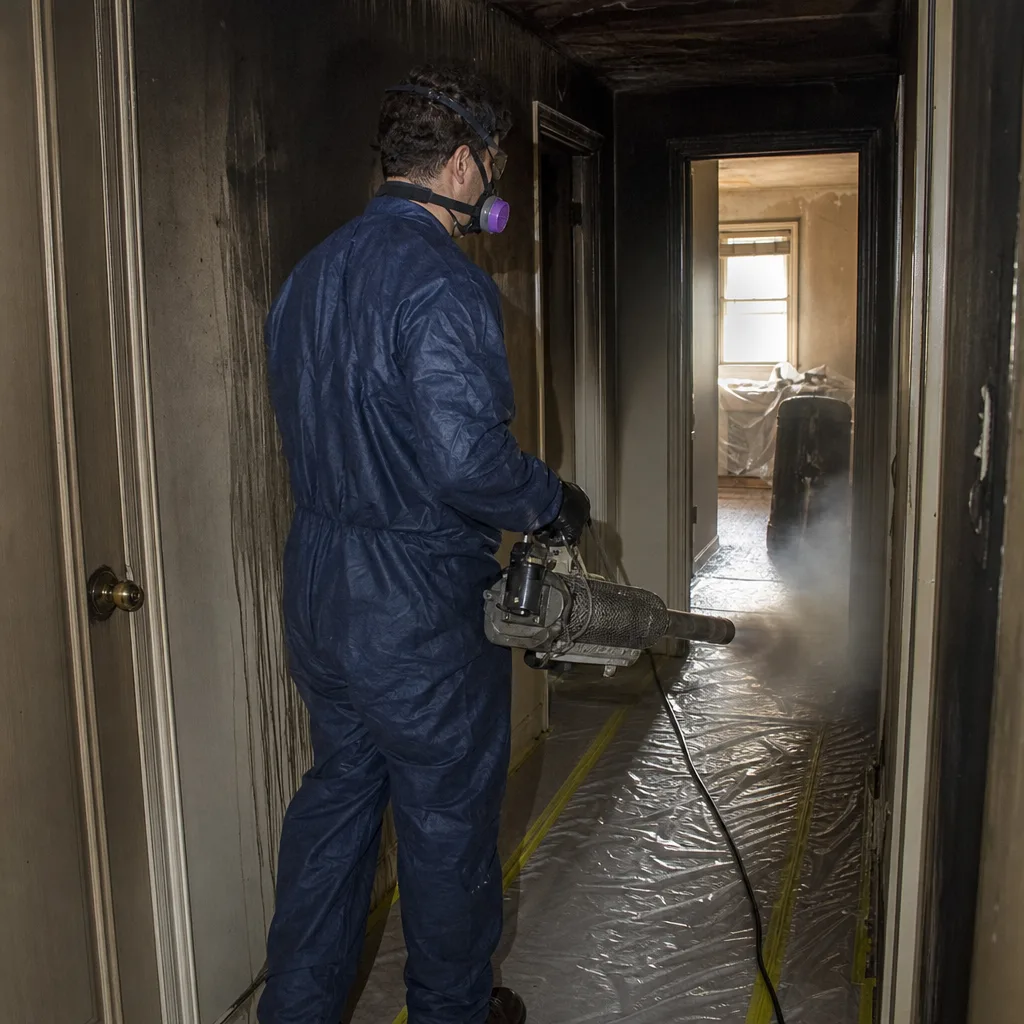
When wind breaks a window or a fallen branch opens a wall, we secure the opening immediately with board-up and, where LPC rules apply, frame it as temporary protection pending review. This keeps out rain and intruders before drying work begins.
Roof Tarping
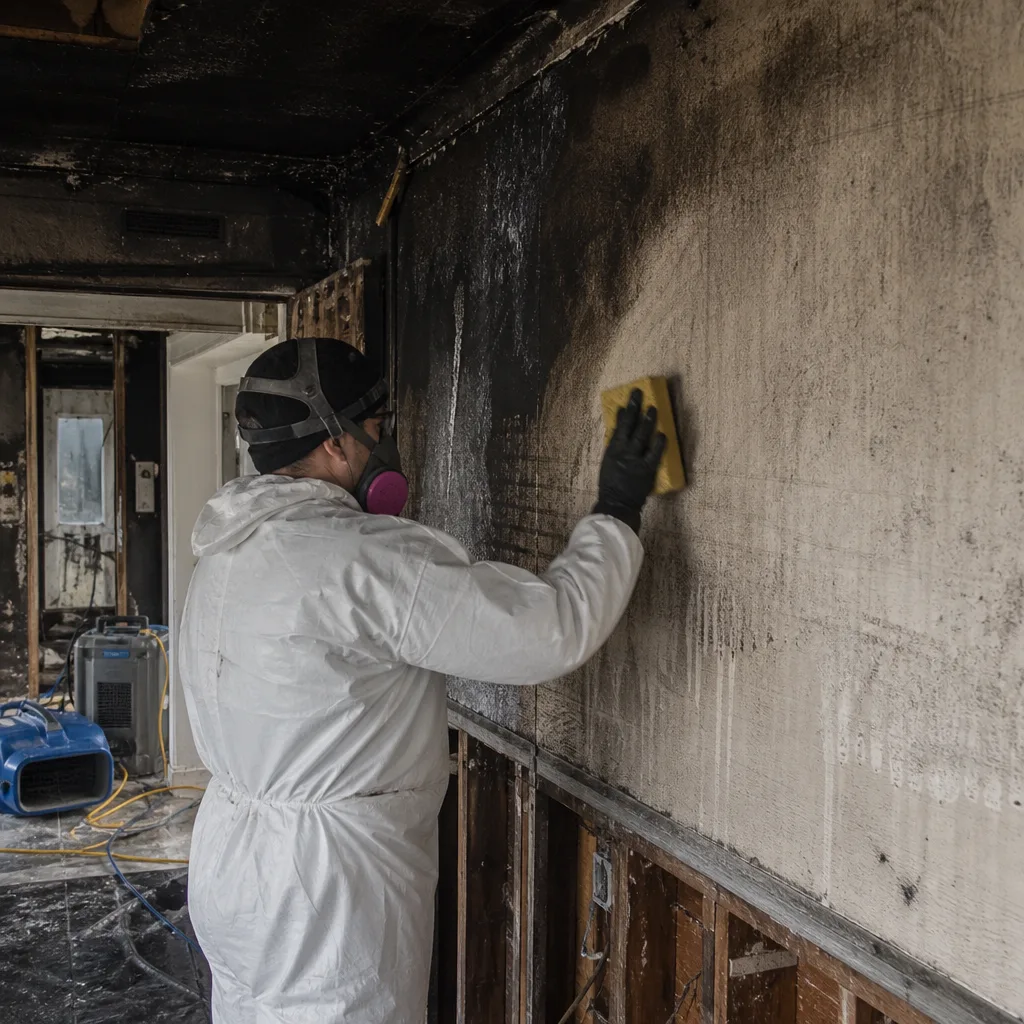
Wind-driven rain needs a sealed roof fast. We tarp damaged roofs on Federal rowhouses and Federal-era additions, anchoring tarps so they hold through a second storm while permanent repair scopes go through LPC review. A loose tarp in a Village windstorm is a liability, so we use reinforced anchoring on every job.
Debris Removal
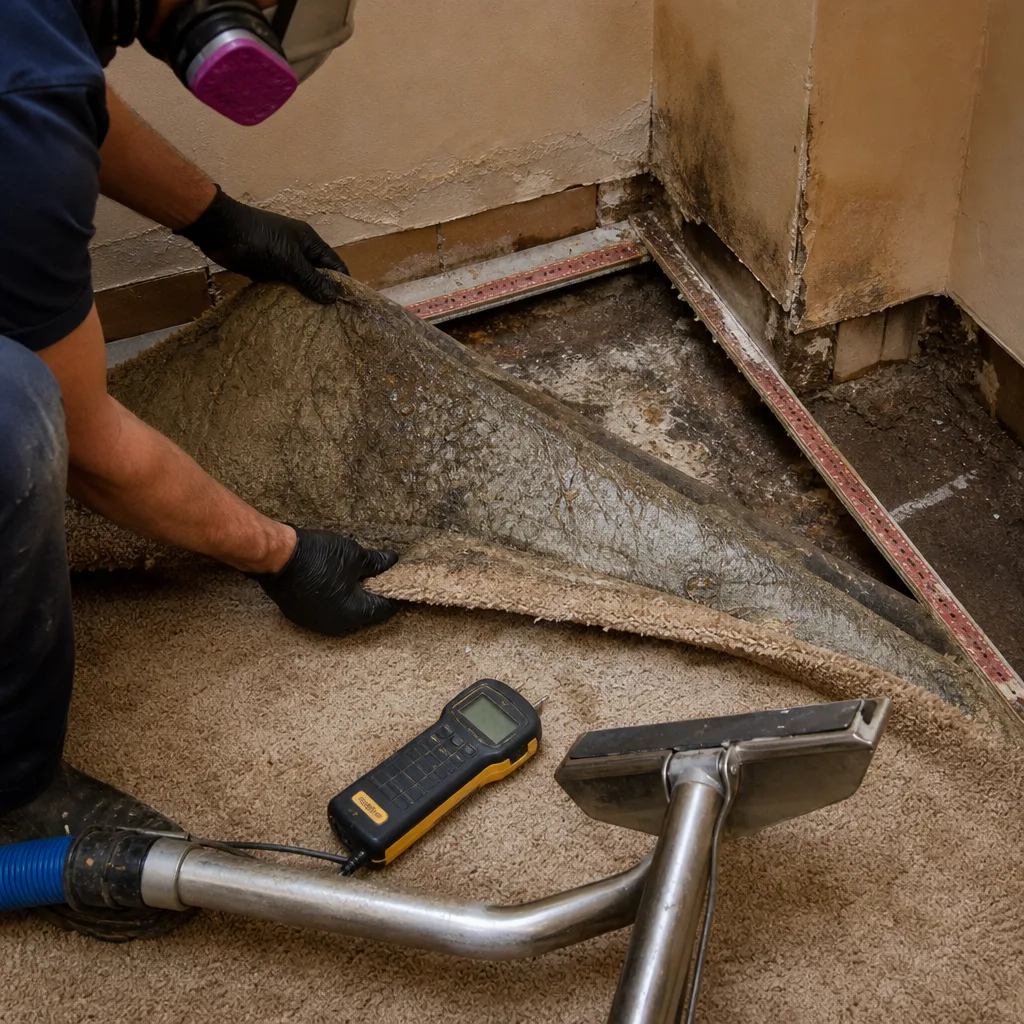
Storm debris in Greenwich Village tight rear yards and shared alleyways requires coordinated access. We remove branches, roofing debris, and damaged building materials, and work with neighboring owners where debris spans lot lines. Prompt removal stops secondary water entry and insect issues within days.
What happens when you call
- 1
A real person answersNo phone trees - you reach a local pro.
- 2
You get an upfront price rangeHonest numbers before anyone is dispatched.
- 3
A background-checked tech heads outLicensed & insured, dispatched right away.
- 4
You approve before work beginsNothing starts until you say go.
Storm & Disaster Restoration Costs in Greenwich Village, NY
Storm restoration in Greenwich Village runs higher than in newer construction because the materials demand more labor. Emergency water extraction in a Village cellar with groundwater intrusion typically runs $1,200 to $3,800 depending on square footage and contamination category. Structural drying for a storm-wet rowhouse party wall runs $2,500 to $6,500 when it includes LPC-sensitive drying protocols and moisture monitoring. Roof tarping on a rowhouse runs $650 to $1,800 depending on roof height and access. Full flood damage restoration with rebuild in a cellar apartment runs $9,000 to $28,000. What moves the price: Category of water, LPC review requirements, access through shared entrances, and whether the party wall needs drying across property lines. Insurance usually covers storm claims when documentation is thorough. We give you a free inspection and a written scope before any equipment runs, so you know the number before you commit. Call (917) 924-4221 for an exact quote.
We Also Serve Cities Near Greenwich Village
Our Manhattan crews also run storm and flood restoration in Fairview, Harrison, East Bronx, and Hunts Point, with the same 45-minute response and 90-Day Done Right Promise. If your property sits near the Greenwich Village border, call and we will confirm which crew reaches you fastest.
Serving Greenwich Village, NY - Our Local Coverage Area
We’re based in the Greenwich Village area and know this community well, offering our Sanitization Services in Greenwich Village. Use the map below to see our service coverage - if you’re nearby, we can almost certainly help.
Greenwich Village Storm & Disaster Restoration Questions, Answered
Why does storm flooding in Greenwich Village basements often require longer structural drying than in Midtown?
Greenwich Village basements on Hudson-facing blocks sit on historically filled land with a high water table, so groundwater re-saturates the slab while we are still drying the air. Drying must account for continuous moisture migration from below, which adds days to the drying curve compared to above-grade Midtown buildings. We use sub-slab moisture readings and adjust dehumidifier placement accordingly.
Can Floodline Restoration coordinate storm damage drying across shared party walls in a Village rowhouse?
Yes. After a nor’easter sent Hudson River surge into a Morton Street cellar, our crew set up containment and ran structural drying with Dri-Eaz LGR dehumidifiers and Phoenix air movers for four days. We used moisture mapping to track wicking into the shared party wall, coordinated access with the neighboring co-op board, and applied antimicrobial treatment to the old-growth heart pine framing before documenting the scope back to pre-loss condition. Party wall drying requires written access agreements and daily readings shared with both owners. We handle that coordination directly.
Does the Landmarks Preservation Commission require special approval for storm damage repairs in Greenwich Village?
Yes, for exterior work that alters protected features. Replacing a damaged Italianate cornice, a Greek Revival door surround, or any exterior element visible from the street requires LPC review before work begins. Emergency stabilization like board-up and tarping is allowed to prevent further damage, but permanent repairs must go through the LPC process. Contractors who skip this step face stop-work orders and forced reversals. We handle LPC compliance as part of the restoration scope.
How quickly should I start water extraction after a storm floods my Hudson Street co-op cellar?
Within hours, not days. Waiting more than 24 hours to start structural drying on a storm-wet party wall lets Category 2 water wick laterally into neighboring units and turns a one-unit mitigation into a three-owner claim. On Hudson Street and other far-west blocks, the high water table means groundwater keeps pushing in until extraction and dehumidification are paired. Call (917) 924-4221 and we will have extraction running the same visit.
What does a storm-damaged cast-iron steam system mean for restoration in older Village buildings?
Cast-iron steam systems in Village rowhouses and tenements run at high pressure and low pitch, so a storm-driven pressure surge or a frozen supply line can crack a radiator or blow a fitting, flooding the unit below. The restoration challenge is that the water travels through old pipe chases and behind plaster walls, so visible damage on one floor often masks hidden water two floors down. We inspect the full pipe run and dry the entire chase, not just the room where the leak showed.
Does insurance cover storm damage restoration in Greenwich Village?
Most standard homeowners policies cover sudden storm damage, including wind, rain, and surge water that enters from an opening. The claim succeeds when the documentation is complete: photos from the first hour, daily moisture logs, and a line-item scope that matches carrier estimating standards. We provide all of that and bill your carrier directly. For co-op buildings, we coordinate with the building’s master policy and your individual unit coverage.
Can I stay in my Greenwich Village apartment during storm restoration?
That depends on the water category and the extent of drying. Category 1 rainwater from a roof leak allows you to stay in dry rooms while we run containment around the affected area. Category 3 surge water from Hudson flooding, which contains sewage and fuel, usually requires vacating the affected unit until antimicrobial treatment and clearance testing are complete. We tell you honestly on day one which situation you are in, and we give you a timeline in writing.
What should I do in the first 30 minutes after storm water gets into my Greenwich Village property?
Turn off electricity to the affected area if you can do so without standing in water. Then call (917) 924-4221. Do not run standard fans, do not open walls, and do not use a shop vac on Category 2 or 3 water. Photograph everything before you move anything. In Greenwich Village, where party walls and LPC materials are in play, the first 30 minutes set the course for the whole claim. We will be on site within 45 minutes of your call.
Storm and wind damage in Greenwich Village does not wait for landmarks review, insurance adjusters, or business hours. Neither do we. Our Storm & Disaster Restoration team knows the rowhouses, the co-ops, the party walls, and the LPC rules that govern this Historic District, and we pair that with Dri-Eaz, Phoenix, and XPOWER equipment that moves water and moisture out of old buildings without destroying what makes them worth saving. If your cellar is wet, your roof is open, or your steam system just let go, call (917) 924-4221 now. A live dispatcher answers, a crew is dispatched to Greenwich Village within 45 minutes, and the 90-Day Done Right Promise is in writing before we finish. Done right, and backed in writing. That is the Keystone Standard.
Written by Curt Bowman, Owner at Floodline Restoration Co. of Manhattan, serving Greenwich Village since 2010.