
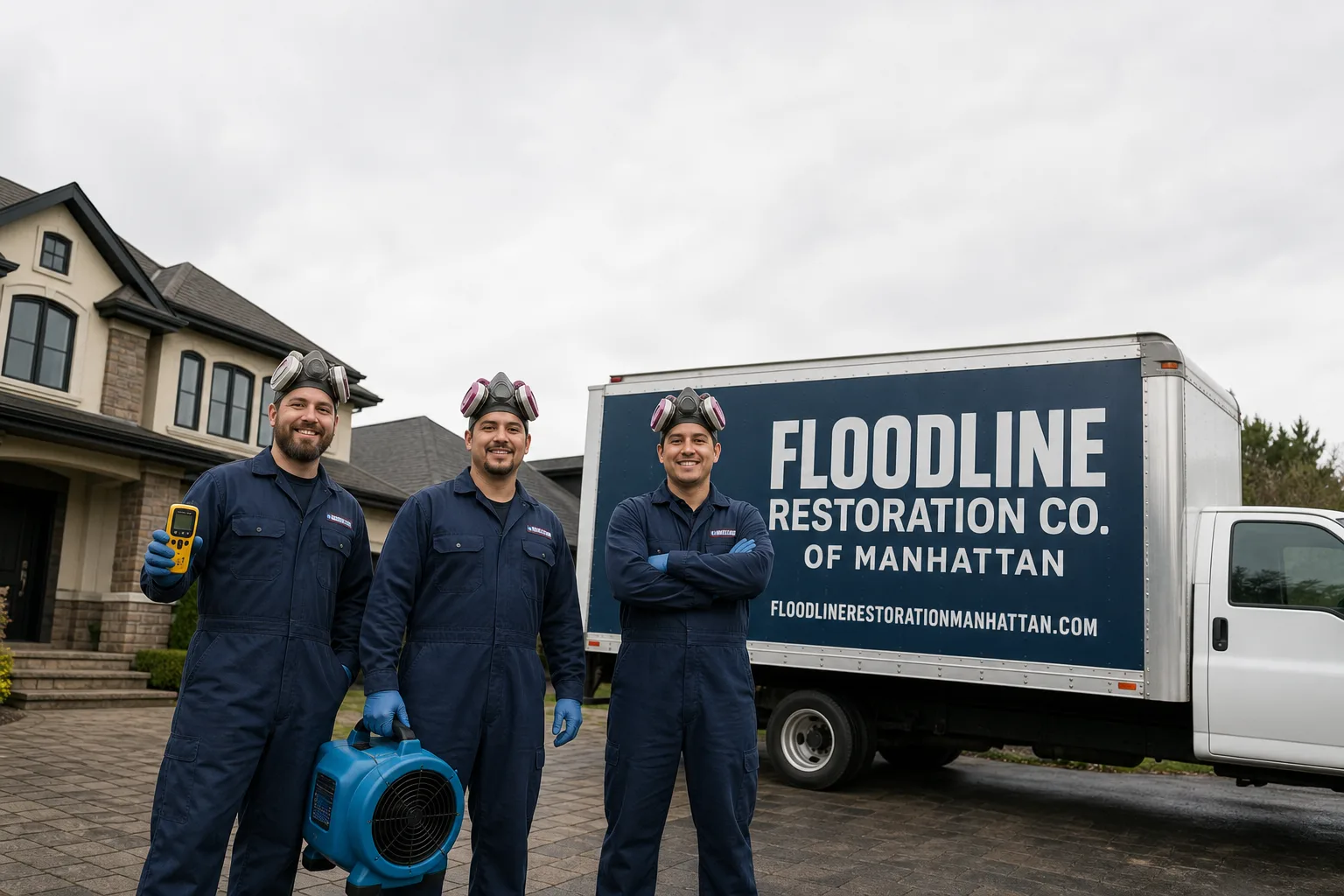
Free visual inspection and a written scope of work before any mitigation begins - photos, moisture readings, and drying logs go in your claim file
The scope we write is the scope we bill. Anything new gets shown to you, in writing, before we touch it.






 Before
 After
After Before
 After
After Before
 After
After24/7 Emergency Storm & Disaster Restoration in Kensington
Storm damage in Kensington moves fast. A nor’easter tears open a slate roof at 3 a.m., wind-driven rain pours through original plaster ceilings, and within 48 hours you’re looking at mold behind lath-and-plaster walls that were built in 1932. That’s why we answer live around the clock. Call (917) 924-4221 and a real person picks up, not a recording. A certified Storm & Disaster Restoration crew can be dispatched to your Kensington street within 45 minutes, often faster. We start with a free visual inspection, take moisture readings the same visit, and begin emergency board-up or roof tarping immediately if the envelope is open. The first hour matters most: water migration through plaster and old-growth timber accelerates damage, and the longer it sits, the more expensive the scope becomes. Our Storm & Disaster Restoration team handles everything from first extraction to finished rebuild under one roof, so you’re never handed off to an unknown crew.
Understanding Storm & Disaster Restoration Severity in Kensington Properties
Not all storm water is equal, and Kensington’s housing stock makes severity classification especially important. Category 1 water comes from a clean source like a roof leak before it touches insulation or framing. Category 2 carries significant contaminants, common when wind-driven rain passes through old attic cellulose or lead paint dust. Category 3 water, the worst, contains sewage, bacteria, or chemical runoff, often from storm sewer backup or flooding that breaches finished basements. In pre-war Kensington homes, we see a pattern: water enters at the roofline, travels down through plaster-and-lath interior walls, and pools inside cavities where you can’t see it. By the time staining appears on a dining room ceiling on Beverly Road, moisture has often been sitting in the wall for days. Professional moisture mapping with thermal imaging and penetrating probes tells us exactly how far the water traveled. Then structural drying begins with commercial Dri-Eaz and Phoenix equipment, monitored daily until the dry standard is met. Guesswork isn’t restoration.
Why Kensington Property Owners Choose Floodline Restoration Co. of Manhattan
- 45-minute response commitment: From the moment you call, a Kensington-area crew is mobilized. Most jobs see extraction running the same visit.
- 24/7 live answer, always a person: Our dispatchers answer at 2 a.m. on a February night when a nor’easter has just torn through your roofline. No phone trees, no callbacks.
- IICRC-certified crews: Our technicians hold WRT, FSRT, and AMRT certifications and train to RIA and IFA standards. They arrive in uniform, background-checked, and know period construction.
- Free visual inspection: No charge to walk the property, assess the damage, and give you a straight answer about what needs to happen and what can wait.
- Direct insurance billing: We submit to your carrier directly, with photo documentation, moisture logs, and a line-item scope of work. You never play messenger.
- One team from extraction to reconstruction: The same certified crew that reads the moisture map on day one handles daily readings, dries the structure, and rebuilds what needs rebuilding. No handoff, no inherited crew.
Our Storm & Disaster Restoration Process
Inspection & Assessment
We arrive, walk the property, and document every surface. Thermal imaging reads the moisture map behind plaster, above ceilings, and under flooring. You get a clear scope and a firm price before work starts.
Extraction & Stabilization
Standing water comes out immediately with truck-mounted extraction units. If the roof or windows are open to weather, we board up and tarp now, not later. Stabilization stops the loss from getting worse while mitigation proceeds.
Drying & Dehumidification
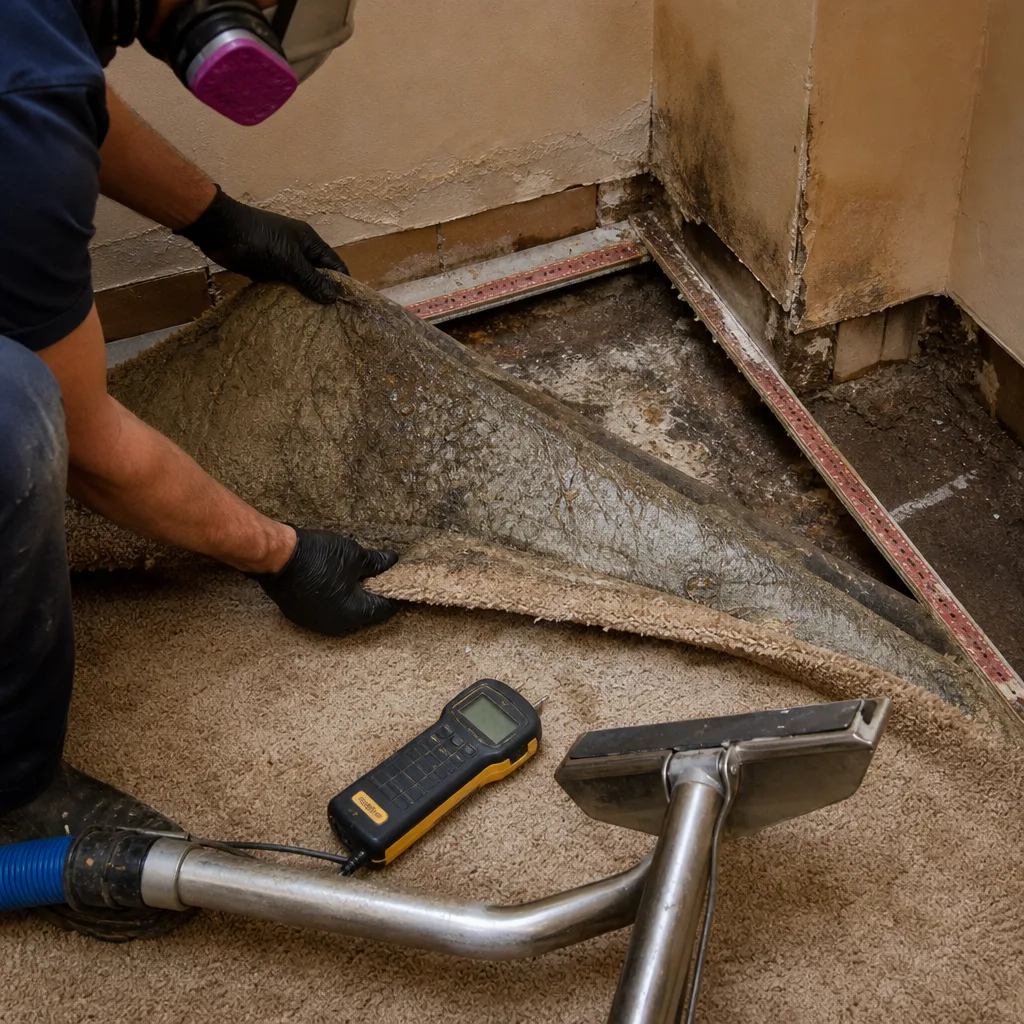
Professional-grade Dri-Eaz and Phoenix air movers and dehumidifiers run continuously. We use Injectidry systems to pull moisture from wall cavities and under cabinetry that would otherwise stay wet and hidden.
Cleaning & Sanitization
Contaminated surfaces get antimicrobial treatment appropriate to the water category. HEPA air scrubbers run during contaminated-drywall removal and through structural drying to capture spores and particulates.
Specialty Treatment for Storm Damage
This is where Kensington work differs from generic restoration. We treat period plaster, document legacy plumbing corrosion for your insurer, and match original slate or clay tile during roof repairs.
Repairs & Restoration
The same crew rebuilds what was damaged: plaster repair, hardwood refinishing, slate roof sections, trim replication, structural carpentry. We leave the home at pre-loss condition, not just dry.
Need Emergency Storm & Disaster Restoration in Kensington Now?
Crews minutes away, answering live 24 hours a day. The sooner we start, the less it costs.
Working With Your Insurance Company
Storm damage claims in Kensington hinge on documentation. From the first hour, we photograph every surface, log moisture readings room by room, and write a scope of work that reflects real line-item costs for period materials, not generic drywall allowances. What complicates many Kensington claims is what we find after opening a wall. When corrosion behind original galvanized supply lines is discovered during storm mitigation, your carrier needs to see evidence, not hear an anecdote. Our drying logs, photos, and written findings go directly to your adjuster. We bill the insurer directly for covered work, and we coordinate with your adjuster by phone and email so you don’t have to interpret restoration terminology. That’s a square deal, and we put it in writing under our 90-Day Done Right Promise.
What We Provide Your Insurer
- Thorough documentation of the loss
- Photos of all damage, room by room
- Moisture readings and drying logs
- A detailed, line-item scope of work
- Direct coordination with your carrier
Built for Kensington’s Loss Calendar
Kensington’s storm losses follow the seasons, and each one hits these old houses differently. January brings deep freezes that burst supply lines behind original plaster walls, often in the dead of night when homes are quietest. Spring thaw and heavy April rains saturate the ground around foundations built before modern drainage, sending water into basements through fieldstone and early poured concrete. Summer brings thunderstorm microbursts that drop branches from the village’s dense mature canopy onto slate and clay tile roofs. Then comes nor’easter season, the most destructive period for Kensington homes. Sustained wind-driven rain finds every gap at dormer intersections, around chimneys, and along aging flashing on steep roof pitches. By the time a storm passes, damage is rarely confined to one surface. Water has traveled. Our crews know these seasonal patterns and arrive prepared for what this village’s homes actually throw at them.
Storm & Disaster Restoration Across Kensington’s Neighborhoods
Kensington is small, but its streets hold distinct restoration patterns. Homes along Beverly Road, with their 1930s Colonials and original slate roofs, see recurring wind damage at dormer intersections where flashing has aged past its service life. The streets off Arleigh Road tend toward substantial 1920s Tudors and center-hall Colonials where plaster ceilings meet walnut-stained trim, making water migration through lath and plaster the defining challenge after any roof breach. Along the Middle Neck Road corridor, the homes run large and set back, often with mature trees close enough to drop limbs onto roof structures during summer storms. The properties near Allenwood Road’s curve, where the canopy sits dense, see the highest rate of whole-tree and large-limbs falls in storm season. On Edgewood Road and the connecting blocks, we regularly find corroded galvanized supply lines still in service behind original walls, a hidden vulnerability that turns what looked like a simple ceiling stain into a plumbing restoration project. Each area has its own failure pattern, and mapping that pattern is part of our job.
Specialized Storm & Disaster Restoration Services We Offer in Kensington
Roof Tarping
Kensington’s slate and clay tile roofs cannot be tarped the way an asphalt roof can; stakes and nail patterns have to respect the tile and the copper valleys beneath. Our crews tarp dormer intersections, ridge lines, and flashed penetrations with weighted systems that hold through a nor’easter’s sustained winds. We have tarped original slate on Beverly Road and Arleigh Road more times than we can count, and we know which fastening methods the village building department accepts.
Storm Damage Cleanup
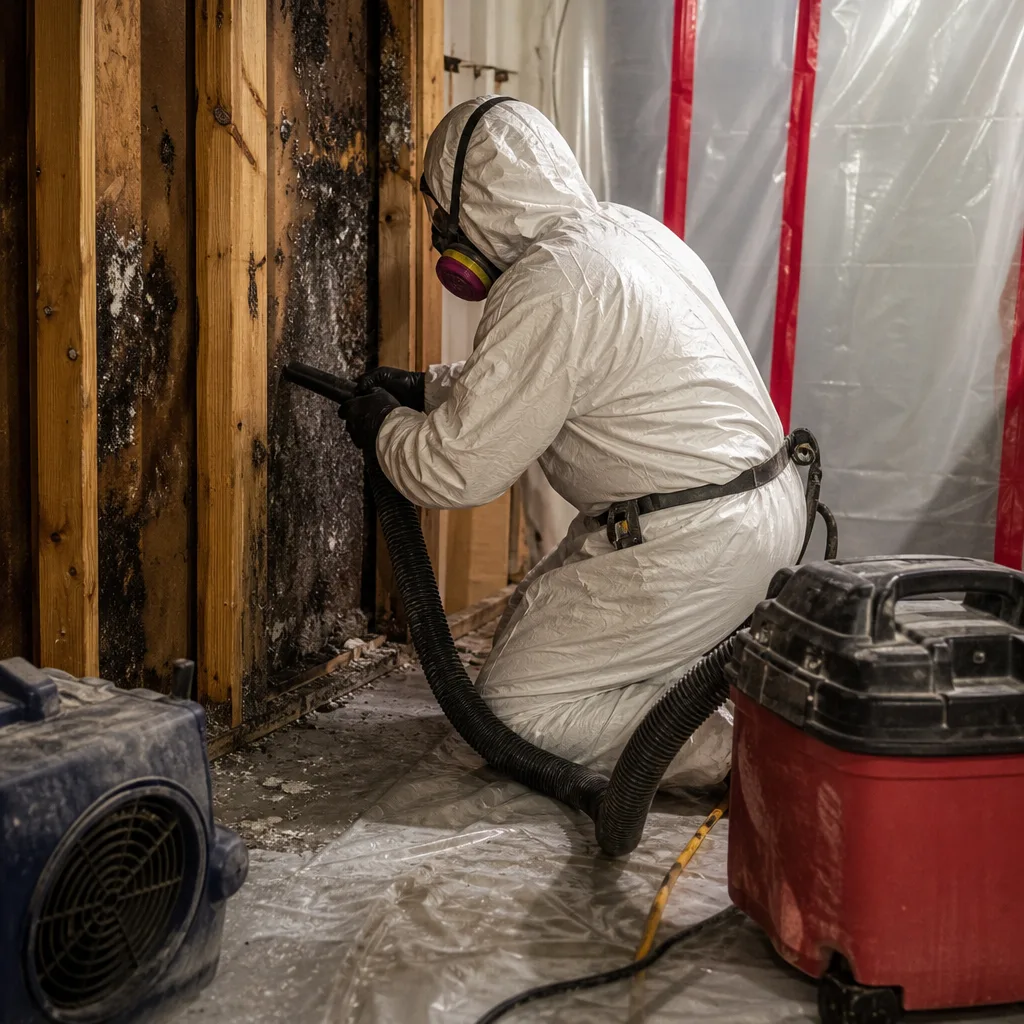
Fallen limbs, scattered slate tiles, wind-blown debris, and water-logged plaster are what Kensington storms leave behind. We remove debris, extract water from finished and unfinished spaces, and apply antimicrobial treatment where contamination is present. Cleanup isn’t finished when the floor is swept; it’s finished when moisture readings in hidden cavities say dry.
Emergency Board-Up
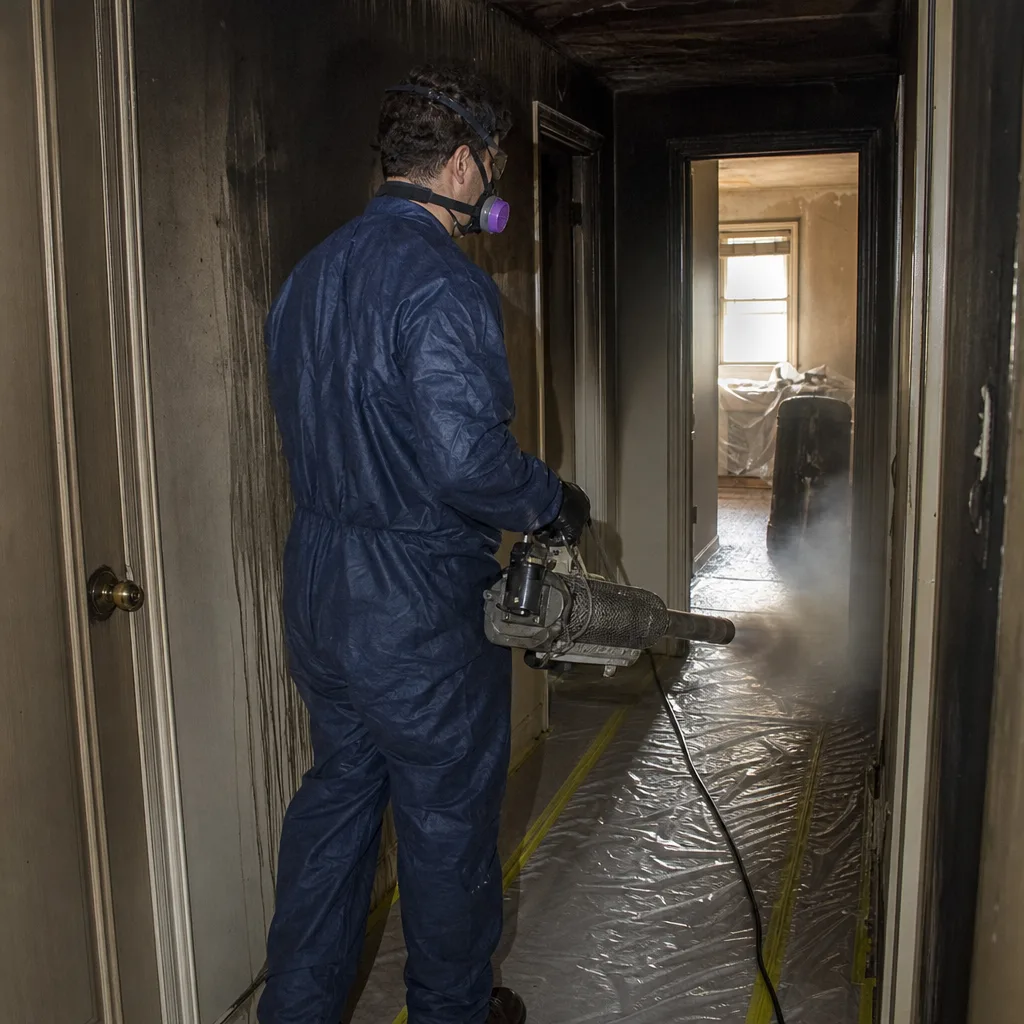
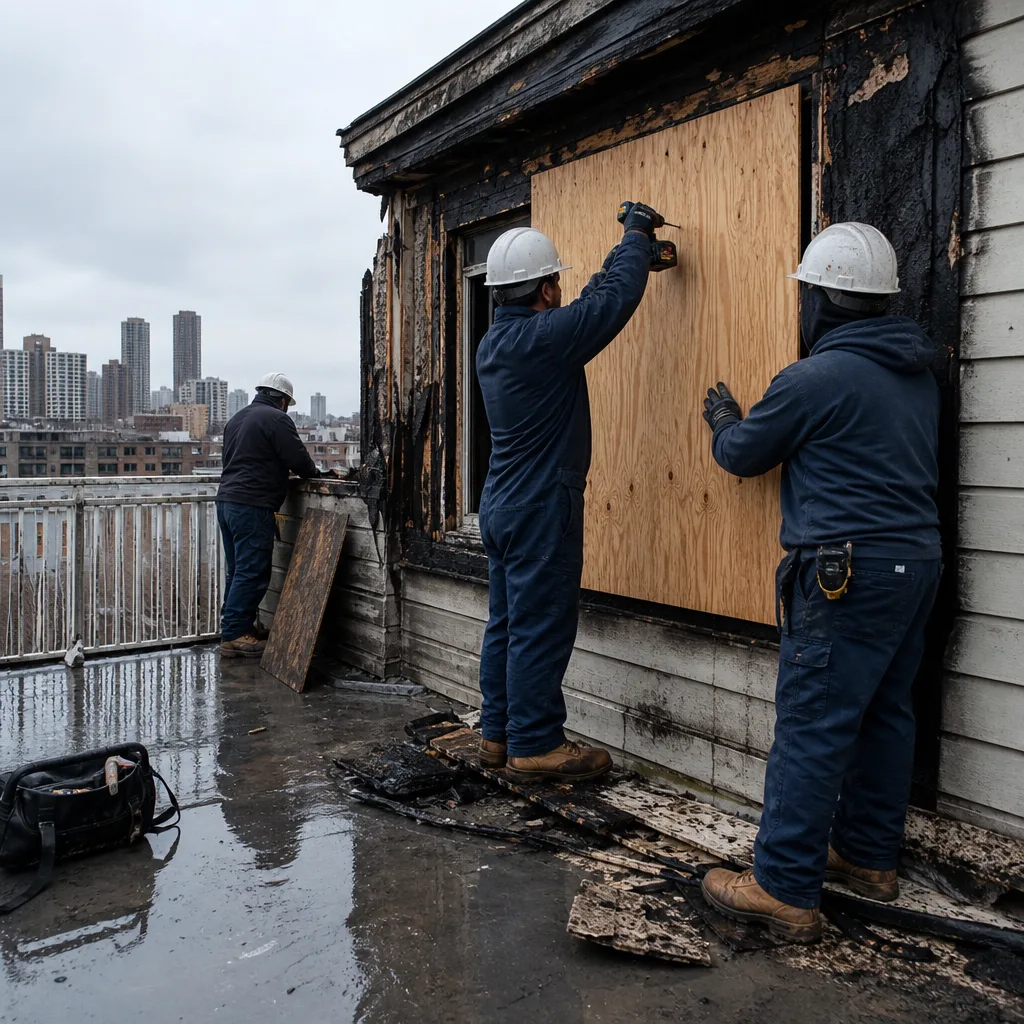
When a tree limb goes through a picture window on a 1920s Colonial, the opening has to be secured before the next rain. We board up with custom-fit plywood, seal the perimeter, and document everything for your insurance carrier. Board-up isn’t demolition, and in a period home we work around original mullions and trim rather than through them.
Flood Damage Restoration
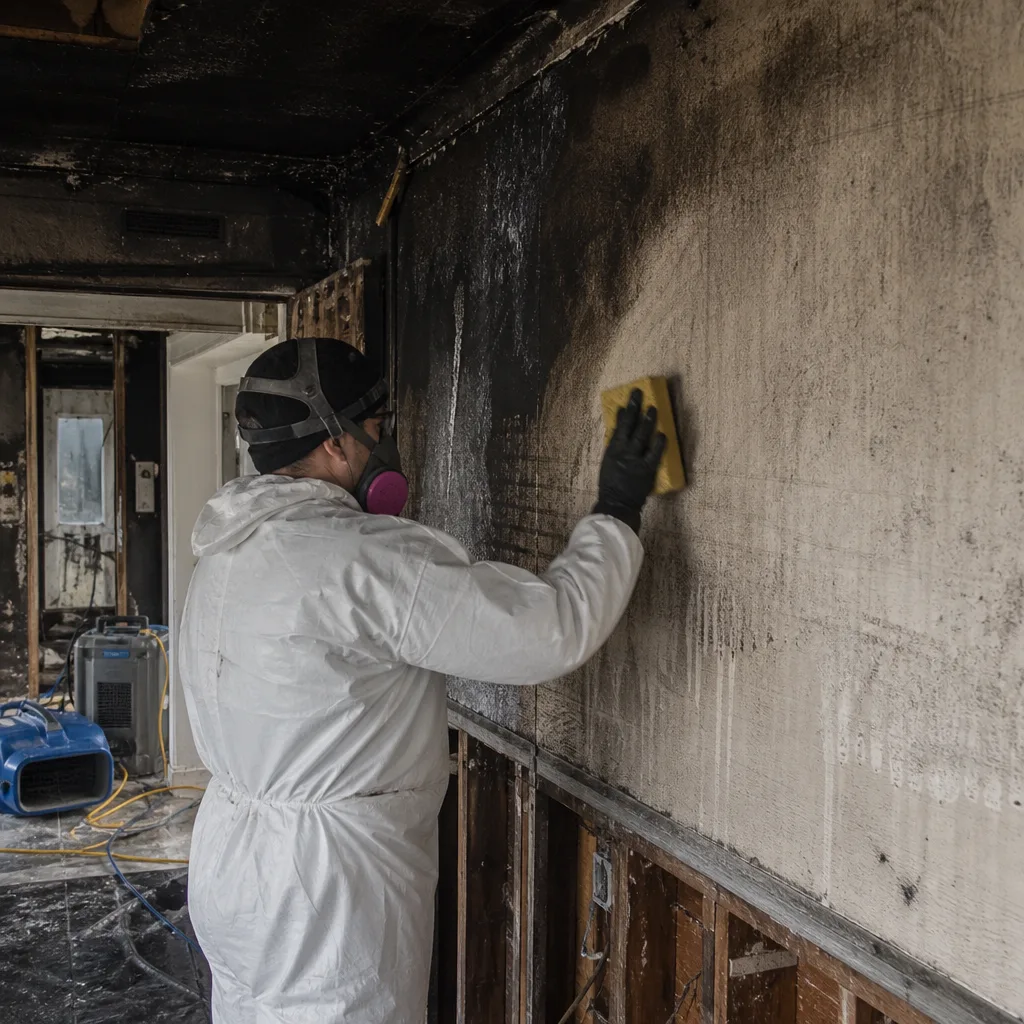
Basement flooding in Kensington homes often turns into a bigger conversation about what those basements contain: original mechanical systems, stored heirlooms, and sometimes finished rooms with wood paneling from the 1950s. We extract first, then dry with commercial equipment, then help you decide what can be saved and what has to go. Every decision goes in writing.
Debris Removal
After a storm knocks a mature oak limb across your driveway or side yard, the debris has to go before it damages masonry or invites pests. We remove it, haul it, and document the loss for your carrier. If the limb struck the house, we photograph the impact point and assess for hidden structural stress.
What happens when you call
- 1
A real person answersNo phone trees - you reach a local pro.
- 2
You get an upfront price rangeHonest numbers before anyone is dispatched.
- 3
A background-checked tech heads outLicensed & insured, dispatched right away.
- 4
You approve before work beginsNothing starts until you say go.
Storm & Disaster Restoration Costs in Kensington, NY
In Kensington, emergency roof tarping runs $400 to $900 for a typical single-dormer or ridge-line breach, depending on access and roof pitch. Emergency board-up of a single opening typically runs $250 to $600 including materials and securing the perimeter. Storm debris removal from a standard lot runs $300 to $800, more when a whole tree section is involved. Water extraction and structural drying in a single-room roof leak runs $1,800 to $4,200, with the range driven by how far the water traveled through plaster and what equipment hours are needed to reach the dry standard. Full storm restoration, including period plaster repair, hardwood refinishing, and slate matching, runs $12,000 to $40,000 or more on the largest Kensington homes. The cost moves with what we find behind the walls, and in this village, that often means corroded pipe replacement and scope expansion. The free visual inspection gives you a firm written scope before money is committed.
| Service | Typical Kensington Range |
|---|---|
| Emergency roof tarping | $400-$900 |
| Emergency board-up (single opening) | $250-$600 |
| Storm debris removal | $300-$800 |
| Water extraction & structural drying (single room) | $1,800-$4,200 |
| Full storm restoration (period home) | $12,000-$40,000+ |
We Also Serve Cities Near Kensington
Our crews serve Kensington and the surrounding communities every day. If you’re in Fairview, Harrison, East Bronx, or Hunts Point, the same certified technicians, the same live 24/7 dispatch, and the same 90-Day Done Right Promise apply. Call (917) 924-4221 and a person answers, ready to get a crew moving.
Serving Kensington, NY - Our Local Coverage Area
We’re based in the Kensington area and know this community well. Use the map below to see our service coverage - if you’re nearby, we can almost certainly help.
Kensington Storm & Disaster Restoration Questions, Answered
How fast can a crew actually reach my Kensington home?
We commit to a 45-minute dispatch window for Kensington properties. Most calls see a crew on site within that window, often faster during active storm events when our technicians are already staged in the area. A live dispatcher answers the phone 24/7 and coordinates the response while you’re still on the line.
Does my Kensington home need a village permit for storm damage restoration, or can I just use a Nassau County contractor?
Kensington’s village building department requires its own permit and inspection process for restoration work, separate from Nassau County. Contractors who assume county standards apply routinely get their restoration plans rejected for period-material mismatches or unpermitted scope changes. We build our scopes around Kensington’s specific code interpretations for plaster, slate roofing, and legacy plumbing from the first inspection, so the permit process doesn’t stall your restoration.
My plaster ceiling has water stains after a nor’easter but feels dry. Do I still need professional drying?
Yes. Plaster and lath hold moisture in hidden cavities long after the surface feels dry to the touch. A stain on a Kensington ceiling often means water has migrated through the lath and is sitting against framing or interior wall surfaces. Without professional moisture mapping and structural drying, mold can establish within 48 hours and spread behind walls you can’t see. The visual stain is the tip of what’s actually wet.
Can you match my home’s original slate tiles and plaster texture during storm restoration?
Yes. We source matching slate and clay tile through salvage networks that carry the same quarries and dimensions used in 1920s through 1950s Kensington construction. Plaster repair is done with traditional lime-based materials and matched texture templates so the repair blends with the original surface. Period-accurate material matching is a core part of our Kensington scope, not an afterthought.
What does it mean if my storm water damage is classified as Category 3?
Category 3 water is grossly contaminated, carrying sewage, bacteria, or chemical runoff. In Kensington storms, this typically comes from sewer backup into basements or floodwater that has crossed finished areas. Category 3 requires full removal of saturated porous materials, antimicrobial treatment, and often containment during the demolition phase. A trained IICRC-certified technician must make the call, and the scope is bigger than a standard roof leak dry-out.
Will my insurance cover the extra work if you find corroded galvanized pipes behind my storm-damaged wall?
Often yes, and that’s why documentation matters. When we open a storm-damaged wall and find corroded galvanized supply lines that have been failing behind original plaster, we photograph it, note it in our drying logs, and write the finding into the scope of work with a clear connection to the storm damage. Adjusters accept documented evidence far more readily than verbal claims. We submit the expanded scope directly to your carrier and advocate for coverage.
How long does drying and storm restoration take in a period Kensington home?
Structural drying typically takes 3 to 7 days for a single-room roof breach, depending on how far water traveled through plaster and whether wall cavities are involved. Full restoration, including plaster repair, slate matching, and refinishing, runs 2 to 6 weeks on most Kensington homes. What extends timelines in this village is the permit process and periods material sourcing; what shortens them is doing both correctly the first time.
Can we stay in our home during storm restoration?
Usually yes for localized damage like a single roof leak or one boarded opening. When Category 3 water is present, when demolition releases lead paint dust, or when the structural frame is exposed, we recommend temporary relocation until containment and cleaning are complete. We tell you straight at the inspection whether the home is safe to occupy, and we document that recommendation for your carrier.
Written by Curt Bowman, Owner at Floodline Restoration Co. of Manhattan, serving Kensington and surrounding communities.
Storm damage in Kensington won’t wait for a callback. Call (917) 924-4221 now for a free visual inspection and a firm written scope. The 90-Day Done Right Promise stands behind every job: if it’s not done right, we make it right. That’s the Keystone Standard, in writing.