
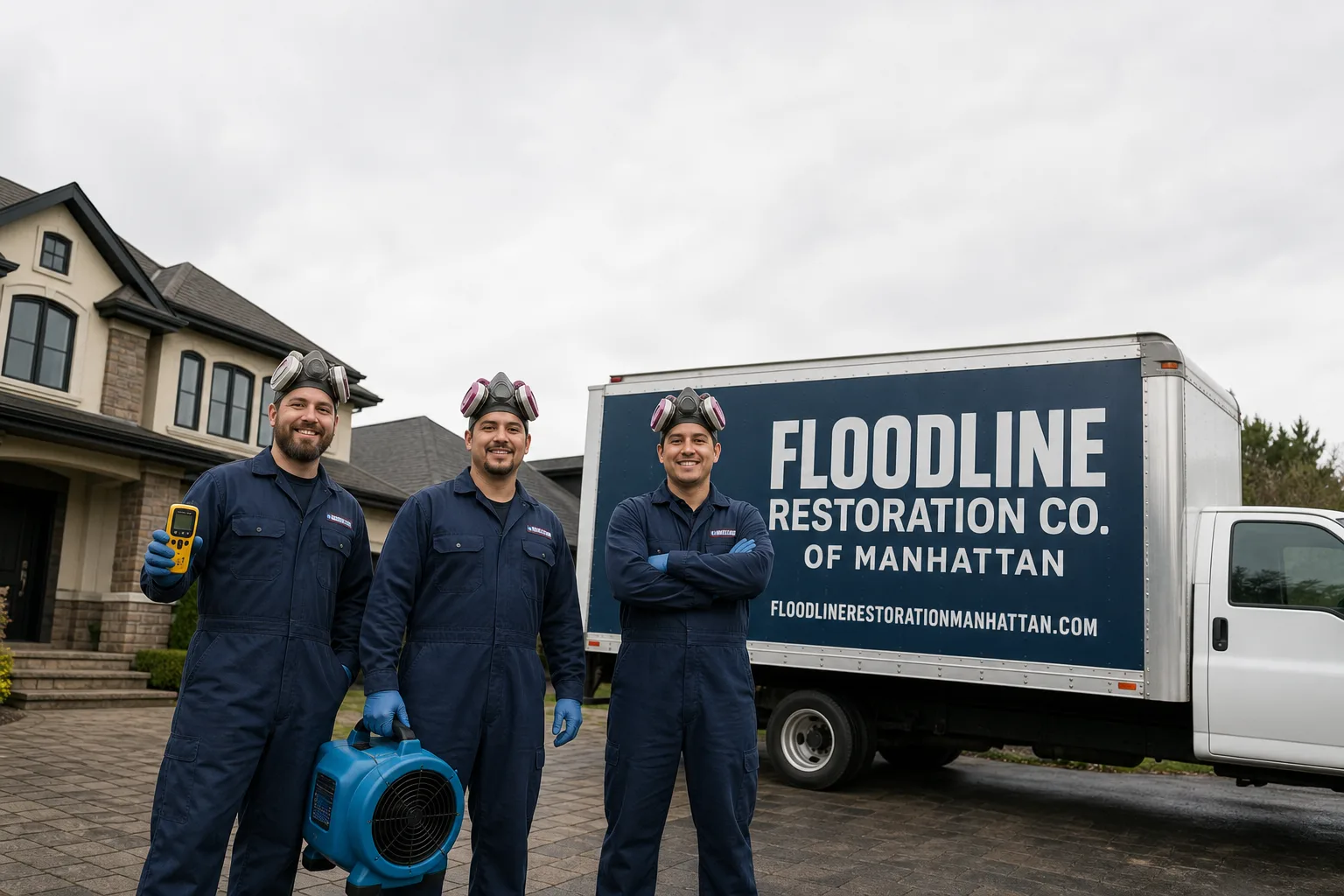
Free visual inspection and a written scope of work before any mitigation begins - photos, moisture readings, and drying logs go in your claim file
The scope we write is the scope we bill. Anything new gets shown to you, in writing, before we touch it.






 Before
 After
After Before
 After
After Before
 After
After24/7 Emergency Storm & Disaster Restoration in Millwood
When a nor’easter tears through Millwood or an ice storm brings a mature oak down onto your roof, you need a crew that answers the phone and gets moving. Floodline Restoration Co. of Manhattan runs live dispatch around the clock, and our Storm & Disaster Restoration team reaches Millwood homes fast. Call (917) 924-4221 any hour. A live person picks up, not a recording, and we can have a certified crew assessing your damage the same visit. The first hour matters: water that sits in a fieldstone basement on Seven Bridges Road or a split-level off Route 100 is already wicking into drywall and framing before sunrise. We start extraction the day we arrive.
Understanding Storm & Disaster Restoration Severity in Millwood Properties
Storm damage in Millwood runs the full range from Category 1 clean water from a cracked supply line to Category 3 contamination when the Kensico Reservoir watershed floods a basement with storm runoff carrying silt, lawn chemicals, and whatever else the drainage system picked up. Category 3 water is the serious one. It requires full containment, antimicrobial treatment matched to DEP watershed rules, and disposal of saturated porous materials. Category 2 gray water lands in between, common after a storm when sump pumps fail and washing machine discharge backs up through floor drains. The 1950s and 1960s split-levels and colonials that dominate Millwood’s housing stock present a specific challenge: moisture migrates across multiple floor zones through open stairwells and shared wall cavities. A basement flood reads on the moisture map two hours later as elevated humidity in the kitchen wall above. Our technicians use thermal imaging and hygrometers to trace exactly where the water went, because treating only the obvious damage in a split-level guarantees hidden mold within 48 hours.
Why Millwood Property Owners Choose Floodline Restoration Co. of Manhattan
- 45-minute response commitment: From the moment you call (917) 924-4221, we track dispatch to arrival. In the Route 100 and Millwood Road corridor, our crews typically beat that target.
- 24/7 live answer, never an automated system: Two in the morning, a dispatcher picks up. Not a phone tree. Not a callback queue. A person who can send a crew.
- IICRC-certified crews: Our technicians hold WRT and FSRT certifications as the baseline, with AMRT-certified specialists on mold and Category 3 jobs. The certifications are real, and the crews are background-checked and uniformed.
- Free visual inspection: Before any work begins, we walk the property with you, identify what happened, and write a scope. You approve it before equipment comes off the truck.
- Direct insurance billing: We deal with your carrier. You don’t play messenger between our office and a claims adjuster. Photo documentation, moisture logs, and line-item scopes go straight to them.
- One team from extraction to reconstruction: The same certified crew that extracts the water also rebuilds the wall. No handoff. No inherited crew who never saw the original damage.
Our Storm & Disaster Restoration Process
Inspection & Assessment
We arrive, walk the property, and document everything. Thermal imaging and penetrating meters map moisture through walls, floors, and the split-level floor zones unique to Millwood homes. You get a written scope before work starts.
Extraction & Stabilization
We remove standing water with truck-mounted extraction units, then set up emergency board-up or roof tarping if the storm left openings. Stabilizing the structure stops new water from entering while we work the original loss.
Drying & Dehumidification
Dri-Eaz dehumidifiers and air movers run continuously, with daily moisture readings logged. We do not stop until the dry standard is met, documented, and confirmed by hygrometer readings.
Cleaning & Sanitization
HEPA air scrubbers run during the entire cleanup phase. All affected surfaces are cleaned, and antimicrobial treatments are selected with DEP watershed regulations in mind. Nothing goes down the drain that shouldn’t.
Storm Specialty Treatment
For tree-impacted roofs, we handle rafter assessment, insulation saturation checks, and structural drying inside attic cavities. For flooded basements, we address seepage sources, not just the water that already entered.
Repairs & Restoration
The same Floodline crew rebuilds drywall, replaces insulation, refinishes floors, and restores the property to pre-loss condition. The job ends with a final moisture log in your hands and our 90-Day Done Right Promise in writing.
Need Emergency Storm & Disaster Restoration in Millwood Now?
Crews minutes away, answering live 24 hours a day. The sooner we start, the less it costs.
Working With Your Insurance Company
Storm damage in Millwood almost always involves a carrier. We document from the first hour: photos room by room, moisture readings, thermal imaging scans, and a line-item scope that matches industry-standard estimating software. Our office communicates directly with your adjuster, so you don’t sit on hold translating our notes into insurance language. We bill the carrier directly when coverage applies. The 90-Day Done Right Promise, our Keystone Standard, is in writing and tied to our K.E.Y.S. values code: Krafted right, Every time, Your home first, Standing behind it. Curtis Bowman founded this company in 2010 around a dispatch board, not a sales desk, and that still matters when a claim gets complicated.
What We Provide Your Insurer
- Thorough documentation of the loss
- Photos of all damage, room by room
- Moisture readings and drying logs
- A detailed, line-item scope of work
- Direct coordination with your carrier
Built for Millwood’s Loss Calendar
Millwood sits in the Hudson Valley funnel, where nor’easters, tropical remnants, and ice storms track through like clockwork. January brings deep freezes that split supply lines in mid-century colonials. March and April thaw saturates the heavy clay soils around fieldstone foundations, and basement seepage follows. Summer thunderstorms flash-flood low-lying sections of Route 100 and Millwood Road in hours, not days. Then comes the tree season: dense mature oaks and tulip poplars over residential lots drop limbs the size of small trunks, punching roof penetrations that reach all the way into attics and upper-floor framing. Each season brings a specific loss pattern. Our crews know what to expect when the dispatch call comes in for a Millwood address, and we stage equipment accordingly. A January call gets extra drying capacity for frozen pipe floods. An August call gets board-up materials and roof tarping loaded before we leave the yard.
Storm & Disaster Restoration Across Millwood’s Neighborhoods
The Route 100 corridor running north from Millwood Road through Millwood proper carries the heaviest concentration of mid-century split-levels and colonials. These homes sit on sloped, wooded lots where mature oaks overhang rooflines. Tree limb impacts here mean full rafter splits, not just shingle damage. Over near the Kensico Reservoir side, homes along Seven Bridges Road and the smaller lanes running east toward the water face additional constraints: DEP watershed rules govern any runoff from restoration work, including antimicrobial selection and wastewater handling. We adjust our treatment plans before we start, not after an inspector flags something. The older farmhouses on larger parcels, some dating back a century or more, have original plank framing and minimal vapor barriers. Water that enters a wall in one of those homes spreads through the cavity twice as fast as in a 1970s ranch. And the ranches themselves, with their long low profiles and shallow roof pitches, collect heavy wet snow in nor’easters and need tarping fast when the load gets dangerous. Each neighborhood in Millwood has its own failure mode. We plan for them all.
Specialized Storm & Disaster Restoration Services We Offer in Millwood
Storm Damage Cleanup
After wind and water pass through, Millwood properties need more than a mop. We remove storm debris, extract standing water, cut out saturated drywall, and treat affected framing. Millwood’s position near Kensico Reservoir means DEP regulations shape which antimicrobial products we can apply. We know the rules and work within them, keeping your property and the watershed protected.
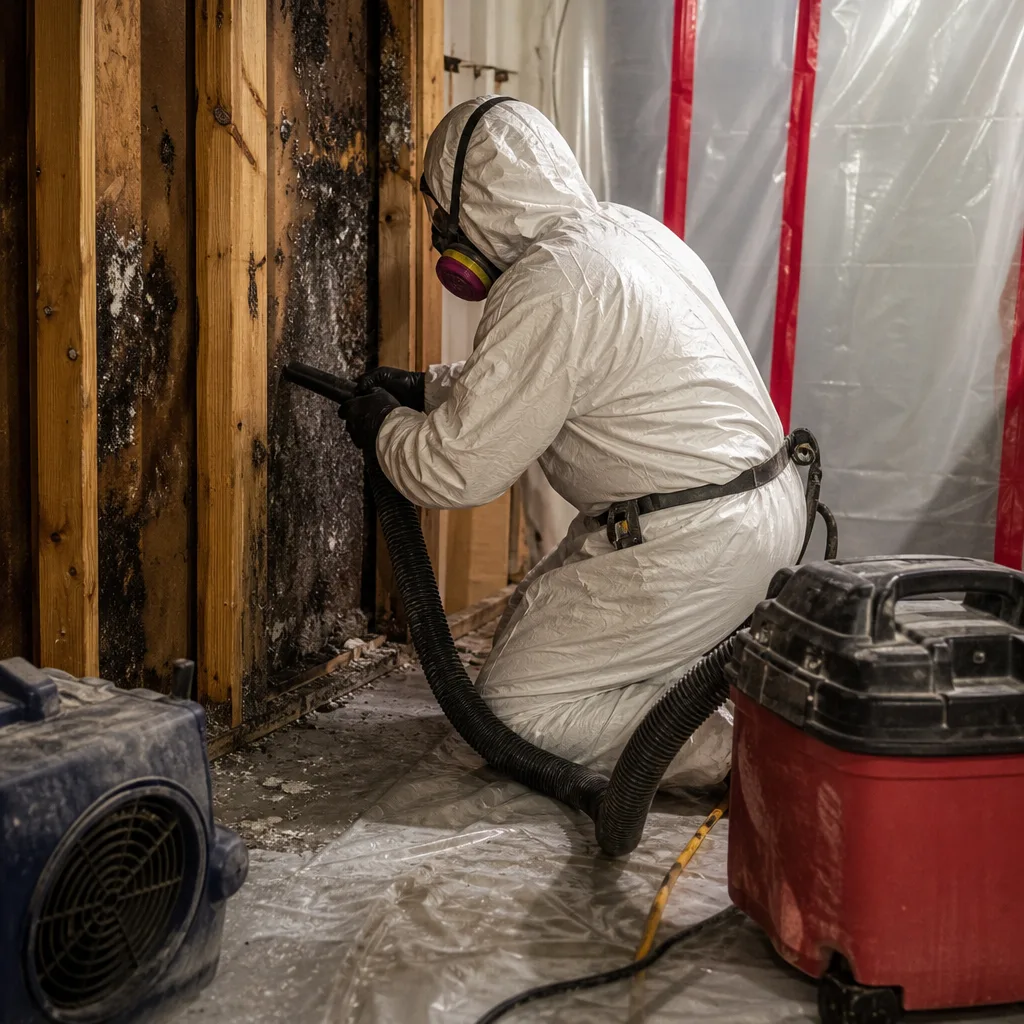
Flood Damage Restoration
Flooding in Millwood comes from three directions: reservoir-adjacent runoff, basement seepage through fieldstone foundations, and failed sump pumps during heavy rain events. We categorize the water, contain the affected area, and begin extraction. Dense tree cover slows surface drainage in many Millwood lots, which means floodwater sits against foundations longer here than in open-lot towns like Chappaqua.
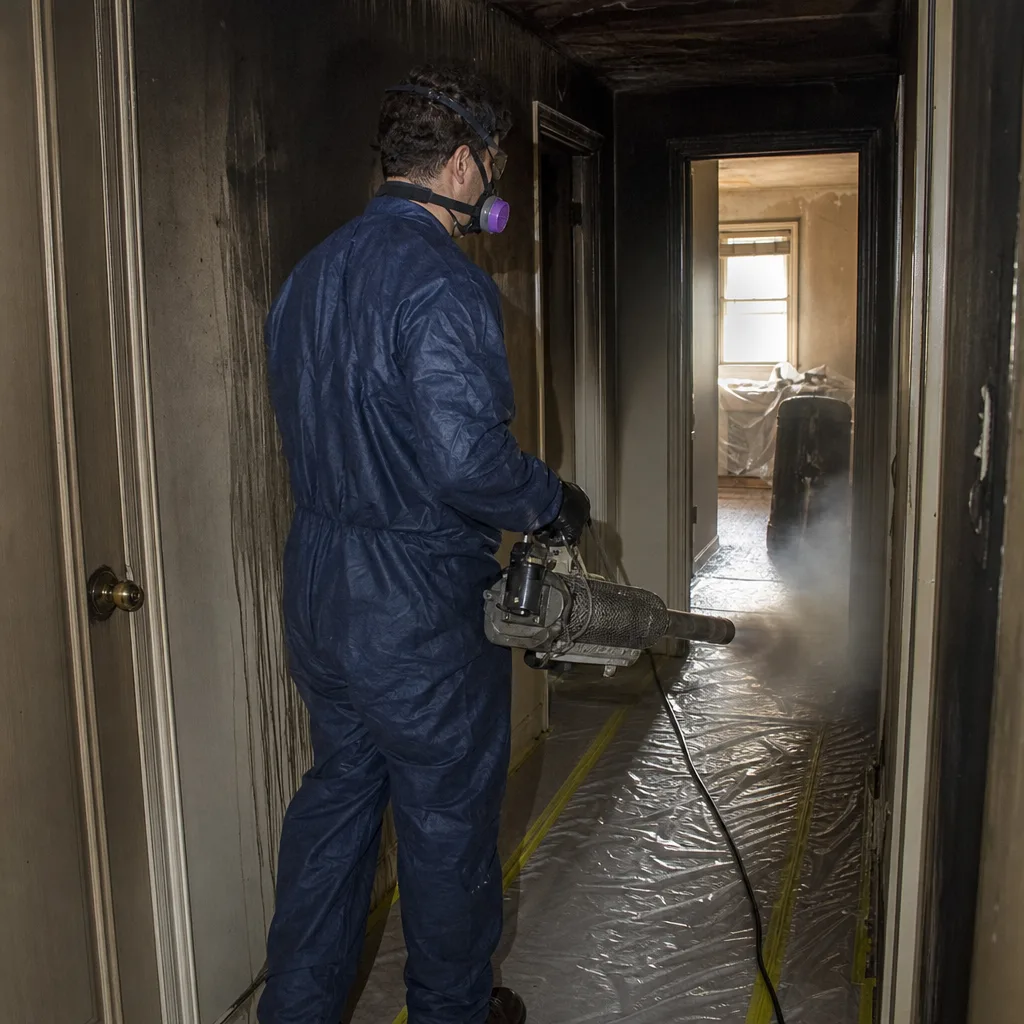
Emergency Board-Up
A tree limb through a bedroom window or a broken door after high winds leaves your home open to weather, animals, and unauthorized entry. Our crew boards up the opening the same visit. We use proper plywood cut to fit, secured solidly. Board-up is stabilization, not a repair, and it keeps a bad situation from becoming a worse one before reconstruction starts.
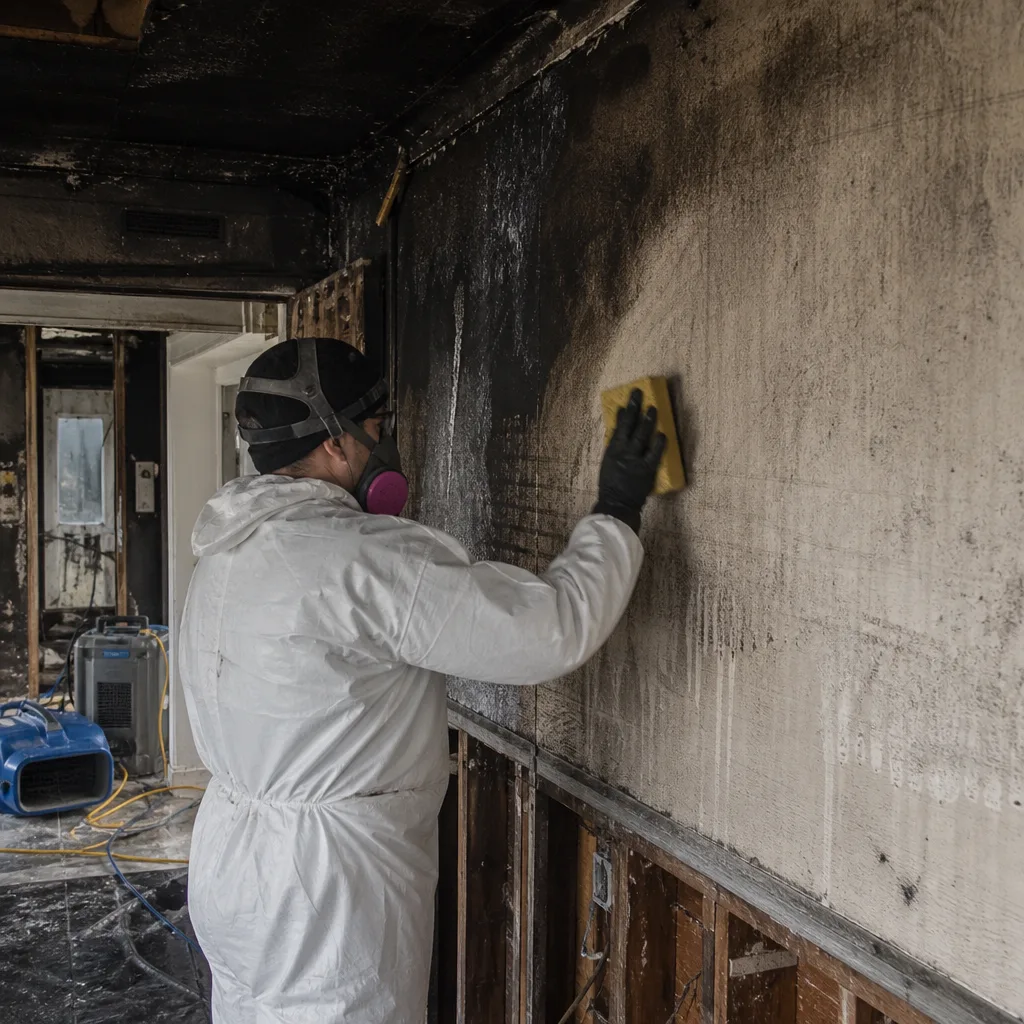
Roof Tarping
Millwood’s mature oaks and tulip poplars make roof tarping the most common emergency storm service we perform. A limb that punctures the roof feeds rainwater into the attic, and from there into walls and ceilings below. Tarping within hours stops that chain reaction. We secure tarps over the damaged section, sealed against wind and rain, until permanent roof repairs are scheduled.
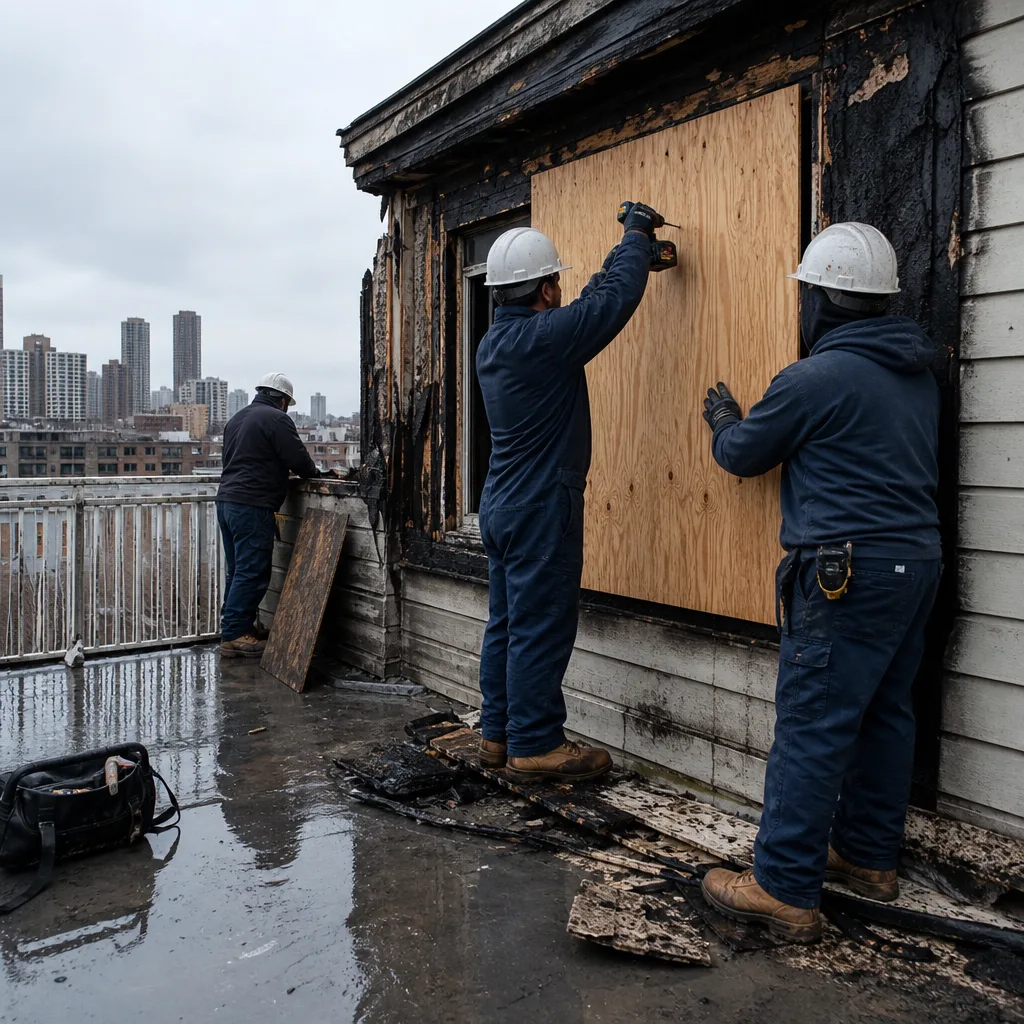
Debris Removal
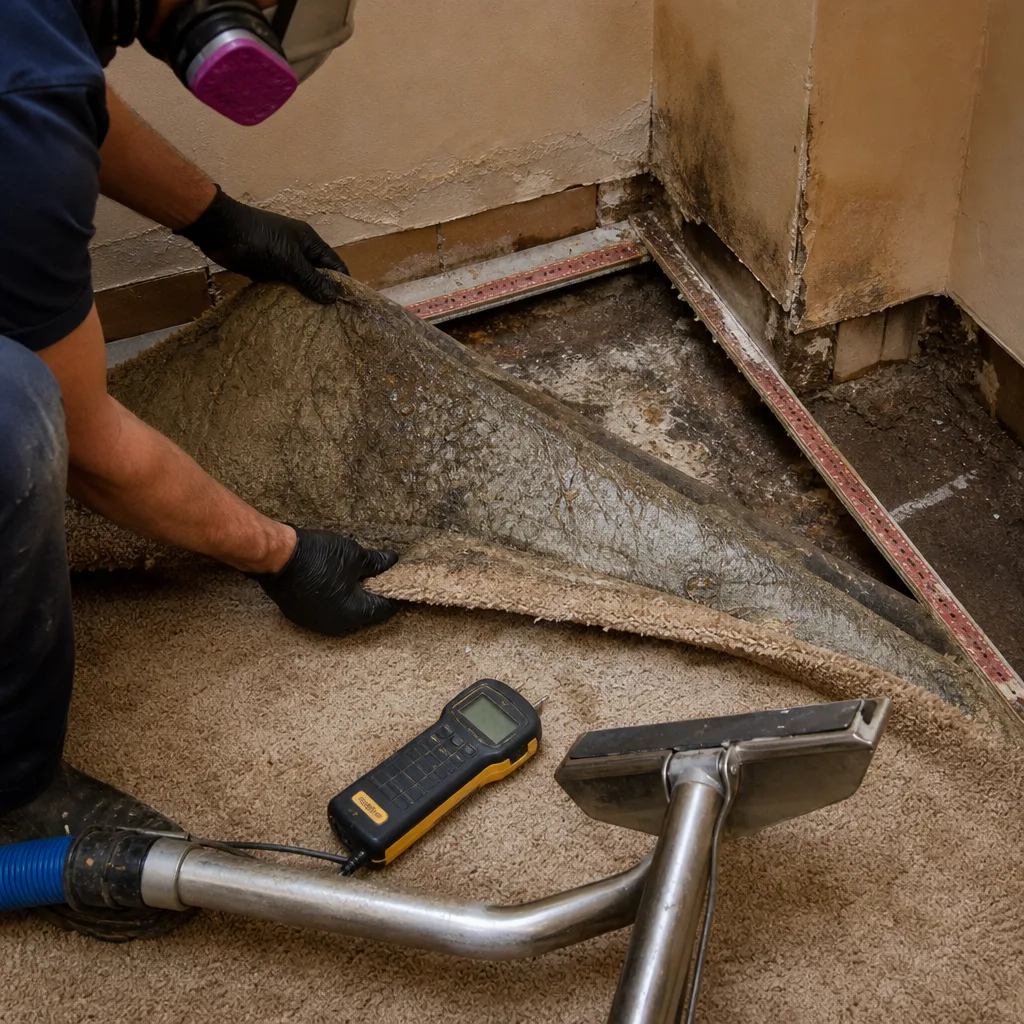
Storm debris in Millwood isn’t just branches in the yard. Broken glass, torn shingles, wet insulation, and downed limbs all need hauling before drying and repairs can begin. We clear the affected areas, separate salvageable materials from trash, and remove everything from the property. If a tree has come down, we coordinate the cleanup around what the restoration requires.
What happens when you call
- 1
A real person answersNo phone trees - you reach a local pro.
- 2
You get an upfront price rangeHonest numbers before anyone is dispatched.
- 3
A background-checked tech heads outLicensed & insured, dispatched right away.
- 4
You approve before work beginsNothing starts until you say go.
Storm & Disaster Restoration Costs in Millwood, NY
Storm damage restoration pricing depends on what happened and how far the water traveled before we stopped it. A straightforward Category 1 basement extraction in a Millwood ranch with drying and minor drywall replacement runs $1,200 to $3,800. Category 2 or 3 jobs with containment, antimicrobial treatment, and full drywall removal typically land between $4,500 and $12,000. Roof tarping after a tree limb impact runs $450 to $950, plus board-up if windows or doors are involved. Full rafter repair and attic drying after a mature oak limb punches through runs $6,000 to $18,000 depending on insulation saturation and framing damage. Insurance covers most storm-related losses, less deductible. We inspect free, write a firm scope, and give you the numbers before any work starts. Call (917) 924-4221 and we’ll walk you through what your specific situation will cost.
We Also Serve Cities Near Millwood
Floodline Restoration Co. of Manhattan serves Millwood and the surrounding Westchester communities, including Storm & Disaster Restoration in Millwood, Chappaqua, Mount Kisco, Ossining, and Briarcliff Manor. Same crews, same certifications, same 90-Day Done Right Promise.
Millwood Storm & Disaster Restoration Questions, Answered
Does Millwood’s proximity to the Kensico Reservoir affect which antimicrobial treatments you can use for mold after a storm?
Yes. Millwood falls under NYC DEP watershed regulations that restrict certain biocides and require runoff controls before any treatment is applied. We plan antimicrobial selection around these rules before we start, which matters because using a standard treatment without checking compliance can trigger violations and fines. Our IICRC-certified crews know the DEP requirements and work within them on every Millwood job.
How quickly can you get a crew to a flooded basement in the Route 100/Millwood Road corridor after a nor’easter?
We commit to 45-minute dispatch response for Millwood addresses, and the Route 100 corridor is one of the fastest for us to reach. A live dispatcher answers your call at (917) 924-4221 and has a crew moving immediately. In heavy storm conditions when all of Westchester is calling at once, we prioritize by severity and get to flooding emergencies first.
What happens when a mature oak limb drops a full rafter into my 1950s colonial’s attic during an ice storm?
That’s a board-up and tarping emergency first, then structural drying. We secure the roof opening to stop new water coming in, then assess the rafter split, check insulation saturation, and set up containment for the attic space. Drying a split-level colonial with attic damage takes 3 to 7 days on average, longer if the limb brought wet snow and ice into insulation that then melted into wall cavities.
Do I need a pack-out if my Millwood basement takes Category 3 water from a sewer backup during a tropical remnant?
Usually yes. Category 3 water carries contaminants that saturate porous materials beyond safe restoration. Anything absorbent that contacted the water, including boxed belongings, upholstered furniture, and some drywall, needs removal. We handle pack-outs, document everything for your insurer, and store items off-site until the structure is dried and cleaned. Direct insurance billing covers this when the loss is covered.
How does the shallow bedrock and dense tree cover in Northern Westchester affect how fast you can dry out my split-level?
Shallow bedrock prevents fast drainage on many Millwood lots, so water sits against foundations and keeps wicking inward even after the rain stops. Dense tree cover blocks sunlight and airflow, which slows surface evaporation. Both factors extend structural drying times in Millwood compared to open-lot towns. We run larger dehumidifiers and more air movement here, and we hold daily moisture readings until the dry standard is confirmed, not assumed.
Will my insurance cover storm damage restoration in Millwood?
Most storm-related losses are covered under standard homeowners policies, less your deductible. That includes wind damage, tree impacts, roof punctures, and interior water damage from the storm. Flood damage from rising water is a separate flood policy. We document everything from the first hour, coordinate directly with your adjuster, and bill the carrier directly when coverage applies. Call (917) 924-4221 and we’ll walk through what your policy covers.
How long does full storm restoration take for a typical Millwood home?
Extraction and stabilization happen the first day. Drying runs 3 to 7 days for most Millwood homes, influenced by the shallow bedrock and dense tree cover that slow natural drainage. Repairs and reconstruction add 1 to 3 weeks depending on damage extent. You get a written timeline at the inspection, and we update it honestly as the job progresses. The 90-Day Done Right Promise stands behind the finished work.
What should I do in the first 30 minutes after storm damage hits my Millwood home?
Call (917) 924-4221 first. Then shut off power to affected areas if water is present, move what you can away from the wet zone, and stay out of rooms with sagging ceilings or visible structural damage. Don’t enter a basement with standing water that could be in contact with electrical outlets. Document what you safely can with photos. A live dispatcher answers 24/7 and gets a certified crew moving while you’re still on the phone.
Storm & Disaster Restoration in Millwood: The Local Realities
Millwood’s position directly adjacent to the Kensico Reservoir, a primary holding basin for New York City’s drinking water supply, means every storm restoration job here operates under DEP watershed regulations that prohibit certain biocides and mandate runoff controls. Contractors who don’t know these rules can rack up compliance violations and fines. We know them, because we work Millwood jobs weekly. The same dense tree canopy that gives Millwood its character also creates its most predictable storm damage: mature oaks and tulip poplars overhanging rooftops on Route 100, Seven Bridges Road, and Millwood Road. When those trees lose limbs in an ice storm or nor’easter, the damage runs deep into rafters and insulation. Our crew responded to a nor’easter that split a mature oak over a 1960s split-level on Seven Bridges Road. We deployed Dri-Eaz dehumidifiers and air movers after extracting Category 2 water from the fieldstone basement, but first we set up containment and adjusted our antimicrobial treatment plan to comply with DEP runoff rules. The rafter split required emergency board-up, and we spent the first four hours on moisture mapping before structural drying began. That’s the difference on a Millwood job: the water, the trees, and the watershed rules all have to be handled at once. A generic restoration crew that treats Millwood like any other Westchester hamlet misses at least one of the three.
Serving Millwood, NY - Our Local Coverage Area
We’re based in the Millwood area and know this community well. Use the map below to see our service coverage - if you’re nearby, we can almost certainly help.
Call Floodline Restoration Co. of Manhattan for Storm & Disaster Restoration in Millwood
A storm doesn’t wait for business hours, and neither do we. Floodline Restoration Co. of Manhattan answers live 24 hours a day at (917) 924-4221. Free visual inspection. Written scope before work starts. Direct insurance billing. One certified crew from first extraction to final rebuild, backed by the 90-Day Done Right Promise in writing. If you’re in Millwood and a storm left damage behind, call now.
Written by Curt Bowman, Owner at Floodline Restoration Co. of Manhattan, serving Millwood and Northern Westchester with storm and disaster restoration since 2010.