
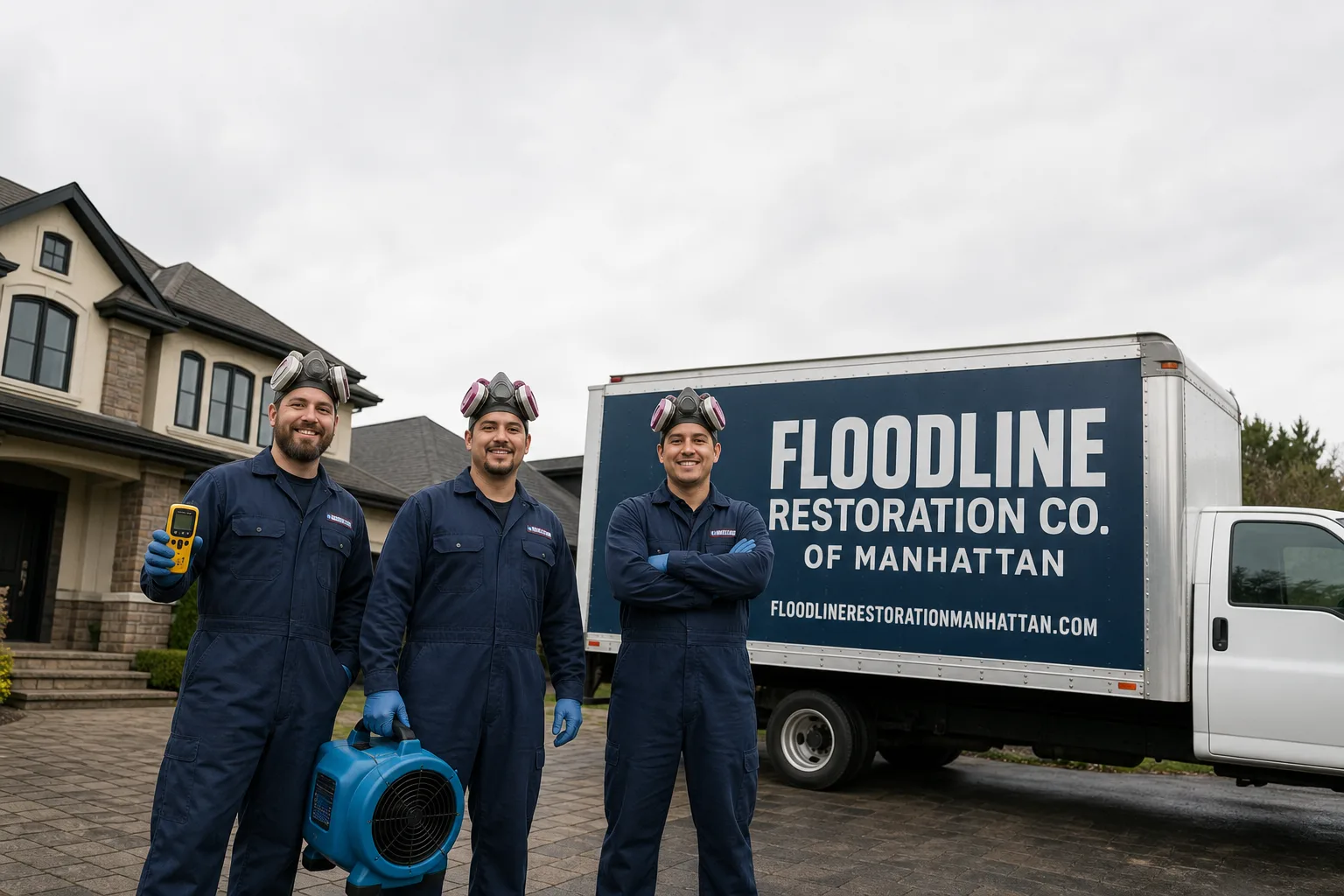
Free visual inspection and a written scope of work before any mitigation begins - photos, moisture readings, and drying logs go in your claim file
The scope we write is the scope we bill. Anything new gets shown to you, in writing, before we touch it.






 Before
 After
After Before
 After
After Before
 After
After24/7 Emergency Storm & Disaster Restoration in Ossining
Storm damage in Ossining doesn’t wait for business hours, and neither do we. When a nor’easter tears shingles off a hillside home above Broadway or tidal surge backs storm drains up near the Metro-North station, you’ll get a live person on the phone at (917) 924-4221, any hour, any day. Our crews are dispatched inside the Ossining area immediately, and every job starts with a free visual inspection. The first hour matters: water from a storm-swelled Hudson or hillside runoff moves through plaster-and-lath walls fast, and the sooner extraction starts, the less drying, the less mold, and the lower the final repair bill. We arrive ready to stabilize, extract, and start drying the same visit.
Understanding Storm & Disaster Restoration Severity in Ossining Properties
Ossining’s housing stock makes storm damage a different animal than it is in newer Westchester subdivisions. Most homes from the 1880s through the 1930s have rubble-stone or unreinforced concrete-block foundations, plaster-and-lath interiors, and cast-iron drain lines that crack under stormwater pressure. When water enters, it doesn’t just pool on a concrete slab: it wicks into lime plaster, old-growth timber joists, and the dust-and-debris cavities between lath strips. We classify water by category because the category dictates the protocol. Category 1 is clean water from a burst supply line or roof leak. Category 2 carries contaminants from sump-pit overflow or washing-machine discharge. Category 3, what we see after coastal surge or storm-drain backflow along the Ossining waterfront, contains sewage and pathogens, requiring full containment, HEPA air scrubbing, and disposal of affected porous materials. Moisture mapping with thermal imaging shows us where water traveled inside old walls, and structural drying with Dri-Eaz dehumidifiers and air movers runs until hygrometer readings hit the dry standard, not a day sooner. In pre-1930 homes, that timeline often runs longer because old timbers release moisture slowly.
Why Ossining Property Owners Choose Floodline Restoration Co. of Manhattan
- 45-minute response commitment: When a crew leaves our dispatch board, the clock starts. Most Ossining jobs see first equipment on-site within 45 minutes of your call.
- Live-answer dispatch, 24/7: A real person answers at 2 a.m. after a coastal surge, not a recording. You’ll never leave a message during an emergency.
- IICRC-certified crews: Our technicians hold WRT and ASD certifications, with AMRT on mold jobs. Background-checked and uniformed on every site.
- Free visual inspection: We walk the property, map the moisture, and hand you a written scope before any work starts. No pressure, no surprises.
- Direct insurance billing: We deal with your carrier so you don’t become the messenger between adjuster and contractor.
- One team, extraction to rebuild: The same certified crew that reads the moisture map on day one handles reconstruction. No mid-job handoff, no inherited strangers.
Our Storm & Disaster Restoration Process
Inspection & Assessment
We map every affected room with moisture meters and thermal imaging, identify the water category, and document damage with photos. You get a written scope and a straight answer on what needs to happen.
Extraction & Stabilization
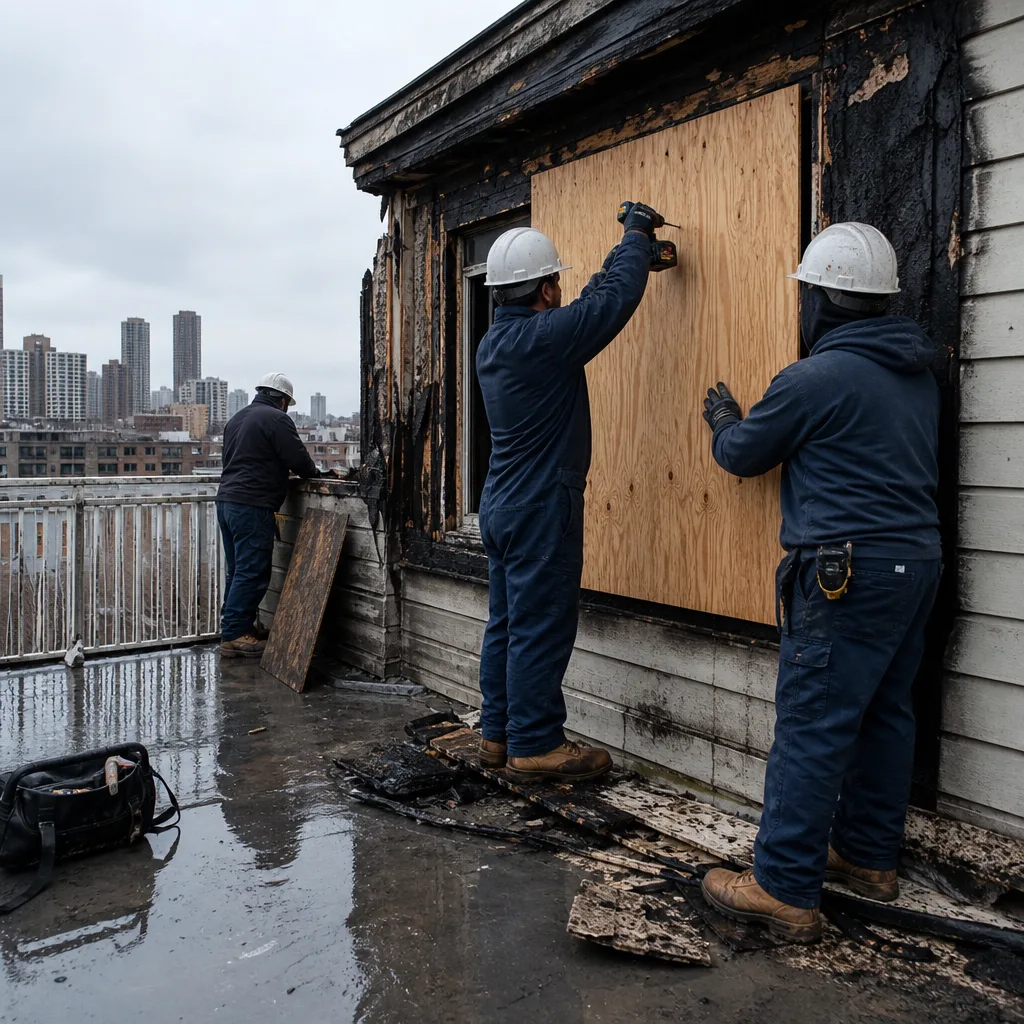
Standing water comes out immediately with truck-mounted extraction units. We stabilize the structure with emergency board-up, roof tarping, or shoring if the storm compromised the building.
Drying & Dehumidification
We set Dri-Eaz dehumidifiers and Phoenix air movers in a calculated layout, not scattered randomly. Daily hygrometer readings are logged until the dry standard is met, and the log goes to you and your insurer.
Cleaning & Sanitization
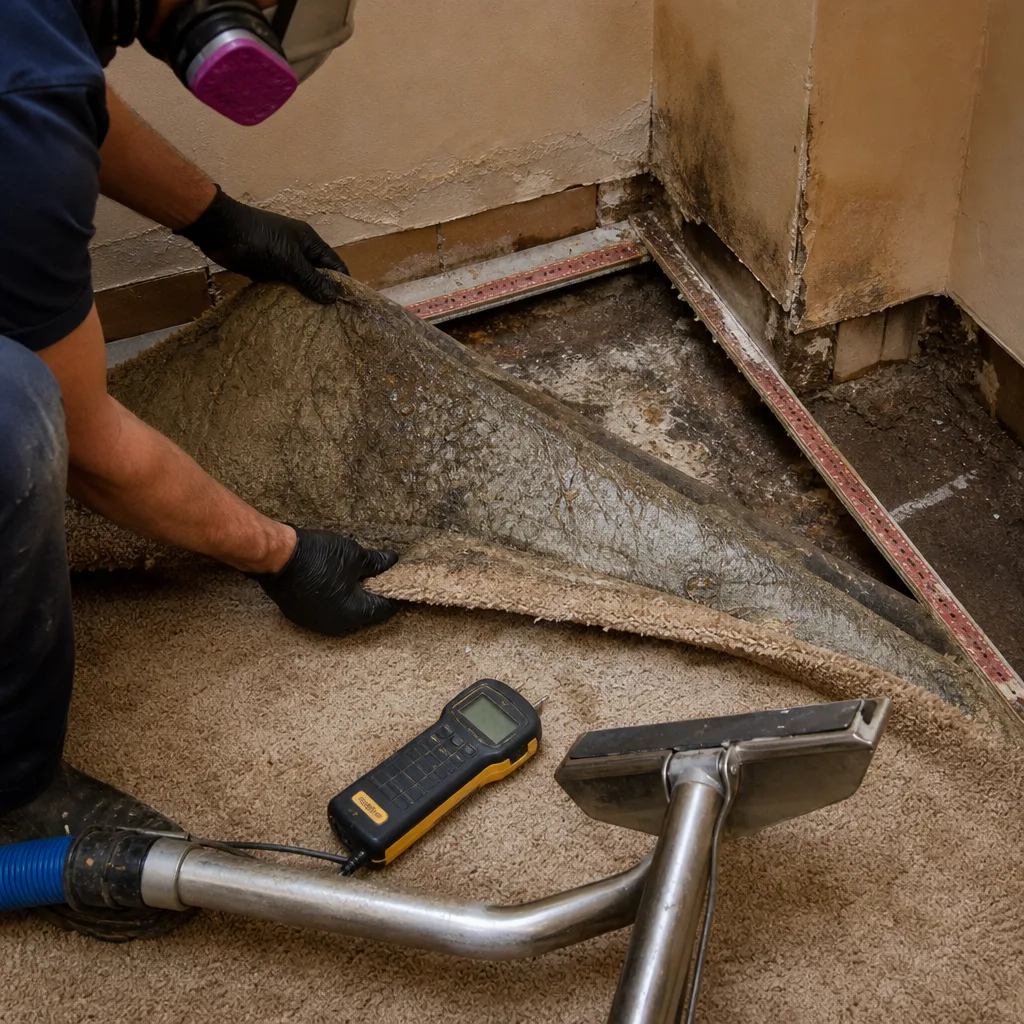
Affected surfaces get antimicrobial treatment appropriate to the water category. HEPA air scrubbers run during demolition and cleaning to capture airborne spores and soot particles.
Storm-Specific Treatment
For tidal surge and drain backflow, we execute category 3 protocols: containment barriers, removal of contaminated porous materials, and clearance testing on mold and bacteria before reconstruction begins.
Repairs & Restoration
Rebuild starts when the moisture is measured gone. We repair walls, flooring, cabinetry, and electrical, pulling permits where Ossining code requires them and standing behind the result in writing.
Need Emergency Storm & Disaster Restoration in Ossining Now?
Crews minutes away, answering live 24 hours a day. The sooner we start, the less it costs.
Working With Your Insurance Company
A storm or flooding event in Ossining almost always means a claim, and how that claim is documented in the first 48 hours sets the rest. We photograph every affected room before demolition, log moisture readings daily, and build a line-item scope that matches the loss, not what an adjuster might guess. Our team communicates directly with your carrier, so you spend your time deciding where to sleep, not arguing about coverage limits. The 90-Day Done Right Promise is in writing: if something isn’t done right, we make it right, no paperwork battles. Ossining homes near the FEMA flood zones often involve elevation questions, and we can help you understand whether flood insurance applies or whether a standard homeowner policy covers the specific damage.
What We Provide Your Insurer
- Thorough documentation of the loss
- Photos of all damage, room by room
- Moisture readings and drying logs
- A detailed, line-item scope of work
- Direct coordination with your carrier
Built for Ossining’s Loss Calendar
Ossining gets about 47 inches of precipitation a year, and it tends to arrive in concentrated events. January deep freezes burst supply lines in the uninsulated basements of pre-war homes along Croton Avenue and Spring Street. Spring thaw and heavy March rains push hillside runoff into rubble-stone foundations all along the eastern slopes, overwhelming French drains that were undersized when they were installed decades ago. Summer thunderstorms drop flash floods that overwhelm window wells and stairwell drains on the steep streets sloping toward the river. Nor’easters from October through March bring the double threat of wind damage to roofs and siding, then water intrusion through the openings. And coastal surge events, like Superstorm Sandy in 2012, back tidal water through storm drains into low-lying blocks near the Water Street and Main Street corridors. We plan our Ossining response around these patterns because they repeat on schedule.
Storm & Disaster Restoration Across Ossining’s Neighborhoods
Ossining’s topography splits the village into distinct risk profiles, and our crews know each one. The hillside streets above Route 9 and east of North Highland Avenue climb steeply, and those homes, many with century-old rubble-stone foundations, battle chronic hydrostatic seepage every time rain runs downhill. The blocks around the Metro-North station and the waterfront, including the Water Street corridor and lower Main Street, sit in active FEMA flood zones where tidal surge backs through storm drains. The downtown core’s mid-century multi-family buildings, concentrated around Croton Avenue and Spring Street, bring flat-roof water intrusion and aging plumbing as recurring restoration categories. Over in the neighborhoods up toward the Briarcliff Manor line, hillside drainage and sump pump failures dominate. On a single block just uphill from the station, homes on the downhill side flooded from storm-drain backflow during Sandy while homes on the uphill side stayed dry. That’s how block-specific this work is, and why we never quote a job without knowing the property’s exact elevation relative to the flood plain.
Specialized Storm & Disaster Restoration Services We Offer in Ossining
Flood Damage Restoration
Whether the water came from the Hudson, a failed French drain, or a cast-iron pipe that cracked under storm pressure, we extract, dry, and rebuild. In Ossining’s pre-war basements, we pay particular attention to plaster walls and old timbers because they hold moisture longer and hide it better. See how our Storm & Disaster Restoration team handles the full cycle, from first extraction to finished rebuild.
Storm Damage Cleanup
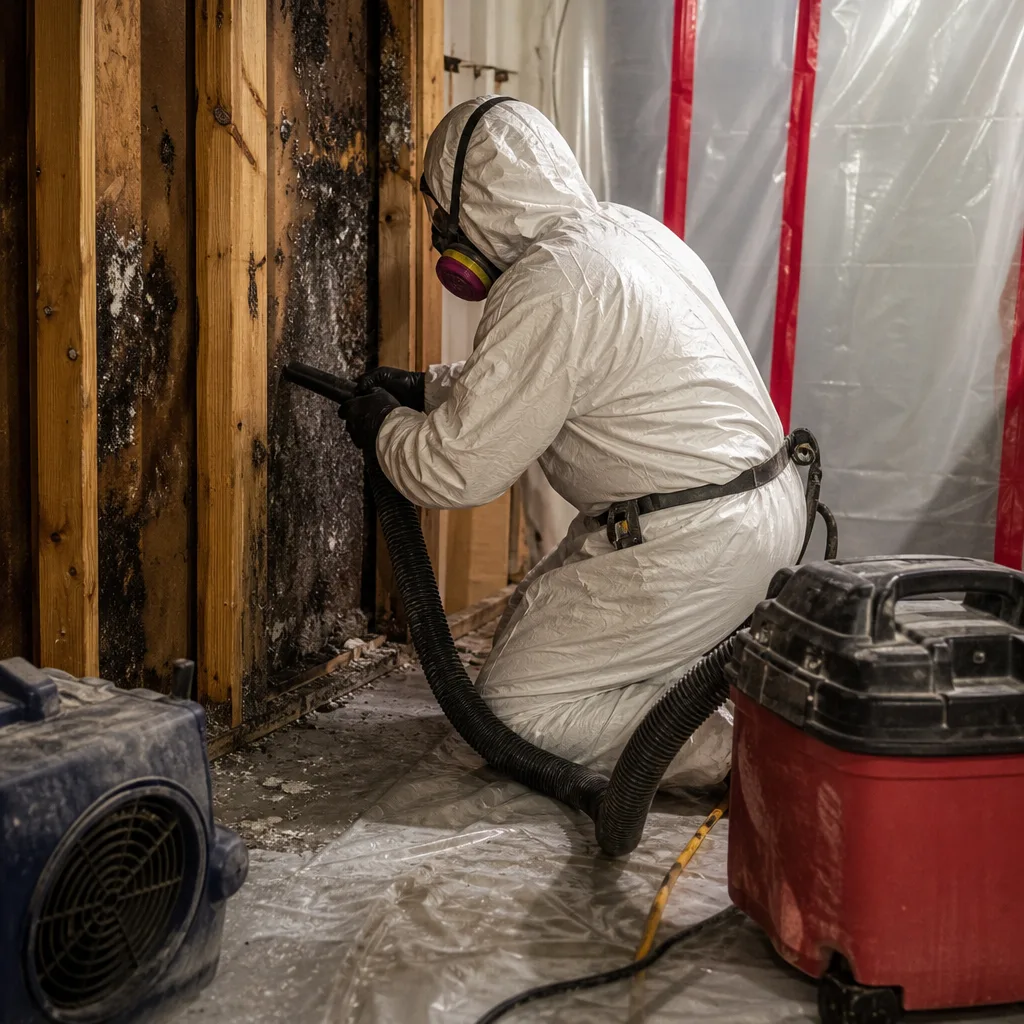
After wind-driven storms, we clear waterlogged drywall, saturated insulation, and storm debris from Ossining properties fast, so structural drying can start. Our crews handle everything from a single basement to a full multi-unit building on Croton Avenue.
Emergency Board-Up
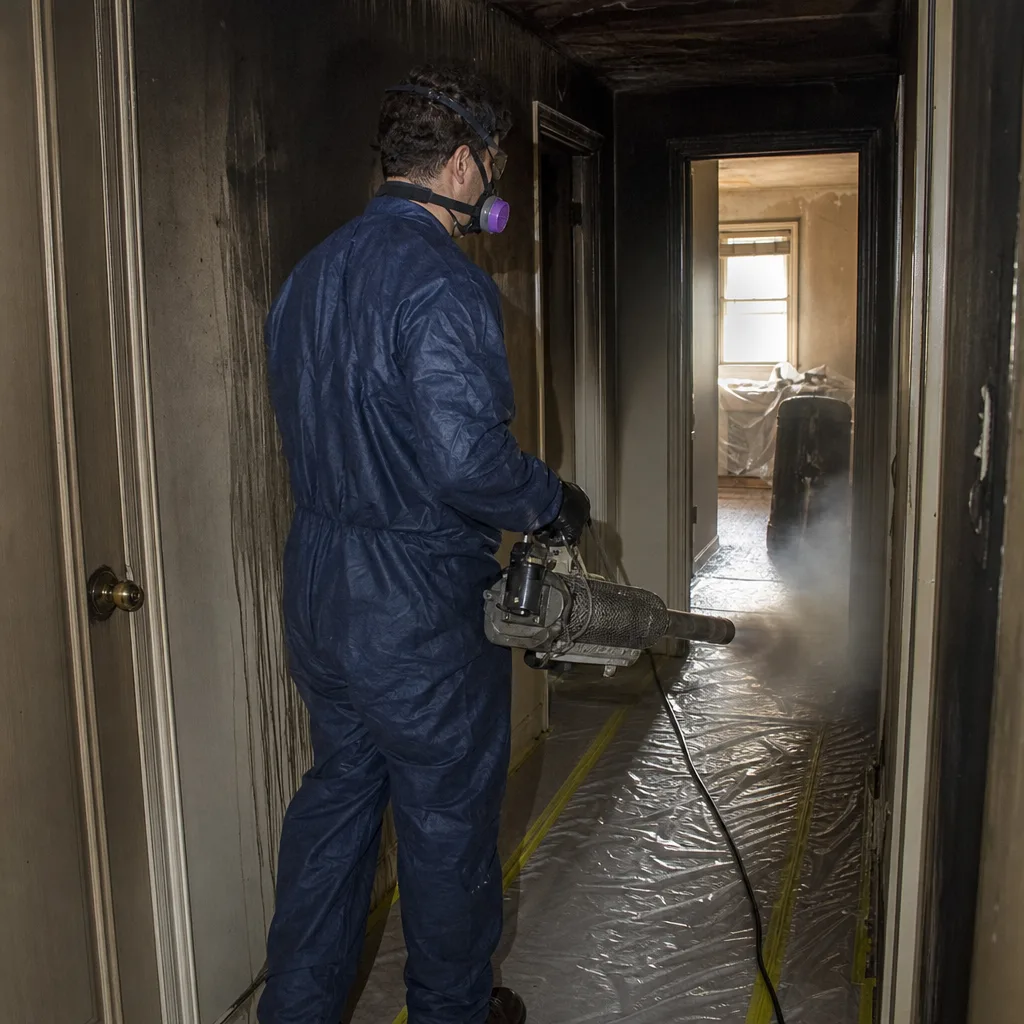
When a tree limb or wind gust takes out a window or a wall section on a hilly Ossining street, we secure the opening with structural-grade board-up the same visit. The goal is keeping rain, animals, and unwanted visitors out until permanent repairs are scheduled.
Roof Tarping
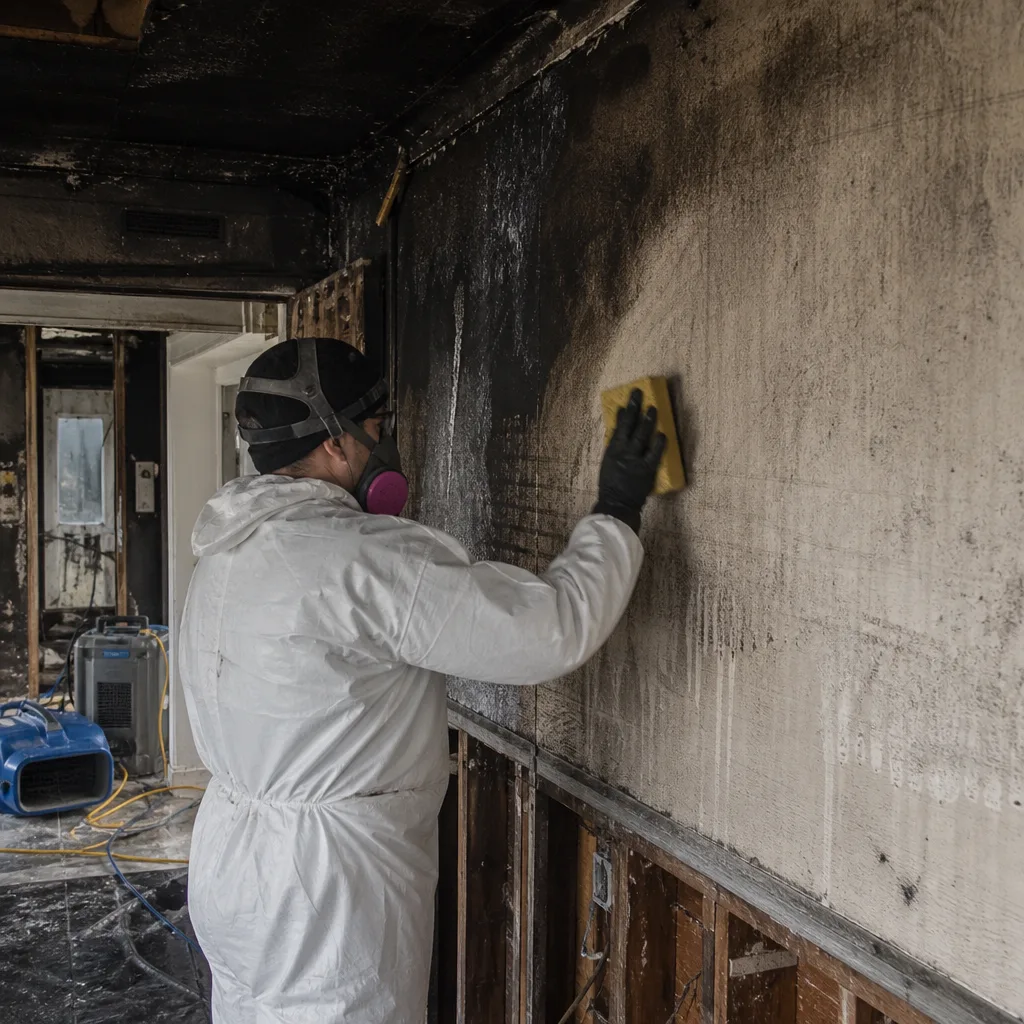
Storm-lifted shingles and torn flashing on steep-roofed Victorians and colonial-era homes in Ossining need immediate covering. We tarp the damaged section, secure it against the next nor’easter, and document the condition for your insurer.
Debris Removal
Storm-felled branches, plaster, soaked carpet, and ruined contents all get hauled out under one plan. We separate what can be salvaged, document everything for the claim, and leave the property ready for drying or rebuild. For homeowners across Ossining, debris removal is priced in the scope, not billed as an afterthought.
What happens when you call
- 1
A real person answersNo phone trees - you reach a local pro.
- 2
You get an upfront price rangeHonest numbers before anyone is dispatched.
- 3
A background-checked tech heads outLicensed & insured, dispatched right away.
- 4
You approve before work beginsNothing starts until you say go.
Storm & Disaster Restoration Costs in Ossining, NY
What you’ll pay in Ossining depends on the water category, how far the moisture traveled, and how old the structure is. A typical storm-cleanup job, single basement with category 1 or 2 water, extraction, and drying, runs $2,800 to $6,500. Category 3 flood damage from tidal backflow or sewage, requiring containment, disposal of contaminated materials, and rebuild, typically falls between $8,000 and $30,000 or more for full basements in older Ossining homes. Emergency board-up alone runs $350 to $900, and roof tarping runs $500 to $1,400 depending on pitch and accessibility on the hillside streets. These are real Ossining market numbers we’ve built from years of local work. Insurance often covers the structural portion; you may face a deductible. The free visual inspection gives you a firm written scope before any money changes hands, so you’ll know exactly what you’re approving.
We Also Serve Cities Near Ossining
Our crews regularly run restoration jobs in Briarcliff Manor, the Millwood hamlet, Pleasantville, and Chappaqua. If your street runs up against the village line, call us anyway; dispatch will route the nearest available crew.
Ossining Storm & Disaster Restoration Questions, Answered
Why do some basements on the same Ossining street flood during a coastal storm while others stay dry?
Elevation relative to the flood plain is the deciding factor, and in Ossining it changes block by block. Homes on the downhill side of a street near the Metro-North station sit lower than the storm-drain outfall, so tidal surge pushes water back through the drains into basements. The uphill side of the same block sits above the backflow level and stays dry. An elevation certificate tells you exactly where your foundation sits relative to base flood elevation.
How does Ossining’s hillside runoff affect basement flooding compared to flat inland towns?
In flat towns, groundwater moves slowly and enters basements gradually. On Ossining’s slopes, runoff from a heavy storm moves downhill at speed, hits foundations at the uphill side, and forces water through rubble-stone joints, window wells, and foundation cracks under hydrostatic pressure. Older French drains were often undersized for modern storm volumes, so they back up and flood the basement from below.
What category of water is typical in Ossining storm-surge flooding near the Metro-North station?
Category 3. Tidal surge that backs through storm drains carries sewage, road runoff, and harbor contamination. It requires full containment, removal of affected porous materials, HEPA air scrubbing, and antimicrobial treatment. You should never attempt category 3 cleanup with household gear.
How quickly can mold start after a nor’easter floods an Ossining basement?
Mold spores germinate in as little as 24 to 48 hours in a warm, wet basement. In a heated Ossining home after a winter nor’easter, that window can be shorter. The key is getting extraction and commercial drying started the same day, and our crews are set up to do exactly that. Call (917) 924-4221 and a crew is dispatched to Ossining immediately.
Do I need an elevation certificate before restoring my Ossining home after a flood?
Not to start restoration. But if your property sits in a FEMA flood zone near the waterfront, your insurance claim or future flood-insurance rates may depend on the foundation’s elevation relative to base flood elevation. We can help you understand whether you need one and how to get it during the reconstruction phase.
How fast can someone actually get to my Ossining property during a storm emergency?
Our commitment is 45 minutes from dispatch to first equipment on-site for Ossining addresses. After a village-wide event, demand spikes, but our live dispatcher prioritizes by severity and tells you honestly when a crew will arrive. Estimates are free, and you’ll never wait on hold for a recording.
Will insurance cover storm and flood restoration in Ossining?
Storm damage like wind-blown roof openings, downed trees, and burst pipes is typically covered under a standard homeowner policy. Flooding from rising river water or coastal surge requires separate flood insurance, often through the NFIP. Storm-drain backflow can fall into either category depending on policy language. We document everything photographically and coordinate directly with your adjuster so the claim reflects the actual loss.
Should we stay in our Ossining home while restoration is underway?
For minor category 1 water damage, often yes. For category 3 contamination or extensive mold remediation, we recommend relocating until containment is removed and clearance testing passes. We’ll tell you straight based on the severity, and document the recommendation for your insurer if additional living expense coverage applies.
Serving Ossining, NY - Our Local Coverage Area
We’re based in the Ossining area and know this community well. Use the map below to see our service coverage - if you’re nearby, we can almost certainly help.
Get Storm Damage Under Control in Ossining Now
The line the water left on your Ossining wall is where we start. Every hour that passes, moisture moves deeper into old plaster, old timber, and old stone, and the repair bill climbs with it. Call (917) 924-4221 for a free visual inspection and a written scope of work, with direct insurance billing so you never play messenger with the carrier. We’ll be there when we say, and the result is backed by the 90-Day Done Right Promise, in writing.
Written by Curt Bowman, Owner at Floodline Restoration Co. of Manhattan, serving Ossining since 2010.