
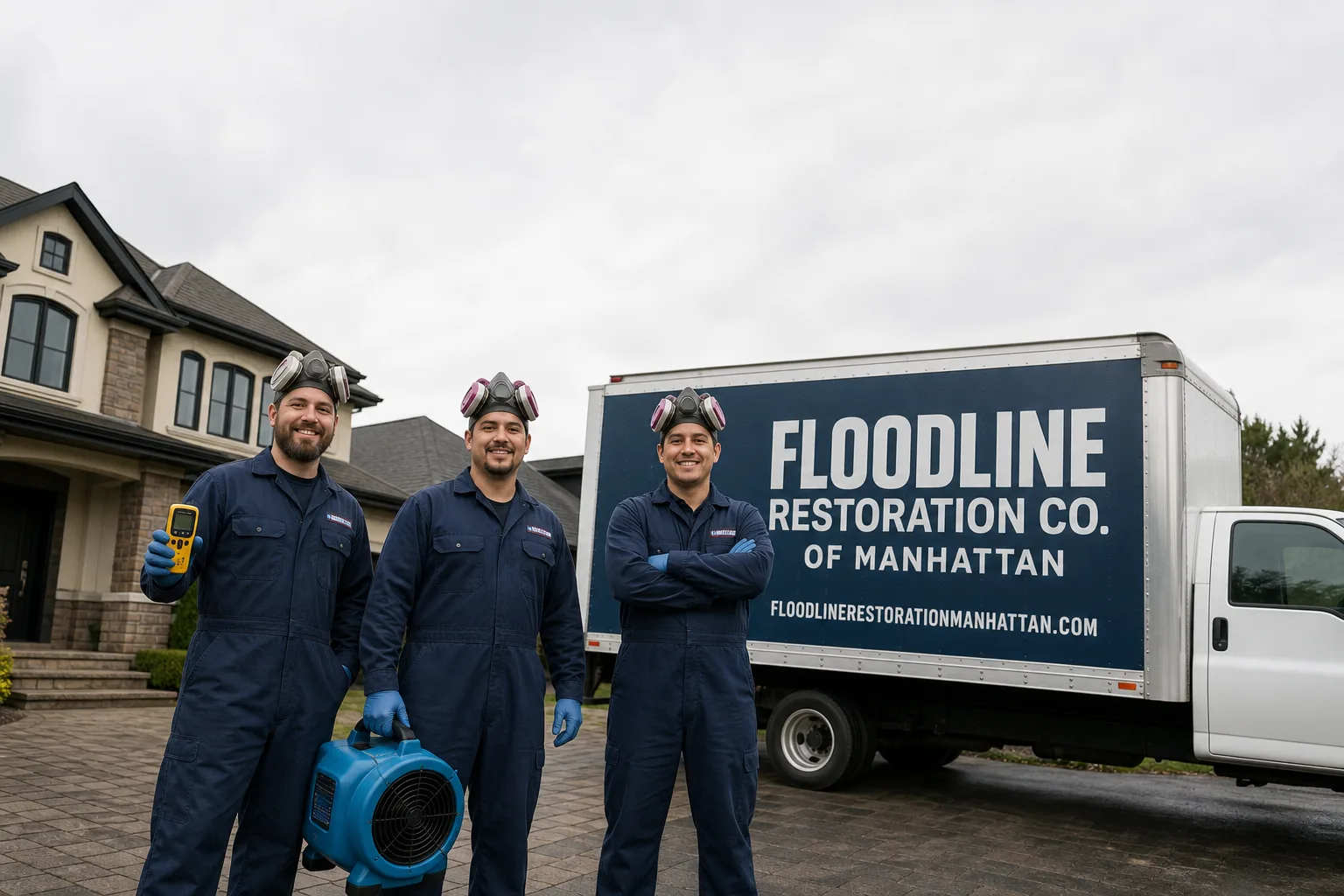
Free visual inspection and a written scope of work before any mitigation begins - photos, moisture readings, and drying logs go in your claim file
The scope we write is the scope we bill. Anything new gets shown to you, in writing, before we touch it.






 Before
 After
After Before
 After
After Before
 After
After24/7 Emergency Storm & Disaster Restoration in Teterboro
Storm damage in Teterboro rarely looks like a flooded living room. It looks like a 60,000-square-foot warehouse with wind-peeled roofing, a hangar door jammed off its track, or a logistics bay holding two inches of Hackensack River surge. Floodline Restoration Co. answers live, 24 hours a day, at (917) 924-4221. When a nor’easter or summer squall hits this Meadowlands borough, our crews dispatch from the metro office and begin stabilization on the same visit. The first hour after a storm passes determines whether you’re drying a Category 1 leak or tearing out a Category 3 slab. We board up, tarp roofs, extract standing water, and start commercial-scale drying before mold has a chance to establish. That’s the entire ballgame here: speed, scale, and equipment that matches the building.
Understanding Storm & Disaster Restoration Severity in Teterboro Properties
Teterboro’s building stock consists almost entirely of large-footprint commercial structures: aircraft hangars, freight depots, auto dealerships, and distribution warehouses built on fill over former Meadowlands wetland. That changes the severity math. Water entering a 50,000-square-foot hangar on Industrial Avenue isn’t a carpet-drying job; it’s a slab-scale moisture migration event. We classify water by IICRC standards: Category 1 (clean supply line), Category 2 (gray water), Category 3 (black water containing sewage, river surge, or runoff). The slow-draining Meadowlands basin means floodwater lingers against concrete and masonry for days after the storm passes, pushing Category 1 water toward Category 3 as it collects contaminants. Wind damage follows a similar severity curve: a compromised hangar door or roof panel admits rain long after the initial storm, compounding structural wetting. Our thermal imaging and moisture mapping identify wicking along perimeter walls and vapor-barrier breaches before visible mold appears, which in Teterboro’s commercial stock is usually beneath industrial flooring or inside wall cavities.
Why Teterboro Property Owners Choose Floodline Restoration Co. of Manhattan
- 45-minute response commitment. Our dispatch board, not a sales desk, routes certified crews to Teterboro addresses the moment you call. Extraction equipment rolls on the same truck.
- Live answer, 24/7, every day. A real person picks up at 2 a.m. during a nor’easter. No automated system, no callback list, no recording.
- IICRC-certified crews trained to WRT and ASD standards. Water damage restoration and applied structural drying certifications mean our moisture maps and drying logs stand up to carrier scrutiny and commercial code.
- Free visual inspection with a written scope. We walk the hangar, warehouse, or dealership bay, photograph every affected square foot, and hand you a line-item scope before equipment gets unloaded.
- Direct insurance billing. Floodline bills your carrier directly. You never play messenger between our crew and the adjuster, and photo documentation goes straight to the claim file.
- One team from extraction to reconstruction. The same certified crew that runs desiccant dehumidifiers on day one rebuilds the dock door or reinstalls the roof deck. No mid-job handoff, no inherited crew.
Our Storm & Disaster Restoration Process
Inspection & Assessment
We start with thermal imaging and moisture meters across every affected zone, including slab perimeters and concealed cavities near the Hackensack River side of the property. Then we write the scope and hand it to you before work begins.
Extraction & Stabilization
Standing water comes out with truck-mounted extraction units sized for commercial square footage. Wind-damaged openings get emergency board-up and roof tarping immediately so the building stops taking on water and debris.
Drying & Dehumidification
For a 50,000-square-foot slab, we run Phoenix and Dri-Eaz desiccant dehumidifiers alongside dozens of air movers positioned by moisture map, not guesswork. Daily hygrometer readings and a drying log get shared with you and your insurer.
Cleaning & Sanitization
Category 3 water brings pathogens. We clean and sanitize affected surfaces to IICRC standards, then run HEPA air scrubbers to capture airborne spores and particulates before any rebuild starts.
Wind-Resilience Repairs
Storm & Disaster Restoration in Teterboro always includes a wind-hardening review: door track alignment, panel re-securing, impact-rated glazing where code requires, and roof-fastener inspection at uplift-prone edges.
Repairs & Restoration
We rebuild what the storm took: roof decking, hangar door systems, dock seals, interior partition walls. The 90-Day Done Right Promise backs every repair in writing, with no argument and no paperwork battle.
Need Emergency Storm & Disaster Restoration in Teterboro Now?
Crews minutes away, answering live 24 hours a day. The sooner we start, the less it costs.
Working With Your Insurance Company
Commercial claims in Teterboro involve industrial values: freight, aircraft, vehicles, inventory. That means adjusters need defensible documentation from hour one. Our Storm & Disaster Restoration team photographs every affected bay, hangar section, and exterior opening before we move equipment in. We record moisture readings at the first visit and log daily drying data until the dry standard is met, then hand the complete file to your carrier. The estimate follows industry-standard pricing for commercial restoration in northern New Jersey. If your adjuster has questions about dry standard, equipment count, or why a vapor barrier needed replacement, our project lead talks to them directly. You get the claim moving, not the phone tag.
What We Provide Your Insurer
- Thorough documentation of the loss
- Photos of all damage, section by section
- Moisture readings and drying logs
- A detailed, line-item scope of work
- Direct coordination with your carrier
Built for Teterboro’s Loss Calendar
Teterboro’s storm season runs on a predictable rhythm. Late winter nor’easters bring the worst of it: sustained winds off the Meadowlands hit hangar doors and warehouse roof edges with uplift forces that peel fasteners and buckle panels. March and April add heavy rain onto still-frozen ground, and the Hackensack River’s tidal backflow pushes stormwater onto low-lying industrial parcels. Summer thunderstorms arrive fast and drop two inches in an hour, overwhelming the borough’s limited drainage and ponding against loading docks and ground-level entries. Fall, when the remnants of Atlantic hurricanes track up the coast, brings the surge risk that Superstorm Sandy proved in 2012. Each season produces a different failure mode: wind-rated door track fatigue in winter, sheet-flow intrusion in spring, flash flooding at dock level in summer, surge in fall. Our crews stock for all of it and know which buildings on Industrial Avenue, Moonachie Road, and Route 46 corridors take water first when the basin backs up.
Storm & Disaster Restoration Across Teterboro’s Neighborhoods
Teterboro is small but its few corridors each have a distinct damage profile. Along Industrial Avenue, the freight depots and distribution centers sit closest to the Hackensack River, making them the first stops for storm surge and tidal backflow calls. These buildings need slab-scale extraction fast. Moonachie Road runs through the heart of the borough’s warehouse district, where long flat roofs and wide overhead doors face prevailing northwest winds, and we regularly find uplift damage at the windward roof edges and door header gaps. The area around Route 46 and Huyler Street concentrates auto dealerships with large showroom glass, roll-up service bays, and vehicle inventories that demand immediate climate control after water intrusion. Near Teterboro Airport (TEB), hangars and aviation support facilities present the most sensitive work: any roof tarping, debris removal, or exterior repair must be coordinated with airport operations to avoid flight-path conflicts. Our crews know the access protocols and plan staging accordingly. Every one of these zones requires commercial-scale drying, not residential fans.
Specialized Storm & Disaster Restoration Services We Offer in Teterboro
Storm Damage Cleanup
Wind-blown debris, broken glass, damaged racking, and flooded floors get cleared, catalogued for insurance, and removed from the building envelope quickly. We separate salvageable freight from condemned material and document it all for your claim.
Flood Damage Restoration
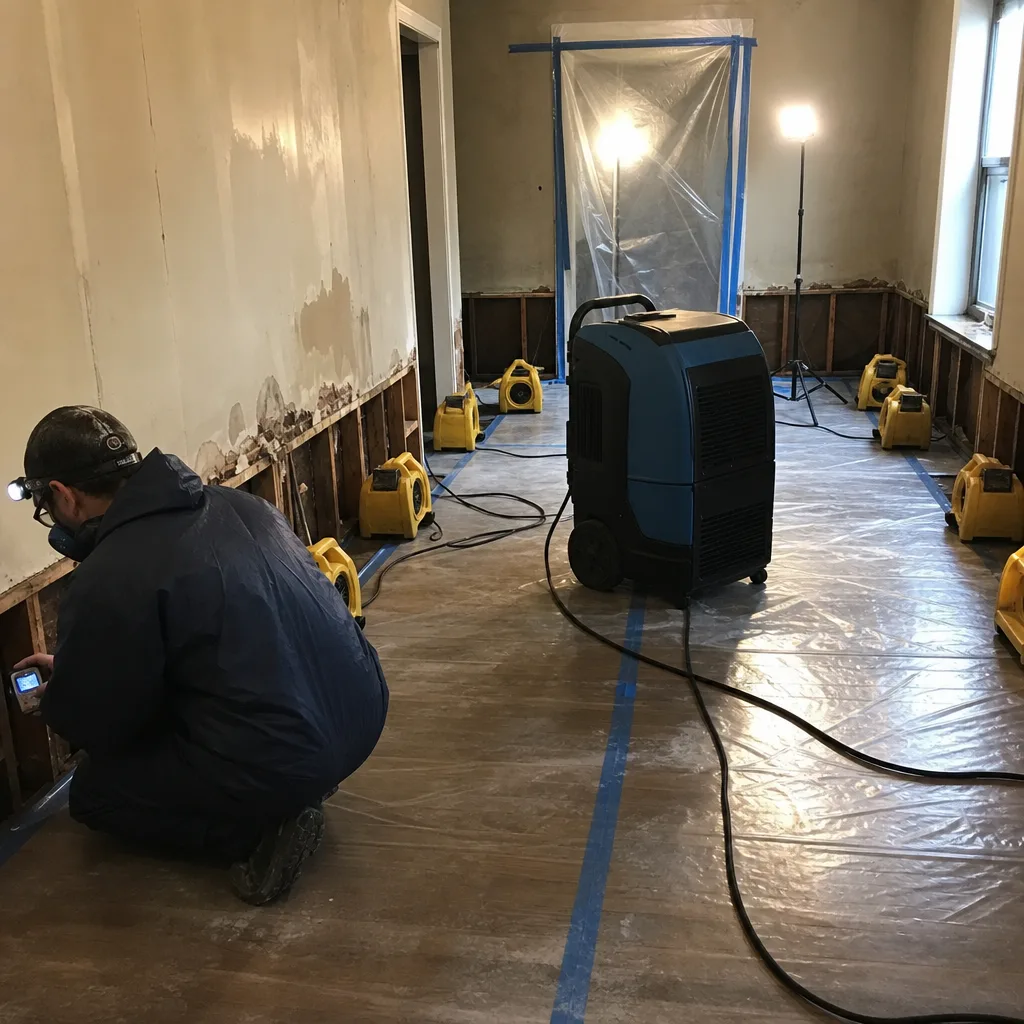
Hackensack River surge and stormwater ponding in the Meadowlands basin demand extraction sized for the slab area, not the room count. We run truck-mounted extraction with desiccant dehumidifiers and air movers staged by moisture map, and we monitor wicking at the perimeter walls for days.
Emergency Board-Up
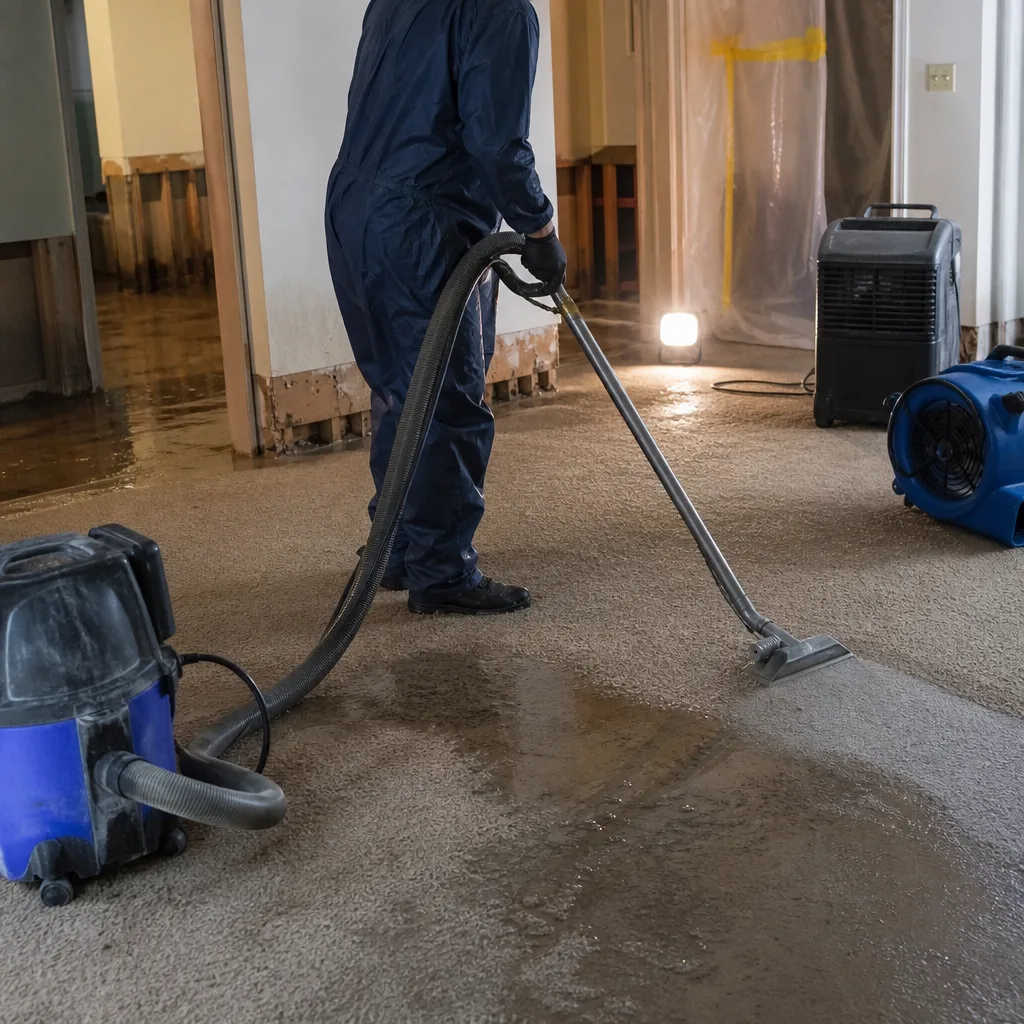
After a storm passes, open doors and broken glazing invite rain, animals, and unauthorized entry. We board up openings with materials appropriate to the opening size and exposure, including hangar door gaps and shattered showroom glass along Route 46.
Roof Tarping
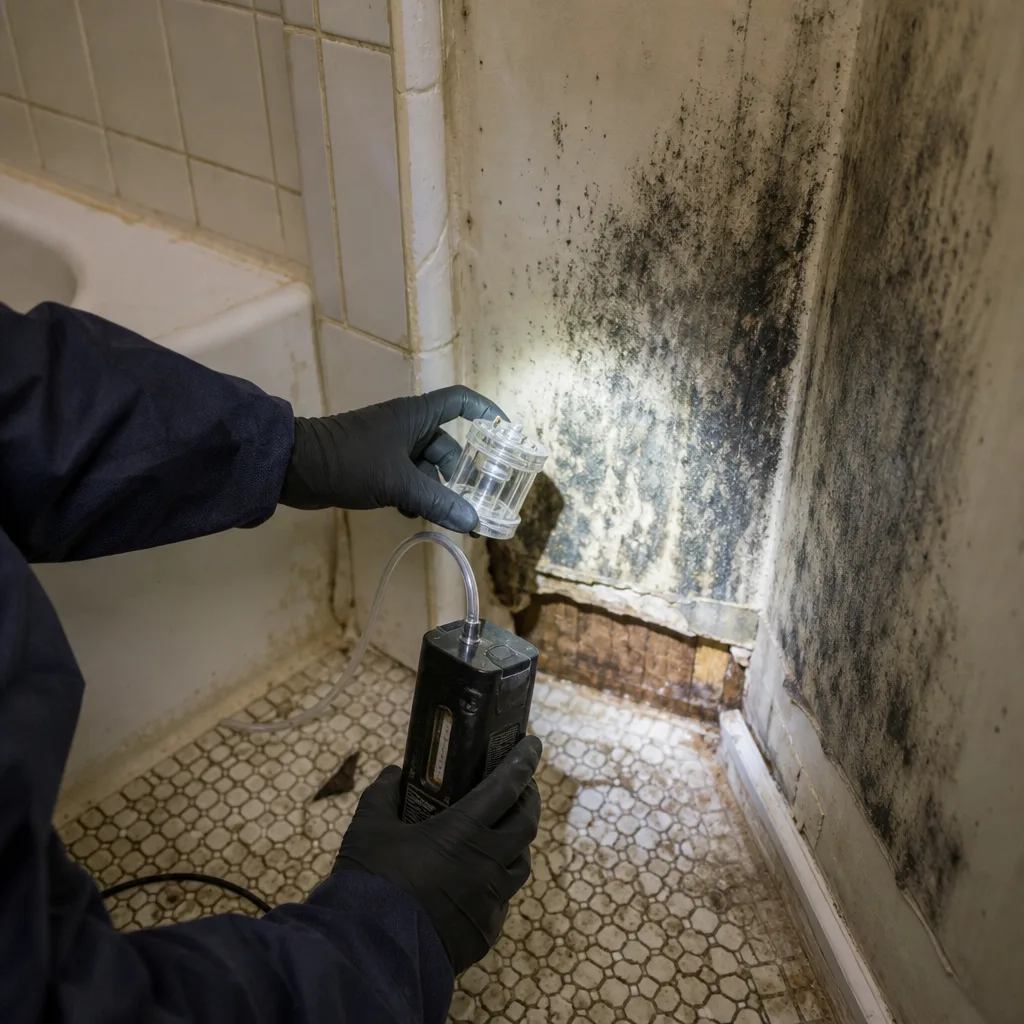
Wind uplift peels membrane roofing at corners and edges more than anywhere else. We tarp those sections the same visit, fastening to code and securing against the next wind band. For airport-adjacent properties, we coordinate staging with Teterboro Airport operations before any work begins.
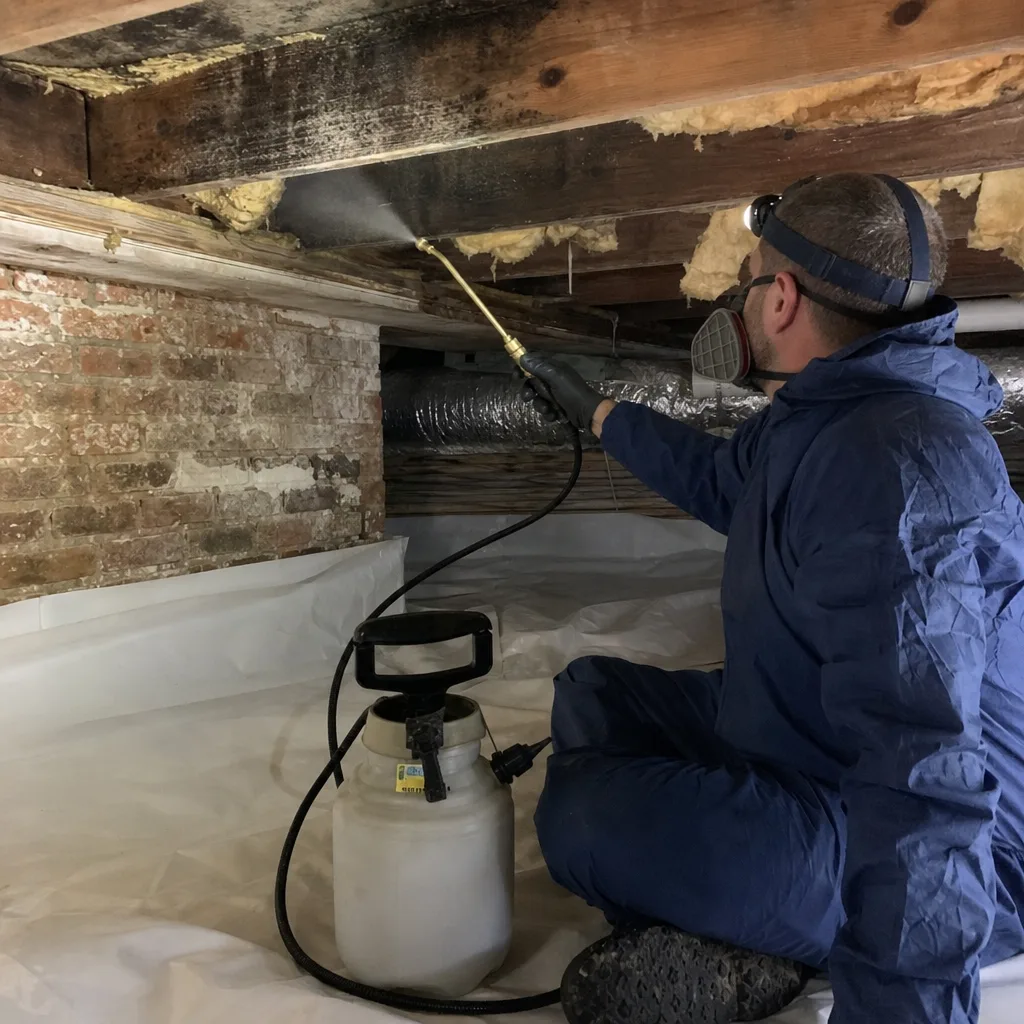
Debris Removal
Storm debris around warehouses and hangars often includes sheet metal, roofing membrane, and pallet fragments that pose a liability and a flight-safety hazard near TEB. We remove it promptly, separating materials for your insurer’s documentation.
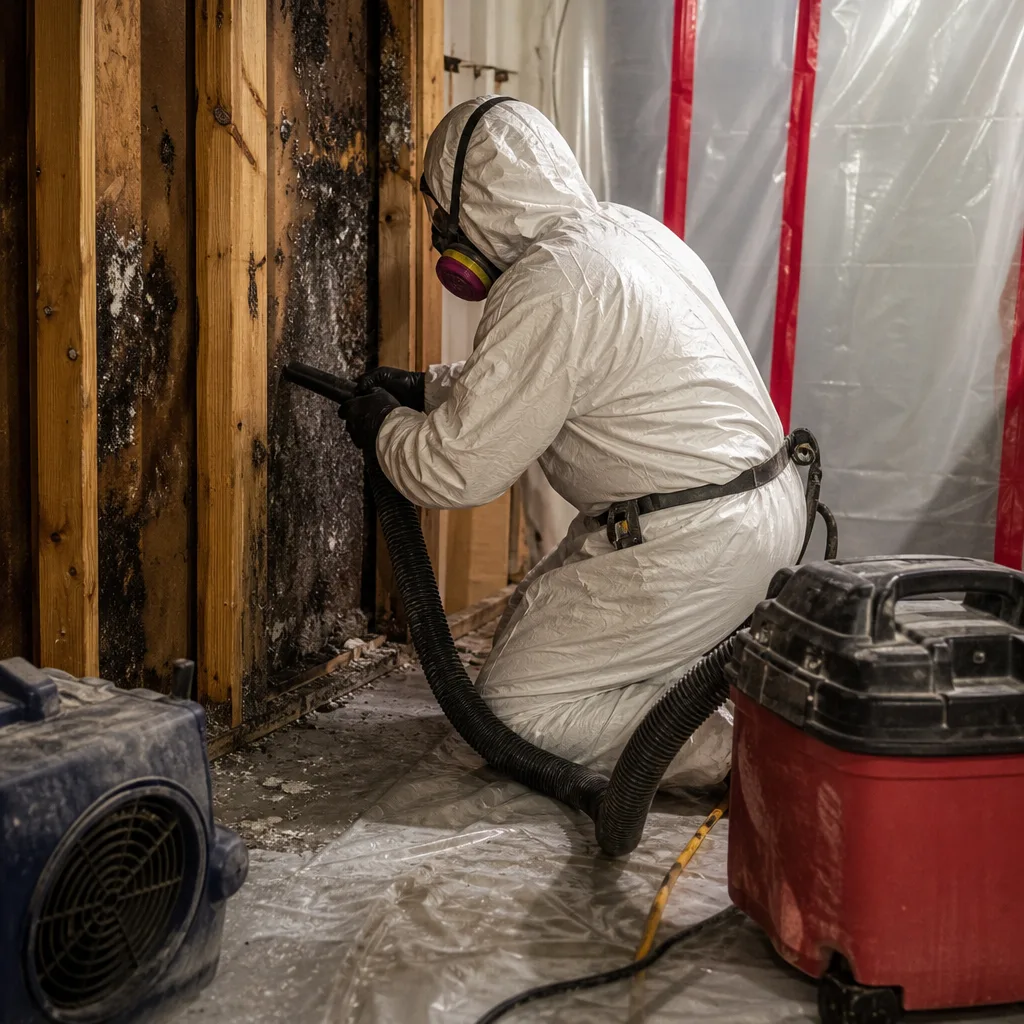
Wind Damage Repair
We repair door tracks, rehang panels, replace fastener line failures along roof edges, and rebuild partitions blown out by storm pressure. Every repair gets checked against Teterboro’s wind-load expectations so the same storm can’t open the same hole twice.
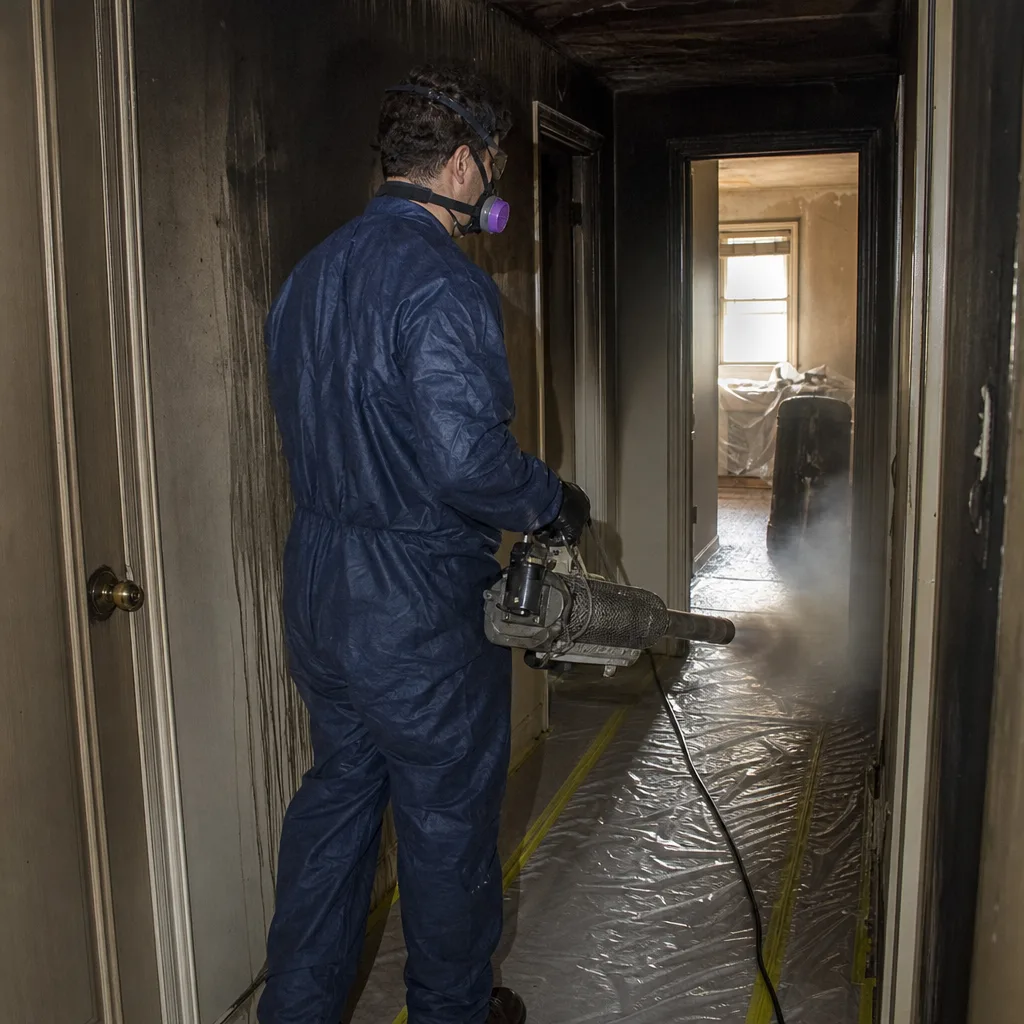
What happens when you call
- 1
A real person answersNo phone trees - you reach a local pro.
- 2
You get an upfront price rangeHonest numbers before anyone is dispatched.
- 3
A background-checked tech heads outLicensed & insured, dispatched right away.
- 4
You approve before work beginsNothing starts until you say go.
Storm & Disaster Restoration Costs in Teterboro, NJ
Teterboro pricing runs commercial at nearly every line. Here’s what we typically see in this borough’s market:
- Emergency board-up: $850-$2,400 depending on opening size and material, with same-visit tarping included on most single-openings.
- Roof tarping: $1,200-$4,500 for wind-damaged sections, more for large warehouse footprints or steep hangar rooflines.
- Flood extraction and drying for a 50,000 sq ft slab: $18,000-$60,000, driven by Category 3 contamination, equipment count, and drying duration.
- Debris removal: $600-$3,000 for post-storm cleanup, scaled by volume and hazard classification.
- Wind damage repair: $2,500-$25,000+, depending on whether it’s door track realignment or a full roof-edge rebuild.
What moves the price: water category, square footage, how long water sat in the Meadowlands basin before extraction, whether the vapor barrier was breached, and whether airport access protocols add staging time. Insurance typically covers storm-related loss in Teterboro’s commercial stock, and we bill the carrier directly. The free visual inspection produces a firm scope before any money changes hands. Call (917) 924-4221 and our lead can give you a working number within an hour of walking the property. Senior and veteran discounts always apply, plus $50 off any repair over $250.
We Also Serve Cities Near Teterboro
When storm damage crosses the borough line, we’re already close. We run the same commercial-grade response to Teterboro‘s neighboring municipalities: South Hackensack, Hasbrouck Heights, Little Ferry, and Bogota. Each gets the same live 24/7 answer, the same certified crews, and the same written 90-Day Done Right Promise.
Teterboro Storm & Disaster Restoration Questions, Answered
What wind rating do repair materials need to meet Teterboro building code for commercial hangars?
Hangar doors and exterior panels in Teterboro must meet wind-load criteria set by the New Jersey building code for the Meadowlands wind zone, which typically requires components rated for sustained and gust forces that inland Bergen County structures don’t see. The exact rating depends on the building’s exposure category, height, and proximity to open fetch across the airport. We verify the required rating before ordering doors, panel fasteners, or glazing, and we don’t install anything that fails the local review.
How quickly can you board up a Teterboro warehouse after a storm passes?
Same visit, typically within 45 minutes of dispatch reaching the property. Our Teterboro crews carry board-up materials on the truck and stage around Industrial Avenue and Moonachie Road during storm watches. For airport-adjacent properties, access protocols may add a few minutes, but we coordinate with TEB operations while en route to keep the boarding moving.
What happens if storm surge from the Hackensack River floods a Teterboro aircraft hangar?
We treat it as a Category 3 water event. Extraction starts immediately with truck-mounted units sized for the slab, and aircraft or equipment are moved or jacked out of standing water where safely possible. Desiccant dehumidifiers and HEPA air scrubbers run until the dry standard is met, because aviation electronics and airframes won’t tolerate lingering humidity. We document everything for the aircraft owner’s insurer and the hangar’s carrier.
Do you handle debris removal from Teterboro Airport property after a wind event?
We do, with airport access coordination. Debris near TEB isn’t just a cleanup issue; it’s a flight-safety hazard. We work with airport operations to stage removal between arrivals and departures, separating materials for insurance documentation and disposing of them according to Teterboro’s commercial waste rules.
Can you restore a commercial roof after wind uplift without shutting down an active Teterboro logistics center?
Yes. We tarp the wind-damaged section the same visit to stop water intrusion, then schedule the structural roof repair in phases that keep dock doors and interior operations running. Tools and materials stage away from active freight lanes. The crew works in containment where needed. We’ve done this on active logistics floors off Industrial Avenue without a single lost shift for the tenant.
How long does drying take in a Teterboro warehouse after floodwater recedes?
Two to five days for most commercial slabs, sometimes longer when water sat for days in the slow-draining Meadowlands basin. The key is equipment count and moisture mapping. A 50,000-square-foot slab needs desiccant dehumidifiers and 30-40 air movers positioned by readings, not sympathy. We log daily hygrometer numbers until the dry standard is met, then hand the log to you and your carrier.
Will insurance cover storm surge damage in Teterboro?
Commercial policies in this area usually cover wind-driven rain and storm surge under the building’s named-peril coverage, though some carriers still apply separate hurricane or flood deductibles. We provide the photo documentation, moisture logs, and line-item scope your adjuster needs to move the claim. We also bill the carrier directly, so you never have to front the restoration cost while the claim sorts itself out.
What should I do in the first 30 minutes after storm damage to a Teterboro building?
Call (917) 924-4221. Then, if it’s safe, shut off utilities to affected areas and move high-value contents out of standing water. Don’t enter a flooded building with live electrical systems, and don’t run residential-grade fans in a commercial space, which only spreads moisture. Our crew arrives, boards openings, starts extraction, and gives you a written scope before the hour is up.
Serving Teterboro, NJ - Our Local Coverage Area
We’re based in the Teterboro area and know this community well. Use the map below to see our service coverage - if you’re nearby, we can almost certainly help.
One Field Note From Teterboro
After a nor’easter pushed Hackensack River storm surge into a logistics warehouse off Industrial Avenue, our crew found four inches of Category 3 water across 80,000 square feet of slab. We ran Phoenix and Dri-Eaz desiccant dehumidifiers with 40 air movers, used moisture mapping to isolate wicking at the perimeter walls, and returned the facility to pre-loss condition before mold onset. The tenant’s freight was back in place within five days. That’s the standard we bring to every Teterboro call, and the 90-Day Done Right Promise means if it’s not done right, we make it right, in writing.
Written by Curt Bowman, Owner at Floodline Restoration Co., serving Teterboro and the Meadowlands since 2010.