
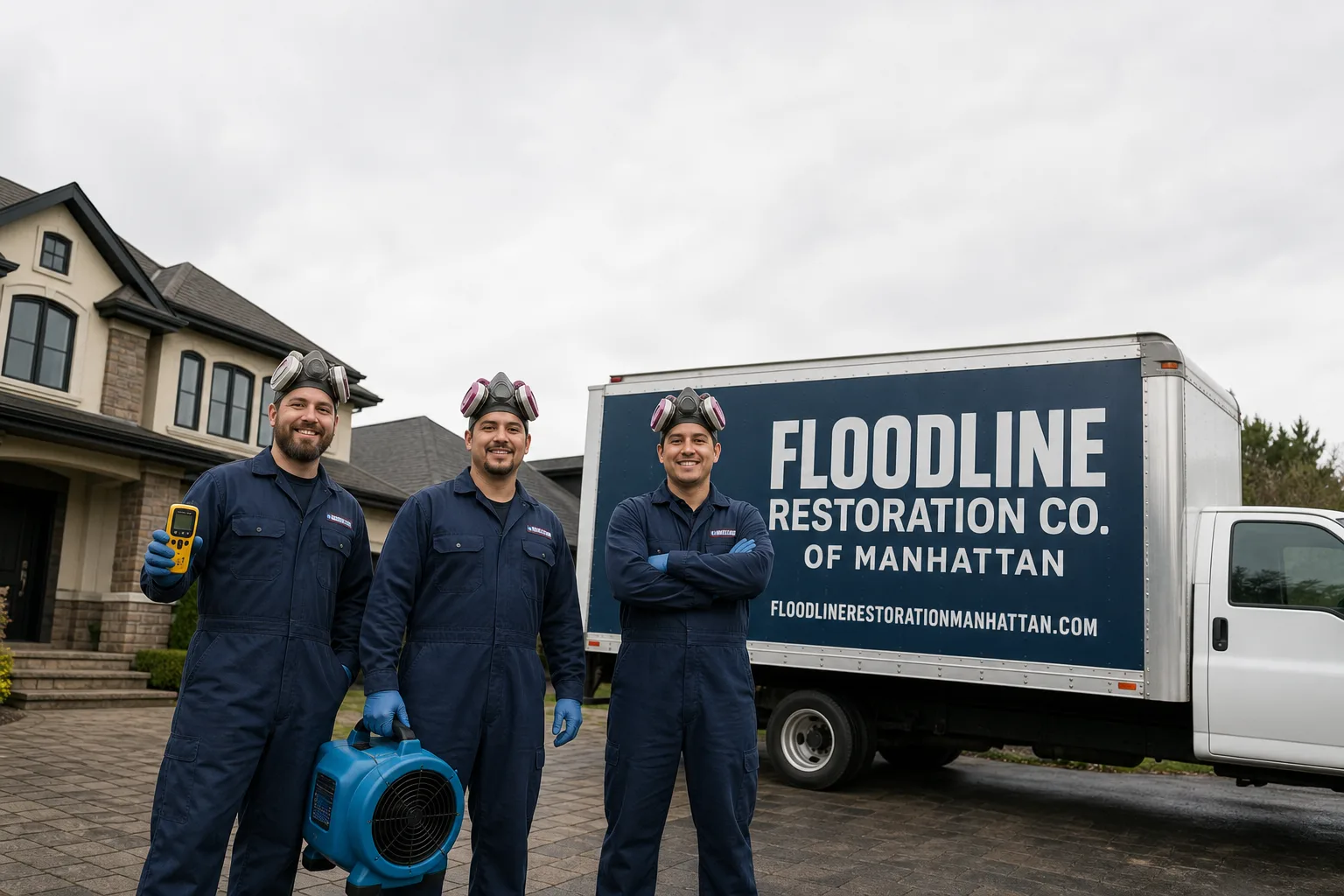
Free visual inspection and a written scope of work before any mitigation begins - photos, moisture readings, and drying logs go in your claim file
The scope we write is the scope we bill. Anything new gets shown to you, in writing, before we touch it.






 Before
 After
After Before
 After
After Before
 After
After24/7 Emergency Storm & Disaster Restoration in Woodside
Storm damage in Woodside moves fast, and so do we. Our Storm & Disaster Restoration crews answer live around the clock, every day of the year. Call (917) 924-4221 when wind, rain, or falling debris has compromised your rowhouse, and a certified technician reaches your block, usually within 45 minutes. The first hour after a roof breach or window blowout is when the real cost gets written; water migrating through plaster-and-lath ceilings and into finished basements does not wait for morning.
We serve Woodside with the same crew from first extraction through final reconstruction, so you deal with one name and one written scope instead of a rotating cast of subcontractors. A live dispatcher answers at 2 a.m. because storms do not check the clock, and neither should your restoration company.
Understanding Storm & Disaster Restoration Severity in Woodside Properties
Woodside’s housing stock, built mostly between the 1920s and 1940s, behaves differently in a storm than newer construction. Attached brick rowhouses share party walls, so water that enters through one roof breach routinely wicks laterally into the adjoining unit’s plaster-and-lath ceilings and wall cavities. We classify water by category before we touch it: Category 1 is clean supply-line water, Category 2 carries contaminants from appliances or sumps, and Category 3, the most common after a combined sewer backup, contains sewage and requires full antimicrobial treatment and containment. Wind-driven rain through a failed original entry door often produces Category 2 conditions inside finished basement apartments within hours.
Flat and low-slope roofs on these pre-war buildings are prone to ponding in Woodside’s heavy nor’easter rains. Once the membrane fails, water travels down through multiple floors before anyone notices. Our technicians use thermal imaging and hygrometers to map moisture behind walls and under floors, then run structural drying with professional-grade equipment until the dry standard is met, usually three to five days for most rowhouse losses. Daily moisture readings get logged and shared with you and your carrier, because a dry surface hides what is still wet underneath.
Why Woodside Property Owners Choose Floodline Restoration Co. of Manhattan
- 45-minute response commitment – a crew is dispatched to your Woodside address as soon as you call, with a live dispatcher on the line, not a recording.
- 24/7 live answer – a real person picks up at any hour, every day, including holidays and the middle of a nor’easter.
- IICRC-certified technicians – our crews hold WRT, FSRT, and AMRT certifications, so storm water, sewage, and mold are handled to the proper standard.
- Free visual inspection – before any work begins, we assess the damage and explain exactly what we found and what we recommend.
- Direct insurance billing – we coordinate with your carrier and bill them directly, so you are not chasing paper.
- One team from start to finish – the same certified crew that stabilizes your rowhouse rebuilds it, with no mid-job handoff.
Our Storm & Disaster Restoration Process
Inspection & Assessment
We arrive, assess the full extent of storm damage, and map moisture across the affected floors and party walls. You get a written scope of work before anything gets torn open.
Extraction & Stabilization
Standing water comes out first using truck-mounted extraction and XPOWER pumps. We secure openings with emergency board-up and roof tarping the same visit so no additional weather gets in.
Drying & Dehumidification
Dri-Eaz and Phoenix dehumidifiers run alongside strategically placed air movers to pull moisture from wall cavities, ceilings, and subfloors. Hygrometers and thermal imaging track progress until the dry standard is met.
Cleaning & Sanitization
Category 3 water from combined sewer backups gets full antimicrobial treatment with containment and HEPA air scrubbing. We remove saturated materials that cannot be dried, including plaster and insulation where needed.
Wind & Impact Repair
For wind damage, we reinforce or replace entry doors with wind-rated units, repair roof membrane failures, and address any structural compromise to shared party walls or window openings.
Repairs & Restoration
The same crew rebuilds what was torn out, matching the existing rowhouse character as closely as possible. The job is not done until you hold the 90-Day Done Right Promise in writing.
Need Emergency Storm & Disaster Restoration in Woodside Now?
Crews minutes away, answering live 24 hours a day. The sooner we start, the less it costs.
Working With Your Insurance Company
Storm claims in Woodside get complicated when one rowhouse breach involves two or three owners and their separate policies. After a nor’easter tore a section of roofing off a two-family rowhouse on 61st Street, our crew tarped the exposed roofline, then followed a moisture map across the party wall to find water had wicked into the neighbor’s plaster-and-lath ceiling. We ran structural drying with Dri-Eaz dehumidifiers and XPOWER air movers in both units, documenting separate scopes of work for each owner’s policy before any repairs began.
We photograph everything from the first hour, write industry-standard estimates, and talk directly with your adjuster so you do not have to translate restoration language over the phone. Most storm losses on rowhouses involve structural damage under the owner’s policy and contents or displacement under a tenant’s policy; we separate the two so the claim does not stall.
What We Provide Your Insurer
- Thorough documentation of the loss
- Photos of all damage, room by room
- Moisture readings and drying logs
- A detailed, line-item scope of work
- Direct coordination with your carrier
Built for Woodside’s Loss Calendar
Woodside sees a predictable rhythm of storm losses through the year, and each season leaves a different signature. January deep freezes burst supply lines inside our uninsulated pre-war rowhouses, sending clean Category 1 water through kitchens and down into basement apartments. Spring thaw and steady rain saturate the soil around foundations, and original clay or cast-iron drain lines let groundwater seep through cracks and floor drains. Summer thunderstorms hit fast and hard, overwhelming the combined sewer system beneath Woodside’s streets and backing Category 3 water up through basement floor drains during heavy rain events.
Autumn and winter nor’easters are the most damaging. High winds tear membrane sections off flat roofs, launch debris into windows, and drive rain under eaves and through failed flashing. A single wind-blown roof failure on one attached rowhouse regularly means coordinating tarping and mitigation across two or more addresses, because the water does not respect property lines. We plan our equipment staging around this calendar, so Dri-Eaz dehumidifiers and B-Air air movers are ready to roll when the forecast turns.
Storm & Disaster Restoration Across Woodside’s Neighborhoods
Our crews know Woodside by its blocks, not just its zip code. Around the 61st Street corridor, rows of attached brick two-families from the 1930s mean wind damage to one roofline quickly becomes a shared problem for the adjacent owner. Near Northern Boulevard and the 7 train, commercial storefronts with residential units above present mixed-use losses where a single storm event requires coordination with both a business owner’s policy and a residential carrier.
The blocks south of Roosevelt Avenue, including the dense two-to-three-family rowhouses near Woodside Avenue, see chronic basement backups during moderate rain because the combined sewer lines beneath these flat streets surcharge quickly. Over by Doughboy Park and the Big Six Towers area, post-war construction sits alongside pre-war brick, so our response changes block by block. We read the building the way it was built, then respond accordingly.
Specialized Storm & Disaster Restoration Services We Offer in Woodside
Storm Damage Cleanup
After wind and rain pass, Woodside rowhouses are left with saturated plaster, buckled flooring, and debris scattered across yards and flat roofs. We remove the damaged material, extract standing water, and begin structural drying immediately, working around tenants and owners who are still in the building.
Flood Damage Restoration
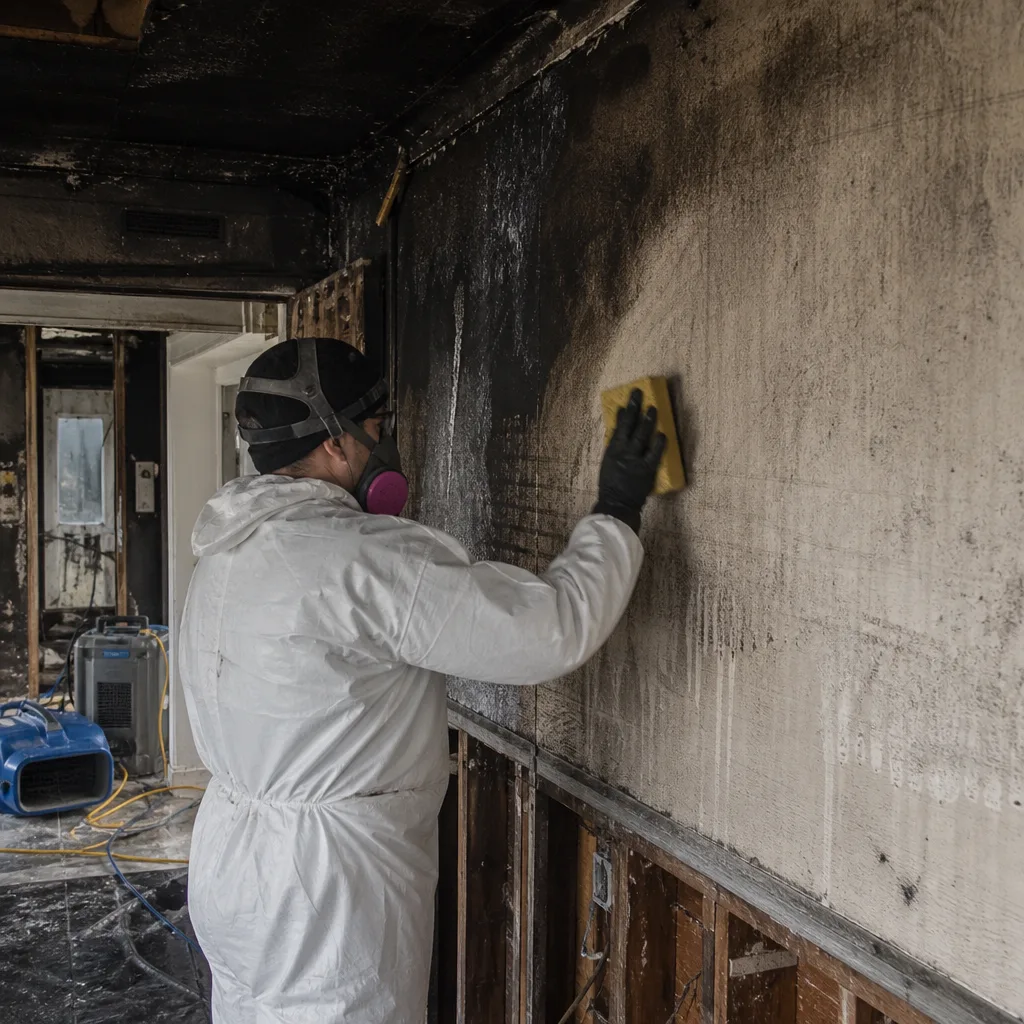
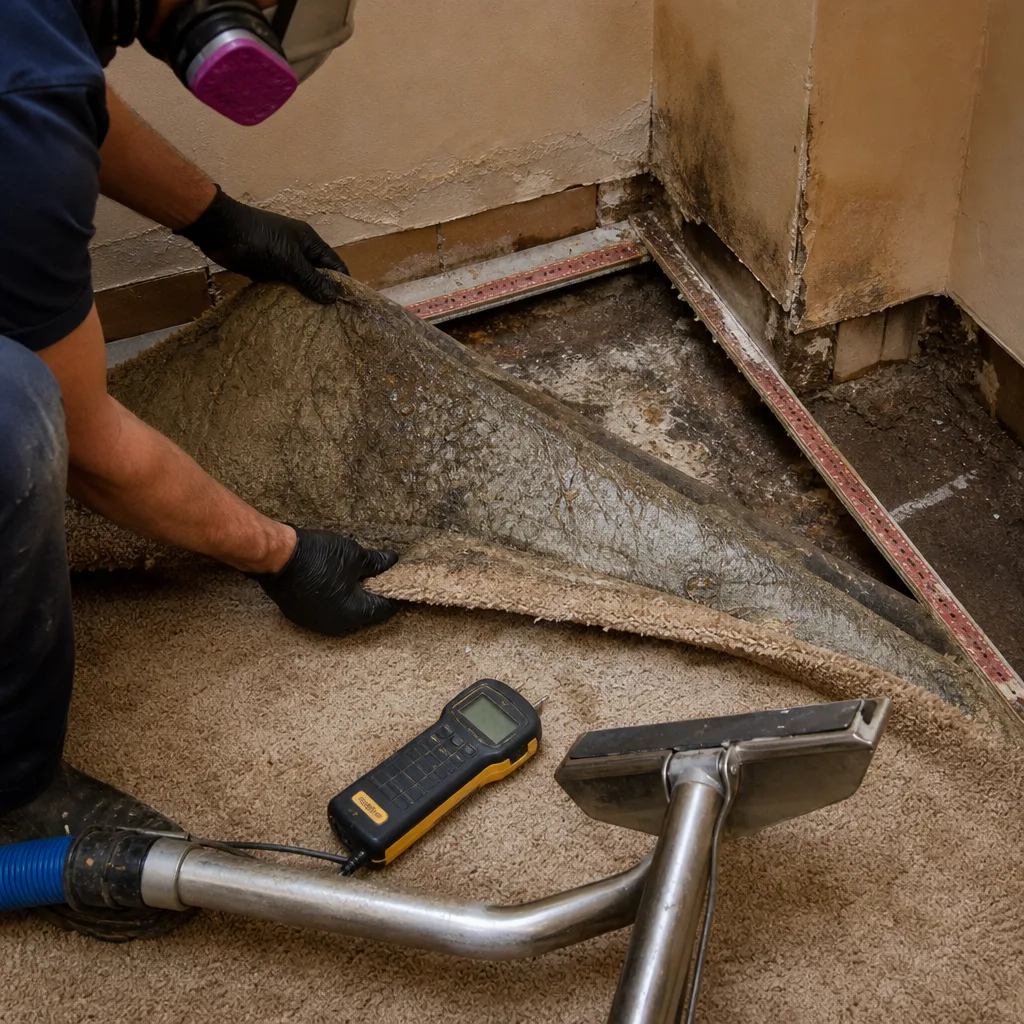
Finished basement apartments in Woodside flood chronically during heavy rain because the combined sewer infrastructure beneath these streets cannot handle the volume. We categorize the water correctly, contain the area, and run full decontamination protocols when Category 3 water is present, not just a courtesy mop-up.
Emergency Board-Up
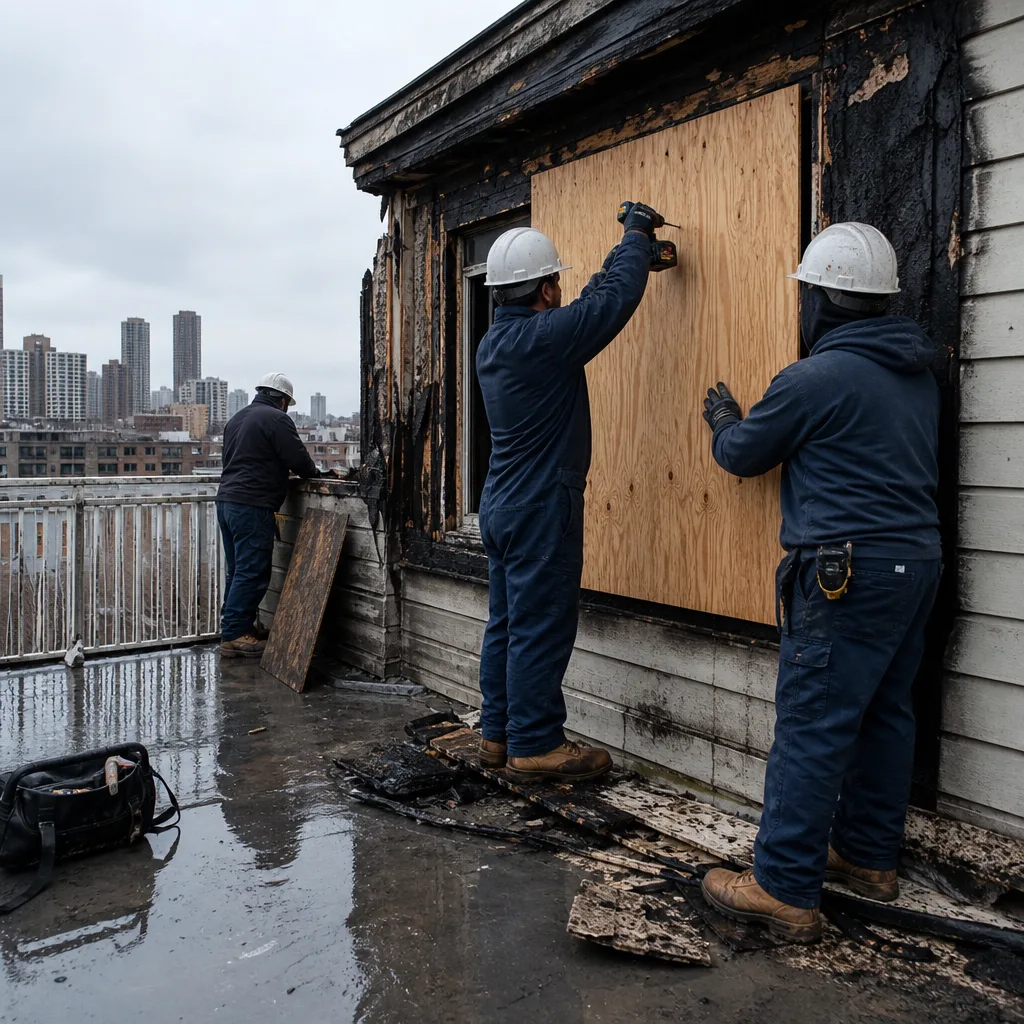
A blown-out front window on a three-family rowhouse leaves every unit exposed. We board openings with weather-resistant panels the same day, securing first-floor windows and entry doors so wind-driven rain cannot reach finished basements or interior walls.
Roof Tarping
Flat and low-slope roofs on Woodside’s pre-war buildings fail under nor’easter winds and heavy rain. We tarp exposed rooflines immediately to stop active water intrusion, then schedule the membrane repair or replacement once the structure stabilizes. Tarping is a stopgap, not a repair, and we tell you that plainly.
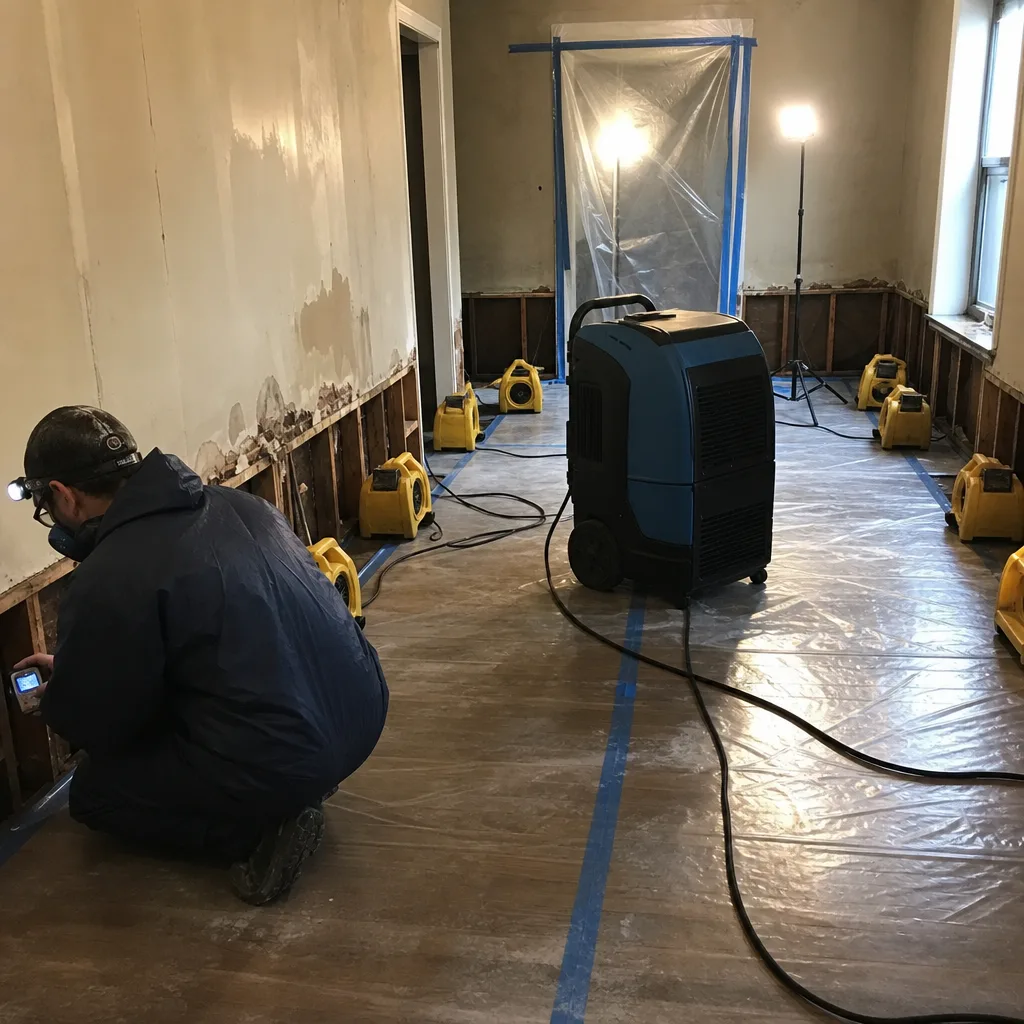
Debris Removal
Storm debris from broken branches, roofing material, and blown-in glass creates hazards around rowhouse entrances and shared walkways. We clear it safely, document what we removed, and include the work in the written scope for your carrier.
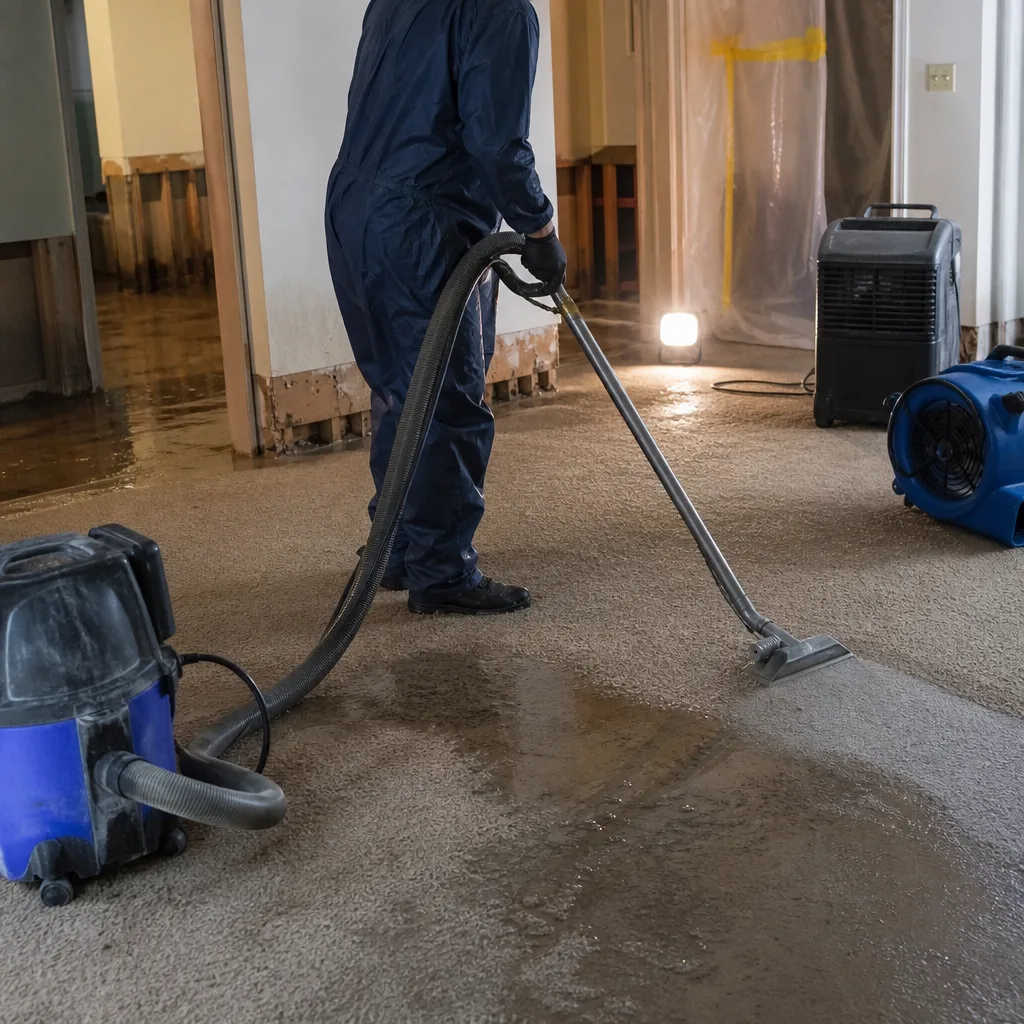
Wind Damage Repair
Original 1920s entry doors fail under wind load without warning, and once they go, wind-driven rain reaches basements and finished lower units within minutes. We reinforce existing doors or install wind-rated replacements, repair wind-damaged roof membranes, and address any structural compromise to shared party walls.
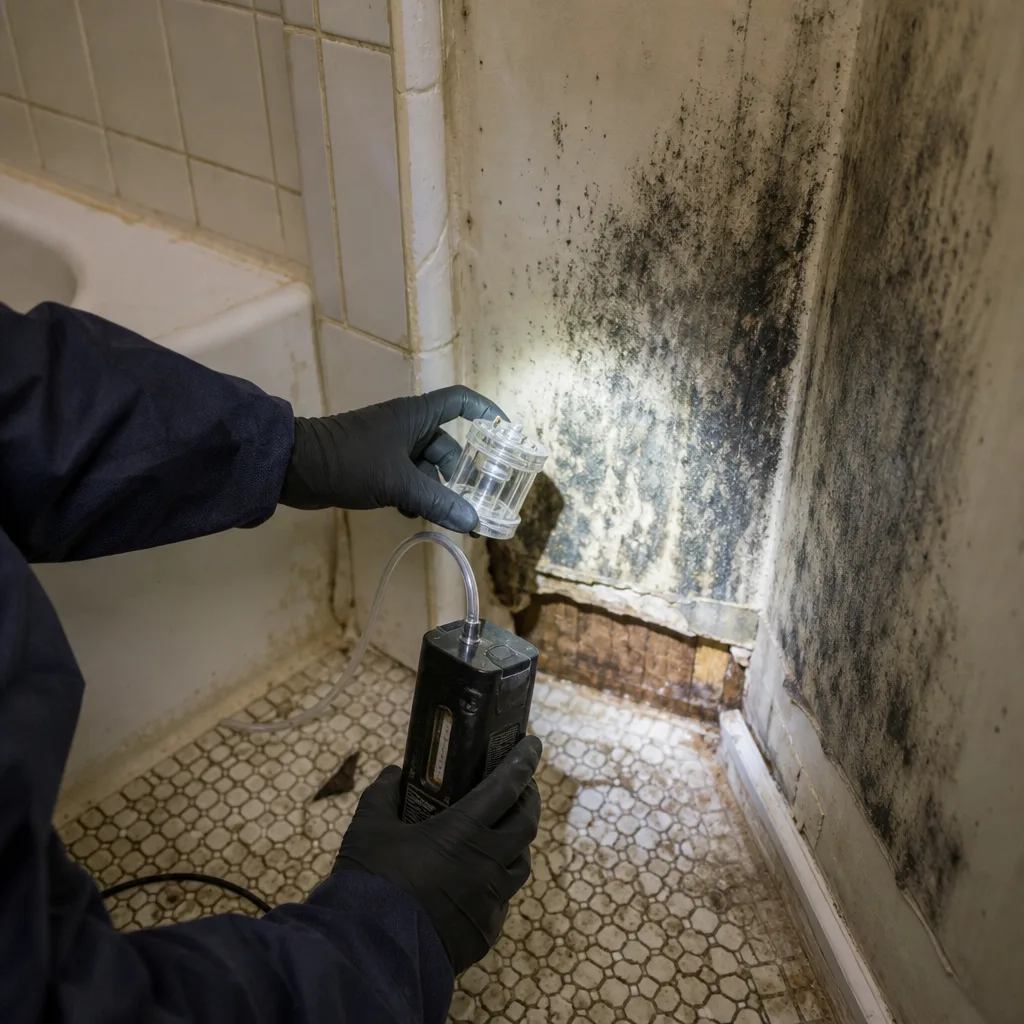
What happens when you call
- 1
A real person answersNo phone trees - you reach a local pro.
- 2
You get an upfront price rangeHonest numbers before anyone is dispatched.
- 3
A background-checked tech heads outLicensed & insured, dispatched right away.
- 4
You approve before work beginsNothing starts until you say go.
Storm & Disaster Restoration Costs in Woodside, NY
Storm damage restoration in Woodside is priced by scope, not by square foot alone. Emergency board-up for a single blown-out window typically runs $250 to $600. Roof tarping on a flat rowhouse roofline after a nor’easter usually lands between $400 and $900, depending on access and the area exposed. Wind damage repair for a failed entry door, including reinforcement and weatherproofing, generally runs $800 to $2,500 per opening when replacement is required.
For a full flood damage restoration in a finished basement after a combined sewer backup, expect $3,500 to $9,000, which includes Category 3 decontamination, containment, drying, and removal of saturated materials. The price moves with the extent of the water migration behind walls and the number of units involved. Most storm losses are covered under homeowners policies, and we bill your carrier directly. Before any work begins, we complete a free visual inspection and hand you a written, line-item scope so you know exactly what you are approving. Call (917) 924-4221 to set that up.
We Also Serve Cities Near Woodside
Our crews respond to storm losses in Woodside and the surrounding Queens neighborhoods, including Sunnyside, Jackson Heights, Long Island City, and Maspeth. Same response standards, same live dispatch, same written guarantee.
Serving Woodside, NY - Our Local Coverage Area
We’re based in the Woodside area and know this community well. Use the map below to see our service coverage - if you’re nearby, we can almost certainly help.
Woodside Storm & Disaster Restoration Questions, Answered
Why is wind-rated door reinforcement so urgent on Woodside’s 1920s rowhouses?
Original entry doors on Woodside’s pre-war rowhouses were built before modern wind-load standards, and they fail inward under nor’easter gusts, allowing wind-driven rain into finished basements within minutes. Reinforcement or replacement prevents a door failure from turning a wind event into a water loss.
When a storm tears a flat roof off one side of a shared rowhouse, who pays for damage in the adjacent unit?
Each owner files under their own policy. The breached unit’s policy covers the roof and their interior; the adjacent unit’s policy covers damage that wicked through the party wall, but only if it is documented properly from the first day. We map moisture across the wall and photograph everything so each adjuster sees a clean line between structural and interior claims.
Can you just dry out a finished basement after a combined sewer backup, or does it need full decontamination?
Water from a combined sewer backup is always Category 3 because it contains sewage. Simple drying is not enough. The area needs containment, antimicrobial treatment, and removal of saturated porous materials like drywall and carpet. Skipping this step leaves pathogens in the wall cavities and creates mold conditions within days.
How quickly do you need to start structural drying after a roof tarp goes on in Woodside?
Within 24 hours, ideally sooner. Woodside’s plaster-and-lath walls hold moisture deep inside, and mold can establish itself in 48 to 72 hours. We start drying the same visit whenever possible, running Dri-Eaz dehumidifiers and XPOWER air movers while the tarp stops active intrusion.
What does emergency board-up look like for a three-family rowhouse with a blown-out front window?
We secure the opening with weather-resistant panels same day, covering the broken window and any surrounding damage to the frame. The panels stop wind-driven rain, keep the building secure, and prevent further glass or debris from entering the unit. It is a temporary fix that holds until replacement materials are ready.
How fast can a crew actually get to Woodside after I call?
Most calls receive a response within 45 minutes, with a live dispatcher on the line the entire time. Storm events with widespread damage may extend response slightly, but our Woodside crews are staged locally and know the street grid without navigation delays.
Will my insurance policy cover storm damage to my rowhouse and my tenant’s belongings?
Your homeowners policy covers the structure and your own belongings. Your tenant files separately under their renters policy for personal property and displacement costs. We document the split clearly so each adjuster gets the right scope, which keeps the claim moving instead of stalling over jurisdiction.
What should I do in the first 30 minutes after storm damage to my Woodside home?
Call (917) 924-4221 first. Then, if it is safe, shut off electricity to affected areas and move valuables away from water. Do not enter standing water that may be Category 3 from a sewer backup. Do not try to tarp a roof yourself, high winds and wet surfaces create real fall risk. Let our technicians handle stabilization.
Written by Curt Bowman, Owner at Floodline Restoration Co. of Manhattan. He has built Floodline Restoration Co. around a plainspoken promise: if it is not done right, we make it right, in writing, with no arguing. Every Woodside storm job gets the 90-Day Done Right Promise from the first phone call.