
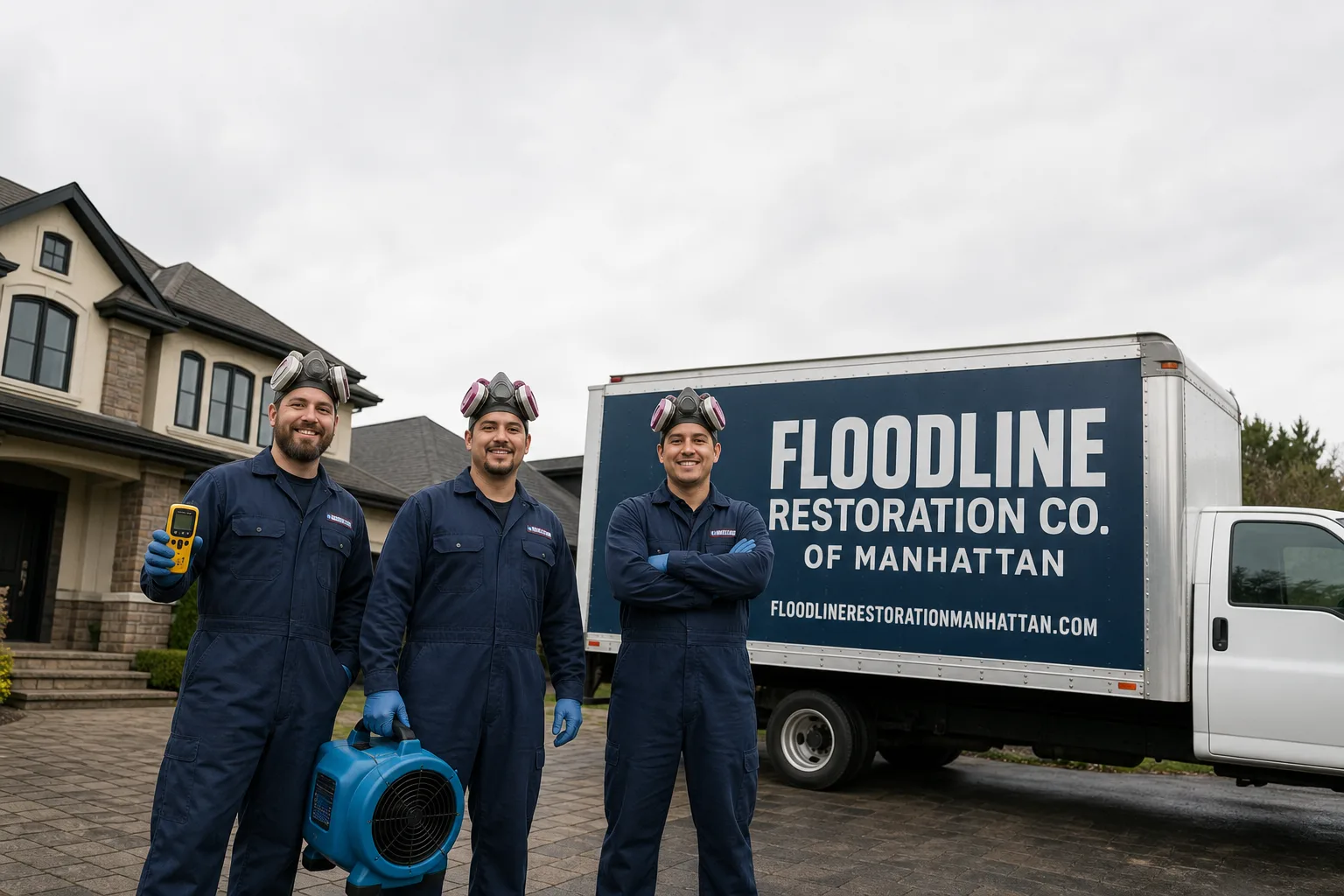
Free visual inspection and a written scope of work before any mitigation begins - photos, moisture readings, and drying logs go in your claim file
The scope we write is the scope we bill. Anything new gets shown to you, in writing, before we touch it.






 Before
 After
After Before
 After
After Before
 After
After24/7 Emergency Water Damage Restoration in Bellerose Terrace
When water is spreading through a Bellerose Terrace Cape Cod at midnight, the first call needs to reach a live person, not a recording. Emergency water extraction in Bellerose Terrace typically runs $850-$2,400 depending on how far the water has traveled, and the sooner extraction starts, the more of your plaster, floors, and framing we can save. Call (917) 924-4221 any hour. Our crew reaches Bellerose Terrace properties fast, begins extraction the same visit, and the estimate is free, visual, and in writing before any work begins.
Water does not wait for business hours. Neither do we. A live dispatcher answers at 2 a.m., and a certified crew heads to your street the same hour. The first 60 minutes determine whether you are drying out a wall or gutting a room. In Bellerose Terrace’s older homes, that clock runs faster: original plaster-on-lath and cast-iron stacks hold moisture longer and hide damage deeper than newer construction ever could.
Understanding Water Damage Restoration Severity in Bellerose Terrace Properties
Restoration scopes turn on the source and the saturation path, not just the puddle you can see. Clean water from a burst supply line is Category 1. Gray water from an overflowing washer or a roof leak is Category 2. Sewage backup or floodwater from storm surge is Category 3. Each category changes the drying plan, the sanitizing agents, and whether we cut out material or attempt to save it. In Bellerose Terrace’s late-1940s and 1950s homes, category is only half the picture: moisture mapping almost always reveals hidden travel through original plaster-on-lath assemblies and behind parged concrete block basement walls. That hidden path is where mold starts within 48 to 72 hours, and it is why we log daily moisture readings until the dry standard is met, not until the surface feels dry to the back of a hand. Structural drying here takes measurement discipline. Our Water Damage Restoration team runs Dri-Eaz and Phoenix dehumidifiers with air movers sized to the room, not the square footage on the listing, because Bellerose Terrace’s clay-heavy till and shallow water table change how walls release moisture.
Why Bellerose Terrace Property Owners Choose Floodline Restoration Co. of Manhattan
- 45-minute response commitment for Bellerose Terrace calls. The clock starts when you hang up with our dispatcher.
- 24/7 live answer. A real person picks up at 2 a.m. No automated system, no call-back queue, no answering service that only takes a message.
- IICRC-certified crews trained to WRT, ASNT, and FSRT standards. Background-checked and uniformed, every job.
- Free visual inspection with a written scope before work starts. You see exactly what we found, what it costs, and what we will do.
- Direct insurance billing. We coordinate with your adjuster, document every loss from hour one, and spare you the messenger role.
- One team from extraction to reconstruction. The same crew that reads the moisture map on day one runs daily readings, hands the log to your carrier, and rebuilds what needs rebuilding.
Our Water Damage Restoration Process
Inspection and Assessment
We trace the source, map moisture through walls and floors with thermal imaging and hygrometers, and photograph everything. You get a written scope and a firm price before any cutting begins.
Extraction and Stabilization
Standing water goes first. Truck-mounted extraction removes the bulk, and we pack out wet contents to stop wicking. If a wall is saturated, we cut what must go and leave what can be saved.
Structural Drying and Dehumidification
Dri-Eaz and Phoenix dehumidifiers paired with XPOWER air movers go to work inside containment. Injectidry systems pull moisture from cavities without opening finished walls. Daily readings are logged and shared with you and your carrier.
Cleaning and Sanitization
Surfaces get washed with antimicrobial agents appropriate to the category. HEPA air scrubbers run to capture spores before air has a chance to spread them.
Moisture Verification and Specialty Treatment
We do not call it dry until our meters say the dry standard is met. We watch for secondary damage in Bellerose Terrace’s older assemblies, specifically hidden moisture behind lath and in cast-iron chase walls.
Repairs and Restoration
Drywall, plaster, flooring, trim, and paint go back to original condition or better. Since Floodline Restoration Co. handles reconstruction under the same roof, no mid-job handoff to an inherited crew. Compliance goes through the Town of Hempstead Building Department before we touch structural work.
Need Emergency Water Damage Restoration in Bellerose Terrace Now?
Crews minutes away, answering live 24 hours a day. The sooner we start, the less it costs.
Working With Your Insurance Company
Insurance claims on Bellerose Terrace water damage fail when the loss is under-documented in the first 48 hours. We change that. From the moment we arrive, we photograph room by room, log moisture readings daily, and produce a line-item scope using the same estimating framework your carrier uses. Your adjuster talks to us directly. You stay out of the middle. When the cause is a hydrostatic event or a failed legacy drain stack, documentation matters even more: carriers scrutinize those claims for maintenance exclusions, and the difference between coverage and denial often comes down to whether the exact migration path was mapped before demolition started.
What We Provide Your Insurer
- Thorough documentation of the loss
- Photos of all damage, room by room
- Moisture readings and drying logs
- A detailed, line-item scope of work
- Direct coordination with your carrier
Built for Bellerose Terrace’s Loss Calendar
Bellerose Terrace gets hit on a seasonal rhythm, and we plan for it. January deep freezes burst supply lines in exterior wall cavities, and in these older Capes, that water runs down inside the plaster before anyone sees a stain. March through April brings the thaw, and with it the chronic basement seepage this neighborhood knows too well: the Hempstead Plain’s nearly flat glacial outwash and clay-heavy till drain poorly, so meltwater sits against foundation walls until hydrostatic pressure pushes it through the parged block. Summer thunderstorms dump an inch in an hour and flood streets faster than the storm drains can take it, sending water into garages and ground-level entries. Nor’easters in the fall and winter lift the already-shallow Nassau County water table, and basements that flooded once flood again. The repeat-event pattern is real. Treating each event as a standalone loss misses the point: the source is groundwater pressure, and the fix has to address the source, or next March the same water comes back.
Water Damage Restoration Across Bellerose Terrace’s Neighborhoods
Response routes here are tight. Bellerose Terrace sits east of Jamaica Avenue and north of Braddock Avenue, bordered by the Cross Island Parkway to the west and the Nassau County line cutting right through the community. Homes along 242nd Street, 86th Avenue, and 89th Avenue are mostly post-WWII Capes on small lots, many with cast-iron drain stacks still original to the build. Unfinished basements are the norm, and parged concrete block walls wick groundwater steadily from October to May. The corridor along 86th Road toward Winchester Boulevard sees frequent hydrostatic seepage after heavy rain because the land there sits slightly lower than the surrounding grade. Homes on the Queens side of the line share the same housing stock, but the permitting reality is different: unincorporated Bellerose Terrace runs all structural restoration permits through the Town of Hempstead Building Department in Hempstead village, not NYC DOB. The same repair that clears a permit in Queens can get red-tagged here when the inspector finds Queens-style code assumptions in the scope. That is not a nuance. That is the defining operational reality for Water Damage Restoration in Bellerose Terrace, and a contractor who does not know the line is a contractor who hands you a stop-work order.
Specialized Water Damage Restoration Services We Offer in Bellerose Terrace
Emergency Water Extraction
Standing water removal starts the hour we arrive, often the same call. We run truck-mounted extraction through Bellerose Terrace streets, pull saturated carpet and pad, pack out wet contents, and get air moving before mold has a window. On 89th Avenue and 242nd Street, this is the difference between drying a room and rebuilding a wall.
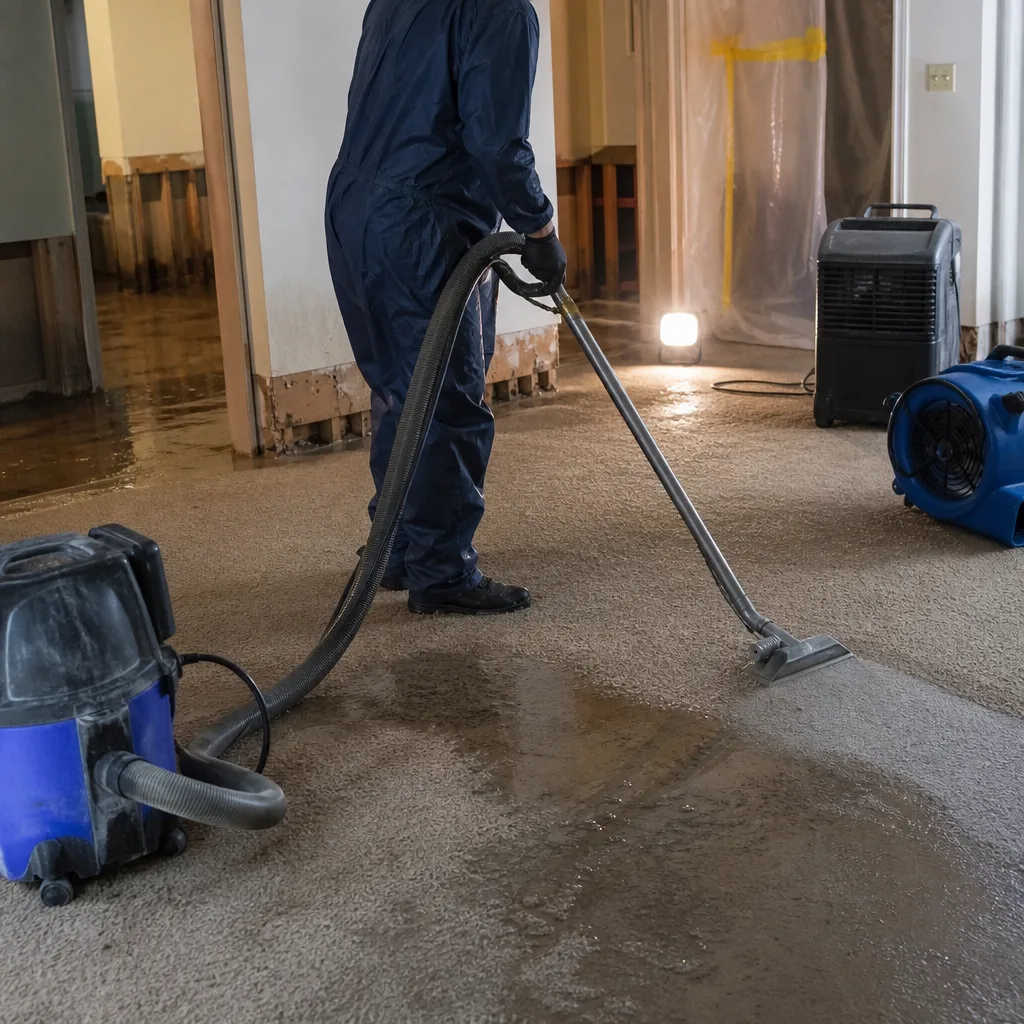
Structural Drying and Dehumidification
Bellerose Terrace’s post-WWII Capes hide moisture behind original plaster-on-lath assemblies. We use thermal imaging and penetrating moisture meters to find what the eye cannot see, then run Dri-Eaz and Phoenix dehumidifiers with XPOWER air movers inside containment until the dry standard is met. Injectidry systems pull water from wall cavities without opening finished rooms, which spares your original plaster.
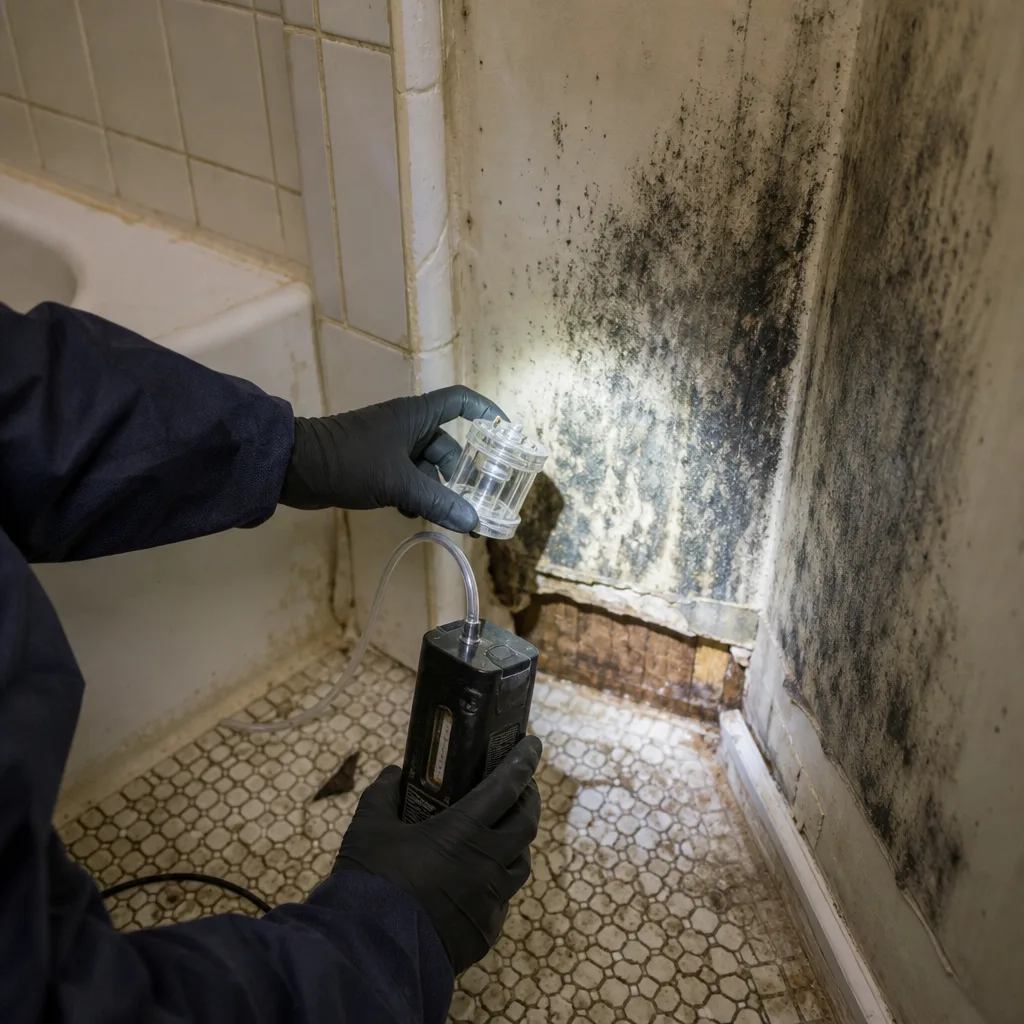
Basement Water Removal
Parged concrete block basement walls in Bellerose Terrace wick groundwater chronically, not occasionally. Removing the water is step one. Keeping it out means addressing the hydrostatic source, not just mopping the floor. We remove, dry, and then scope the source fix so next season’s nor’easter does not put you back in the same puddle.
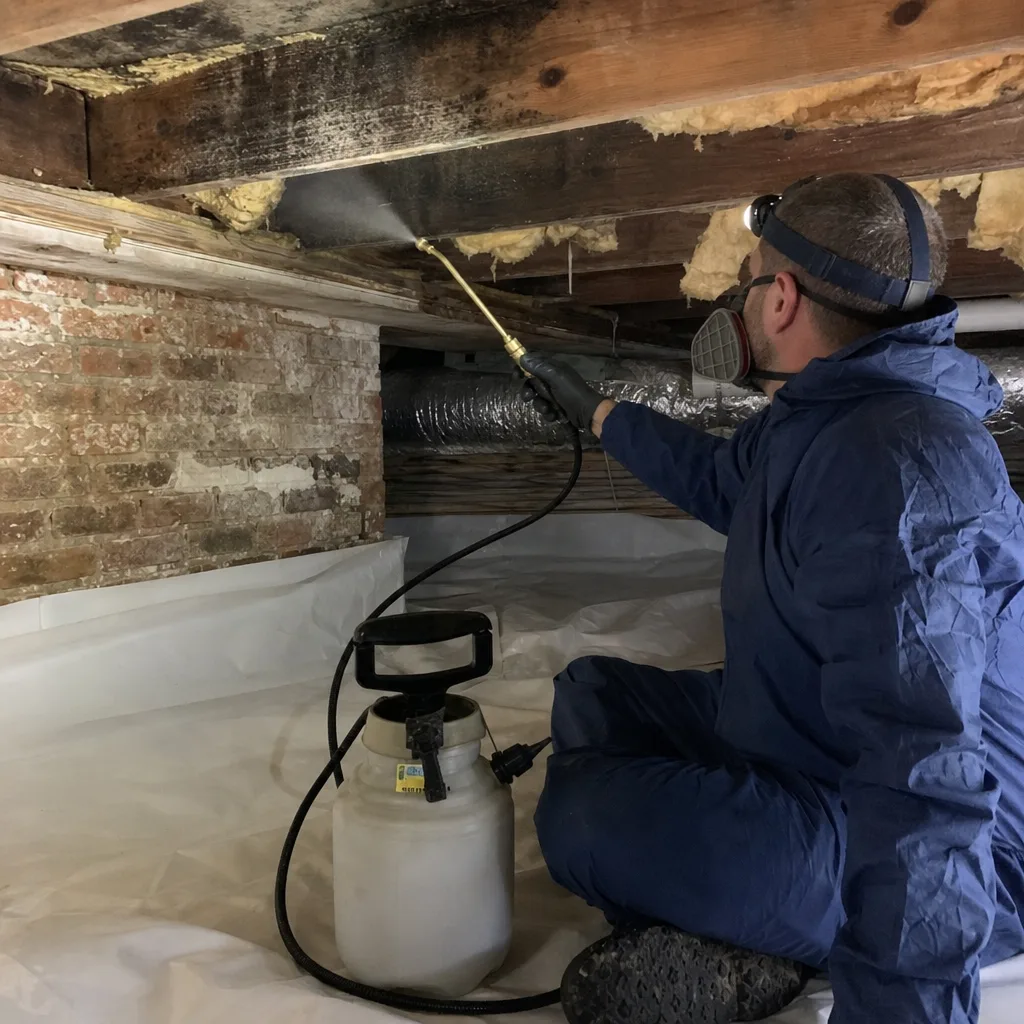
What happens when you call
- 1
A real person answersNo phone trees - you reach a local pro.
- 2
You get an upfront price rangeHonest numbers before anyone is dispatched.
- 3
A background-checked tech heads outLicensed & insured, dispatched right away.
- 4
You approve before work beginsNothing starts until you say go.
Water Damage Restoration Costs in Bellerose Terrace, NY
Straight numbers for a Bellerose Terrace job. Emergency water extraction with basic drying runs $850-$2,400 for a single room with moderate saturation. Structural drying across a full basement climbs $2,500-$5,500, depending on square footage and whether containment and Injectidry cavity drying are required. Burst pipe restoration with drywall and flooring replacement typically lands $3,000-$8,000. Full basement water removal with hydrostatic pressure remediation often runs $6,000-$15,000 because you are fixing the drainage, not just the water. Mold remediation added to a water loss, common in these older homes, adds $1,800-$6,000 depending on the spread. What moves the price: Category 3 contamination, hidden moisture behind plaster, the condition of original cast-iron stacks, and whether Hempstead permits trigger scope changes. Most jobs blend insurance-covered and out-of-pocket work. A free visual inspection gives you a firm scope before you commit a dollar. Call (917) 924-4221 for the exact number on your property.
We Also Serve Cities Near Bellerose Terrace
Our crews respond daily across Fairview, Harrison, East Bronx, and Hunts Point, with the same live 24/7 dispatch and the same written guarantee. When water crosses a property line, a response route crosses a town border. We already know the roads, the permitting offices, and the housing stock in each.
Serving Bellerose Terrace, NY - Our Local Coverage Area
We’re based in the Bellerose Terrace area and know this community well. Use the map below to see our service coverage - if you’re nearby, we can almost certainly help.
Bellerose Terrace Water Damage Restoration Questions, Answered
Does Bellerose Terrace require different permits for water damage restoration than Bellerose, Queens?
Yes. Bellerose Terrace is unincorporated Nassau County, so structural restoration permits run through the Town of Hempstead Building Department in Hempstead village, not NYC DOB. Inspectors enforce Nassau County energy and mechanical codes, which differ meaningfully from Queens standards. A contractor who assumes Queens rules apply here can get a stop-work order mid-job. Floodline Restoration Co. pulls the right permit from the start and writes scopes to Nassau County code, not Queens habit. Call (917) 924-4221 and ask us to walk your scope before the inspector does.
Why do basements in Bellerose Terrace flood repeatedly after a single water damage event?
Because the source is usually hydrostatic pressure, not a one-time leak. The Hempstead Plain’s flat glacial outwash and clay-heavy till drain poorly. When nor’easters raise the shallow Nassau County water table, groundwater pushes up through basement floors and in through parged concrete block walls. If restoration only removes the water and dries the room, the pressure source remains, and the next heavy rain puts water back in the same spot. We scope the drainage fix, not just the cleanup. Call (917) 924-4221 for an assessment that addresses the source.
How fast does mold start in a Bellerose Terrace Cape Cod with original plaster walls?
Mold germination typically begins within 48 to 72 hours of saturation in a Bellerose Terrace home. Original plaster-on-lath holds moisture longer than modern drywall because lath strips create capillary bridges and hidden cavities trap humidity. In homes with cast-iron chase walls, moisture can sit for weeks inside the wall assembly while the room outside looks fine. That is why we run daily moisture readings and do not call a job dry until our meters do. The moment you see a stain or smell an earthy odor, call (917) 924-4221. Time is genuinely working against your plaster.
Can you dry out a Bellerose Terrace basement without removing the parged concrete block walls?
In many cases, yes. Parged concrete block walls can often be dried from the interior side using professional dehumidification and air movement if the wall is not structurally compromised. We drill small weep ports at the base to release trapped water from block cells, then run Dri-Eaz and Phoenix dehumidifiers with XPOWER air movers until the dry standard is met. If the parging has already failed and sections are spalled or bulging, those sections come out and get re-parged. But we do not tear out a sound wall just because it got wet. A free inspection tells you which path your basement needs.
What happens if a Hempstead inspector finds unpermitted restoration work in Bellerose Terrace?
A stop-work order goes up, and the job freezes while the scope gets rewritten to Nassau County code. If walls are already open, the homeowner usually absorbs the cost of redo work and the delay. Structural restoration in unincorporated Bellerose Terrace requires a Town of Hempstead Building Department permit before cutting into framing, load-bearing assemblies, or drain stacks. Floodline Restoration Co. files permits before structural work begins. An inspector finding a compliant scope is a routine sign-off. An inspector finding an unpermitted cut is a call you do not want to take. Reach us at (917) 924-4221 and we will keep your project on the right side of the line.
How fast can a crew actually reach Bellerose Terrace?
Our response commitment is 45 minutes for Bellerose Terrace calls. The crew dispatches from the metro office and runs the Cross Island Parkway or Jamaica Avenue directly into the neighborhood. A live dispatcher answers every hour of every day, so you are never waiting on a call-back while water spreads. For an active leak or a flooding basement, call (917) 924-4221 and the clock starts now.
Will my insurance cover water damage restoration in Bellerose Terrace?
Most standard homeowner policies cover sudden and accidental water damage from burst pipes, appliance failures, and storms after the deductible. Coverage tightens when the loss is tied to long-term seepage, a failed drain stack, or hydrostatic pressure under the slab. Some carriers exclude groundwater outright. We document the exact cause and migration path before demolition, and we coordinate directly with your adjuster. That documentation is usually the difference between a covered claim and a denied one. Call (917) 924-4221 and we will review your policy’s actual language with you, no guesswork.
What should I do in the first 30 minutes of a water damage event in Bellerose Terrace?
Shut off the water supply if the source is a plumbing line. Cut power to affected rooms if water has reached outlets or appliances. Move what you can safely lift off wet floors. Do not use a household vacuum to extract water. Call (917) 924-4221 and talk to a live dispatcher. The first 30 minutes are about stopping the source and getting a crew rolling. Everything else, our team handles when we arrive.
Written by Curt Bowman, Owner at Floodline Restoration Co., serving Bellerose Terrace and the surrounding communities with 24/7 live dispatch and the 90-Day Done Right Promise in writing.