
Free visual inspection and a written scope of work before any mitigation begins - photos, moisture readings, and drying logs go in your claim file
The scope we write is the scope we bill. Anything new gets shown to you, in writing, before we touch it.






 Before
 After
After Before
 After
After Before
 After
After24/7 Emergency Water Damage Restoration in Bushwick
Water damage in Bushwick rarely announces itself politely. A supply line lets go at 2 a.m. in a pre-war tenement on Knickerbocker Avenue and within forty minutes it’s running down through three apartments. A cracked cast-iron waste stack in a converted loft off Wyckoff lets Category 3 water into a finished basement. When that happens, call (917) 924-4221. A live dispatcher answers. Not a recording. Every hour of the day, every day of the year.
Our crews run 45-minute response commitments inside Bushwick because we know the housing stock here punishes delay. The sooner extraction starts, the less water wicks into lath-and-plaster, the less chance mold gets established behind walls, and the lower the final bill. We show up, read the moisture map, and start pulling water the same visit. Free visual inspection. No charge to know what you’re actually facing.
Understanding Water Damage Restoration Severity in Bushwick Properties
Restoration work in Bushwick runs on a three-category system the industry uses everywhere, but the building stock here makes severity levels matter more than they do in newer neighborhoods. Category 1 is clean water from a supply line or burst pipe. Category 2 is gray water with some contamination, like washing machine overflow. Category 3 is grossly contaminated, what we call black water: sewage backups, street flooding, or water that’s sat long enough to grow bacteria.
In a modern drywall building, a Category 1 loss on the third floor might stay contained. In a Bushwick pre-war tenement, that same leak can travel inside lath-and-plaster cavities, saturate the horsehair binding, and drop two floors before anyone sees a stain. We use moisture mapping and thermal imaging to trace that migration because what looks like a small ceiling stain on a 1910 building often means water is already inside the wall assembly three rooms over. Structural drying here isn’t just fans and dehumidifiers. It’s knowing how 1880s brick, original plaster, and hundred-year-old floor joists actually behave when wet.
Why Bushwick Property Owners Choose Floodline Restoration Co. of Manhattan
- 45-minute response commitment – We dispatch crews from within the Bushwick area and we’ll be there when we say. When water is moving through a building, the first hour sets the scope.
- 24/7 live answer, always – A real person picks up at 2 a.m., not a voicemail. You never leave a message waiting for a callback while water keeps rising.
- IICRC-certified crews – Our technicians train to WRT, FSRT, and AMRT standards. The certification isn’t a wall decoration. It’s the difference between drying a building and just wetting a mop.
- Free visual inspection – No charge to assess the loss, map the moisture, and tell you honestly what needs to happen. No sales pressure attached.
- Direct insurance billing – We work directly with your carrier, send them the documentation, and you don’t play messenger between us and your adjuster.
- One team from extraction to reconstruction – We don’t hand the job off to a different contractor. The same background-checked, uniformed crew that extracts the water dries the building and rebuilds what needs rebuilding.
Our Water Damage Restoration Process
Inspection & Assessment
We arrive, walk the full loss area, and use thermal imaging and hygrometers to find water that isn’t visible yet. In Bushwick buildings, that means checking wall cavities, floor joists, and the units below, not just the room where the water pooled - the same thorough approach we apply to Fire & Smoke Damage Restoration in Bushwick.
Extraction & Stabilization
Truck-mounted and portable extraction units pull standing water fast. We stabilize the site by shutting off supply lines, protecting unaffected areas with containment, and removing saturated materials that can’t be saved.
Drying & Dehumidification
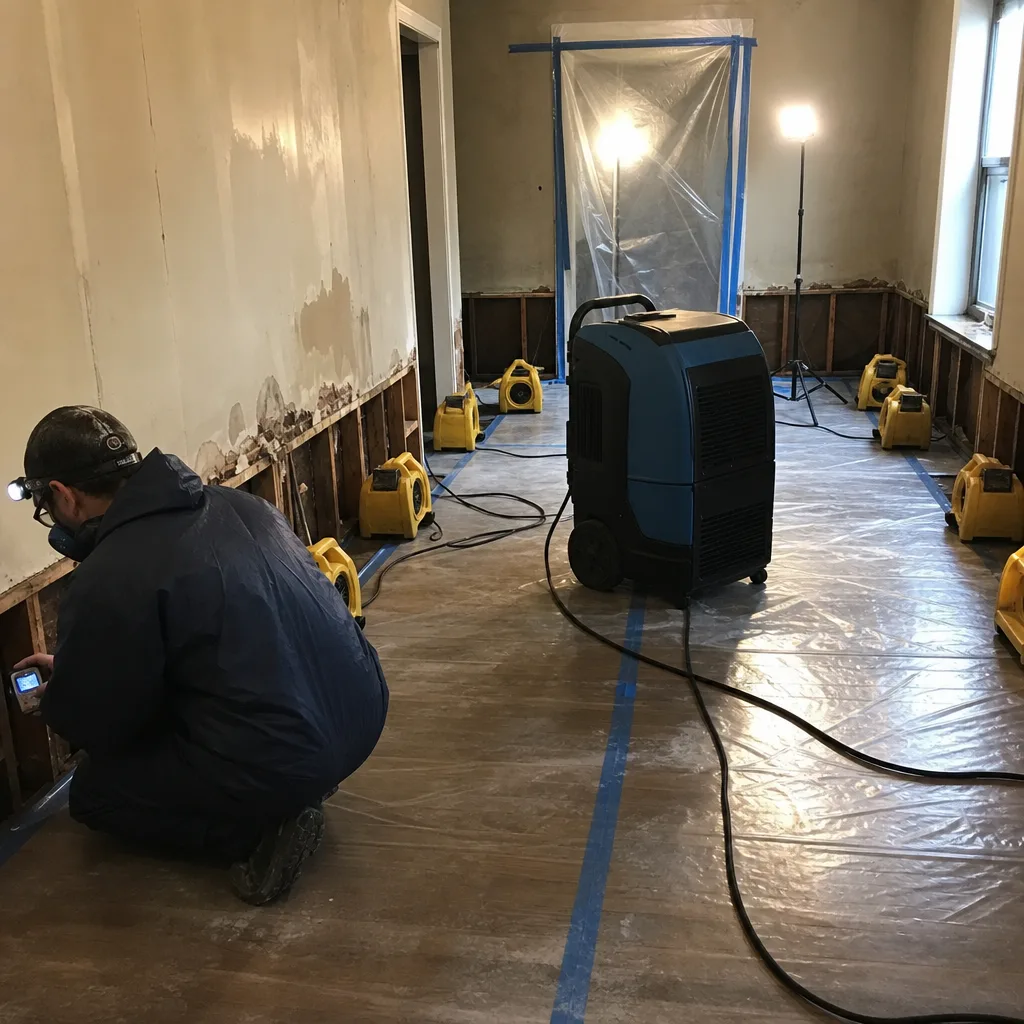
Dri-Eaz LGR dehumidifiers and XPOWER air movers get placed based on the moisture map, not guesswork. Daily readings are logged until the dry standard is met. In pre-war plaster walls, that takes patience, the right equipment, and knowing when to open a wall cavity versus when to dry it in place.
Cleaning & Sanitization
For Category 2 or 3 losses in Bushwick, we apply antimicrobial treatments to affected surfaces and run HEPA air scrubbers to remove airborne contaminants. Sewage Cleanup - Bushwick in a basement off Central Avenue gets treated very differently than a clean-water pipe burst in a loft.
Specialty Treatment for Bushwick’s Building Types
This is where local knowledge matters. A pre-war tenement with original plaster and lead paint triggers abatement protocols. A converted warehouse floor may need slab inspection. We scope these variables before work starts, not after demolition uncovers them.
Repairs & Restoration
Once dry standard is met, the same Floodline crew handles the rebuild: drywall, plaster, flooring, trim, paint. No handoff, no second contractor, no new foreman to bring up to speed. We hand you the moisture log and the 90-Day Done Right Promise in writing.
Need Emergency Water Damage Restoration in Bushwick Now?
Crews minutes away, answering live 24 hours a day. The sooner we start, the less it costs.
Working With Your Insurance Company
Water damage claims in Bushwick get complicated quickly, especially when the loss touches multiple units in a pre-war building or involves asbestos abatement in original plaster. We document everything from the first hour: moisture readings, drying logs, photos room by room, a line-item scope with the specific Bushwick variables priced in. That documentation goes to your adjuster directly. We bill your carrier. We talk to them so you don’t have to.
No surprises on the bill. No playing messenger between your insurance company and the restoration crew. A square deal, in writing.
What We Provide Your Insurer
- Thorough documentation of the loss
- Photos of all damage, room by room
- Moisture readings and drying logs
- A detailed, line-item scope of work
- Direct coordination with your carrier
Built for Bushwick’s Loss Calendar
Bushwick’s water damage season never really ends. It just changes character. January and February bring the deep freezes that hammer supply lines in uninsulated pre-war tenement walls. A copper pipe in an exterior wall on a Wilson Avenue walk-up freezes, splits, and floods three floors before the tenant gets home. We see those calls every winter, and the damage is always worse than the owner expects because water traveled through lath-and-plaster cavities before anyone noticed.
Spring thaw brings basement seepage in the converted warehouses around Flushing and Morgan Avenues, where missing perimeter drains mean groundwater has nowhere to go but through the slab. Summer thunderstorms dump enough water in an hour to overwhelm the aging roof drains on 1900s tenements, sending water down through ceiling bays and into apartments below. Every season in Bushwick has its signature loss. Our crews know which one is coming before the phone rings, and we stock the equipment to answer it.
Water Damage Restoration Across Bushwick’s Neighborhoods
Bushwick isn’t one kind of building. It’s three or four, often on the same block. That changes how we respond to every water loss.
Around Maria Hernandez Park and east toward Irving Avenue, the housing stock is predominantly pre-war brick tenements from the 1880s through the 1920s. These buildings have thick masonry walls, original lath-and-plaster, and plumbing that’s often been patched for eighty years. Water moves through them slowly, then lingers. A ceiling stain on the top floor means we’re likely checking wall cavities two floors down.
Along Flushing Avenue and Wyckoff Avenue, the converted factory and warehouse buildings dominate. These lofts have open floor plates, high ceilings, and almost never a proper interior perimeter drain. Basement water removal in these buildings often requires cutting the slab and adding a sump, a scope item the previous estimator missed because they treated it like a standard residential basement.
In the blocks near Bushwick Avenue and Broadway, you’ll find the 1980s HUD-era replacement buildings: lower cost construction, no true moisture barrier, cheap framing. A small ceiling leak in one of those units can rot floor joists within days. The visible stain doesn’t tell the story. The moisture readings do.
And near Myrtle Avenue, the mix is sharpest: a pre-war walk-up next to a 1980s replacement next to a converted warehouse. That single row of buildings presents three distinct restoration scenarios, each with different water migration paths, different abatement triggers, and different code obligations. Restorers in neighboring Ridgewood or Bed-Stuy rarely face that density of conflicting structural profiles on one block. We price and scope for it on every Bushwick job.
Specialized Water Damage Restoration Services We Offer in Bushwick
Emergency Water Extraction
Standing water in Bushwick doesn’t wait, and neither do we. Our extraction teams run truck-mounted units for large losses and portable systems for upper-floor apartments where stair access limits equipment. We start pulling water the same visit, then set containment to keep moisture from spreading through adjacent units. In a pre-war building, fast extraction is the single biggest factor in whether original plaster gets saved.
Structural Drying & Dehumidification
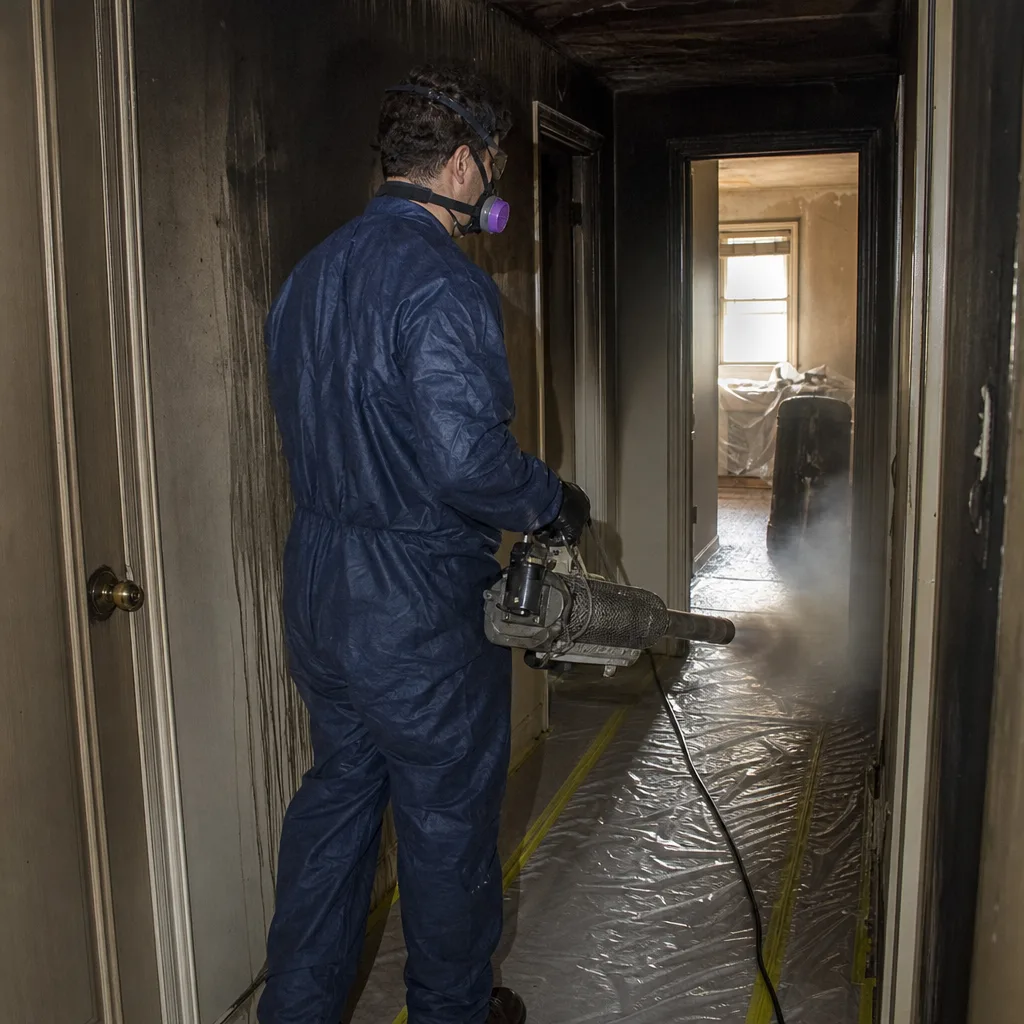
Drying a Bushwick pre-war tenement is a different job than drying a suburban house. The masonry walls hold moisture. The lath-and-plaster cavities wick water upward and sideways. We run Dri-Eaz LGR dehumidifiers and XPOWER air movers placed from the moisture map, and we log readings daily until the dry standard is met. Then we hand that log to you and your carrier. Done right, and backed in writing.
Burst Pipe Restoration
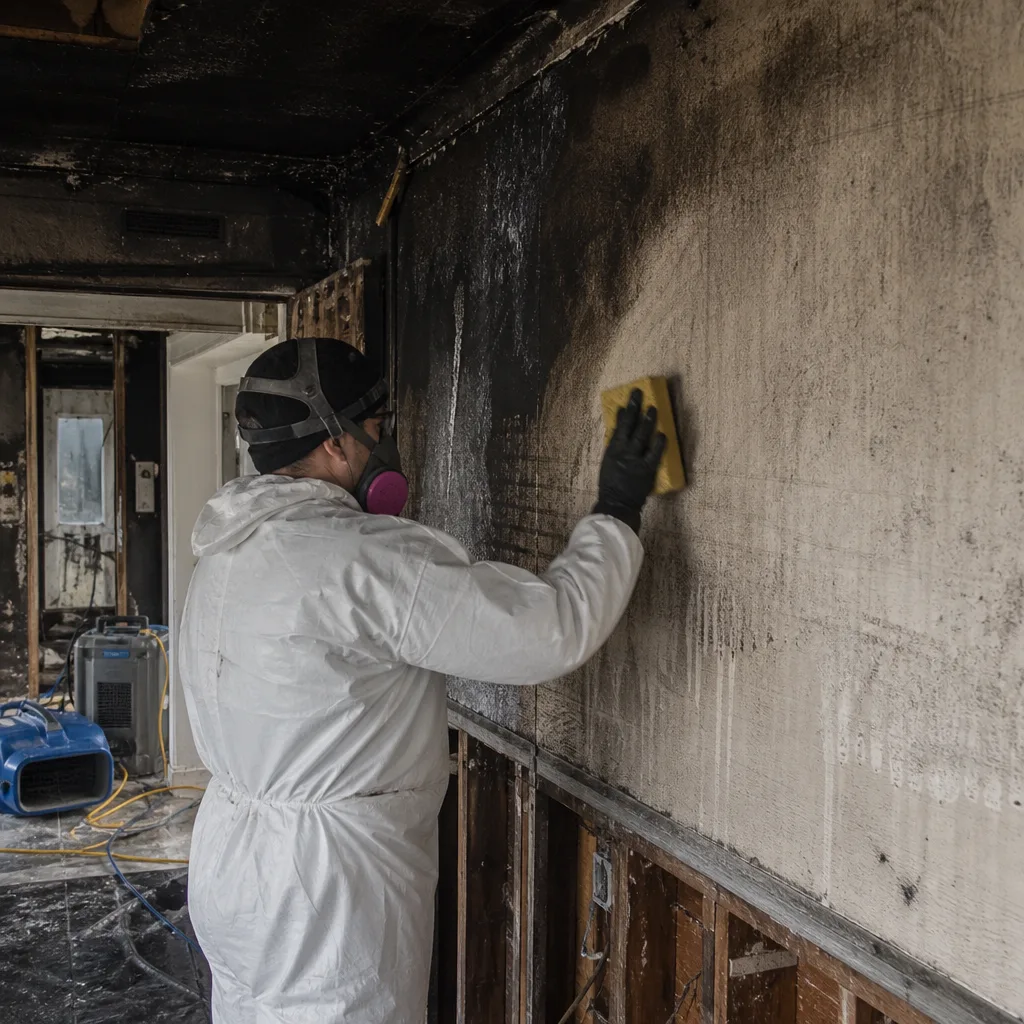
Freeze-thaw cycles hammer Bushwick’s aging plumbing every winter. When a supply line splits in an exterior wall, the water damage is often worse than it looks from the apartment below. We trace the full migration path, extract what’s visible, open wall cavities where necessary, and dry the structure before rebuilding. Our burst pipe work in Bushwick accounts for the building’s actual age, not the age of the visible finish.
Flood Cleanup
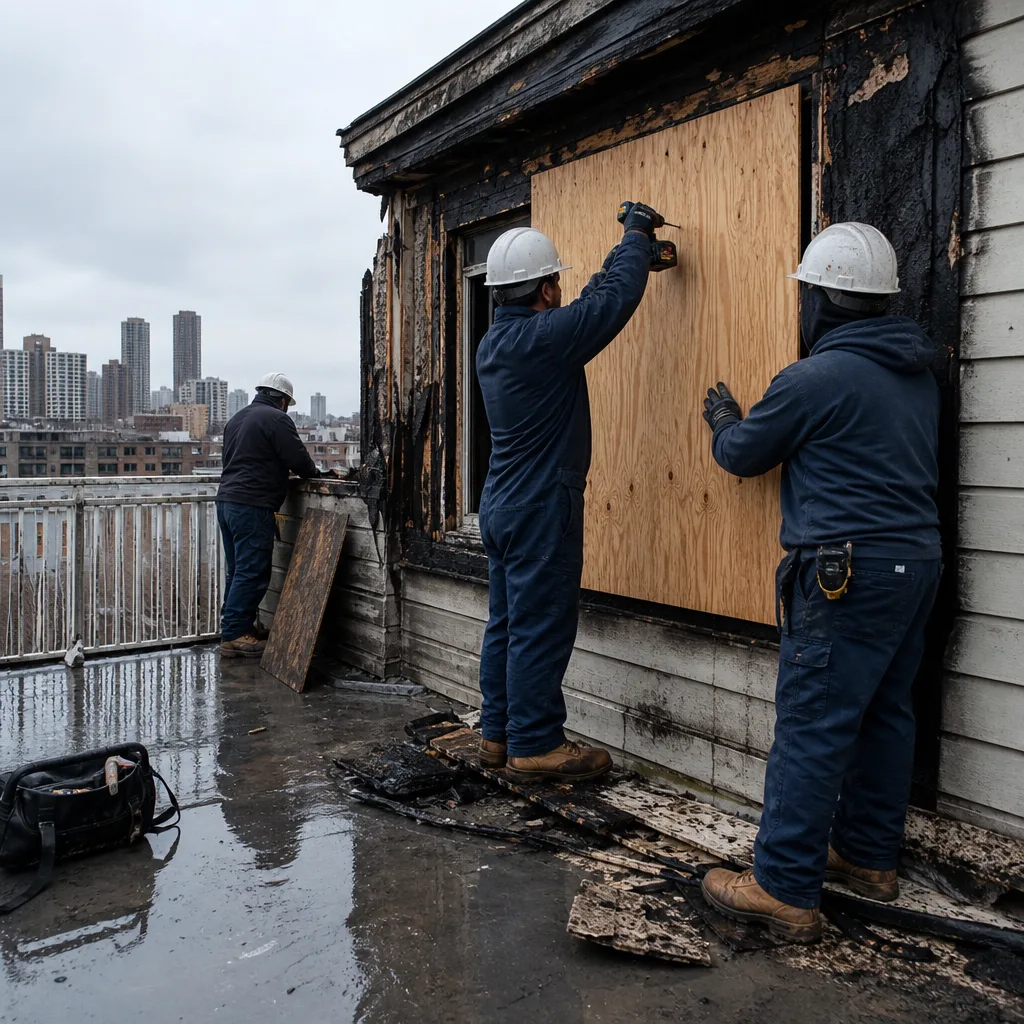
Summer cloudbursts and nor’easters overwhelm Bushwick’s aging roof drains and street-level basement entries, making Bushwick Storm & Disaster Restoration critical when flooding strikes. Floodwater is Category 3 by default: contaminated, carrying whatever it picked up from the street, the sewer, or the building’s own aging pipes. We treat it as such, with containment, antimicrobial application, and HEPA air scrubbing before drying starts. A flood in a Wyckoff Avenue loft basement isn’t a mop job. It’s a full remediation path.
Basement Water Removal
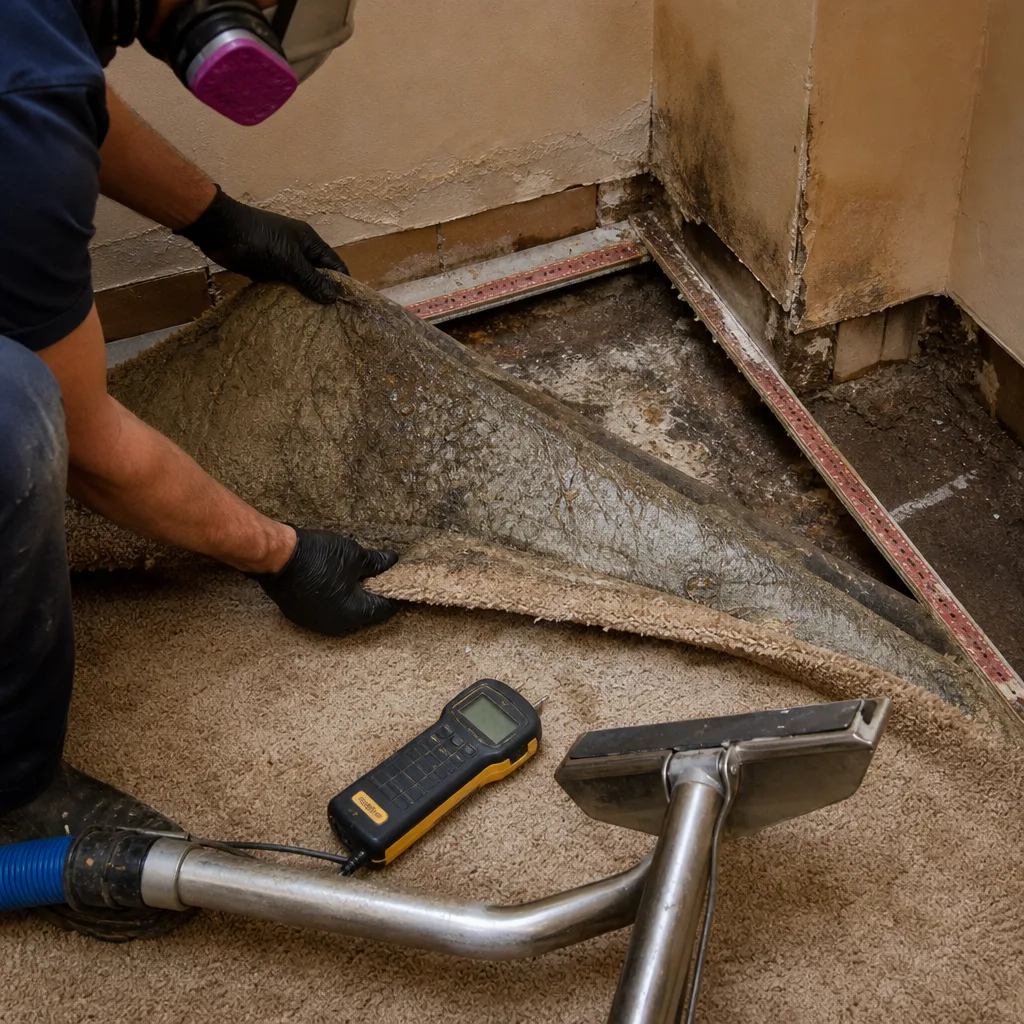
Bushwick basements run from cramped pre-war cellars with dirt floors to converted warehouse storage bays. Many have no interior perimeter drains. When groundwater or a sewer backup fills one, extraction alone won’t solve the recurring problem. We remove the water, dry the space, and scope the fix: sump installation, slab cutting, waterproofing, whatever the actual building requires. The line the water left is where we start.
What happens when you call
- 1
A real person answersNo phone trees - you reach a local pro.
- 2
You get an upfront price rangeHonest numbers before anyone is dispatched.
- 3
A background-checked tech heads outLicensed & insured, dispatched right away.
- 4
You approve before work beginsNothing starts until you say go.
Water Damage Restoration Costs in Bushwick, NY
A typical emergency water extraction in Bushwick runs $800 to $2,400, depending on the size of the affected area and whether it’s a single room or multiple floors. Structural drying for a moderate Category 1 loss in an apartment runs $1,200 to $3,800, but a Category 3 basement flood in a converted warehouse near Flushing Avenue can run $4,000 to $12,000 once containment, antimicrobial treatment, and slab work are scoped.
What moves the price in Bushwick specifically: whether the building is pre-war lath-and-plaster (more demolition, more careful drying, more time), whether abatement triggers enter the picture (asbestos in original plaster, lead paint layers), and whether multiple units are involved. A simple burst pipe in a 1980s HUD replacement unit costs less to dry than the same pipe in a 1910 tenement because the wall assemblies and building systems differ.
Most covered losses end up paid by insurance, minus deductible. We scope in writing, bill your carrier directly, and stand behind the work with the 90-Day Done Right Promise. If it’s not done right, we make it right. No paperwork battles.
We Also Serve Cities Near Bushwick
Our crews respond throughout the surrounding Brooklyn and Bronx corridors. We regularly handle water damage restoration in Fairview, Harrison, East Bronx, and Hunts Point, bringing the same 45-minute response commitment and the same crews to each job. Same live answer at 2 a.m. Same written guarantee.
Bushwick Water Damage Restoration Questions, Answered
Why does a water leak in a Bushwick pre-war tenement often trigger asbestos and lead abatement before drying can even start?
Because the original plaster in buildings put up between the 1880s and 1920s almost always contains asbestos in the brown coat, and every wall surface carries multiple layers of lead paint. Once water saturates that plaster and we have to cut into it, NYC DEP abatement requirements and tri-agency permits apply. We scope that from the first call so you’re not surprised by a regulatory cost multiplier after demolition has already started.
What does Category 3 water mean in a Bushwick basement, and why does it change the scope so much?
Category 3 means grossly contaminated water: sewage, street flooding, or water that’s been sitting long enough to grow bacteria. In a Bushwick basement, that could mean a backed-up waste line in a pre-war tenement or groundwater pushing through a converted warehouse slab. We can’t just dry Category 3 affected materials. They get removed, the area gets contained and antimicrobial-treated, and only then does drying start.
How do our crews handle water in a Bushwick converted warehouse where the slab may have legacy industrial contamination?
We treat the slab as a potential contamination source, not just a floor. Moisture mapping tells us where water migrated beneath the surface. If the building’s industrial past suggests contamination risk, we scope slab testing and any necessary barrier installation before drying finishes. The warehouse conversions around Flushing and Wyckoff weren’t built to residential standards, so we don’t pretend they were.
Why does a small ceiling leak in a 1980s Bushwick HUD building often require full structural drying and pack-out?
Those replacement buildings went up fast with cheap framing and no true moisture barrier. A ceiling leak that would stain drywall in a newer building can rot floor joists and wall plates within days in a 1980s HUD unit. The visible stain is a fraction of the affected area. We read the moisture map and follow it, even when that means pack-out and drying beyond what the stain suggests.
Can you save the original plaster in a Bushwick pre-war tenement after water damage, or does it have to come out?
Sometimes. If extraction starts fast and the plaster hasn’t delaminated from its lath, we can often dry it in place with targeted dehumidification and careful monitoring. If it’s already sagging, crumbling, or saturated with Category 3 water, it comes out. We’ll tell you honestly which path applies to your walls before we start cutting. Estimates are free. Call (917) 924-4221.
How fast can a crew actually get to a Bushwick address?
We run a 45-minute response commitment for emergency water extraction inside Bushwick. Dispatch coordinates from our New York City office, and crews are staged near the area. At 2 a.m. you’ll get a live person on the phone and a crew on the way, not a call center promise and a callback.
Will insurance cover water damage restoration in a Bushwick building?
Most suddenly-occurring water losses are covered: burst pipes, supply line failures, storm entry. Gradual leaks without a sudden cause are often not. The difference matters. We document everything from the first hour and work directly with your carrier to maximize the claim. Bring the policy, we’ll read it with you. Call (917) 924-4221 for a free visual inspection first.
What should I do in the first 30 minutes after water damage in Bushwick?
Shut off the water at the source or the building shutoff if you can do so safely. Kill power to the affected area if water is near outlets or wiring. Move what you can to dry ground. Then call (917) 924-4221. Don’t wait for the landlord, the super, or the plumber to call you back. Extraction that starts in the first hour saves plaster, saves joists, and saves money.
Serving Bushwick, NY - Our Local Coverage Area
We’re based in the Bushwick area and know this community well. Use the map below to see our service coverage - if you’re nearby, we can almost certainly help.
Restoration That Knows Bushwick’s Buildings
Bushwick’s housing stock is shaped by the fires that followed the 1977 blackout. Whole blocks burned. What got rebuilt next to the survivors was often cheap and fast. What survived was already old. The result is a neighborhood where a single row on Eldert Street or Jefferson Avenue can hold a 1880s tenement, a 1980s HUD replacement, and a converted industrial loft, each with different water migration paths, different hidden hazards, and different code obligations.
A restoration company that treats all three the same will miss water in a lath-and-plaster cavity, under-estimate rot in cheap 80s framing, or overlook slab contamination in a former factory. We don’t. Our Water Damage Restoration team reads each building for what it actually is, not what it looks like from the street. That’s the difference between a dry building and a building that looks dry.
Last winter, our crew responded to a Category 3 water loss in a converted warehouse loft off Flushing Avenue. The original cast-iron waste stack had cracked after years of freeze-thaw stress, flooding the lower duplex with black water. We set up containment and negative air to isolate the affected bay, used moisture mapping to trace water that had wicked behind the old brick party wall, and pulled the saturated plaster before antimicrobial treatment and structural drying with Dri-Eaz LGR dehumidifiers and XPOWER air movers. The building got dry. The owner got a moisture log. The carrier got line-item documentation. No handoffs, no surprises.
If you’re dealing with water damage in Bushwick, call (917) 924-4221. A live person answers. A crew gets there. And the job gets done right, in writing.
Written by Curt Bowman, Owner at Floodline Restoration Co. of Manhattan, serving the Bushwick area with 24/7 emergency response.